
health

Photo of elementary school students standing by their desks working with construction paper.
Photo by K.W. Barrett, Flickr CC

Millions of students each year are suspended or expelled from school, sometimes in response to minor, non-violent policy violations such as skipping class and “disruptive behavior.” These harsh policies disproportionately push out students from disadvantaged backgrounds, especially youth of color. Much of the research on this topic focuses on middle and high school students. However, a new study by Wade Jacobsen, Garrett Pace, and Nayan Ramirez shows that a surprising number of urban students are already impacted by the third grade.

The researchers used data from several thousand children in 20 large American cities to document how many were suspended or expelled by age 9. Overall, 11% of children were removed from school at least once by this age. However, there were stark race and gender inequalities in elementary school discipline. Only 8% of white boys and 2% of white girls were suspended or expelled, compared with 40% of black boys and 15% of black girls.

Next, the researchers wanted to understand what factors are driving inequalities in early school discipline. They found that racial disparities were not due to differences in behavior reported by parents. Instead, disparities were mostly explained by school disciplinary practices and family background, such as poverty and parental incarceration.

Exclusionary discipline is intended to punish and reduce aggressive behavior. However, the researchers showed that children who were suspended or expelled became more physically aggressive after they returned to school. They suggest that suspension and expulsion disrupt routines at home and cause children to fall behind at school, and this increased stress may lead to poor behavior.

While exclusionary discipline may sometimes be necessary to ensure student safety, there can be little disagreement that pushing kids out of schools when they are still learning to read is a practice that should be reconsidered. Finding effective alternatives to exclusionary discipline for non-violent behavior at an early age could improve racial equity in life-long educational outcomes.
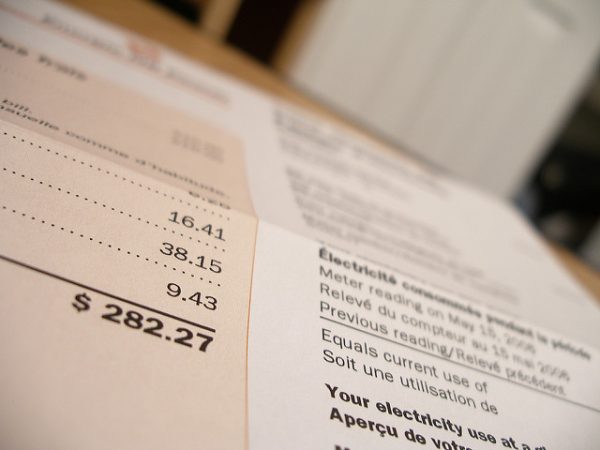

Photo of an electricity bill
Photo by Brendan Wood, Flickr CC

In the United States, more than 1 in 10 households spend at least half of their income on housing costs meaning these households struggle to pay for other basic needs with their remaining income. New research goes beyond housing payments and potential eviction to help us understand the complexity of housing hardship. In a recent study, Ryan Finnigan and Kelsey D. Meagher examine households that missed housing payments and utility payments. They find that missing utility payments is associated with persistent economic disadvantage, and an onset of missed payment is predicted by a major change in health.

The researchers use U.S. census data from the Survey of Income and Program Participation, in which approximately 30,000 households complete a survey every four months for two to five years. They specifically focus on households with missed payments for housing, utilities, or both (13-16% of households in the sample).

More households missed payments for utilities than for rent or a mortgage, and missed payments for utilities persisted over time, while missed housing payments did not. For example, half of households that missed utility payments in 2009-10 continued to miss payments a year later, whereas households that missed housing payments were more likely to catch up by the next year. The authors suggest this may be because households prioritize housing payments in order to avoid eviction.

Those that missed payments for utilities (or both utilities and housing together) tended to have the most disadvantaged characteristics — higher poverty rates, lower average incomes, fewer employed household members, lower homeownership rates, and a household member in poor health.

The biggest predictor of households missing payments for utilities, housing, or both was declines in health — even more so than losses to income. Since the authors controlled for out-of-pocket medical expenses in their analysis, they suggest this finding may be related to increased caregiving responsibilities on other members of the household.

This research helps us to understand that housing hardship isn’t just about losing your house. Even when people are able to prevent eviction, they may struggle with making payments for other basic needs like heat or water. This means that policymakers interested in reducing hardship may want to consider aid for utilities and other basic needs, instead of primarily focusing on housing and food insecurity.

Photo of a child sitting on a sidewalk. Photo by Chris Beckerman, Flickr CC

In 2016 there were more than 400,000 children in foster care in the United States. Kids are placed in foster care because of parental neglect, abuse, incarceration, and other reasons that make it unsafe for them to live at home. The majority of these kids are successfully reunited with their parents after their parents complete a case plan. However, a sizable minority of these reunited children will re-enter foster care. New research by Sarah Font, Kierra Sattler, and Elizabeth Gershoff identifies the policy and family conditions that make foster care re-entry more likely.

Foster care is meant to be a temporary status, and the federal government pushes states to achieve “permanency” for kids in care as quickly as possible. Federal funds can even be withheld from states if too many children remain in foster care for longer than a year. A “permanent” home has two main forms: reunification with parents, or terminating parents’ rights and matching kids with an adoptive home. Terminating parents’ rights is considered an extreme step. Doing so requires detailed evidence that parents are not making timely progress toward their goals. By contrast, the standards for reunification are less clear. This means that if parents’ progress is not good, but also not bad enough to terminate their rights, the state has an incentive to reunite them with their kids as they approach federal deadlines. Returning children to parents who have made sub-par progress makes it more likely that they will be taken from their home again in the future.

The researchers analyzed data of children from Texas to find out what family conditions predict foster care re-entry. The children most at risk of re-entry were those who initially entered foster care because of parental substance abuse and neglect (substance abuse is rarely the only reason children are removed from a home). Of these cases, parental substance abuse and neglect were also typically the reasons for reentry, showing that these issues within the home persist over time.

These findings are especially important at a time when opioid use (combined with neglect) is increasing the number of children being removed from their homes. The researchers do not suggest that states should lower their standards to terminate parents’ rights. Rather, they advocate that timelines toward permanency should be relaxed and more post-reunification services should be offered to formerly substance-abusing parents to reduce the risk of returning a child to a home that is still unsafe.

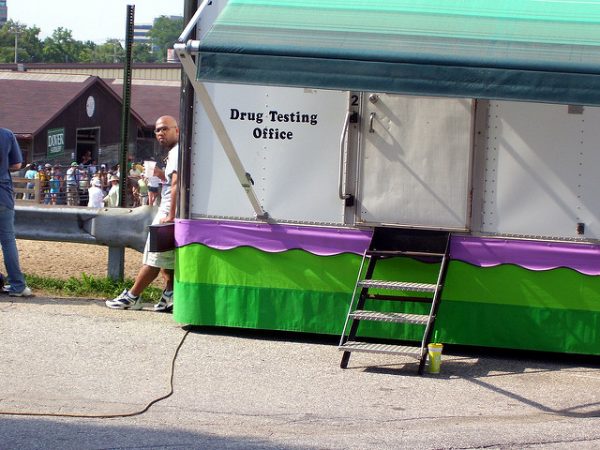
Photo of a portable structure labeled, “drug testing office.” Photo by Phil! Gold, Flickr CC

Originally published November 1, 2018.

For a long time, individuals and organizations have drawn stark lines between the “deserving” and the “undeserving” poor. Over the past 40 years, these distinctions have been used to justify cutting or limiting social safety net programs, leading to a decline in cash welfare programs and other parts of social assistance programs that working-age, able-bodied, poor adults are eligible for. Furthermore, researchers have shown that welfare recipients are subject to a growing list of limits, conditions, and expectations. In a recent study, Eric Bjorklund, Andrew P. Davis, and Jessica Pfaffendorf continue such research by examining states’ efforts to implement drug testing for applicants to “Temporary Aid to Needy Families” (TANF), a flagship national welfare program.

In the tense racial and economic climate following Obama’s 2008 election, Arizona became the first state to introduce a policy restricting access to cash welfare for applicants based on drug test results. Since then, 15 states followed by passing drug test policies for recipients of TANF. To understand how the states that passed welfare drug testing policies potentially differ from states that did not, Bjorklund and colleagues looked for patterns in the years leading up to the implementation of the policy. They examined factors such as states’ government ideology, whether a Republican governor ousted a Democrat, the proportion of nonwhites in the population, and the white employment rate. 

Both decreases in white labor force participation and having a Republican governor were associated with a state’s implementation of a drug testing policy. The authors rely on social context to explain this finding — specifically, these policies were implemented during the economic recession following Obama’s 2008 election as the first African American President of the United States. Given the importance of the white employment rate, the authors speculate that whites may have held a zero-sum belief that economic gains by people of color would entail losses for whites. Whites’ racialized economic fears may have led them to support restrictive policies framed as “correcting” the behavior of certain “morally compromised” groups, thus prompting politicians and legislators to tighten access to welfare programs by excluding those who failed a drug test. In short, this research highlights the ways social assistance programs can be shaped by public perceptions about who deserves assistance and who doesn’t.

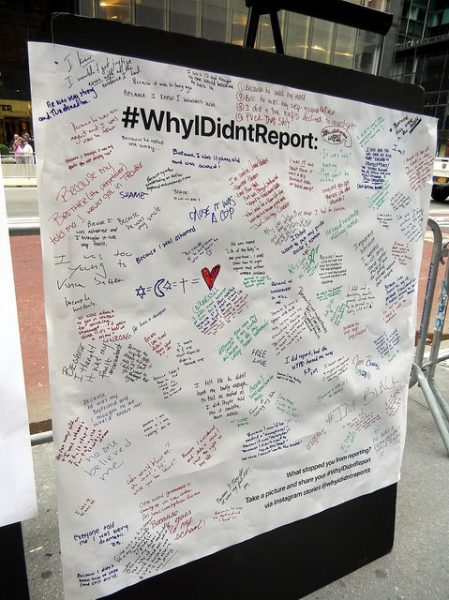
Photo of sign with handwritten messages of “why I didn’t report.” Photo by The All-Nite Images, Flickr CC

Emotions ran high across the nation as many of us tuned in to watch Dr. Christine Blasey Ford’s testimony of sexual assault by Judge Brett Kavanugh in front of the Senate Judiciary Committee. Dr. Ford’s public testimony has produced important dialogues regarding why most victims do not report, as seen in the social media hashtag #WhyIDidntReport. New research by Shamus Khan, Jennifer Hirsch, Alexander Wamboldt, and Claude A. Mellins contributes to this growing conversation by exploring the social risks students face in reporting.  

Khan and colleagues draw upon the Sexual Health Initiative to Foster Transformation (SHIFT) study, which includes 151 interviews, 17 focus groups, 18 months of participant observation, and a random-sample survey of 1,671 college students at Columbia University and Barnard College (a women’s only institution). This study mostly draws from the interviews with college students. Researchers defined incidents of sexual victimization based on legal definitions of sexual assault, rather than incidents that students explicitly labeled as such. According to the authors’ definition, interviews revealed that 66 students recounted 89 incidents of sexual victimization.

For many victims, naming their experiences as sexual assault and telling authorities came with a variety of social risks. For one, students feared association with a stigmatized identity such as “victim” or “survivor.” They often viewed these labels as disempowering and told interviewers they didn’t want to be seen as “that girl” or “that guy.” Some students attempted to claim alternative identities as compassionate students willing to provide second chances to their perpetrators by not reporting.

Second, reporting means students encounter risks to their social networks. For example, students considered how labeling and reporting might hinder their ability to develop or preserve interpersonal relationships, which for some, include relationships with their perpetrator. Lastly, students worried they might lose access to college activities like sports, sororities, fraternities, and other student organizations, which would affect their long-term career goals. Several students discussed how reporting would add stress and take time away from their activities. Men who were intoxicated and Black men in particular expressed concern that they would be the ones accused of assault due to their alcohol intake or lack of racial privilege.

As we continue to address sexual violence in the Me Too era, this work encourages us to look beyond formal reporting policies and work to transform the social and cultural conditions that shape perceptions of risk among sexual assault victims.

Click here for more sociological research and expert insight on sexual violence!

Photo of a sign with arrow pointing to
an accessible area in a subway station. Photo by Marcin Wichary, Flickr CC

We hear a lot about the gender pay gap and the racial wealth gap, but rarely about how disability also affects economic security. New research by Michelle Maroto, David Pettinicchio, and Andrew C. Patterson investigates how disability interacts with gender, race, and education level to influence economic stratification in the United States. The researchers analyze data from the 2015 American Community Survey (ACS), focusing on poverty status and total personal income (earnings, governmental income, savings). The ACS identifies people with disabilities as anyone who has cognitive, ambulatory, independent living, self-care, vision, or hearing difficulty. Instead of analyzing race, education, and gender separately, the researchers created 24 different groups where these identities intersect (e.g., black women with a bachelor’s degree, white men without a bachelor’s, Asian Pacific Islander women with a bachelor’s, and so on).

Overall, the effects of disability on poverty were strongest for women, racial minorities, and those with low levels of education. Specifically, disability had the largest effects on poverty for black and Hispanic women with low levels of education. White and Asian men with high levels of education were the least affected. In other words, if individuals already have racial, educational, and gendered privilege, these components may insulate people with disabilities from falling into poverty — in this case, highly educated white and Asian men. On the other hand, women and racial minorities who are already at a greater risk of poverty do not have that insulation.

Data come from the 2015 American Community Survey, adults age 18 and older, N = 2,490,616. Estimates refer to the percentage of persons with income at or below 100% of the federal poverty line after accounting for several control variables.

In terms of total income, disability had the largest negative effect on the most advantaged groups, particularly for men with higher levels of education. But even though more advantaged men with disabilities took the greatest hit in terms of income, they still averaged more total income — about $63,000 per year — than other groups. Less-educated women with disabilities overall earned only about $28,000 per year and women of color in this category earned even less. In other words, those with more markers of privilege have more to lose, but the more disadvantaged groups still end up at the bottom. This research shows that disability disadvantages all groups economically, but the ways it combines with other social statuses influences how groups experience economic insecurity or privilege.

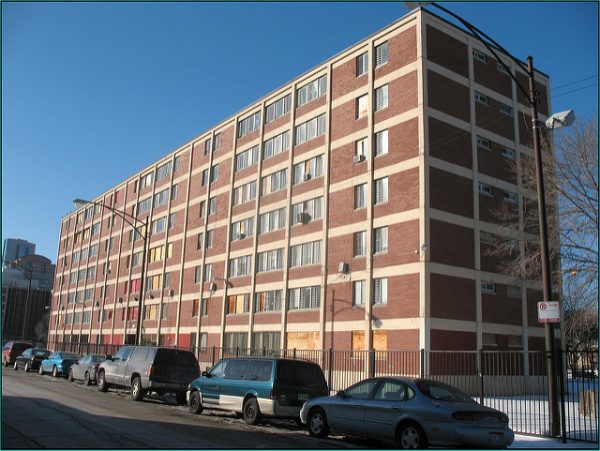
Photo of a Chicago public housing building. Photo by TheeErin, Flickr CC

Earlier this year, the Trump administration proposed legislation that would significantly raise rents for people who rely on subsidized housing from the Department of Housing and Urban Development. In addition to concerns about an increase in homelessness, new research by Andrew Fenelon, Natalie Slopen, Michael Boudreaux, and Sandra Newman shows that this policy may also have a detrimental effect on children’s mental health.

Fenelon and colleagues used housing assistance records from the U.S. Department of Housing and Urban Development (HUD) to compare 1,967 children currently receiving housing assistance — either living in public housing, multifamily housing, or using housing vouchers — to those set to receive housing assistance in the next two years. This setup allowed researchers to compare children receiving housing assistance with others in similar socioeconomic situations. Researchers then linked this data to measures of children’s mental health, specifically whether children likely had any socioemotional problems over the past six months. 

The study found that children currently receiving housing assistance had better mental health outcomes than those on the waiting list. However, this was only the case for children living in public housing, not those living in multifamily housing or using housing vouchers. While the researchers did not specifically study why this is the case, they suggest public housing may provide social stability for children by giving families greater access to social ties and networks. In other words, both stability and community may be necessary to support children’s mental health.

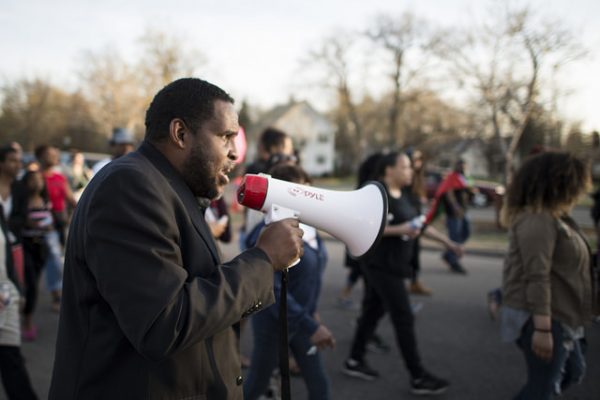
Black Lives Matter march for Tania Harris. Photo by Fibonacci Blue, Flickr CC

Research shows that poor communities of color are policed more extensively than other areas, and heavy policing  can substantially alter people’s behavior and identities. Some research indicates that individuals avoid formal institutions (e.g., schools, hospitals), while other research suggests that individuals interpret the increased criminal justice contact as racialized injustice and become more involved in activism. Using data from the National Longitudinal Survey of Adolescent to Adult Heath, Brianna Remster and Rory Kramer investigate community members’ varied responses to police contact.

Remster and Kramer found support for both avoidance of formal institutions and increased activism. People with more contact with the criminal justice system were more likely to avoid institutions — contact decreased the likelihood of receiving medical care and banking for members of all racial groups. Although the avoidance response applied to all races across contexts, avoidance tended to be stronger in predominantly minority communities. The researchers also found support for the activism hypothesis — individuals who had been stopped by police were more likely to take an activist role, which was measured by political rally attendance and whether individuals contacted government officials. In other words, after police contact individuals may withdraw for fear of further criminal justice contact, but they may also be inspired to protest unequal policing practices. 

This research also reveals the far-reaching presence and effects of modern surveillance across many contexts. Although the impacts of aggressive policing may be stronger in some neighborhoods, the impacts were not limited to poor minority communities. People across a variety of contexts respond to increases in criminal justice contact through avoidance and activism. Overall, the findings show that criminal justice contact can alter social life in more than one way beyond the moment of arrest.

Headstones in a Cemetery. Photo by Bart Everson, Flickr CC

The expansion of the U.S. criminal justice system is often justified in the name of public safety. While incarceration does have crime-reducing capabilities, it also has numerous negative effects, such as decreased likelihood of employment and other “collateral consequences” for those incarcerated. Thus, it’s hard to say whether incarceration does more good than harm. This is a tricky question to answer, as the outcomes of incarceration are often hard to compare. However, Michael Light and Joey Marshall use a bevy of administrative panel data to compare whether incarceration saves more lives through reducing homicides than it costs lives through increases in infant mortality.

Overall, they find that the incarceration rate both decreases the homicide rate and also increases the infant mortality rate. The authors estimate that the “net benefit” of incarceration is much smaller when the mortality costs are taken into account. In other words, there seems to be a very weak or even non-existent return on incarceration when considering mortality. Thus, while it appears that incarceration does indeed “save lives,” incarceration also causes deaths, muddying the picture of the benefits of imprisonment. This research challenges claims that increased imprisonment will greatly enhance public safety and human well-being, and gives a glimpse into the varying effects the criminal justice system can have.

Photo by 53Hujanen, Flickr CC

It has been over two years since the Flint lead water crisis came to light. Today, many in Flint remain skeptical about the quality of the water and residents continue to push for better water infrastructure and safety standards. We now know that lead exposure has a multitude of negative health impacts, and some even argue that the removal of lead from gasoline in 1970 contributed to the great crime decline. Recent research by Robert Sampson and Alix Winter tests this connection by examining if lead exposure is connected to delinquency and arrest in adolescence.

Sampson and Winter use data from the Project on Human Development in Chicago, a representative sample of children and their caregivers in the mid-1990s. In this study, they follow a group of 254 individuals from infancy to age 21. They examine blood lead levels, official arrest records, and caregiver-reported antisocial behavior. By following these individuals over two decades, the researchers are able to observe possible effects of lead exposure over time.

Sampson and Winter find that lead exposure is directly linked to antisocial behavior, like destructive outbursts, in adolescence. This relationship stands even when accounting for a variety of individual, caregiver, and neighborhood characteristics, including the participant’s mental health and impulsivity. While the authors do not find a direct connection between lead exposure and arrest, previous research tells us that antisocial behavior is related to arrests for many different types of crimes. Therefore, those exposed to lead in their childhoods will likely face increased interaction with the criminal justice system, due to lead’s toxic effects — specifically increased antisocial behavior.

Sampson and Winter argue that toxic inequality — unequal exposure to toxins, like lead — may shape the unequal distribution of crime in neighborhoods and cities throughout the United States. In this case, lead poisoning may explain how one dimension of social inequality contributes to crime and criminalization. Flint’s crisis highlighted how environmental hazards are concentrated in disadvantaged communities, and this study further demonstrates that unequal exposure to toxic living conditions can have long-reaching consequences for the families and their children that live in these areas.