
health

A patient signing a form in a doctor’s office. Image by SHVETS production under Pexels license.

Reproductive rights are considered a hot-button topic by many, but different groups can face different pressures in exercising these rights. Moreover, rights around fertility-affecting operations like the removal of one’s uterus (hysterectomies), are often left out of the discussion. To shed light on these issues, recent research examines how gender and race affect those seeking a hysterectomy, usually seen as the most extreme birth control option. 

Andréa Becker, a postdoctoral researcher and instructor at the University of California San Francisco conducted 100 in-depth interviews with a diverse set of individuals who have undergone or are considering a hysterectomy. These operations were sought in many cases to remedy painful reproductive conditions like endometriosis, uterine tumors, or for gender-affirming care. 

She discovered that while white cisgender (cis) women are routinely blocked from accessing desired hysterectomies, cis women of color are pressured into having hysterectomies by medical professionals they are relying on for responsive treatment. Even in cases where a woman of color desires to preserve her fertility, she may experience unwanted pressure to have her uterus removed instead of seeking other treatments for painful reproductive conditions. For example, here’s how a Black woman named Kat described her struggle to preserve her fertility despite the medical establishment’s pressure.

“Every time I had a physical exam, every time I had a vaginal exam, every time I had a pelvic exam every time, it was like “hysterectomy, hysterectomy, hysterectomy,” it was it was definitely pushed.”

Women who did not have or intend to have a male partner or desire kids also experienced differential treatment when seeking a hysterectomy. One lesbian woman even described how medical practitioners did not consider her wishes on the matter at all and were more concerned with the fertility wishes of a fictitious future husband.

Perhaps surprisingly, trans men and non-binary patients reported having a comparatively easy experience getting a premenopausal hysterectomy if they wanted one and were readily offered the procedure or even directed to it as it reinforced societal gender norms.

The study clearly shows a systematic disregard for women’s agency by the medical community, especially that of women of color. The pressure exerted by practitioners to sterilize women of color, even when it contradicts their wishes and goals, has links to a much longer history of medical abuse of such patients. These findings reinforce the need for medical institutions and practitioners to understand and address how racial prejudice and other forms of discrimination affect their treatment of patients.


A bare prison cell with a bunk bed, metal chair, and toilet. Image from RDNE Stock project under Pexels license.

Gender segregation is a core feature of American prisons, with men and women separated out into separate facilities. So how do gender nonconforming prisoners fit into this system? 

In a study of California men’s prisons from 1941 to 2018, Joss Greene finds that the response to gender-nonconforming prisoners varied historically. As attitudes towards both punishment and gender changed over time, prison administrators shifted their approach to managing gender-nonconforming prisoners. 

1941-1954: Segregation

Beginning in the early 1940s, California promoted prisons as sites of rehabilitation. However, from 1941 to 1954, prison administrators viewed gender nonconformity as a contagion that threatened both the overall health of the prison and the prison’s rehabilitation efforts. Prisoners who were identified as “effeminate homosexuals” were segregated from the rest of the prison population, stigmatized, and excluded from educational and work opportunities.

1955-1981: Treatment

From 1955 to 1981, prison administrators approached gender-nonconforming prisoners as “medicalized subjects”, meaning that their homosexuality or gender expression was considered a psychiatric or medical condition. 

Gender-nonconforming prisoners were subjected to psychological studies and “treatment” (in the form of harsh medical experimentation) at a newly constructed California prison medical facility. However, many prisoners were able to use their new medical label as leverage to demand access to some gender-affirming care.

1982-1998: Risk Management

In the late 1970s, California’s “tough on crime” approach led to a historic rise in prison populations. To increase efficiency, prison administrators classified prisoners into four risk levels, based on their sentence, behavioral record, and other factors. Those classified as high-risk were subject to harsher punishment. Under this system, all “known homosexuals” were automatically classified as a Level 3 risk (the second-highest level). They were grouped in with individuals convicted of more serious crimes, faced increased restrictions within the prison, and were frequently targets of violence. Victims of violence often increased their risk score by defending themselves, as the system did not distinguish between the risk of harm to the prisoner and the risk of the prisoner harming others.

1999-2018: Legal Status

Finally, from 1999-2018, there were growing social movements opposing mass incarceration, and “transgender” became a recognized legal status. Prison administrators, seeking to avoid legal battles, created a “transgender” prisoner category and expanded their medical services, including gender-affirming hormone treatments.

Despite these legal advances, most transgender prisoners have been unable to access hormone treatments and still face widespread suffering in prisons. They remain a protected group in name, but not in reality.

Advancing Rights

Greene’s work highlights how institutions (and their underlying logic and resources) can shape how gender boundaries are defined, reproduced, and changed over time. In California prisons, views on crime and punishment, incarceration rates, prison resources, and anti-incarceration social movements all shifted gender boundaries within prisons. These historical shifts should provide hope for some trans rights advocates, who view changing prison policies as an opportunity to provide relief for transgender prisoners. That said, fully addressing the suffering of gender-nonconforming prisoners will require more fundamental changes to both societal gender boundaries and the nature of prisons themselves.

A dark silhouette of a man reading a book in a library. Image from Pixabay under Pexels license.

Self-help books have continued to gain popularity in recent decades, but there is mixed evidence of how these books are helpful for people, especially for those experiencing mental health challenges. To gain a better understanding of how individuals use these books, A.E. Gwynne did intensive interviews with people experiencing depression who regularly read such literature.

When asked why they turned to self-help books in the first place, interviewees typically described wanting a “quick fix” or “silver bullet”. Sarah is an example. She believed reading a self-help book on mental health would, “be like going to one of those churches where they put their hands on your head, and all of a sudden…a miracle!” 

Many interviewees described changing their expectations of these books as they read more. In particular, they described the quest for books that could teach them only one thing that could potentially aid them in their lives. They also realized that the books were only an aid and they needed to do the work of helping themselves. Aaron explained, “That’s what self-help means. It means help yourself. The book’s helping you, but you’re still doing the lifting.” Beyond personal improvement, respondents also valued how self-help books allowed them to understand that others are experiencing the same struggles as they were. 

While readers were generally enthusiastic about self-help books, some admitted that reading them sometimes caused them to experience shame, disappointment, fear, confusion, and anger. This less-than-positive effect was generally attributed to the fact that reading was sometimes hindered by the very symptoms they were experiencing. Monique explained, “When you’re depressed you don’t really feel like reading. I think coming out of it, that’s when you read.”

While self-help books can be helpful for some, this research highlights how reading them is often a mixed bag and rarely an instant fix. People seeking help strictly from self-help books may isolate themselves and prevent them from connecting with organizations, programs, and professionals with expertise in dealing with addressing the root issues of mental health.

Jessica Pac, Sophie Collyer, Lawrence Berger, Kirk O’Brien, Elizabeth Parker, Peter Pecora, Whitney Rostad, Jane Waldfogel, and Christopher Wimer, “The Effects of Child Poverty Reductions on Child Protective Services Involvement,” Social Service Review, 2023

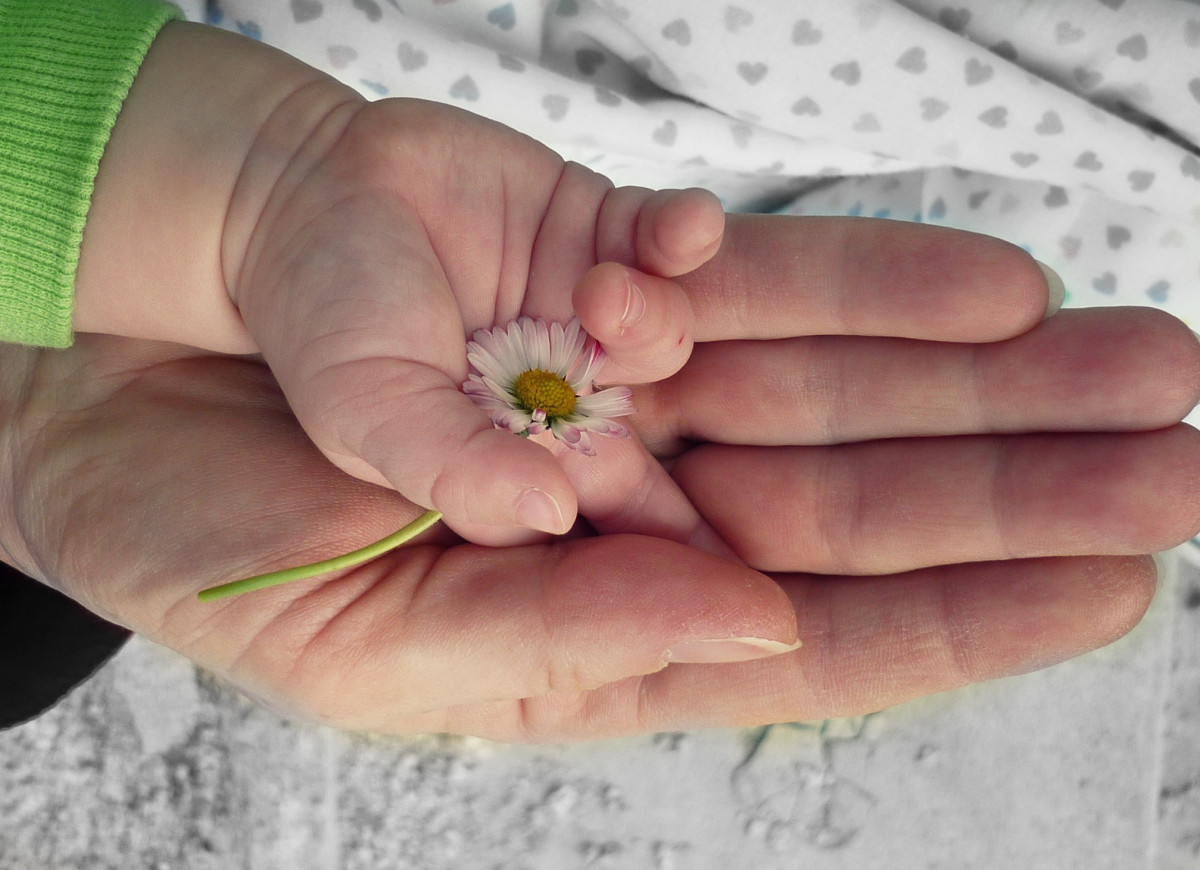
A baby’s hand holding a daisy, laying in an adult’s hand. Image from pxhere is licensed under pxhere license.

Child Protective Services (CPS) are meant to protect the safety and well-being of all children, however, they often end up punishing families for being poor. Many parents in poverty do not mistreat or neglect their children but are investigated by CPS because they lack the necessary resources to provide adequate care to their children. Since poor families are more likely to be under CPS surveillance, new research from Jessica Pac and colleagues examined how policy changes aimed at alleviating poverty might affect the number of CPS investigations.

In 2019, the National Academy of Sciences consensus report proposed four policy packages that they estimated would reduce child poverty by 19-52%. These packages included expansions to existing welfare policies such as the Earned Income Tax Credit (EITC) which gives low-income families tax breaks, the Child and Dependant Care Tax Credit which helps families pay for expenses related to child care, and the Supplemental Nutrition Assistance Program (SNAP) which helps families pay for groceries. 

To test the potential influence of these policies on CPS investigations, Pac and colleagues ran a simulation using data from various databases. What they found was that on average, these packages could reduce CPS investigations by 11.3-19.7% yearly. Based on their estimates, up to 669,018 fewer children could be under CPS supervision. 

Because race and ethnicity are associated with need, Pac and colleagues noted that these policy packages would greatly reduce racial disparities within the child welfare system. They found an 18.7-28.5% reduction in investigations for Black children and a 13.3-24.4% reduction for Hispanic children. This is important because Black and Hispanic children have been historically overrepresented in CPS reports even though they only make up a smaller percentage of the population. 

Based on this research, it seems that implementing policies that lessen the economic and mental burdens on parents can reduce CPS investigations and improve child wellbeing. For example, expanding economic support would allow parents to spend more time with their children, buy essentials such as groceries, and afford necessary physical and mental health care. All in all, the researchers suggest that the potential positive effects of poverty alleviation policies on child safety are too big to be ignored. 

An older couple walking closely together along a gravel path on a cloudy autumn day. Image by EddieKphoto from Pixabay is licensed under Pixabay license.

Are you looking for love? Above the age of 60? Well, you’re in luck. With the advent of online dating, older singles are beginning to reenter the dating world. Social science research has mainly focused on the online dating experiences of twenty-somethings, but new research from Lauren Harris explored the dating preferences and patterns of older adults.

Harris interviewed 50 men and 50 women, ages 60-85, through four online dating sites. Three of the sites were for the general public and one was specifically targeted towards older adults. Harris asked participants questions about their motivation and interests in online dating such as: “What are you looking for in a romantic partner?,” “Do you have any deal breakers?,” and “What do you notice when looking through someone’s online dating profile?”

Harris discovered that family caregiving responsibilities played an important role in how older singles viewed potential matches. Oftentimes, older adults will still provide care for their adult children or grandchildren. Harris found that these caring responsibilities actually changed the desirability of singles online in gendered ways. 

Women with family care obligations were seen as less desirable. For example, one of the men interviewed explained his irritation with this dynamic saying, “Why are you teasing me and wasting my time when you have the responsibilities? …It just gets frustrating. Do you want a relationship or do you not? So if you’re always taking care of your grandkids, why are you on a dating site when you don’t have time to get into a relationship?”

In contrast, men who had similar care responsibilities were seen as more desirable to women. As one woman explained in her interview, “A lot of times they’ll say something about how they love their children and their families and spend a lot of free time with their family. I like that. I like a family man.” At the same time, however, if men appeared to be in poor health or have young children of their own their desirability decreased. Women tended to shy away from men which might add to their care work responsibilities. As one woman described,  “What they’re looking for is women to take care of them… Or they’re having health problems. Maybe the wives [were] taking care of them in life or whatever…I’m not your nurse.”

Harris highlighted the gendered role family care responsibilities play in selecting potential love interests at an older age. Many older adults have care responsibilities and are subsequently experiencing unequal gendered impacts on their dating life. Because romantic relationships can be a major source of support and improve overall well-being, the influence of gender inequality on the dating experiences of older adults is important to consider. Technology has allowed more older adults to re-enter the dating world, but it has also highlighted the persistent caregiving double standard. 

A brown teddy bear with a bowtie laying on a hospital bed. Image by Mylene2401 from Pixabay is licensed under Pixabay license.

It’s no secret that childhood can influence the trajectory of adult life. Childhood disadvantages like financial strain and low socioeconomic status impact mental and physical development, which can set the stage for worse health outcomes in adulthood. Matthew A. Andersson and colleagues wanted to understand whether access to quality healthcare might limit the influence of childhood disadvantage on adult well-being.

To answer this question, Andersson and colleagues compared data from 16 countries, testing whether and how the quality and accessibility of European healthcare systems influence the illness rates of adults who experienced adverse childhood events. The researchers measured childhood disadvantage using information on childhood poverty, household conflict, and whether a parent was deceased or away from home. Healthcare quality and access were measured through both objective measures (how many adults in a country experience illness, the amount a country spends on healthcare, and the size of the healthcare system) and subjective measures (whether people in a country felt they had access to high-quality healthcare).

The researchers found that access to a good healthcare system – one that effectively prevents and manages disease –  reduced the effect of childhood adversity on adult health. In fact, the better the quality of a nation’s healthcare system the more it acts as a buffer against poor health outcomes.

This research shows how access to decent healthcare makes a real difference in shaping life outcomes. Quality healthcare may not eliminate childhood adversity, but it can offer the possibility for a healthier future for all.

Six bronze bullets on top of a reflective surface, two fired and four not. Image by MasterTux from Pixabay is licensed under Pixabay license.

According to the Centers for Disease Control, more women are killed by their current or former partners than by strangers, and the millions of women in physically abusive relationships are at even greater risk. Because most intimate partner homicides are committed with guns, many states have implemented firearm restrictions on persons convicted of domestic abuse.

Victims of domestic violence often seek emergency restraining orders to help protect themselves and their children. In some states, judges are legally required to order the confiscation of firearms when restraining order petitions contain allegations of physical abuse or threats. These statutes are designed to prevent perpetrators from escalating violence against their current or former partner because firearms are commonly used in intimate partner murders. Research has even shown that this mandatory firearm confiscation lowers homicide risk. Given the importance of mandatory confiscation, judges should be ordering the removal of firearms, right?

Not exactly. Recent research from Julie Kafka, Kathryn Moracco, Deanna Williams, and Claire Hoffman found that judges in North Carolina failed to order firearm confiscation in 61% of protective orders, even when physical violence and/or threats to kill were present. This runs against North Carolina’s mandatory firearm confiscation law in emergency restraining order hearings, and the researchers observed judges failing to verbally announce firearm restrictions during hearings in two-thirds of cases. In other words, judges pick and choose when to follow the law and enforce firearm restrictions for people accused of domestic violence; in most cases, they do not order confiscation. 

This research shows that leaving the confiscation of firearms up to judges maintains access to firearms even after allegations of physical abuse and threats. Kafka and colleagues suggest making confiscation the default or removing the “open-to-interpretation” language in the law. The researchers suggest that better training for judges, monitoring the whereabouts of guns in households with a history of intimate partner violence, and greater domestic rights education for victims could prevent further tragedy.

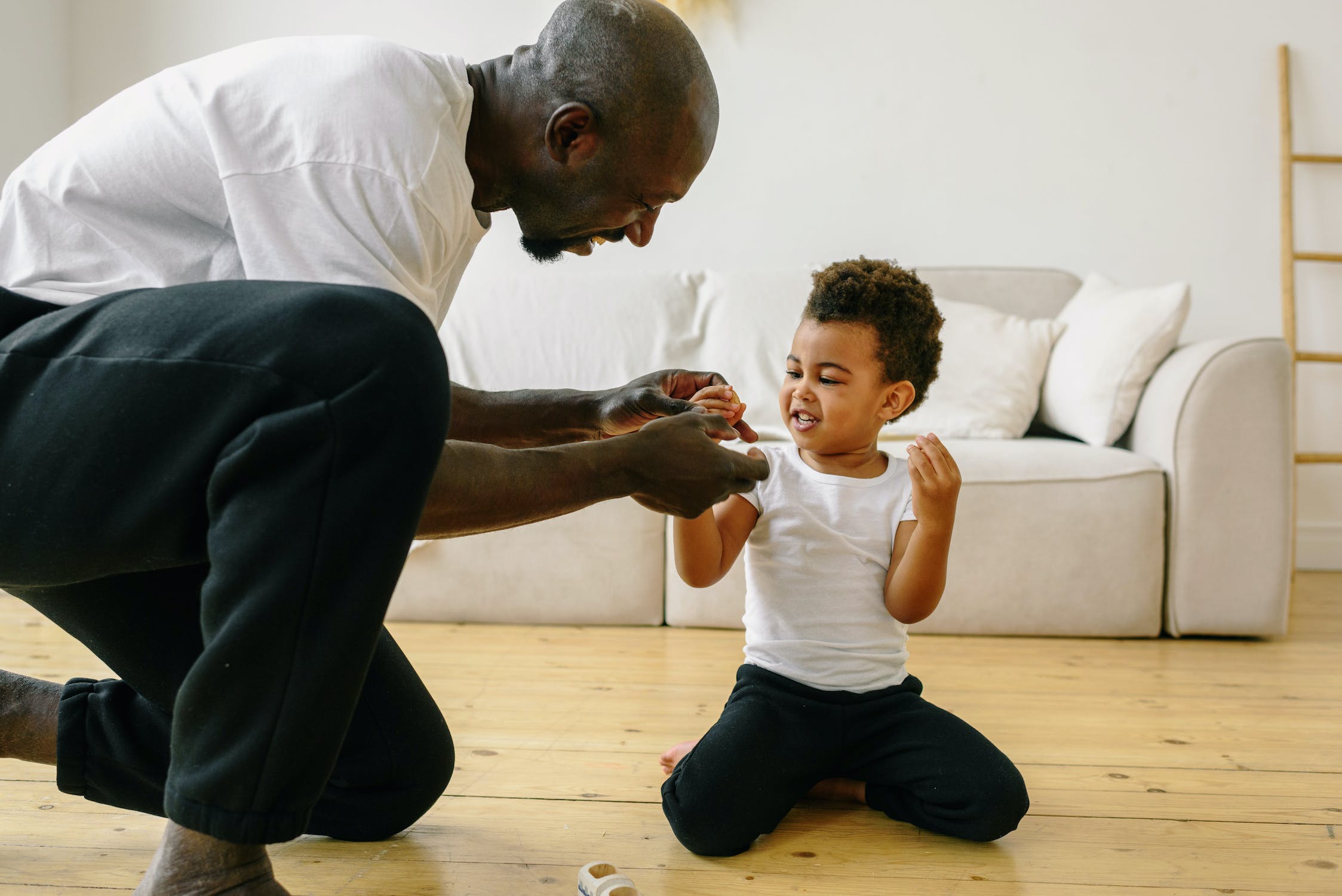
A smiling black father kneels, holding one of his child’s hands. “Father Playing With Little Son at Home” by Ksenia Chernaya is licensed under pexels license.

Bundles of joy? Previous research suggests that having children may not be joyful for all parents, especially those who juggle high expectations with inflexible and demanding workplaces or raising children of color in a racially inhospitable world. However, new research from Jennifer Augustine and Mia Brantley finds that the happiness of parents varies by race and gender and in ways that were not entirely expected, especially in comparison to adults without kids.

The study is based upondata from the General Social Survey, a nationally representative survey of adults in the United States, between 2010 and 2018. Researchers used questions where participants are asked to rate how happy they are and provide information about  their race and if they have children who they live with. This study also took into account what respondents reported for  r items such as income  or church attendence that previous research has shown influences happiness.

Augustine and Brantley found that there is not a difference in happiness between white fathers and nonfathers, but that white mothers are less happy than white women who are not parents. The existence of a “happiness gap” for white women but not white men may result from cultural expectations that  White mothers be totally devoted to their children despite the necessity for most white moms to work outside the home. Conversely, the fact that white dads are not expected to take equal responsibility for caring for kids might help explain why they are about as happy as men without kids.

This analysis also revealed no difference in happiness between black parents and nonparents. In fact, it found that black fathers are actually happier than their peers without children. These findings suggest that fatherhood is an important and meaningful part of life for many black men, whileblack moms might have ways of coping that help them manage the stress of raising children that white moms lack. Black mothers also may not exhibit a “happiness gap” compared to black nonmothers because black motherhood views work and parenting as complementary and emphasizes the importance of communal care for children, providing important support for moms. 

This study only analyzed data up to 2018, prior to the COVID-19 pandemic and racial unrest following the murder of George Floyd. Future research will have to examine how changing demands on parents during the pandemic, especially virtual schooling, as well as greater attention to police brutality and racial injustice shaped differences in happiness between black and white parents and nonparents. But what this research clearly demonstrates is whether there is a “happiness gap” between parents and adults without children depends on who is doing the parenting and how they are expected to manage their parenting responsibilities with other aspects of their life.

Robert Courtney Smith, Andres Besserer Rayas, Daisy Flores, Angelo Cabrera, Guillermo Yrizar Barbosa, Karina Weinstein, Maria Xique, Michelle Bialeck, and Eduardo Torres, “Disrupting the Traffic Stop–to-Deportation Pipeline: The New York State Greenlight Law’s Intent and Implementation,” Journal on Migration and Human Security, 2021
New York state police parked behind a gray near a highway exit. “New York State Police Traffic Stop” by dwightsghost is licensed under CC BY 2.0.

Although many of us view traffic stops as a minor inconvenience, a ticket on the commute to school can end in traumatic separation for undocumented immigrants and their children. Using interviews and data from The US Customs and Immigration Service (USCIS), Robert Smith and colleagues found that the threat of deportation can jeopardize children’s mental and physical wellbeing. 

Smith and colleagues interviewed undocumented parents who have been pulled over for driving without a license. Parents described stops where the police discovered they were unlicensed and delivered them to ICE (Immigration and Customs Enforcement) on the side of the road while their children watched. The children in the backseat watching these encounters experienced short and long term emotional harm after police stops and ICE detainment, including nightmares, post traumatic stress disorder and difficulty adjusting to change in family structure. After these arrests, the parents felt that police neglected their children. For example, one mother described how police made her young children walk three miles home unaccompanied on a cold winter night.

Children and parents lived in constant fear that routine trips to school or the doctor would lead to separation after a police stop. This constant fear of separation from parents made it hard for kids to focus in school. One mother reported that her son had to repeat fifth grade because of his anxiety about his mom being deported. Likewise, fear of deportation can also prevent parents from taking their children to routine healthcare visits.  

 Many parents reported that they were stopped by police due to racial profiling.  Researchers found that a majority of people deported after a traffic stop were booked under “No conviction,” meaning that they were not convicted of any crime or driving violation. Instead, many were targeted for stops on account of their racial appearance. Smith and colleagues found that some law enforcement agencies would even work cooperatively with ICE to scout out undocumented people through traffic stops. 

The authors argue that New York’s newly implemented Drivers License Access and Privacy Act, commonly known as the Greenlight law, could prevent these harms to children. The law allows undocumented immigrants in New York to obtain drivers licenses and prevents the DMV from reporting them to ICE. However, the government’s implementation of the Greenlight law has been inconsistent, weakening its effects. In the small number of counties where Greenlight licenses are offered, lack of funding restricts the amount of licenses that the DMV can administer per day. Some DMV offices refuse to offer services in Spanish and make Greenlight applicants, but not standard license applicants, wait outside in the cold. 

The researchers suggest that universal implementation of the Greenlight law and more thoughtful policing of Latinx communities could eliminate the harm to children and families that comes from police stops, ICE detainment, and family separation. Other solutions include expanding busing to communities with large immigrant populations. This would ensure that children have a safe ride to school and parents would not have to risk deportation by driving unlicensed. These efforts could address the reality that short and routine car trips put some immigrant families at risk of police contact and the harm and separation that can follow. 

Young couple putting their heads together while sitting on steps. “2019 – Mexico – Morelia – 16 – Young Love” by Ted McGrath is licensed under (CC BY-NC-SA 2.0).

Ah, young love. We tend to think of romantic relationships between teenagers as fun and fleeting: intense infatuations that may bring drama or heartbreak but are not really relevant to young people’s well-being. However, new research from Sara Villalta and colleagues finds that when adolescent relationships are high-quality, they can support emotional well-being.

Villalta and colleagues used data about teenagers’ relationships and emotional wellbeing collected over the course of a year through short surveys administered about twice a month. The teenagers who took these surveys were sixteen or seventeen as part of a larger study that has followed them from birth. Every two weeks, these now-teenagers answered questions about how they were feeling and whether they were in romantic partnerships. They were also asked about how they felt about these relationships, and reported whether they felt their relationships were high-quality, making them feel supported with little conflict, or low-quality, with frequent disagreements and little support. 

The researchers found that when teenagers are in high-quality relationships they are more likely to feel happy and less likely to feel sad. That is, teenagers’ emotional health is improved by relationships with partners that make them feel supported and with whom they infrequently have arguments.

Common  stereotypes of “boy-crazy” young women suggest that teenage girls might have more emotional investment in their romantic relationships. As a result, adolescent girls’ emotions could be more influenced by these partnerships. Contrary to these stereotypes, the researchers found that both teen boys and girls felt happier and less sad when in high-quality romantic relationships.

The researchers also tested whether teenagers who have had challenging childhood experiences, such as bad relationships with their mothers or harsh parenting, or who came from households with fewer resources were more likely to be both in low-quality relationships that are unsupportive and argumentative and feel less happy. On the other hand, results indicated that  regardless of the background of teenagers, high-quality romantic relationships made them feel happier.

This research cautions us to not dismiss teenagers’ romantic relationships as fun, ephemeral, and ultimately unimportant forays into love. Instead, Villalta and colleagues’ findings show us that when teenagers’ relationships are supportive and have little conflict they can help adolescents thrive.