
health

Image: A female service member stands at the front of a formation of soldiers, her gaze resolutely focused beyond the camera. “Military women, rule.” by Johnny Silvercloud is licensed under CC BY-SA 2.0.

Women who enter the armed forces are expected to be strong, tough, and masculine. Feminine insults, like being called a girl, are used to denigrate and motivate male service members. New research shows a hidden consequence of these gendered expectations: undeniably feminine moments in servicewomen’s lives, like pregnancy or entering a new heterosexual relationship, increase their risk of assault and discrimination.

Sociologist Stephanie Bonnes interviewed 50 current and former servicewomen. Over 59% of the participants experienced sexual harassment and discrimination that coincided with feminine life events like dating, engagement, marriage to a man, or  pregnancy. Feminine life events jeopardize female service members’ efforts to appear strong and masculine and put them in danger. 

One participant explains how she was victimized  after she started dating a fellow serviceman. The day that her partner left the unit for training, her superior sexually assaulted her. 

 “This NCO cornered me and grabbed and kissed me. I was completely caught off guard. I mean it was right in front of his home, with his wife inside.

The participant described how this had shocked her. Not only was this very public, she had also never had any issues with this coworker before. The timing of the incident led her to believe that her superior waited for her new boyfriend to leave before assaulting her. 

Discrimination against servicewomen who are pregnant or in heterosexual relationships is also deeply ingrained in military institutions. One woman described how her she was treated differently by the military organization after she told her unit she was pregnant.

 “So, I got pregnant and of course they’re liable for lots of things, so God forbid I pick up  a single chair. But then they went and made me go clean the bathrooms for the company.”

The findings show how the undeniably feminine moments in servicewomen’s lives put them at risk for both sexual harassment and workplace discrimination – and how women in the US military are put in harm’s way by their fellow soldiers.

Christina Gibson-Davis, Lisa A. Keister, Lisa A. Gennetian, and Warren Lowell, “Net Worth Poverty and Child Development,” Socius: Sociological Research for a Dynamic World , 2022
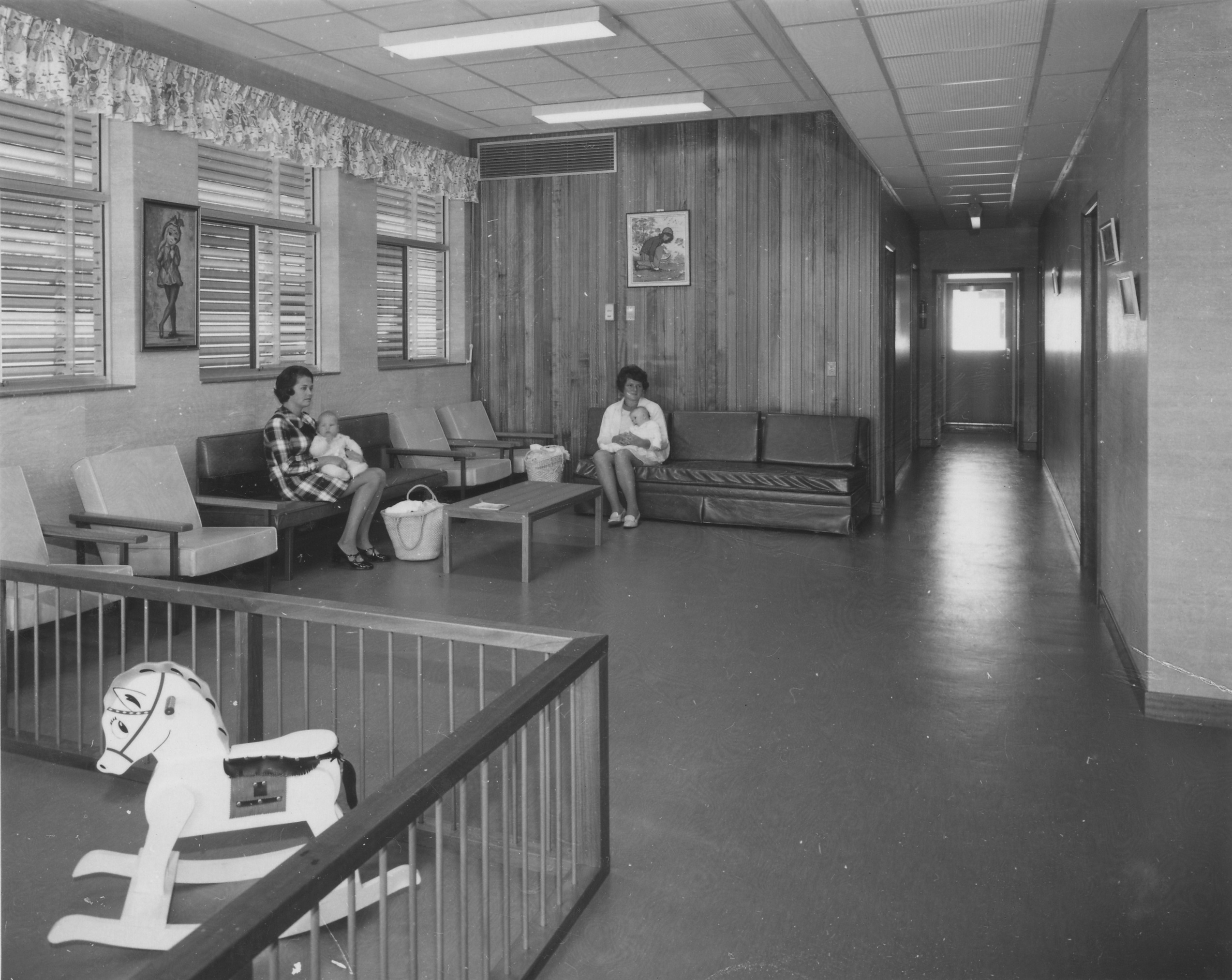
In this black-and-white photo, two people sit on couches, both holding babies. Elsewhere in the room, a children’s play area can be observed with a toy horse inside. “Interior of Maternal and Child Welfare Centre at Dalby, May 1973” by Queensland State Archives is marked with Public Domain Mark 1.0

When we hear about “poverty” in the news, it’s usually measured by income. These measures are very useful! But, we also know that poverty isn’t just about how much money you’re making, it’s also about your net worth: the value of your assets minus your debts. If people suddenly lose income, having savings or selling belongings can cushion families and cover basic expenses such as food and housing. Additionally, some assistance programs, like the Supplemental Nutrition Assistance Program (SNAP), have asset tests that kick people with “too many assets” off benefits.

This puts many poor Americans in a double bind: they need assets as an economic safety net but are penalized for accumulating too many. Despite the importance of assets to the lives of poor Americans, according to Christina Gibson-Davis and her colleagues, there is not enough research on net worth poverty.

In their new study, Gibson-Davis and colleagues address our lack of knowledge about net worth poverty, which they define as a net worth less than one fourth of the federal poverty line, by examining how it affects children’s development compared to income poverty. To do so, they analyze  survey data from 2002 through 2019. This survey include information on household wealth and income, as well as children’s cognitive and behavioral development.

The researchers found that, for kids ages 3-17, net worth poverty was associated with worse reading scores, math scores, and behavioral outcomes, such as sadness and aggression. Although the effects of net worth poverty were similar to those of income poverty, kids who experienced poverty in both net worth and income had the worst outcomes.

Importantly, this research shows that having fewer assets had a greater negative influence on children’s outcomes than having more debt, although both could contribute to net worth poverty.  Debt poverty alone was associated with worse behavioral outcomes while  asset poverty was associated with worse cognitive and behavioral measures. The authors suggest that this is because asset-poor households have fewer resources on hand to invest in their kids than debt-poor households.

In short, this study suggests that children who are “doubly poor,” lacking in both income and net worth, are at the highest risk for cognitive and behavioral concerns. Policy makers should consider that interventions  that target income-poor children alone may overlook the needs of those who are net worth poor. 

Stefanie Mollborn, Aubrey Limburg, Jennifer Pace, and Paula Fomby, “Family Socioeconomic Status and Children’s Screen Time,” Journal of Marriage and Family, 2022
A white finger scrolls on a smart phone, only the finger is illuminated by the glow. “Untitled” by Japanexperterna.se is licensed under CC BY-SA 2.0

Parents must decide how much “screen time” is okay for their kids and how they are going to control technology use for their families. In new research, Stefanie Mollborn and colleagues examined how higher socioeconomic status (SES) families control their children’s technology use. They were surprised to find that families with higher socioeconomic status don’t set hard limits on technology use. Instead, parents and youth collaborated on setting boundaries around technology. 

Millborn and her team conducted 77 interviews with higher SES families. One of their most basic findings is that parents believe there are good and bad ways of using technology. “Good” uses of technology included reading, information gathering, producing content, developing computer skills, and family time like watching tv or a movie together. “Bad” uses of technology included watching TV content individually and playing non-educational video games. 

Although parents identified “good” and “bad” uses of technology, they didn’t want to set hard limits on technology. The reason? Because they felt this would not help their children learn how to communicate with adults, a skill that they thought would benefit their children when they speak with adults in power outside of the home. 

Instead of setting limits on “bad” technology use, these parents sought to work collaboratively with their children. For instance, when April saw her daughter texting while doing her homework, she didn’t tell her not to do but but instead said: “Use it [technology] when it’s helpful. Have fun with it … but don’t let it consume you.”She then asked her daughter,“How does it feel to be sitting there doing your homework and you ‘get the ding’? Is that distracting? Would you like me to help you with a boundary?”

This study highlights that parents with high socioeconomic status want to communicate about technology with their children, rather than setting hard limits. While parents tried to work collaboratively to set media limits with their children it produced conflict when youth pushed for technology use. Many high-income parents talked about just having to give in to their children at times because of the emotional effort involved in saying “no” so many times.

Kate R Watson, Ron Avi Astor, Rami Benbenishty, Gordon Capp, and Michael S Kelly, “Needs of Children and Families during Spring 2020 COVID-19 School Closures: Findings from a National Survey,” Social Work, 2021
A white child navigates their laptop computer, we see their hands on the keyboard and mouse. Image in public domain.

Over the past two years, hundreds of K-12 education hours were lost to COVID-19 and we are beginning to see the academic impact. But what about the emotional, social, and mental health impacts? In new research, Kate Watson and colleagues show some of the challenges students faced during the COVID-19 school closures by analyzing a nationwide survey of school social workers.

While teachers may concentrate on the academic achievement of students, school social workers focus on the emotional, social, and “other” sides of education. 

Above and beyond lost classroom and learning time, COVID-19 school closings meant that children were unable to spend time with friends, attend extracurricular activities, and participate in many traditional school activities for months — and school social workers noticed. 

In the survey, school social workers identified that 76% of students needed mental health services, 62% needed food, and 62% needed tutoring. Typically, these services would be coordinated and provided by the school social worker – such as placing daily food inside of backpacks of students in need of dinner after school.  However, forced to stay at arm’s length, school social workers were severely limited in aiding their students’ basic needs.

School social workers also shared the levels of student participation and engagement through virtual education. Strikingly, more than 80% of participants reported extremely low levels of student participation.  In other words, students generally showed an extremely low level of engagement during “zooming”. Notably, students of color and students who live in poverty were even less likely to be engaged – widening inequities.

Schools have long been about more than just academic learning. Today, while COVID-19 appears to be on the retreat, society must take stock of the lessons learned and implement changes to better prepare schools and the holistic well being of children. The perspectives of school social workers, as advocates for children’s emotional, social, and holistic well being, can show us how much our society relies on schools – beyond just the academics.

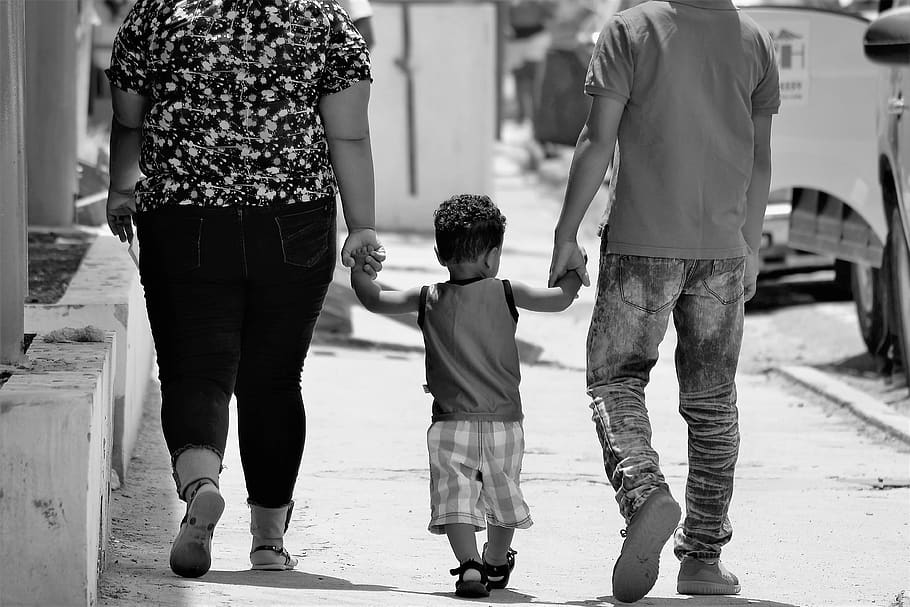
A black and white photo of a young child of color walking and holding the hands of two adults, a woman on his left, and a man on his right. Image use under CC0.

Young men in gangs are often thought to always practice masculinity by engaging in violent behavior like fighting and shooting, which many attribute to systemic inequalities like mass incarceration, scarce jobs, and racism. New qualitative research by John Leverso and Chris Hess shows that as male gang members age, they remain committed to masculinity but they relate to their manhood differently. 

Leverso and Hess asked about important life events that changed the way respondents understood what being a good man is in 29 in-depth interviews with current and former gang members in Chicago. These interviews showed how masculinity endures and evolves into new phases of adulthood, particularly fatherhood.

From the perspective of these current and former gang members, the ideal man is “hardworking, no punk, tough, and loyal.” Their concept of the ideal man reflects a tough, hardworking, and heterosexual ideal of manhood. These foundations of masculinity were consistent among men when describing both their past and present lives, regardless of whether they remained involved in a gang. However, despite this consensus, the ways gang members accomplish these goals of masculinity changed drastically as they became fathers, caregivers, and husbands.

Even current gang members still value family as an important part in accomplishing masculinity. One example is Jason, a gang member who claims that he “will always be a Pope,” or a part of his gang. However, he now valued his role as a father more and put his daughter’s needs in front of the gang. For instance, Jason claimed he would only help his fellow gang members financially if they were desperate, but would not do anything dangerous for the gang, and if anyone asked him to do something dangerous he would “smack them silly.”

This change in understanding of being a good father was also observed with those who had left gang related activity. As a gang member, Juan expressed the importance of “putting in work” (violent or non-violent actions in service of the gang) to show he was “faithful, loyal and respectful.” For Juan today, however, “putting in work”  means “spending time with his son, making money as a truck driver, and being a family man.” While no longer a gang member, loyalty and faithfulness to his family and children are still central to his ideas of manhood.

The article highlights that gang members, like non-gang members, change how they accomplish masculinity over the course of their lives. It also challenges assumptions about gang members as having radically different understandings of manhood. Like many men who were never in gangs, they prioritize being a family man and providing for their families. 

Parenting is hard. Ensuring that their kids are healthy and successful, while maintaining their own well-being and other commitments, is a real challenge for many caregivers. Parenting classes, an intervention targeted towards low-income parents, can help. These classes can potentially offer parents support and help them build skills. 

However, new research from Maia Cuchiarra shows how parents and class instructors may have fundamentally different understandings of the purpose of parenting. In particular, parents and instructors may disagree about the appropriateness of physical discipline, particularly when parents are concerned about preparing their children to live in a hostile or threatening environment.

Cucchiara attended weekly, community-based parenting courses taught by professionals living in the same predominantly Black and lower-income neighborhood.  Most of the class participants that Cuchiarra observed attended classes voluntarily or as a requirement of a housing program, not due to court-mandate. 

The Black mothers in the course understood parenting through a “protective frame.” They viewed their primary responsibility as ensuring the physical safety of their children in a world, and local community, that was unsafe and potentially violent. They had a nuanced view of physical discipline and drew clear distinctions between types of force that were or were not appropriate. These mothers felt that it was important for their children to respect them and understand how to use force to protect themselves if threatened.

In contrast, class instructors used a “therapeutic frame.” They viewed children as very vulnerable and in need of warm and gentle support. They did not think that physical discipline was ever appropriate and viewed the potential consequences of using physical discipline as serious for both the parent-child relationship and children’s self-esteem.

The mothers in the study used physical discipline because it helped them meet their high-stakes goal of keeping their children safe in a hostile world. Even though the parents and instructors in this study were members of the same community, this research shows how professional commitments to non-violence can clash with the parental responsibility of raising children in potentially violent environments.

A white hand dials a number on an office phone, the receiver for the phone held in the other hand. Image via pixabay, Pixabay License.

In the United States there are 14 million formal child support cases, meaning that one in five children are dependent on child support payments. To ensure that these children receive financial support from noncustodial parents (that is, parents who are not the primary caretaker), child support agencies employ punitive strategies such as garnishing wages, suspending public assistance, suspending driver’s licenses, and even jail time.  

Unsurprisingly, previous research has found that noncustodial parents were dissatisfied and frustrated with child support agencies and their harsh sanctions. However, when Daniel Meyer and Yoona Kim used a larger, nationwide sample to test whether noncustodial parents actually disliked the child support system, their analysis told a different story.  

Unlike previous studies, which have generally used small interview-based methods, the researchers used surveys to assess satisfaction of 1,800 noncustodial parents in seven states who were behind on payments and had difficulty holding a job. They found that the majority of noncustodial parents were actually satisfied or indifferent about the child support agencies – the opposite finding of previous qualitative studies.  

They also discovered that one of the largest predictors of satisfaction was personalized service.  More specifically, when noncustodial parents knew the name of a child support worker that they could call for questions, they were 56% more likely to be satisfied with the child support system.

Statistics can tell us a story that sometimes counters our assumptions and previous understandings – and multiple methods are likely needed to address a complex question like satisfaction with the child support system.  Understanding such questions is likely essential to encouraging timely and complete payments which support children. With millions of children depending on child support to stay housed, clothed, and fed, this research shows how “putting names to systems” can help humanize government services and institutions.

Anna Zajacova, Hanna Grol-Prokopczyk, and Zachary Zimmer, “Sociology of Chronic Pain,” Journal of Health and Social Behavior, 2021
Image: A white woman sits on a bed in pajamas, her arms clutched around her midsection in pain. Image courtesy of pixabay, Pixabay License.

How does pain affect the well-being of an individual? What about the well-being of a society?

In a recent article, Anna Zajacova, Hanna Grol-Prokopczyk, and Zachary Zimmer argue that chronic pain is a social issue with consequences beyond medicine

In 2016, the CDC estimated that 20% of U.S. adults experience chronic pain. Chronic pain is a distinct phenomenon of suffering and disability that has significant mental and physical impacts. Chronic pain is different from acute pain from a temporary injury, such as a broken bone or a burn. A person who experiences chronic pain is more likely to suffer from anxiety or depression, and twice as likely to commit suicide. 

Chronic pain disproportionately impacts certain groups. Overall, women experience slightly higher levels of pain than men. People with lower socioeconomic status experience significantly more chronic pain. For instance, individuals without a high school diploma experience three times the amount of severe pain than college graduates. These findings demonstrate that pain is connected to broader social inequalities and conditions. 

The seemingly private experience of pain has wide-ranging social dimensions and implications that require further study. Our suffering may be individually felt, but it must also be collectively understood, especially if we are to make real progress in advancing the health and well-being of all.

Lindsey Rose Bullinger, Jillian B. Carr, and Analisa Packham, “Effects of Stay-at-Home Orders on Domestic Violence,” American Journal of Health Economics, 2021
Image: The roof of a police car is visible at the bottom of the image, a blue light is illuminated on top. Image via pixabay, Pixabay License.

The COVID-19 lockdowns brought much of society to a screeching halt – including many types of crime. Yet one crime type that is especially difficult to track may have risen – domestic violence.  Lindsey Bullinger, Jillian Carr, and Analisa Packham looked closely into these crime numbers and discovered some unexpected findings.

Using cell-phone activity and public transportation data in Chicago during the March 2020 lockdown, the researchers examined the impact of official stay at home orders on domestic violence reports, arrests, and 911 calls. They found that reports and arrests for domestic violence decreased during the lockdown, but when they looked “upstream” at 911 calls, they found a 7.4% increase in police calls for domestic violence. 

To explain the apparent increase in police calls for domestic violence but decline in reports and arrests, the researchers suggested three possible explanations.  

  1. Many people were deemed “nonessential” and ordered to remain home, leading more neighbors to “self-police” domestic conflicts, potentially increasing 911 calls.  However, when police arrived, victims of domestic violence may have been less likely to officially report the crime because they feared further isolation during this unpredictable time – leading to fewer reports. 
  2. Due to concerns about COVID-19 within jails and prisons, police and courts may have intentionally limited arrests and prosecutions. 
  3. The shutdown of workplaces, schools, child care centers, domestic violence shelters, and other supports during the lockdown created additional stress on the community.  From these closings, pressures such as unemployment, increased caregiver demands, and isolation increased the chance of conflict and domestic violence within homes. 

The lockdowns in cities and communities across the U.S. clearly saved many from COVID-19 and reduced many types of crime.  But domestic violence is a distinctive category of crime, with social causes that are bound up with family relationships.  Policies providing better social and material support for families during future lockdowns might help ease the strains that led to domestic violence in the COVID-19 era.

Image: A table in an examination room is in the center of an image, with a medical machine to the left, and a light aimed at the table to the right. Image via pixabay, pixabay license.

Across the country, state legislatures are passing laws to decrease access to abortion. These legal barriers to abortion highlight the importance of geography to abortion access with access to abortion care varying dramatically according to state laws. New research from Orlaith Heymann and collaborators explores how people select clinics for abortion care when faced with limited choices.

The researchers interviewed forty-one people seeking abortions in cities in and around Ohio, a state with abortion laws that leave more than ninety percent of the state without access to abortion care. Heymann and colleagues invited people to interviews who already had appointments scheduled at abortion clinics, meaning their participants had already overcome many of the legal and economic barriers to accessing care. 

They found that, in seeking abortion care, people sought to minimize the risks associated with abortion which is stigmatized and viewed as shameful, lonely, impersonal, and unsafe. Interviewees sought abortion clinics that felt safe, friendly, and comfortable. In doing so, participants drew on their personal experiences receiving abortions and other reproductive healthcare or the experiences of their friends and family members. Interviewees also relied on publicly available information like online reviews and the reputation of national organizations.

Public information like online reviews were a particularly important source of information for study participants who felt uncomfortable asking friends and family for guidance because of the stigmatized nature of abortion care. Some participants also sought clinics in far away neighborhoods in order to avoid being seen or recognized. These respondents used online information to assess whether or not these neighborhoods were safe, hoping to avoid areas that felt unsafe or risky.

Heymann and colleagues’ work is a reminder that even those that have overcome barriers to accessing abortion did so while figuring out how to minimize the risk of getting care and in hope of having a positive and safe experience.