The PEW Research Center just released new findings based on a representative sample of Americans on “Social networking sites and our lives.” Let’s focus on a conclusion that speaks directly to the foundation of this blog: that our social media networks are dominated by physical-world connections and our face-to-face socialization is increasingly influenced by what happens on social media.
Movies like The Social Network, books like Turkle’s Alone Together and television shows like South Park (especially this episode) just love the supposed irony of social media being at once about accumulating lots of “friends” while at the same time creating a loss of “real”, deep, human connection. They, and so many others, suffer from the fallacy I like to call “digital dualism.” There are too many posts on this blog combating the digital dualism propagated by these people who don’t use/understand social media to even link to all of them all here.
from the full report: http://pewinternet.org/~/media//Files/Reports/2011/PIP%20-%20Social%20networking%20sites%20and%20our%20lives.pdf
Citizen-generated film footage – from the Zapruder film, to the Rodney King beating, to 9/11 – has long served an important role in shaping media narratives around major news events. Yet, with the recent advent of smartphones, virtually everyone will soon have the ability to film public events at virtually anytime. What many people do not realize is that the legality filming other people varies widely from state-to-state. Massachusetts and Illinois, for example, both have strict laws about filming without consent, even in public.
Nevertheless, the technologies are increasingly being used by everyday citizens to record interactions with those in positions of authority. This trend is often described as sousveillance (meaning observation from below). For some people, this instinct to record of seemingly significant events has become almost second nature. Consider the recent video from Casey Neistat, who immediately pulled out a camera when stopped by an officer while biking. more...
There is an important space between old and new media. This is the grey area between (1) the top-down gatekeeping of old media that separates producers and consumers of content and (2) the bottom-up nature of new, social media where producers and consumers come from the same pool (i.e., they are prosumers).
And in the middle are projects like Global Voices, what might be called curatorial media: where content is produced by the many in a social way from the bottom-up and is then mediated, filtered or curated by some old-media-like gatekeeper.
The current protests in Syria can serve as an important example of how curatorial media works. Especially because foreign journalists have been banned from the country, creating a dearth of information for old media. Alternatively, more...
Found at a local Target store: Your education as a market commodity
In my Theorizing the Web presentation last April, I gave a presentation entitled Practical Cyborg Theory: Discovering a Metric for the Emancipatory Potential of Technology. I wanted to develop a cyborg theory that helps us understand the emancipatory potential of a given technology or technological system. My formal hypothesis was an addendum to Haraway’s definition of a cyborg in the Cyborg Manifesto:
A cyborg is a cybernetic organism, a hybrid of machine and organism, who’s existence and emancipatory potential is constructed as a function of the temporal and social environment within which it operates.
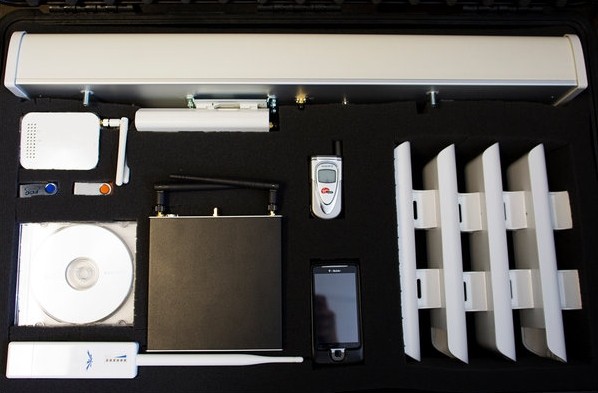
In a sort of 21st century version of Radio Free Europe, the US State Department has sponsored a project that develops suitcase-sized kits that set up cell-phone based mesh networks. These private networks are to be deployed in countries that have totalitarian governments (with anti-American sentiment).
Thought to be the domain of the political left by some, social media has come to be nearly ubiquitous for both parties. One may even argue that the political right in the U.S. has passed the left. While not a perfect measure, one can look at the number of tweets sent by members of congress. From May 8th to June 8th, 2011, members of congress sent 15,383 tweets. The 232 Republicans sent 10,846 tweets (that’s about 47 tweets per member for this month). The 168 Democrats sent just 4,537 tweets (27 tweets per member). Republicans are tweeting almost twice as much.
What other measures can we look at to compare/contrast the right and left’s usage of social media? Does social media inherently tend to the left or right?
Several weeks ago, David Strohecker wrote a post about Tattoos and the Augmented body. In a response to this post, Ned Drummond wrote a thought provoking comment, in which she differentiates between “active” and “passive” cyborgs. I think this is an interesting distinction that deserves fleshing out. A deeper exploration of this distinction will be fruitful in pushing the theoretical boundaries of of what it means to be a cyborg—or an inhabitant of augmented reality.
The first thing to acknowledge is that “active” and “passive” are necessarily fluid states, rather than hard dichotomies. This is something Ned and I fleshed out in the comments section of the above mentioned post. Specifically, I said:
I would venture to say that active and passive use of technology probably ranges on a continuum, and individual cyborgs are more or less active/passive in different moments.
I would add to this that individual cyborgs can be simultaneously active and passive—actively using one technology while passively using another, or even actively using one part of a technology while passively using another part.
Before I can offer examples of the activity/inactivity continuum, I must offer a definition of active and passive interaction with technology. When Ned wrote about it, the distinction hinged on rule following. Those who use a technology for its intended purpose(s) are more passive, while those who use a technology in unintended ways are more active.
President Obama declared June to be LGBT Pride Month and so, I though it would be appropriate for us here at Cyborgology, to take a moment and recognize how LGBT peoples were foundational to the construction of cyborg studies and other inter/trans/multidisciplinary fields. I should note upfront that this incredibly brief summary, from a macro perspective, does some violence to the critical nuance of all the fields mentioned. I hope this post encourages further research, not angry comments about my (acknowledged) hurried treatment of the subject matter. Consider this more of a conversation-starter, than a stand-alone digest. I would also like to thank my good friend Naomi Ardjomandkermani for inspiring me to do this post. She does fantastic work with intersex communities on the web at http://intersexresources.moonfruit.com.
Cyborgology editors Nathan Jurgenson and PJ Rey were recently interviewed by Maryland Morning’s Sheilah Kast about how social media is being used in 2012 presidential campaigns and which candidates are likely to benefit most
We live in a cyborg society. Technology has infiltrated the most fundamental aspects of our lives: social organization, the body, even our self-concepts. This blog chronicles our new, augmented reality.


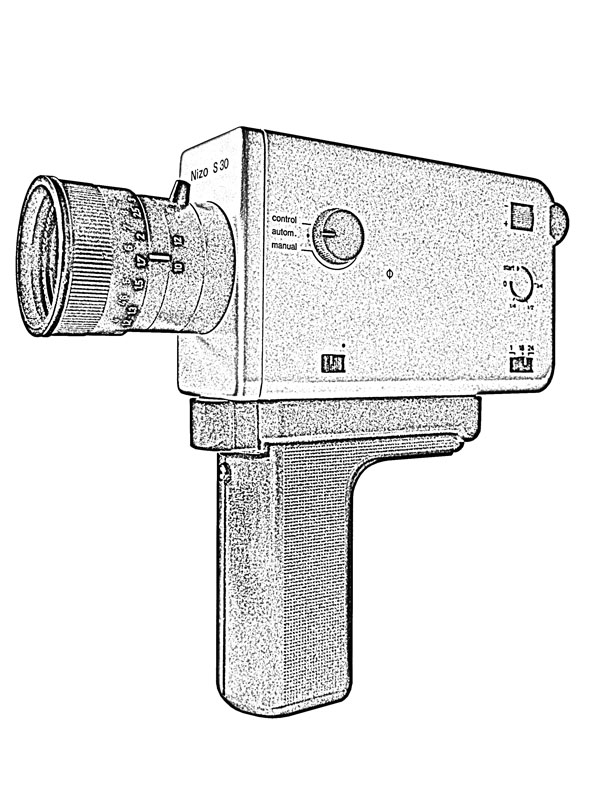
 There is an important space between old and new media. This is the grey area between (1) the top-down gatekeeping of old media that separates producers and consumers of content and (2) the bottom-up nature of new, social media where producers and consumers come from the same pool (i.e., they are prosumers).