race

Photo of a sign that says, “smile have a nice day.” Photo by larryc, Flickr CC

As we celebrated Dr. Martin Luther King Jr. last week, it is clear how much of an impact his life and legacy has had on American society. But in many respects, we have failed to achieve much of King’s hope for a more racially equitable and just society. Examples of overt racism are plentiful (e.g.,the recent viral video of white high school students mocking Native American activist Nathan Phillips) and — rightly — garner much attention. However, in a recent op-ed for The Guardian, Robin DiAngelo reminds us that focusing primarily on these overt cases of racism reinforces a common myth among white Americans that racism includes only “isolated and individual acts of intentional meanness.” DiAngelo, a sociologist and a racial equity consultant, points out that niceness is is central to this myth.

When people understand racism only as an individual action, it hides how structural racism operates in our current institutions and society. DiAngelo expands further,

“This definition is convenient and comforting, in that it exempts so many white people from the system of white supremacy we live in and are shaped by. It is at the root of the most common kind of white defensiveness. If racists are intentionally and openly mean, then it follows that nice people cannot be racist.”

For many whites, highlighting their niceness and proximity to people of color is how they distance themselves from racism. For example, a white person will often be quick to point to how many friends of color they have, how they live or work in a diverse environment, or they might even use defensive strategies to deny claims of racism like “but he/she is a nice person.” DiAngelo argues that this “cursory friendliness” does nothing to address racial inequality and the racially segregated lives that white people often lead:

“The racial kinship white people attempt to draw from niceness might be seen as a false or fabricated affinity. Most white people live segregated lives and in fact have no lasting cross-racial relationships. We are in the position to choose segregation and often do. The claims of non-racism that we make are therefore based on the most superficial of shared experiences: passing people of color on the street of large cities and going to lunch on occasion with a co-worker.”

DiAngelo concludes by urging white Americans to move beyond niceness to combat racism and racial inequality. White people must not only acknowledge their white privilege, but also make concerted efforts to

“put what [they] profess to value into the actual practice of our lives. This takes courage, and niceness without strategic and intentional anti-racist action is not courageous.”
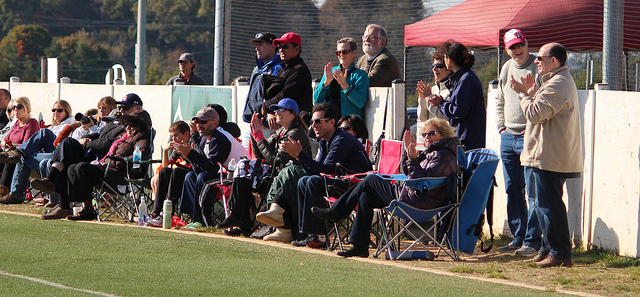

Photo of parents cheering on the sidelines by MSC U15 Green, Flickr CC

After the holidays, many parents breathe a collective sigh of relief. The holidays and their many challenges — travel, presents, and time with extended family — are so stressful that they make people wonder whether raising children has always been this hard. A recent The New York Times piece by Claire Cain Miller confirms that parenting has indeed gotten more time-consuming and expensive. Miller draws upon an arsenal of sociological research to illustrate how and why parenting has become so relentless.

Much of the pressure parents feel stems from wanting to pass on advantages to their children — especially since American children today are less likely to be as affluent as their parents. According to Phillip Cohen,

“As the gap between rich and poor increases, the cost of screwing up increases. The fear is they’ll end up on the other side of the divide.”

As a result, parents use “intensive parenting,” a child-rearing style that demands a great deal of their own time and resources. Sharon Haysdescribes intensive parenting as “child-centered, expert-guided, emotionally absorbing, labor intensive and financially expensive.” And according to Jennifer Glass, intensive parenting is rooted in the American view of child rearing as an individual — not societal — task, though it has begun to gain popularity in England and Australia.

But not all parents engage in these efforts equally, nor are they expected to. Jessica Calarco explains that intensive parenting allows affluent white mothers to ensure their children remain advantaged in society. Middle-class black mothers also use intensive parenting strategies, but for different reasons. According to Dawn Dow,

“They’re making decisions to protect their kids from early experiences of racism. It’s a different host of concerns that are equally intensive.” 

The demands of intensive parenting affect mothers’ lives far more than fathers. Liana Sayer’s research on American time use diaries shows that the time women spend parenting cuts into their sleep, time alone with their partners and friends, leisure time and housework. Moreover, while fathers today have increased the amount of time they spend with their children, mothers still spend significantly more.

So, drawing on research by over a dozen sociologists, Miller shows us that we are not wrong to find intensive parenting problematic. Not only does this parenting style disproportionately burden lower income families — and mothers in particular — but we’re not even sure it is effective in passing advantages on to the next generation. By stressing the importance of individualistic approaches to parenting, we fail to seek structural solutions that could ease the burdens of working mothers. In the words of sociologist Caitlyn Collins, intensive parenting “distracts from the real questions, like why don’t we have a safe place for all kids to go when they’re done with school before parents get home from work?”

Photo of five students of different races sitting around a laptop. Photo by liz falconer, Flickr CC

The incoming congressional class will be the most diverse in history, including a record number of women of color. Although change is slow in the political realm, the changing face of Congress may reflect the changing face of the United States. The U.S. Census has long predicted that non-Hispanic whites will become a numerical minority, making up less than half of the U.S. population in the not-too-distant future. Recently The New York Times interviewed social scientists to get their reactions to this national “majority-minority” conversation. 

Social psychologists Maureen Craig and Jennifer Richeson recognized that these projections — that whites will no longer make up the majority — spark fear in many white Americans. Consistent with what researchers already know, that groups feel more threatened as their size declines, Craig and Richeson found that white Americans who read about the projections indicated more negativity toward racial minorities.

From his own experience presenting these census projections to others, demographer Dowell Myers observed that progressives were uninterested in finding ways to alleviate fears about this demographic shift. Instead, political progressives heralded these projections as a sign of “demographic destiny” that would inevitably sweep them into power.

Sociologists like Richard Alba question whether the Census is even using the right categories when they project a majority-minority country. Race is particularly difficult to project, considering the definition of race changes over time because it is always situated in a particular context and set of social relations. This leaves researchers with many questions, including whether the Census Bureau should continue to identify mixed-race individuals with both white and other racial backgrounds as non-white, as well as whether whiteness will shift to include current non-white groups. As sociologist Mary Waters concludes,

“The question really for us as a society is there are all these people who look white, act white, marry white and live white, so what does white even mean anymore?…We are in a really interesting time, an indeterminate time, when we are not policing the boundary very strongly.”

Photo of a large university building. Photo by Prayitno, Flickr CC

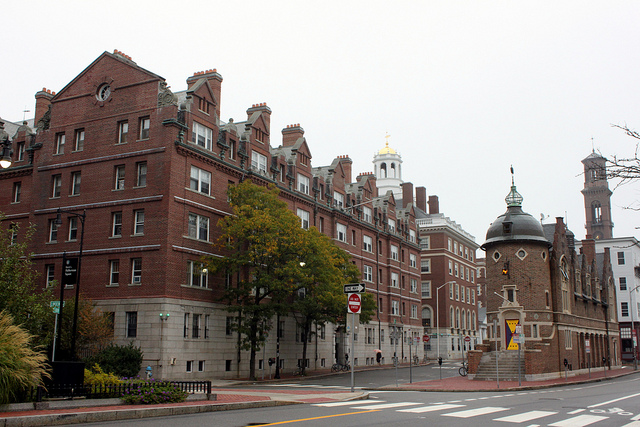
The high-profile lawsuit filed against Harvard University has reignited debates about race, college, and inequality. The plaintiffs claim that admission practices at Harvard have led to discrimination against Asian-Americans, but their arguments reflect a long line of litigation that claims such practices have led to discrimination against whites. A key point that gets lost in this debate is the pursuit of diversity in college student bodies, which colleges highlight as essential to their students being able to compete in the globalizing, modern world. In a recent article in The Washington Post, Anthony Chen and Lisa M. Stulberg discuss how the pursuit of diversity has a long history in higher education.

The use of race in admissions policies is often linked to the famous Supreme Court case Bakke v. University of California in 1978. There, the Court ruled in favor of universities’ right to consider applicants’ race in admissions as part of a holistic attempt to increase diversity at campuses. This case set the precedent for a diversity rationale in race and admissions, but Chen and Stulberg contend that such frameworks date back even further. They name several notable university figures in mid-20th century America who discussed diversity as an important part of a college experience, such as Harvard’s dean of admissions William J. Bender in 1961 and City College psychologist Kenneth B. Clark, who highlighted the benefits of diversity and multiracial environments in an era were several colleges still practiced racial segregation.

This discussion of the educational benefits of diversity — as well as corresponding changes in admissions practices at some colleges — dates back to at least the 1960s. Yet, Chen and Stulberg argue these ideas are still relevant for society today:

“The world is a big place full of people who are different from one another, and going to a school with a diverse study body is one of the best ways to prepare for it. That common-sense lesson from American history is still worth remembering today.”

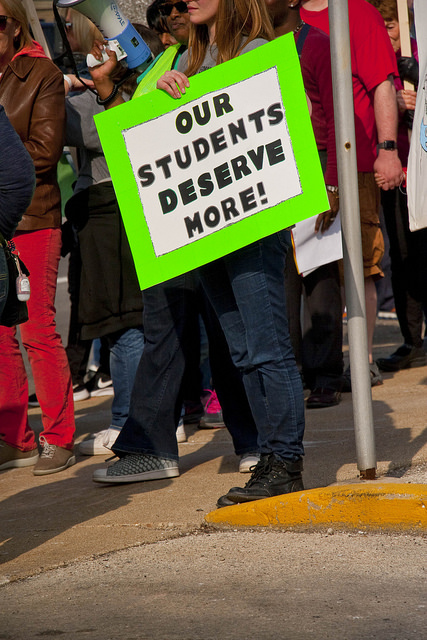
Photo of a protest sign that reads, “our students deserve more.” Photo by Charles Edward Miller, Flickr CC

In 2013, the abrupt closing of fifty Chicago public schools largely impacted people of color in West and South Side neighborhoods. Reasons for closures included under-enrollment and poor performance, but according to Chicago-based sociologist Eve Ewing, there is more to the story. In a recent interview with Morning Shift radio, Ewing describes systemic issues that contributed to under-enrollment, like the demolition of 22,000 public housing units across the city as part of the Chicago Housing Authority’s “Plan for Transformation.”

Subsequent school closings have disproportionality harmed students of color, and while these policies may not be intentionally racist, Ewing argues they reflect persistent structural racism in Chicago. For example, the school closings risk students’ safety, as many are now forced to trek through areas with perilous gang activity to reach their new schools. The emotional impact of school closings can also be devastating, comparable to family separations. Ewing observed close familial relationships between black students and their teachers and classmates, and thus the resulting separation can feel like losing a family member. And for “legacy” students, whose families have attended the same school for generations, the devastation is felt by entire families. To emphasize the severity of these school closings, Ewing makes a powerful connection between historical racism and policies today:

“A principal who was speaking at a school closure meeting, a black woman, stood up and said, ‘I feel like I’m at a slave auction right now.’… And I think that obviously there are many important distinctions between this kind of separation and chattel slavery, but I do think it’s important to think about, for black children, what it means to take them away from situations of stability, where they have deep, meaningful bonds with the adults and the other children in their lives.”

Photo by NCDOTcommunications, Flickr CC

Intersectionality is a term frequently used in many different contexts, from social movements to academic research to everyday speech. A recent article in The New York Times explores how intersectionality — defined as “the complex and cumulative way different forms of discrimination like racism, sexism and classism overlap and affect people” — influences men and women of color in the workplace.

The article draws from a recent non-profit study surveying 1,600 participants in workplaces ranging from corporations to higher education. Most respondents said they were “highly on guard at work,” which often meant they actively repressed traits others might perceive as frightening or intimidating. For example, they arrived early to meetings so they would be seated when others arrived in order to appear less threatening.

While the majority of workers in the study reported this need to be “on guard” to protect themselves against racial and gender bias, the types of stereotypes various groups face are not the same. For example, African-American women tend to face the stereotype of “the angry black woman,” while Latinas face stereotypes about being “too emotional or too wedded to their families.” Sociologist Yung-Yi Diana Pan notes that Asian-Americans are sometimes identified as “being workhorses without creativity” and “passive and acquiescent,” and this may lead to fewer promotions according to a recent report by the Ascend Foundation. 

Part of the problem, according to sociologist Lata Murti, is that women of color are constantly compared to professional white women — the “invisible norm.” So, what is the solution? Latasha Woods, brand manager at Proctor & Gamble argue it starts with leadership:

“We need leadership that truly cares about inclusion — a lot care about diversity, but how do you foster inclusion? People spend a lot of time on what they know the boss cares about. If they see the boss cares about inclusion they will too.”

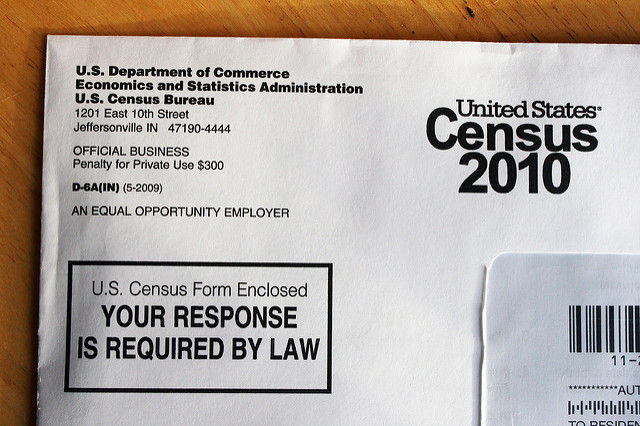
Photo of a U.S. census envelope. Photo by Quinn Dombrowski, Flickr CC

Racial categories are often imposed or assigned, and one’s race tends to be thought of as an immutable quality. One’s ethnic identity, on the other hand, is more likely to be a chosen identity — related to cultural factors, traditions, and family history — but is sometimes conflated with race. When multiracial identities are involved, racial and ethnic categories are especially malleable, and many population surveys like the U.S. Census do not allow for this complexity. A recent NBC News article draws from sociological research to argue that the 2020 census should capture racial and ethnic identities for a more accurate picture of the Latino population.

Sociologist Richard Alba argues that the current U.S. Census divides America into two groups: white and non-white. Of the non-white population, the current largest group are individuals with mixed Hispanic and white European ancestry. However, prior censuses — based on the two-question format on ethnicity and race — do not reflect or allow for ambiguities and realities of mixed racial and ethnic identities for Latinos in the United States. Children of these mixed-race families, even though they have a white parent, are counted as non-white, and this obscures the blending and racial change for some parts of the Latino and Asian populations in the United States.

How we see ourselves racially is not always what race others may ascribe to us. In his 2015 study, sociologist Nicholas Vargas found that 42 percent of Hispanics identified as white, but only 6 percent were perceived as white by other Americans. This highlights the importance of differentiating between assigned racial identities and proclaimed ones.  

Some researchers do not believe the U.S. Census is an effective tool to measure racial identity. In her book, Manifest Destinies, Laura Gómez writes:

“the [Census] has to look beyond racial categories of being white and nonwhite — which reflects more the historic attitudes imposed by society on different groups than the mixed reality of modern-day America — and make it more inclusive to encourage greater participation and accuracy.”

However, the 2020 Census will keep the same formatting, going against a decade of research on Latino identities — identities that do not rely solely on skin color or racial descent. As census-takers grapple with the constrictive format for questions that measure racial and ethnic identity, these problems of accurate representation will remain.

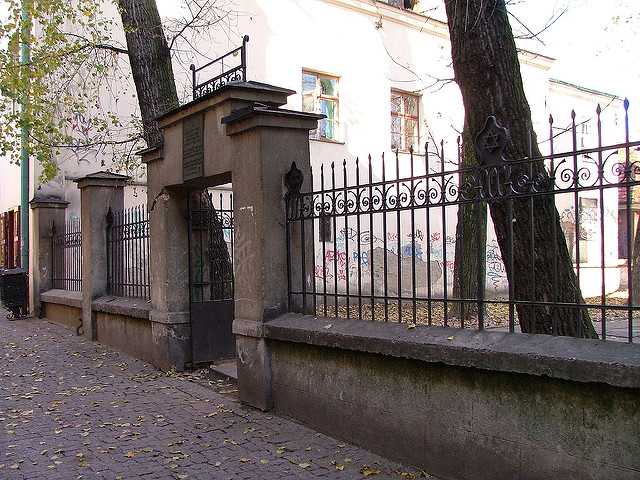
Photo of a gate in front of a synagogue in Poland. Photo by Emmanuel DYAN, Flickr CC

On November 9th, 1938, thousands of Jewish stores, homes, and places of worship across Nazi Germany were destroyed by extremist mobs. During Kristallnacht, or “The Night of Broken Glass,” dozens of Jews were murdered and another 30,000 were sent to concentration camps in this crucial shift from anti-Semitic language to physical violence. This year’s commemoration of Kristallnacht comes in the aftermath of the shooting of 11 Jewish congregants in a Pittsburgh synagogue. In recent years, ideologically motivated violence has been increasing against religious minorities. Jewish and Muslim congregations have heightened their security measures in the face of such threats. In a new article in The Conversation, Christopher Scheitle and Jeffery Ulmer analyze these increased protections and the heightened fear among many religious minorities in their spaces of worship.

Using surveys and interviews, Scheitle and Ulmer conducted a study of over 1,300 congregations to examine crime and security in religious spaces. While many congregations experienced vandalism or theft regardless of religion,  synagogues and mosques experienced threats of violence at much higher rates:

“Crimes, most commonly vandalism and theft, were committed at about 40 percent of congregations in the year prior to the survey. This overall percentage was not significantly different across religious traditions. When we dug deeper, though, we found that synagogues and mosques deal with crime-related problems that are much different than the average church. Our survey found, for instance, that synagogues and mosques were three times more likely than congregations overall to have received an explicit threat in the prior year.”

Many synagogues and mosques have sought to respond to these threats through increased security. In comparison to other religions, Jewish and Muslim congregations have incorporated many more security cameras and guards. However, these implementations are not without cost:

“Our interviews found that most places of worship have a hard time implementing security. Some of this is simply not enough money. Larger and wealthier congregations tend to have more security in place. Beyond resources, our interviews consistently found that places of worship view security measures as a potential threat to their mission of creating a sacred space that is open to their communities.”

Scheitle and Ulmer suggest that congregations can better protect themselves through cost free measures, like limiting entrances to places of worship, and through community partnerships. A knowledge of the legacies of anti-Semitism and other forms of religious discrimination also emphasizes the need for compassion and concern in the wake of such tragedies.

Photo of Star of David on a Jewish Synagogue. Photo by Patrick Lentz, Flickr CC

The mass shooting at the Tree of Life Synagogue has been characterized as the deadliest attack on Jewish people in U.S. history, and mourning services continued last week and over the weekend for the shooting victims. In a recent article for The Conversation, Jeff Gruenewald and William Parkin discuss how the recent rise in violence against religious minority communities is often tied to far-right extremist conspiracies and ideological beliefs.

The authors argue that while violent crimes targeting religious minorities and institutions have been on the rise in recent years, it’s nothing new. Far-right extremism has existed in the United States for more than a century and motivated many of these crimes. Gruenewald and Parkin explain further:

“Unfortunately, it’s not new for far-right extremists to vilify non-white, non-Anglo-Saxon and non-Protestant religions. Judaism has endured most of their ideological rage and conspiratorial paranoia…Their dogma claims, falsely, that globalist Jews have infiltrated the government and other U.S. institutions, and that Jews and non-whites pose an existential threat to the white race.”

Using data from the U.S. Extremist Crime Database, they demonstrate that since 1990, far-right extremists have commited 217 ideologically motivated homicides, nineteen of which targeted religious institutions or individuals. While there are many examples of far-right extremist violence that have not been religiously motivated, such as the Oklahoma City bombing, the authors indicate that far-right extremist violence against religious minorities — especially places of worship — appears to be on the rise since 2010. And beyond these cases,there is evidence of over 100 failed or foiled plots against Jewish institutions or individuals between 1990 and 2014.

While mass shootings and extremist violence are rare events, Gruenewald and Parkin’s research demonstrates that there are some disturbing patterns in far-right extremism and its connections to mass violence. The authors conclude with the need to prevent far-right radicalization,

“We believe countering divisive narratives with different viewpoints informed by evidence on what works to prevent radicalization is more productive than aggravating wounds with politicized rhetoric. As Americans, we must speak openly about the perils of white supremacy, anti-Semitism and both the rhetorical and real dehumanization of those we perceive as unlike us. Those wielding political power and influence need to publicly and clearly condemn acts of violence by extreme far-rightists and the ideologies underpinning this form of domestic terrorism.”

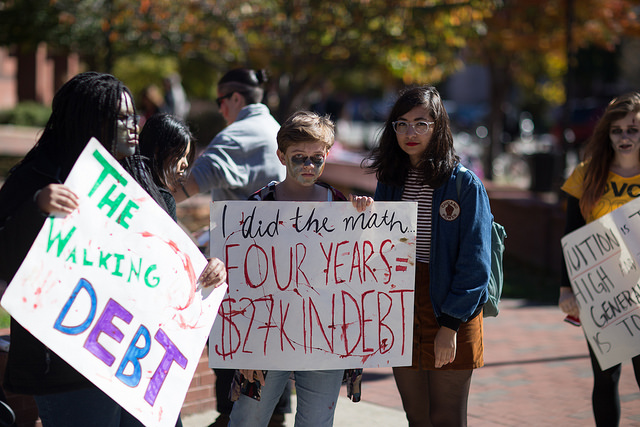
Photo of people protesting student debt. Photo by Tom Woodward, Flickr CC

While considerable media attention has been paid to the student debt crisis in the United States, few stories have detailed how this burden falls disproportionately on Black borrowers. Recently, CNBC interviewed Jason Houle about how student loans contribute to the racial wealth gap.

In their research, Houle and his co-author found that Black Americans accumulate nearly twice as much debt as their white counterparts by graduation. This disparity grows through adulthood as Black borrowers pay their loans at a slower rate than whites (4% per year vs. 10% per year). Fifteen years after college, Black borrowers hold 185% more student debt than whites. Houle contends that “the racial wealth gap is both the biggest and has grown the fastest among those with a college education,” and that student loans are a primary reason for this trend. In fact, student loans explain roughly 25% of the total racial wealth gap by age 30.

Houle offers several explanations for this gap. Black students on average have less financial capacity to pay for college than whites, causing them to pursue more loans. Additionally, Black students are more likely to attend expensive for-profit colleges and use private loans, both of which offer fewer protections to consumers. Houle uses the phrase “predatory inclusion” to describe this phenomenon, remarking that expanded access to higher education for Black Americans has also expanded opportunities for financial institutions to exploit them. These findings have made Houle rethink the metaphor of higher education as an engine of upward mobility: 

“In a world where we have rising college costs and rising student debt, it raises questions about whether or not that engine may be sputtering out.”