race

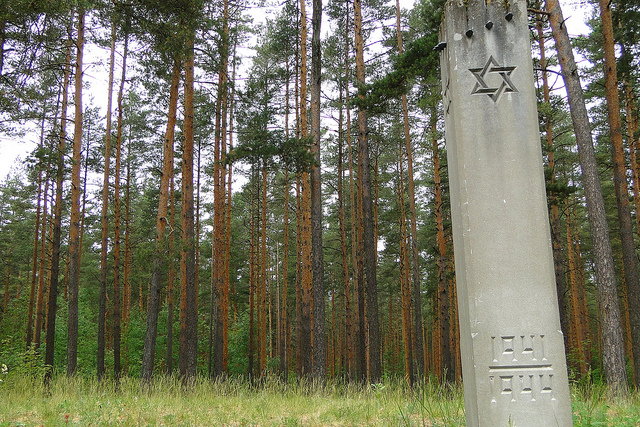
Star of David marker at Bikernieku Forest mass grave site in Latvia. Photo by Adam Jones, Flickr CC

The White House recently published a press release decrying the violent behavior of MS-13 members, referring to the group as “animals” 10 times throughout the short post. In response, researchers Aliza Luft and Daniel Solomon wrote a Washington Post article discussing how dehumanizing language can enable violence. They draw upon historical examples, referencing animalistic rhetoric used in Nazi Germany and the 1994 Rwandan genocide. As Luft and Solomon explain, dehumanizing language alone cannot directly incite violence:

“Recent research suggests that promoting negative views of others can go only so far in motivating people to kill. In Rwanda, for example, Hutu militants issued calls on the radio to exterminate inyenzi, the Kinyarwanda word for ‘cockroach.’ But some Hutus refused to kill, saved Tutsis, or shifted stances from killing to not killing neighbors. This suggests that the decision to commit murder and other violence was difficult for Hutu civilians. Dehumanizing propaganda alone didn’t persuade Hutus to suddenly turn on their Tutsi peers.”

However, the researchers describe a number of ways dehumanizing language can, in fact, heighten tensions or lessen the cost of violent behavior:

“Language is not innocent. Dehumanizing propaganda helps to normalize extreme perspectives on how to address social problems. It grants legitimacy to those who do believe that certain others are inherently threatening, dangerous and ought to be eliminated from the community…Dehumanizing propaganda alters norms of what is and isn’t perceived as acceptable views or behavior. Even when people don’t believe what they hear on the radio or on TV, dehumanizing propaganda might make them hesitate more to speak out against it.”

In closing, Luft and Solomon argue that public action can counter the negative potential of dehumanizing language. They note, for example, that protest by Catholic leaders in Nazi Germany mobilized otherwise complacent members of the public into resistance. In an American context where communities of color face daily systemic violence, protest against dehumanizing language may serve a protective function.
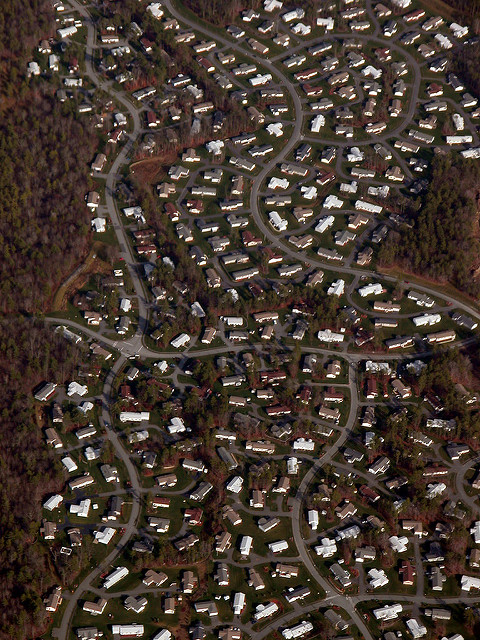
Photo by Art01852, Flickr CC

U.S. census estimates indicate that babies of color are now the majority and that by 2020, the majority of children under 18 will be non-white. Despite this growing diversity, many parts of the United States remain deeply segregated by race. A recent article in the Washington Post draws on U.S. census data and insights from sociologists Michael Bader, Kyle Crowder, and Maria Krysan to visually depict and explain the persistence of residential segregation in the United States.

Bader points out that the persistence of segregation is tied to the history of slavery, Jim Crow, and redlining practices against Black communities. Cities that have large African American populations, like Chicago and Detroit, have entrenched patterns of segregation. However, Krysan and Crowder argue in their book that housing policies and practices do not alone reproduce segregation. Daily routines and connections to others can also result in inequalities. As Krysan describes,

“We don’t have the integrated social networks. We don’t have integrated experiences through the city. It’s baked-in segregation, [Every time someone makes a move they’re] not making a move that breaks out of that cycle, [they’re] making a move that regenerates it.”

On the other hand, diversity in many suburbs has increased over the past decades. The D.C. metro saw a 300 percent increase in Hispanic American and a 200 percent increase in Asian American populations from 1990 to 2016. Bader connects this diversity in the suburbs to policy, arguing that both lower housing costs and the implementation of the Fair Housing Act helped to circumvent segregation,

“A lot of those areas were developed after the Fair Housing Act was implemented…If you’re building housing and you’re subject to the Fair Housing Act, you shouldn’t have, in those particular units, the legacy effects of segregation.”

While policy cannot address all residential segregation, it may lessen its reach.

Photo by John Beagle, Flickr CC

Throughout the United States, school years are wrapping up and families are making their summer plans. While at one time students could rely on their school-friends to be playmates for the summer, the prevalence of school choice policies — which allow students to attend schools outside of their neighborhoods — means that this is no longer the case. This spring, CityLab highlighted social science research on the relationship between school choice policies and gentrification. Specifically, two recent studies found that school choice policies may create inequalities in housing even as they seek to alleviate them in education.

Carla Shedd, a sociologist who has written about challenges in urban education, notes,

“What is remarkable in this moment is that schooling and housing are decoupled in a way that hasn’t been the case before.”

In other words, schools and neighborhoods no longer share the same fate. The emergence of school choice policies, such as charter schools and waivers from No Child Left Behind, allow well-off families to buy houses in lower-priced areas while still avoiding schools they perceive as undesirable. Francis Pearman, who published his recent findings with Walker Swain in Sociology of Education, told CityLab,

“As school choice expands, the likelihood that low-income communities of color experience gentrification increases.”

 Research by Stephen Billings, Eric Brunner and Stephen L. Ross also supports this finding. Lottery policies from No Child Left Behind meant that families could move into areas with lower housing prices but send their child to school elsewhere. Since the law gave students in failing schools priority in the lottery, new residents in Charlotte exploited the law by moving into districts with schools deemed to be failing. In both instances, the ability to send a child to a school other than the neighborhood option meant that housing in low-income communities of color were more attractive to well-off White families, spurring gentrification but without improvement to the local schools in the area.

Photo by James Palinsad, Flickr CC

A recent public focus on workplace discrimination against women has inspired heightened attention to the effects of gender inequality. Previous research shows that sexual harassment at work disrupts women’s employment, causing various economic harms. New research, recently featured in Salon, shows it also makes women sick. Researchers Catherine Harnois and Joao Luiz Bastos studied the relationship between workplace discrimination and health — both physical and mental — and their findings indicate the two are strongly linked for women:

“Among women, perceptions of gender discrimination are significantly associated with worse self-reported mental health. Women who perceived sexual harassment also reported worse physical health. We did not find a significant association between gender discrimination and sexual harassment with health outcomes among men, but this may be a result of the small number of men reporting these forms of mistreatment.”

In this study, women reported an average of 3.6 days of poor mental health compared with men’s 2.8 days, and an average of 2.7 days with poor physical health, compared with men’s 2.2 days. Certain factors increased the risk of negative health:

“Respondents who perceived multiple forms of mistreatment reported significantly worse mental health than those who perceived no mistreatment, or just one form of mistreatment. Among women, the combination of age and gender discrimination was particularly detrimental for mental health. Women who reported experiencing both age and gender discrimination had an average of 9 days of poor mental health in the past 30 days.”

Based on their findings, this health gap could be significantly reduced by decreasing the amount of gender discrimination in the workplace.

Photo by liz west, Flickr CC

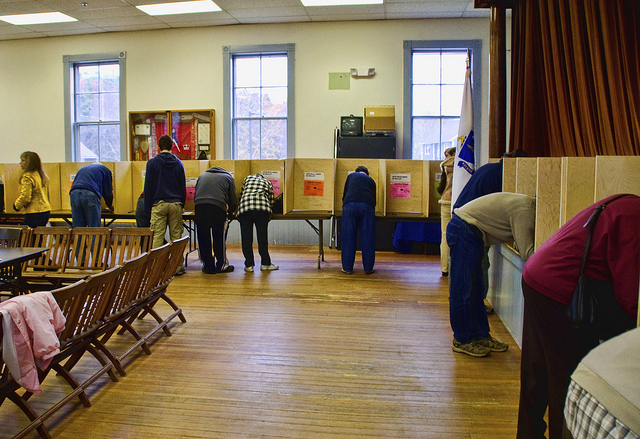
A Texas woman was recently sentenced to five years in prison for voting in 2016 presidential election. Crystal Mason was on probation following a felony conviction for tax fraud, and she was unaware that she had been barred from voting due to her record. Mason’s story represents the many barriers individuals with felony backgrounds face upon reentry into society. A recent article in The New York Times discusses the work of Sarah Shannon and Chris Uggen on state variation in felon disenfranchisement practices.

The scholars’ 2016 report for The Sentencing Project found that 6.1 million Americans are barred from voting due to a felony record. However, these disenfranchisement practices look different from state to state. Some states prohibit people convicted of felonies from voting for life. Others will restore voting rights upon the completion of a full sentence and a tedious application process. On the other end of the spectrum, some states allow those who are still incarcerated to vote. As Uggen summarizes,

“The state disparities are really astounding… It is definitely confusing at election time, and many former felons are risk-averse — they may not vote if they are afraid of getting a felony conviction for illegal voting.”

In recent years, some states have begun to reconsider their felon disenfranchisement laws, specifically due to their impact on communities of color. For example, Governor Andrew Cuomo of New York announced that he will implement an executive order to restore voting rights to parolees. Shannon and Uggen’s research demonstrates that felon disenfranchisement laws may perpetuate racial inequalities. Shannon states,

“In terms of inequality, clearly, felony disenfranchisement laws have racially disproportionate effects. Our estimates lay that bare. In addition, because these laws can vary so widely by state, the effects are also spatially disparate, impacting some states’ electorates more than others.”

Photo by Stefan Munder, Flickr CC

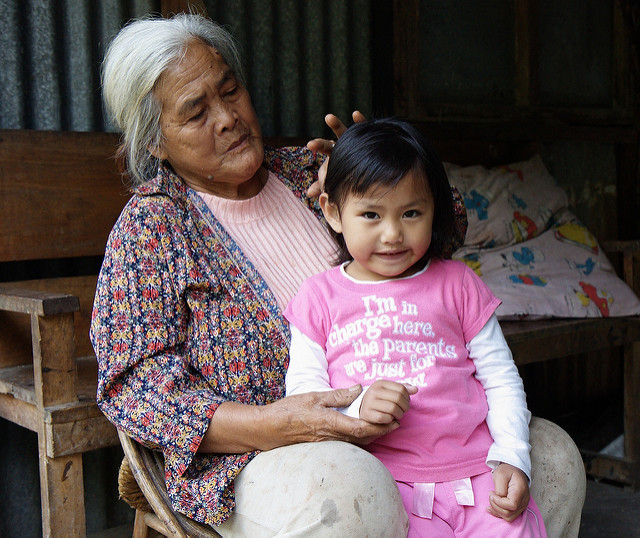
While U.S. society often valorizes the nuclear family — two-parent households with children — many families do not fit this model. In honor of Mother’s Day this past weekend, Ms. Magazine highlighted the long history of collective mothering in the United States. Social scientists demonstrate how the individualized, biological model of mothering emphasized in the United States can be a problem:

“Many feminist sociologists have pushed back against narrow understandings of parenting. Sharon Hays argues that pressures for mothers to “do it all” though intensive mothering styles alienates and emotionally depletes women…Sharing care-work can alleviate some demands of what sociologist Arlie Russell Hochschild calls the ‘second shift,’ or the household labor usually left to women after the formal workday ends.”

Further, certain groups rely more heavily on collective mothering. For African Americans, collective mothering has been important for survival:

Patricia Hill Collins describes how blood mothers, ‘other mothers,’ grandmothers and community mothers have collectively cared for Black children since slavery, playing integral roles in Black community survival. The mainstream media tends to associate these mothering practices with working-class and poor mothers of color, but Collins points out that Black middle-class mothers also rely on community mothering to protect their children from everyday forms of racism.”

Mothers who immigrate to another country for work also depend on collective parenting — often by family and friends — if their children remain in their country of origin. While many Native American families rely on collective child-raising practices as well, the U.S. government rarely recognizes them as valid forms of parenting. Social workers have taken away thousands of Native American children and placed them into mostly White, nuclear families.

So, when we celebrate Mother’s Day, we must keep more than individual mothering in mind.

Photo by wiz722, Flickr CC

Gun ownership and the decision to carry a gun in public may seem like an individual choice. However, in a recent Vox podcast, sociologist Jennifer Carlson explains that carrying a gun in public is intertwined with cultural understandings of gender, race, and family. Carlson interviewed dozens of gun carriers and NRA instructors. She even went through the training herself, received her license to carry, and became a certified instructor to understand the culture of individuals who regularly carry guns. 

Regarding race, NRA courses often neglect lessons about the impacts of racial bias in determining who may be a threat, for example. In terms of gender, Carlson finds that men — who carry firearms more often than women– are influenced by feelings of a loss of masculinity, socioeconomic decline, family histories, and ideas around civic responsibility.

“When I talked to [women] I got a very different narrative [than men] about why they are carrying guns… If we [go] back to the Second Amendment debate, it’s often ‘This is my individual right,’ ‘This is about my individual right to self-defense,’ or ‘It’s about self-protection.’  And when I talked to men…oftentimes it was about self-defense but it also was about family protection — family protection was a huge piece of the puzzle. This idea, if I’m working a job at night, and my wife is at home and she’s alone, there needs to be a firearm there so that she can be protected. And that’s a really interesting move because that’s [about an] absent male protector, [whereas] women were individualistic in terms of ‘This is my right to self-defense,’ ‘My life is valuable in and of itself,’ and ‘I can have a gun to protect myself.’  

In other words, both men and women valued owning firearms for protection, but women framed their gun ownership in terms of self-protection, while men viewed gun ownership as a way to protect others. 

Photo by westsubindy, Flickr CC

National Geographic recently made a dramatic, if unsurprising, proclamation: The publication has a racist past. For decades, National Geographic depicted “savage” and “inferior” races on its pages. But in owning this history, argues the Editor in Chief, National Geographic is part of a progressive and nuanced dialogue on race. However, in a recent article in The Washington Post, sociologist Victor Ray explains the problematic nature of this “new” conversation about race and how it overstates the progress made on issues of racism and discrimination.

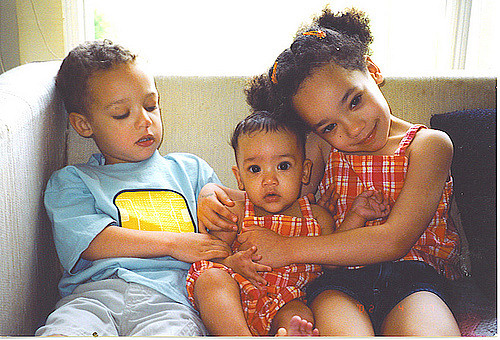
Ray focuses on National Geographic’s cover story, which features biracial twins:

“The cover photo depicts 11-year-old mixed-race twin girls, with the tabloid-esque framing that one is black, the other white. And the headline makes the grand claim that the girls’ story will ‘make us rethink everything we know about race.’ The ‘we’ here is implicitly white people, and the story of these children doesn’t break new ground so much as reinforces dangerous racial views. The girls in the photo, with their differing skin tones, are depicted as rare specimens and objects of fascination.”

While sociologists have long understood race as a social construction, National Geographic paints this as a new discovery. Additionally, the publication implies that individual attitudes and interpersonal conflicts are the root cause of racism. In doing so, they overlook the effects of structural racism:

“Racism is likely to influence the lives of these girls in ways that can’t be reduced to individual, mean-spirited prejudice. For instance, whites in the United States have, on average, 10 times as much wealth as black people. This wealth gap has multiple causes, including institutional racism in lending and housing discrimination. Similarly, because of current and historical patterns of segregation, black Americans are more likely to live in polluted neighborhoods with adverse implications for their long-term health.”

In focusing on the individual actions and the “personal sin” of racism, we underestimate the impact race can have on structural factors, such as wealth, housing, and health. As Ray suggests, National Geographic can take steps to account for its racist past by avoiding frames that overstate progress.

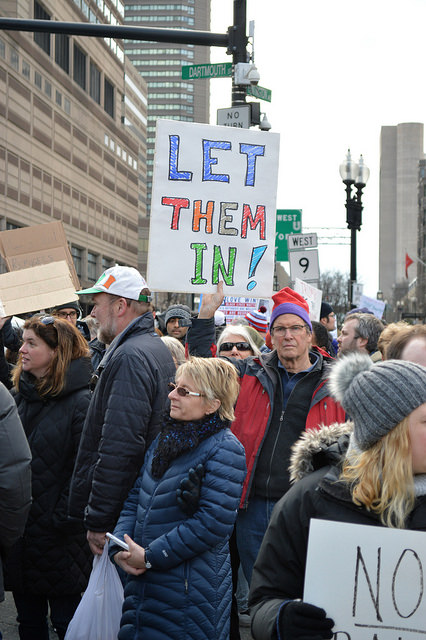
2017 Immigration Rally in Boston. Photo by Terry Holt, Flickr CC

Throughout history, immigrant groups have been used as scapegoats for social problems — be it the continually unfolding European refugee crisis or the aftermath of the Holocaust. And those in favor of xenophobic policies, tend to encourage these negative sentiments against immigrants to garner support these types of policies. In the United States, many politicians demonize immigrants for their supposed violence, but a recent article in The New York Times features research that undermines the foundations of this contention. A team of researchers, led by sociologist Robert Adelman, examined 200 cities across the United States to uncover the relationship between immigration and crime trends over the course of several decades. Their study concluded that while immigration has risen in almost every city since the 1970s, crime has not:

“In 136 metro areas, almost 70 percent of those studied, the immigrant population increased between 1980 and 2016 while crime stayed stable or fell. The number of areas where crime and immigration both increased was much lower — 54 areas, slightly more than a quarter of the total. The 10 places with the largest increases in immigrants all had lower levels of crime in 2016 than in 1980. And yet the argument that immigrants bring crime into America has driven many of the policies enacted or proposed by the administration so far: restrictions to entry, travel and visas; heightened border enforcement; plans for a wall along the border with Mexico…But while the immigrant population in the county has more than doubled since 1980, overall violent crime has decreased by more than 50 percent.”

And while the researchers cannot use this evidence to establish whether an increase in immigration reduces crime, they clearly show that an immigration influx is not the disastrous picture painted by many news sources and politicians:

“In general, the study’s data suggests either that immigration has the effect of reducing average crime, or that there is simply no relationship between the two, and that the 54 areas in the study where both grew were instances of coincidence, not cause and effect. This was a consistent pattern in each decade from 1980 to 2016, with immigrant populations and crime failing to grow together.”

Photo by United Soybean Board, Flickr CC

President Trump’s distaste for “political correctness” has deeply resonated with many Americans, especially in rural communities. In a recent interview for Vox, Robert Wuthnow — a sociologist who spent eight years interviewing members of small, rural communities across the country — argues that resentment in predominantly White, rural towns is less a reflection of economic woes and more a response to threatening cultural and demographic changes.

Rural Americans tend to direct their frustration from adjusting to changing economic and social conditions at lawmakers, who they believe are seizing their resources and giving them to big cities. Many discussed cultural shifts and a “moral decline.” For example, one resident felt like the government was taking away their personal control over their lives because they can’t “spank [their] children without ‘the government’ intervening.” Further, Wuthnow describes how growing diversity in the United States threatens many rural Americans’ Christian, white-normative, and heteronormative lifestyles, resulting in rising White nationalism movements, like the Alt-right.

As the country changes and their kids leave to find work in urban centers, White rural Americans feel they are being left behind. But instead of dismissing them, Wuthnow argues that we should try to understand their perspectives. He concludes,

“Rural America does have real problems — population decline, a brain drain, opioid addiction, etc. We can make of that what we want. But that’s not the whole picture. Not every small town is full of people who are suffering and bitter and angry at Washington…[And while] there are significant differences between small towns and large cities,…there are also commonalities. Since we’re living in a polarized time, it’s worth remembering that not all divisions run along the rural-urban divide.