
race

Black Panther actress Lupita Nyong’o at the 2017 San Diego Comic Con International. Photo by Gage Skidmore, Flickr CC

It’s no surprise that Hollywood could do better in terms of diversity. But it might be surprising that diversity in all aspects of filmmaking pays off, literally. A recent article from NPR discusses Darnell Hunt‘s annual Hollywood Diversity ReportThe report finds a “mixed bag” for people of color attaining key roles in the industry. People of color are incredibly underrepresented in positions like talent scouts, directors, and lead roles.  This underrepresentation is especially disconcerting when nearly half of the U.S. population is comprised of people of color, and yet the industry remains predominantly White and male.

Hunt and his team also found that diverse films and TV did extremely well in 2016, and that people of color were the top consumers of ticket sales for many major films that year. In other words, more diversity may mean more monetary payoff. Hunt points to Black Panther as a groundbreaking example in the industry.

“[Black Panthersmashed all of the Hollywood myths that you can’t have a black lead, that you can’t have a predominantly black cast and [have] the film do well. It’s an example of what can be done if the industry is true to the nature of the market. But it’s too early to tell if Black Panther will change business practices or it’s an outlier. We argue it demonstrates what’s possible beyond standard Hollywood practices.”

In short, the success of diverse films should not be underestimated, and it seems to be in Hollywood’s best interest to increase diversity both on screen and behind the camera.

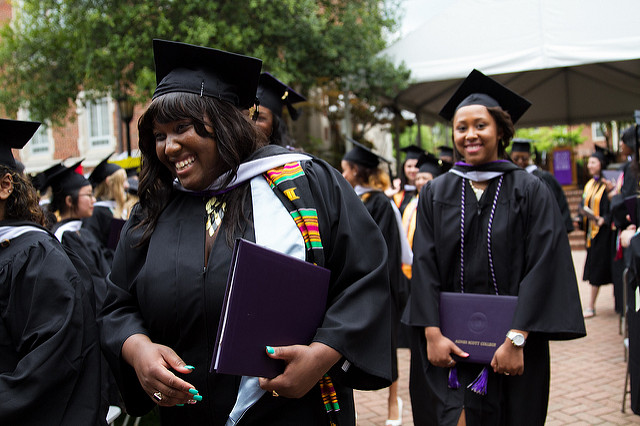
Photo by Jes, Flickr CC

Many of us are familiar with the “white flight” of the 1950s, as droves of White families moved from major cities to the surrounding suburbs. While we might like to believe that white flight is a relic of the past, a recent article in the Pacific Standard highlights recent research by sociologist Samuel Kye showing that white flight remains a reality in many American neighborhoods. Using Census data, Kye found evidence of white flight — losing at least 25% of its White population — in more than 10% of suburban neighborhoods between 2000 and 2010.

While this demographic shift could reflect property values and economic concerns, Kye’s findings suggest that class is not driving these trends. When compared to poorer communities, middle class neighborhoods are actually more likely to experience white flight. As Kye outlines,

“Race not only remains salient in middle-class neighborhoods…but motivates white flight to an even greater degree relative to those same effects in poorer neighborhoods… White flight eventually becomes more likely in middle-class neighborhoods when the presence of Hispanics and Asians exceeds 25 percent and 21 percent, respectively. Middle-class neighborhoods appear to be less reliable routes for the residential integration of Hispanics and Asians.”

Kye’s research demonstrates that despite growing diversity in many rural and urban communities across the United States, white flight will remain a persistent challenge to racial and ethnic integration within neighborhoods — and overall racial and ethnic equality. Kye concludes,

“…racially integrated neighborhoods represent key sites where sustained exposure and contact may continue to erode longstanding divisions, and improve levels of intergroup cooperation and trust.”

Photo by Agnes Scott College, Flickr CC

We know that a college degree can often help ensure employment, creating pathways to better opportunities and resources in someone’s career and even one’s personal health. A recent article in The Washington Post shows that the health benefits of higher education are more nuanced than scholars originally believed. Drawing from the work of sociologists Andrew J. Cherlin and Jennifer Karas Montez, the article demonstrates that location, race and ethnicity, and even expectations all shape the relationship between a college degree and health.

College degree attainment is related to many health benefits, including longevity. In recent years, White Americans without college degrees faced increasing mortality rates, while Black and Hispanic Americans showed overall advancements in their longevity, even among those without a degree. Andrew Cherlin argues that expectations are particularly important for understanding why there are clear racial differences in the link between degrees and health benefits. As the article outlines,

“It wasn’t long ago that white working-class Americans could count on leading a comfortable life with just a high-school degree. Middle-aged men and women, the very group falling ill and dying, are the first generation without that guarantee. They compare themselves with their parents and find their lives falling short. For black and Hispanic Americans, if you haven’t got as much to hope for, you might just have less to lose.”

Geography and economic differences add more complexity to unpacking the causes of health disparities. Living without a degree in areas that are heavily impacted by economic shifts and with inadequate medical resources like the rural United States can further exacerbate health problems. As Jennifer Karas Montez suggests, tackling these issues on a large scale is even more difficult given that public policies are created at state and local levels. In short, the relationship between health and college attainment is complex. Having a college degree does not directly translate into health benefits and vice versa — those without a college degree are not fated to poor health. 

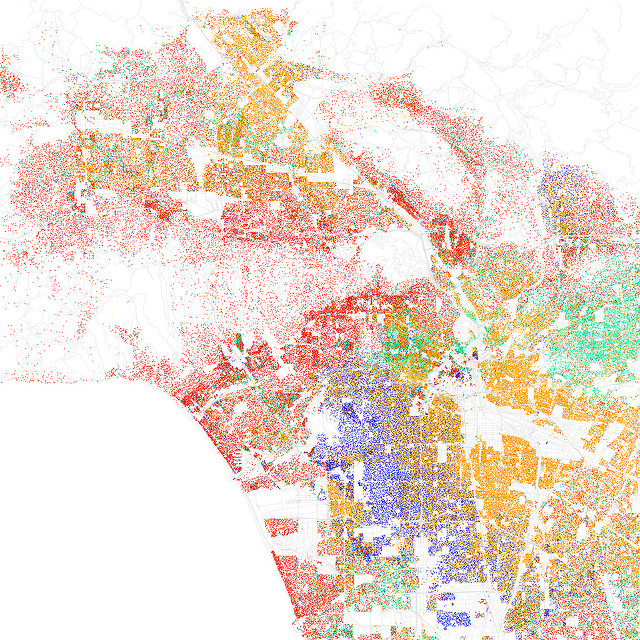
Racial Dot Map for Los Angeles based on 2010 Census. Photo by Eric Fischer, Flickr CC

The United States Census is a trusted source for population data. But, like all large-scale survey projects, the census must make decisions about how to define and analyze elements for categorizing data, like racial group.  In a recent article in The Washington Post, sociologist Richard Alba argues that the census over-estimates counts of racial and ethnic minorities, a move that can seriously affect politics and policies in the United States.  

Alba particularly has a problem with how the census counts mixed-race youth. For young people from a mixed Hispanic and White background, the census only counts them as Hispanic, not as both White and Hispanic — similar to the age-old idea of the “one-drop rule” instituted for Black people in the United States. This way of counting leads to an over-estimate of Hispanics in the United States, and this may fuel White fears about becoming a minority in the near future.

Alba points out that, “distorted census data can result in inaccurate statements of ‘fact’ and misleading projections for the future.” Take, for example, President Trump’s desire to limit immigration from African countries and encourage immigration from European countries like Norway. Alba argues that the lack of fundamental changes to the 2020 census will only continue to fuel misperceptions about racial and ethnic change in the United States:

“Census statistics will continue to roil the public discussion of diversity, by exaggerating white decline and the imminence of a majority-minority United States. Political figures and pundits who oppose immigration and diversity could exploit that, peddling an alarmist narrative that doesn’t fit with the long-standing reality of mixing between immigrant and established Americans.”

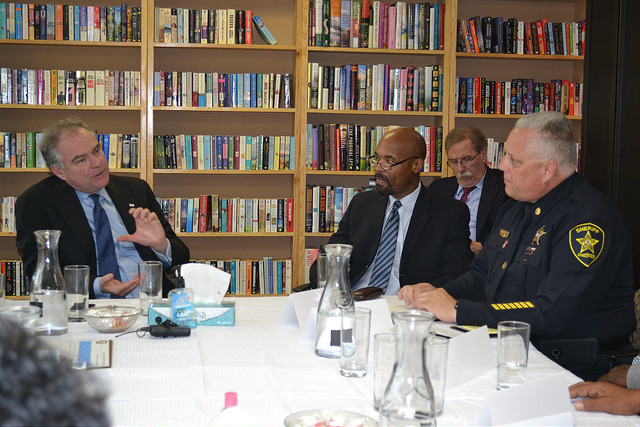
U.S. Sen. Tim Kaine meeting with local officials to discuss criminal justice reform. Photo by Senator Tim Kaine, Flickr CC

According to a new report, rates of felony conviction are on the rise in the United States. In response, policy influencers in many states are seeking strategies to combat this increase. However, solutions often unveil further challenges. A recent article from PBS discusses a new study on the rise of felony punishments on a state-by-state basis, as well as the barriers to policy reform.

From 1980 to 2010, felony convictions increased in every state. Sociologist Michelle Phelps discusses the context behind these high rates: 

“When crime rates rose in the 1980s and early 1990s, local and state leaders hired more police and they made more arrests, including felony arrests… In addition, many states elevated nonviolent crimes like drug possession to felony status, and many district attorneys adopted a get-tough strategy, seeking felony charges whenever possible. Police focused drug enforcement on high-crime neighborhoods, which were often predominantly African-American…As a result, felony convictions rose much faster among blacks than among whites.”

In an effort to combat high incarceration rates, states like Georgia have tried replacing prison sentences with probation. But as Phelps points out, probation can be just as damaging as serving a prison term since, in addition to having a criminal record, individuals on probation must also abide by additional rules and requirements:

“Though it’s frequently dismissed as a slap on the wrist, probation can entail onerous requirements…For instance, probation can require a job and good housing as a condition for staying out of prison, but the felony conviction itself can make it hard or impossible to get that job.”

In sum, policymakers searching for new ways to bring felony numbers down must consider unintended consequences of reforms — especially when reforms have the potential to reinforce or worsen deeply structural racial inequalities.

Photo by Kyle Pearce, Flickr CC

In the 1950s and 60s, middle-class White families moved from cities across the United States into suburbs. Today, we see movement in the opposite direction. Middle-class families are moving to previously neglected inner-city neighborhoods, a process known as gentrification.  While gentrification provides middle and upper-class families with more urban living options, previous residents in those neighborhoods are often forced to move out when they can no longer afford the rising cost of living. In a recent NPR article, sociologist John Schlichtman discusses negative consequences of gentrification. Schlichtman explains, 

“The reason gentrification has a bad rap is due to the inequity between race and housing. Race is, at its heart, a class issue…The devaluing of lower-class neighborhoods, usually residents of color, is the result of a history of unjust policies, including government defunding and redlining.”

According to Schlichtman, those who move into gentrifying neighborhoods may feel guilty because they benefit from “an unjust gap.” At an individual level, Schlichtman suggests investing in businesses that already exist in the community, instead of new ones. But to really create social change, action must go beyond the individual:

“We need to put pressure on our city governments as a community to not put profit and investment as the number one priority. It can be balanced with other priorities of community.”

In short, gentrification can reinforce racial and class inequalities in the United States. And while gentrification is not only about individual choices, individuals — especially those moving into gentrifying neighborhoods — can take steps to counter its negative effects.

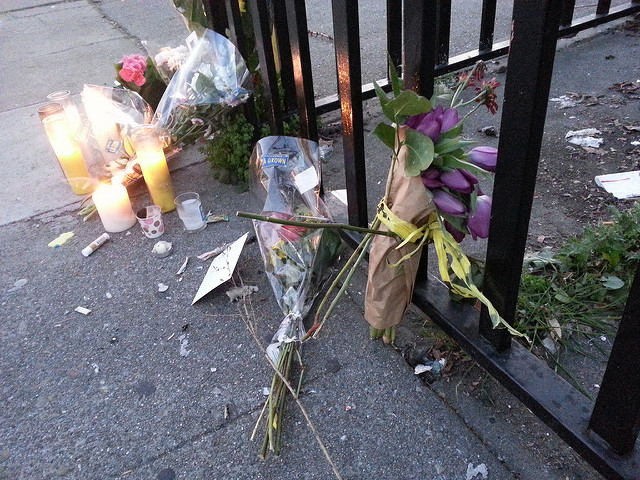
Flowers and Candles for Kiante Tay Campbell. Photo by George Kelly, Flickr CC

Despite the current administration’s affirmations of high crime rates and push for more tough on crime policies, their approach does not align with the reality of crime in the United States, where violent crime fell substantially over the past 25 years. In a recent article in The New York Times, sociologist Patrick Sharkey discusses his research on both the causes and social benefits of the violent crime drop.

Reductions in crime improved the overall climate in major cities, but especially improved social conditions in disadvantaged communities of color. Declines in homicide led to increased life expectancy for young Black males. Sharkey’s research also demonstrates that declines in homicide helped to narrow the achievement gap between Black and White children and decreased concentrations of poverty in many cities. According to Sharkey, “living in poverty used to mean living with the constant threat of violence. In most of the country, that is no longer true.”

Undervalued forms of violence prevention —  non-profit organizations in particular — could help keep levels of violent crime low. Sharkey argues that a method that focuses on safety and creating community, rather than tough policing and prosecution, is the next step to a further reduction in violent crimes:

“These findings suggest a new model for combating urban violence. While police departments remain crucial to keeping city streets safe, community organizations may have the greatest capacity to play a larger role in confronting violence. Working directly with law enforcement and residents, these organizations are central to the next stage in the effort to make our cities even safer.”

Photo by futureatlas.com, Flickr CC

In the decades since the Holocaust, the international community created mechanisms like the 1951 Genocide Convention in order to ensure that the world would “never again” experience such tragedy. Even so, genocide and mass violence continue to occur across the world. Recent AP reports provide even more evidence of a genocide in Myanmar, yet military response and global governance are again lacking. In a recent article in The Washington Post, Aliza Luft addresses these failings and suggests that economic tactics may succeed where others have failed.

Many factors can influence violent behavior, like prejudice and propaganda, but for many who commit violence, economic considerations are essential. For example, some governments use poverty to motivate civilians to engage in violence, offering resources in exchange for participation. According to Luft:

“Thus, one strategy for intervention is to even the economic playing field: to lower the capital of the génocidaires while increasing that of their potential recruits. Responses can include targeted financial measures such as asset freezes and economic divestment from major firms that help fund genocidal governments. Additionally, non-governmental relief efforts might focus not only on food, medicine, and housing for the displaced, but also on creating economic opportunities to reduce the potential for recruitment by genocidal authorities.”

Economic strategies can take many forms, including organizations that guide companies towards pro-human rights policy, as well as online campaigns that have dissuaded companies from working with genocidal regimes. Luft argues that anyone can aid in genocide prevention through personal spending choices, outreach, and activism. She suggests civilians use financial strategies that may influence politics and policy:

“To deepen the link between investment or operations abroad and commitments to human rights, civilians can emply boycotts and social media campaigns to pressure these companies over their complicity in genocide. Research has shown that economic and reputational concerns can motivate a company to change its policies. It is time to mobilize on behalf of the Rohingya, and to target businesses whose taxes and revenue fund violence.”

Photo by Gareth Simpson, Flickr CC

With the highest incarceration rate in the world, many policymakers in the United States are looking to reform the criminal justice system. Some have turned to fines as an alternative to jail or prison. Unfortunately, fines may not be the best solution, according to sociologist Alexes Harris

In a recent New York Times article, Harris argues that a fine-based system places a huge financial burden — the responsibility of funding the entire criminal justice system — directly on those who are often least able to pay. Harris writes,

These people are paying for the system of justice from which we all benefit, but they cannot afford to do so. They are often poor, unemployed and of color. In research on monetary sanctions in nine states, my research team and I found that many people have trouble navigating the legal process associated with fines and fees, like finding out how much money they owe and meeting minimum payment requirements. Of the 380 people we interviewed, over half received public assistance and a vast majority had problems paying their legal debt.

Consequences for not paying can be severe. Not only do delays in payment often result in late fees or interest charges, warrants are sometimes issued for those who fail to pay, and they may end up incarcerated anyway. However, Harris explains that there are other alternatives to incarceration besides fines:

“They should instead search for ways to reduce criminal justice budgets by prioritizing preventive measures proved to decrease recidivism and improve public safety such as free drug and alcohol treatment programs, low-cost housing, restorative justice and job training. To start, lower courts should rely on day fines, where monetary sanctions are determined based on a person’s daily wage and the seriousness of the offense. The sanction is proportionate to a person’s ability to pay and the degree of harm inflicted.”

Photo by Tammy Anthony Baker, Flickr CC

In the last few months, President Trump’s incendiary tweets have found a home in sports, including comments on the NFL, the NBA, and college basketball. In a recent article in ABC News, sociologists discuss how Trump’s tweets about sports with high percentages of Black athletes are racially-coded, and may reveal Trump’s own racial bias and attempts to appeal to his political base.

In response to President Trump’s  demand that owners fire NFL players for kneeling, sociololgist Ben Carrington argues,

“When Trump uses language referring to Black athletes or other Black figures that kind of speak out in terms of them being ungrateful and undeserving of their place in sports, he’s re-invoking that dark era in American sports in which that language was explicit and Black players couldn’t play.”

In another example, Trump demanded thanks for keeping three UCLA basketball players out of jail in China after shoplifting, calling the father of one player an “ungrateful fool” and “a poor man’s version of Don King, but without the hair.” As these tweets gain headlines, the media may miss the core racial issues that drive this kind of dialogue in sports, according to sociologist Doug Hartmann.

“Trump’s been able to make the focus be on whether this is appropriate or not, and how players should be punished or disciplined, and completely distracted our attention from the racial issues that the players who are protesting want to focus our attention on – police brutality, huge wealth gaps, the treatment of African Americans in cities — those are real racial issues.”

In short, Trump’s tweets and the media’s coverage of them divert public attention from larger issues of racial injustice in the United States.