politics

Photo by André Zehetbauer, Flickr CC

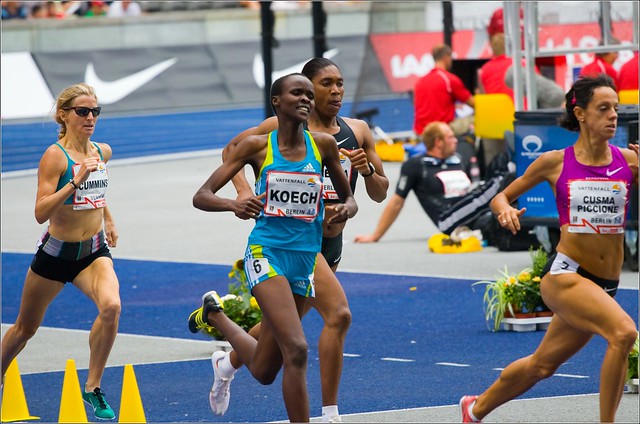
Last month, the International Association of Athletics Federations (IAAF) ruled against Caster Semenya, a two-time Olympic champion from South Africa who challenged rules prohibiting women with naturally high levels of testosterone from competing  The court’s ruling declares that female track athletes with naturally elevated levels of testosterone must reduce these hormones before they can participate in certain races at major competitions.

Madeleine Pape, a former Australian Olympian who has raced against Semenya and a Ph.D. candidate in sociology, told The New York Times that athletes should be allowed to compete based on their preferred gender:

I’m not saying it’s a solution, but I think it’s a start…I think it’s hard to draw a biological line around the female athlete category.”

She believes the court ruling is based primarily on

“People’s fears and misconceptions about trans women competing…I want to make sure people understand the complexities [of gender categories] and relate to these women as real people.”

While there have been broader shifts in cultural acceptance of transgender people and deconstructing gender categories, sports organizations tend to draw hard lines between men and women. According to law professor Doriane Lambelet Coleman:

“The gender studies folks have spent the last 20 years deconstructing sex and all of a sudden they’re facing an institution with an entirely opposite story…We have to ask, ‘Is respecting gender identity more important or is seeing female bodies on the podium more important?’”
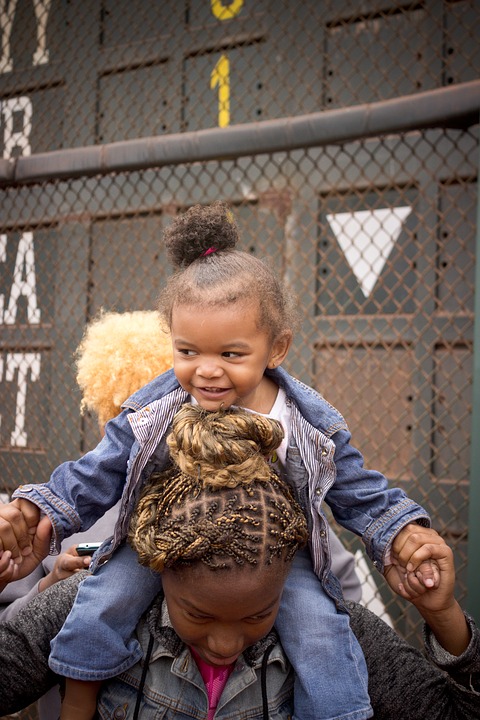
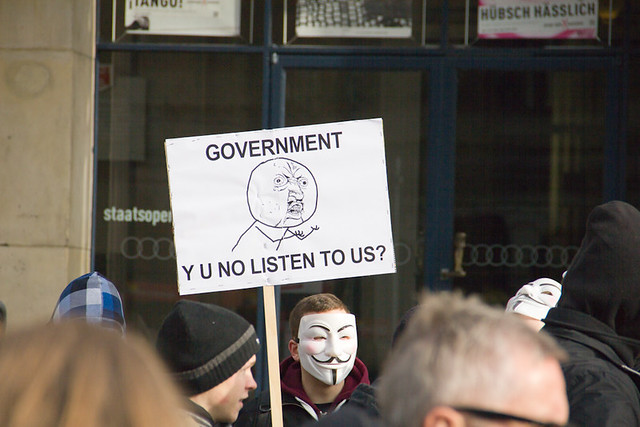
Photo of a black woman holding a black child on her shoulders.
Photo from Max Pixel CC

Black women have faced decades of public scrutiny for their mothering practices. From their reproductive health decisions to their selection of romantic partnerships, Black women are often deemed responsible for disrupting the traditional (patriarchal) Black family. In a recent essay in The Nation, writer Dani McClain argues that these cultural wars against Black mothers have led to the politicization of Black motherhood, where Black mothers socialize their Black children to resist tropes around Black criminality, laziness, and undeservingness. In fact, according to research cited in the article,

“out of 17,000 families with kindergartners, parents of color are about three times more likely to discuss race than their white counterparts. Seventy-five percent of the white parents in the study never or almost never talked about race.”

McClain further draws from Black feminist sociologist Patricia Hill Collins to illustrate how Black mothering resists white expectations of the traditional middle class nuclear family. For example, politicians and policymakers alike have used higher rates of non-marital births in Black communities to suggest the real social problem is Black women’s lack of marital commitment to Black men. Yet, Collins argues that Black mothers instead rely on “other-mothering” as a form of social support. “Other-mothering” involves “a system of care through which black mothers are accountable to and work on behalf of all black children in a particular community.”

The intergenerational message among Black women, then, is one of patriarchal rejection, where social welfare policies such as improved work conditions and quality healthcare (rather than heterosexual marriage) become the strategies to counter the effects of poverty. On this point, Collins writes,

“Since Black mothers have a distinctive relationship to white patriarchy, they may be less likely to socialize their daughters into their proscribed roles as subordinates.”

Photo by kurrija, Flickr CC

We’ve all seen cats and celebrities become images that represent cultural moments in spreadable and shareable ways — also known as a “meme.” Memes often represent jokes and light-hearted cultural moments, but they have also become an outlet for activist movements and political expression. VICE news recently featured a new type of meme circulating worldwide: “activist memes.” Previous generations wrote songs and created art to protest policies and create movements, but VICE notes that 21st century memes can go viral in seconds.

James M. Jasper, a sociology professor, argues that protest movements often involve emotional elements. To this end, Jasper argues that the subjects of activist memes are often villains:

“They’re an important step in arousing the anger or fear that can mobilize people…the media [of protest art] have changed somewhat, but the purposes are similar: the blaming of villains, the identification of victims, as well as outrage at the villains and compassion for those victims.”

Political figures like President Trump are a major target for activist memes and protest art in both liberal and conservative camps, especially for those who disagree with major players’ policies. According to VICE author Sage Lazzaro:

“creating or consuming political memes that align with one’s point of view can be therapeutic. They reflect what’s happening in society, and help justify feelings of rage and fear while helping us feel less alone.”

Photo of a mother sitting on the floor holding an infant.
Photo by Jessica Pankratz, Flickr CC

Working moms need more than just flowers and spa days this Mother’s Day. They need policy changes and other support in order to manage their stressful daily lives. As highlighted in a CNBC article, sociologist Caitlyn Collins’ new book Making Motherhood Work demonstrates that Germany and Sweden can serve as useful models for how to support mothers in the United States.

Collins points out that many American mothers juggle primary caregiver roles and demanding work schedules. She interviewed 135 middle-class working mothers in some of the most wealthy nations in the world — the United States, Sweden, Italy, and Germany — and she found that the United States is an outlier in its lack of societal support for working mothers.

Policies alone cannot solve all of American moms’ woes, but Collins argues that Germany and other countries can serve as useful models. For example, a policy in Berlin allows mothers to take an entire year of parental leave and either work part-time or telecommute after that. Collins states that if similar policies are set in place to support working mothers in the United States, a weight would be lifted off their shoulders.

Collins’ research highlights how American society needs a deeper appreciation in supporting mothers in their daily lives and work. However, it still doesn’t hurt to get mom a little something extra this year!

A Rwandan woman and man sit on a bench outside of Ntarama and wait for gacaca court to begin.
Outside Ntarama, people wait for the gacaca court to begin. Photo by Robin Kirk, Flickr CC

Genocide often involves the restructuring of military organizations to target of civilians based on their identity. But in Rwanda, the army and militias of the genocidal regime killed alongside those who had not previously been part of the military. Farmers, doctors, and religious leaders responded to calls to participate in the violence, carrying out the genocide within their own communities. This April marks the twenty-fifth anniversary of the Rwandan genocide, and communities continue to grapple with the effects of this violence.

One of these is the return of those convicted of genocidal crimes from prison or communal work camps. In recent years, many of these individuals have returned home to the communities where they committed violence. Hollie Nyseth Brehm and Laura C. Frizzell recently wrote an op ed in the New York Times about their research on this reentry process. Brehm and Frizzell work with 200 Rwandans who were incarcerated for crimes of genocide, following their journey from the end of their incarceration through their return home. In this op-ed, the researchers include a number of anecdotes from Rwandans who were surprised to be met with a warm welcome upon their return:

Straton served almost 21 years in prison for murdering three people. When he was released, he could barely recognize his surroundings because of Rwanda’s vast economic growth. Dirt roads had been paved and new buildings were everywhere, meaning he ultimately had to ask strangers how to find his house. There, he found his wife and children, and after a joyous reunion, the next few days were full of pleasant surprises. “There are people that I never expected to help or to greet me, and they did it … Neighbors would come with Fanta. Some friends would come and give me small amounts of money.”

In post-genocide Rwanda, the history of Belgian colonialism and the institutions created out of this history take much of the blame for the 1994 genocide. This means individuals do not face all the blame — instead, their behavior is part of a broader social context, which helps to facilitate reconciliation:

What could explain such an unlikely, friendly welcome? Much of the answer lies in where many Rwandans place blame for the genocide. Sources like public school curriculums and government-run memorials paint a complex picture of the violence as rooted in Belgian colonial rule that exacerbated divisions between Hutu and Tutsi. These sources also highlight the “bad governments” that discriminated against Tutsi and encouraged violence during the genocide. By placing blame on historical colonialism and governments, this dominant narrative removes some of the responsibility from the individuals who perpetrated the violence on the ground — especially the uneducated farmers who claim they were acting out of fear or were following orders.

Brehm and Frizzell stress that this focus on the systemic causes of the 1994 genocide does not absolve genocidaires of responsibility for their actions, nor does reconciliation mean that survivors don’t still carry the pain of the past. Instead, these small steps in community rebuilding have key symbolic significance. As Brehm and Frizzell observe,

“Healing from such unimaginable trauma will always be a work in progress, but it is happening.”

Photo of a tea party rally. A sign is visible that says, uninsured but free.
Photo by Fibonacci Blue, Flickr CC

Many working-class white Americans — even those stricken by poverty or poor health — favor policies that defund programs that could benefit their health and opportunities. Racial resentment may be part of the reason why. In an interview with Vox, Jonathan Metzl suggests that working-class white populations often scapegoat immigrant and minority populations, instead of blaming those who actually shape these policies — the elite and corporations.

In the South and Midwest, Metzl finds that working-class whites have rejected policies that would otherwise benefit their access to healthcare and educational resources, leading to shorter lifespans and higher high school dropout rates — all to block these same resources for immigrants and minorities. However, Metzl makes it clear that individual racism is not the sole factor driving this paradoxical situation. Instead, he suggests that the issue is more structurally-rooted; the policies themselves are racially motivated, not necessarily the individuals that support the policies. However, Metzl did find many whites who feel that public services only benefit racial minorities, including using stereotypes such as “welfare queens,” which continues to be a powerful racial trope in politics.

It is important to remember that racial resentment and white privilege are not new to the United States. Metzl discusses:

“Philosophers have been wrestling with this in the United States for centuries. I mean, this was the core question that W.E.B. Du Bois asked after Reconstruction: Why is it that low-income whites, working-class whites, don’t align their interests with newly freed slaves? If they did, it would be an insurmountable union that would really force some benefits from upper-class people to make the lives of working-class people better…And what he found was that there was this idea of a reward of whiteness that was given to white people. It was a psychological benefit that allowed them to feel a sense of psychological prestige and overlook their own material conditions.”

When working-class whites attempt to hold on to white privilege — by supporting policies that continue to defund education and health care in the United States, for example — they help perpetuate a situation that is, according to Metzl, “hurting nearly everybody.”

Photo of a basketball court with players for a final four ncaa championship game.
Photo by John Champion, Flickr CC

This March’s TV ratings for the NCAA Men’s Basketball Tournament mark a four-year high, placing 2019 in a tie for the third-largest March Madness viewership since the early 1990s. Considering that 2017’s title game drew 23 million viewers, last night’s championship is positioned to exceed that number. High-visibility sporting events like the Final Four not only influence our perceptions of race and sport in a number of ways, but they can also alter the power dynamic between players and owners. In an interview for Match Volume, Sociologist Ben Carrington explains how.

Fans may look forward to high visibility events like the Final Four to escape the pressures of day-to-day life, but sports can have real-world impacts. For example, entertainment sports skew the perception of racial representation within sport, leading fans to believe that Black athletes have more success than they really do.

“All sports are racialized to different degree. Looking at all levels, coaches, owners, GMs, the front office, the media, then most sports remain overwhelmingly white. One of the ancient things, one of the discourses, is that quote ‘Blacks dominate sports.’ …[but] if you look at participation figures–the group who participates most often in the greatest range of sports, most frequently, are white middle class males. They play lacrosse, they ski, they sail, they play, you know, softball, baseball, golf, tennis–across the board. So what we find in a small number of sports, entertainment sports, the ones that have high visibility, there’s a disproportionate number of blacks, black men in particular. So that kind of skews the discussion.”

On the other hand, the sport-as-entertainment industry’s dependence upon Black athletes gives them tremendous power, which NBA players have capitalized on. NFL owners’ fear that players would harness this power likely prompted their backlash against Colin Kaepernick, Carrington explains.

“I don’t actually think the NFL owners were that bothered by Kaepernick speaking out on those issues [like Black Lives Matter]. I think what they became the most fearful about as the protests continued, which helps to explain his exclusion, was that the NFL players would begin to act like NBA players. And by that I mean…[owner] Donald Sterling was effectively stripped of ownership [of the LA Clippers] within 48 hours of that tape breaking. 48 hours. An owner, stripped of ownership. And that came about not because the other owners thought this is really outrageous, that one of us is speaking badly about black people, it came about because Stef Curry and Lebron James made it really clear to the commissioner that you might not have games come Wednesday.”

Given that hot-button issues like these are topics that frequently come up when Carrington teaches “Race, Celebrity, & Sports” and “Politics of Sports” at the University of Southern California, he emphasizes to his students that thinking sociologically — not adopting his political point of view — is the key to getting a good grade.

“What I want the students to do is to think critically. I want them to debunk,… to look to unveil the… power structures which often aren’t visible, but are there, shaping…. Why do we support a certain team rather than another team? Why is there a stadium being built in Englewood? What’s the politics behind that, what’s are the consequences for gentrification, for housing costs, what are the transportation implications of that? Why is the LA Dodgers Stadium where it is? Who gets displaced when stadiums are built where they are? Who gets to own teams? Who gets to play for teams? You know, all of the myriad of things that surround sports: the good and the bad, the ugly and the beautiful.”

Carrington’s goal is to encourage his students to think independently, marshal critical thinking, and use good evidence and data to support their opinions, no matter what side they’re on. For the rest of us, high-profile sporting events like the NCAA Championships invite us all to reflect on the social patterns that shape them.

Photo of a United States border patrol checkpoint.
Photo by faungg’s photos, Flickr CC

Migration across the U.S.-Mexico border is a highly contested and politicized topic in the United States today, and much of this discussion revolves around white Americans long-standing but erroneous fears of undocumented immigrants crossing the southern border. However, a recent study featured in an op-ed for the Chicago Tribune finds that Latinos who legally cross often experience discrimination at border checkpoints.

The study’s authors, Alexander Updegrove, Joshua Shadwick, Eryn O’Neal, and Alex Piquero, draw from surveys at two public Texas universities about student experiences of legal crossings across the U.S.-Mexico border. Nearly one-third of the students described experiences of discrimination by border patrol agents due to their darker skin complexion, clothing, use of a Mexican instead of U.S. passport, and for having an accent. All of these students described experiencing either additional screening, extended questioning, degrading comments, or physical searches.

For example, a 19-year-old Latino respondent Robert’ reports being mocked by a Customs and Border Protection (CBP) officer for his health condition, stating that the officers

“[made] fun of my heart pulse, because I have a pretty fast pulse — most of the time my hands are shaking. So when I told him about my health issue, he started to laugh and called other officers to come and see.”

One of the study’s co-authors, criminologist Alex Piquero, explains that when people are treated poorly by custom officials or other law enforcement, it causes trust in the entire institution to wither away:

“People talk, they share vicarious experiences and then you have this folklore that develops; … if you create a lived experience that law enforcement is not fair, not on their side and not there to help and protect certain people, then these same people are likelier to not report crime and not go to law enforcement for help.”

According to Piquero, trust and mutual respect must be present between safety officials and the public in order to ensure everyone’s safety.

Photo of an old mugshot
Photo by Tyne & Wear Archives & Museums, Flickr CC

Governor Andrew Cuomo of New York announced earlier this year that part of his 2020 executive budget will include a proposed ban on public disclosure of arrest photos and booking information collected by police agencies. The announcement is part of recent developments across the United States to end the practice of the mass distribution of mug shots and arrest information online. In a recent editorial for Slate, Sara Esther Lageson describes how the movement to end the widespread practice of online mug shots highlights broader debates about transparency, free speech, and due process.

Lageson notes how Cuomo’s proposal has since inspired public backlash while other stories, such as California criminal indictment of mugshots.com for charging people thousands of dollars for mug shot removal on their site, have received sparse but positive public support. She describes how this contradiction represents a tension between transparency in public records and due process protections,

“There’s an important due process responsibility to protect the innocent that must be balanced against unfettered access in a digital age—even if this means losing access to millions of mug shots. As it stands now, the debate over whether law enforcement should release mug shots centers on how the records are used in the public sphere. While simply posting the photos is an expression of First Amendment freedoms, salaciously posting the mug shots for fodder, voyeurism, or extortion feels wrong. But attempting to make a clear distinction between the two creates a false dichotomy between the appropriate and inappropriate sharing of public records on the internet.”

While mug shots may be useful to monitor police misconduct or other activities during arrest, Lageson notes that there are many exemptions through the federal Freedom of Information Act (FOIA) that make it difficult or impossible for the public to keep an eye on police, court, and prison operations. Thus, the potential transparency benefits to having constant online access of people’s arrest information and mug shots do not outweigh the stigma and shame that can impact people for the rest of their lives. Lageson looks to Europe as a useful example for how the United States can do better,

“There are other options for how to treat mug shots and other pre-conviction records. Nearly all European countries, for instance, routinely protect the privacy of the accused and limit public access to criminal records in an effort to foster rehabilitation. Curbing mug shots to prevent public shaming and extortion just doesn’t equate to secret criminal justice operations—which, in reality, are already quite secretive even with our current public records scheme. It’s entirely possible to promote open government while also preventing the bulk release of millions of booking photos per year.”

Photo of a pregnancy test by Johannes Jander, Flickr CC

New York recently changed their abortion laws to allow late-term abortions when the circumstances put the mother or the fetus at risk. The law has since spurred controversy, causing a backlash in many states to limit abortion access and curb women’s reproductive rights. The law and its political backlash highlight how we often think about pregnancy as a yes-or-no answer, an all-or-nothing commitment. But a recent article in The Upshot emphasizes how this binary view of pregnancies as either “planned” or “unplanned” is inaccurate. Recent research shows that in 9 to 19% of pregnancies the mother was not sure what she wanted at the time. However, most service providers do not account for this kind of ambivalence.

Sociologist Heather Rackin argues that the distinction between  “unintended” vs. “unwanted” pregnancies is important:

“It might not be that unintended pregnancy has all these negative consequences that we think about…for some people, it might have positive consequences.”

However, when pregnancies are unwanted, mothers tend to lack resources needed to raise a child. Family planning services can address this distinction by providing continual care depending on the needs and desires of their patients. To reduce the number of unwanted pregnancies, doctors have been encouraged to ask patients about their desires to become pregnant. For those that may not want to be pregnant, contraceptive methods with more efficiency than birth control may be ideal. On the other hand, doctors can provide prenatal guidance and a contraceptive method that is reversible for patients who are uncertain.

In short, pregnancy and parenthood are complex — decisions to raise a child cannot be reduced to whether a pregnancy is planned or unplanned.