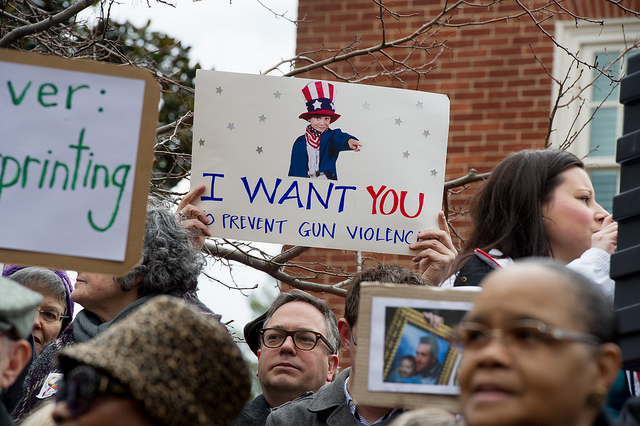
politics

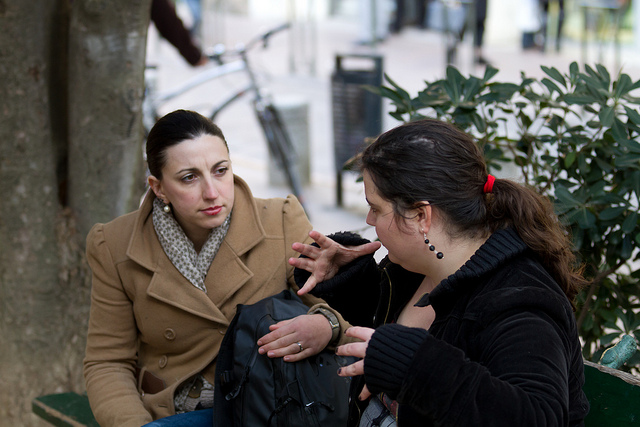
Photo by Pierre-Selim, Flickr CC

The #MeToo movement and high-profile sexual harassment and assault cases recently brought greater media attention to sexual violence. With this increased attention, however, comes new questions regarding the language used to talk about and write about various forms of sexual violence. This is not only a question of what specific words to use, but also how much detail to give about the act of violence or the victims’ experiences. Using vague or all-encompassing terms like “sexual violence” can flatten and sanitize victims’ experiences. However, when descriptions of sexual violence are not sanitized, they tend to be sensationalized.

In a recent Vox article on the complicated language of sexual violence, sociologist Heather Hlavka argues that sensationalizing violence can be a serious problem.

“Are we, as a culture, so titillated by the extremities of violence — the types, the details, the comportments — that we would like to ingest each sensationalized bit of people’s experiences?” asks Hlavka. “What is the ultimate goal? To better understand? To discredit the experience or mitigate the offense because it fell low on a range of horrors? To discredit the victim by dissecting her actions, her composure, her silence, or her resolve?”

People who experience sexual violence also struggle with language. According to Hlavka, many do not recognize or name their experiences as such, but this does not mean the problem is a lack of words to use to describe sexual violence. Instead, she argues that a broader culture of sexism has the power to reshape the meaning behind such terms, causing them to lose their power. 

Girls do not name their experiences as rape or sexual assault, despite very clearly fitting within established legal categories. Boys, too, struggle to understand, define, and identify as a victim of sexual violence but for different reasons. I would argue that we do not lack a language of sexual violence and harassment…It’s there — it’s a feminist language of power and control and abuse and consent — we just aren’t integrating it in truly meaningful ways, and thus our experiences will not neatly map onto law.”
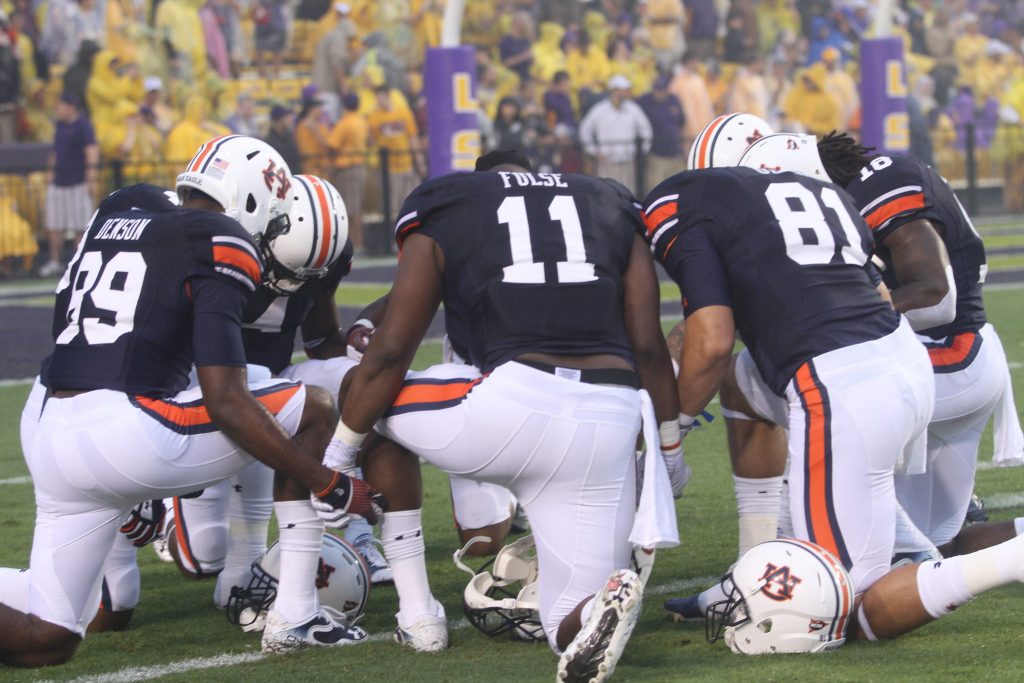

Photo by Tammy Anthony Baker, Flickr CC

In the last few months, President Trump’s incendiary tweets have found a home in sports, including comments on the NFL, the NBA, and college basketball. In a recent article in ABC News, sociologists discuss how Trump’s tweets about sports with high percentages of Black athletes are racially-coded, and may reveal Trump’s own racial bias and attempts to appeal to his political base.

In response to President Trump’s  demand that owners fire NFL players for kneeling, sociololgist Ben Carrington argues,

“When Trump uses language referring to Black athletes or other Black figures that kind of speak out in terms of them being ungrateful and undeserving of their place in sports, he’s re-invoking that dark era in American sports in which that language was explicit and Black players couldn’t play.”

In another example, Trump demanded thanks for keeping three UCLA basketball players out of jail in China after shoplifting, calling the father of one player an “ungrateful fool” and “a poor man’s version of Don King, but without the hair.” As these tweets gain headlines, the media may miss the core racial issues that drive this kind of dialogue in sports, according to sociologist Doug Hartmann.

“Trump’s been able to make the focus be on whether this is appropriate or not, and how players should be punished or disciplined, and completely distracted our attention from the racial issues that the players who are protesting want to focus our attention on – police brutality, huge wealth gaps, the treatment of African Americans in cities — those are real racial issues.”

In short, Trump’s tweets and the media’s coverage of them divert public attention from larger issues of racial injustice in the United States.

Photo by Francois Marcotte, Flickr CC

Despite recent declines, the United States still has one of the largest prison populations among comparable nations. Most of those incarcerated in U.S. prisons will eventually be released. Evidence suggests that as many as 600,000 individuals are released from prison each year. Upon release, many people must serve time on parole, which typically involves a period of supervision with a set of conditions that a parolee must follow, such as passing a drug test. In a recent article in The Conversation, Shawn Bushway and David Harding discuss how violations of parole conditions appear to be a key driver of high prison populations, rather than new offenses.

Since people convicted of a felony are randomly assigned judges in Michigan, Bushway and Harding, along with their colleagues Jeffrey D. Morenoff and Anh P. Nguyen, conducted a “natural experiment” to account for how an individual’s background may influence their sentences. As the authors explain,

This random assignment of judges mimics the way a scientist would design a randomized, controlled experiment in the lab. There are no obvious differences between who gets randomly assigned to one judge and who gets assigned to the other. For all intents and purposes, the groups are identical. So if one group ends up with stricter sentences, it’s likely due to the judge’s predilections rather than to anything specific to the individual defendants and their crimes.”

The authors are thus able to understand the specific effects of parole violations. Their findings suggest that people who are imprisoned and then released to parole — rather than those who are put on probation (instead of incarceration) initially — are more likely to return to prison. Further, some scholars remain skeptical that probation may also be another avenue into the prison system. Overall, the work of social scientists suggest that if we want to reduce prison populations, we must reevaluate parole and probation practices, including the response to violations of supervision conditions. 

Photo by Hector Alejandro, Flickr CC

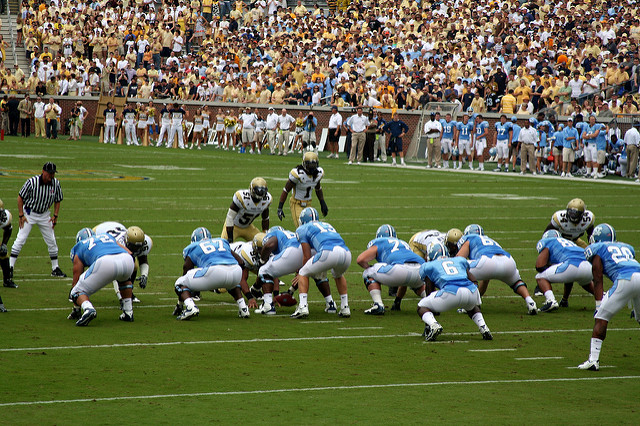
Scandals in college athletics are becoming so commonplace that the NCAA’s decision not to sanction University of North Carolina over academic misconduct barely made the news, while corruption in NCAA basketball has turned into a major FBI investigation. Fans might be justified in viewing the NCAA as a boogeyman in scandal-plagued college sports. After all, the NCAA is the organization that began using the term “student-athlete” as a way to avoid workers compensation claims from the widow of a college football player. Rick Eckstein, however, argues in Salon that the NCAA is simply a sign of larger problems in higher education. In his evocative language,

If the NCAA is Oz’s projection on the wall, a profit-oriented higher education system is behind the curtain pulling the levers.”

Eckstein ties spending on college athletics, which is known to run huge deficits, to the larger trend of the “corporatization” of higher education. Under this logic, higher education institutions work more like businesses than schools, and college athletics are a way for university administrators to achieve a variety of revenue-driven goals. For instance, sports are a way for colleges to manipulate enrollment statistics, encourage alumni donations, and, most importantly, expand the school’s brand. Eckstein writes,

“If we think about college sports as a marketing venture rather than an educational venture, all of this spending makes perfect sense. Think of players as walking advertisements – each branded with the school’s logo – who appear before millions of viewers on ESPN and ABC.”

Athletics isn’t the only part of higher education that seems to have an unstable foundation. Over half of Republicans now believe that universities have a negative impact on the country. Even the students who attend have less faith in the institution. Eckstein argues that it’s time to view NCAA athletics, with all of its contradictions, as a symptom of a corporatized higher education system that places fights over financial gain over student learning.

Photo by Ray_LAC, Flickr CC

With the current presidential administration’s promises to build border walls and increase deportations, it may be surprising that Latinx immigrants report experiencing less discrimination than those born in the United States. According to a recent survey featured in NPR’s Code Switchonly 23% of Latinx immigrants report experiencing discrimination, while 44% of Latinx born in the United States report discrimination. 

Sociologist Emilio Parrado told NPR that perceptions and experiences of discrimination are related to an individual’s level of participation in and adaption into United States culture. Research suggests that Latinx born in the United States may face more direct discrimination than immigrants, because they are more likely to engage in competitive workforce and social settings. 

“Discrimination is a strategy of the dominant group to protect itself, to protect the benefits that they have, so discrimination is something that emerges not when people are culturally different, but that emerges when people compete.”

Parrado also argues that many immigrants come to the United States without knowing the contextual “rules” of interactions with others, which makes it harder to  immediately identify instances of discrimination or racism.

“For immigrants, there is a process of learning that you are being discriminated against…Immigrants tend to think that it’s their own fault, that it’s because they don’t know the rules, or they don’t know English.”

Thus, past research may not fully capture how much discrimination is occurring simply because people may not recognize it as such. In response, some children of Latinx immigrants who were born in the United States are trying to educate their families on what discrimination looks like.

Photo by frankieleon, Flickr CC

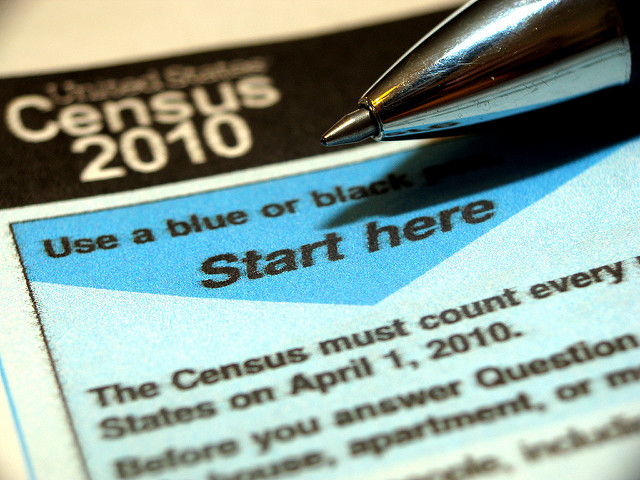
The multiracial population in the United States has grown at a significant rate since 2000 — three times faster than the general population. For the first time, the 2000 national census enabled individuals to choose multiple racial categories. However, racial identities are subjective, contextual, and fluid, making the categorization of racial identity an extremely difficult task. In a recent article in The Atlantic, sociologist Robyn Autry discusses the Census Bureau’s data cleaning process, which attempts to reconcile these ambiguities in racial identity, often at the expense of an accurate representation of people of color in the United States.

In the 2010 census, the Pew Research Center found that 9.8 million people reported a different racial or ethnic background than they had previously in 2000. To account for this, previous data is “cleaned” by changing or deleting responses from these individuals. Even with over 60 different options capturing racial descent in the 2010 census, individuals’ racial identities may be more nuanced than the census can account for.  According to Autry,

“Some people bristle at being asked to reduce the complexity of their self-perceptions into a singular choice. The ‘check-this-box’ mentality of the census is at odds with the more fluid and ambiguous self-perceptions of the population: people originating from outside the country, for example, or those habituated to customizable digital profiles, like those on Facebook, which appear to revel in the uncertainty of multitudinous identity. If anything, these digital tools have helped accelerate citizens’ willingness to self-identify in categories broader than those provided by the government — and even to demand to be able to do so.”

It seems the census has been slow to reflect the changing and dynamic atmosphere of racial identity in the United States over the last few decades. According to Autry, the census is more than just numbers and categories: 

“A simple count of the population remains ideologically loaded. These data are not neutral or objective information about the population. Instead they reflect changing political priorities and techniques to grasp how the country’s population is seen — and how resources are made available to them.”

Photo by Philip Cohen, Flickr CC

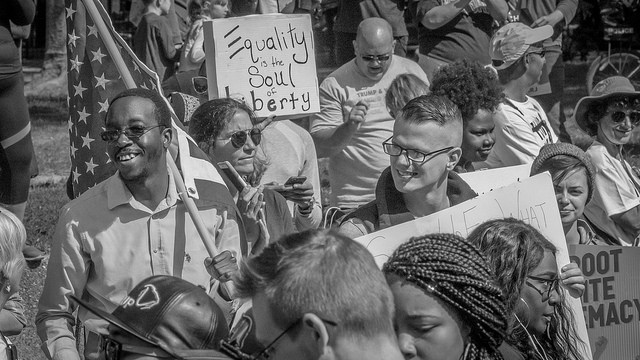
Recent social movements in the United States, like Black Lives Matter and Occupy Wall Street, have sought to challenge the status quo. While such movements often make the news, less attention is paid to how they achieve success. A recent article in the New York Times by sociologist Kenneth T. Andrews argues that social movements bring about change through exercising different types of power — cultural, disruptive, or organizational.

We are used to seeing cultural or disruptive power from movements in the media, but organizational power is also important. Organizational power is reflected in a movement’s ability to sustain its agenda through ties to other groups. Recent research suggests that after the Tea Party built upon disruptive power gained from initial protests, it established local organizations and supported political candidates that shared its ideas, ultimately transforming the Republican Party. However, as with each mechanism of power, organizational power also has constraints. Andrews explains,

“Staging the occasional protest and raising money are one thing; developing leaders and building constituencies are another. Despite substantial resources and hundreds of organizations, the environmental movement, for example, has not generated the sort of participation sufficient to meet the environmental challenges we face.”

In short, the pathways to power that different social movements utilize are very important to the movement’s success in encouraging change. A movement may have the most success when it combines all three types of power, which helped movements like the Civil Rights Movement. And even if a movement itself is short-lived, the cultural effects may remain long after a movement has fizzled out, and even small-scale changes can still have the cultural power to affect the status quo well into the future.

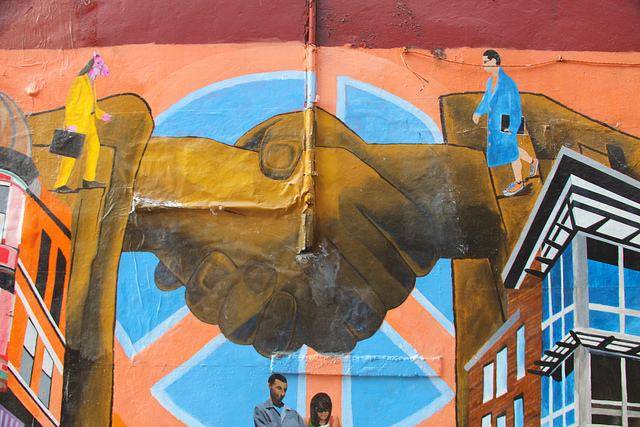
Pilsen Smart Communities Mural. Photo by Daniel X. O’Neil, Flickr CC

Since the 1990s, rates in homicide, robbery, assault and theft have seen a consistent drop in American cities like New York, Washington, and San Diego. Theories about this great “crime decline” typically focus on larger societal shifts, such as increased access to abortion and reductions in lead poisoning. However, a recent article in The New York Times presents evidence for a different trend: how local non-profit groups played a crucial role in reducing violence in some communities in the U.S.

Using data from the National Center for Charitable Statistics, sociologist Patrick Sharkey and doctoral students Gerard Torrats-Espinoza and Delaram Takyar traced the formation of community groups and nonprofit organizations in 264 cities over the past 20 years. The research team found that the growing number of organizations is connected to a considerable decline in both the murder rate and in violent crime. The article summarizes Sharkey’s findings,

“Every 10 additional organizations in a city with 100,000 residents, they estimate, led to a 9 percent drop in the murder rate and a 6 percent drop in violent crime.”

What is the connection between nonprofits and crime reduction? Sociologist Robert Sampson explains that effective crime prevention does not necessarily require hot-spot policing, mass incarceration, or tough-on-crime control measures. Community organizations engage in a wide variety of initiatives, from building playgrounds to employing young men, which contributes to the creation of vibrant communities and public spaces, dissuading criminal activity. And while the rise of community organizations is not the sole contributor  in the crime drop, it is a step forward in urban crime prevention that does not rely on intense policing or harsh penalties. As Sharkey notes,

“The model that we’ve relied on to control violence for a long time has broken down … This gives us a model. It gives us another set of actors who can play a larger role.”

Photo by Tax Credits, Flickr CC

College education is a core part of social mobility in the United States, but it is also increasingly controversial. Amid polarizing views on trust in colleges and universities and a proposed plan to tax graduate students’ tuition waivers, Americans are facing big questions about the role of higher education in our society.

Now, there’s a new twist. In an op-ed column for The New York Times, UC Merced sociologist Charlie Eaton looks at how some private schools are tied up in the Paradise Papers exposé. Eaton writes,

“It’s an increasingly bipartisan view that elite private colleges are islands of wealth. And there’s good reason for that: It’s true … the Paradise Papers revealed that dozens of wealthy college endowments use Caribbean islands as offshore tax havens for their investments.”

Eaton argues that this revelation is in line with a long term trend toward inequality in higher education, where some schools show a broad commitment to educating a wide range of people, while others stockpile their resources to serve a small student body. Elite private schools often enroll a limited number of students, drawing a large proportion from “the 1 percent.”

“The problem with enormous endowment growth is that private institutions have not used the resource boom to provide greater benefits to the public … America’s top public universities, on the other hand, have substantially increased their enrollments since the 1970s despite shrinking state funding. They also tend to enroll low-income students at much higher rates.”

In a time where more people are skeptical of colleges and universities, scandals like this pose a central question for the future of higher education: can private schools provide a leg up, or will they have to find another way to pay out?

Photo by Maryland GovPics, Flickr CC

After a mass shooting, we often seek to understand why. Sociologists are well-positioned to help us to make sense of these tragedies. In a recent article for Quartz, Tristan Bridges and Tara Leigh Tober reflect on the importance of American masculinity for understanding the prevalence of mass shootings in the United States.

While the United States does have more guns than many other nations, Bridges and Tober argue that gun access does not fully explain why the United States has more mass shootings. This explanation also does not account for why nearly all mass shootings are committed by men. Bridges and Tober use the concept of “masculinity threat” — when men’s masculinity is called into question — to explain why mass shootings follow a larger pattern. Evidence shows that men who experience masculinity threats are more likely to condone violence, male superiority, and homophobic attitudes. 

“Mass shootings follow a consistent pattern: The men who commit them have often experienced what they perceive as masculinity threats. They’re bullied by peers, gay-baited by classmates, and often perceive themselves as unable to live up to societal expectations associated with masculinity, such holding down a steady job, having sexual access to women’s bodies, or being tough or strong. This does not suggest that men are somehow unavoidably more violent than women. But it does suggest that mass shootings need to be seen, in part, as enactments of masculinity.”

Unmasking the role of masculinity in mass shootings is critical because it removes the individualized framing of mass shootings, including equating white shooters with mental health issues but not extending this discussion to persons of color. Since mass shootings are not an individual issue, they cannot be solved by individual solutions. While gun control is one part of the solution to mass shootings in the United States, Bridges and Tober argue we also must recognize the role of masculinity and invest in a new culture of masculinity that is not so deeply invested in dominance and violence.