politics

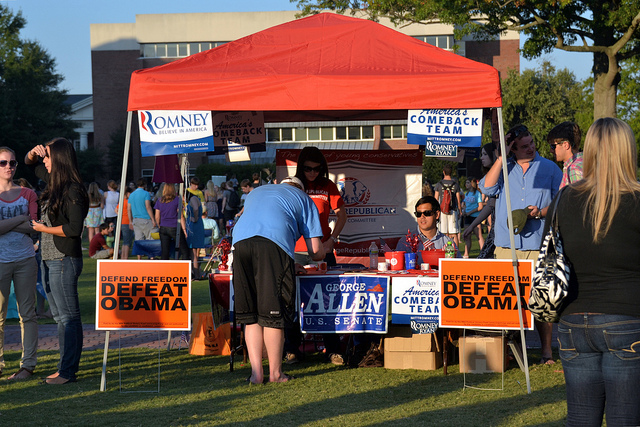
College Republicans student group. Photo by Tony Alter, Flickr CC

In our current political climate, freedom of speech is a major concern on college campuses and beyond. Controversial campus speakers such as Milo Yiannopoulos and Richard Spencer have caused event cancellations and sparked protest. Harsh criticism has come from those on the right, including Attorney General Jeff Sessions who recently stated that “the American university was once the center of academic freedom — a place of robust debate, a forum for the competition of ideas … is transforming into an echo chamber of political correctness and homogenous thought, a shelter for fragile egos.”

In a Monkey Cage analysis for The Washington Post, sociologist Jeffrey Kidder discusses conservative criticisms of liberal “safe spaces” and what these critiques illustrate about conservative identity. In some instances, provocation of liberals and progressives serves to simply embolden conservative identity, as they are able to claim a victory in successfully inciting liberal outrage. Kidder notes,

“Instead of focusing on policy debates or electoral outcomes, right-leaning students can find a sense of purpose in offending (or outright attacking) those they come to see as the opposition…Thinking sociologically — and not just politically or ideologically — about such controversies will help clarify what is at stake for the individuals and organizations involved. We must not lose sight of the narratives supporting social identities. Despite claims to the contrary, conservative groups are equally working to maintain their own safe spaces. These are largely battles over which identities get to be privileged in the public sphere, in which actors on both the left and right interpret history so as to cast their actions and causes in the most favorable possible light.”

Kidder argues that behind their critiques of liberal safe spaces, conservatives are in fact asking for their own safe spaces on campus too. In his ethnography of college Republicans, he finds that while Republicans may have national government control, many feel they are the vocal minority in campus settings. 
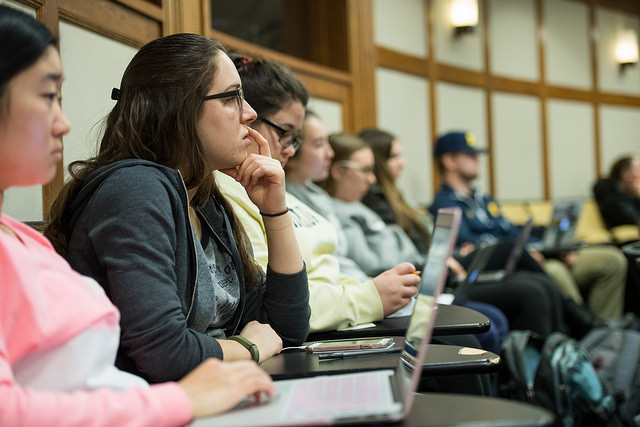
Panel on sexual assault on campus at University of Michigan in February 2017. Flickr CC.

Education Secretary Betsy DeVos recently referred to current campus sexual assault enforcement as a “failed system,” indicating that the Trump administration would work to revoke current guidelines. Two sociology PhD candidates from the University of Michigan, Miriam Gleckman-Krut and Nicole Bedera responded with an op-ed in the New York Times entitled, Who Gets to Define Campus Rape?  

Gleckman-Krut and Bedera worry that DeVos’s speech signals a coming change in evidentiary standards for sexual assault cases. During President Obama’s term (both as a result of Department of Education guidance and proactive moves from universities) most institutions shifted the standard of proof in such cases from “beyond a reasonable doubt” to “a preponderance of evidence,” or what the authors define as “more likely than not.”  The authors contend that this new standard is central to encouraging survivors to come forward and receive support from their institutions, especially considering the risks to well-being and educational attainment that assault can bring. They write,

When judging whether someone has been raped, it’s almost impossible to assert that a sex act constituted violence “beyond a reasonable doubt.” Many survivors struggle to produce what campus hearing boards would consider evidence, especially when it comes to acquaintance- or date-based sexual assaults in which alcohol made it impossible for someone to physically resist.”

Gleckman-Krut and Bedera urge the Department of Education to maintain the weaker evidence standard in order to keep campus sexual assault proceedings centered on the survivors, not the accused. Bedera’s research has shown that although college-aged men can articulate their college’s affirmative consent policies, actual practice often does not follow those standards. Gleckman-Klut and Bedera conclude,

“Though they vary, the approximations of how many women have been sexually assaulted in college are always high. That should be the education secretary’s biggest concern.”

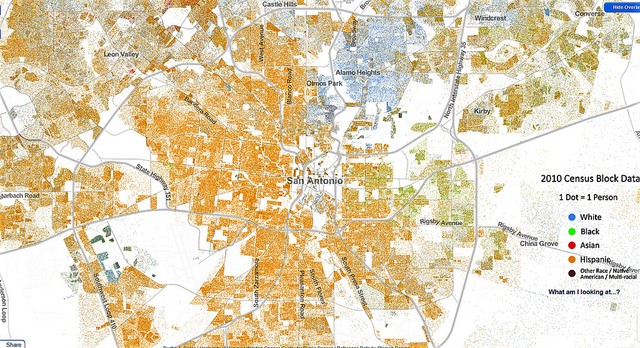
U.S. Census, 2010. Photo by Joe Wolf, Flickr CC

Recent celebrations of National Hispanic Heritage Month call our attention to the growing importance of Hispanic culture, histories, and contributions in the United States. As the Hispanic population has grown, so too has the interest in defining what exactly it means to be “Hispanic.”  Research suggests that administrative agencies, particularly the U.S. Census Bureau, played a significant role in unifying different identities under this single pan-ethnic umbrella category. In a conversation with sociologist Cristina Mora, NPR’s Code Switch uncovers the complicated history behind the term “Hispanics.”

Prior to the 1960 census, Latin communities did not have an identifiable option or category matching their ethnic identity. Initial attempts in the 1960 and 1970 census resulted in a massive undercount. Following these largely unsuccessful efforts, Mexican and Puerto Rican communities mobilized to come up with a sufficient term for the 1980 census. Terms were heavily contested, agencies and experts debated various phrasings, and, with reservations, they eventually decided on Hispanic. And the importance of finding a proper category cannot be underestimated — having “Hispanics” as a category in the census enabled communities to address pressing political issues. Mora told NPR,

“Once the category was made, everything from political groups to civic organizations to every other media group that would emerge, would draw on census data. As soon as the census numbers came out, Latino lobby groups could then run the numbers and say, ‘Look, this is what Latino poverty looks like; this is what Latino educational attainment looks like.’ They could go up to the Department of Education, for example, and say, ‘Latinos are the second-largest minority group. And yet, our educational attainment pales to that of whites. Send money to our schools.’”

Despite its contested nature, the use of the ethnic category of Hispanic and its incorporation into administrative counts has proven to be an effective tool for mobilization of Latinx populations. Mora’s research indicates that defining ethnic categories in this way may create opportunities to increase political representation and power among minorities in the U.S.

Photo by Wonder woman0731, Flickr CC

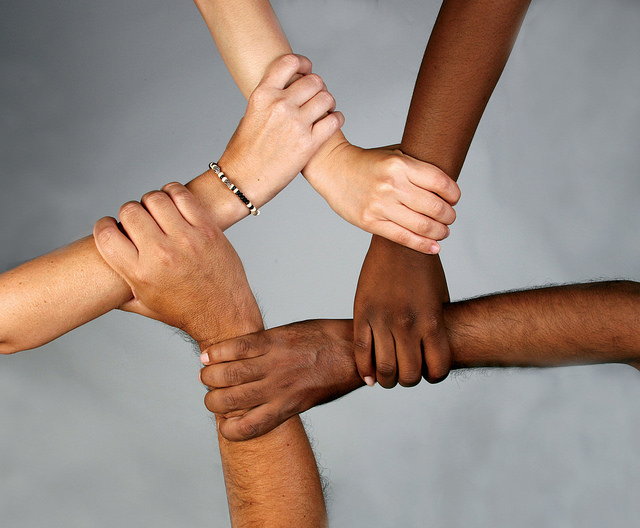
The goal of increasing “diversity” has become a common focus in university admissions, meaning strengthening the presence of underrepresented minorities within the student body. This kind of rationale also appears in businesses and government, with rhetoric that emphasizes how diverse groups can be more productive and innovative. In essence, most see pursuing diversity as a good thing because of the benefits of diversity.

That said, researchers question whether “diversity” policies and programs really overcome existing racial inequalities, and some argue that organizations are more interested in boasting about their diversity than they are in actually increasing minority representation. Ellen Berrey has researched the meaning and use of the word “diversity” in a variety of sites. Her research, as described in The New Yorker, suggests that touting the benefits of diversity can have an unintended consequence: glossing over issues of inequality, exclusion, and discrimination. As an example, Berrey describes an investigation of diversity in a Fortune 500 company,

“The diversity-management program functioned mainly as a surreal exercise in internal branding, entirely separate from the legal department (which handled claims of discrimination). So-called diversity managers worked to foster an “inclusive” environment, but they seemed to spend much of their time “reiterating the good that would come from diversity,” as a way of justifying their own positions.”

The New Yorker article also discusses research by Natasha Warikoo, who examines the ways that white students at Ivy League colleges describe diversity on campus. Their accounts point to what Warikoo calls “the diversity bargain” — white students accept the existence of racialized admissions programs with the expectation that students from different racial and ethnic backgrounds will expose them to new ideas, cultures, and experiences. In general, these researchers find that “diversity” rhetoric often misses the bigger picture of continued racial inequality in the United States.

For the past twenty-five years, Oklahoma has seen some of the highest levels of female incarceration in the United States. In a recent article from Reveal, research by sociologist Susan Sharp demonstrates that incarceration rates and sentence severity varies between different counties within the state, where courtroom cultures and access to legal resources vary.   

Across the state, harsh drug sentencing leading to lengthy prison sentences for women is the norm, and Sharp argues that women in Oklahoma have become “collateral damage” in the War on Drugs. This is in large part due to the cultural norms surrounding women’s roles as mothers. Sharp explains,

“I think the general population of the state feels that a woman – particularly a woman who has children who uses drugs – violates all the norms in a way that they find unacceptable . . . and they would rather see those children grow up in foster care than to be with a mother who had a drug problem.”

However, Sharp has found that rural counties with more “get tough on crime” district attorneys and judges will typically send more people to prison, and poor women in these areas often experience the “wrath of judges and prosecutors.” In urban areas, women have access to more resources — money for private attorneys and specialty courts for drug addiction and mental health issues — which often keeps them from serving a sentence or helps reduce their time served.  The case of Oklahoma demonstrates how local differences influence punishment, as external and situational factors play a central role in shaping personal experiences with the criminal justice system.

Photo by Tax Credits, Flickr CC

Does talking about economic inequality really matter when it comes to influencing voters? A recent article in The Washington Post discusses research on whether income inequality impacts Americans’ support for certain economic policies. A report from Leslie McCall and Jennifer A. Richeson suggests that when presented with data on economic inequality, Americans develop skepticism about the existence of actual economic opportunity, and will tend to favor policies that promote equality. Using experimental data, the researchers found that when presented with information on income inequality, 58% of Americans surveyed responded more favorably toward policies proposing decreasing the pay gap (in contrast to 51% for those who did not receive information). The authors write,

“Americans tend to support greater spending on education when their opposition to inequality rises or inequality itself rises, consistent with a link between concerns about inequality and opportunity. But this pattern may be limited to particular time periods and does not extend to support for other kinds of spending or government redistribution generally.”

The research suggests that Americans are fully capable of linking income inequality with economic opportunity and that efforts should not be made to avoid discussing one or the other. The authors conclude,

“For this reason, the instinct to focus on economic opportunity instead of inequality seems misplaced. In the minds of Americans, the two can be linked quite readily.”

Photo by Patriot Stones, Flickr CC

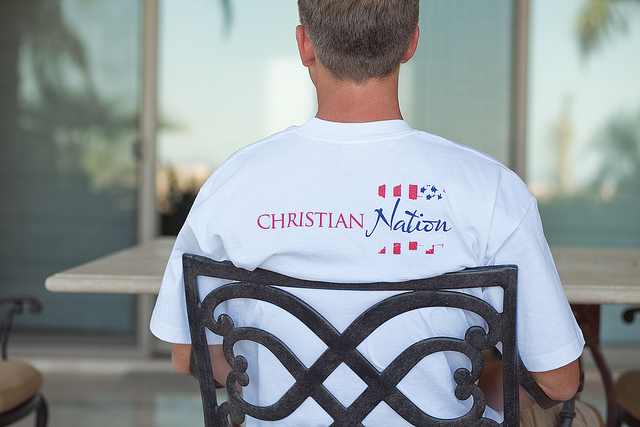
It’s been well documented that religion played an important role in the 2016 presidential election, as well as recent state elections. ThinkProgress.org recently contributed a new analysis of this relationship, highlighting preliminary research from a number of sociologists on the role of “Christian nationalism” in President Trump’s victory. Their findings indicate that the belief that America is a Christian nation may both predict support for Trump and be connected to intolerant views of other groups.

Sociologists Andrew Whitehead, Samuel Perry, and Joseph Baker found that Christian nationalism was “strongly and positively associated with voting for Trump,” and they emphasized that Christian nationalism is not simply another measure of religiosity. Whitehead told ThinkProgress,

“For this study, when we look at a lot of the normal ways we measure religiosity, at the end of the day, none of them really predict a vote for Trump except Christian nationalism. It didn’t matter if you were evangelical or mainline [Christian], it didn’t matter if you went to church a lot or a little, what mattered was whether you think America is a Christian nation.”

Whitehead notes that an important part of this research regards findings about the ways Christian nationalism interacts with other ideologies, and ThinkProgress reached out to sociologist  Penny Edgell for further development of this connection. Edgell’s ongoing work with Evan Stewart and Jack Delehanty indicates that support for “public religious expression,” a variable that measures the belief that religion should be an integral part of public life and deliberation, is associated with intolerance against a variety of groups. Edgell emphasized the need for more analysis of white Christian nationalism, especially its role in propagating ideologies like Islamophobia and xenophobia. She told ThinkProgress,

“Certain white Christian institutions house and foster and bundle these attitudes all together, and link them to politics in systematic ways.”

Photo by Jon Skilling, Flickr CC

Where does Washington D.C. get its policy? For nearly a century, think tanks have churned out the research that drives the political agendas of the day. Often hiring specialists from universities, we think these organizations bring the facts to politicians who, of course, can add the spin.

But recent shakeups in the think tank world call this narrative into question. NPR reports on a controversial decision at the New America Foundation to close a project studying monopolies. Critics allege that funding from Google swayed the decision, but blatant bribery isn’t necessarily the whole story. Sociologist Thomas Medvetz traces bigger structural changes in think tank organizing over the years that make these groups more susceptible to partisan interests, because they aren’t just doing research. From the article:

[Medvetz] said think tank experts now need skills not commonly found on college campuses: “Skills that one would use in a PR firm, for example, or a lobbying firm, as an aide on Capitol Hill, as a scholar, or a journalist.”

This is a key sociological insight about organizations: when groups have to draw on a wide variety of skills and resources to survive, there is a higher chance that conflicts of interest will arise even without explicit corruption.

Photo by Tony Webster, Flickr CC

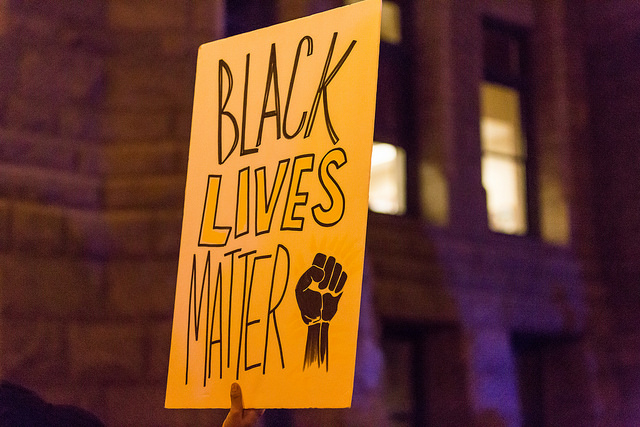
Over a year after 49ers quarterback Colin Kaepernick first knelt during the national anthem in protest of police brutality, protests in the NFL spiked dramatically after President Trump attacked players who followed Kaepernick’s example. In recent weeks many more players knelt, locked arms, or stayed in the locker room during the anthem in response to Trump’s speech and series of tweets. During the flurry of media attention on the NFL, scholars Rashawn Ray and Nicole Gonzalez Van Cleve wrote an Op-ed for NBC News about not losing sight of the original purpose of the protests.

Instead of focusing on the political implications of the president’s tweets or changes in protests over the past week (such as owners joining their players on the field), Ray and Van Cleve reiterate research on the violent repercussions of racial bias in policing. They emphasize that black athletes, even NFL stars, are subject to the same dangers of racial profiling as all other African Americans. In an MSNBC spot discussing the Op-ed, Ray told the panel,

“We really have to reorient the narrative. This isn’t about someone standing or sitting, this is about the fact that black lives matter. This is about the fact that football players, basketball players, baseball players, once they leave those stadiums they are black and brown men. And unfortunately in our society it doesn’t matter if you are affluent or less affluent, unfortunately you might be actually profiled by the police, and unfortunately that particular profiling can turn deadly.”

Photo by Molly Adams, Flickr CC

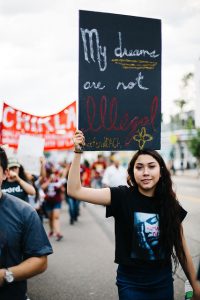
Ambiguity from the Trump administration about the future of the Deferred Action for Childhood Arrivals (DACA) program puts the current lives of many immigrant youth and young adults in a state of limbo — nearly 1 million people could face the loss of legal protection or even deportation. In a recent piece for The Globe Post, Stephanie Canizales outlines what the abolishment of DACA could mean for both the current DACA-recipients, or “Dreamers,” and others who may have qualified for the program in the future.

Beginning in 2012, Canizales conducted in-depth research with hundreds of now long-settled undocumented young adults. These young adults, now aged 18 to 31, arrived as unaccompanied minors to the United States between the ages of 11 and 17. Her research shows that upon arrival, and without parental support, many of these youth entered the workforce immediately, taking jobs in industries marred by deplorable working conditions and wages. These jobs were often extremely detrimental to mental and physical health, and forced many youth to work exceptionally long hours for menial pay.

Work permits under DACA appear to have helped alleviate these exploitative workplace conditions, and many Dreamers are now enrolled in college to further their careers. Canizales’ work demonstrates that the loss of DACA could also negatively impact young adults at work even if they aren’t deported. She concludes,

“Removing legal protections for immigrant youth and young-adult workers risks further increasing the exploitation of immigrants in the workplace, as well as poverty and marginality in their communities.”