
culture

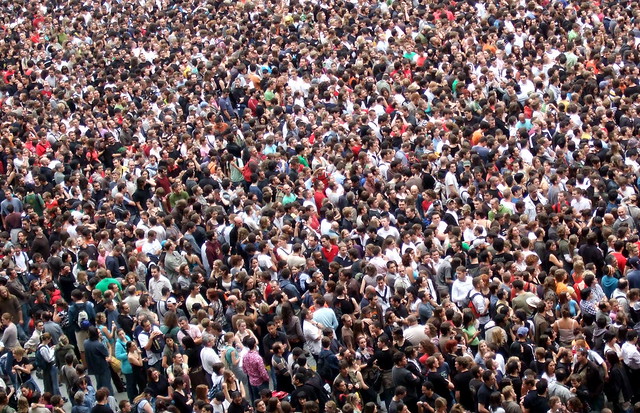
Photo of a large crowd of people, with no space in between.
Photo by James Cridland, Flickr CC

For most of human history, the world population has been much smaller than it currently is — the population has grown substantially only in the last two centuries, as technological and medicinal advances increased life expectancy. Social scientists now say that this growth will end within this century, according to a recent article in The Atlantic. By 2100, when the world population will be approximately 11 billion, growth rates and death rates will be relatively equal; while the population will continue to grow in some parts of the world, other regions will bear aging, smaller populations. Thus, though the numbers seem to equalize, human demographics could look quite different than they do now. Based on these population considerations, the 2100 world could witness many social, political, and cultural shifts, both on a local as well as a global level.

To begin, shifting populations could shape family structures and cultural production.

  • Traditional family structures may change in places where most people currently have large, extended families. Sociologist Parfait Eloundou-Enyegue explains that some of these places will experience smaller fertility rates, leading to smaller families. This could change traditional family structures in some countries as large, extended families give way to smaller, nuclear families. The family reunion may be less lively, but it’s not all bad; as families get smaller, parents can invest more time and resources into their children, whether it’s being able to afford better schools or giving the kids their own room.
  • Art, music, theater, and other forms of culture are often clustered around larger, urban environments with youthful populations. As demographics change and certain parts of the world become relatively younger than others, we could see a shift in dominant produces or culture and entertainment. For example, marketing and producing sports has already changed as certain parts of the world have grown while others have shrunk. For several parts of the world that have been often overlooked in global culture and entertainment, this could be their big break; break a leg!

At the same time, the population plateau of 2100 could spark tensions and challenges, particularly for economics, political interests, and social policy. 

  • The world population will be collectively older than it is now, and a much larger proportion of people will be of retirement age. This could cause political and policy shifts in many countries, particularly those with social spending programs that support the retired and elderly. Often, these are paid for by the employed persons in the labor force, a group that will be comparatively younger and smaller in the future; this will likely cause shifts in how social services operate and receive funding. Furthermore, since such programs are often key political issues, changing populations could spark shifts in the political arena based on different interests and agendas across age groups. 
  • By 2100, the global environment and climate could look much different than it does now, and the population is estimated to plateau just below 11 billion people. Climate change affects different parts of the world in a variety of ways. Across the world, some populations will shrink and age in comparison to others. Thus, different countries’ social and political responses to environmental issues will likely reflect considerations of their different population needs. 

Of course, these population predictions are just predictions, but they are informed by complex tools and methods in demography; such analyses are built on hard data regarding the world population and trends in fertility and birth. Thus, even if there are some fluctuations in the numbers, the general trend towards an aging population in some regions and a younger population in others will remain. Overall, this could lead to many social, cultural, and political changes.

The world may stop growing, but the population plateau could still cause many shifts and shake-ups; change really is the only constant.


Photo of two men sticking their tongue out for a selfie
Photo by Andy Rickman, Flickr CC

A growing number of couples are meeting through online dating, while for much of history couples met through friends and family. According to new research by sociologist Michael Rosenfeld and colleagues — cited in a recent article in The Atlantic — online dating shows no evidence of slowing down. As online dating grows, individuals shoulder more of the burden of finding a mate. Sociologist Jessica Carbino points out that expectations of potential partners are also shifting, sometimes toward “unrealistic.”

Rosenfeld doesn’t see this state of affairs as a major cause for concern:

“I don’t see anything to worry about…For people who want partners, they really, really want partners, and online dating seems to be serving that need adequately.”

In addition, online-dating has been helpful for minority communities, including LGBTQ people. Rosenfeld points out that in the past, even families who were supportive of their queer children were unlikely to know other queer people to introduce them to, whereas online dating sites certainly do. Rosenfeld and colleagues’ research supports this: the proportion of gay couples who have met online has risen greatly in recent years.

Online dating can feel daunting and overly critical at times, but clearly there are good things to swipe right about.

Photo by Elicus, Flickr CC

It seems like everyone has a side-hustle these days. Yet, according to a recent article on CNBC, research shows that these side gigs may not be all they’re cracked up to be. Sociologists, Arne Kalleberg and Alexandrea Ravenelle explain there are caveats to consider before you invest time and energy into a side hustle.

Side hustles seem like easy and fun ways to make a quick buck. According to Kalleberg:

“Side hustles always sound like they’re going to be this cool, entrepreneurial activity…That’s part of the PR and the lure of these platform companies — that you can work and make money whenever you want and be flexible. But that’s not always the case.”

Research shows that side hustles require lots of time, energy, and money up-front, and it can be a while before your side hustle turns into a profitable endeavor. Turning your hobbies and passions into cash may sound like fun, but it actually make your favorite pastimes into tedious, energy-sapping hours on the job. As Ravenelle reminds us,

“Every hour that you spend working is an hour that has to come from somewhere else in your life, whether that’s sleep, leisure time or your time with family and friends.”

Finally, but importantly, it’s not as easy as you’d think to keep your side-job and full-time job separate; sometimes, you find yourself managing your side-gig during work hours. Though there’s a lot of pressure to have a side-job these days, it just might not be worth it.

Photo by Sascha Kohlmann, Flickr CC

Headphones are not just for listening to music. They can also help avoid harassment. In a recent article in The Atlantic, sociologist Laura Loganexplains that many women leave their headphones in as a strategic move to avoid street harassment.

Logan, who studies street harassment, discusses how this use of headphones and AirPods is only one way women try to protect themselves against harassment in public spaces. Acknowledging street harassment gives the assaulter attention and power, but sometimes, when a street harasser thinks they’re being ignored or challenged, they lash out with even more derogatory comments — including racist or violent statements. Thus, for many women, it is easier to pretend that the noise in their headphones masked a street harasser’s nasty comments than it is to challenge such comments. Logan says,

“When women wear headphones, or read books, or do other things that mean they don’t have to acknowledge this is happening in some way, they’re managing that dilemma.

Women still deal with sexism and misogyny in their daily lives. Leaving headphones in is just one way women attempt to drown it out.

Photo by André Zehetbauer, Flickr CC

Last month, the International Association of Athletics Federations (IAAF) ruled against Caster Semenya, a two-time Olympic champion from South Africa who challenged rules prohibiting women with naturally high levels of testosterone from competing  The court’s ruling declares that female track athletes with naturally elevated levels of testosterone must reduce these hormones before they can participate in certain races at major competitions.

Madeleine Pape, a former Australian Olympian who has raced against Semenya and a Ph.D. candidate in sociology, told The New York Times that athletes should be allowed to compete based on their preferred gender:

I’m not saying it’s a solution, but I think it’s a start…I think it’s hard to draw a biological line around the female athlete category.”

She believes the court ruling is based primarily on

“People’s fears and misconceptions about trans women competing…I want to make sure people understand the complexities [of gender categories] and relate to these women as real people.”

While there have been broader shifts in cultural acceptance of transgender people and deconstructing gender categories, sports organizations tend to draw hard lines between men and women. According to law professor Doriane Lambelet Coleman:

“The gender studies folks have spent the last 20 years deconstructing sex and all of a sudden they’re facing an institution with an entirely opposite story…We have to ask, ‘Is respecting gender identity more important or is seeing female bodies on the podium more important?’”

Photo of a romantic couple's backs as they sit on a bench. One has a hand in the other's hair.
Photo by Jeffrey, Flickr CC

Do younger generations cheat on their spouses more than older generations? According to an article in The Atlantic, it’s too early to tell.

Sociologist Wendy Manning explains there is no evidence that young adults are more likely to be faithful than young adults in the past. While a recent analysis of the General Social Survey (GSS) suggests that people age 18 to 55 may be less likely to have extramarital affairs than those older than 55, Manning argues this simply reflects that people over 55 have been married longer and thus have had more opportunities to cheat.

A broader look at marriage trends shows that the divorce rate has decreased significantly and marriage has become more selective in recent decades among more educated persons, according to sociologist Andrew Cherlin. Manning notes that that millennials may be purposely setting themselves up for more stable marriages than their parents:

“The specter of divorce looms large. And it seems like it’s a big reason why a lot of young adults want to live with someone first. They want to divorce-proof their marriage.”

While younger generations may be more selective about the marriages they do enter, we won’t know if they stay faithful for many years.

Photo by verkeorg, Flickr CC

As the weather heats up and the school year draws to a close, many parents ponder the best ways to keep their kids occupied during the summer months, given their own resources and obligations. Electronic devices are always a popular option, but how much screen time to permit young children can be a tough decision to make, and one that parents themselves are often judged for.

To help parents devise a plan for their kids’ devices, a team of international experts shared their latest recommendations in a recent World Health Organization press release regarding children’s sedentary behavior, physical activity, and sleep. The report concluded that for preschool-aged children, sedentary screen time should be limited to an hour, and the less the better. They also recommended that kids be physically active for at least three hours a day; more is preferable. This implies that parents should replace children’s reduced screen time with time spent actively engaging in physical activity and interactive play so as to further motor skills and cognitive development.

Indiana University sociologist Jessica Calarco points out in The Atlantic, however, that such guidelines make a number of assumptions that may not be true for all families:

“If parents are letting their kids watch TV, or keeping them cooped up inside, or keeping them strapped in a car seat for an hour or more, it’s not because they think it’s good for their kids. Parents make those decisions because they don’t have any other choice. Or, at least, because the alternatives require more money or more space or more energy or more patience than those parents have on any given day.”

Some parents may have access to paid childcare, extracurriculars, safe outdoor spaces, or libraries with high-quality children’s programming, but these constructive alternatives are out-of-reach for many families. In fact, less-privileged parents often turn to screen time because it’s a safer or more educational choice than other options. On Twitter, Calarco concludes that strict screen-time guidelines are problematic because they treat screen time as a choice, rather than a necessity. This framing, in turn, heightens the already intense scrutiny faced by disadvantaged parents.

Photo by kurrija, Flickr CC

We’ve all seen cats and celebrities become images that represent cultural moments in spreadable and shareable ways — also known as a “meme.” Memes often represent jokes and light-hearted cultural moments, but they have also become an outlet for activist movements and political expression. VICE news recently featured a new type of meme circulating worldwide: “activist memes.” Previous generations wrote songs and created art to protest policies and create movements, but VICE notes that 21st century memes can go viral in seconds.

James M. Jasper, a sociology professor, argues that protest movements often involve emotional elements. To this end, Jasper argues that the subjects of activist memes are often villains:

“They’re an important step in arousing the anger or fear that can mobilize people…the media [of protest art] have changed somewhat, but the purposes are similar: the blaming of villains, the identification of victims, as well as outrage at the villains and compassion for those victims.”

Political figures like President Trump are a major target for activist memes and protest art in both liberal and conservative camps, especially for those who disagree with major players’ policies. According to VICE author Sage Lazzaro:

“creating or consuming political memes that align with one’s point of view can be therapeutic. They reflect what’s happening in society, and help justify feelings of rage and fear while helping us feel less alone.”

Photo of a mother sitting on the floor holding an infant.
Photo by Jessica Pankratz, Flickr CC

Working moms need more than just flowers and spa days this Mother’s Day. They need policy changes and other support in order to manage their stressful daily lives. As highlighted in a CNBC article, sociologist Caitlyn Collins’ new book Making Motherhood Work demonstrates that Germany and Sweden can serve as useful models for how to support mothers in the United States.

Collins points out that many American mothers juggle primary caregiver roles and demanding work schedules. She interviewed 135 middle-class working mothers in some of the most wealthy nations in the world — the United States, Sweden, Italy, and Germany — and she found that the United States is an outlier in its lack of societal support for working mothers.

Policies alone cannot solve all of American moms’ woes, but Collins argues that Germany and other countries can serve as useful models. For example, a policy in Berlin allows mothers to take an entire year of parental leave and either work part-time or telecommute after that. Collins states that if similar policies are set in place to support working mothers in the United States, a weight would be lifted off their shoulders.

Collins’ research highlights how American society needs a deeper appreciation in supporting mothers in their daily lives and work. However, it still doesn’t hurt to get mom a little something extra this year!

A Rwandan woman and man sit on a bench outside of Ntarama and wait for gacaca court to begin.
Outside Ntarama, people wait for the gacaca court to begin. Photo by Robin Kirk, Flickr CC

Genocide often involves the restructuring of military organizations to target of civilians based on their identity. But in Rwanda, the army and militias of the genocidal regime killed alongside those who had not previously been part of the military. Farmers, doctors, and religious leaders responded to calls to participate in the violence, carrying out the genocide within their own communities. This April marks the twenty-fifth anniversary of the Rwandan genocide, and communities continue to grapple with the effects of this violence.

One of these is the return of those convicted of genocidal crimes from prison or communal work camps. In recent years, many of these individuals have returned home to the communities where they committed violence. Hollie Nyseth Brehm and Laura C. Frizzell recently wrote an op ed in the New York Times about their research on this reentry process. Brehm and Frizzell work with 200 Rwandans who were incarcerated for crimes of genocide, following their journey from the end of their incarceration through their return home. In this op-ed, the researchers include a number of anecdotes from Rwandans who were surprised to be met with a warm welcome upon their return:

Straton served almost 21 years in prison for murdering three people. When he was released, he could barely recognize his surroundings because of Rwanda’s vast economic growth. Dirt roads had been paved and new buildings were everywhere, meaning he ultimately had to ask strangers how to find his house. There, he found his wife and children, and after a joyous reunion, the next few days were full of pleasant surprises. “There are people that I never expected to help or to greet me, and they did it … Neighbors would come with Fanta. Some friends would come and give me small amounts of money.”

In post-genocide Rwanda, the history of Belgian colonialism and the institutions created out of this history take much of the blame for the 1994 genocide. This means individuals do not face all the blame — instead, their behavior is part of a broader social context, which helps to facilitate reconciliation:

What could explain such an unlikely, friendly welcome? Much of the answer lies in where many Rwandans place blame for the genocide. Sources like public school curriculums and government-run memorials paint a complex picture of the violence as rooted in Belgian colonial rule that exacerbated divisions between Hutu and Tutsi. These sources also highlight the “bad governments” that discriminated against Tutsi and encouraged violence during the genocide. By placing blame on historical colonialism and governments, this dominant narrative removes some of the responsibility from the individuals who perpetrated the violence on the ground — especially the uneducated farmers who claim they were acting out of fear or were following orders.

Brehm and Frizzell stress that this focus on the systemic causes of the 1994 genocide does not absolve genocidaires of responsibility for their actions, nor does reconciliation mean that survivors don’t still carry the pain of the past. Instead, these small steps in community rebuilding have key symbolic significance. As Brehm and Frizzell observe,

“Healing from such unimaginable trauma will always be a work in progress, but it is happening.”