culture

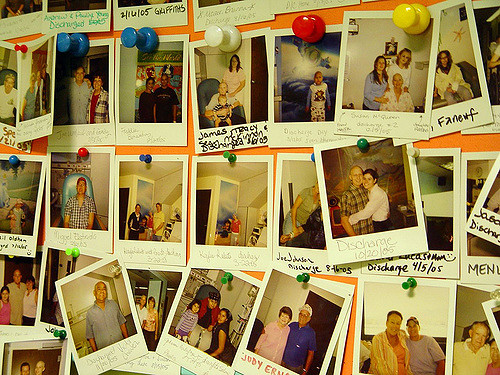
Photo of a wall of polaroid pictures representing discharged patients. Photo by midiman, Flickr CC

No, absolutely not. But married patients often receive more aggressive cancer treatment than those who are unmarried. Joan DelFattore, author of a recent article in The Washington Post, believes it might have something to do with doctors’ perceptions of unmarried people — specifically that unmarried people are less able to handle aggressive treatments than married people. DelFattore connected with sociological and medical experts to explore the potential importance of marital status in cancer treatments.

Some researchers speculate that overall unmarried patients may be starkly different than their married counterparts in terms of social support, depression, and social isolation. Sociologist Linda Waite, who co-wrote a book on the social benefits on marriage, concurs with these claims:

“In the U.S., where people have plenty of options for marriage, it’s likely to be those who are disabled or otherwise at a disadvantage who don’t marry….And so, they might indeed do worse in health care because of the underlying issues that caused them not to marry.

Others, like Susan Brown, point out that these perceptions are based on the assumption that social support comes primarily from spouses, rather than other family and friends. Instead, Brown argues that care providers should be open to patient support coming from people other than spouses or romantic partners. She says,

“Frame the discussion in terms of what the patient actually needs, rather than focusing on whether it’s provided by people in specific roles…Our whole system is built around traditional family roles, and that doesn’t work for many people.”

Good social support certainly matters for surviving cancer treatment, especially aggressive treatment. Where it comes from matters much less than the fact that it’s there.
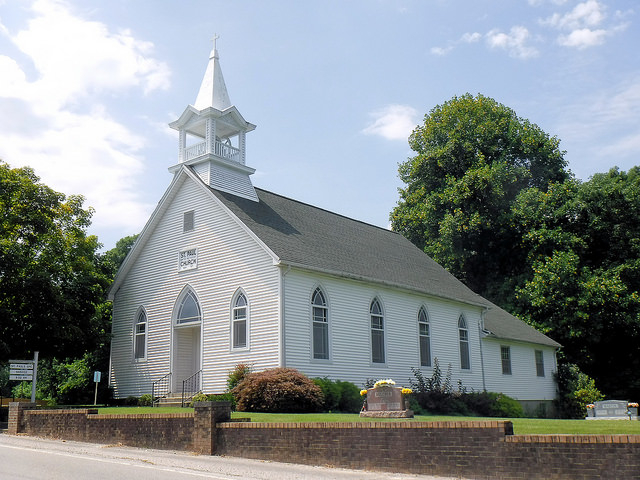
Photo of a white church. Photo by raschau, Flickr CC

Classic social science has long thought that as societies accumulate more wealth and education, religious commitments tend to decline. But the United States always posed a troubling counterexample to this long-standing “secularization” thesis, as a very wealthy society with stronger religious commitments than others across Europe. The unique U.S. experience has encouraged researchers to think more carefully about the role of religion in society, and new sociological research is bringing this debate back into the spotlight.

In 2016, David Voas and Mark Chaves published an article arguing that the United States was no longer an exception to the old secularization theory — religiosity is on the decline here, too, but much more slowly as each new birth cohort is younger than the last. In 2017, Landon Schnabel and Sean Bock published an article building on this work, arguing that most of this decline comes from moderate religious respondents. In other words, the highly pious are remaining stable. This year, both teams published new work using the same data from the General Social Survey to see who is right. As reported in The Salt Lake Tribune, it looks like the argument continues.

The big disagreement comes down to how you view history and methods. Schnabel and Bock focus on a peak in religiosity during the Reagan era, and they show that treating this peak separately leads to flat trends in religiosity afterwards. Voas and Chaves don’t treat this time as unique, and so their analysis finds a slow decline in all kinds of religion after it occurs. The debate is important because it shows us a way forward when researchers in a field disagree — rather than just saying “it’s complicated,” we can take the time to hash out our assumptions and map out how the world really works.

Photo of a person with their back to the camera facing a train as it rushes past. Photo by Georgie Pauwels, Flickr CC

Despite growing research that people are having less sex in the United States, the perception that “everyone is doing it” persists, especially for young people. In a recent article, The Atlantic asked social scientists why young people aren’t having more sex.

Lisa Wade, author of the book, American Hookup Culture, says that one of the reasons for is that young people are more likely to have sex within relationships than in hookups, and always have been:

“Go back to the point in history where premarital sex became more of a thing, and the conditions that led to it…Young women, at that point — [the 1940s and 50s] — innovate ‘going steady.’ If you [go out with someone for] one night you might get up to a little bit of necking and petting, but what happens when you spend months with them? It turns out 1957 has the highest rate of teen births in American history.”

Part of the reason young people today are having sex more in relationships than in hookups — at least for women — might be that they are avoiding bad sex. According to Paula England, women report sex in hookups is less pleasurable than sex in relationships. Based on recent trends, it appears as though fewer young people are actually having relationships at all, marriage or otherwise. And the rise of online dating apps means that people meeting online are marrying more quickly, which might mean they are dating less overall, according to Michael Rosenfeld.

Despite a decline in sex overall for young people, this decline likely does not affect all young people equally. Since research shows that a good sex life appears to contribute to happiness and other health benefits, this also means that those who do not have a fulfilling sex life also do not reap those benefits. The article’s author, Kate Julian, concludes,

“Like economic recessions, the sex recession will probably play out in ways that are uneven and unfair. Those who have many things going for them already — looks, money, psychological resilience, strong social networks — continue to be well positioned to find love and have good sex and, if they so desire, become parents. But intimacy may grow more elusive to those who are on less steady footing.”

Photo of a yacht. Photo by Ken Teegardin, Flickr CC

In our current era defined by financial crises and the Panama Papers, the ultra-rich have taken extra steps to keep their private lives off the radar. When sociologist Brooke Harrington began to inquire into their secrets — through interviews with wealth managers who specialize in protecting the fortunes of the world’s richest people — she discovered not only how the rich keep getting richer, but also how they spend their limitless fortunes. In a vivid account of her research in The Guardian, she explains that the rich not only rely on wealth managers to preserve and expand their fortunes, but also to cover up drug addictions, promiscuous behavior, secret love affairs, and laziness at work. Her interviews highlight how behaviors that are often associated as ‘pathologies’ of the poor are considered to be mere ‘eccentricities’ among the rich. Harrington expands further,

“Behaviors indulged in the rich are not just condemned in the poor, but used as a justification to punish them, denying them access to resources that keep them alive, such as healthcare and food assistance.”

Her findings also reveal how the ultra-rich take advantage of conditions that would mean life-threatening experiences for people in poverty. For instance, having no-fixed residence exposes the poor to a high risk of homelessness and forced migration. The ultra-rich, on the other hand, can acquire different residences and nationalities from varying countries with ease. And this ‘homeless’ status actually allows them to avoid the taxation of their fortunes. As one of Harrington’s interviewees, an extremely wealthy businessman, declares:

“I am not tax resident anywhere. The tax man says ‘show me a utility bill’, and the only utility bill I can present is for the house I own in Thailand, and it’s in a language that the European authorities aren’t familiar with. With all the mobility going on in the world, international marriages, governments can’t keep up with people.”

In sum, Harrington’s research shows that we often stigmatize and punish the poor for behaviors that the rich can easily get away with, and that this deception and lack of accountability may have long-lasting impacts for income inequality in the United States.

Photo by NCDOTcommunications, Flickr CC

Intersectionality is a term frequently used in many different contexts, from social movements to academic research to everyday speech. A recent article in The New York Times explores how intersectionality — defined as “the complex and cumulative way different forms of discrimination like racism, sexism and classism overlap and affect people” — influences men and women of color in the workplace.

The article draws from a recent non-profit study surveying 1,600 participants in workplaces ranging from corporations to higher education. Most respondents said they were “highly on guard at work,” which often meant they actively repressed traits others might perceive as frightening or intimidating. For example, they arrived early to meetings so they would be seated when others arrived in order to appear less threatening.

While the majority of workers in the study reported this need to be “on guard” to protect themselves against racial and gender bias, the types of stereotypes various groups face are not the same. For example, African-American women tend to face the stereotype of “the angry black woman,” while Latinas face stereotypes about being “too emotional or too wedded to their families.” Sociologist Yung-Yi Diana Pan notes that Asian-Americans are sometimes identified as “being workhorses without creativity” and “passive and acquiescent,” and this may lead to fewer promotions according to a recent report by the Ascend Foundation. 

Part of the problem, according to sociologist Lata Murti, is that women of color are constantly compared to professional white women — the “invisible norm.” So, what is the solution? Latasha Woods, brand manager at Proctor & Gamble argue it starts with leadership:

“We need leadership that truly cares about inclusion — a lot care about diversity, but how do you foster inclusion? People spend a lot of time on what they know the boss cares about. If they see the boss cares about inclusion they will too.”

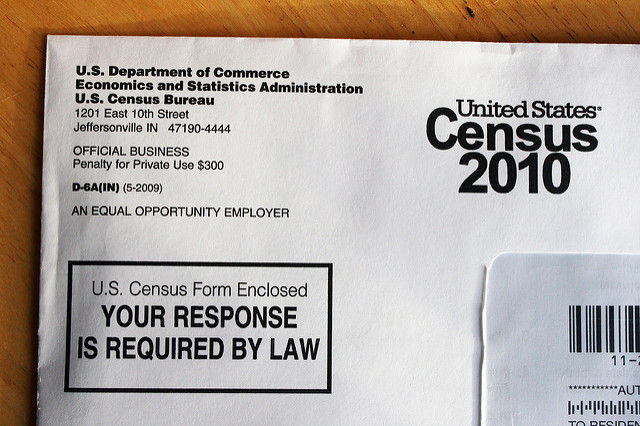
Photo of a U.S. census envelope. Photo by Quinn Dombrowski, Flickr CC

Racial categories are often imposed or assigned, and one’s race tends to be thought of as an immutable quality. One’s ethnic identity, on the other hand, is more likely to be a chosen identity — related to cultural factors, traditions, and family history — but is sometimes conflated with race. When multiracial identities are involved, racial and ethnic categories are especially malleable, and many population surveys like the U.S. Census do not allow for this complexity. A recent NBC News article draws from sociological research to argue that the 2020 census should capture racial and ethnic identities for a more accurate picture of the Latino population.

Sociologist Richard Alba argues that the current U.S. Census divides America into two groups: white and non-white. Of the non-white population, the current largest group are individuals with mixed Hispanic and white European ancestry. However, prior censuses — based on the two-question format on ethnicity and race — do not reflect or allow for ambiguities and realities of mixed racial and ethnic identities for Latinos in the United States. Children of these mixed-race families, even though they have a white parent, are counted as non-white, and this obscures the blending and racial change for some parts of the Latino and Asian populations in the United States.

How we see ourselves racially is not always what race others may ascribe to us. In his 2015 study, sociologist Nicholas Vargas found that 42 percent of Hispanics identified as white, but only 6 percent were perceived as white by other Americans. This highlights the importance of differentiating between assigned racial identities and proclaimed ones.  

Some researchers do not believe the U.S. Census is an effective tool to measure racial identity. In her book, Manifest Destinies, Laura Gómez writes:

“the [Census] has to look beyond racial categories of being white and nonwhite — which reflects more the historic attitudes imposed by society on different groups than the mixed reality of modern-day America — and make it more inclusive to encourage greater participation and accuracy.”

However, the 2020 Census will keep the same formatting, going against a decade of research on Latino identities — identities that do not rely solely on skin color or racial descent. As census-takers grapple with the constrictive format for questions that measure racial and ethnic identity, these problems of accurate representation will remain.

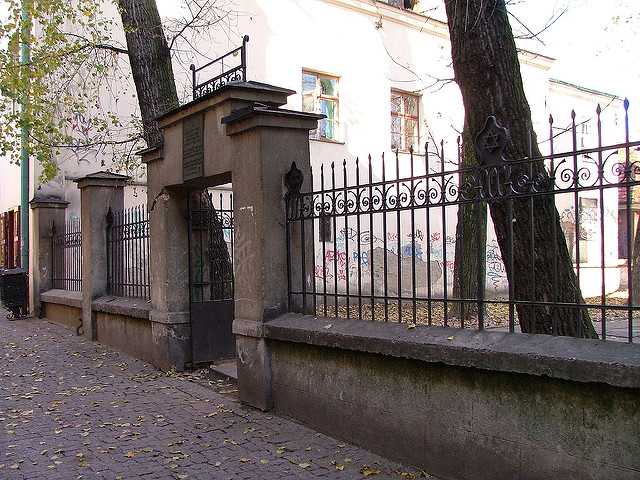
Photo of a gate in front of a synagogue in Poland. Photo by Emmanuel DYAN, Flickr CC

On November 9th, 1938, thousands of Jewish stores, homes, and places of worship across Nazi Germany were destroyed by extremist mobs. During Kristallnacht, or “The Night of Broken Glass,” dozens of Jews were murdered and another 30,000 were sent to concentration camps in this crucial shift from anti-Semitic language to physical violence. This year’s commemoration of Kristallnacht comes in the aftermath of the shooting of 11 Jewish congregants in a Pittsburgh synagogue. In recent years, ideologically motivated violence has been increasing against religious minorities. Jewish and Muslim congregations have heightened their security measures in the face of such threats. In a new article in The Conversation, Christopher Scheitle and Jeffery Ulmer analyze these increased protections and the heightened fear among many religious minorities in their spaces of worship.

Using surveys and interviews, Scheitle and Ulmer conducted a study of over 1,300 congregations to examine crime and security in religious spaces. While many congregations experienced vandalism or theft regardless of religion,  synagogues and mosques experienced threats of violence at much higher rates:

“Crimes, most commonly vandalism and theft, were committed at about 40 percent of congregations in the year prior to the survey. This overall percentage was not significantly different across religious traditions. When we dug deeper, though, we found that synagogues and mosques deal with crime-related problems that are much different than the average church. Our survey found, for instance, that synagogues and mosques were three times more likely than congregations overall to have received an explicit threat in the prior year.”

Many synagogues and mosques have sought to respond to these threats through increased security. In comparison to other religions, Jewish and Muslim congregations have incorporated many more security cameras and guards. However, these implementations are not without cost:

“Our interviews found that most places of worship have a hard time implementing security. Some of this is simply not enough money. Larger and wealthier congregations tend to have more security in place. Beyond resources, our interviews consistently found that places of worship view security measures as a potential threat to their mission of creating a sacred space that is open to their communities.”

Scheitle and Ulmer suggest that congregations can better protect themselves through cost free measures, like limiting entrances to places of worship, and through community partnerships. A knowledge of the legacies of anti-Semitism and other forms of religious discrimination also emphasizes the need for compassion and concern in the wake of such tragedies.

Photo of Star of David on a Jewish Synagogue. Photo by Patrick Lentz, Flickr CC

The mass shooting at the Tree of Life Synagogue has been characterized as the deadliest attack on Jewish people in U.S. history, and mourning services continued last week and over the weekend for the shooting victims. In a recent article for The Conversation, Jeff Gruenewald and William Parkin discuss how the recent rise in violence against religious minority communities is often tied to far-right extremist conspiracies and ideological beliefs.

The authors argue that while violent crimes targeting religious minorities and institutions have been on the rise in recent years, it’s nothing new. Far-right extremism has existed in the United States for more than a century and motivated many of these crimes. Gruenewald and Parkin explain further:

“Unfortunately, it’s not new for far-right extremists to vilify non-white, non-Anglo-Saxon and non-Protestant religions. Judaism has endured most of their ideological rage and conspiratorial paranoia…Their dogma claims, falsely, that globalist Jews have infiltrated the government and other U.S. institutions, and that Jews and non-whites pose an existential threat to the white race.”

Using data from the U.S. Extremist Crime Database, they demonstrate that since 1990, far-right extremists have commited 217 ideologically motivated homicides, nineteen of which targeted religious institutions or individuals. While there are many examples of far-right extremist violence that have not been religiously motivated, such as the Oklahoma City bombing, the authors indicate that far-right extremist violence against religious minorities — especially places of worship — appears to be on the rise since 2010. And beyond these cases,there is evidence of over 100 failed or foiled plots against Jewish institutions or individuals between 1990 and 2014.

While mass shootings and extremist violence are rare events, Gruenewald and Parkin’s research demonstrates that there are some disturbing patterns in far-right extremism and its connections to mass violence. The authors conclude with the need to prevent far-right radicalization,

“We believe countering divisive narratives with different viewpoints informed by evidence on what works to prevent radicalization is more productive than aggravating wounds with politicized rhetoric. As Americans, we must speak openly about the perils of white supremacy, anti-Semitism and both the rhetorical and real dehumanization of those we perceive as unlike us. Those wielding political power and influence need to publicly and clearly condemn acts of violence by extreme far-rightists and the ideologies underpinning this form of domestic terrorism.”

Photo of a person sitting at a coffee shop table with a mug and a laptop. Photo by veganstraightedge, Flickr CC

Hate ordering a coffee and a scone, laptop in tow, only to find out that all the good tables next to the outlets are taken? Coworking spaces seem to be the affordable solution. Upscale urban restaurants –looking to make money during morning and afternoon off-hours — have started partnering with coworking startups to provide affordable workspaces with power strips, fast wifi, and bottomless coffee and tea. In a recent Vox article, Gaby DelValle calls upon the work of sociologist Dalton Conley to describe this latest trend in ‘weisure.’

“In his 2009 book Elsewhere, USA, Princeton University sociologist Dalton Conley referred to this as ‘weisure,’ or the merging of work and leisure. This breakdown of the boundary between labor and enjoyment, Conley wrote, is ultimately destructive, even if it’s disguised as a boon for both employee and employer.”

Coworking spaces, like Spacious in New York City, are expanding as more workers turn to freelancing or telecommuting. Having the freedom to work from anywhere may eliminate some of the role conflict experienced by people trying to juggle work, family, and their social life, but it also means they need a place to work from. Many workers find coworking spaces preferable to coffee shops because of the amenities and the camaraderie of working among other people. Yet, Conley explains, the shift to coworking also has less desirable consequences.

“This work-and-play blurring ends up enhancing [their] sense of alienation,” he wrote. “It’s not just that they feel like they need to be working when they are ostensibly supposed to be having fun or, conversely, that they should stop working and be there for their kids, spouse, or friends. It’s not just that [they] need to be everywhere at once. It’s that once disparate spheres have now collided and interpenetrated each other, creating a sense of ‘elsewhere’ at all time. … Home is more like work and work is more like home and the private and public spheres are indistinguishable from each other.”

As Conley explains, coworking is part of a larger trend of blurring distinctions in the social world: home–office, work–leisure, public–private, and even self–other. The result for many is a sense of alienation: No matter where we are, we’re always wondering where we should be and where we need to be. When we participate in ‘weisure,’ we feel that we should be ‘elsewhere.’

Photo of emergency worker on a street responding to a release of mercury. Photo by Massachusetts Dept. of Environmental Protection, Flickr CC

Gentrification is rapidly transforming once-industrial cities into trendy urban neighborhoods.  However, the dangers that lie below the surface – “hundreds of millions of pounds” of hazardous wastes released by small and large businesses each year – fail to be addressed at the same rate. In a recent interview in The Guardian, sociologists Scott Frickel and James R. Elliot discuss findings from their book about the limitations of current data on environmental hazards and how gentrification has diversified the types of people at risk of exposure to toxic waste.

Frickel and Elliot explain that government databases on hazardous sites only appeared in mid 1980s, and databases often exclude manufacturers that have few employees or release under a specified threshold of pollutants. Reporting is also completely voluntary, meaning the databases only contain the information facilities choose to report. In their research, Frickel and Elliot use old manufacturing directories to address these limitations by creating their own database. They found manufacturing to be heavily concentrated in certain “legacy sites,” or areas where you would expect to find heavy industry with large concentrations of factories or other facilities. However, these site boundaries also spread out slowly over time, and so too did the hazardous wastes. While disadvantaged social groups are more typically exposed to these pollutants, gentrification has disrupted this to some extent.  Elliot explains,

“We do also find things that we’ve come to unfortunately expect from the vast research on environmental injustices… These larger facilities are opening up and disproportionately concentrating in areas of ethnic minority and low-income settlement. But when we begin to consider the spread and the accumulation across cities as land uses change, that picture also changes. We begin to see, as one of our colleagues put it, that we’re all in this together. Many different types of neighborhoods are exposed.”

To remedy this exposure to hazardous materials, Frickel suggests that urban planners seriously consider the history of pollutants that exist below our cities when addressing sustainability. It remains to be seen how gentrification will impact citizens’ ability to hold businesses and government officials accountable for these environmental hazards, but recent events such as the water crisis in Flint should serve as a key example of how far we have left to go to address toxic hazards.