politics

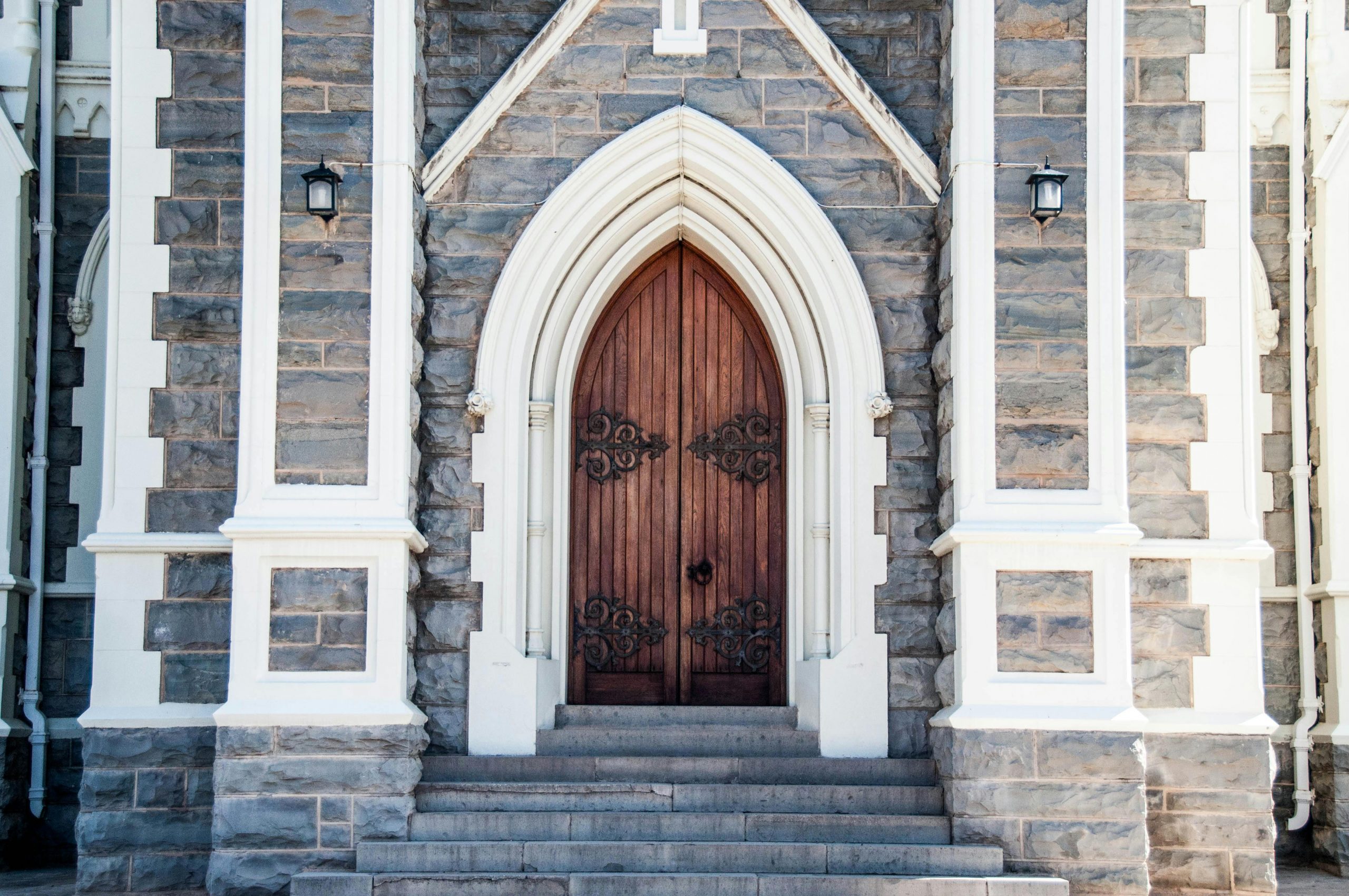
A gothic style church door, with stone steps leading inside. Gothic Church Entrance with Ornate Wooden Doors by Zak H is licensed under CC BY 2.0 in pexels.

Religious institutions such as churches, mosques, religious schools, and religious organizations are not required to follow Title III of the Americans with Disabilities Act (ADA). Recently, reports have suggested this poses a barrier to voting for many disabled Americans, since churches make up 20% of polling places nationally. While inaccessibility is certainly not unique to religious institutions, these barriers evoke important questions regarding the experiences of disabled Americans in religious spaces.

How Accessible are Religious Congregations?

The state of accessibility varies widely among religious congregations around the country. (Notably, most research on congregational accessibility in the U.S. focuses on Christian churches and does not include other faith communities). Even though religious institutions are not required to follow ADA accessibility standards, many congregations have become more accessible in the decades since the ADA was signed into law. Larger churches typically have more accessibility features (like ramps into buildings or up to altars, accessible toilets, sign language interpreters, or large print materials) than smaller congregations. Additionally, churches whose leaders received some kind of training about supporting people with disabilities tend to be significantly more accessible. While the popularity of livestreaming services online, especially since the COVID-19 pandemic, has made many churches’ teachings more widely available, congregations that lack other forms of accommodation continue to be physically inaccessible to many.

Other Barriers to Participation and Inclusion

Many people with disabilities also experience significant social barriers to inclusion in religious communities. The prejudice against people with disabilities that exists throughout society influences norms and interactions in congregations as well, often in forms of paternalism or exclusion. Additionally, illness and disability are often treated as sinful. This is visible in unsolicited prayers for the supernatural healing of disabled people, teachings that people would be cured of their disabilities if they had more faith, and worship songs that celebrate ideas such as there being “no lame” in heaven. The degree to which religious congregations accept and include people with disabilities profoundly impacts disabled people’s experiences and perceptions of the community, their place within it, and even the religion more broadly.

Efforts toward Inclusion and Reform

Individuals and congregations who have advocated for inclusion and justice for people with disabilities have emphasized the need for religious communities to take on new understandings and theologies of disability. These efforts often draw on resources from their faith traditions about the inherent value of people with disabilities and the need for their inclusion and care. Such advocacy typically portrays disability as a social issue rather than an individual issue, which compels people to view disability in terms of social justice rather than charity or pity.

Photo Of Ramadan Light On Top Of Table by Ahmed Aqtai is licensed under CC BY 2.0 in pexels.

In the United States, Islamophobia is at an all-time high. Muslim people have experienced increased discrimination including being singled out by airport security and other law enforcement individuals, being called offensive names, and experiencing physical threats of violence or attacks. Given that the Muslim population is continuing to grow, it is crucial to consider the experiences of Muslim people in the U.S. and the challenges they face.

Trends in Islamophobia

Muslim people do not make up a large population of the United States, comprising around 3 million people (or about 1.1% of the total US population) in 2017 and is projected to be 1.7% in 2030. And over the last decade, public perception of Muslim people has since trended towards unfavorable.

The Impact of Media on Islamophobia

The media has played a critical role in shaping how the public perceives Muslim people in the U.S., including depicting discriminatory stereotypes of Muslim people as terrorists, violent, and backwards. For some, these representations have been used to justify violence and discrimination against Islamic people and institutions.

The Racialization of Muslim and Islamic Identity

The development of Islamophobia has been driven as well by the ways in which Muslim identity has become racialized in the U.S. and other parts of the world, an example of how “religion can be raced”. In particular, people “assign Muslim-ness” onto markers of Islam (such as wearing a hijab, having a beard, or wearing traditional clothing like a thobe or abaya) that are informed by cultural ideas and appearances. It is important to keep this racialization in mind when considering how Islamophobia manifests.

Muslim is not a Monolith

It is  important to resist the ”one-size-fits-all” stigmatized representations and stereotypes  of an extremely diverse group of people. While public perceptions have conflated Arab and Middle Eastern identity solely with a singular Muslim category, Muslim people actually come from different ethnic groups that vary widely along beliefs, values, and more.

Studio Setting by Brett Sayles is licensed under CC BY 2.0 in pexels.

What does it mean to be authentic? Authenticity is frequently used to describe people or things that are believed to be genuine, sincere, consistent, or original. We evaluate both things (like music, television, or food) and people (ourselves and others) on their authenticity, often assuming that some are inherently real or beyond artifice, while others are more artificial or contrived. However, sociologists and social scientists recognize the notion of authenticity itself as a powerful social construct: we collectively decide that people and things are (or are not) authentic. We evaluate people in terms of their personal and social authenticity.

Personal Authenticity

Personal authenticity involves being “true” to one’s self. But…what is the true self? Sociologists and scholars have challenged the idea that we have a true self, arguing that we all play a variety of social roles (student, friend, employee, etc.) in different situations. As we take on these roles, some individuals believe their actions are real and genuine and others feel that they are just putting on an act. It is this subjective understanding of the true self that matters for personal authenticity, even if it is socially constructed or conditioned. When people feel that they are being true to themselves, they experience authenticity as an emotional response.

A desire to feel authenticity is a powerful motive for behavior. Sometimes we act with the specific goal of expressing our true self.  For example, some get tattoos and body art to express their authentic selves.

However, societal pressures, from social norms to economic needs, may influence us to embrace behaviors that feel inauthentic. In the context of economic exchange, many roles require emotional labor (or, the management of feelings to create a certain emotional display). For example, flight attendants are expected to be friendly and helpful to the travelers–even if the travelers are rude or unruly. For workers, engaging in emotional labor can feel like acting or maintaining an illusion, leading to feelings of inauthenticity and a sense of emotional numbness.

Social Authenticity

Individuals are a part of many different groups (unions, trivia teams, fandoms, religious groups, etc.) and social categories (age, race, class, and gender/sexuality) and social authenticity is the idea of truly belonging to that group or category. Group members define certain characteristics as authentic and evaluate the authenticity of others based on those criteria. Authenticity can serve as a way to draw boundaries around groups, establishing who is in and who is out. For example, members of local punk scenes may display their authenticity through personal appearance, knowledge of punk music, and extensive vinyl collections—setting them apart from “posers.” Outsiders–or, individuals who fail to meet the authenticity criteria established by a group–may be viewed as appropriating the culture of a group to which they don’t belong.

Of course, group members may disagree on what it means to be an authentic member. When the authenticity of a group member is questioned, they may respond by challenging the validity of the authenticity standards used to judge them.

The Role of Race, Class, and Gender

Being perceived as an authentic member of a social group can yield rewards, from the tangible reward of admission to a university to simply achieving group belonging. However, marginalized groups often face bias or unattainable expectations of what an authentic member of their group should be like. These expectations can be produced within groups or perpetuated externally, through institutions like schools or the media. For instance, socially constructed notions of an authentic Asian American student or Black woman can exclude those who may not conform to these expectations, while also reaffirming sweeping generalizations about these groups.

The relationship between perceived authenticity and social acceptance is especially vital in professional life. For instance, people of color in White-dominated professions face unique pressure to prove themselves as “authentic” because whiteness is an implicit expectation of a good leader. Similarly, evaluations of people’s merit based on class and gender are embedded with assumptions about who can be authentic in their position. People with marginalized identities in certain professions or organizations are not only expected to fulfill their duties- but must also juggle personal and social authenticity based on ambiguous standards. 

Woman In Black Shirt Holding Red Lipstick by cottonbro studio is licensed under CC BY 2.0 in pexels.

There have long been debates around transgender inclusion within feminist movements. Although anti-transgender sentiments within feminism date back to the 1970s, these views were not prominent for much of feminist history. However, since the 2010s, anti-trans sentiment within feminism has received much greater attention in public discourse, often in ways that negatively impact transgender persons.

A small but vocal faction, often described as “TERFs” (Trans-Exclusionary Radical Feminists) or gender-critical feminists, argue that feminism should focus on “sex-based rights”—the idea that legal protections and spaces should be reserved for those assigned female at birth. Many argue that this position excludes transgender women and reinforces a narrow, often white and middle-class definition of womanhood. While most feminists generally support transgender rights, TERFs have received significant attention through media coverage, political alliances, and legal battles, making their views seem more prominent than they likely are within the larger feminist movement.

Built on Biology?

TERFs emphasize the importance of sex in determining identity, often denying or minimizing the  influence of culture, history, and personal experience. However, much research shows that sex and gender are more complex than a rigid binary. That is, what it means to be a man or a woman (even within the fixed binary) changes dramatically over time and across cultures, as the definitions and boundaries of what a “man,” “woman,” or “non-binary person” is shift over time.

Historically, the idea that biological sex is deterministic has been used to uphold rigid gender norms, for example, by limiting women’s access to political and professional spaces and by defining trans women as “biologically male” regardless of their identities. TERF arguments rely on static definitions of sex to draw boundaries around womanhood, maintaining that trans women can never truly be women because they were not assigned female at birth. This approach ultimately reinforces the same gendered structures that earlier 1st and 2nd wave feminist movements have long challenged.

Exaggerated Threats to Safety and Fairness

The question of transgender women in sports and bathrooms has garnered great public attention and debate. Both TERFs and more traditional political conservatives often argue that transgender women in these spaces compromise safety and fairness for cisgender women. However, research has found no evidence that transgender women pose any greater danger than cisgender men and women.

The same arguments used to exclude transgender women from women’s spaces are often used against cisgender women who do not conform to Western ideas of femininity. During the 2024 Paris Olympics, for example, Algerian boxer Imane Khelif was falsely accused of being transgender, even though there was no evidence to support the claim. Similarly, South African runner Caster Semenya has faced gender tests and competition bans because of her naturally high testosterone levels, despite being assigned female at birth. These cases reveal a contradiction—if some cisgender women don’t fit traditional gender norms, it raises the question of whether strict definitions of womanhood should decide who belongs in women’s spaces. Critics argue that these accusations are less  about fairness than about reinforcing racial and gender biases, using moral panics and misinformation to exclude marginalized groups.

The Grand Paradox

In contrast to other feminists, TERFs maintain strong political alliances with right-wing groups. Organizations like the Women’s Liberation Front (WoLF) have collaborated with The Heritage Foundation, a conservative think tank that also opposes issues related to women’s reproduction, family structures, and LGBTQ+ protections. This paradox has led scholars to question whether a movement aligned with groups seeking to dismantle fundamental feminist principles can truly be considered feminist.

Such tensions are not new. Feminism has changed over time, with each generation debating what the movement should focus on. For example, disagreements between older feminists, who focused on issues like workplace equality, reproductive rights, and protections against sexual violence, and newer feminists, who advocate for including transgender rights, racial justice, and broader LGBTQ+ issues, show how divisions emerge. Some older feminists feel that prioritizing gender identity and racial justice shifts attention away from core feminist issues like sexism and women’s rights, making women’s struggles less visible and less prioritized. The current conflict involving TERFs is another generational divide, where some feminists reject new ideas about gender and race that move beyond cisgender and white women, while others push for a more inclusive approach.    

About Us

AJUS is dedicated to the proposition that every idea deserves a platform. We welcome dissertation chapters, voice memos, vague thoughts, lecture notes, and data analysis that speaks for itself. Use your sociological imagination.

Manuscript Types

  1. Theoretical Speculations – Wildly ambitious frameworks with no empirical evidence.
  2. Data? – Raw numbers in an Excel file, preferably unformatted.
  3. Ethnographic Musings – 1-2 notes jotted down on a used napkin.
  4. Methodological Hot Takes – No actual study, just vibes.
  5. Unfinished Dissertations – Someone, someday might just read it.

Submission Guidelines

  1. Proposing sociological questions?
  2. Fully conceptualized, partially completed work is acceptable.
  3. Include 1+ cite(s) you “meant to look up later.”Placeholders and “TBD” acceptable.
  4. Feature tables and figures that may or may not be related to the topic.
  5. Write the conclusion at 2 AM, ideally over- or under-caffeinated.
  6. ORCHID ID required.

Formatting Requirements

  1. Length: We encourage all manuscripts to be between 500 words and wherever your heart tells you to stop.
  2. Proofreeding optional.
  3. Font: Something not so basic, expand your horizons.
  4. Citations: Surprise us. APA, MLA, CFG, SSD, GHD, DGD, NFL, NHL, KCF… 
  5. Abstract: Don’t be too, somewhat vague.
  6. References: Don’t forget anyone, because we will send it to whomever you forget to cite…

References: Don’t forget anyone, because we will look through and will send it to whomever you forgot to cite…

Peer Review Process

All submissions will undergo our patented Mega-Triple-Blind Peer Review System™, where:

  1. The authors forget what they wrote.
  2. The reviewers skim the abstract and pick 1 or 2 arbitrary things to call out.
  3. The editors decide based on their breakfast.

We guarantee comprehensive feedback (e.g., “Interesting…” and “?”).

If your paper is rejected, you may submit an appeal by:

  1. Resending the same manuscript in a different font.
  2. Signing an affidavit attesting that “Foucault would have accepted this.”
  3. Threatening to start your own journal.

How to Submit:

Send your completed-ish manuscript via:

  1. A blurry PDF screenshot in an email attachment labeled “Final_Draft_3_(Actually_Final).doc”
  2. A Google Doc with unresolved comments.
  3. Mail.
  4. AJUS Signal Editors Only Group Chat.
  5. Give us a call and read it aloud: ‪(715) 600-2187‬ (after 10:33 PM only)

2025 Issue | Outside the Box Thinkers


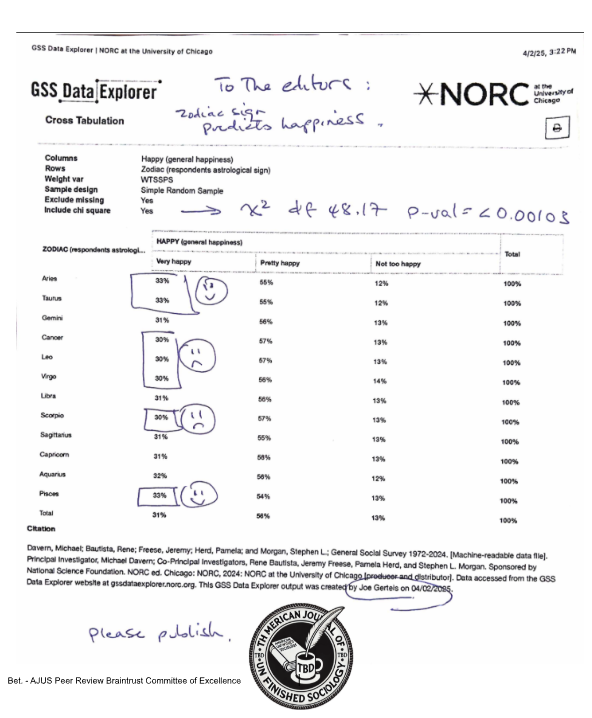
Zodiac Sign Predicts Happiness


A large college lecture hall, with some seats brightly lit and others covered in an ominous shadow. Photo by Pixabay from Pexels under Pexels license.

On November 9th, 2023 the Florida Board of Governors voted to remove “Principles of Sociology” from the list of required courses at all public colleges. Manny Diaz Jr, the state’s education commissioner, wrote on social media that “sociology has been hijacked by left-wing activists.” In response, the president of the American Sociological Association, Joya Misra, released a statement defending the importance of sociology in higher education. The decision in Florida has jolted the sociology community into an identity crisis and led to a broad, far-ranging debate about and defense of the value of the discipline. 

The Value of Sociology

Although the first department of sociology was established in the late 19th century, the discipline remains difficult to define. For those outside of the field, Sociology is often confused with social work or even socialism. But even among sociologists, there have been lasting debates about what constitutes and defines the discipline, its object(s) of study, and its unique way of viewing the world. Even its status as a science is a perennial question: should sociological observations be considered objective facts as in the natural sciences, or will social realities always be subjective and biased? The recent policy changes in Florida’s higher education curriculum have caused sociology insiders and outsiders alike to ask if it’s a science and what sort of utility it has in the real world. 

Anti-intellectualism

Though the attacks on sociology by politicians and policymakers have made headlines recently, lambasting higher education is nothing new in American politics. Since the late 1960s, sociologists and other scholars have been studying anti-intellectualism – holding distrustful and disparaging attitudes towards experts and respected scientists – in the United States. Acclaimed historian Dr. Richard Hoffstadter famously published Anti-Intellectualism in American Life in 1963, which in part argued that the construction of intellectuals as ‘elite’ members of society diminishes their reputation as trustworthy amongst the general public. This framing makes them a target for politicians who claim to ‘represent the people,’ and can transform generally accepted scientific theories into potent political wedge issues. 

The internet’s inception has significantly impacted the form and salience of anti-intellectualism in American society. The racial, social, and economic inequalities that continue to afflict the country have become exceedingly visible through online media. The internet has also provided a platform for creating false and misleading content and its widespread distribution and dissemination. The convoluted flurry of articles, figures, and ‘facts’ uploaded to social media and news websites has given anti-intellectualism a contemporary twist that researchers from all scholarly fields must confront if they haven’t already.

Sociology’s Contributions

Sociology often forces us to confront uncomfortable or inconvenient truths about social life. This makes the social sciences a target for politicians seeking an academic scapegoat or those embroiled in the anti-intellectualism movement. Despite these efforts, sociology remains a discipline of deep theoretical foundations and valuable scholarship in the search for knowledge, shared realities, and truth. One of the major subdisciplines in the field is the Sociology of Knowledge which is concerned with knowledge production in society and how we collectively construct our societies.

While attacks on the discipline have been motivated mainly by political conservatives in the United States, it’s important to note that no one political ideology is promoted by sociology. For example, Ronald Reagan and Michelle Obama were sociology majors. Rather than forcing a specific set of moral or idealistic values on those who study it, sociology empowers people across a range of political persuasions to study, critique, and act upon our complex surroundings. 

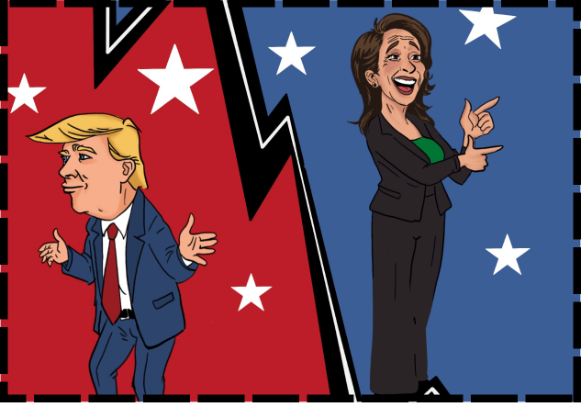
Donald Trump with a red background and Kamala Harris with a blue background. Photo by author, Jordyn Wald, CC0 (no rights reserved).

Humor isn’t just amusement—it also reflects the dynamics of society. Humor can reinforce group identities, challenge authority, mobilize others to drive social change – and it helps us talk about social tensions in a way that feels easier to handle. This holds in politics as much as other social domains. In politics, humor helps people connect with candidates, rally support, and make sense of tough issues. In today’s election, supporters use memes and humor to boost candidates’ images, mock opponents, and generate political engagement.

Political Participation

Humor and memes can inspire public participation in political conversations and support social action by spreading viral messages that strengthen group identity or challenge opponents. As participatory media, memes encourage users to remix content, making complex political issues more accessible and engaging. By framing critiques as “just jokes,” the public can combine humor with political critique, capture more attention, impact public opinion, and reduce tension.

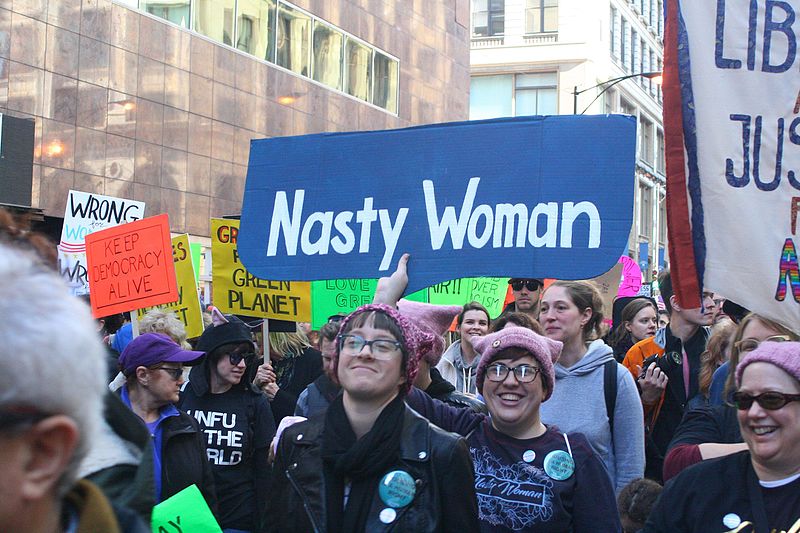
For example, during the 2016 U.S. presidential election, memes like “Basket of Deplorables” and “Nasty Woman” became rallying cries and cultural tools to 1) mock opponents, 2) signal political affiliation and 3) be politically engaged. In the 2024 election, supporters are once again using memes to make political points. These include exaggerated AI-generated memes geared to boost Donald Trump’s image as strong and confident, or memes that turn Kamala Harris’ past criticisms with a lighthearted tone to boost her image as approachable and resilient.

Political Protest and Opposition

Humor in protests and political opposition can empower activists to challenge authority and express discontent. In social movements, it delivers powerful messages, strengthens group bonds, and provides emotional support. Humor also makes challenging authority feel less confrontational, allowing for open conversations about change. Through satire, irony, and parody, activists connect emotionally with audiences, question power structures, and make complex issues more approachable. 

However, while humor can reveal flaws in those in power, its playful nature risks being misunderstood if not used carefully. For instance, humor’s lightheartedness can weaken messages when audiences miss the criticism or view it as only entertainment.

Humor Styles and Political Appeal

Researchers have shown that humor in political messages can impact a politician’s appeal and voter support, depending on the type of humor. Karakaya and Edgell found that right-wing politicians, like Trump, often use confrontational humor to strengthen support among their base, especially among those frustrated with political elites. Trump’s outspoken humor, inspired by stand-up and sports culture, portrays him as a bold challenger of the political system, appealing to his supporters but potentially pushing away moderates who find it polarizing.

Generally, both left and right wing politicians often use humor as a tactic to address social issues and critique those in power. By employing self-mocking or inclusive jokes, politicians can connect more broadly with audiences, deflect criticism, and enhance the relatability of their messages. For instance, Kamala Harris uses humor in her challenge to Donald Trump to “say it to my face” aiming to deflect criticism and connect with her audience, while Donald Trump often uses sarcasm to deflect accusations and build a strong base of supporters.

Although political humor from both sides can boost likability, it risks backfiring if it feels insincere or too harsh, making politicians seem unapproachable and turning voters away. Any type of humor—whether aggressive, self-mocking, or inclusive—loses its impact when it feels forced or overdone.

When Studying Humor Gets Too Serious

Funny enough, social scientists studying humor, however, are often called out for “taking the fun out of it” – overanalyzing jokes and memes with theories that strip away their spontaneity and enjoyment. This creates a paradox: while humor offers valuable insights into social boundaries, challenges to authority, and the ways we build connections, studying it too closely can strip away the very lightheartedness that makes it engaging in the first place. As E.B. White put it, ‘Analyzing humor is like dissecting a frog. Few people are interested and the frog dies of it.’ Yet, understanding humor’s role gives us valuable insight into how it shapes our social and political landscape.

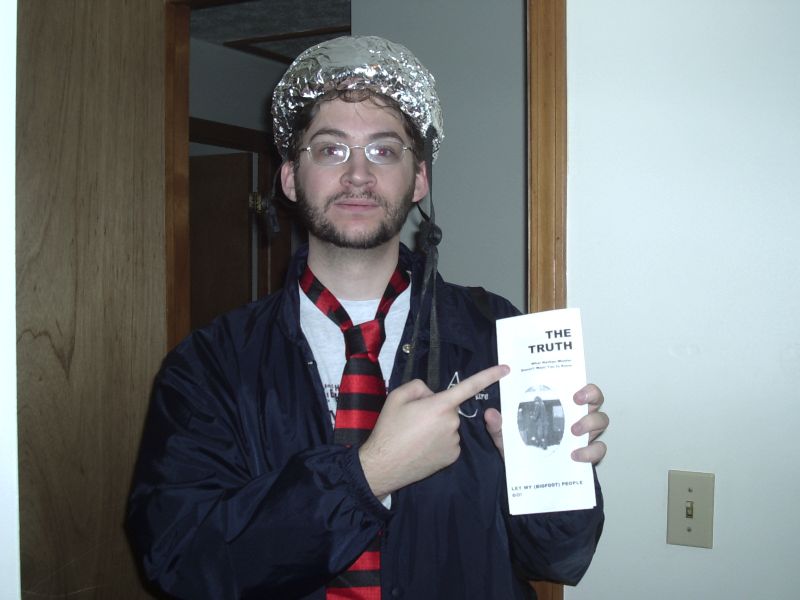
A young man holding a pamphlet labeled “The Truth”, donning a red, striped tie and tin-foil hat. “Conspiracy Nut” by Will is licensed under CC BY 2.0 on Flickr.

Is there “a single group of people who secretly control events and rule the world together”? According to a December 2023 poll by YouGov, 41% of Americans think so. Even more – 54% – said Lee Harvey Oswald wasn’t acting alone when he shot President John F. Kennedy. No matter how you slice it, belief in conspiracy theories is widespread. But what actually is a conspiracy theory? And why do so many people believe in them, while others don’t? There’s a wide array of social science research that has tried to answer these and other questions related to these controversial ideas.

What is a Conspiracy Theory, Anyway?

Scholars have offered multiple definitions of a conspiracy theory. According to one definition, a conspiracy theory alleges that “powerful and secretive groups” of people are engaged in some kind of evil and secret activity. In another definition, the conspiratorial worldview has three main components. 1) “nothing happens by accident”: world events almost always happen because someone intended for them to happen. 2) “nothing is as it seems”: agents of the conspiracy are lying to you. 3) “everything is connected”: secret patterns are everywhere.

Why Do People Believe?

Many different people believe in many different conspiracy theories for many different reasons. Nonetheless, people are more likely to believe in some circumstances more than others. In general, people are more likely to believe conspiracy theories that portray their political opponents negatively. Also, people who know a lot about politics but don’t trust either powerful institutions or other people very much are especially likely to believe in conspiracy theories. 

One recent paper found that conspiracy beliefs are “U-shaped”: those at the top and bottom of the socioeconomic ladder are more likely to believe in them, while people in the middle are less likely to believe. People are also more likely to believe in conspiracy theories during potentially threatening or insecure times in society, such as higher levels of unemployment, as well as political and demographic changes.

Mixing It Up

Scholars have compared conspiracy theories to other types of ideas, including rumors, folk theories, and fake news. Whatever we call them, the things we think we know are always grounded in our communities and social norms. The truth is always contested. The social construction of “knowledge” is especially true for subjects where most non-specialists don’t have a lot of prior experience, such as science or medicine. 

Conspiracy theories are an example of “stigmatized knowledge”: ideas that are denied by mainstream institutions like universities, the scientific community, and the government. Some argue that these ideas are becoming more mainstream, in part thanks to the internet and declining trust in authority. Some scholars claim that, while promoters of stigmatized ideas oppose what they view as the mainstream, they are often receptive to each other’s beliefs. For example, one study found that after people started believing in conspiracy theories about the COVID-19 pandemic, they often started to hold more conspiratorial beliefs in general.

A military cemetery. Photo by Pixabay under Pexels license.

Memorial Day Shout Out to the Silent Ranks from Sociological Images on Memorial Day and the significance of how the mothers of U.S. service members during the war on terrorism, who, along with other family members, form the “silent ranks” providing crucial homefront support despite the largely gendered expectations and limited recognition they receive.

Shifting Memories and Meanings of Pearl Harbor by Jillian LaBranche writes on how iconic events like Pearl Harbor shape American identity and understanding of current events, with collective memories constructed and evolving through social institutions and contemporary interests.

Indirect Effects of Combat on Veterans’ Health by Allison Nobles on research by Jason Schnittker, looking into the new policy on how Veterans Affairs now lets veterans seek non-VA care to reduce long wait times. Research shows veterans’ poor health is more linked to difficulties in civilian life, social relationships, and smoking than direct combat injuries or PTSD, highlighting the need for comprehensive support.

The Marks of War by Letta Page covers the work of Jason Deitch, a UC-Berkeley PhD and veteran, who collaborated with the California State Library and others on the “War Ink” project, interviewing tattooed veterans to share their stories and emotions through their tattoos, aiming to bridge the gap between veterans and their communities and reduce their isolation.

A college campus with people protesting and holding signs on the entrance steps. Photo by Brett Sayles from Pexels under Pexels license.

This week, pro-Palestinian protests are occurring in many U.S. colleges and universities in response to the conflict in the Gaza Strip and surrounding areas. Students supporting Palestinians are building encampments, occupying buildings, and marching on and off campuses to advocate for a ceasefire, peace, and divestment in Israel’s military. At the same time, other students are reporting continued antisemitic incidents on campuses. As these demonstrations continue and grow, history tells us that increased police presence may lead to more conflict on campuses. In light of these real-time developments, we here at TSP wanted to share a few pieces from us and others on the important role that college campuses and students serve in starting conversations and social change in broader society.

First Hand Faculty Experiences on Campus Issues

  • Mass Movements; Moral Moments by Donna Gabaccia reflects on her first-hand experience as a faculty member during an incident of police abuse in Minneapolis, recalling a distressing scene where a young Black teenager was unjustly detained by police in a library.

Young Adults and Social Structure of Protests

  • When Youth Become Activists by Amber Joy Powell writes up some research on the nationwide youth-led movement advocating for stricter gun control in 2018, demonstrating the significant impact young activists can have using modern tools like social media to enhance their cause.
  • in brief: close to the issue by Parker Muzzerall on how proximity to protests, such as the Occupy Central Movement in Hong Kong, increases support for the movement and shifts political ideologies leftward among nearby residents, despite the disruptions caused.

Challenges of Involving Police

Public Opinion and Tolerance (or lack of) on Campus Protests and Academic Freedom in Sociology