
politics

Photo of two microphones by Håkan Dahlström, Flickr CC

This post was created in collaboration with the Minnesota Journalism Center.

“Political polarization” refers to sharpening contrasts between political parties, groups, and individuals. The 2016 U.S. presidential election catalyzed a wave of research about political polarization, filter bubbles, and echo chambers. With this rise in polarization research, it is important to distinguish between ideological polarization, people having more extreme political views; affective polarization, people having negative sentiment toward other political parties; and party alignment, people affixing strong party labels to themselves. Being clear about the differences between these forms of polarization adds a layer of nuance to research on whether polarization is rising and what drives such changes.

The three types of polarization don’t always go hand-in-hand. For example, social science research shows rises in affective polarization and party alignment, but the same isn’t necessarily true for ideological polarization.
Political polarization exists within journalistic and social media contexts, as well; especially around topics like “fake news” that became buzzwords during President Donald Trump’s 2016 campaign. In this context, scholars have found that Americans are more likely to gravitate toward national media outlets that align with their political affiliation and often discuss political topics with people who share their same political views.
While social media sometimes forces people to confront conversations they would have otherwise avoided, studies have also found that exposure to opposing political viewpoints on social media can actually increase polarization rather than facilitating bipartisan dialogue. While polarization is evident in online spaces, there is evidence that individuals who are most likely to be polarized are older than 75 and are the least likely to use the internet and social media.

Several authors and scholars are skeptical of whether polarization can be overcome or will shrink; the research above suggests that polarization is entrenched in this contemporary moment. Nevertheless, understanding the sources of polarization and its different dimensions allows us to pursue bipartisan solutions that facilitate cooperation rather than contestation.

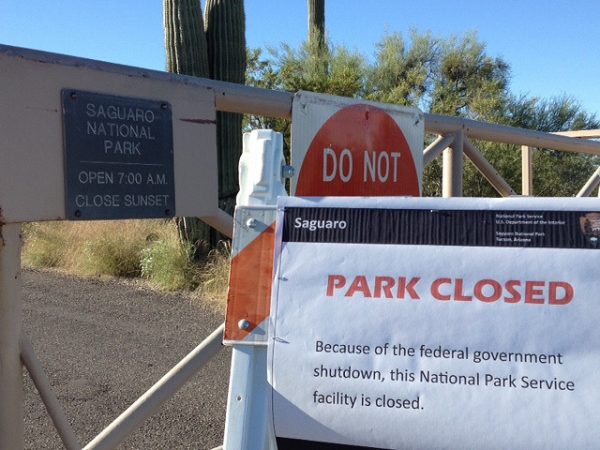
Photo of country flags on a building for the 2018 World Economic Forum meeting. Photo by GovernmentZA, Flickr CC

Each year in January, the World Economic Forum hosts its annual meeting in the Swiss resort town of Davos. The event brings together state leaders, business tycoons, and philanthropists who cultivate relationships between governments and businesses, all with the hope of guiding global progress. This year, the annual meeting made headlines for featuring a Somalian refugee, Mohammed Hassan Mohamud, as one of the event’s seven co-chairs. This inclusion marks another stage of a contested history of international business, development, and intervention in the Global South.

Throughout the Global South, colonialism altered or destroyed local systems, such as food production. Agriculture was restructured to serve colonial powers, which often forced farmers to produce cash crops (like coffee or cotton) instead of food for their own consumption. Over time, knowledge about cultivating local crops was lost. In the aftermath of colonialism, many countries have faced challenges in remaking their agricultural sectors. Businesses and governments from the Global North have sought to have a role in this restructuring. Investors and technological innovators partner to develop new foods, often suggesting genetically modified crops as a solution to hunger. Many scholars, however, raise concerns about the cultural loss of replacing local produce with imported goods that look and taste different. Others assert that such approaches do not address the power inequities that lead to hunger.
Large international development organizations that use technology as a tool of development, such as the Gates Foundation, are organized to create and implement “best practice systems.” Often, this means that corporations develop solutions that treat recipients of their products as new customers. Rachel Schurman argues that this structure separates institutions and their employees from the needs of farmers and strategists from the Global South. From this vantage point, events like the annual World Economic Forum meeting serve as opportunities for international businesses to strategize the best ways to find new consumers.
Activist scholars have built on these critiques with tangible suggestions for more equitable practices. Many argue that development actors must treat communities in the Global South as partners in progress, rather than as beneficiaries. This can be done by including local leaders at every stage of the decision making process. More broadly, activist scholars advocate for the role of social science in industry decision making, particularly in instances of post-conflict investment, as social scientists can provide insight into both power inequities and the long-term effects of economic intervention.

The tension between economic expansion and philanthropy has always been an aspect of development. These power hierarchies continue, but scholars are offering new avenues for more equitable involvement of the Global South. While the inclusion of a refugee in a leadership position in Davos could be a step in the right direction, involvement from the Global South must be inclusive, genuine, and sustained to truly make a difference. In Mohamud‘s own words, “We are not asking for too much, just equal opportunity.”

Photo of a closed sign outside Saguaro National Park during the 2013 U.S. federal shutdown. Photo by NPCA Photos, Flickr CC

Originally posted October 15, 2013.

Government shutdowns are (thankfully) rare and tend to lead to a lot of calls to economists: what happens to the dollar on the international market? How do military towns and towns that rely on National Park tourism survive? Will companies screech to a halt while they wait for the FDA to get back to business? In the meantime, we might take this opportunity to remember the myriad ways in which all Americans are dependent upon the government.

Most people don’t realize they benefit from government programs.

In 2012, Mettler asserted 96% of Americans benefit from 21 specific government programs (not including those that affect all people equally, like road maintenance). These include “submerged” benefits (like tax breaks for mortgage interest) and direct benefits (like Medicaid). In Table 3 of the second citation, she shows that even some 44.1% of those receiving Social Security benefits answer “no” when asked if they “have used a government program.”

The government is instrumental in innovation.

Fred Block and Matthew Keller sum up some of their research in a Scholars’ Strategy Network brief on government as the main driver of innovation. Using data from R&D‘s annual top 100 breakthroughs list, in 2006 they identified 88 winners with some government support, 77 of which relied on federal dollars and 42 of which came directly out of federally-sponsored labs. They also focus on a program started by Ronald Regan’s Administration that, today, provides up to 6,000 loans ($2 billion or so) annually to small businesses trying to commercialize new tech.

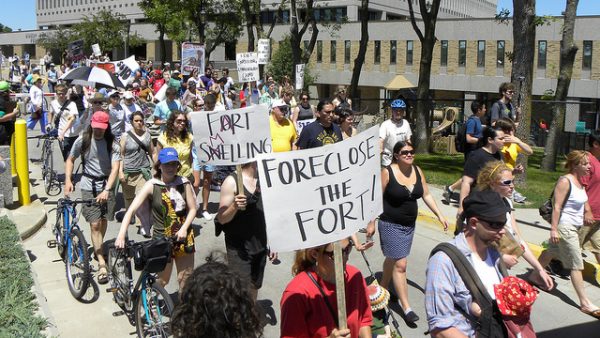
Protest calling to remove Fort Snelling in Minnesota. Photo by Fibonacci Blue, Flickr CC

Originally posted October 9, 2018.

In recent months, a homeless encampment of over 300 people — most of whom are American Indian — has formed along a highway noise wall in Minneapolis. The encampment has been self-proclaimed the “Wall of Forgotten Natives” by residents and Indigenous activists who point out that much of Minneapolis is built on stolen Dakota land. Social and health service providers have mobilized around the encampment, and city officials have worked with community leaders to begin a relocation of people at the encampment to more stable housing on Red Lake Nation land. The wider context for the establishment of the camp, American Indian solidarity and resistance to disbanding the camp, as well as the government’s response, all highlight the process of settler colonialism.

In the United States, settler colonialism is defined as the control of land and its resources by white settlers who seek political power/control in a new space (i.e. like “regular” colonialism) through both displacement and violence against Indigenous persons in order to eventually replace the Native population (i.e. unlike “regular” colonialism). Until recently, studies of Indigenous people have largely been absent from sociological research and some have referred to this as sociology’s “complicity in the elimination of the native.” Scholars have begun to incorporate settler colonialism into research on the domination and dispossession of various racial and ethnic groups.
In Minnesota, American Indians face the consequences of settler colonialism everyday: generational trauma from historical violence and boarding schools while at the same time, confronting a host of contemporary inequities in health, exposure to violence and the foster care system between Natives and non-Natives. At the national level, the U.S. government’s urban relocation programs during the 1950s serve as further examples of settler colonial logic and contemporary homelessness among Minnesota’s urban Natives today and their political response. While these policies encouraged Natives to move from what were economically deprived reservations to what was promised as training and employment in urban areas, they faced intense discrimination. By 1969, unemployment among urban Natives was nearly ten times the national average and Native incomes were less than half of the national poverty level.
After the U.S. government failed to assimilate Native people through relocation in the 1950s, their attempt to end the legal status of what it meant to be a “federally recognized tribe” led to American Indian resistance across the United States and into the social movement fold of the 1960s and 1970s. Founded in 1968, the American Indian Movement was started in Minneapolis, and Minnesota is a historically important site of resistance to settler colonialism among Native peoples. American Indians continue to resist settler colonial practices and beliefs today. One example of this includes Indigenous protests against federally recognized holidays like Columbus Day and Thanksgiving, which are embedded in settler colonial stories of the past that “whitewash” events and stereotype Indigenous people. Other acts of resistance include ceremonies acknowledging genocide and other violent acts by the U.S. government. Just last spring, Dakota activists illustrated such resistance to the Walker Art Center’s decision to host a piece of a “scaffold” similar to that of 38 Dakota men who were hanged following the U.S.-Dakota War of 1862.

The “Wall of Forgotten Natives” highlights both the settler colonial practices that make such a homeless encampment possible but also demonstrate how American Indians have continually resisted settler colonial ideas and actions.


The authors respectfully acknowledge that the University of Minnesota stands on Dakota and Ojibwe peoples’ traditional lands.  

Photo by Ulisse Albiati, Flickr CC

Originally posted August 6, 2018.

Teenager Maedeh Hojabri was recently arrested and imprisoned by Iranian authorities for posting Instagram videos of herself dancing in her bedroom. People around the globe were stunned at the news, although such punishment and censorship is sadly a common phenomenon. In Iran, Hojabri’s actions violated conservative legal norms that impose a strict dress code and condemn women for exposing their hair or dancing in public. More than a century of social science research can help shed light on why governments criminalize the violation of expected gender norms.  

Classical sociological theory argues that state actors use legal sanctions to exert control and enforce moral sentiments, in an attempt to garner social solidarity. The criminalization of dancing, for example, enforces and legitimizes the morality of conservative values and strict social control. To protect dominant social values, elites may use the penal system as a tool to persecute and discriminate against social minorities. The dominant group’s repression of subordinate groups derives from hierarchies that operate around patriarchal, racial, religious, class, national, political, or ethnic distinctions. Hojabris’ case illustrates repression based on patriarchal norms.
The state may also use the penal system to demonstrate competence and authority. Penal repression allows the state to demonstrate its sovereign capacity and reassert political authority under threat. The case of criminalizing dancing in Iran thus illustrates how public authorities use penal policy to address a legitimacy crisis. Many scholars link the loss of public confidence in the political system to the rise of punitive populism and the ascendancy of penal severity in and outside the United States.

The penal state has become a central instrument for the exercise of authority. It can protect conservative values and strengthen the power of political elites, who exploit the penal system to legitimize their political agendas. While criminalizing dancing seems odd in the United States, in Iran it serves to enforce moral rules, extend social control, and demonstrate state power.

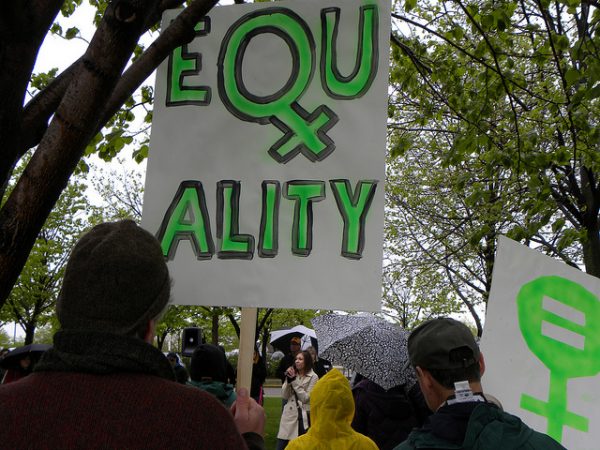
Photo of a protest sign that says “equality” with a female symbol. Photo by Fibonacci Blue, Flickr CC

During this year’s midterm elections, six states adopted Marsy’s Law, a measure that aims to amend state constitutions so that they treat victims’ rights as equal to defendants’ rights in the criminal justice system. Observers like the American Civil Liberties Union warn that the law circumvents due process — particularly the presumption of innocence — by allowing victims the right to deny evidence to defendants and their counsel, and in some states, even curtail the amount of time a defendant can appeal a conviction. The law’s popularity and ensuing debates highlight two key lines of research, the power of victim rights movements in the United States and the racial and gender privilege underlying perceptions of victimhood.

Although different segments of the victim rights movement have different origins, scholars typically point to the 1960s as the time when victim rights hit the national scene. Since then, the mainstream movement has led to state statutes to provide victim restitution, and increase funding for victims’ services. Scholars suggest that while the victim rights movement has had some positive impacts, it occurred alongside the “get tough on crime” movement that facilitated the prison boom. For example, the advocacy of predominately white, elite feminist movements on punishments for rape and domestic violence was viewed as a victory in addressing violence against women. However, it also resulted in a form of “carceral feminism” that increased punitive responses in criminal justice policies in lieu of reforms in other areas such as welfare and other social services.
Other scholars note that the mainstream victim rights movement privileged some victims over others, minimizing and ignoring violence against Black women, Indigenous women, other women of color, and trans women. Research shows that Black women are more likely to experience interpersonal violence but media and even laws often frame “victims” of crimes as white — especially white women. Of the 51 laws named after crime victims in the United States since 1990, only four are named after Black victims, and only three after Hispanic victims. Scholars like Beth Richie show how this dominant political discourse of “preventing crime” not only obfuscates Black women’s experiences with violence but also criminalizes their responses to protect themselves through mandatory arrest and other criminal procedures.

Heightened news coverage and social media attention to the Cyntoia Brown case serves as a clear example of this disparity, demonstrating who U.S. society values as victims and survivors of sexual and other forms of violence. Thus, while Marsy’s Law may seem on its surface to bring an equal playing field to victims in the criminal justice process, researchers and policymakers must pay attention to the broader context from which it emerged and how this law may not only diminish due process, but also privilege certain types of victims over others.


Check out this TROT for more on the racialization of victimhood for missing girls.  

For insight into a social movement that centers women of color as survivors of sexual, domestic, and state violence, check out INCITE!

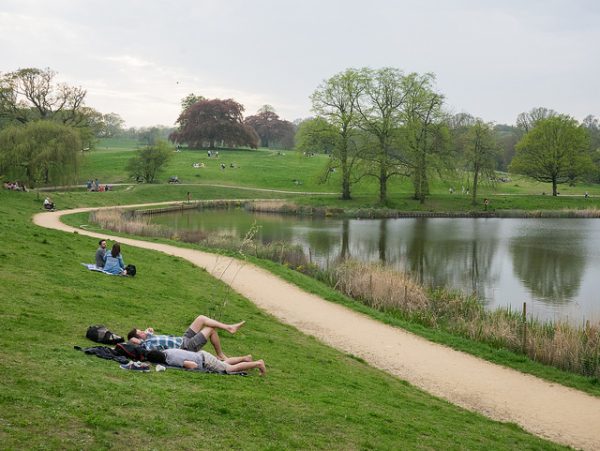
Photo of people laying on grass near a pond. Photo by Taavi Randmaa, Flickr CC

Green areas are widely recognized as an indicator of development and social wellbeing, but the relationship between nature and crimes is only beginning to come into view.  How might natural spaces reduce crime rates?

Economic Development

Green space interventions enhance the visual appearance of an area and motivate movement and participation, which can increase economic development. Also, by raising property values, green spaces foster economic stability and access to credit. Both economic development and real wealth transfer bring work opportunities and financial power to residents, which in turn could reduce criminal activities. One caution about green criminology, however, is that, genuine improvements in built environments may not favor current residents. Instead, existing residents may be displaced by new neighbors arriving in response to attractive urban conditions.

Social Gathering

Green areas can also provide physical or symbolic cues of care and attention that discourage criminal behavior. By promoting the use of outdoor spaces, built environments become places of social gathering. Green areas thus become organized places of surveillance, which discourages incivilities and criminal behavior.  They also replace vacant lots and abandoned sites, which constitute attractive places for illegal activities such as prostitution, drug sales and use, or weapons offenses.

Well-Being

Better amenities can also improve residents’ well-being and thus decrease precursors of violence. Built environments may favor conditions that enhance the pleasantness of pedestrian environments, the convenience of walking for travel or recreation, and environmental safety. Some argue that vegetation promotes better cognitive performance, produces positive emotions and fosters environmental consciousness.

Guardianship

Habitable spaces and better amenities also shape and enhance the relationships and social initiatives from community members. Green areas provide sites for social gatherings, and facilitate social interaction. Cohesive communities mobilize resources to tackle the underlying social causes of crime, or to encourage commerce and employment opportunities. Connected with surveillance, social cohesion makes residents more willing to step in and directly address criminal behavior, thus improving surveillance and oversight. Cohesive communities also foster well-being among residents and generate better health outcomes by social processes like promoting outdoor activities, participating in organizations, and creating networks of support.

Situational Crime Prevention

Green areas can also influence behavioral outcomes by eliminating, blocking or restraining access to crime targets and by removing the target itself.  They can be designed to minimize the number of entry and exit points and control pedestrian or vehicular access. Therefore, their physical design and layout features can alter criminal routines and targets. Green areas offer physical barriers that effectively obstruct opportunities for crime and modify both the attractiveness of targets and the motivation of potential-offenders.

Since investment in green areas can impact more people for longer periods of time than individual or lifestyle interventions, creating green places may provide a greater pay-off than traditional individual approaches to reducing crime. This is especially important for lower income communities, where residents may lack individual economic or social resources to encounter crime individually.  

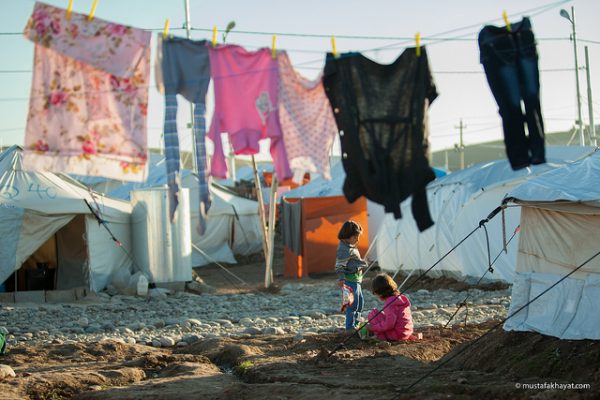
Photo of two children standing between white tents in a refugee camp. Photo by Mustafa Khayat, Flickr CC

The murder of journalist Jamal Khashoggi sparked criticism of Saudi Arabia across the globe. But a recent New York Times article brings forward a striking paradox – this single incident has drawn far more outrage than Saudi Arabia’s large-scale intervention in Yemen. Over the past three years, thousands of civilians have been killed, half of Yemen’s population is at risk of famine, and over 20 million people need humanitarian aid. This conflict is largely caused by Saudi Arabia’s intervention, like attacks on civilian infrastructure and continual deadly air strikes. These factors caused the United Nations to label the violence in Yemen as 2018’s worst humanitarian crisis. Yet in the United States, this conflict has received only limited attention. Research can help to explain the lack of coverage of this crisis and why distant conflict may result in selective empathy.

Depictions of violence play an important role in understanding distant conflict. Places with a history of violence, like Afghanistan or Syria, become linked with this conflict – violence may become understood as timeless or inevitable. Individuals in conflict zones are then minimized into stereotypes, like tribal savages or helpless, incapable victims.
Aid campaigns can unintentionally reinforce these depictions. While campaigns that feature starving children or crying mothers are often well-intentioned, they can reinforce dehumanizing depictions by characterizing groups only through their suffering. In such campaigns, civilians caught up in conflict are  displayed as objects of pity, rather than people with rich lives that were devastated by violence. And more concerning, real suffering can be reduced to a tool to remind viewers of their own luck or deserving.
While we understand our own lives as complex, our conceptualizations of others are often less vivid – such comparisons tone how we understand ourselves and those around us. This contrast can result in stereotypical depictions of groups we see as distant from ourselves. For example, Edward Said argued that influential Western texts about Africa and Asia exoticized these places and the people that lived there. These simplifications become particularly problematic during times of violence because those experiencing conflict in far-away spaces may be understood as less complex and, therefore, less deserving of empathy.

The cultural and physical distance of international conflict can affect empathy, one reason that front-page coverage of Yemen has been limited. However, those seeking a deeper understanding of conflict can challenge these depictions by informing themselves about the history and day-to-day reality of violence and those who experience it. Doing so has the potential to counter these simplified tropes about conflict across the globe.

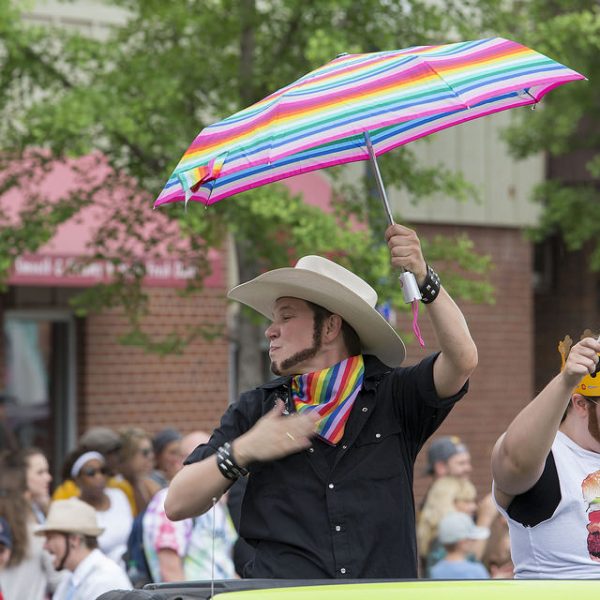
Photo of a drag king holding a rainbow umbrella during a pride parade. Photo by IowaPipe, Flickr CC
According to a recent memo, the U.S. Department of Health and Human Services is seeking to establish a legal definition of sex and gender based on “a biological basis that is clear, grounded in science, objective and administrable.” However, social and biological scientists agree that — based on their scientific understanding — gender and sex are not solely biological, and sex and gender are not the same thing. Sex is a category used to describe a culmination of biological and genetic components, including chromosomes, hormones, and physical anatomy. Gender, on the other hand, may or may not be linked to biological traits. Gender refers to a cultural identity, one that has social weight in the world, with particular meanings attached to it. Gender involves social norms, attitudes, and expressions.
Neither sex nor gender are binaries, meaning there are not just two categories — female or male, women or men — and they are not fixed or static. They can and do change over individuals’ lifetimes. U.S. society is increasingly more likely to accept that gender is more of a spectrum than a binary. We’re hearing more about transgender individuals in the media, but transgender is only one gender identity that challenges a binary view of gender. Others include, but are not limited to, gender nonconforming, gender fluid, and gender queer.
Just as gender is not a binary, neither is sex. The biological components of sex do not always align solely with “male” or “female.”  An individual may have XY chromosomes and an outward female appearance, including breasts and a vagina. Another might have XX chromosomes and high levels of testosterone. Yet another might have genitalia that appear to be neither male or female (too long to be a clitoris, too short to be a penis). These individuals fall into a category called “intersex.” While it’s hard to know how many individuals are intersex (some don’t even know themselves), a commonly reported statistic is 1 in 1500 to 2000 American births.
Nevertheless, U.S. society remains deeply invested in two categories of sex and gender. In fact, most of society is organized around these ideas. In other words, gender is an institutionalized system. And during our everyday lives we constantly categorize people based on their appearance and behavioral cues — gender is a system of categorization we use to understand our social world. People who challenge gender or sex binaries thus can face serious consequences, including discrimination and violence.

No doubt, the recent controversy in the Department of Health and Human Services isn’t the first time we’ve grappled with contested definitions of gender and sex in our political history — and it certainly won’t be the last.

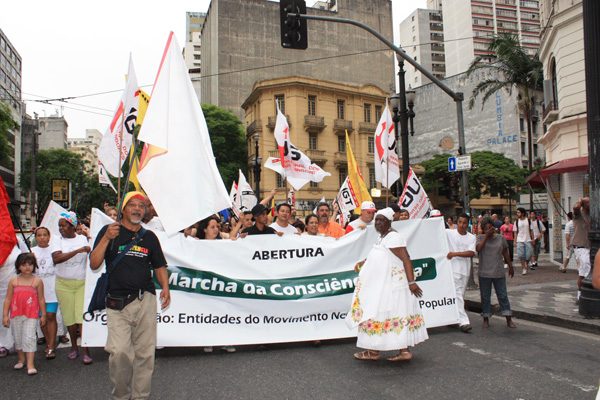
Photo of a march for Dia Consciência Negra in São Paulo. Photo by Central dos Trabalhadores e Trabalhadoras do Brasil CTB, Flickr CC

Historically, Brazil had presented itself as a “racial democracy” where interaction between racial groups formed a utopian, raceless society. In the last few decades, Brazil has come to acknowledge its underlying racism and resulting disparities, leading to the 2001 enactment of race-based affirmative action projects. Social scientific research can help us better understand the functions and necessity of these programs, which are likely to be under threat following the election of right-wing candidate Jair Bolsonaro who has been openly critical of Blacks and the LGBT community and the policies that serve them.

In Brazil, skin color has been the defining mechanism for racial categorization and identity in between a black and white binary. Some official methods, however, including the Brazilian Census, recognize multiracial identity and a number of racial categories. Multiple methods of classification can be tricky, and this can obscure deeper and more basic racial inequalities. Though pardos (a mixed-race category used in the census) can face similar social situations as dark-skinned Blacks (sometimes referred to as pretos), recent research finds that pardos actually do experience less disadvantage than pretos, complicating decisions about who receives help from affirmative action programs.
Given this complexity, determining who is Black and a possible beneficiary of the racial quota program has differed. Some universities have required applicants to be of African descent to qualify for racial quotas, which has caused complications since many Brazilians could claim African ancestry even though they may have light skin or are not seen as “Black.” In other cases, verification committees at different universities confirm whether an applicant should be considered Black and a beneficiary of the racial quota system. The quota program has now significantly broadened to include applicants from low-income families as well as Indigenous peoples. Independent of skin color or racial group, support for affirmative action programs and race-targeted public policies is strong. Research suggests, however, that the more education someone has, the less likely they are to support racial quotas. It is important to consider what factors affect support and execution of these policies as opponents such as President-elect Bolsonaro attempt to dismantle it.