gender

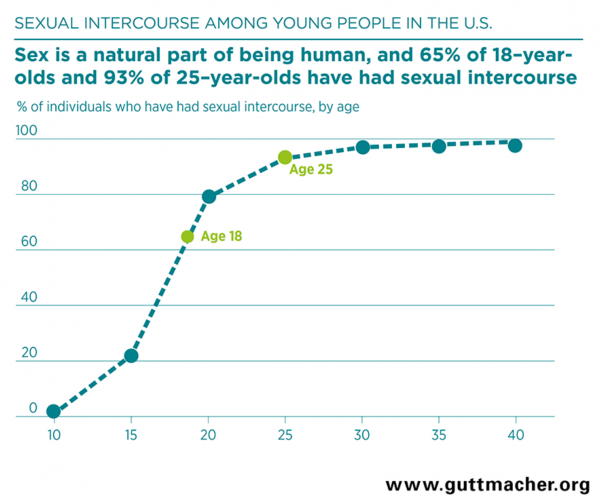
Research shows that by age 18, 65% of people in the US have had sexual intercourse. Graph via Guttmacher Institute.

Recently, the American rapper T.I. acknowledged that he attends gynecological examinations with his daughter to “check her hymen is still intact.” While shocking to many, T.I.’s boasting and the public debates it has provoked reveal deeply rooted cultural norms and beliefs about  virginity that young women encounter on a daily basis. Sociological research provides a closer look at how virginity is both socially constructed and discriminatory against girls and women.

People understand virginity and its subsequent “loss” through several frames. Traditionally, most people view virginity as a sexual transition from childhood to adulthood through vaginal-penile intercourse, though people often recognize virginity loss among same-sex couples who engage in other forms of genital sex. For some, virginity is viewed as a gift that may be given to another sexual partner; for others, virginity functions as a stigma that prevents them from progressing in their social life. Still, others see the loss of virginity as one step in the process of growing up and developing healthy relationships with romantic partners. Research has also shown that views and interpretations often change over time, especially in response to new experiences. Overall, these variations demonstrate that virginity is far from a simple biological truth. 
The different meanings and interpretations of virginity and loss can have significant social consequences as well. Virginity pledges — promises to remain abstinent until marriage–are one very well researched example. Under this view, pledgers perceive sex as sacred, solely for marriage, and heterosexual. About 12 percent of young people pledge abstinence, though most break that pledge before marriage. Those who break their pledges face negative consequences, including higher possibility for pregnancies and contracting HPV. Social context — including religiosity and the identities of others — contributes to who keeps their pledges.
Photo is shows a child covering their ears while watching tv
Photo by Miles Bannan, Flickr CC

This post was created in collaboration with the Minnesota Journalism Center

Obstruction, quid pro quo, impeachment. The tweets, the news alerts, the endless headlines. This political landscape, and the overall media news landscape, can be exhausting, and news consumers are showing they are tired of it all. A June 2019 Digital News Report explained that this news fatigue has turned into news avoidance: 41 percent of respondents in the United States (and 32 percent worldwide) said they “often or sometimes” avoid the news. 

Scholars are exploring the reasons for news avoidance, with some readers finding news “too negative,” “frustrating” or “annoying.” Other research shows that women are more likely than men to avoid the news, a gap explained by structural inequalities, like family commitments and household responsibilities.
One of the first journalism studies on this topic found that participants avoided the news but counted on the news finding them. The study from Stephanie Edgerly identified participants who did not follow any news accounts or journalists on social media but relied on Facebook to notify them of significant news and events.
These news avoiders are less inclined to vote, a troubling fact to University of Minnesota researcher Benjamin Toff:

“I do have concerns about whether our news environment is all that conducive to creating an electorate of people who actually hear the other side, can think through complicated political debates and issues, and understand a variety of different perspectives.”

Women’s news avoidance is intertwined with a lack of political engagement. This can lead to women facing difficulty advocating for themselves in the political sphere and fewer women involved in the political process or even running for office.
One way to decrease the number of news avoiders is to improve the quality of news itself and make news consumption more appealing. “Solutions journalism” explores sociological problematic issues in communities (homelessness, childhood obesity, etc) and critically examines problem-solving efforts. This goes beyond more straight-forward traditional reporting of the facts and, instead, offers ideas on how to resolve issues important to community members. Research demonstrates that readers are more likely to engage with (share, like, etc) solutions-oriented content than traditional news content. In addition, findings reveal readers report more favorable attitudes towards the news story and news organization when news discussed solutions.

Another important avenue in combating this news avoidance issue is media literacy. For more on media literacy, click here.

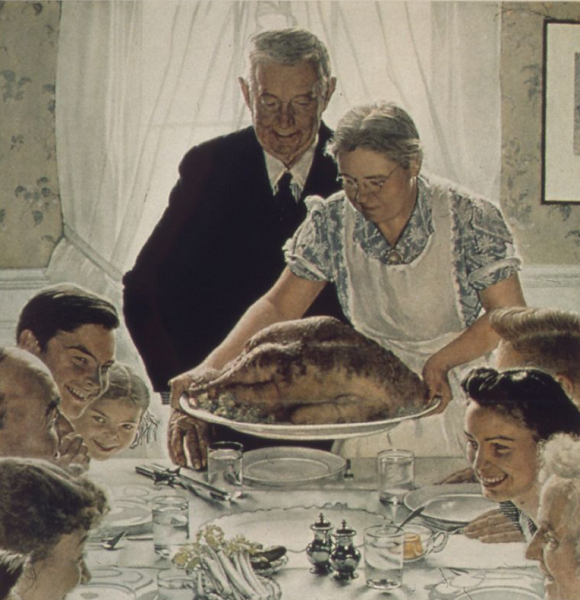
Peaceful holiday meals may still be the ideal, but they are not the norm. The image shows part of a World War II propaganda poster by Norman Rockwell, proclaiming, “OURS… to fight for: Freedom from want,” via Wikimedia Commons.

As we prepare for Thanksgiving, many people look forward to sharing a warm meal with their family and friends. Others dread the holiday, gearing up to argue with their relatives or answer nosey questions. TSP has written about the political minefield that holiday meals can be in the past. This year we want to point out that the roots of difficult dinners actually run deep in everyday family mealtime. Thanksgiving, like any family mealtime, has the potential for conflict. 

Scholars have documented how important meal time can be for families in terms of cultivating relationships and family intimacy. However, they also show that despite widespread belief that families should share “happy meals” together, meals can be emotionally painful and difficult for some families and family members.
Disagreements between parents and children arise at mealtime, in part, because of the meal itself. Some caregivers go to battle with “picky eaters.” Migrant parents struggle to pass cultural food traditions to children born in the United States. Low income parents worry that their children will not like or eat the food they can afford.
Family meals also reproduce conflict between heterosexual partners. Buying, preparing, and serving food are important ways that women fulfill gendered expectations. At family meal-times men continue to do less work but hold more power about how and when dinner is served.
Thanksgiving, or any big holiday meal, can involve disagreements. However, that is not altogether surprising considering that everyday family meals are full of conflicts and tension.
A woman walks alone in a dark alley. Photo by renee_mcgurk via Flickr.
While opinions of particular environments, situations, or objects may appear to be objectively dangerous or safe, sociologists argue otherwise. Instead, they find that opinions about safety are subjective. While there is a physical reality of harm and fear, beliefs about safety and danger spread through socialization, rather than direct observation. For example, Simpson notes that snakes and turtles can both cause illness and death through the transmission of venom or bacteria, yet snakes are seen as dangerous and turtles as benign. In other words, danger and safety do not exist on their own; they are contextual.
Socialized beliefs about safety and danger are also raced, classed, and gendered. While statistics indicate that men are predominantly the victims of violent crime, women express greater fear of crime. This fear often acts as a form of social control by limiting women’s daily activities, like when they leave the house and what they wear. Furthermore, the construction of fear and crime is often tied to racist legacies. In the United States, white women express prejudicial fear about areas marked as “dangerous” or “sketchy,” due to the occupation of this space by men of color.
Safety and danger are also constructed at the international level, as national security is politicized. For example, instances of large-scale political violence, such as genocide, war, and acts of terrorism revolve around the social construction of an enemy. More generally, national enemies are constructed as dangerous and a threat to the safety of a nation’s people. This construction of the enemy and perception of fear can move people to join terrorist organizations, participate in genocidal regimes, and enlist in state militaries.
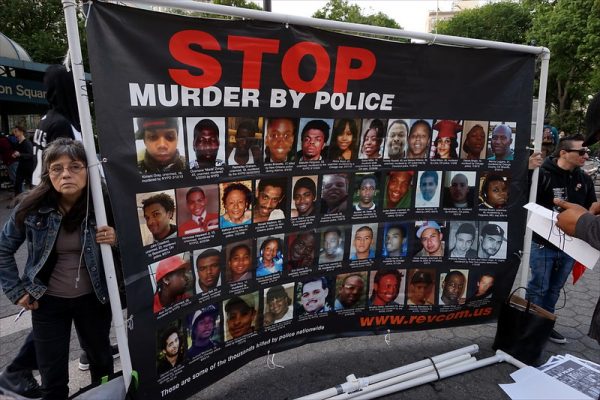
Photo shows a large sign that reads, Stop Murder by Police, and shows pictures of women and girls killed by police.
Photo by The All-Nite Images, Flickr CC

Earlier this month another Black American, Atatiana Jefferson, was fatally gunned down by a Fort Worth police officer in her own home. In the weeks since her death, community activists and residents have called for law enforcement accountability and reform of the police department’s use of force policies. As the Fort Worth community continues to grieve and fight for justice, Jefferson’s death reminds us Black women must be included in conversations around police violence, reform, and accountability. After a decades long struggle for visibility, Black women activists created the hashtag #SayHerName to bring awareness to the growing number of Black cis- and transgender women killed by law enforcement — a list Jefferson has now joined at just 28-years-old. A small but impressive group of sociological works have highlighted Black women’s experiences with police and the racialized and gendered challenges that lie ahead in developing police-community trust.

Similar to Black men and boys, Black women and girls also hold higher levels of legal cynicism (distrust) in law enforcement than whites. They report being stopped and facing verbal harassment for traffic incidents or, in the case of Black girls, breaking curfew — especially when in the presence of Black male peers. Black women and girls also distrust police due to their unresponsiveness to serious calls involving interpersonal, domestic, and sexual violence. For many Black women and girls living in low-income communities, police violence is simply one form of a larger “matrix of violence,” where they must also navigate interpersonal and neighborhood violence. At times, police are the perpetrators of these gender-specific forms of violence. These matrices remain interconnected, as cynicism towards law enforcement hinders reliance on police to address other forms of violence.
Motherhood also brings distinct challenges that shape Black women’s attitudes towards police. Black women are targeted through “family criminalization,” where they fear law enforcement will target both their children and themselves for being “bad mothers.” Since motherhood places Black women responsible for the safety of their children, they attempt to protect Black youth from police suspicion by sharing cautionary tales, sheltering them, and teaching them to comply with police demands. Black women’s cautionary tales, however, often emphasize the police assaults against Black sons, while treating police violence against Black daughters as improbable and less violent. While Black mothers often view police as illegitimate and unresponsive, they may also use police services to help (mostly male) loved ones when other resources remain scarce.

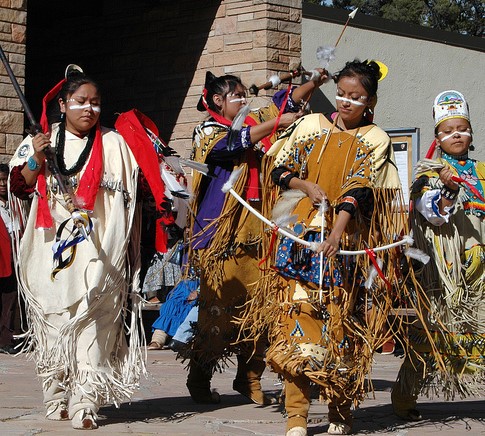
The Dishchii’ Bikoh’ Apache Group from Cibecue, Arizona, demonstrates the Apache Crown Dance. Photo by Grand Canyon National Park, Flickr CC

Originally posted October 9, 2017

In recent years,  an increasing number of Americans are celebrating Indigenous People’s Day to honor those who suffered at the hands of explorers like Christopher Columbus. Social science research helps us understand the underlying gender and racial components of colonial settlement in the United States.

In what is now the United States, Andrea Smith argues that sexual conquest — the rape of native women — was closely tied to the conquest of land. Europeans perceived the indigenous people that inhabited the Americas as uncivilized. Ideas of white civility deemed native women as hypersexual and uncontrollable, unlike white women, whose perceived purity they could not match. These ideas of native women’s sexuality allowed for European males to rape native women without consequence.
Ideas about native men’s and women’s  inferiority were also important for white men’s identities. In the U.S., white settlers believed themselves to be superior to indigenous peoples, bringing enlightenment to an empty wilderness. White, male identity was thus closely tied to the control of land and ownership of property.  
Colonizers viewed land as a metaphor for women’s subjugation. Land – similar to women – was something to be taken and possessed by European men. For example, Europeans who colonized parts of Africa referred to the continent as “virgin land.” Just as virginity was used to describe young women who are perceived as pure and untainted by sex, referring to unconquered land as “virgin” reflects the European’s beliefs that it was also pure, untainted, and ripe for European colonization.

Candidate for Virginia Delegate (elected November 7) Danica Roem, at Protest Trans Military Ban. Photo by Ted Eytan, Flickr CC

Originally posted November 28, 2017.

American attitudes towards transgender and gender nonconforming persons might be changing. Earlier this month, voters elected six transgender officials to public office in the United States, and poll data from earlier this year suggests the majority of Americans oppose transgender bathroom restrictions and support LGBT nondiscrimination laws. Yet, data on attitudes toward transgender folks is extremely limited, and with the Trump administration’s assault on transgender protections in the military and workplace, the future for the trans community is unclear. Despite this uncertainty, a close examination of the social science research on past shifts in attitudes towards same-sex relationships can provide us insight for what the future may hold for the LGBTQ community in the coming decades.

Attitudes about homosexuality vary globally. While gay marriage is currently legal in more than twenty countries, many nations still criminalize same-sex relationships. Differences in attitudes about homosexuality between countries can be explained by a variety of factors, including religious context, the strength of democratic institutions, and the country’s level of economic development.
In the United States, the late 1980s witnessed little acceptance of same-sex marriage, except for small groups of people who tended to be highly educated, from urban backgrounds, or non-religious. By 2010, support for same-sex marriage increased dramatically, though older Americans, Republicans, and evangelicals were significantly more likely to remain opposed to same-sex marriage. Such a dramatic shift in a relatively short period of time indicates changing attitudes rather than generational differences.
Americans have also become more inclusive in their definition of family. In 2003, nearly half of Americans emphasized heterosexual marriage in their definition of family, while only about a quarter adopted a definition that included same-sex couples. By 2010, nearly one third of Americans ascribed to a more inclusive understanding of family structures. Evidence suggests that these shifts in attitudes were partially the result of broader societal shifts in the United States, including increased educational attainment and changing cultural norms.
Despite this progress for same-sex couples, many challenges remain. Members of the LGBTQ community still experience prejudice, discrimination, and hate crimes — especially for trans women of color. Even with support for formal rights for same-sex couples from the majority of Americans, the same people are often uncomfortable with informal privileges, like showing physical affection in public. Past debates within LGBTQ communities about the importance of fighting for marriage rights indicates that the future for the LGBTQ folks in the United States is uncertain. While the future can seem harrowing, the recent victories in the United States and Australia for same-sex couples and transgender individuals would have been unheard of only a few decades ago, which offers a beacon of hope to LGBTQ communities.

Want to read more?

Check out these posts on TSP:

Review historical trends in public opinion on gay and lesbian rights (Gallup)

Check out research showing that bisexual adults are less likely to be “out” (Pew Research Center)

Ben Ostrowsky//Flickr CC

Originally posted October 13, 2015.

October brings cozy sweaters, Pumpkin Spice Lattes, and lots of pink for Breast Cancer Awareness Month. It’s a worthy campaign: approximately 1 in 8 women will receive a breast cancer diagnosis in her lifetime. But how has breast cancer gained such visibility when others—even other forms of cancer—plague the population at even higher numbers?

Breast cancer awareness campaigns have branded breast cancer through pink ribbons and other merchandise, making the disease not only highly visible, but also a commodity. The signature pink color connects breast cancer to traditional ideas of femininity, beauty, and morality, and allows family and friends to show support.  Color aside, merchandise and freebies like cosmetics and small home appliances reinforce breast cancer’s symbolic ties to beautiful, domestic, heterosexual women as the primary sufferers. This is breast cancer’s “disease regime,” a system of institutional practices and styles of speech that shapes how patients experience it (Klawiter 2004, 851).  
Large-scale organizations like the Susan G. Komen foundation raise awareness, but often leave out marginalized identities that don’t fit a traditional feminine image. Groups like the Women & Cancer Walk provide spaces for those who don’t fit the mainstream definition of a “breast cancer patient.”
The specific image of the breast cancer patient affects who participates in activism and how they view their work for the cause. Many women volunteer for organizations like Komen as a way to connect with other survivors. Often this means that much of their work goes unnoticed, in part because they downplay their activism as trivial volunteering or “just being fair,” further reinforcing the gendered construction of the disease.

For more on breast cancer awareness, check out posts at Feminist Reflections, Sociological Images, and two of our recent Discoveries.

Photo by Petr Kratochvil, PublicDomainPictures.net CC

Nearly two years after the rise of #MeToo, sexual assault and harassment continue to surface across media headlines. Whether writing about the uptick in sexual assaults or the most recent sexual misconduct allegations against Brett Kavanaugh, the media often emphasize changes in complaints or reports of law violation. Yet, the process by which individuals learn that assault and harassment can be reported in the first place remains crucial to understanding shifting complaint levels. Sociologists of law have used legal consciousness to explain how people first perceive an act of discrimination as wrong and worthy of complaint.

Legal consciousness refers to the ways individuals make sense of law and legality within everyday contexts. Beyond its formal legal institutions and processes (such as courts), the law more generally guides how we understand what is and what is not legal. We learn about legality through legal images displayed across television, news media, films, cultural practices, and social relations. These cultural ideas of law and legality shape whether and how we come to view an act as a breach of law or a discriminatory practice. Once individuals reflect upon legality, Patricia Ewick and Susan Silbey suggest that they may “engage, avoid, or resist the law and legal meanings.” But when marginalized groups experience crime and discrimination, they often have fewer resources for mobilization at their disposal.
For example, growing public awareness of workplace sexual harassment — one form of gender discrimination — has shifted attention to how women come to define unwanted sexual attention as harassment. After experiencing sexual jokes, solicitation, and sexually explicit material in the workplace, women use several frames to understand what they experienced. They may simultaneously view these incidents as forms of gender discrimination and blame themselves, brush off men’s sexual comments, downplay own their harm relative to more serious forms of harassment, or even participate in the sexual banter to bond with male coworkers. Research shows that even in incidents where women felt violated, they did not necessarily define that violation as meeting the legal definition of sexual harassment, which for them included more intrusive behaviors, such as physical contact.
Relatedly, some groups are more likely than others to define harassing workplace behaviors as sexual harassment. In particular, men and older cohorts of women who began working before sexual harassment came to public attention in the 1970s are less likely to recognize forms of unwanted sexual attention as sexual harassment. Once people are conscious of a phenomenon, they may “mobilize” the law in response. Mobilizing responses included filing a formal complaint, telling bosses/supervisors, and confiding in close friends, partners, and family members. The reactions of family and friends, in particular, often become learning moments, in which individuals come to see and define the issues they experience as legal problems.
Photo shows a crowd of people holding signs. The sign in focus is green and says "Missing Murdered" and shows photos of Indigenous women.
Photo by JMacPherson, Flickr CC

A historic inquiry into missing and murdered women in Canada has determined that the nation committed genocide against Indigenous women, girls, and Two-Spirit people. The violence stems from a long history of colonial and patriarchal violence, according to the report’s authors. Moreover, they suggest that “persistent and deliberate human and Indigenous rights violations and abuses are the root cause behind Canada’s staggering rates of violence” still today. Recent sociological research shows that the heightened risk of violence faced by Indigenous women in Canada is also deeply entwined with social stigmatization, poverty, and the lingering impacts of reservations on housing and schools.

With racism and colonization, Indigenous women in Canada have long been labelled as promiscuous, immoral, and sexually available. Today, these stereotypes contribute to victim-blaming and a lack of attention to cases of missing and murdered Indigenous women, girls, and Two-Spirit people. More specifically, law enforcement regularly dismisses reports of missing women and girls as runaways or partiers and, with the media, use these stereotypes to blame these women for making bad choices that contribute to their own victimization.
Yet many women who hitchhike
do so for social and material reasons. Ever since the creation of reservations, these women face barriers to transportation and mobility. Such challenges are only exacerbated by poverty and homelessness. For Indigenous women and girls in other words, hitchhiking a logical, even necessary form of travel.
Then, there is also the
problem of violence committed by law enforcement officers themselves. Even when publicized (as one egregious such case from 2011 was) police officers rarely face prosecution — further reinforcing the idea that Indigenous women and girls can be exploited with impunity. These abuses of power are part of systemic injustices in the criminal justice system, from denial of medical care while incarcerated to jury acquittals in murder trials

Prime Minister Trudeau has assured the Canadian public that his government will take action in response to this report. But with a history of abuse and broken promises, it should not be surprising that many Indigenous people are skeptical that anything will really change.

For in-depth reporting on more of these cases, listen to the CBC podcast, Missing & Murdered.