gender

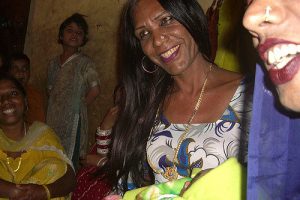
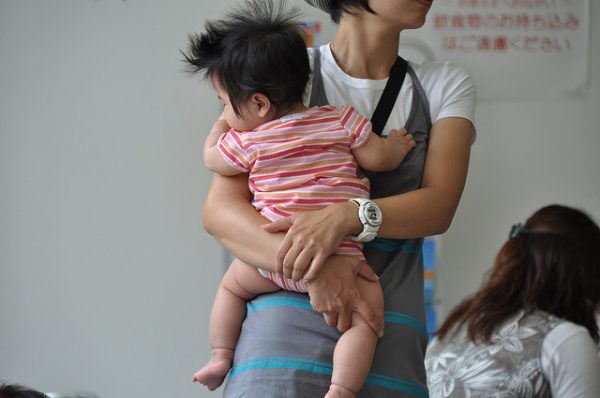
A hijra at the birth of a baby. While the mother rested, she acted as a host. Photo by Whitney Lauren, Flickr CC

The recent hire of a transgender news anchor in Pakistan garnered strong national and international support. Transgender individuals, commonly referred to as hijra or khawaja sara in South Asia, have long held a place in societies in the region, for Hindus and Muslims alike. Officially defined as a “third gender,” hijra — a non-conforming, trans, or intersex gender identity — in Pakistan now have their own category in the census, the right to vote, and the right to inherit property. Despite these advances, recent sociological findings point out that the hijra community still faces problems of legal recognition, social stigma, marginalization, discrimination, and violence.

Hijra often face familial rejection, lack of opportunities, and human rights violations in Pakistan. Most hijra are born biologically male, but many run away from home due to physical, emotional, or verbal abuse by family members who shame hijra for not performing traditional masculinity. After forming their own communities, hijra may be coerced into dancing, sex work, and begging to make a living. Hijra are also routinely discriminated against and excluded from schools, health services, and government jobs. When police sexually and physically abuse hijra, the legal system often fails to protect or support them. Even in old age, many hijra are cast out of their own communities because they can no longer support themselves.
At the same time, many hijra resist the man/woman gender binary and navigate society without the confines of traditional gender roles, allowing for some freedom under patriarchal social structures. When excluded from their families, kinship groups, and social networks, hijra create parallel social institutions, relations, and practices that make up new, distinctive communities.
Even with the implementation of a third gender category, some hijra do not legally adopt the category. Instead, some opt to combine feminine symbols with aspects of masculinity, demonstrating their goal to remain free of any singular legal definition. Given the benefits of being a man in Pakistan — and where a number of familial, religious, and economic difficulties may arise with legally choosing the third gender — hijra often opt to continue to maintain a male legal identity. But the supreme court rulings recognizing hijra indicate that the Pakistani state may in fact be moving away from gender binaries.

Though Pakistani laws have formally recognized hijra, this research suggests that social change is necessary for their inclusion in society. It also indicates that hijra communities will likely continue to be resilient and adaptive in a social structure that does not always afford them the benefits of those that identify along the male/female gender binary.

Photo by Avi, Flickr CC

From PRIDE parades to drag brunch, we tend associate queer people and queer-friendly places with cities. While some LGBTQ individuals do migrate to the metros, many also reside in rural America. Social scientists illustrate how queerness in the country functions differently than in the hustle and bustle of the city.

Distinguishing urban and rural is one way that LGBTQ people construct their identities in the context of small towns. Some feel that the popular images of gay individuals in urban spaces partying and enjoying nightlife are extreme and run contradictory to the experiences of queer folk who live quieter lives. Others feel that city gay bars are more impersonal than local small-town dive bars. Like in the show Cheers where “everyone knows your name,” a person’s character and long-term local status seems to matter more than their sexual orientation. In addition, some gay and lesbian individuals choose to return to their rural roots after trying out city life and rationalize this choice by deciding not to conform to cultural, urban-based understandings of what being gay means.
Queer visibility also differs in rural versus urban areas. Finding other LGBTQ people in rural areas  generally takes more legwork. While cities tend to have specific locations where queer communities congregate, rural communities have fewer designated queer enclaves. This means that meet ups for queer people in rural places involve circulating information and using space temporarily. One consequence of limited space is that many LGBTQ people have more trouble accessing social support, which may lead to worse health outcomes.
Residents in rural areas tend to have poorer health outcomes compared to those in cities overall, but the disparities are stronger for LGBTQ people. Not only do many queer folks face discrimination and stigma in healthcare facilities, rural healthcare is less likely to be equipped with the resources to meet the specific needs of gay, lesbian, queer, and non-binary patients.
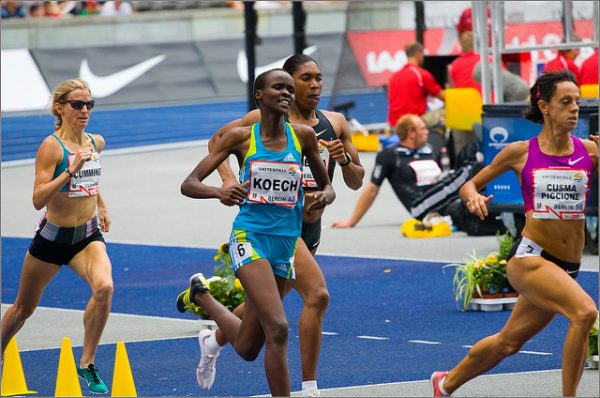
Photo by André Zehetbauer, Flickr CC

During PRIDE month Americans celebrate gender and sexuality spectrums, but many social arenas still rely on a rigid binary. Athletics is one of the spaces where gender segregation still dominates. In fact, its strict separation of sports into male and female competitions actually requires sport administrators to set and police the boundaries between the sexes and has created many controversies and conundrums in recent years. Sociological research illustrates how actors use gender verification, or sex testing, in athletics as a weapon of nationalism, sexism, and racism, thus reinforcing a medical view of the gender binary in an attempt to ensure “fair play.”

Gender verification in international athletics was part of the battlefield of the Cold War. Systematic sex testing in the Olympic Games began in 1968, largely in response to concerns about the dominant performances of the East German women and fears or rumors of men posing as women. In addition to being used as a weapon of nationalism, gender verification testing targeted athletes who did not conform to white, Western norms of femininity. Even after systematic sex testing was (briefly) eliminated by the International Olympic Committee in 2000, “suspicious” athletes such as the middle-distance runners Santhi Soundarajan and Caster Semenya were forced to undergo gender verification in 2006 and 2009.
Sport federations continue to defend gender verification of women — but not men — on the basis of “fair play,” or the idea that women competing against men face an unfair athletic disadvantage. Feminist scholars have critiqued the fair play reasoning as a smokescreen for the policing of women, especially as sex segregation and drug testing are two of the only ways that sport federations attempt to enforce a level playing field. Additionally, sex testing forces a medical definition of sex and draws sharp lines that punish individuals who are intersex, have chromosomal abnormalities, or have higher than average levels of androgens.

How sex has been defined and verified has shifted as the medical understanding and technology available has advanced, but all gender verification methods will continue to struggle with how to fit the wide spectrum of gendered individuals into only two boxes.

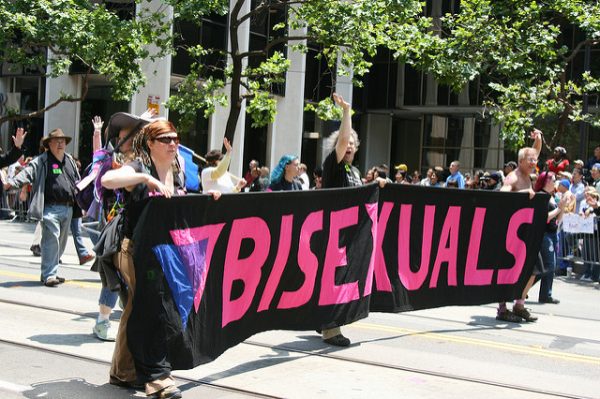
San Francisco Pride Parade, Photo by Caitlin Childs, Flickr CC

From a favorite lighting trope to the album premiere of the season, bisexuality and pansexuality are having a major cultural moment. According to recent social surveys, the number of people who identify as bisexual is on the rise. Social science research studying bisexuality shows us how a more fluid look at sexual identity brings both benefits and challenges.

For many people, identification with a particular sexual orientation is not a clear and consistent process. Some bisexual people come out later in life, or choose different labels for it.  And how “out” you are can depend on the gender and number of partners you have. Today, more young people are embracing this fluidity as “something other than straight.”
But this fluidity can also have consequences. Bisexuals face unequal health outcomes and wage disparities, and additional social stigma in both straight identified and queer identified spaces.
But wait, there’s some good news! The way researchers study bisexual behavior — often comparing bisexual individuals with two or more partners to straight or gay individuals with only one or more partners — means that some of the differences in health may be exaggerated. Despite greater attention to bisexual individuals in popular culture, we must not forget the challenges faced by this population. In a world that likes clear labels, it is easy for people who don’t fit those categories to fall through the cracks.
Photo by annie berge, Flickr CC

Recently we’ve been hearing more about “incels” or involuntary celibates — people who want to have sex but can’t seem to find a partner — especially in the context of mass violence. For example, Elliot Rodger, who killed six people in 2014 as part of a self-declared “war on women,” publicly blamed women for his inability to find a willing partner. Articles in the popular press have suggested that masculinity has more to do with this group’s behavior than wanting to have sex. In fact, social science research clearly demonstrates that there are plenty of adults out there who want to be having sex — but aren’t — and do not commit horrendous acts of violence.

First, many people fit into the category of “involuntary celibate.” One researcher defined it as someone who desires to have sex but has been unable to find a willing partner for at least six months. There are many reasons people don’t have sex, from religious beliefs, to physical ability, to a partner’s preferences. Depending on one’s age and relationship status, the path to involuntary celibacy can look very different. For instance, men and women with little relationship or sexual experience reported lack of experience to be the main reason for celibacy, in addition to social skills, body image, living arrangements, work arrangements, and transportation. Further, young adults tend to report feeling “off time.” In other words, they believe their peers are already having sex, a lot of sex, and they feel like they will never catch up.
Even though having sex is a key part of masculinity for most young men, some avoid feeling “off time” by pledging abstinence until marriage. These men do not feel less masculine than their peers. Instead, they reframe the choice as one that requires self-control and therefore their masculinity is dependent on not having sex until marriage.
While many people in partnered relationships — married or not — have sex at the beginning of the relationship, some report their relationship becomes “sexless” later on, often due to one partner’s sexual desires (or rather, lack thereof). While most view the lack of sex in their relationship as negative, they are often reluctant to leave a stable relationship. Many decide the benefits of staying, like strong emotional connections, outweigh the costs of leaving like financial instability and loneliness.
Photo by wilvia, Flickr CC

Images of smiling mothers and children flowed through our newsfeeds last week week as millions of Americans celebrated Mother’s Day. Yet, within the slew of digital odes to motherhood, many users posted messages of support for women who either voluntarily or involuntarily opted out of motherhood. Sociologists have long explored the meanings of motherhood and its social impacts on the women excluded from its definition.

Despite increasing support for gender equity, the traditional role of mother and the myth of ‘maternal instinct’ are still recognized as ‘natural’ rites of passage in a woman’s life. Women without children — particularly those who do not desire to have children — face stigma and criticism from friends, family and even coworkers that their childless status is abnormal and selfish. Even those who are involuntarily childless are portrayed as bereft and damaged. Childless women have resisted these depictions by expressing their reasons for opting out of motherhood. These include commitment to career aspirations, adverse childhood experiences, and idealistic perceptions of what good mothering looks like.
In the absence of children, people find alternative ways to form familial bonds. Contrary to cultural representations of  childless women as cold and selfish, Amy Blackstone illustrates how childless couples have more time to develop closeness through intimacy and sexual activity with their partners. Furthermore, some research suggests that women in childless relationships are more likely to earn higher incomes, work outside the home, and face less pressure to complete household duties traditionally relegated to women.
Women may also opt in to motherhood even after being staunchly against the idea. Some become pregnant unexpectedly, while others encounter life experiences, such as desire from one’s partner to have a child or the death of a loved one, that ultimately transform their plans from not wanting children to preparing for motherhood.
Photo by Joe Flintham, Flickr CC

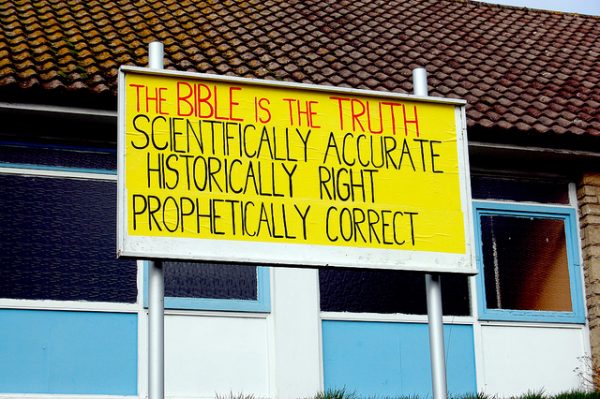
This month many celebrated Easter Sunday, symbolizing the resurrection of Christianity’s most prominent figure, Jesus. In this context, we find ourselves reflecting on the rise of the U.S. evangelical movement and the individuals who constitute its membership. Most recently progressives criticized evangelicals for their support of Donald Trump, who received over 80 percent of the evangelical vote despite his lack of religious practice, and his purported incidents of sexual misconduct. Sociological research provides a complicated picture of evangelicals in the United States and their beliefs.

The evangelical movement emerged during the mid-twentieth century and quickly gained popularity among conservative Whites in the 1990s. The core belief of evangelicalism, which has its roots in fundamentalism, lies in its assertion of the Protestant Bible as God’s actual word. Evangelicals see the Bible as the ultimate authority over moral matters and believe it cannot be contested. Their mission seeks to convert non-believers to Christianity so they may see Jesus as their savior and save their souls from eternal damnation.
Evangelicals also make up an essential part of the Republican Party. Several explanations exist for the strong link between evangelicalism and right-wing politics, including religiosity, gender and family ideologies, and moral standards. For example, evangelicals support political causes that reaffirm Biblical beliefs and support ideologies that center patriarchal models of family. Further, moral traditionalists hold universal ideas about what is right and wrong and support political causes and figures that uphold moral principles they perceive to be under threat.
Yet, several scholars warn against overgeneralizing about evangelicals. For example, Andrew Greeley and Michael Hout point out that while a significant amount of African American Christians share some of these evangelical beliefs, they overwhelmingly support democratic policies. Furthermore, outside of the U.S. context, many conservative White Christians reject right-wing social politics.
Photo by IQRemix, Flickr CC
Embracing and shaping fashion are not without issues of power and inequality. Different consumers have varying degrees of access to certain products, whether in terms of money or knowledge of what is happening in a particular arena of fashion. In most societies, clothing is a way to signal social class and occupation. While some privileged consumers assert class identities through conspicuous consumption of luxury goods, not all fashion choices are about creating or maintaining an image of wealth and power. Researchers have studied various subcultures to understand how fashion relates to identity.
Think of English punks or the 1970s or goth teens as examples of subcultures that use style and clothing to brand their identities rather than fit in with mainstream culture. In light of this, interpreting and predicting fashion trends remains difficult because individual and group identity expressions are in constant states of negotiation. Consumers decide if and to what extent they adopt a new trend or practice in order to fit in with a certain group or distinguish themselves from them. In other words, fashion is not just about the clothes themselves; it is a process of constant change that occurs in the contexts of existing culture and society.
Photo by Jason Hargrove, Flickr CC

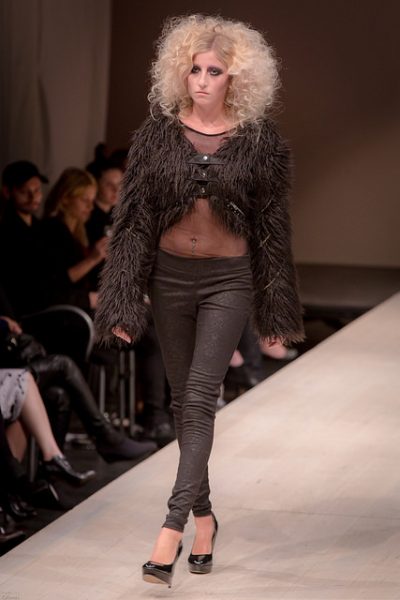
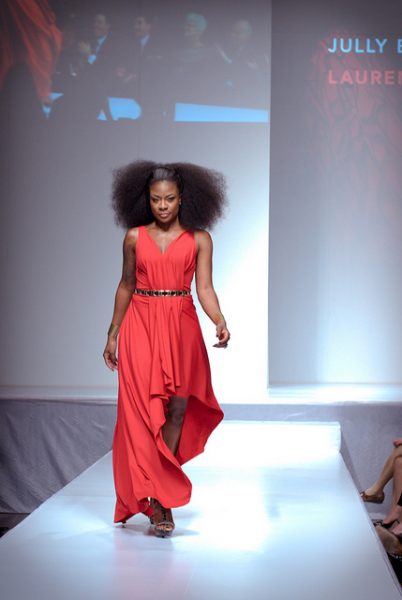
Fashion month has come to a close. Actors graced the Academy Awards red carpet with glamorous gowns and haute couture. Clicking through fashion websites, blogs, and Instagram or flipping through the glossy pages of Vogue, Harper’s Bazaar, and other more traditional print materials has long been a pastime for consumers of fashion and clothing. While some argue that the study of clothing and couture merits little scholarly attention, others view fashion as a valuable case for understanding everyday aspects of social life like personal identity, consumption, and social distinction and exclusion.

Peers, such as friends, family, and others in similar social locations, as well as fashion designers and brands act as reference points for choosing fashion items. When consumers purchase and use a blouse, handbag, or pair of shoes, those items take on social meaning and mark social distinctions. While people make choices in their fashion consumption, these decisions occur in relation to what others think and do. One might think that the top fashion houses are the ones who create what’s “in” or “out,” but consuming fashion does not occur in such a simple top-down way.
Choosing clothing is not necessarily about fitting in with what Louis Vuitton or Givenchy calls fashion, but rather a way to communicate specific meanings to the people in one’s peer groups. Particularly with the rise of the Internet as a way for consumers and producers to communicate about fashion, trends are difficult to predict. In other words, social actors — whether in haute couture houses or specific consumer subcultures — can influence fashion trends, but they cannot dictate what becomes popular.
Sociology of fashion extends beyond consumers of couture to the designers of dresses and producers of posh. Creating fashion products for mass consumption typically involves constant negotiation among social actors all over the world, not just a few designers and assistants sewing beautiful one-of-a-kind garments in a studio — after all, most pieces are intended for more than one person to wear. Company CEOs and head designers make decisions about how many collections they plan to produce, the overall vibe of the products, which suppliers will provide the materials, and which factories will sew the products. The leathers, lace, fabric, and buckles may come from places as far flung from each other as Italy, India, Brazil, and Thailand. Designers constantly communicate with suppliers and manufacturers in person and via phone and email to make decisions about fabrics, buckles, heel height, and other details. Much like an essay, an “it” bag in its final form has likely undergone numerous revisions before gracing the arms of fashionable women on Instagram.
Part of the Famous Five in Ottawa, Canada. These women are famous for asking the Supreme Court if the word “Persons” in the British North America Act (1867) included women. Photo by Bernard Spragg. NZ, Flickr CC

As we move through Women’s History Month, we remember the women and men around the world who have fought for gender, race, and other social equalities. Honoring the legacies of historical figures and the movements that led to their rise, however, raises larger questions about how these particular figures and movements are cemented into our memory, while others have been downplayed or altogether forgotten. Social science helps us understand these processes of collective remembering and forgetting.

Knowledge of past events is more than historical facts. Collective memory recognizes historical knowledge as a social process and acknowledges that socially-produced understandings of history also dictate how we understand the past. Groups reshape collective memory over time, with different institutions either reinforcing or reshaping knowledge. Within education, for example, textbooks can shape the way generations understand certain historical events. Legal institutions can also construct collective memory by categorizing actions as just or criminal. Additionally, commemorative events or memorials can prioritize certain understandings for those who participate or visit.
Creating knowledge about historical figures and events often lies in the ability of “reputational entrepreneurs,” like journalists, politicians, museum curators, and historians to construct or maintain a positive reputation of certain individuals and events. In a contentious political climate, this task proves even more difficult as groups compete for positive reputations. Entrepreneurial groups compete by denigrating opponents, downplaying failures, and constructing images of heroism. Failure on the part of reputational entrepreneurs may lead to the characterization of certain figures as revered and others despised. As new generations emerge, however, reputations of historical figures may be refocused to emphasize concerns in the contemporary political climate.