gender

Photo by freestocks.org, Flickr CC

Valentine’s Day is a time when our rom-com scripts are in high gear. The quintessential V-Day script assumes a man and a woman in a monogamous romantic relationship celebrate by exchanging gifts, sharing a romantic dinner, and then ending the night with a steamy bedroom scene. In reality, many people challenge this script. However, these challenges are made more difficult by gendered socialization that reinforces norms about men’s and women’s bodies, heterosexuality, and sexual pleasure.

Children learn their bodies are gendered early in life. Institutions like sports and education systems often teach and highlight differences between boys and girls. For instance, preschool teachers construct gender norms by disciplining girls and boys differently — telling girls to be quiet more frequently than boys. And since girls and women have fewer opportunities than men to demonstrate physicality, they tend to underestimate their bodily capacities.
Children also learn to privilege heterosexual relationships in schools. Some preschool teachers encourage what they see as “romantic” affection between boys and girls in their classes, but rarely interpret affection between children of the same gender as romantic. Children reproduce these norms in their own play. For instance, when playing “house” girls rarely play the role of “dad” and boys rarely play the role of “mom.” Further, when parents talk to their children about sexuality they also reinforce gender differences. For instance, mothers talk about relationships, reproductive bodies, and what sexual behaviors are considered “wrong” more with their daughters than with their sons.
These early experiences have consequences for how we view and understand our bodies. Despite the increased awareness of the benefits of developing a healthy sexuality, women tend to know less about their sexual bodies than men. For instance, women report lack of knowledge about the functions of their genitalia. They also tend to rely more on their sexual partners than men for sexual pleasure and are more likely to say they are indifferent about their sexuality.
Photo by Tony Webster, Flickr CC

Every year the FBI releases its Uniform Crime Report (UCR), an annual collection of crimes reported to local police agencies across the United States.  When the FBI released the 2016 report last year, it was missing many key tables, spurring a letter from criminologists asking that Jeff Sessions and the FBI director, Christopher A. Ray, release the report in its complete form (as it had been in previous years). Although the FBI claims that the trimming of the report was planned for many years, other reports suggest that this may not be the case. So what exactly is missing from the UCR and why does it matter to social science research?

The 2016 UCR is missing tables from the Supplementary Homicide Reports (SHR), which include data on homicide victims’ relationships to perpetrators and other situational circumstances of homicides. Without these data, researchers — like those studying intimate partner and family violence — will be unable to track these aspects of homicides over time. In the past, researchers used the SHRs to examine how declining marriage rates, increased access to domestic violence services, and the improved economic standing of women contributed to a sizable decrease in spousal homicide from the 1970s to the 1990s. Others used the SHRs to examine the geography of interpersonal homicide, indicating that rural residents may be more susceptible to intimate partner and familial homicides than residents of metropolitan areas.
Like many other national databases, the Supplemental Homicide Reports suffer from some data quality issues. One study finds that data establishing the relationship between a victim and perpetrator in the SHRs may be particularly unreliable. While this may suggest that dropping some tables from the UCR may have been a strategic move by the FBI, most studies of the SHR data quality call for more efficient and effective data collection prior to compiling an SHR, as well as better variable measurement by the SHR, rather than complete dismissal of the reports.

Beyond homicide data, which also includes gang and drug-related homicides, the 2016 Uniform Crime Report is missing many additional tables. One of these is drug arrests by specific drug types, including synthetic opioids or heroin. This is a particularly surprising omission considering the opioid epidemic is a major policy concern for the Trump administration. The recent call to action by criminologists appears to have been successful — FBI Director Wray indicated at a December House Judiciary Committee hearing (see 3:28:35 for Wray’s statement) that the FBI now plans to republish the UCR with all of the missing tables included. This is good news for social scientists, who argue that we cannot have effective policies on social issues such as crime and drug use without the data that drive these critical decisions.

Photo by taylormackenzie, Flickr CC

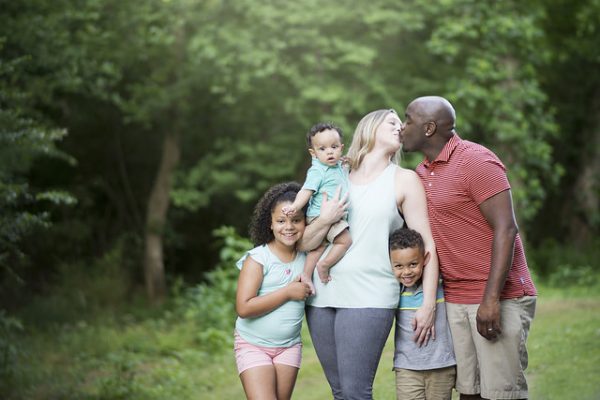
Church bells ring in England, as the country prepares for the royal wedding between Prince Harry and American actress Meghan Markle next spring. While royal weddings have long stirred excitement among local and foreign regions alike, commentators have been quick to speculate how Markle’s identity as a biracial woman – African American mother and white American father – might shape the future of the British monarchy. The speculation surrounding Markle’s racial identity highlights the complexities of being multiracial in an increasingly diverse, yet still discriminatory, global world. Sociological studies can help us better appreciate how mixed-race individuals navigate the societal perceptions of their identities.

The recognition and visibility of mixed-race individuals and identities has grown in recent decades, yet the histories, meanings, and responses to mixed racial identities vary considerably within and across international contexts. While the U.S. primarily emphasizes “bi-racial” as rooted in a white and nonwhite racial system, in Latin America, mixed-race identities fall within a more flexible “tri-racial”system. For instance, individuals from Brazil and the Caribbean trace their mixed-race origins back to colonial conquest centuries ago, and thus mixed-race people have been considered a central part of the national identity in these locations. Understanding these differences further our understandings of how race is socially constructed.
While some mixed-race people embrace a multiracial identity, others use strategies to appear as monoracial. For black-white biracial individuals, this means attempting to appear as either white or black. Individuals in one U.S. study reported tanning, combing their hair, speaking, and dressing in a certain way to appear as more white or black depending upon the potential social gains in any given context. Nevertheless, as we might expect from the experiences of other people of color, mixed-race individuals often face mistreatment from whites and non-whites alike for their appearance. Biracial women, for example, report receiving frequent mistreatment from non-biracial black women, who often accuse them of thinking they are “all that” because of their light skin and hair texture.
In some contexts, multiracial individuals are preferred above whites. And dating is no exception. Within romantic relationships, sexual and dating partners tend to exoticize biracial individuals. For some, perceived racial ambiguity makes biracial individuals ideal for casual sexual encounters, while others are sought after because their partners believe they will make beautiful babies. One recent study suggested that mixed-race women may be more likely to self-identify as “multiracial” than mixed-race men because the multiracial identity is more associated with traditional perceptions of feminine beauty. Despite individual and systemic preferences for biracial people, this preference often comes at a cost of commodifying their bodies, and many cannot escape discrimination that have historically oppressed people of color.
Photo by Chase Carter, Flickr CC

Originally published Oct. 31, 2017

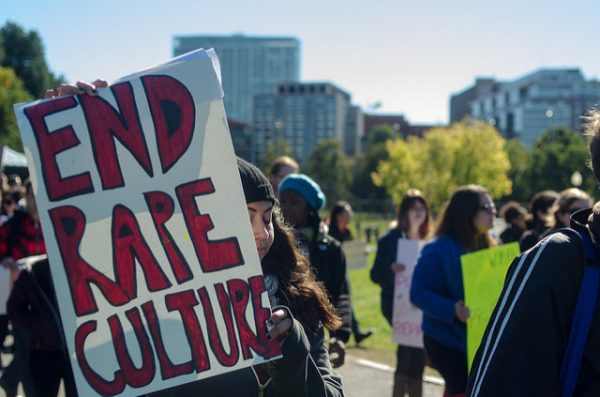
In recent weeks, over 500,000 women and men shared the hashtag #MeToo in response to the following social media tweet: “If all the women who have been sexuallly harrassed or assaulted wrote ‘Me too.’ as a status, we might give people a sense of the magnitude of the problem.” Some participants only shared the hashtag, while others revealed deeply personal stories of sexual harassment in the workplace, child sexual abuse, and sexual assault on college campuses, to name a few. Initially started by activist Tarana Burke, this reinvigoration of the Me Too campaign comes amidst numerous sexual assault and harassment claims against several high status men, including Hollywood mogul Harvey Weinstein, musical artist Nelly, and most recently, House of Cards actor Kevin Spacey. Sexual harassment and sexual assault are certainly not new phenomena. Yet, these campaigns that provide space for survivors to address victimization may signal a renewed public effort to address rape culture – a struggle that social scientists have spent decades trying to resolve.

Consequences of Sexual Violence

Sexual violence frequently results in several psychological and financial consequences for victims and survivors throughout the life course. Many report feelings of depression and posttraumatic stress disorder following the incident, and the trauma that results from sexual violence may alter how victims view themselves. Kaitlyn Boyle argues that assault characteristics like physical injury, perpetrator force, and physical resistance shape one’s self-identification as a “victim” or a “survivor.” Sexual violence may also impact women’s career trajectories. For example, many women that are sexually harassed in the workplace are more likely than non-harassed women to change jobs earlier in their career in order to avoid their harassers and/or employers who failed to fully investigate their claims. These moves often resulted in increased financial hardship.


Defining Rape Culture and Dismantling Masculinity

Feminist sociologists have long pointed out that sexual violence doesn’t simply stem from individual sexual impulses — it emerges as a consequence of masculine ideals that justify men’s aggression and encourage women’s subordination. This is in large part due to rape culture. In their important study on college fraternities and sexual assault, A. Ayres Boswell and Joan Spade define rape culture as “a set of values and beliefs that provide an environment conducive to rape” (133).
Under popular rape myths that suggest “guys will be guys” and “bros before hos,” some men within highly male-dominated peer groups, such as fraternities and athletic teams, engage in acts like harassment and gang rape to connect with and impress their male peers. And while there are many men who openly oppose sexual violence by distancing themselves from perceived rapists and claiming they are “good guys,” they may also reinforce cultural rape myths that only stereotypical “bad guys” — strangers, physically violent individuals, and minority men — commit rape. This ultimately works to cover up the more subtle forms of everyday sexual violence.
Photo by Quinn Dombrowski, Flickr CC

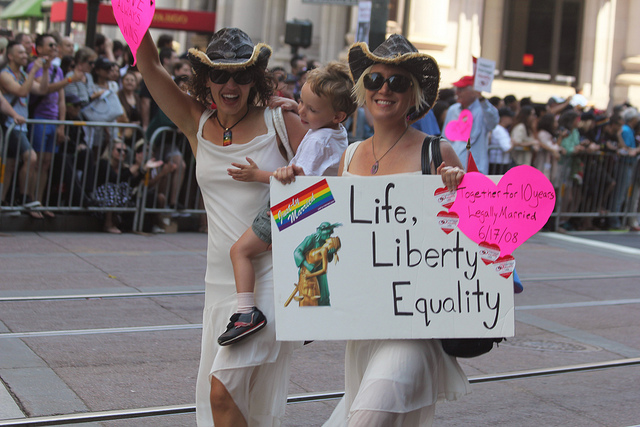
LGBT families are increasingly visible in public life. From famous celebrity same-sex parents like Neil Patrick Harris and David Burtka to same-sex family representations in popular television shows like Grey’s Anatomy and Modern Family, it may be easy to forget the hurdles LGBT families continue to face. For decades, anti-same-sex parenting activists have challenged LGBT parental rights, arguing that same-sex parenting somehow harms the wellbeing of children. Social science research on LGBT parenting has generally refuted  these claims, providing evidence that good parenting occurs under a diversity of family arrangements.

Families have never truly resembled the so-called “traditional” nuclear family, yet LGBT families have indeed expanded definitions of kinship and parenting. Beyond disrupting norms about gender and sexual orientation of family members, many LGBT families use adoption and various methods of assisted reproduction to have children. Some families include two parents, some include one, and others involve co-parenting between more than two people.
Despite a range of options for family structures, LGBT families still face legal challenges to parenting. Legal rights pertaining to adoption and parental rights vary significantly across the United States, as do parents’ understandings of and interactions with the law. In fact, parents’ expectations of what family formation means are often shaped by the legal context in which they live. For instance, if adoption is not an option for the second parent, it may become less important to the parents’ perception of how a family should look.
Over the past decade, research on the well-being and success of children with lesbian and gay (LG) parents has intensified. Evidence overwhelmingly indicates that these children do just as well as children raised by different-sex parents in social and cognitive development, academic performance, and avoiding substance abuse and delinquent behavior. Beyond wellbeing, LG parents may be less likely to enforce rigid gender norms on their children, instead offering a variety of gendered options. Studies have also found that children’s activity preferences are less gendered when parental division of labor is more equally shared between both parents, and this egalitarian form of co-parenting appears to be more common among middle class, white lesbians. However, parents from all backgrounds may be less likely to endorse gender nonconformity with their sons than with their daughters.
While the research base on LG parents and family structures has developed rapidly, we know much less about transgender parents and transgender youth. Similarly, the experience of bisexual individuals has often been ignored or collapsed under LG experiences. This lack of research complicates the notion of LGBT as a comprehensive umbrella term in family studies, as social scientists know far less about the BT than the LG, and even less about queer and asexual identities (QA).
Photo by Cristian V, Flickr CC

Prominent figures in American film, news, and politics are facing a dramatic wave of sexual harassment accusations. In response, the heads of organizations — like the Academy of Motion Pictures Arts and Sciences and various colleges and universities — are not only encouraging victims to voice their allegations, but also re-examining their own institutional cultures. Social science research has explored the social dynamics of sexual harassment in the workplace and the conditions that prevent reporting. 

Individuals who experience sexual harassment often do not report right away — some may not interpret their experiences as abuse at first, but even when they do, many choose not to come forward. And others who are aware of the harassment frequently turn a blind eye. In order for victims of sexual harassment, discrimination, or abuse to come forward, they must first believe that doing so will be effective and not result in their own harm. Lost jobs opportunities and the fear of retaliation are among the most frequent reasons for not reporting, and educational, psychological factors, and financial resources all influence the likelihood of reporting. 
Organizations can also develop cultures of corruption and silence as sexual harassment becomes embedded within the institution. Members normalize and justify these practices, and then socialize newcomers to view such behavior as permissible and even desirable. In doing so, members of the organization legitimize and reinforce the status quo. For instance, women’s success may be interpreted as a threat to men’s masculinity, and in some cases, these men respond through controlling practices like sexual harassment. In order to keep their jobs and avoid conflict with coworkers, many women remain silent and feel they must tolerate unwelcome sexual advances. When coworkers witness harassment and do not respond, victims may internalize negative judgments, which lowers their sense of well-being and reduces opportunities for collective action.
Photo by Mike Schmid, Flickr CC

Benefits for the wealthiest Americans in Republicans’ proposed tax plan are causing alarm among some Americans, especially because they risk widening an already large wealth gap. According to a recent analysis, the three richest Americans control more wealth than half of the United States’ population. Wealth is different from income, because it takes into account assets like property and debts in addition to earnings, which means wealth inequality in the United States is much greater than income inequality. Social scientists demonstrate that the amount of wealth a person accumulates is associated with a variety of social advantages. And once someone has accumulated wealth, the benefits continue to build up over time and across generations.

Income matters for wealth accumulation, but that is not the only factor. Homeownership is particularly important, though age, wealth of parents, level of education, religion, race, and gender also influence the wealth a person acquires. For instance, unmarried women’s wealth on average is lower than men’s, and a significant gap exists between whites and Blacks in America — a gap that only gets wider in the top tax bracket.
Having wealth is an important indicator of future wealth and well-being. Parents’ wealth is often associated with greater well-being for their children, including higher educational and occupational attainment. Personal wealth also partially explains the gap in marriage rates between people with high and low education levels.
Photo by stephalicious, Flickr CC

From sexual harassment to salary gaps, stories about gender inequality at work are all over the news. How does this happen? Social science research finds that people often place into different jobs by gender, race, and class, and this sorting has consequences for inequality in earnings and career prestige. Just like a middle school dance where students congregate on opposite sides of the floor because of both self-sorting and social norms, gendered occupational segregation comes from a combination of choice and implicit discrimination based on workplace “fit.” Women often choose less prestigious occupations based on how they perceive their personalities and competence, and employers and colleagues tend to favor people like themselves when hiring, promoting, and collaborating.

When people choose their jobs, they often think about careers to match their personalities. Gender socialization and stereotypes about competence, personality traits, and innate abilities influence how women and men consider which  jobs are right for them. Many women learn to perceive themselves as emotional, systematic, or people-oriented. They also tend to think they possess the right traits to work in female-dominated jobs like teaching and nursing. Women are more likely to think they will perform poorly at careers in science, technology, math, and engineering (STEM) because they have learned to think they are not “naturally” as good at these subjects as men are.
Outright gender-based discrimination in hiring and workplace practice is illegal, but it still occurs through implicit biases to the detriment of women. Employers often look for people who will blend well with their workplace’s culture, and this results in hiring candidates similar to themselves, in terms of both gender and social class. Once hired, colleagues tend to collaborate and share resources with those they think are like them as well, often isolating women in male-dominated workplaces. As a result, many women leave highly-paid, highly-skilled positions in favor of less prestigious jobs with more women and friendlier environments.
Photo by Frank de Kleine, Flickr CC

Several abortion providers have come under intense criticism for offering free abortions to women affected by Hurricane Harvey. While this criticism echoes decades of social and political debates regarding women’s reproductive rights, the control over women’s bodies extends far beyond the second-wave feminist movement during the mid-20th century. For example, recent calls for the removal of a statue honoring J. Marion Sims, a doctor known for medical contributions to the field of gynecology and who performed experimental surgeries on non-consenting enslaved black women without anesthesia, illustrate the historical links between reproductive control, gender, and race. Sociologists allow us to trace the long history of controlling black women’s reproduction.

While historical accounts of reproductive rights rhetoric in the 19th century point to the gendered issue of men’s control over women’s bodies and the valorization of traditional motherhood, they neglect how political rhetoric also drew on ideas of white superiority. As more immigrants migrated to the U.S., Anglo-Saxon political elites worried that greater migrant representation would quickly dismantle their political power, and so American physicians encouraged Anglo-Saxon women to bear children for the sake of continued political power among whites.
Even though white women were subjected to political rhetoric that sought to control their reproduction, their capacity to reproduce the white race meant they were privileged relative to black women. This privilege was shaken when white women gave birth to mixed-race children, however, and these women were sometimes forced into indentured servitude. On the other hand, racially mixed children born to black women during slavery were not threatening to a white racial order. Instead, they were viewed as symbols of white men’s social and economic control over black women.
During and after slavery, black women were commonly depicted as sexually deviant, hypersexual and promiscuous. State-sanctioned practices to control black women’s reproduction–like coercive birth control and mass sterilization campaigns where doctors performed hysterectomies on black women that were not medically necessary–reflected these cultural images. When black women did have children, restrictive welfare policies limited the state support they could receive, further drawing on racialized constructions of black women as lazy, ignorant, “welfare queens.” Both sets of state practices reflect the attempt to control black women’s sexuality, reproduction, and families.

For more on the ways mothers are controlled and policed, check out this TROT on morality and maybe-moms.

Photo by Ted Eytan, Flickr CC

Despite increased awareness surrounding transgender identities and experiences, the National Coalition of Anti-Violence Programs (NCAVP) has tracked 36 anti-LGBTQ homicides in 2017 alone, 16 of whom were transgender women of color. Along with President Trump’s recently proposed military ban of transgender persons, there is evidence that personal prejudices and institutional discrimination continue to affect the lives of those in the trans community.

One way institutions like the military discriminate against transgender individuals is by advancing the assumption that trans bodies are a problem and should conform to “normal” standards. For example, medical professionals that work with transgender patients often discourage them from undergoing transitional surgery too soon. This discouragement reinforces traditional ideas that treat gender and sex as the same thing, and recognize both as binary. This discrimination shapes psychological and physical well-being, as transgender people who appear as gender nonconforming have a greater risk of engaging in self-harm acts, including suicide.
Transgender people are also at a greater risk of being the victims of violence. Surveys indicate that roughly 50% of transgender people report experiences of sexual violence or assault. The continuous threat of violence influences everyday decision making and quality of life across communities. For example, transgender women are more likely to perceive an association between acts of physical violence with sexual assault. Moreover, individuals transitioning from male-to-female are more likely to experience violent victimization than those transitioning from female-to-male, with a heightened risk during periods of transition and gender ambiguity.