culture

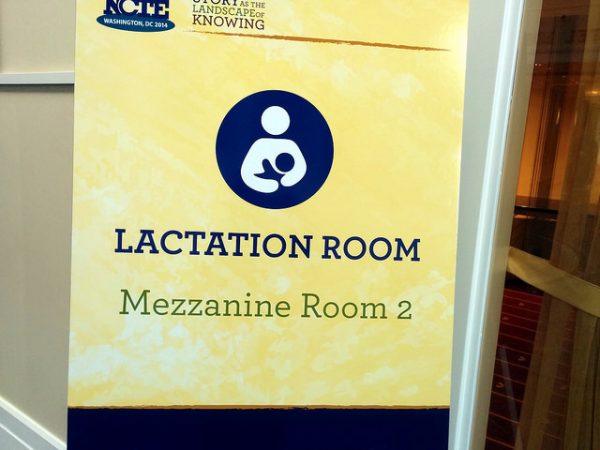
Lactation Room Sign. Photo by Cory Doctorow, Flickr CC

Recently, Utah and Idaho legalized public breastfeeding, finally making the practice lawful in all parts of the United States. Yet, even where public breastfeeding is legal — and has been for some time — breastfeeding mothers still face stigma. For instance, a pool patron and a staff member recently asked a breastfeeding mother in Mora, Minnesota to cover herself while at a public pool. Many have pointed out the contradictions between observers’ acceptance of women’s skin in certain public domains (like at the beach or on the cover of a magazine) and the public shaming women receive when their skin is exposed during breastfeeding.

In U.S. society especially, breasts are sexual symbols. And since motherhood is not highly sexualized, public breastfeeding presents a cultural contradiction in the United States. Because of these shared understandings of breasts as sexual, mothers must consciously negotiate spaces where they can breastfeed. For example, mothers report they engage in a variety of behaviors, like avoiding breastfeeding in certain spaces where they might face scrutiny or draping a blanket over the baby to hide their breasts, in order to not be viewed as sexual while breastfeeding.

In other words, one reason people respond to public breastfeeding with discomfort and sometimes hostility is that breasts have a particular meaning within U.S. culture and breastfeeding in public challenges that meaning.

Photo by Indi Samarajiva, Flickr CC
The word “rave”evokes different responses depending upon one’s generation. For many it symbolizes fun all-night dance parties with friends. While the public may be quick to associate rave culture with youth delinquency, social science explores the broader range of social, spiritual, and cultural elements of raves and electronic dance music (EDM). Raves began in 1980s Britain and quickly spread to the United States. Youth created these anti-establishment and and underground events to celebrate peace, love, unity, and respect — otherwise known as “PLUR.” However, heavy drug consumption resulted in media scrutiny and government crackdowns of these underground locations in the 1990s and early 2000s, pushing raves into more formal spaces like clubs.
Social scientists have explored raves and the electronic dance music scene from two different perspectives. The cultural perspective emphasizes a sense of community and empathy for its members as the roots of the scene. From this perspective, drug use enhances these experiences. The rave has been portrayed as a youth cultural phenomenon, characterized by belonging, self-expression, acceptance, camaraderie, escape, and solidarity, and where drugs — particularly ecstasy or “E” — are often central to the scene or tools in rebellion. From the public health perspective, excessive drug use is the defining feature of rave culture. Here raves and the electronic dance music scene are perceived as dangerous drug subcultures that increased drug-related health problems in the United States. However, some debate these claims and argue that the effects of ecstasy itself are linked to feelings of closeness and solidarity at raves.
While typically not linked to public perceptions of rave culture, some scholars connect raves and electronic dance music culture (EDMC) to religion and spirituality. In particular, scholars point to the non-Christian religiosity of rave’s dance “ritual,” likening it to the non-denominational “new church.” Further, EDM inherits its ritualistic, chanting, and percussive elements from African, Asian, and Indigenous cultures in North America, and African American, Latino, and gay communities in Chicago and New York City in the 1970s and 1980s. Thus, youth promoted raves as place of growth, sacredness, and unity, where youth were not divided through class, ethnicity, and gender.

Though the shape and form of raves and rave culture continues to change, both cultural and public health scholars agree that these events are much more than sporadic, all night dance parties.

Photo by Sara Star NS, Flickr CC
Despite the stressful experiences and the poverty that often accompany immigration, social science research shows that Hispanics as a whole fare better in health outcomes than non-Hispanic Whites. The ‘Hispanic Paradox’ refers to the fact that these good health conditions in Hispanic populations represent a curious puzzle for researchers. This is because Hispanics also exhibit low-income status, disproportionate exposure to stress factors associated with the immigration process such as learning a new language, adapting to an unfamiliar environment, and encountering persistent discrimination — factors associated with poor health outcomes.
Some studies explain the ‘Hispanic Paradox” based on Hispanic culture-specific features that act as protective factors of health and wellbeing. They include the cultural emphasis in the development of social resources, family ties, and religious affiliations. Hispanic mothers in the United States, for example, enjoy favorable birth outcomes due to their close relationships with family, friends, and community members who provide a protective network of informal prenatal care. However, new research has found that Hispanic mothers’ adaptation to the norms of U.S. society — known as acculturation — erode these healthy behaviors.
Notably, the Hispanic Paradox may not remain consistent when researchers consider the specific composition of Hispanic populations living in the United States, compared to Hispanic populations in their places of origin. For instance, Hispanics who migrate may have better health conditions than those who stay in their home countries, known as the ‘healthy migrant effect’. On the other hand, less healthy Hispanics may be more likely to return to their home countries and thus less likely to participate in research studies, what is called ‘the salmon bias’. A study of Hispanics tested both the ‘healthy migrant’ and ‘the salmon bias’ effects among Cubans (for whom returning to their home countries is not feasible), Puerto Ricans, and U.S.-born Hispanics (whose deaths are recorded in the U.S. national statistics). Findings reveal that lower mortality for Hispanics remains constant, even when controlling for these alternative hypotheses.

Alberto Palloni and Elizabeth Arias. 2004. “Paradox Lost: Explaining the Hispanic Adult Mortality Advantage.Demography 41(3): 385-415.

Ana F. Abraido-Lanza, Bruce P. Dohrenwend, Daisy S. Ng-Mak, and J. Blake Turner. 1999. “The Latino Mortality Paradox: A Test of the” Salmon Bias” and Healthy Migrant Hypotheses.” American Journal of Public Health 89(10): 1543-1548.

Studies on the Hispanic Paradox shine a light on how ethnicity can affect health outcomes. However, concerns about health outcomes among minorities require both strengthening the benefits and preventing potential harmful consequences of being Hispanic in the United States.

Photo by Rodrigo Soldon Souza, Flickr CC
The FIFA World Cup is in full swing in Russia, and fans from all over the world have been traveling or tuning in to catch their favorite teams and players. The World Cup may seem like fun and games, but for social scientists all over the world, soccer — or “football,” as most of the world calls it — is Exhibit A in the argument that sport and its mega-events are a powerful social force on the world stage.
Sport elites and enthusiasts often celebrate the positive, community-building dimensions of soccer’s social power, highlighting soccer’s role in building national unity and fostering international cooperation. Across various geographic boundaries and historical periods, soccer can and often does bring people together through shared traditions, social networks, and goals. International sports can even shape international politics and diplomacy.
As TSP co-Publisher Doug Hartmann has insisted for years however, even as sport builds community and social connections, it simultaneously crates differences and distinctions, some of which can lead to conflict or inequality. Global soccer exhibits these social dynamics as well. For example, the popularity of sports and competition in many parts of the world can be connected to historical processes of colonialism and imperialism. Another common theme in the social scientist’s playbook is the racism and violence that so often accompanies soccer in both national and international settings.

All this might help explain why some scholars have been cautious and critical of the Russian World Cup, such as Jules Boykoff, who warns against the presence of bigotry and ultranationalism in an op-ed with the LA Times. The complicated intersections of sport, power, and race means that there are times when it’s not all fun and games.


For more, check out this NBC Think article on “sportwashing”– using mega-sports events to elevate a country or politician’s reputation and distract from their negative human-rights records.

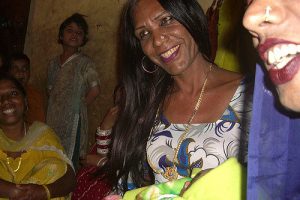
A hijra at the birth of a baby. While the mother rested, she acted as a host. Photo by Whitney Lauren, Flickr CC

The recent hire of a transgender news anchor in Pakistan garnered strong national and international support. Transgender individuals, commonly referred to as hijra or khawaja sara in South Asia, have long held a place in societies in the region, for Hindus and Muslims alike. Officially defined as a “third gender,” hijra — a non-conforming, trans, or intersex gender identity — in Pakistan now have their own category in the census, the right to vote, and the right to inherit property. Despite these advances, recent sociological findings point out that the hijra community still faces problems of legal recognition, social stigma, marginalization, discrimination, and violence.

Hijra often face familial rejection, lack of opportunities, and human rights violations in Pakistan. Most hijra are born biologically male, but many run away from home due to physical, emotional, or verbal abuse by family members who shame hijra for not performing traditional masculinity. After forming their own communities, hijra may be coerced into dancing, sex work, and begging to make a living. Hijra are also routinely discriminated against and excluded from schools, health services, and government jobs. When police sexually and physically abuse hijra, the legal system often fails to protect or support them. Even in old age, many hijra are cast out of their own communities because they can no longer support themselves.
At the same time, many hijra resist the man/woman gender binary and navigate society without the confines of traditional gender roles, allowing for some freedom under patriarchal social structures. When excluded from their families, kinship groups, and social networks, hijra create parallel social institutions, relations, and practices that make up new, distinctive communities.
Even with the implementation of a third gender category, some hijra do not legally adopt the category. Instead, some opt to combine feminine symbols with aspects of masculinity, demonstrating their goal to remain free of any singular legal definition. Given the benefits of being a man in Pakistan — and where a number of familial, religious, and economic difficulties may arise with legally choosing the third gender — hijra often opt to continue to maintain a male legal identity. But the supreme court rulings recognizing hijra indicate that the Pakistani state may in fact be moving away from gender binaries.

Though Pakistani laws have formally recognized hijra, this research suggests that social change is necessary for their inclusion in society. It also indicates that hijra communities will likely continue to be resilient and adaptive in a social structure that does not always afford them the benefits of those that identify along the male/female gender binary.

Photo by Avi, Flickr CC

From PRIDE parades to drag brunch, we tend associate queer people and queer-friendly places with cities. While some LGBTQ individuals do migrate to the metros, many also reside in rural America. Social scientists illustrate how queerness in the country functions differently than in the hustle and bustle of the city.

Distinguishing urban and rural is one way that LGBTQ people construct their identities in the context of small towns. Some feel that the popular images of gay individuals in urban spaces partying and enjoying nightlife are extreme and run contradictory to the experiences of queer folk who live quieter lives. Others feel that city gay bars are more impersonal than local small-town dive bars. Like in the show Cheers where “everyone knows your name,” a person’s character and long-term local status seems to matter more than their sexual orientation. In addition, some gay and lesbian individuals choose to return to their rural roots after trying out city life and rationalize this choice by deciding not to conform to cultural, urban-based understandings of what being gay means.
Queer visibility also differs in rural versus urban areas. Finding other LGBTQ people in rural areas  generally takes more legwork. While cities tend to have specific locations where queer communities congregate, rural communities have fewer designated queer enclaves. This means that meet ups for queer people in rural places involve circulating information and using space temporarily. One consequence of limited space is that many LGBTQ people have more trouble accessing social support, which may lead to worse health outcomes.
Residents in rural areas tend to have poorer health outcomes compared to those in cities overall, but the disparities are stronger for LGBTQ people. Not only do many queer folks face discrimination and stigma in healthcare facilities, rural healthcare is less likely to be equipped with the resources to meet the specific needs of gay, lesbian, queer, and non-binary patients.
San Francisco Pride Parade, Photo by Caitlin Childs, Flickr CC

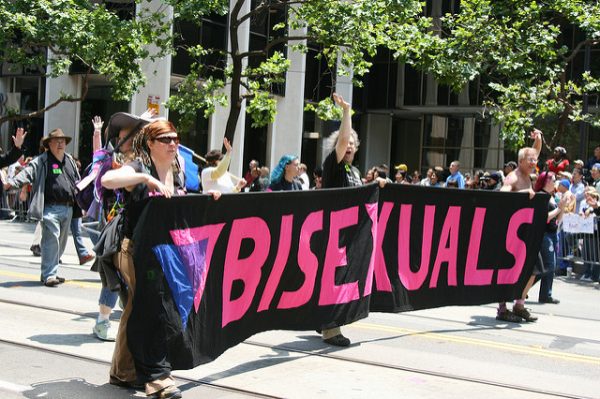
From a favorite lighting trope to the album premiere of the season, bisexuality and pansexuality are having a major cultural moment. According to recent social surveys, the number of people who identify as bisexual is on the rise. Social science research studying bisexuality shows us how a more fluid look at sexual identity brings both benefits and challenges.

For many people, identification with a particular sexual orientation is not a clear and consistent process. Some bisexual people come out later in life, or choose different labels for it.  And how “out” you are can depend on the gender and number of partners you have. Today, more young people are embracing this fluidity as “something other than straight.”
But this fluidity can also have consequences. Bisexuals face unequal health outcomes and wage disparities, and additional social stigma in both straight identified and queer identified spaces.
But wait, there’s some good news! The way researchers study bisexual behavior — often comparing bisexual individuals with two or more partners to straight or gay individuals with only one or more partners — means that some of the differences in health may be exaggerated. Despite greater attention to bisexual individuals in popular culture, we must not forget the challenges faced by this population. In a world that likes clear labels, it is easy for people who don’t fit those categories to fall through the cracks.
Photo by annie berge, Flickr CC

Recently we’ve been hearing more about “incels” or involuntary celibates — people who want to have sex but can’t seem to find a partner — especially in the context of mass violence. For example, Elliot Rodger, who killed six people in 2014 as part of a self-declared “war on women,” publicly blamed women for his inability to find a willing partner. Articles in the popular press have suggested that masculinity has more to do with this group’s behavior than wanting to have sex. In fact, social science research clearly demonstrates that there are plenty of adults out there who want to be having sex — but aren’t — and do not commit horrendous acts of violence.

First, many people fit into the category of “involuntary celibate.” One researcher defined it as someone who desires to have sex but has been unable to find a willing partner for at least six months. There are many reasons people don’t have sex, from religious beliefs, to physical ability, to a partner’s preferences. Depending on one’s age and relationship status, the path to involuntary celibacy can look very different. For instance, men and women with little relationship or sexual experience reported lack of experience to be the main reason for celibacy, in addition to social skills, body image, living arrangements, work arrangements, and transportation. Further, young adults tend to report feeling “off time.” In other words, they believe their peers are already having sex, a lot of sex, and they feel like they will never catch up.
Even though having sex is a key part of masculinity for most young men, some avoid feeling “off time” by pledging abstinence until marriage. These men do not feel less masculine than their peers. Instead, they reframe the choice as one that requires self-control and therefore their masculinity is dependent on not having sex until marriage.
While many people in partnered relationships — married or not — have sex at the beginning of the relationship, some report their relationship becomes “sexless” later on, often due to one partner’s sexual desires (or rather, lack thereof). While most view the lack of sex in their relationship as negative, they are often reluctant to leave a stable relationship. Many decide the benefits of staying, like strong emotional connections, outweigh the costs of leaving like financial instability and loneliness.
Photo by wilvia, Flickr CC

Images of smiling mothers and children flowed through our newsfeeds last week week as millions of Americans celebrated Mother’s Day. Yet, within the slew of digital odes to motherhood, many users posted messages of support for women who either voluntarily or involuntarily opted out of motherhood. Sociologists have long explored the meanings of motherhood and its social impacts on the women excluded from its definition.

Despite increasing support for gender equity, the traditional role of mother and the myth of ‘maternal instinct’ are still recognized as ‘natural’ rites of passage in a woman’s life. Women without children — particularly those who do not desire to have children — face stigma and criticism from friends, family and even coworkers that their childless status is abnormal and selfish. Even those who are involuntarily childless are portrayed as bereft and damaged. Childless women have resisted these depictions by expressing their reasons for opting out of motherhood. These include commitment to career aspirations, adverse childhood experiences, and idealistic perceptions of what good mothering looks like.
In the absence of children, people find alternative ways to form familial bonds. Contrary to cultural representations of  childless women as cold and selfish, Amy Blackstone illustrates how childless couples have more time to develop closeness through intimacy and sexual activity with their partners. Furthermore, some research suggests that women in childless relationships are more likely to earn higher incomes, work outside the home, and face less pressure to complete household duties traditionally relegated to women.
Women may also opt in to motherhood even after being staunchly against the idea. Some become pregnant unexpectedly, while others encounter life experiences, such as desire from one’s partner to have a child or the death of a loved one, that ultimately transform their plans from not wanting children to preparing for motherhood.
Photo by US Department of Education, Flickr CC

Teaching about race and racism in school systems and classrooms is a complex task, and crafting curricula and policies in these areas are even more so. As recent debates over history textbooks and lesson plans about slavery illustrate, race and racism are often emotional and controversial, and vary from community to community, state to state, or nation to nation. The notion of “antiracism” has been another recent touchstone — and research on the topic may lead to more informed policies and decisions on how to address racism in educational contexts.

In its definition, antiracism confronts racism and challenges White gains from the exclusion and oppression of people of color, even if those gains are unintentional. Antiracism in education follows these tenets, by focusing on racial inclusiveness and questioning how conceptions of race and racism have shaped what counts as knowledge.

David Gillborn. 2008. “Developing Antiracist School Policy.” Pp. 246-251 in Everyday Antiracism: Getting Real About Race in SchoolNew York: The New York Press.

Audrey Thompson. 1997. “For: Anti-racist Education.” Curriculum Inquiry 27(1): 7-44.

Many antiracist education programs focus on White individuals, assuming that Whites are the main actors that can produce change, but also major obstacles to progress. But research suggests that students of color are also an important part of the teaching and learning process. These students can bring their own personal experiences — which can’t be learned from books — into the classroom and thus, these students can be instrumental in promoting antiracist change. Involving communities of color in educational processes, by informing students on African languages, cultures, and heritage, for example, can promote collective learning and knowledge production to benefit both students of color and White students.

David Gillborn. 1996. “Student Roles and Perspectives in Antiracist Education: A Crisis of White Ethnicity?British Educational Research Journal 22(2): 165-179.

George J. Sefa Dei. 2008. “Schooling as Community: Race, Schooling, and the Education of African Youth.” Journal of Black Studies 38(3): 346-366.