crime

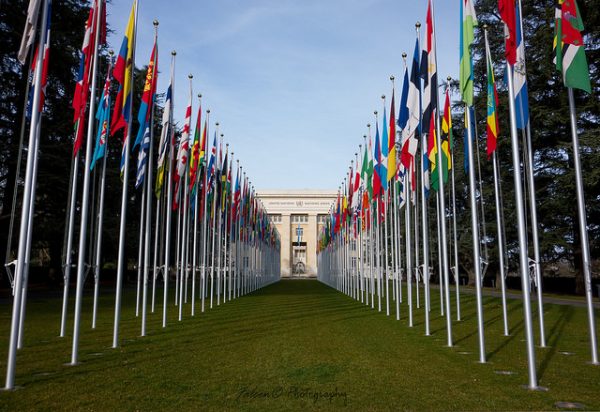
Photo by Falcon® Photography, Flickr CC

The United States and the United Nations have had a closely intertwined relationship since the organization’s founding in 1945. The UN deals with a broad range of issues around the globe, and its widespread influence is often controversial. However, the influence of the United Nation continues to be instrumental in promoting crucial human rights causes, and the reach of its aid is arguably beyond compare. Despite its numerous shortcomings, the UN plays a crucial role in promoting human rights norms across the globe.

Throughout the 1990s in particular, the United Nations took on a central role in the global justice process. It organized and funded international courts following episodes of mass violence, such as the International Criminal Tribunal for Rwanda, and it made indictments for egregious crimes possible for the first time (including the crime of genocide).  Sociologists find that the existence of these courts have a global impact in providing justice, and the trials seem to have a positive effect in reducing human rights violations in the long run.
The judicial process alone cannot adequately address global human rights issues — humanitarianism and diplomacy also play key roles. The United Nation arguably plays the most dominant global role in these initiatives, with monumental campaigns addressing topics like hunger, refugee needs, and climate change. The UN has been criticized for showcasing Western ideals and not taking into account cultural contexts, such as early endeavors to reduce female genital cutting. However, the UN has made improvements and when programs are approached as an opportunity for partnership and not dominance, the outcomes can be quite positive. For example, the agency has taken great strides in promoting gender equality and access to education.
Photo by Democracy Chronicles, Flickr CC

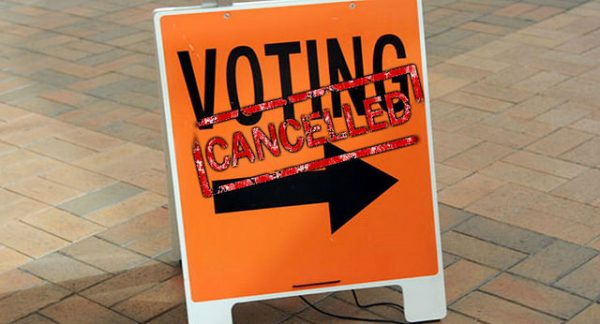
President Trump and his administration have insisted that there was massive voter fraud in the 2016 election, although evidence has not supported this allegation. Instead, the evidence points  to significant issues surrounding voter suppression in the United States.

One contributing factor is felon disenfranchisement — when people with a felony conviction permanently lose the right to vote. Since the late 1860’s, U.S. states with the largest non-white prison populations have been more likely to implement voting restrictions for felons. Today, formerly incarcerated persons constitute the largest portion of the disenfranchised population, which also includes people with disabilities and those without valid forms of identification. Importantly, restrictive voting laws have actually altered political outcomes. For example, it is estimated that Al Gore would have won the 2000 presidential election if formerly incarcerated persons in Florida had been allowed to vote.
After the 2010 midterm elections, there was a wave of laws that seemed to bolster voting requirements, such as new ID laws and proof of residence. And while strengthening voter requirements may seem benign at first, these rules restrict access to people who are less likely to have identification and proof of residence — people of color, the elderly, and the poor. In essence, such laws make it harder for only some people to vote. Research suggests that Republican leadership and legislatures are more likely to push for these laws, an irony when we consider that the President Trump is alleging that there were too many votes.
Photo by Alan Cleaver, Flickr CC

Donald Trump recently falsely stated that the murder rate “is the highest it’s been in 47 years.” Scholars of crime have been energetic in countering this claim with evidence that the violent crime in the U.S. peaked in the early 1990s and has steadily declined since. Although recent data suggests murder has increased in certain cities, Trump’s characterization of the murder rate is way off. But the sentiment behind his statement in some ways reflects a fearful popular discourse about crime rates and “tough on crime” public policies. 

Even after accounting for other relevant factors, people in neighborhoods with higher crime rates are slightly more fearful about crime. While crime fears also vary along demographic lines and victimization experiences, scholars have emphasized the robust effects of social environment as drivers of crime fears. Collective efficacy — the perceived social cohesion of a neighborhood and the willingness of neighbors to intervene on others’ behalf — is a strong predictor of lower crime fears, whereas the perceived level of disorder (e.g. vandalism) is associated with greater fear.
Scholars have noted that popular discourse around crime has revolved around talk of “random violence,” which deemphasizes patterns of crime and victimization and focuses on the claim that everyone is equally at risk. This rhetoric maximizes public concern and favors policy strategies that include individual law enforcement tactics (“tough on crime”) as opposed to changes in structural conditions (e.g. neighborhood dynamics, class) that are correlated to crime and victimization.
Research on the relationship between fear of crime and the emergence of “get tough on crime” policies explores whether the origins of the punitive turn in crime control resulted from the general public’s fear of crime rates or political strategies that influence the public’s perceptions of crime. Some scholars have found that, in combination with increased media coverage, political initiatives surrounding crime (and not actual crime rates) fostered increasing public concern about crime and drugs during the 1960s and 80s.
Others have recently challenged this notion, arguing that punitive public sentiment is what motivated policymakers to develop tough on crime policies. Regardless of this “chicken and egg” dilemma, crime issues developed into a key political strategy. This “governing through crime” expands racial divisions rather than increasing security for American citizens. The concentration of mass incarceration in impoverished minority communities is evidence enough that crime as a political strategy has important repercussions for American notions of equality and liberty for all.
NO MORE: Domestic Violence Awareness event in Hawaii. Photo by University of Hawaii, Flickr CC

Russian President Vladimir Putin recently signed a new law that decriminalizes domestic violence. Perpetrators of domestic violence against children and spouses will only face charges if injuries require a hospital visit, and the punishment will take the form of fines rather than jail time. While this is certainly troubling, policies and laws concerning domestic violence in the United States are far from perfect — they are often limited in how much they change the way perpetrators think of domestic violence, even if they sometimes keep abusers from repeating violent behavior.

Often, particularly in the context of welfare policy, a mismatch tends to exist between low-income abused women’s actual needs and the assumptions about those needs that inform policies on domestic violence. While policies and services can help victims to exit abusive relationships and offer protection and material support, they can also come with constraints that make leaving abusers difficult, such as requirements for teen parents to live with a parent, to complete a GED or job training programs, and fear of deportation for immigrants. “One-size fits all” policy approaches, such as those common in state welfare policies, make it hard for victims to make decisions about what works best for their individual situations because their individual experiences get trumped by blanket procedures.
When it comes to arresting and prosecuting perpetrators, abusers often think of their punishments as evidence of an unfair legal system rather than consequences for their own actions. And while abusers who are arrested and serve jail time are less likely to commit subsequent acts of domestic violence than those who are arrested but not charged with abuse, the affect of arrest on subsequent domestic violence is often contingent on whether or not someone has something to lose — research finds that being arrested deters people with jobs from subsequent domestic violence, but does not deter those without a “stake in conformity.”
Photo by Neon Tommy, Flickr CC

The Trump administration continues to ramp up policies that not only curb the flow of undocumented migrants into the United States, but also bolster an already formidable deportation system. Currently, many “Dreamers” protected by former president Obama’s executive order are worried that president Trump will overturn this crucial immigration policy, which grants residency status to undocumented individuals that came to the United States as children prior to 2012. This unprecedented move could potentially lead to the detention and deportation of nearly 800,000 people. Surprisingly, social science has found that immigration policy in the United States does not typically follow immigration patterns, but more often shaped by economic and political conditions.

Many legal avenues for migration to the United States were dismantled from the late 1950s through 1965, including the elimination of many temporary worker visas and country and hemispheric quotas. This policy shift resulted in an uptick in undocumented migrants from Latin America until the late 1970s, which subsequently tapered off with the passage of the Immigration and Reform Control Act in 1986. Due to this influx of undocumented immigrants, political rhetoric surrounding immigration took a punitive turn, fueling anti-immigrant sentiment and restrictionist policies with strict enforcement practices, especially during the mid 1990s through the 2000s.
Deportations of both undocumented and documented immigrants has increased significantly in the past few decades, so much so that under the Obama administration, a record 2 million immigrants were deported by the end of 2013. These unprecedented numbers of deportations typically involved people with no criminal record or those with minor convictions, such as traffic offenses or marijuana possession, and nearly one quarter of the 400,000 deportees in 2012 were parents of U.S. citizens.
Scholars have demonstrated the parallels between the system of mass deportation and mass incarceration in the United States, both of which disproportionately impact men of color, are rife with punitive rhetoric, and are bolstered by massive government and private expenditures. Tanya Maria Golash-Boza contends that deportation is nested within the current state of global capitalism.  She argues that deportations serve the function of removing surplus labor while keeping undocumented labor populations in the United States compliant and vulnerable. This era of mass deportation and “crimmigration” comes at a significant cost to immigrant communities and families. Unfortunately, if the current political climate of “America First” is any indicator, these social and human costs will only exacerbate in the recent future.
Photo by Blok 70, Flickr CC

The selling of Mexico’s nationalized oil company has caused gas shortages and rising gas prices, sparking nationwide protest. In the midst of  “El Gasonlinazo,” unlikely heroes have stepped forward to fight for affordable gasoline — Mexican drug cartels. The cartels are threatening to burn gas stations, specifically those run by foreign companies, and they have started stealing oil and selling it back to Mexican citizens for a lower cost. They claim that it is a disservice to the people of Mexico to make them pay such high prices for gas, especially when many do not even make a living wage.

It is not unusual for individuals or groups with a negative image to present themselves in the best way possible through “impression management,” and drug cartels are no exception. Past research shows that developing an image of being helpful to the community helps cartels and gangs to garner legitimacy and respect. In Mexico, there is a long tradition of rebel groups acting in the name of the community, for example, the Zapatistas portrayed themselves as liberators, rather than criminals, in their fight against globalization. 
The Niger Delta experienced a similar situation when Chinese oil companies bought entry into the land. Citizens of Nigeria banded together to form rebel groups, using kidnappings and other violent measures as forms of resistance. Oil is a vital resource, which is why citizens of under-developed nations are willing to look to non-traditional groups for help fighting the interests of foreign companies and international elites.
Photo by Stephen Melkisethian, Flickr CC

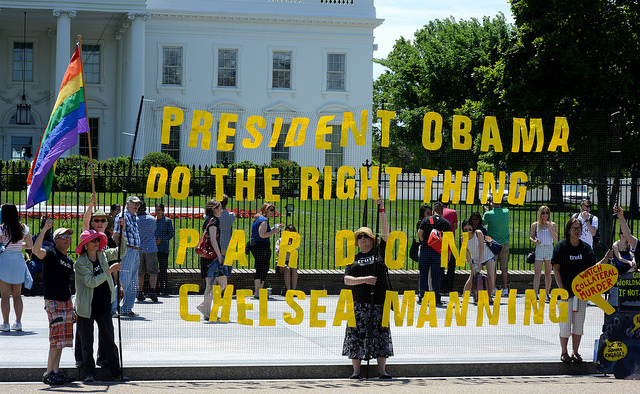
Barack Obama issued 78 pardons and 153 commutations before leaving office, including commuting the sentence of Chelsea Manning. While commutations shorten the sentences of incarcerated individuals, but do not alter their criminal record, pardons remove the conviction from the individual’s record. Obama’s latest string of clemency decisions brings his administration’s total to 1,324, the majority of which were commutations.

Research on federal executive clemency shows that rates of clemency are highest when Democratic presidents are in power, when crime rates are lower, and during periods of war. Legal research also highlights variation between states, with certain governors utilizing clemency measures more than others, though not necessarily along party lines. While executive clemency was once a practice commonly employed by U.S. presidents, its use has declined in recent decades. This decreased use of executive clemency has coincided with a sharp increase in arrests, both of which have contributed to the substantial rise in incarcerated individuals across the U.S. 
Scholarship also hints at who is likely to receive a commutation or pardon. Analyses of death sentences shows that women, youth, the elderly, and those who have spent a significant amount of time on death row are more likely to have their death sentences commuted. Additionally, death penalty commutations are more common among governors who are not returning to office (lame duck) and when the death row population is particularly old. However, even though female prisoners are more likely to receive clemency, recent qualitative investigations of commutation hearings suggest that women encounter a systemic gender bias when applying for a pardon or commutation.
Taken at the Slutwalk meeting at Trafalgar Square in London, June 2011. Garry Knight, Flickr CC

Originally published Sept. 13, 2016

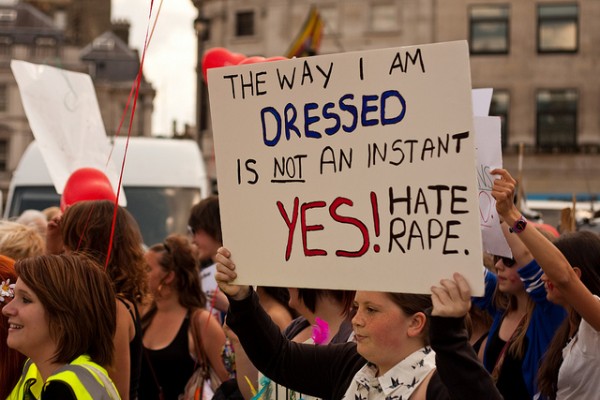
Earlier this summer, a California judge sentenced Brock Allen Turner to 6 months in jail for the sexual assault of an unconscious 23-year-old woman because the judge believed a harsher punishment would “have a severe impact on him.” After Turner’s father referred to his son’s actions as “20 minutes of action,” the survivor detailed the emotional aftermath of her assault and the revictimization during trial in a powerful impact statement. This sentencing decision and subsequent defending of Turner because of his university status, lack of criminal history, and “positive character” continue to strike public outrage, as he was released from jail after serving 3 months. Feminist scholars have long addressed the pervasiveness of rape culture and help us pinpoint how it reproduces notions that only “bad guys” commit “real rape.”

Police and prosecutors often make decisions to arrest and charge suspects based upon characteristics of “real rape” –  rapes that involve strangers, weapons, and physical force. These depictions of sexual assault suggest only “bad guys” rape and that victims must physically resist and show their injuries to prove it. Empirical studies illustrate that acquaintances perpetrate the vast majority of rapes and include little, if any, physical injury. Still, rape and sexual assault continue to be characterized by under-reporting and high attrition rates.
Some men convicted of rape deny their actions by portraying the victim as the true sexual aggressor and themselves as the victim. In one study, men argued that the victim said no when she really meant yes, initiated the sexual contact, and even enjoyed the sexual contact once she relaxed. Other men acknowledged their actions as rape but provided excuses, citing drugs and alcohol, emotional problems, and a brief lapse in judgement from their otherwise “nice guy” persona as the true source of the victim’s rape.
Perhaps one reason myths of the pathological rapist persist within the criminal justice system is the expectation that women and girls should accept sexual violence and aggression from men as normal in their everyday interactions. In a recent study, adolescent girls often described their experiences of harassment and sexual violence with men and boys as normal “because they do it to everyone.”

For more on rape culture and its consequences, see this TROT on the revictimization of rape victims, this piece on pop music and rape culture, and these stats on rape and sexual assault in the U.S.

Photo by Robert Couse-Baker, Flickr CC

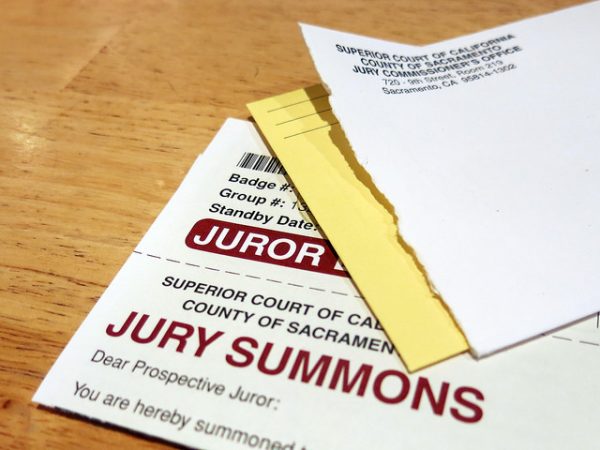
The U.S. Supreme Court is currently hearing arguments for Peña-Rodriguez v. Colorado, a case concerning allegations of racial bias in jury deliberations. Many states prohibit hearing juror testimony following the conclusion of a trial; however, following the deliberations of Peña-Rodriguez’s case, two jurors signed affidavits attesting to racial bias by a fellow juror. They allege that the juror referred to an alibi witness as discreditable because he was “an illegal,” and asserted that the defendant was guilty “because he’s Mexican.” After initially being struck down by both the trial judge and the Colorado Supreme Court, Peña-Rodriguez is now making his case to the highest court, a task which research suggests may prove extremely challenging.

In her book The New Jim Crow, Michelle Alexander illustrates why challenging racial bias in juries is so difficult. Despite the passage of laws such as Batson v. Kentucky, which prohibits prosecutors from discriminating on the basis of race when selecting juries, both prosecutors and defense attorneys are allowed peremptory strikes, or the ability to strike potential jurors for just about any reason they choose. Challenging instances of racial bias is even more difficult following the Supreme Court decision in Purkett v. Elm, which ruled that even if there is a pattern of striking a particular racial group by a prosecutor, providing any race-neutral reason (the prosecutor in this case used hair length) is enough to justify that the decision is not based on race.
Moreover, it is not just legal precedents that solidify racial bias, but also the initial selection process itself that is discriminatory. Potential jurors are drawn from registered voters or Department of Motor Vehicle lists, which contain fewer minorities. Forty-seven states also restrict the rights of felons to serve on juries, which disproportionately limits the presence people of color. Most states and the federal government place a lifetime exclusion for felonies, which automatically bans nearly 30 percent of adult black men from jury service.
In short, jury selection is not only inherently racially biased, but many Supreme Court decisions appear to support a system of racial discrimination rather than dismantle it. As a result, legal precedents such as the rules of evidence may bolster, or at the very least shield, racial bias within jury deliberations.
Photo by Edward Kimmel, Flickr CC

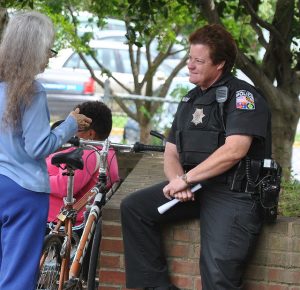
Protests broke out throughout Tulsa, Oklahoma the night an unarmed black man, Terence Crutcher, was shot and killed by a white female police officer, Betty Shelby. Police killings have surged in mainstream media since the 2014 shooting deaths of young black men like Michael Brown and Eric Garner, shootings that have overwhelmingly involved male law enforcement officials. As a result, female police officers and the likelihood that they will use unnecessary force have largely been excluded from the conversation.

Findings in this area, however, are mixed. Some report that there are no significant differences between use of force by men and women when making arrests, except for the fact that use of force encounters for women were slightly less likely to employ a weapon and produce injury. Others, however, noted that female police officers are less likely to use force and suggest that a greater female presence may reduce violent interactions with citizens.
The last several decades have witnessed a rise in female officers in law enforcement agencies. Consequently, social scientists have addressed the gendered assumptions about women’s competence in handling tasks traditionally considered masculine. Institutional norms in policing often require a great deal of “emotional labor” that differ based on an officer’s gender. Women officers are expected to display little outward signs of emotion in their interactions with citizens, and yet are commonly still assigned policing tasks that tend to be devalued as feminized and judged as appropriate for women officers, such as administrative duties and community policing. 
Some research suggests that female officers are more likely to be victimized themselves. One study finds that female police officers are not at an increased risk of experiencing victimization during police-citizen interactions, but that incidents involving interpersonal violence along with alcohol and/or drugs increases risks for women on the job.