
inequality

Photo by Marmett Tallahassee via Flickr.com CC

In January 2016, the State of Michigan declared a public health emergency in the city of Flint because the city’s drinking water was contaminated with lead. This breakdown in public health happened following an earlier emergency declaration – a financial emergency – which lead to the aggressive move by Governor Rick Snyder, who invoked authority enshrined in state law, to appoint an emergency manager to run Flint. Now activists are calling for the repeal of that state emergency manager law.

The crisis in Flint draws attention to ongoing conflicts in responses to U.S. urban crises. Is fiscal stability to be pursued at the expense of social equity, balancing budgets at the expense of helping people who live in a troubled city? Flint is hardly alone. Local governments across the United States are caught between increasing costs and shrinking revenues. From city to city, the proximate causes vary from loss of state revenues to rising costs for public services and underfunded public pensions, to outright fiscal mismanagement. But the difficulties are similar and hit poor, minority communities hardest, creating acute dilemmas of social equity. more...
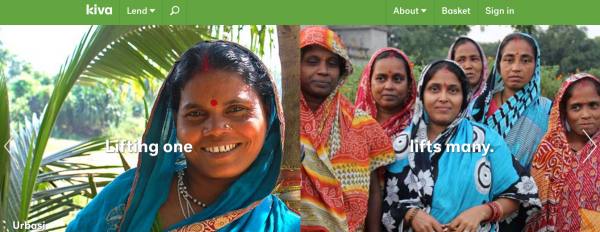
The promise of microlending made explicit, if not proven.

Micro loans help small borrowers start or continue enterprises, even if the borrowers cannot put up collateral. Giving such loans to women in developing countries has been widely touted as a way to help them and their families economically – and also boost the social status of women in societies where relations between men and women are very unequal. Do micro loans work to achieve these goals? Our research looked at this issue in Bangladesh and discovered that it takes more than increments of economic help to improve the social status of women.

Results of a Project Meant to Help Women

Our recently completed research project analyzed data collected as part of the Chronic Poverty and Long Term Impact Study in Bangladesh. Various development initiatives over a 10 year period were examined in this study, which used panel surveys, life-history interviews, and focus groups to learn how programs have influenced family decision making and the control of resources by various household members. Our research focuses specifically on women’s participation in the “fishpond program,” an economic development project implemented in the Jessore District of Bangladesh.

The fishpond program aimed to improve economic wellbeing and nutritional standards for women and their families, and at the same time hoped to empower women and improve their social status. Women in a dozen different villages were offered both technical training and credit to help them develop group fishponds using innovative techniques. The female recipients were selected by a non-governmental organization based on economic need.

As the program unfolded, it was evaluated by researchers who interviewed husbands and wives shortly after the project was launched and again ten years later. Of course the researchers wanted to see if the fishponds improved the economic and nutritional status of families, but in addition they probed how the new economic activities of women grantees influenced their social status. Would their marriages improve as a result of the program? Would the women report less domestic violence? Would women come to own a greater share of the marital property after they became more important economic providers? Would both spouses report that women were more equal partners in their marriage? more...

Photo by Ed Schipul, Flickr CC. https://flic.kr/p/e3anpY
Photo by Ed Schipul, Flickr CC.

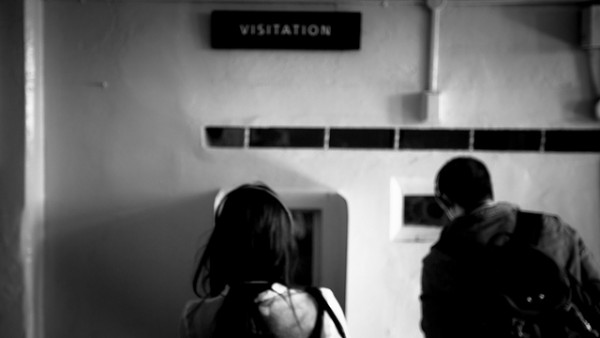
A very large number of Americans are held in jails and prisons – some 762 out of every 100,000 residents. Although the United States has only five percent of the world’s population, it holds one quarter of all the world’s prisoners. However, the social burdens occasioned by so much imprisonment are not borne equally by all segments of the American population. According to recent estimates, one of every 15 black men is held in jail or state or federal prison, compared to one of every 106 white males. This racial disparity has a big impact on the life fortunes of white and black men – contributing to gaps in many domains, ranging from jobs and family life to health and mortality.

But the social reverberations of mass incarceration do not stop with the prisoners themselves. The consequences can be even greater for children, family members, and associates attached to those who are imprisoned. A burgeoning research literature suggests that having a family member sent to prison damages the mental and physical health of those left at home. The imprisonment of a family member means one less person to contribute to household support, increasing stress and making everyone less economically secure.

Although researchers have documented these indirect social impacts from imprisonment, they have been unable before now to estimate how many adult women and men are connected to an inmate – and therefore, have not been able to specify the scope of negative consequences faced by people tied to America’s prisoners. Now, for the first time, data from the 2006 General Social Survey make it possible to estimate the reach and wider social impact of the U.S. prison system. We use this data and build on previous studies to explore the impact of imprisonment on the family members and associates of black and white prisoners. more...

ESPN's "The Power of IX" series considered four decades of the policy.
ESPN’s “The Power of IX” series considered four decades of the policy.

Title IX, the U.S. civil rights law that prohibits sex discrimination in federally funded education programs, is one of the most significant steps toward gender equality in the last century. By requiring schools to provide equal opportunities regardless of sex, the law intervenes to ameliorate disparities at the institutional level. President Obama concisely summarizes Title IX’s importance: “From addressing inequality in math and science education to preventing sexual assault on campus to fairly funding athletic programs, Title IX ensures equality for our young people in every aspect of their education.” more...

StockMonkeys.com, creative commons.

Getting a college degree is an increasingly expensive endeavor and many students struggle to make ends meet while they are in school. Although the rising cost of college tuition and fees receives a great deal of public attention, students face other costs, too – including often hefty payments for living expenses, textbooks, and transportation to and from classes. These inescapable extra costs constitute half to three-quarters of total college expenses, and when students cannot afford to cover them, they often struggle to focus on school work and spend less time in the classroom. In dire cases, students may find themselves without a secure place to live or enough food to eat.

Financial aid for college students is meant to help cover the extra expenses, but aid packages often fall short because of chronic underfunding and complex bureaucratic administrative hurdles. Researchers and practitioners have found that when students run into short-term financial problems, college financial aid offices often have difficulty responding quickly.

In addition to traditional financial aid programs, there is also a need for emergency assistance. Promptly responsive emergency aid programs can help keep students enrolled, perhaps allowing more of them to complete studies and receive degrees. In a recent research project we used surveys and interviews to examine such programs, aiming to better understand how they operate and when they succeed. Our work lays the groundwork for much-needed additional evaluations. more...

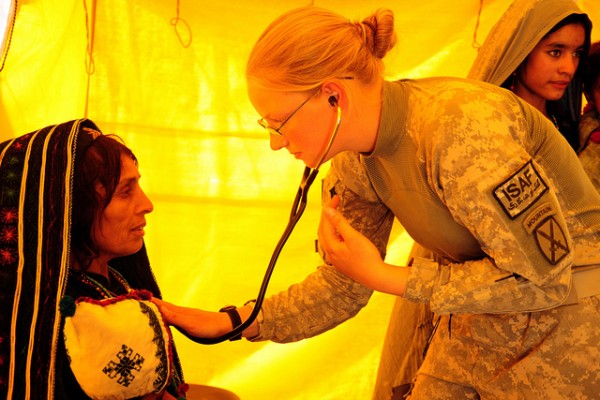
Spc. Margie Huelskamp checks up on a patient at the Ghormach Clinic, Afghanistan. US Army.

Around the world we see encouraging declines in the number of people newly infected with the virus that causes AIDS (as the acquired immunodeficiency syndrome is called). But hard-won gains in preventing and treating this “disease that changed everything” are not equally distributed across places and groups of people. The AIDS crisis has, in fact, widened inequalities in health and wellbeing the world over. In poor nations, AIDS remains a leading factor contributing to health declines, because more than 95% of the 33.2 million individuals infected with the human immunodeficiency virus (or HIV) that causes AIDS reside in such countries. The spread of HIV/AIDS has been especially detrimental to women in poor nations. The number of women infected with HIV has increased dramatically in recent years, and young women in less developed nations are about twice as likely as men to become infected. Strikingly, AIDS is the leading cause of death among women of reproductive age.

How can we understand women’s special vulnerability to AIDS, especially in poorer countries? Theories of gender inequality provide clear insights by highlighting the ways in which women have fewer resources and less control than men over decisions about sex and health practices. In particular, women in less developed nations face many barriers in getting needed access to vital educational and health resources, including schools and contraceptives.

If gender inequalities, poverty, and low levels of education and access to health care make for a deadly brew that undermines the wellbeing of women across the less developed world, these harmful forces can be exacerbated by events and trends that further social disorder. In many poor countries, civil wars and violence obviously undermine the health and longevity of women (as well as men). In addition, the spread of AIDS can be spurred by environmental crises and degradation – exacerbated in many places by global warming. So far, the potential impact of environmental degradation on the spread of HIV/AIDS has received insufficient scholarly attention. Drawing insights from eco-feminist perspectives, our work takes a step in the direction of correcting this deficit. more...

Via Flickr
New GED regulations have significantly reduced the number of successful applicants. Photo by rik-shaw, Flickr.

Americans think of themselves as highly educated, yet more than 37 million adults – more than one in ten – have not earned high school diplomas. This has dramatic implications for individual lives. Less than half of all adults without high school degrees have jobs, compared to 64% of those with such degrees and 88% of adults with college degrees. Even with prior work experience, many employers require proof of a high school diploma for even the most basic positions, even more so since the recent recession. Adults without high school diplomas who are fortunate enough to have jobs can expect to earn nearly $10,000 less per year than those with a high school degree, and are much more likely to live in poverty, experience poor health, and end up in prison.

Any way one looks at the social realities, chances to obtain a high school equivalency degree are critical for adults who did not graduate from high school, if they are to flourish in life. For more than sixty years, the General Education Degree – popularly known as the “GED” – has offered such a chance. But current strategies of education reform are handing the GED program to profit-making corporations, and the effect has been to create new educational obstacles for the predominately low-income Americans who have not graduated from high school.

more...

woman reading
Item 139224, Fleets and Facilities Department Imagebank Collection (Record Series 0207-01), Seattle Municipal Archives.

Picture a small office with three employees: Jake, a white man; Anita, a Latina woman whose husband lost his job a year ago; and Crystal, a Black single mother. Even though all three have similar duties, Jake takes home $1000 per paycheck, while Crystal gets $700 and Anita earns $600. The office also used to employ Anne, another Black woman, but she was laid off in 2009. Crystal and Anita are fortunate to still have their jobs, but their wages put their yearly earnings below the federal poverty line. Unable to get by on their wages alone, their families also depend on public benefits.

This specific scenario is imaginary, but it reflects on-going trends. The Great Recession brought hard times to most Americans, but it was especially devastating for women of color. Today, Black women and Latinas face worse job and wage prospects, and experience higher poverty rates and greater difficulties in gaining access to health care. Many female-headed households have depleted their “rainy day” savings and depend on a patchwork of low wages and bare-bones supplements like food stamps and unemployment insurance to make ends meet. The 2009 recession and slow economic growth since then have derailed many women’s previously modest economic progress. Seven years later, America’s women of color are still worse off than they were before the economic crisis hit.

more...

5789168673_be6cd1f5b4_o
Photo by Clemens v. Vogelsang, Flickr CC.

Economic inequality is growing in America and economic mobility is declining. Most observers agree these are worrisome trends, but there is no consensus about solutions. In highly polarized public debates, some say that the government’s role should be limited to ensuring equal opportunity. Others emphasize the need for policies to encourage more equality. We believe that these extremes present a false dichotomy; a middle ground is possible. By looking for ways to further “school readiness,” citizens and policymakers can come together in support of giving all children what they need to take advantage of opportunities to learn and prepare for success in later life.

To Reduce Future Economic Inequality, Ensure That Children Succeed in School

Policy leaders from both sides of the aisle should be able to agree that can young children need to gain the basic attitudes, skills and knowledge required to succeed in school. Children will not enter the labor market on equal terms if stark inequalities begin to hold them back even before age five. Many children who are not ready for school cannot realize their potential – and that makes no economic sense for our country. Failure at school leads to losses of income and tax revenues as well as higher costs for social services, policing, and incarceration. Put another way, differences in school readiness influence kids’ capacities to take advantage of opportunities – and contribute to society – over the course of their whole lives.

Can we address educational disparities simply by make schools themselves more equal? If all schools had the same financial resources and the same number of teachers for every 100 students, and if all teachers were well-compensated and well-motivated and trained, would students from all groups have the same chance to perform well? The answer is no, according to available research. Even school systems of comparable quality cannot produce fair results when some children arrive at the first day of class unprepared to learn. To be ready to learn, youngsters must already have certain language, motor and social skills, and they must be able to pay attention, follow directions, and control their emotions. A lot must happen before the first day of kindergarten. more...

usdeportations

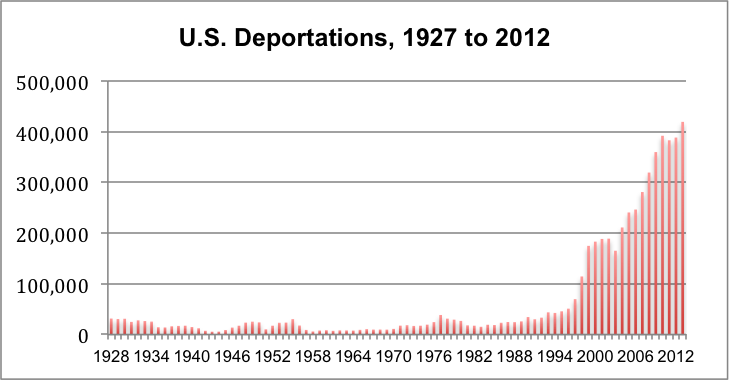
In recent decades, the United States has seen a spectacular rise in deportations, with local police forces authorized by the federal government to identify undocumented immigrants for summary removal. More than 11 million undocumented people across the country – including up to one in ten adult workers in the state of California – faced this threat in their daily lives.

To assuage the human costs, President Barack Obama outlined a plan in November 2014 to provide temporary protection to many undocumented migrants. Building on his earlier efforts to set priorities, the President specified that officials would henceforth seek to deport “felons, not families,” “criminals, not children,” “gang members, not a mom who’s working hard to provide for her kids.” In short, under the new policy, various kinds of immigrants deemed good would be protected from deportation. Well-intentioned city leaders, bureaucrats, and police would need to sort out the good immigrants from those vilified as criminals.

These well-intended steps are meant to alleviate the trauma that the threat of deportation has imposed on millions of law-abiding migrants. But how do the binary divisions work out in practice? My research, based on a year of observations in southern California plus 75 in-depth interviews with undocumented Mexican migrants, suggests that efforts to divide good from bad people in migrant communities can have pernicious as well as helpful effects. more...