
inequality

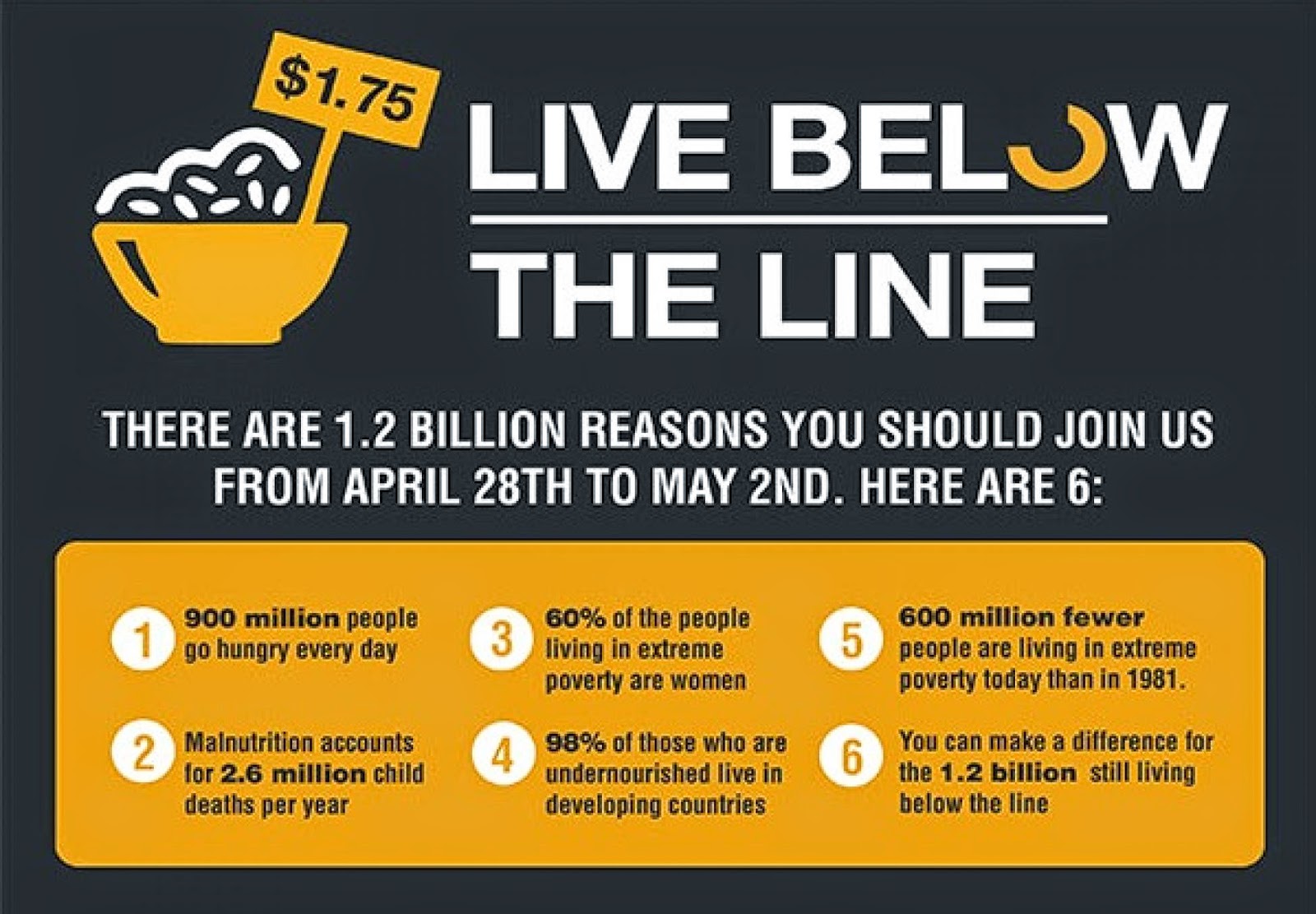
The Live Below the Line Campaign encourages people around the world to try to live on a poverty-level wage.


Poverty is commonly explained as a matter of joblessness, while work for wages is viewed as a pathway out of poverty and toward upward mobility. Indeed, since the end of open-ended welfare benefits in 1996, U.S. public assistance presumes that creating incentives for poor adults, including mothers, to enter the paid labor force is the best way to reduce poverty and dependence on government. Yet many citizens do not understand that most poor adults already work. In fact, by some accounts the so-called working poor outnumber the non-working poor in the U.S. Effectively reducing poverty therefore requires addressing the problems of those who work yet remain poor. more...


Communities for a Better Environment leads environmental justice tours, such as this one in East Oakland, CA. Flickr CC photo by Brooke Anderson.

Environmental problems create especially heavy burdens for poor and minority communities. As three decades of research have shown, these communities host a disproportionate number of landfills, contaminated properties, incinerators, and other polluting facilities, many of which can cause serious health problems. Epidemiological research on health risks reveals that low-income and minority groups have higher rates of asthma, impaired lung function and other respiratory ailments as well as cardiovascular disease. All of these adverse health conditions are caused or exacerbated by exposure to pollution. Underprivileged communities can also be at greater risk from severe weather developments, which are expected to increase with climate change.

The Pursuit of Environmental Justice

Environmental justice has been on the federal government’s agenda now for twenty years, in no small measure due to effective advocacy by grassroots organizations and scholar-activists who have pushed since the 1980s for fairness in environmental protection. The federal government responded with new policy mandates, administrative reorganization, research and data collection programs, enhanced outreach and efforts to build community capacity – and, most notably, with a presidential executive order on environmental justice. Signed by President Bill Clinton on February 11, 1994, Executive Order 12898 called on each federal agency to “make achieving environmental justice part of its mission by identifying and addressing as appropriate, disproportionately high and adverse human health or environmental effects of its programs, policies, and activities on minority populations and low-income populations.” more...

Nearly a quarter of all babies born in the United States are now Hispanics, yet many of these newborns start life’s race behind the starting line, poor and disadvantaged.  This issue might seem relevant only to longstanding metropolitan gateways for new immigrants, such as San Diego, New York, Chicago, and Miami. But today it matters for rural areas and small towns as well, because new immigrants have spread out all over the United States. Hispanics account for more than half of all the nonmetropolitan population growth in the 2000s, and in many parts of rural America from Alabama to Nebraska, growing numbers of Hispanics provide a demographic lifeline to dying small towns. Yet disproportionate and growing numbers of immigrant Hispanic children are born into poverty, and the difficult circumstances they face from before birth through childhood profoundly influence their adult contributions to American society. more...

Location, location, location is the mantra we often hear about the value of real estate – and the same principle applies to the rights and protections enjoyed by gays, lesbians, and bisexuals across the United States. Those who live in New England, along the West coast and in the Great Lakes states can marry whom they wish and are legally protected against hate crimes and discrimination in public accommodations and employment. In the rest of the country, however, such legal rights and protections are rarely found. Drawing on my own research and that of other scholars, this brief explores why this variation exists. Regional imitation, the presence of gay and lesbian legislators, public opinion, and institutional rules all turn out to matter.

Neighboring States Acting Together

Regional differences in public policies supporting gays and lesbians suggest that the importance of what scholars call “policy diffusion,” where policies adopted in one state spread to its neighbors as their citizens and officials see positive effects and move to imitate. In New England, for example, the process started when Massachusetts legislated against employment discrimination in 1988 and recognized same-sex marriages in 2004, and Vermont became the first state to formally recognize same-sex relationships by instituting civil unions in 2000. Similarly, California and Minnesota were early adopters, setting the stage for diffusion along the West coast and among Great Lakes states. California legislated against employment discrimination in 1992 and against hate crimes in 1999, and Minnesota took action in 1993. more...

Half a century after the start of the modern feminist movement, American women make up only 19% of the U.S. Congress and just 24% of all state legislators. Many factors help to explain such severe underrepresentation – and one of the key issues is that political careers are particularly lacking in job flexibility. Elected officials work long hours, travel extensively, and cannot easily interrupt work obligations to care for children. Because women still do most of the housework and child care, challenges in balancing their obligations dissuade many from running for public offices, in the same way that women often avoid other inflexible careers like business leadership.

When women forego legislative careers, it matters not only for the individuals involved, but for states and the nation, because female politicians are more likely to raise issues and vote for policies that matter to women. With women underrepresented in the halls of government, our democracy not only misses out on vital talent; it cannot fully address everyone’s concerns. more...

Why have aspirations to improve economic prospects for disabled Americans fallen short? Legal modifications and retrenchments have reduced the effectiveness of the Americans with Disabilities Act as a set of legal tools to counter discrimination. But broader supply-and-demand factors in the U.S. labor market have also played an important role. Employed disabled people tend to be clustered into certain occupations and industries, many of which offer low wages and constricted opportunities for advancement. The clustering of people with disabilities into certain low-wage occupations can amount to a form of occupational ghettoization, reinforcing labor market inequalities that leave disabled workers at a long-term disadvantage. To better understand how future public policies could boost economic prospects for disabled workers, my colleague Michelle Maroto and I have explored the processes that create – and might break down — occupational ghettos.

From 1980 until the start of the financial crisis of 2007 and 2008, U.S. households accumulated debt at an unprecedented pace. Back in the 1960s and 1970s, the ratio of total debt to disposable income – a measure that reveals households’ ability to service their debts out of current income – hovered around 70 percent. Thereafter it rose, increasing to 90 percent by 1995 and peaking at 135 percent in 2007, before declining to 110 percent in 2013.

The financial meltdown brought new attention to the debt loads facing American households, in part because many analysts fingered defaults on subprime mortgages as a chief cause of the crisis. But policy responses have focused too narrowly on financial market reforms. Certainly it makes sense to curb the unfair and fraudulent lending practices that have proliferated over the past few decades, yet new financial regulation alone won’t make most working families more economically secure. For that, we must understand and address the intertwined social, political and economic trends that have created insecure labor markets and heightened debt risks. more...

In recent years, many large urban districts in the United States have dramatically changed the way they manage the schools they supervise. For decades, most of the public schools in cities were run by central district offices, and every school in the district used many of the same basic materials and ideas to teach their students. Now many central districts are overseeing schools run by others, using what is often called a “portfolio model” or a “portfolio management model.” These terms are meant to indicate that such districts are carefully selecting schools to include or remove from their offerings – so that good schools are kept and weak ones are closed down.

In theory, portfolio management has an appealing logic: If central offices lay out clear expectations and give charter school groups and other organizations that run particular schools a lot of freedom in figuring out how to meet the overall goals, then some especially strong schools can be expected to emerge. The most effective schools can be given the opportunity to expand.

In practice, however, research suggests that portfolio management does not have a clear, predictable influence on school quality. The impact seems to depend on organizational design as well as on the social characteristics and resources of particular communities. more...

Ask Americans to draw a mental map of who lives where, and they will likely say that immigrants and the poor live in large cities such as New York, Chicago, Los Angeles, and San Francisco, while middle-class whites make their homes in the surrounding suburbs. But these mental maps are often inaccurate. Today, more poor people live in suburbs than in central cities, and more than half of all metropolitan-area immigrants reside in suburbs. Immigration, job growth, and residential choices are making our nation’s suburbs more economically and culturally diverse. more...

Several decades ago, most immigrants to the United States settled in a few urban areas in California, Texas, and Illinois. But that has changed in the past twenty years, as immigrants have spread out to build their lives in communities all over the country – including suburbs, smaller cities, and even rural towns. Mexican immigrants and their families account for many of the new arrivals living in what scholars call “new destination” communities, and the best estimates suggest that about one-third of people from Mexico live in communities outside of the original big three immigrant states. Are the Mexican immigrants who have settled in new places doing better than their counterparts who settled in traditional immigrant hub locations? more...