vintage stuff

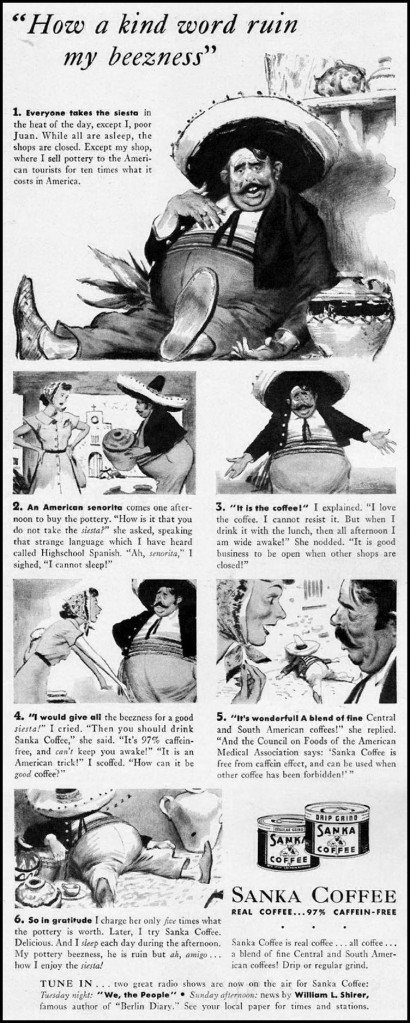
In the vintage ad below, Sanka sells coffee by joking about how Mexicans (I think) lack good ol’ American capitalist values (text below):
sankalife09291941044m5a
Text:

“How a kind word ruin by beezness”

1. Everyone takes the siesta in the heat of the day, except I, poor Juan.  While all are asleep, the shops are closed.  Except my shop, where I sell pottery to the American tourists for ten times what it costs in America.

2. An American senorita comes one afternoon to buy the pottery.  “How is it that you do not take the siesta?” she asked, speaking that strange language which I have heard called Highschool Spanish.  “Ah, senorita,” I sighed, “I cannot sleep!”

3.  “Is it the coffee!” I explained.  “I love the coffee. I cannot resist it.  But when I drink it with the lunch, then all afternoon I am wide awake!”  She nodded.  “It is good business to be open when other shops are closed!”

4. “I would give all the beezness for a good siesta!” I cried.  “Then you should drink Sanka Coffee,” she said.  “It’s 97% caffein-free [sic], and can’t keep you awake!”  “It is an American trick!”  I scoffed.  “How can it be good coffee?”

5. “It’s wonderful!  A blend of fine Central and South American coffees!” she replied.  “And the Council on Foods of the American Medical Association says: ‘Sanka Coffee is free from caffein [sic] effect, and can be used when other coffee has been forbidden!’ ”

6.  So in gratitude I charge her only five times what the pottery is worth.  Later, I try Sanka Coffee.  Delicious.  And I sleep each day during the afternoon.  My pottery beezness, he is ruin but ah, amigo… how I enjoy the siesta!

See also our post on the Frito Bandito and a vintage Tequila ad.

Found at Vintage Ads.

—————————

Lisa Wade is a professor of sociology at Occidental College. You can follow her on Twitter and Facebook.
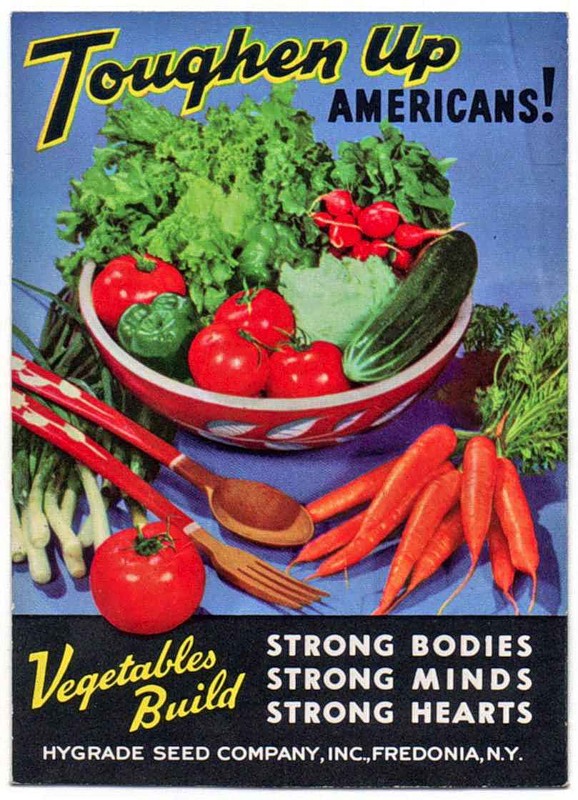
Ilari Sani sent in this vintage ad encouraging Americans to eat vegetables and “Toughen Up.”  Today salad is definitely considered “girl food,” and there are plenty of vintage examples in which meat was connected with strength and toughness (and, more generally, masculinity; see below).  This ad tries to contest that idea.  I wonder if the effort was successful in its day, or if it fell flat alongside the meat = real food narrative.

0_32434_82e597b2_XL

For vintage examples of meat being connected to masculinity, see here and here.  For contemporary examples, see here and here.

Found at Vintage Ads.

—————————

Lisa Wade is a professor of sociology at Occidental College. You can follow her on Twitter and Facebook.
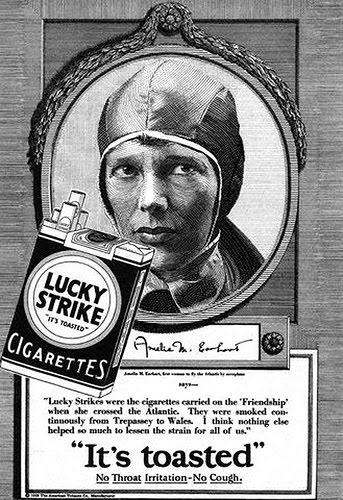
LuckyStrikeAmeliaEarhart

Hat tip to x-ray delta one, via Copyranter.

NEW! (Dec. ’09): Larry (of The Daily Mirror) found two images of Earhart from 1937 in the L.A. Times photo archives. In both Earhart was asked to pose in flirty or cutesy ways that it’s hard to imagine a famous male pilot being posed in:

earhart

earhart2

—————————

Lisa Wade is a professor of sociology at Occidental College. You can follow her on Twitter and Facebook.

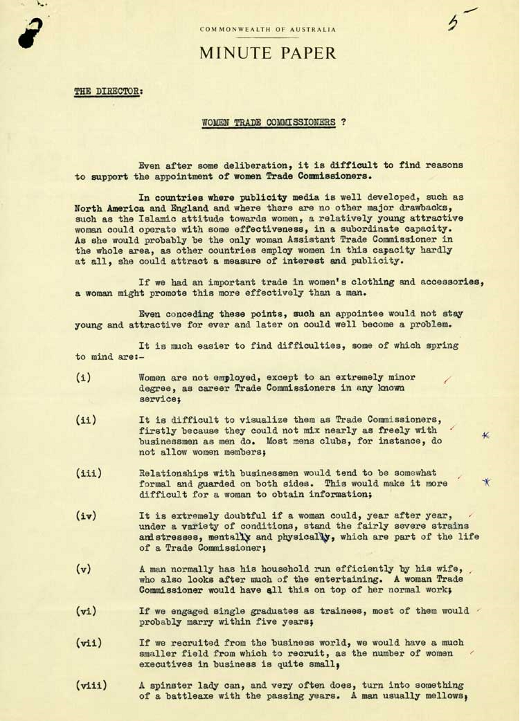
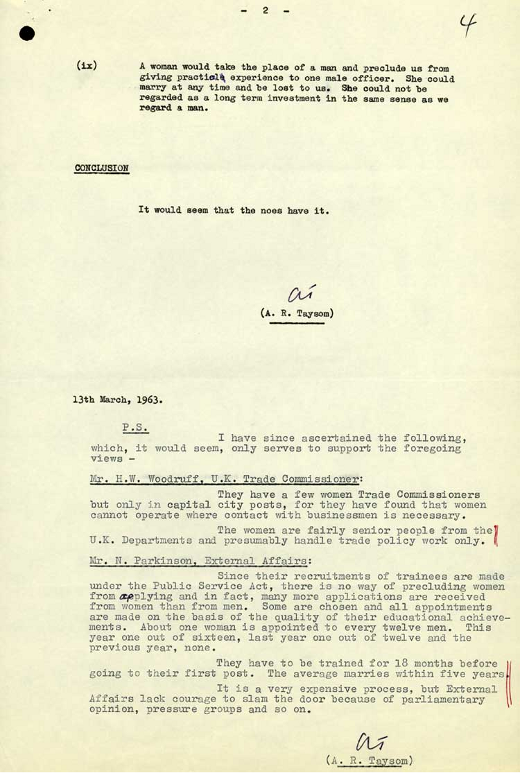
Joshua found a post over at Letters of Note about this letter, written by an Australian government employee in 1963 to the Director of Trade Commissioner Services, arguing against hiring women:

4037161196_714b6560d5_o

4036416255_6256218dc6_o

Text:

WOMEN TRADE COMMISSIONERS?

Even after some deliberation, it is difficult to find reasons to support the appointment of women Trade Commissioners.

In countries where publicity media is well developed, such as North America and England and where there are no other major drawbacks, such as the Islamic attitude towards women, a relatively young attractive woman could operate with some effectiveness, in a subordinate capacity. As she would probably be the only woman Assistant Trade Commissioner in the whole area, as other countries employ women in this capacity hardly at all, she could attract a measure of interest and publicity.

If we had an important trade in women’s clothing and accessories, a woman might promote this more effectively than a man.

Even conceding these points, such an appointee would not stay young and attractive for ever and later on could well become a problem.

It is much easier to find difficulties, some of which spring to mind are:-

(i) Women are not employed, except to an extremely minor degree, as career Trade Commissioners in any known service;

(ii) It is difficult to visualise them as Trade Commissioners, firstly because they could not mix nearly as freely with businessmen as men do. Most mens clubs, for instance, do not allow women members;

(iii) Relationships with businessmen would tend to be somewhat formal and guarded on both sides. This would make it more difficult for a woman to obtain information;

(iv) It is extremely doubtful if a woman could, year after year, under a variety of conditions, stand the fairly severe strains and stresses, mentally and physically, which are part of the life of a Trade Commissioner;

(v) A man normally has his household run efficiently by his wife, who also looks after much of the entertaining. A woman Trade Commissioner would have all this on top of her normal work;

(vi) If we engaged single graduates as trainees, most of them would probably marry within five years;

(vii) If we recruited from the business world, we would have a much smaller field from which to recruit, as the number of women executives in business is quite small;

(viii) A spinster lady can, and very often does, turn into something of a battleaxe with the passing years. A man usually mellows;

(ix) A woman would take the place of a man and preclude us from giving practical experience to one mail officer. She could marry at any time and be lost to us. she could not be regarded as a long term investment in the same sense as we regard a man.

CONCLUSION

It would seem that the noes have it.

(Signed)

(A. R. Taysom)

13th March, 1963.

P.S. I have since ascertained the following, which, it would seem, only serves to support the foregoing views –

Mr. H. W. Woodruff, U.K. Trade Commissioner:

They have a few women Trade Commissioners but only in capital city posts, for they have found that women cannot operate where contact with businessmen is necessary.

The women are fairly senior people from the U.K. Departments and presumably handle trade policy work only.

Mr. N. Parkinson, External Affairs:

Since their recruitments of trainees are made under the Public Service Act, there is no way of precluding women from applying and in fact, many more applications are received from women than from men. Some are chosen and all appointments are made on the basis of the quality of their educational achievements. About one woman is appointed to every twelve men. This year one out of sixteen, last year one out of twelve and the previous year, none.

They have to be trained for 18 months before going to their first post. The average marries within five years.

It is a very expensive process, but External Affairs lack courage to slam the door because of parliamentary opinion, pressure groups and so on.

(Signed)

(A. R. Taysom)

I find point (v) particularly fascinating, as it expressly recognizes the benefits to male professionals of having a wife at home doing many types of behind-the-scenes labor that contribute to his success, and that a female professional might be at a disadvantage in a world in which she is expected to compete against men who do not have to do a “second shift” of childcare and housework after they get home.

I am 34 and unmarried. Do I qualify as a “spinster lady” yet?

See also our recent post on a U.S. letter from the 1930s begging for women to be fired so men could have their jobs and this rejection letter, based on sex, from Disney’s Painting Department.

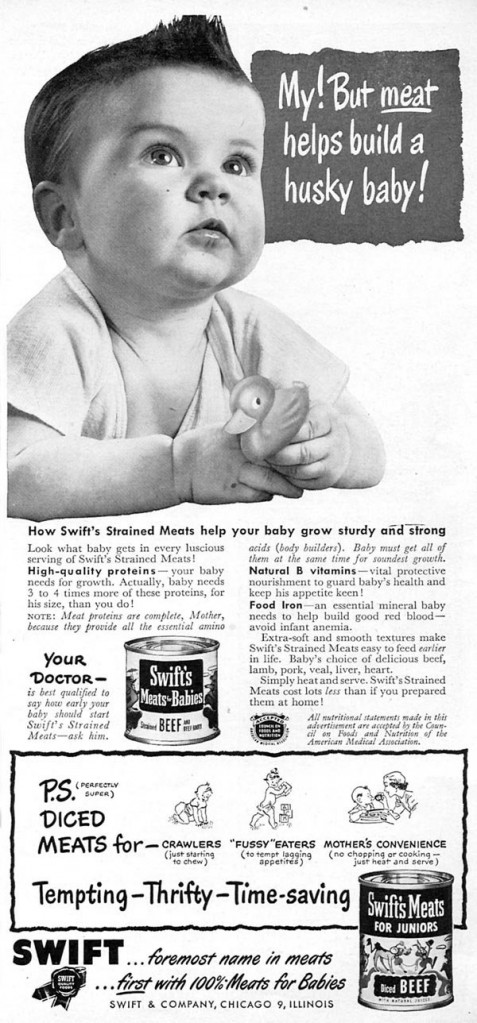
Here’s a vintage ad for Swift canned meat products for babies:

babyday0401194910929a84

(Found here.)

Are parents still encouraged to have “husky” babies? I have a feeling our changing ideas about body size and health have affected how we view babies as well (and I’ve heard of a couple of recent cases where insurance companies turned down infants for being too fat).

We’ve long seen meat associated with strength, particularly when it comes to men. And while the connection between meat and healthy growth is interesting–for instance, think of what we mean when we say someone is a “vegetable,” compared to the message here–what grabbed my attention was a line from the next-to-last paragraph of the ad text:

Baby’s choice of delicious beef, lamb, pork, veal, liver, heart.

It’s a great example of the social construction of what kinds of foods are appropriate and tasty. I highly suspect if Gerber’s put out a line of liver or heart baby food, it wouldn’t sell particularly well. I searched Gerber’s website and couldn’t find anything of the sort available (though they do still have veal with veal gravy). Most Americans simply don’t think of liver and heart as desirable foods any more, and would probably consider canned minced beef heart a more appropriate food for dogs than babies.

Of course, if you call liver paté or foie gras and make is sufficiently expensive, then it can become desirable again.

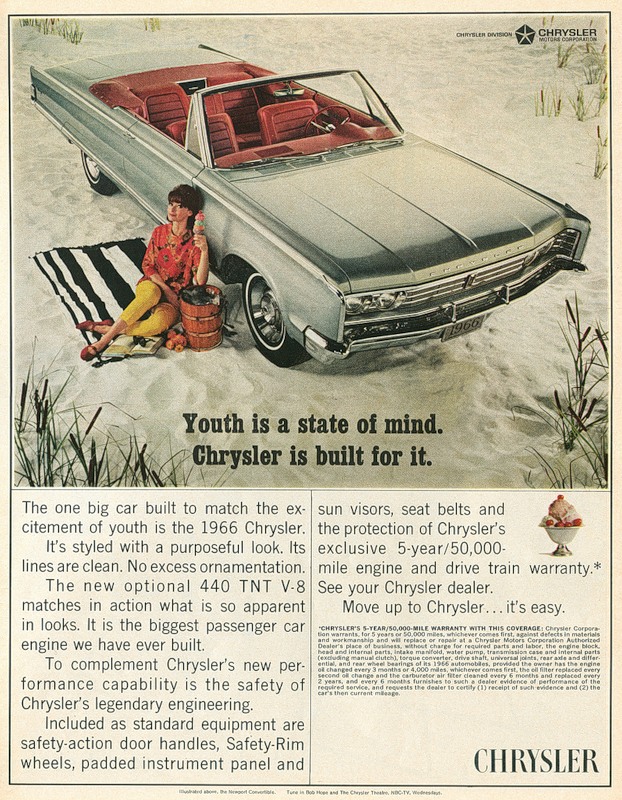
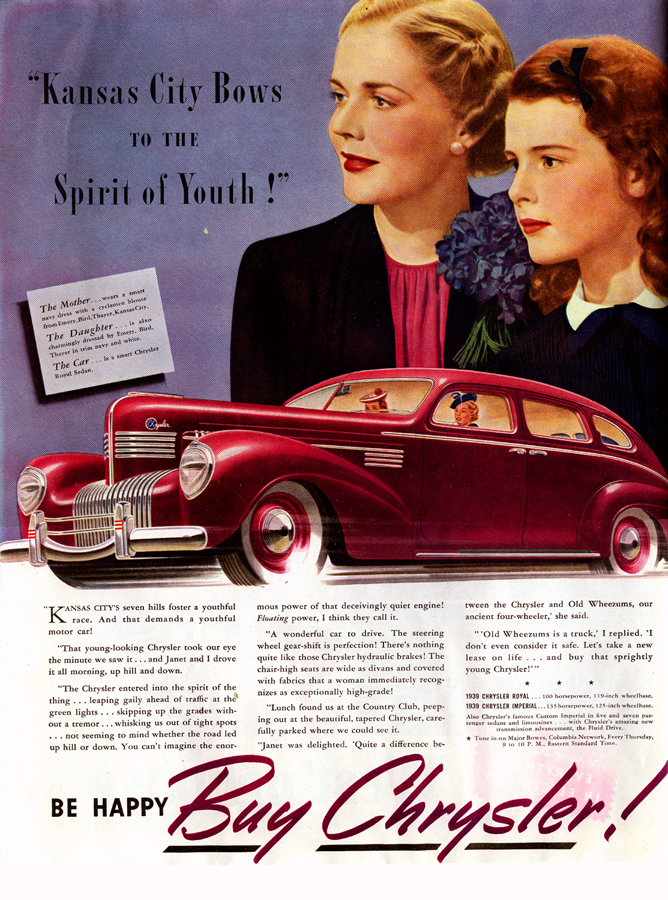
I love that this vintage ad suggests that Chrysler cars are for the young at heart. When I think Chrysler, I think of grandparents.

But no, “youth is a state of mind” and, according to this ad, it involves “a purposeful look,” “clean” “lines,” “no excess ornamentation,” and “safety.”  And ice cream, of course.

What a different social construction of what being young is all about!

0_319fe_2eb1fd2e_XL

NEW (Dec. ’09)! Dmitriy T.M. sent us another example:

17e8aea0bd93a9c73ab6f8def24d09b2-orig

—————————

Lisa Wade is a professor of sociology at Occidental College. You can follow her on Twitter and Facebook.


In the early 1980s the Reagan Administration engaged in an active campaign to demonize welfare and welfare recipients. Those who received public assistance were depicted as lazy free-loaders who burdened good, hard-working taxpayers. Race and gender played major parts in this framing of public assistance: the image of the “welfare queen” depicted those on welfare as lazy, promiscuous women who used their reproductive ability to have more children and thus get more welfare. This woman was implicitly African American, such as the woman in an anecdote Reagan told during his 1976 campaign (and repeated frequently) of a “welfare queen” on the South Side of Chicago who supposedly drove to the welfare office to get her check in an expensive Cadillac (whether he had actually encountered any such woman, as he claimed, was of course irrelevant).

The campaign was incredibly successful: once welfare recipients were depicted as lazy, promiscuous Black women sponging off of (White) taxpayers, public support for welfare programs declined. The negative attitude toward both welfare and its recipients lasted after Reagan left office; the debate about welfare reform in the mid-1990s echoed much of the discourse from the 1980s. Receiving public assistance was shameful; being a recipient was stigmatized.

Abby K. recently found an old Sesame Street segment called “I Am Somebody.” Jesse Jackson leads a group of children in an affirmation that they are “somebody,” and specifically includes the lines “I may be poor” and “I may be on welfare”:

(Originally found at the Sesame Street website.)

I realized just how effective the demonization of welfare has been when I was actually shocked to hear kids, in a show targeted at other kids, being led in a chant that said being poor or on welfare shouldn’t be shameful and did not reduce their worth as human beings. Can you imagine a TV show, even on PBS, putting something like this on the air today? Our public discourse at this point says that being on welfare is shameful, and that those receiving it in fact aren’t “somebody.” They are dependents, lazy loafers, and their kids are just additional burdens on the state; they don’t have the same rights to dignity and respect as other citizens, and they certainly shouldn’t expect to get it.

Of course, the totally confused looks on some of the kids’ faces are hysterical.

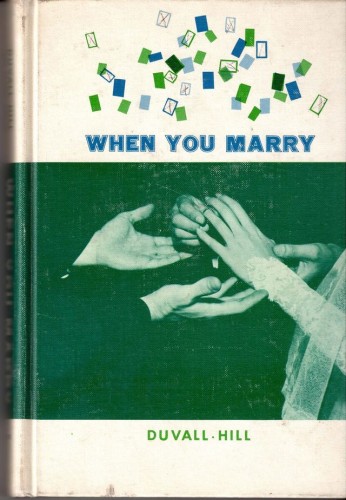
Mary M. of Cooking with the Junior League sent me a link to amalah.com, where you will find images from a 1962 textbook titled When You Marry (you can find the full text of the 1953 edition without photos here, and Larry found a full pdf of the 1962 edition here):

book 1

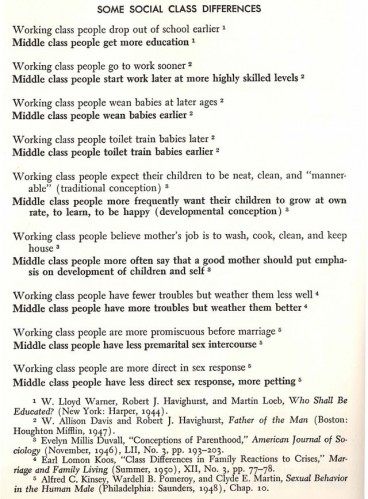
The book covers many aspects of dating and marriage and provides some fascinating insights into gender roles and social assumptions of the time. Here are some useful facts about social classes and families that you might like to know:

book 2

Working class people go to work sooner? Wow. Weird. But at least they have fewer troubles than the middle class. There are so many irritations you have to face when you aren’t poor, but at least you “weather” them well.

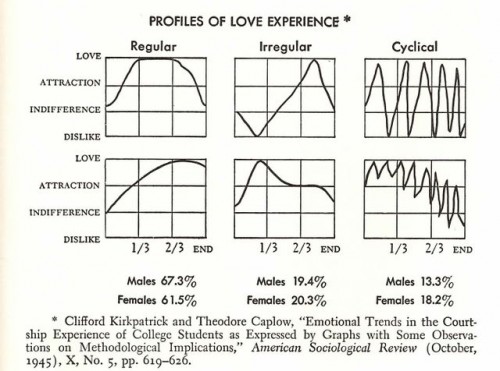
I may use this as an example of pointless graphs:

book 3

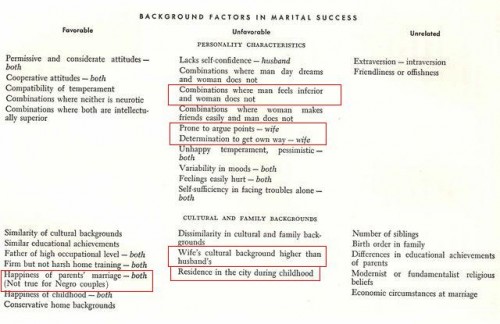
Here we have a list of some factors that are favorable, unfavorable, or unimportant for marital success; I’ve circled some of the more noteworthy items in red:

book 5

Text I highlighted:

[favorable]

Happiness of parents’ marriage —both (Not true for Negro couples)

[unfavorable]

Combinations where man feels inferior and woman does not

Prone to argue points–wife

Determination to get own way–wife

Wife’s cultural background higher than husband’s

Residence in the city during childhood

So you’re sure to have marital problems if the wife won’t give in on things and instead keeps being all argumentative and wanting her own way. I’m not sure what defines a cultural background as “higher” than others, but we see here the same pattern as we do with social class (which I presume is related to cultural background): it’s ok for men to “marry down,” but women aren’t supposed to.

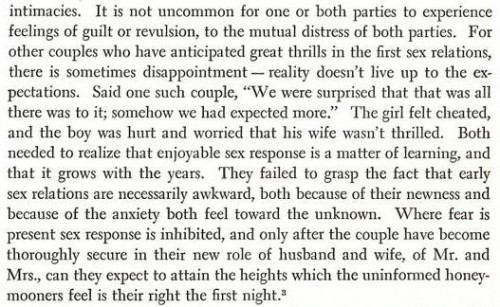
The textbook provides a pretty grim depiction of sex for a newly-married couple:

sex

I found this little gem in on a page from the section on how ideals of marital life often don’t fit with reality:

ads

It’s so widespread to think of marketing and advertising as manipulative today (even among those who like at least some ads or don’t see a real problem with them) that it’s striking to see such a sincerely  positive portrayal of it as a helpful, even “kind” industry.

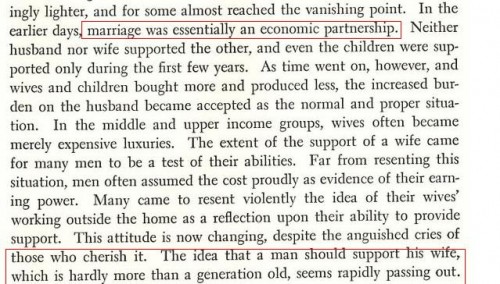
It is noteworthy that the textbook, used during the height of the “Leave it to Beaver” “traditional” family era, depicts the male-breadwinner/female-homemaker family form as a recent creation, as wives became “expensive luxuries”:

money

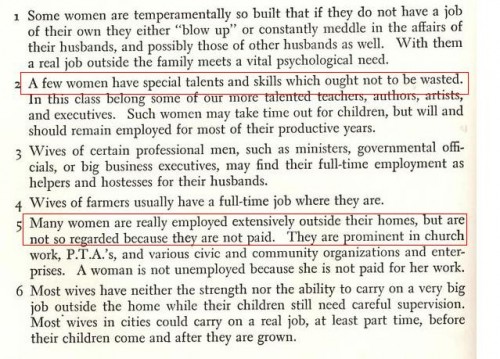
This section describing which women should work doesn’t seem to speak highly of women overall, since just a “few” of us have “special talents and skills.” However, it does make the point (in #5) that “a woman is not unemployed because she is not paid for her work,” an effort to bring attention to the value of women’s unpaid labor (in this instance, community/volunteer work):

skills

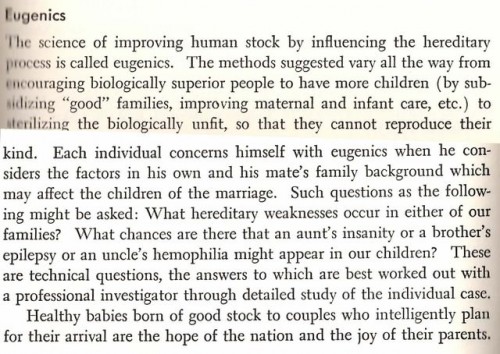
And then there is a helpful discussion of eugenics and good breeding :

book 10

book 11

There’s a lot to ponder there. I think it’s fascinating the way that it illustrates some of our stereotypes about the 1950s/60s (women are supposed to be mothers, sex outside of marriage is bad, etc.) but contradicts others (the male-breadwinner family isn’t a long-standing “traditional” family but rather one they can clearly trace to the recent past, and which even then seemed like it might not last).

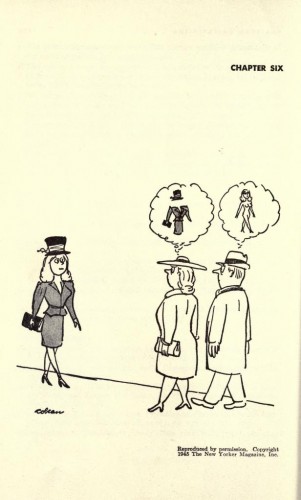
UDPATE: Larry looked through the pdf version of the whole book and found this nice cartoon:

when_to_marry_cartoon