economics: capitalism

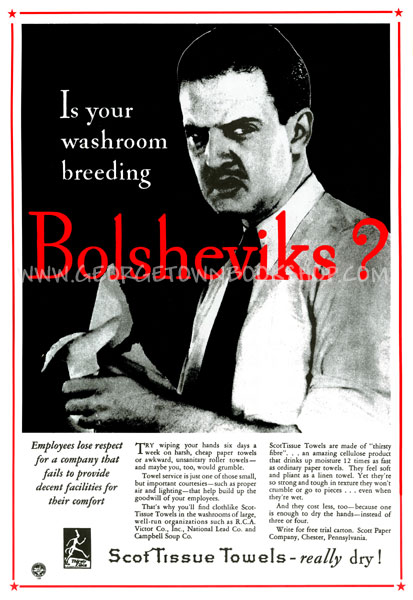
Yesterday, while recovering from the flu, I was glancing through Jon Stewart’s new book Earth: The Book. In the chapter on commerce they included a vintage Scot Tissue ad that I initially thought was a joke. Turns out it was real, first appearing in the 1930s and urging employers to stock bathrooms with Scot Tissue products to prevent turning their employees into radical communists:
(Image via.)

Text:

Employees lose respect for a company that fails to provide decent facilities for their comfort.

Try wiping your hands six days a week on harsh, cheap paper towels or awkward, unsanitary roller towels — and maybe you, too, would grumble. Towel service is just one of those small, but important courtesies — such as proper air and lighting — that help build up the goodwill of your employees. That’s why you’ll find clothlike Scot-Tissue Towels in the washrooms of large, well-run organizations such as R.C.A. Victor Co., Inc., National Lead Co. and Campbell Soup Co. ScotTissue Towels are made of “thirsty fiber”…an amazing cellulose product that drinks up moisture 12 times as fast as ordinary paper towels. They feel soft and pliant as a linen towel. Yet they’re so strong and tough in texture they won’t crumble or go to pieces…even when they’re wet. And they cost less, too — because one is enough to dry the hands — instead of three or four. Write for free trial carton. Scott Paper Company, Chester, Pennsylvania.

What I find fascinating is the idea that even minor discomforts might lead workers to become radicalized, and that one company would market to others based on the idea that they should respect their employees and keep them happy (at least in the way that serves Scot Tissue’s interests). Preventing the spread of communism isn’t, then, just about rooting out ideologues and rabble-rousers. The message is that becoming a Bolshevik may be a response to poor working conditions or treatment by management, and thus employers have a role to play in discouraging it by actually paying attention to potential causes of dissatisfaction and addressing them (in the bathroom, anyway), rather than simply a moral failing or outcome of ideological brain-washing.

UPDATE: Reader Ben has some interesting comments:

I’ve always wondered if it was meant to be serious. I understand that we live in an ironic age, but it’s not like ironic, self-mocking and humorous ads didn’t exist before the 1990s. As time passes and inside jokes lose their meaning, it gets harder and harder to correctly interpret texts with their original meaning and context intact.

Thoughts?
Hegemony is a word used by sociologists use to describe how the status quo can be preserved through consent as well as coercion.  One way to gain consent for the status quo, even if it is unjust, is to make the social arrangements that are in the best interests of the dominant group appear to be in everyone’s best interests.  When hegemony works, we see social cooperation where there would be conflict

Capitalism is a great example of a hegemonic ideology.  Nearly all Americans will argue that capitalism is a fair and effective economic system, even though it, by design, benefits some more than others.  Instead of banding together and saying “this may be working for you, but this isn’t working for us,” however, even the poorest of Americans will typically defend capitalism as the best and most just option for the U.S.

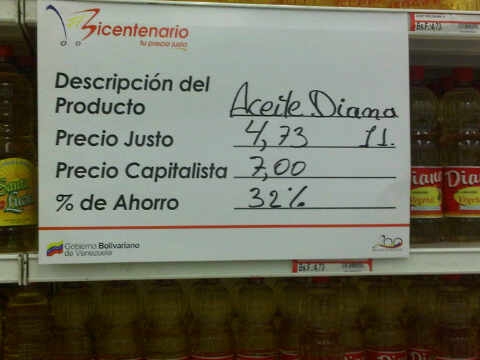
Capitalism, though, is not hegemonic everywhere.  F. T. Garcia sent us a link to a photograph snapped by a student of Economics Professor Greg Mankiw and posted on his blog.  The photo is of a price sign at Mercado Bicentenario in Caracas, Venezuela.  The student translated it as follows:

Description of the product: Diana Oil.

Fair Price: 4,73 Bfs.

Capitalist Price: 7 Bfs.

% of savings: 32%.

In this little narrative, capitalism is an unfair economic system that overcharges consumers.  It is by definition not a fair price.  A very different narrative about capitalism than we typically hear in the U.S.

Lisa Wade, PhD is an Associate Professor at Tulane University. She is the author of American Hookup, a book about college sexual culture; a textbook about gender; and a forthcoming introductory text: Terrible Magnificent Sociology. You can follow her on Twitter and Instagram.


Last week I posted about some potential problems of “awareness branding,” when products are marketed by promising to make a donation to breast cancer research, or wilderness restoration, or something of the sort. Greg P. then sent me a link to a video on RSA Comment where economist/philosopher Slavoj Zizek argues against a reliance on private charity, and particularly ethical consumption, as a solution to global problems. He suggests that, say, buying fair-trade coffee at Starbucks is unlikely to relieve inequities that are directly related to global capitalism (of which Starbucks is a part and beneficiary), and may in fact reinforce them by making individuals in more privileged nations feel like they’ve done something to address the problem, thus relieving them of any obligation to look more deeply into the problem:

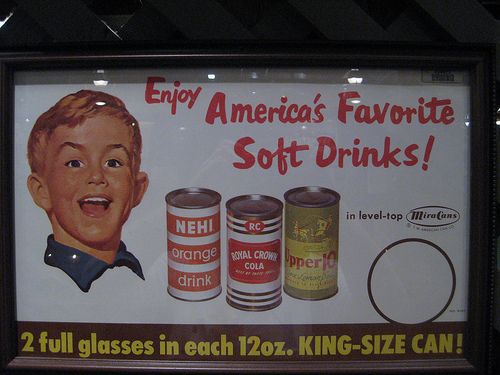
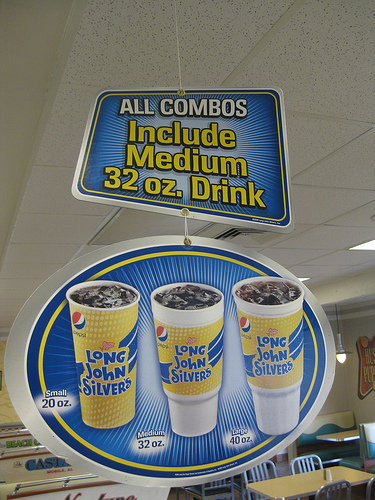
As we’ve talked about before, one marketing strategy to get people to buy more stuff is to manipulate sizes. In the case of clothing, companies often use “vanity sizing,” labeling clothes as a smaller size than they really are. Food serving sizes have followed a form of vanity sizing of their own, with portions getting larger over time. Ben Ostrowsky sent in a great example of changing norms of consumption, highlighting the enormous increase in what is considered a standard serving of soda.

In this 1950s ad for soda, the text proudly proclaims that a 12-oz. can is “king-size,” and includes 2 full servings:

Compare it to this sign at Long John Silver’s, where the smallest size is 20 oz., and a 32-oz. medium soda, presented as the default size, is nearly 3 times as large as the 1950s king-size double serving (though, as a reader pointed out and I didn’t think to mention, we do have to make some allowance for ice in the cup):

The gas station nearest me used to have fountain drink cups that started at 20 oz. I noticed recently they’ve completely dropped that size; the smallest cup you can now buy is 32 oz. The largest is a whopping 64 oz. I am actually curious how a person gets it home in their car, as I don’t see how it would fit in a standard cup holder. Perhaps you buckle it into an empty seat?

Of course, the larger the default size, the more product a company sells. For other examples of the push to increase portions or serving sizes, see Lisa’s post on manufacturers’ instructions for use.

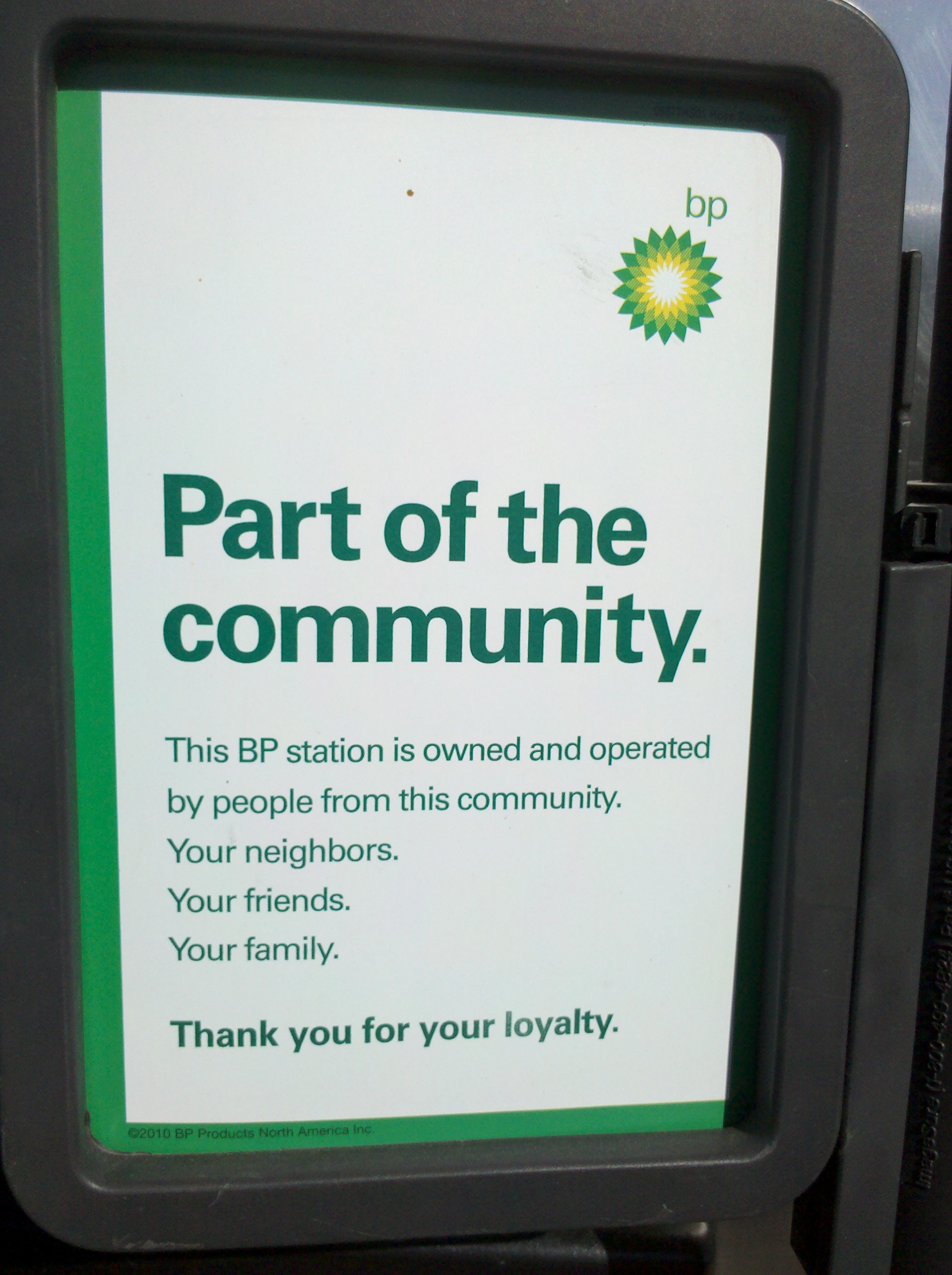
Stephen W. sent in a photograph of a public relations notice at a gas station in Kansas City.  The notice, from BP, explains that the owner of the BP gas station is a member of the community:

The notice is clearly an effort to smooth over the negative publicity BP has recieved as a result of the oil spill in the gulf.  On the one hand, it seems obvious that it’s disingenuous for BP to claim that they are “part of the community.”  And, if one wants to boycott BP, one would not want to buy at a BP station.

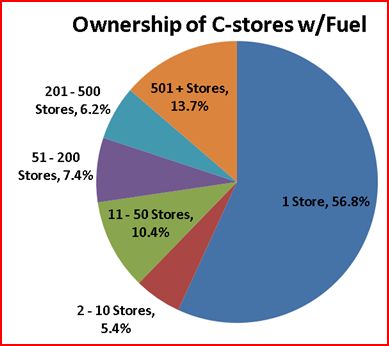
On the other hand, BP is right.  According to the National Association for Convenience Stores, 80% of the gas in the U.S. is bought at convenience stores and in only 2% of cases are these owned by major oil companies (the remainder is largely sold through superstores like Costco and Sam’s Club).  57% of the time, these stores are owned by a person for whom it is a small business and it is the only convenience store they own.

So it is true that, in almost all cases, attempting to police or punish BP by refusing to buy their gas is also hurting a small business owner who has zero control over BP and its policies.

Lisa Wade, PhD is an Associate Professor at Tulane University. She is the author of American Hookup, a book about college sexual culture; a textbook about gender; and a forthcoming introductory text: Terrible Magnificent Sociology. You can follow her on Twitter and Instagram.

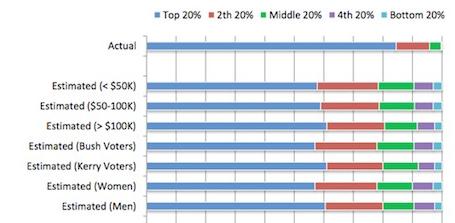
Dmitriy T.M. let us know that Matthew Yglesias posted an interesting graph that compares the actual distribution of wealth in the U.S. compared to what different groups estimate the distribution to be:

As Yglesias says, it’s striking not just that we underestimate how much wealth the top 20% control, but how little the poorest Americans do. Americans imagine the poor to have many, many more financial resources than they actually do.

In the game of Monopoly, as the title implies, the object is to get as much money as possible, ideally bankrupting all the other players until you are the only player left.  The game, then, socializes children into a particular version of economic interaction, one quite compatible with capitalism as we know it.

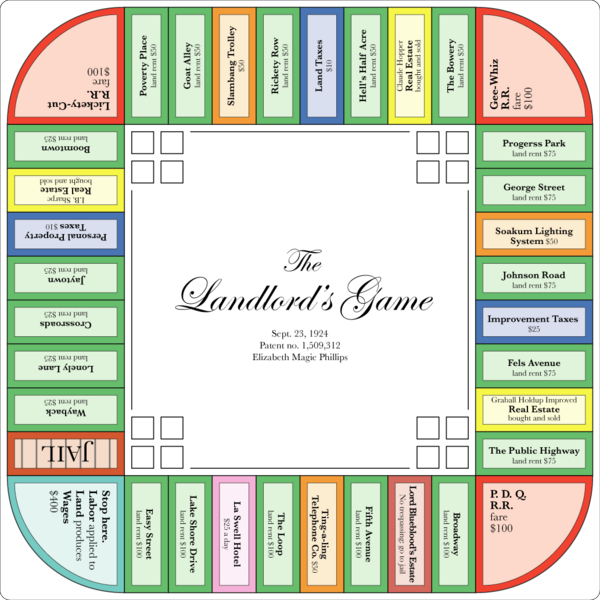
The idea that Monopoly is a socializing agent is brought into stark relief by The Landlord’s Game (from which, it is believed, Monopoly was derived).

Patented by Elizabeth Magie in 1904, the object of this game was to illustrate the economic inequality inherent in the renter/owner relationship.  From Wikipedia:

Magie based the game on the economic principles of Georgism, a system proposed by Henry George, with the object of demonstrating how rents enrich property owners and impoverish tenants. She knew that some people could find it hard to understand why this happened and what might be done about it, and she thought that if Georgist ideas were put into the concrete form of a game, they might be easier to demonstrate.

The game was manufactured beginning in 1910.  In 1935 the patent was ultimately purchased, ironically, by Parker Brothers; they wanted to buy the patents of all competing economy-based board games so as to have a monopoly on the genre.

Lisa Wade, PhD is an Associate Professor at Tulane University. She is the author of American Hookup, a book about college sexual culture; a textbook about gender; and a forthcoming introductory text: Terrible Magnificent Sociology. You can follow her on Twitter and Instagram.

In Buying In: What We Buy and Who We Are, Rob Walker discusses the “mysterious return of PBR.” When I was an undergrad in Oklahoma in the late ’90s, PBR had very distinct connotations: it was a crappy, cheap beer you only drank if you didn’t have the money to buy better beer.  I know this in large part because I had a number of friends who weren’t in college and lived on low incomes for various reasons, including some who were in bands and kept crappy day jobs just until they got their big record deal. [Just FYI: a punk-influenced song about Schrodinger’s cat can be quite catchy and informative, but it may not be the key to fame and fortune.]

I digress. The point is, they often drank PBR because it was cheap. As far as I could tell, they didn’t do so out of a sense that PBR was good or cool, but because they could buy larger quantities of it than other beer (I was never a beer drinker, so I wasn’t directly engaged in the decision-making process about which brand to buy). It was the beer version of ramen noodles: not necessarily exciting, but it’ll suffice if it’s all you can buy. And at various times I would overhear other people make nasty comments about PBR. It, and its drinkers, were, to put it bluntly, considered trashy by a lot of people.

But as Walker describes, PBR has become hip in a lot of places. Walker describes its resurgence since about 2002, when sales, which had dropped precipitously over the last twenty years, suddenly rose 5%. Portland, OR, seems to be the epicenter of the rediscovery of PBR, though it soon spread to other cities, with trendy bars adding it to their menu.

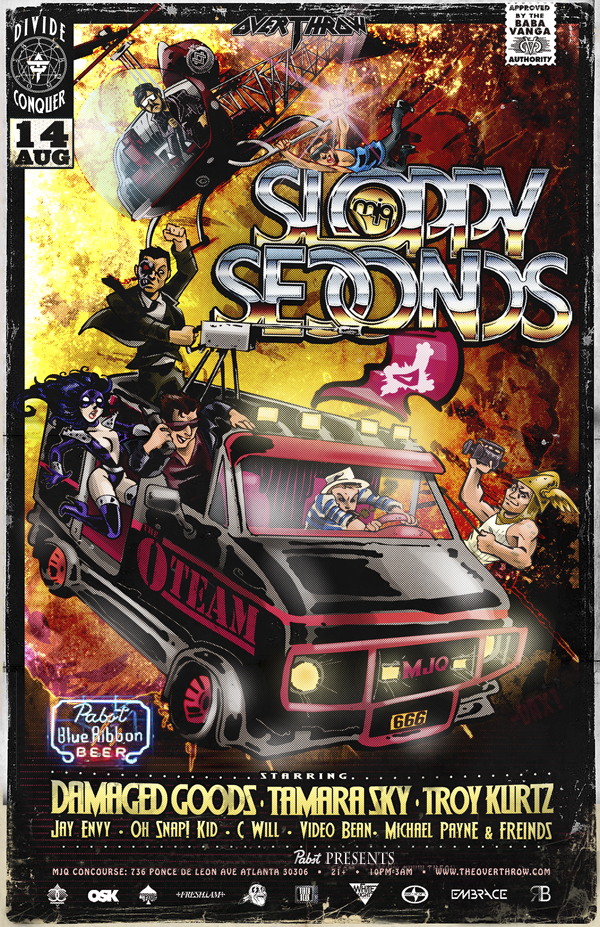
PBR, surprised by this, set about finding out what was going on. They eventually decided that PBR had become a “protest brand,” the non-hyped underdog beer that hipsters chose because it was non-mainstream and wasn’t constantly pushed at them by a PR machine. As a result, PBR rejected a lot of standard marketing tactics (though they did pay to have the beer placed in the 2009 movie Whip It, among others). Instead, they chose to focus on sponsoring events that the new customer base attended or participated in, but in a relatively quiet, non-intrusive way. Here’s a post for an event PBR is sponsoring this Saturday in Atlanta:

Part of PBR’s image, and attraction to people who consider themselves outsiders, is its association with what Walker calls a “blue-collar, honest-workingman, vaguely anticapitalist image” (p. 113). It’s old-school, blue-collar, salt-of-the-earth beer from the days of Milwaukee’s manufacturing and beer-producing glory. When you buy PBR, it lists a P.O. Box in Milwaukee, and the website lists Milwaukee at the bottom of the page.

Except…not so much. PBR is no longer headquartered in Milwaukee. In 1985 PBR was purchased by a man who was buying up a lot of low-market-share beer companies. He moved the headquarters to San Antonio (in May of this year he announced he sold PBR to another company; the headquarters are now in a suburb of Chicago). The move put about 250 people in Milwaukee out of work, including a lot of the blue-collar workers the beer is associated with.

On top of that, PBR doesn’t actually make beer anymore. Miller brews beer for the company, which then packages it in PBR cans. PBR is no longer a producer of beer; it’s a name and logo attached to beer made by a company many of the people drinking PBR would probably dislike.

On the one hand, PBR is a case that shows how consumers make decisions and can affect the marketplace independent of advertising campaigns; PBR certainly wasn’t spending a lot of money trying to woo this new demographic and didn’t initially know quite what to make of it. A group of consumers identified with PBR. That is, they saw the company as like them. They dislike in-your-face marketing, the feeling that companies are trying to manipulate them. They’re outsiders who see themselves as dissenters from a lot of mainstream culture. And PBR fits well with this identity; it’s the underdog, old-school beer company that isn’t actively trying to win over consumers. No TV commercials, no PBR babes in bikinis giving away free samples at bars. And it has working-class cachet.

But much of this is symbolic. Buying PBR makes money for Miller, a company that uses the loud marketing techniques hipsters express disdain for. At this point, you could argue that PBR is simply a beer fashion label. And while it might have associations with the working-class, the process of outsourcing its beer to Miller and moving headquarters to a different state left quite a few members of that class out of work. Walker argues that this indicates a new form of solidarity with blue-collar workers. It isn’t about making sure you’re buying from companies that pay a living wage or fighting for better working conditions. Symbolic solidarity — paying a nod to the working class by buying products (beer, clothing, etc.) — is often seen as sufficient. By drinking PBR you’re identifying with blue-collar workers in spirit, if not in any specific, concrete way.

PBR capitalizes on the perceptions of the brand while engaging in or working companies who engage in many of the practices that those who repopularized it were rejecting when they switched to PBR in the first place.

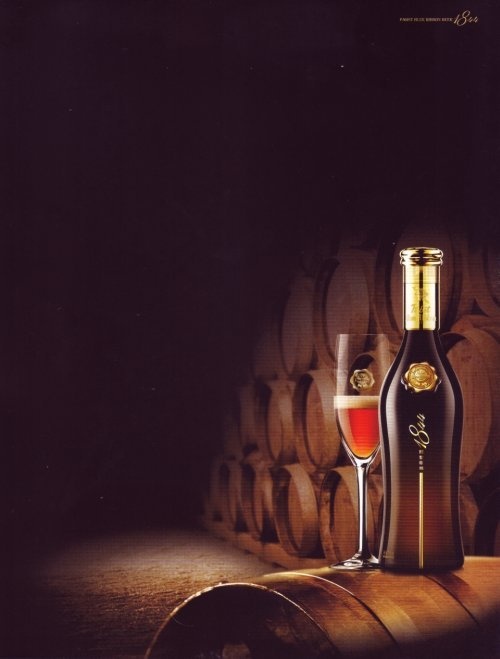
And, just to add one more twist to the story…in China, PBR sells a specialty beer called Blue Ribbon 1844:

How much does the beer sold by the cheap, working-class company cost in China? Why, $44 a bottle. A PBR executive who oversees the Asian market explains, “There’s the nouveau riche, and in China, perception is everything—look at me, I’m rich.” Not exactly the bike-messenger hipster crowd.

So there you go…the long, bizarre, contradictory story of PBR.

————————–

UPDATE: I got an email from an employee of PBR, who says this in defense of the brand:

I just want clear up a huge misunderstanding…We actually are independent American Company, not owned by Miller Brewing. Pabst itself contracts out all its production to other breweries, and has become, in effect, a “virtual brewery.” This keeps our beer fresh and saves us the cost of shipping large distances. It saves the earth, and helps us keep cost low. Many brand do this, also a few micro brands, you be surprised. We are 100% American Company. We also have NOTHING to do with the China Brand. They are a totally separate company just to let  you know.

I thought it was only fair to share his viewpoint. However, I don’t know that there’s really a misunderstanding there. I know PBR isn’t owned by Miller, but rather that the company outsources production of their beer, and I *think* my discussion made that distinction. I apologize if anyone was confused by that. As for my assertion that buying PBR makes money for Miller, it’s not because Miller directly owns them, but because they get money for the outsourcing, which common sense indicates they profit from or they wouldn’t keep doing it.

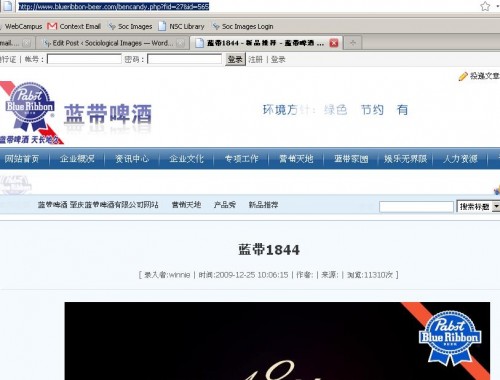
I’m more skeptical about the claim that PBR has nothing to do with the China beer. The Chinese website for the beer has the regular PBR logo prominently displayed on both the site itself and the poster for the beer:

Gwen Sharp is an associate professor of sociology at Nevada State College. You can follow her on Twitter at @gwensharpnv.