
Search results for embed

This one I put out there for debate.

I don’t get a chance to watch the many dance shows out there, but I’ve seen a bit and I have a question for those of you who’ve been watching them more carefully.

The video below is of Sébastien Soldevila and Mimi Bonnavaud dancing at the Cirque de Demain festival (thanks for the info, netrus).  In the dance, a woman is torn between rejecting a man and being powerfully drawn to him.  I’ve noticed that this theme crops up frequently in even just the little bit of dance programming I’ve watched. In this video, you get the idea in just the first few seconds, though you might want to watch the rest because it’s awesome. (Video title, btw, is not mine.)

I can see why choreographers return to this theme again and again. I think this is a common human experience (lord knows I’ve been there) and great fodder for art.

My question is: Is this theme gendered? That is, is it usually the woman who is desperately trying to escape the man and her attraction to him, and not vice versa?

I ask because, if it is, what we’re really seeing is not just a drama about a conflict between attraction and repulsion, we’re seeing a drama in which men are allowed to be deaf to women’s insistence that they want to be left alone, released. Really, deep down, this narrative tells us, she wants him. Therefore, it’s perfectly ok for him to ignore her “no.” If he just follows her for long enough, grabs her to make her look at him one more time, forces her up against his body enough, then she will relent.

From a different perspective, this is a man who is stalking and harassing her, but the narrative (which almost always ends in her giving in to him/her desire) suggests that this is perfectly reasonable, even passionate, loving, devoted behavior.

Do we sometimes (or ever) see women doing the stalking and harassing in these choreographies? Or is it usually the man?

Also in “no” doesn’t mean “no”: caveman courtship, it’s not “no” if she’s a zombie, you may say “no,” but your perfume says “yes,” and some pretty grotesque t-shirts.

—————————

Lisa Wade is a professor of sociology at Occidental College. You can follow her on Twitter and Facebook.

Lisa Wade, PhD is an Associate Professor at Tulane University. She is the author of American Hookup, a book about college sexual culture; a textbook about gender; and a forthcoming introductory text: Terrible Magnificent Sociology. You can follow her on Twitter and Instagram.


The Daily Show calls itself “a fake news show,” but it often does what the “real” news shows won’t. It documents how what people on news shows try to pass off as “spontaneous and unrehearsed” (as the opening of Meet the Press used to put it) is really planned and scripted at Talking Points Central. The Daily Show will give a quick montage of clips in which different people on different shows all use the same unusual word or phrase.

Last night it was “dithering.” A series of right-wingers, culminating in Dick Cheney, all accuse President Obama of “dithering” on Afghanistan.

Slide to 3:37:

It was just like the old days, when The Daily Show would string together clips from Bush Administration figures and right-wing commentators all using the same key words. But then, the statements all came on the same day, so the central direction was obvious. (I mean, it was obvious to Daily Show viewers, not to viewers of “real” news programs.)

The popularity of dithering may be more a case of contagion than planning. Note the dates of the O’Reilly and Cheney clips, more than two weeks apart.

Dithering is not a frequently used word. Lexis-Nexis shows only 27 instances in TV news transcripts for the first nine months of the year. The first use in connection with Afghanistan comes on September 24 – on Australian ABC, but the speaker was from the American Enterprise Institute, a conservative think tank in Washington. So it’s likely that dithering represented one idea of how to attack Obama. That idea took hold.

Over the course of the next month, dithering begins to reverberate. Republican senators use it in hearings in early October, TV news people bounce it back, and right-wing commentators start yodeling it loudly.

They are changing the rationale for why we are in Afghanistan. What’s really going on here is a dither, a big dither, indecisiveness. (William Bennett on CNN, Oct. 18)

And finally the Cheney quote on Oct. 21 that is echoed in every news story about that speech.

The White House must stop dithering while America’s forces are in danger.

Quite possibly, Cheney’s speech was written by someone at the American Enterprise Institute or someone else in that neo-con circle. Still, I don’t see the dithering as a matter of “talking points” distributed by the RNC. Instead, it’s an example of what I mentioned in another post – a word (dithering, issues) that spreads because it just sounds “right,” at least to certain people.

I expect that the dithering life cycle will be mayfly brief. Issues to mean problems was slower to catch on, and it may hang around for a good while.

In this 20 minute video, novelist Chimamanda Adichie describes, with insight and grace, the problem of the “single story.”  She says, “Show a people as one thing, and only one thing, over and over again, and that is what they become.”  Focusing on her experience as an “African” in the U.S. (she is from Nigeria), she also describes her own experiences with realizing that she has heard only a single story, whether of rural Nigerians or Mexicans.

Highly recommended (or read the transcript here):

Via Stuff White People Do.

—————————

Lisa Wade is a professor of sociology at Occidental College. You can follow her on Twitter and Facebook.

Lisa Wade, PhD is an Associate Professor at Tulane University. She is the author of American Hookup, a book about college sexual culture; a textbook about gender; and a forthcoming introductory text: Terrible Magnificent Sociology. You can follow her on Twitter and Instagram.
Before Sociological Images was widely read (when it was just us and our friends), we used to occasionally title posts “Sigh.”  But these days, what with people following us on twitter, we must offer more imaginative titles.  But really, my instinct was to title this with good ol’ resignation:

Via Racialicious.

—————————

Lisa Wade is a professor of sociology at Occidental College. You can follow her on Twitter and Facebook.

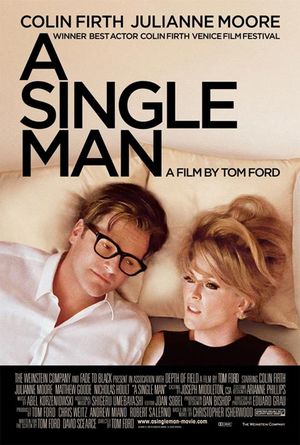
Nora R. sent us a link to an article at Band of Thebes about how promotional materials for the movie “A Single Man,” staring Colin Firth, have been altered to imply that the central relationship in the movie is heterosexual, and to eliminate references to the fact that Colin Firth’s character also has male lovers. A poster for the movie:

6a00d8341cc27e53ef0128756fbd4a970c-300wi

The first trailer:

The second trailer, which emphasizes heterosexual desire:

From the post at Band of Thebes (quote is originally from another article, but you have to sit through a 30-second ad to get to it; there’s a link at the Band of Thebes post if you want to see it):

Peter Knegt reports:

“The new trailer essentially is altered to suggest the core of the film is the relationship between Colin Firth and Julianne Moore’s characters, even removing from the end of the trailer the names of both Matthew Goode and Nicholas Hoult (who play Firth’s love interests). Moreover, in the first trailer, we see Firth’s character kiss both Goode and Moore, in the second we just get Moore. There’s also a sequence of shots in the first trailer which crosscuts Firth, who plays a professor in the film, staring into the eyes of both a female student and a male student. In the second, as you might guess, we only get the female (in a telling twist, instead of cutting to the male eyes, the trailer cuts to a quote from Entertainment Weekly saying ‘[Firth’s] performance is bound to win attention in this year’s Oscar race’).”

Of course, studios often manipulate what a movie appears to be about to appeal to as wide an audience as possible. If you saw some of the previews for “Twilight” that were shown before movies that targeted men, you’d think the movie was a lot more violent and action-heavy than it actually was (I presume to the dismay of some of the viewers who went to see it thinking they were seeing a vampire action movie).

But it’s interesting that a movie in which the main male character’s relationships with other men is a central element is advertised with that main plot point obscured.

Lisa recently posted about a woman who was denied health insurance due to having a C-section in the past; the health care plan would cover her only if she agreed to be sterilized. Mackenzie I.-T. sent in this clip from Anderson Cooper 360 about a woman who was dropped by her insurance company after she was raped, due to her doctors putting her on antibiotics antiretrovirals to try to prevent any possible infection with HIV and her need for therapy:

Embedded video from CNN Video

Classy.

The Oral Cancer Foundation released this video last month, just a couple of weeks before the FDA was scheduled to vote on approval of the ‘male’ Gardasil vaccine.

Whether you’re pro- or anti-vaccine, you might wonder why has FDA testing of and approval for Gardasil’s use on males lagged three years behind the female-only “cervical cancer” vaccine? Most of us who have followed Gardasil’s development were not surprised when the FDA recently voted to approve its use on boys and young men for the prevention of genital warts. However, this limited focus on male genital warts ignores the growing number of medical studies which have shown causal connections between two cervical-cancer causing types of HPV (covered by Gardasil) and a variety of cancers that can have devastating health consequences in female and male bodies.

In light of this body of research, many were dismayed by the fact that the CDC decided against recommending routine use of the Gardasil vaccine for boys.  A NYT article reported that this committee will likely consider data on Gardasil’s ability to protect against male cancers when it meets again in February.

As more Americans learn about the causal links between HPV strains covered by Gardasil and serious (sometimes fatal) oral and anogenital cancers, it will be interesting to see if U.S. boys/young men get vaccinated at as high a rate as girls/young women.

To educate people about the risk of oral cancer from sexually-transmitted HPV, the Oral Cancer Foundation released this video:

———————————————

Adina Nack is an associate professor of Sociology at California Lutheran University specializing in medical sociology, gender inequality and sexual health.  Nack’s book, Damaged Goods?  Women Living with Incurable Sexually Transmitted Diseases came out in 2008.  You can see an earlier post of hers, about sexually transmitted disease and stigma, here.

If you would like to write a post for Sociological Images, please see our Guidelines for Guest Bloggers.

Cate M. emailed us about the promo for the movie “The Killer Inside Me,” saying,

The level of violence is at NSFW levels and quite possibly one of the most ‘trigger warning’ vids I’ve ever seen used to promote a non-horror film.

We get a lot of submissions about sexualized violence toward women, so I thought, “well, ok, we’ll see.” And then I watched it, and at 1:15 in had to pause because I was already horrified. Here’s the whole 5:42 promo. It’s Not At All Safe for Work, and you won’t want to watch it if scenes of sexualized brutality toward women would be a trigger for you. And also, I guess, Spoiler Alert, if that’s your main concern.

UPDATE: The promo keeps being taken down; here’s a link that works for now, but I don’t know for how long.

Clearly, Casey Affleck’s character is a sadistic asshole (the cigar on the guy’s hand), but in the promo, at least, the graphic, sexualized violence is reserved for women…who also appear to like it, at least for a while. Jessica Alba gives in to him, and apparently starts a relationship with him, after he pulls her pants down and whips her. Perhaps that’s because she’s a prostitute; of course she’d like a dominant man who plays rough, right?

The thing is, you could make this movie and tell the same story without actually showing all the violence in such a graphic way. Movies imply things all the time. It’s a choice to show this type of violence toward women as a form of entertainment…and to show the women liking it.

See our posts on increases in violence toward women on primetime TV, sexualized violence on TV crime procedurals, and the movie “DeadGirl.”