
This is pretty old by now, but I’m not a regular watcher of Nickelodeon’s Teen Choice Awards, so I hadn’t seen this before. The audience reactions are really interesting, I think.
Search results for The
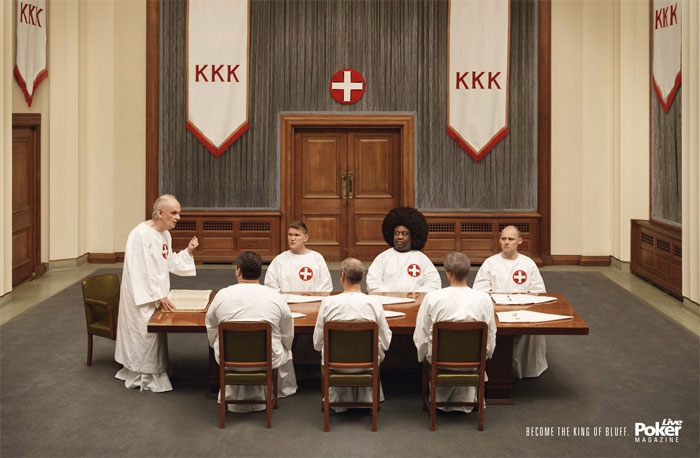
Jenelle N. sent in this French ad for Live Poker Magazine, which she found here. The text at the bottom says, “Become the king of bluff.” You know, like a black guy managing to join the KKK.
That’s somethin’.
Thanks, Jenelle!
Watch how this 60 Minutes clip from August 2006 manages to completely confuse three very different things: sex identity (believing you are biologically female or male), gendered behavior (conforming to cultural rules about girls/women and boys/men are supposed to do and like), and sexual orientation (which sex you are attracted to sexually). For examples, you know your boy is going to grow up wanting to have sex with men because he likes to “help out in the kitchen” or thinks he’s a girl. These are all very different things. It also includes some wretched study design.
Part I
[youtube]https://www.youtube.com/watch?v=IoZoRbP-0WM[/youtube]
Part II
[youtube]https://www.youtube.com/watch?v=WTLAof9oXCI[/youtube]
By the way, funny story: When my nephew was about 2 years old he loved brooms and vacuums. My parents told me that it was because he liked “tools.”
Thanks to Joseph DeM. for the tip!
Lisa Wade, PhD is an Associate Professor at Tulane University. She is the author of American Hookup, a book about college sexual culture; a textbook about gender; and a forthcoming introductory text: Terrible Magnificent Sociology. You can follow her on Twitter and Instagram.
These dolls have been available for purchase for at least 6 years (when I first found out about the website) and I’m surprised they haven’t made it on Soc Images yet!
I want to clarify that while these dolls are created for the use by the anti-choice movement, I’m not trying to make a pro-choice argument here. Rather, I think it is interesting to think about how fetal development is depicted (especially to children), and how these micropreemie dolls compare to medical depictions of fetal development. Not to mention that these are among some of the creepiest things I’ve ever seen.
According to the website:
Micropreemie models are life size portrait models of real micropreemie human babies.
[…]
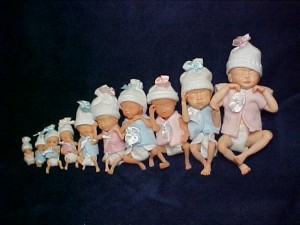
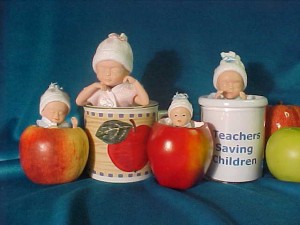
All models are portraits of real babies. Models 6 weeks and 7 weeks are original one of a kind sculpts. They can have a hat and tiny blanket. They are fragile and not poseable. Models eight weeks and over have jointed bodies and come dressed or undressed. All are medically accurate in size and human development. They have been checked for accuracy by Physcians, [sic] Neonatal Intensive Care Nurses, Dulas and the actual parents of the babies represented here. We recommend dressed models for use with children. Children are naturally drawn to these models.
The comparison pictures are from this website.
6 weeks gestation:
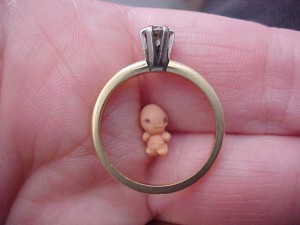

7 weeks gestation:
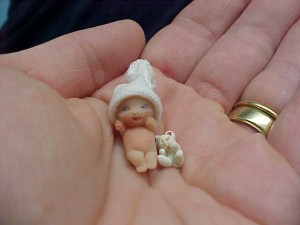

8 weeks gestation:
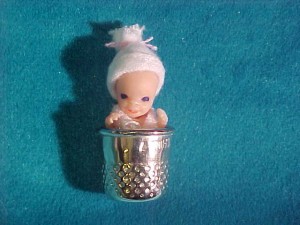

10 weeks gestation:
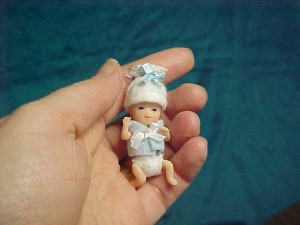

12 weeks gestation:


And some other random micropreemie images from the website:
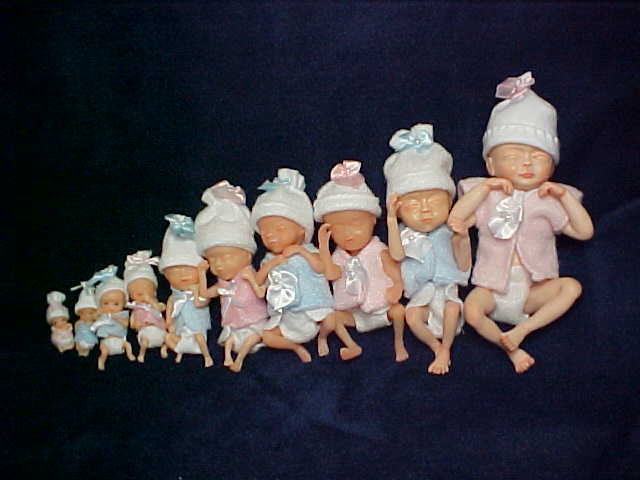
8-18 weeks gestation:
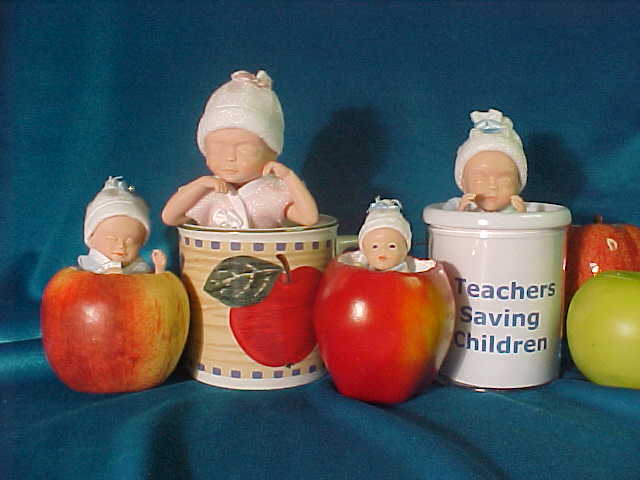
In apples and cups:
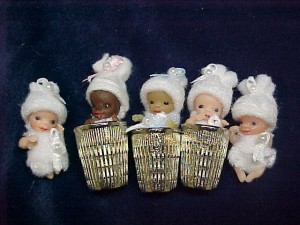
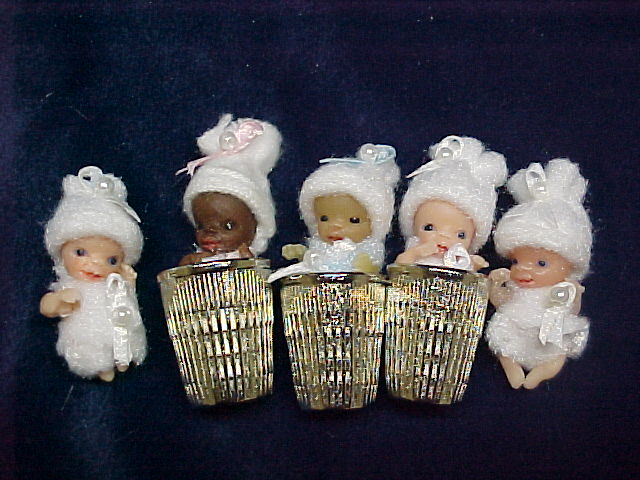
And there is one non-white micropreemie on the website:
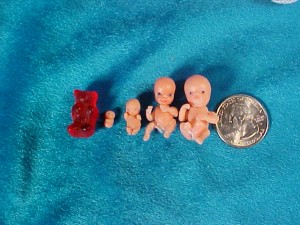
Size comparison with gummy bear and quarter:
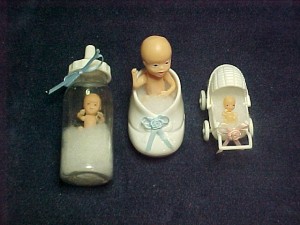
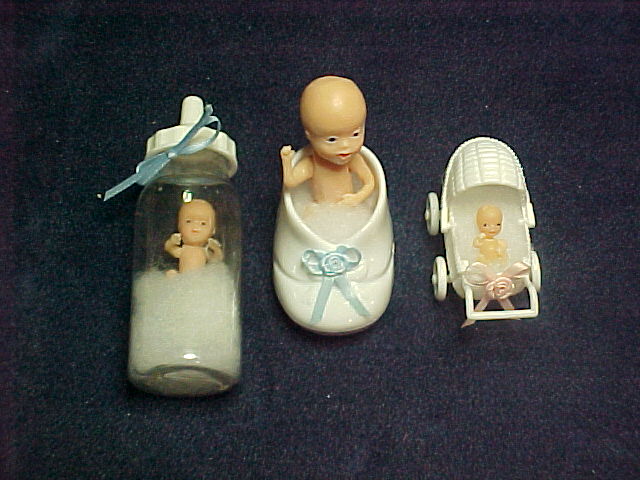
Featured accessories: (yes, that is a micropreemie in a baby bottle. Yikes!)
Keeley c. sent in this comic strip: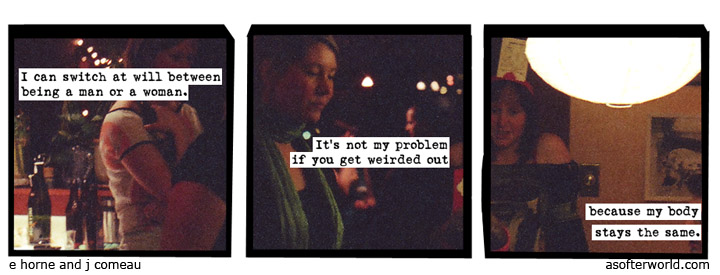
Keeley writes:
I think this strip is an amazing commentary on the fluidity of gender and especially gender identity, and how unrelated it can be to one’s outward biology. I also love how it’s unclear whether the speaker’s ability to shift from man to woman is their own perception of themselves or the way they believe others perceive them when they don’t conform to the norm of thier biological gender. There’s a lot of layers piled into the very simple text.
Thanks!
While whiteness is the neutral category (for example, see here and see here for the same phenomenon related to gender) and most, but not all, advertising is aimed at white people first, we all know that people of color DO appear in advertising, even when it’s obvious that the intended audience is mostly white. In this series, I’m going to offer some examples of how people of color are used in ads and some of the conditions under which they are included.
In this first post of the series, I offer you examples of ads that include people of color in order to associate the collectively-held meaning of the racial minority group (i.e., stereotypical traits, the social construction of the group) with the product.
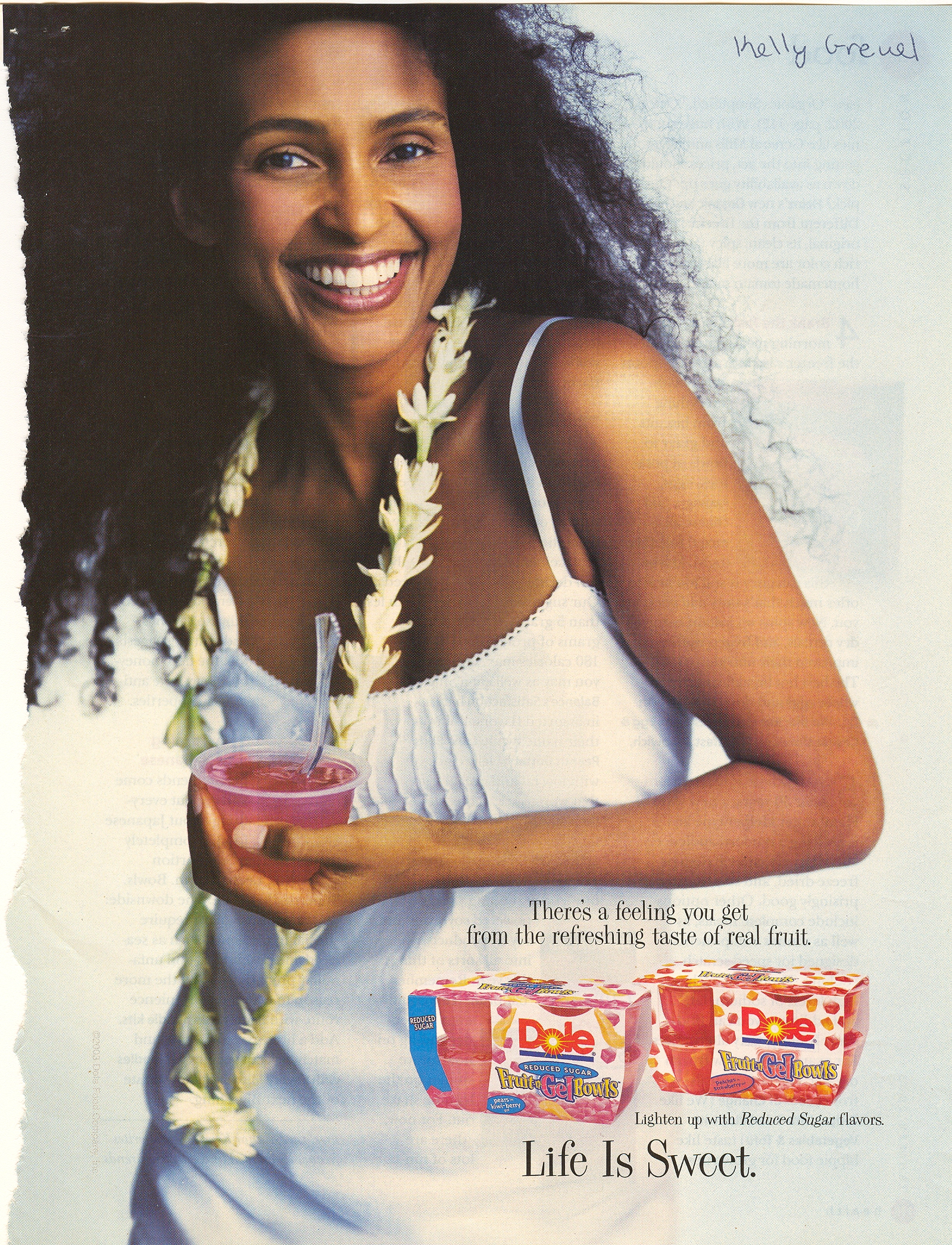
This first one is my favorite (thanks to my student Kelly for submitting it). The product is Dole Fruit Gel Bowls. The text is: “There’s a feeling you get from the refreshing taste of real fruit. Lighten up with Reduced Sugar flavors. Life Is Sweet.” So how do they convince us that “Fruit Gel” is “real fruit”? By putting a “native” appearing woman with a “natural” hairstyle in a white cotton frock with flowers around her neck.
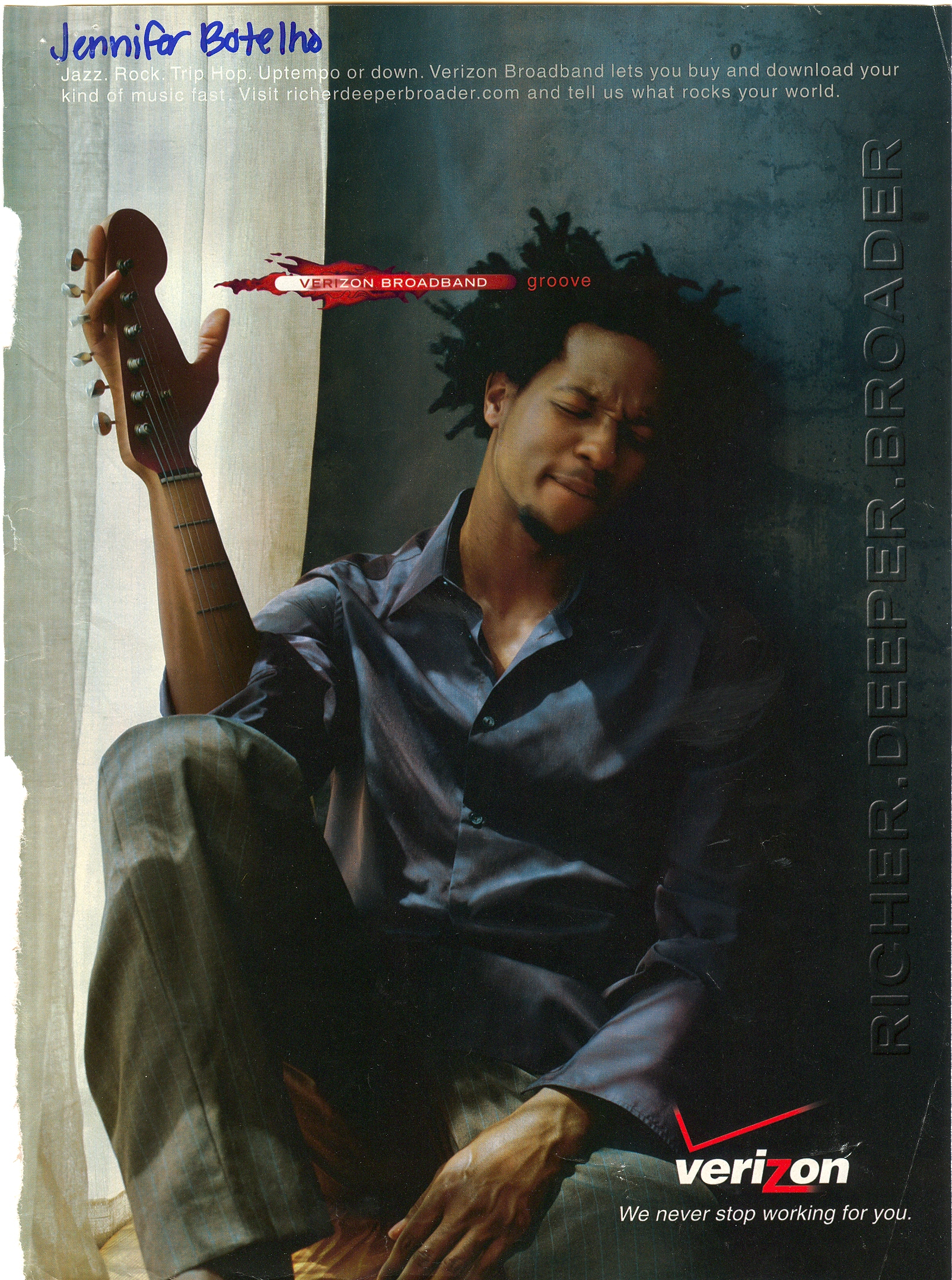
In this ad (thanks to my student, Jennifer, for submitting it) Verizon Broadband is telling us that we can download music fast. What kind of music? The kind associated with black folks, of course. The text along the top reads: “Jazz. Rock. Trip Hop. Uptempo or down.”
Compare that version of the ad with this one (thanks to my student, Laura). In this ad, the person is now an Asian woman and the type of music mentioned is “Classical. Soul. Hip Hop.”

This ad for IBM products features a middle aged Asian man, a type of person associated with high technology.

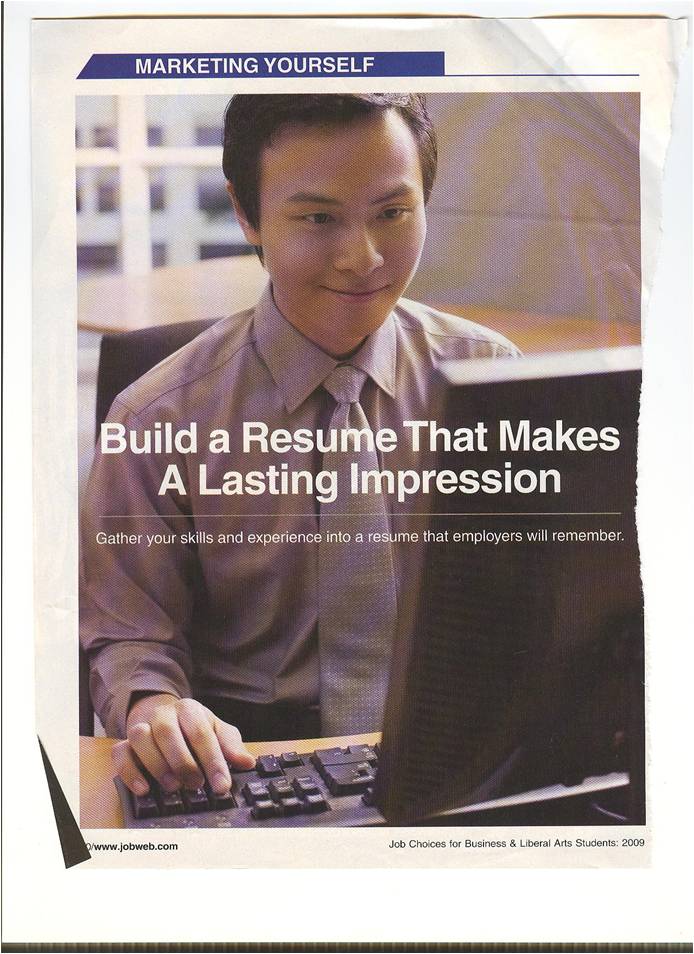
NEW: This ad uses an Asian man to invoke the idea of a good worker.
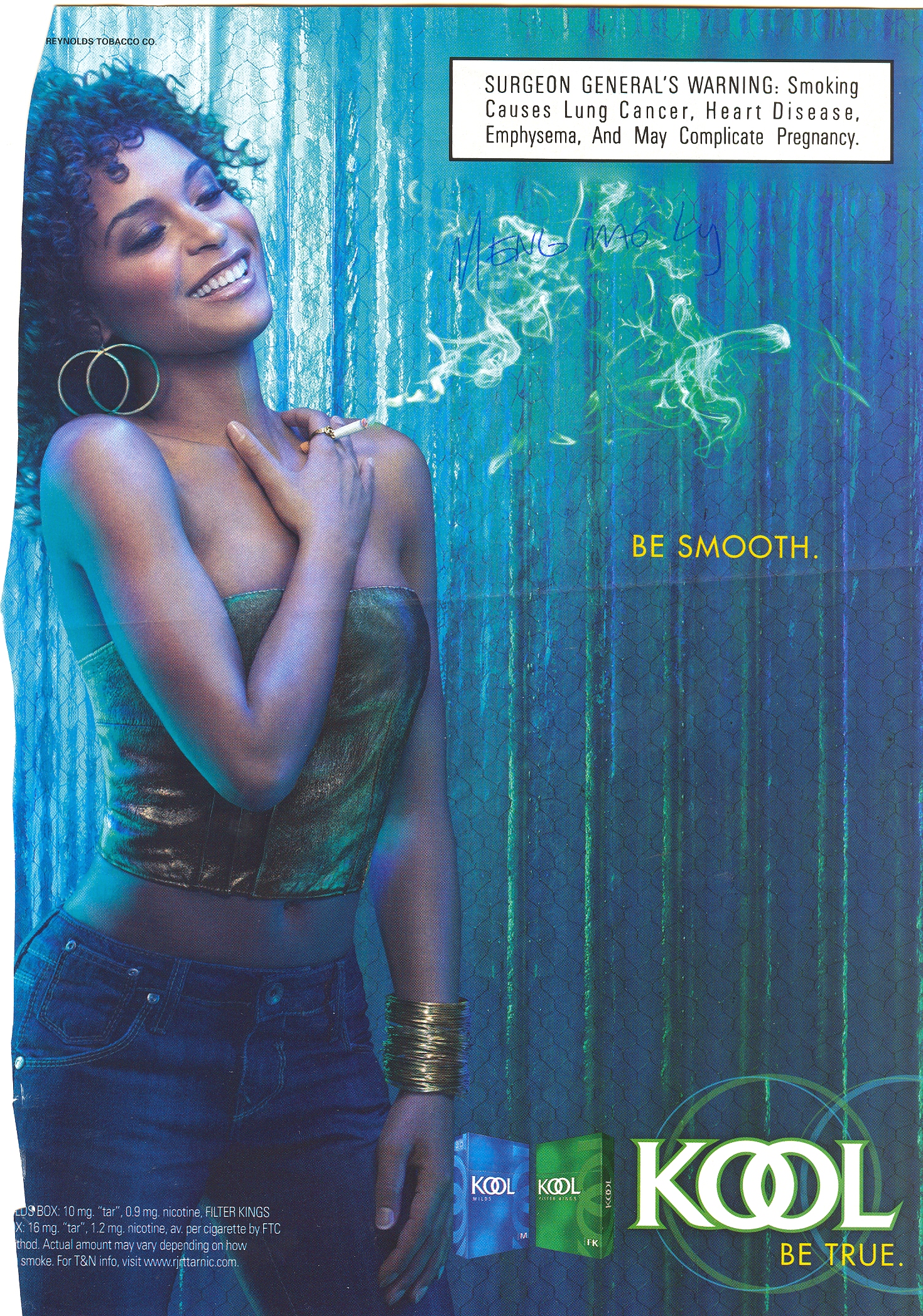
These two ads for Kool cigarettes (thanks to my student, Eugene, for the first one, and this blog for the second) use Black men doing stereotypically Black things (playing the trumpet and djing) in order to try to transfer some of the cool associated with Black men to Kool cigarettes. (Alternatively, these ads may be targeted directly at a Black audience.)


This one too:
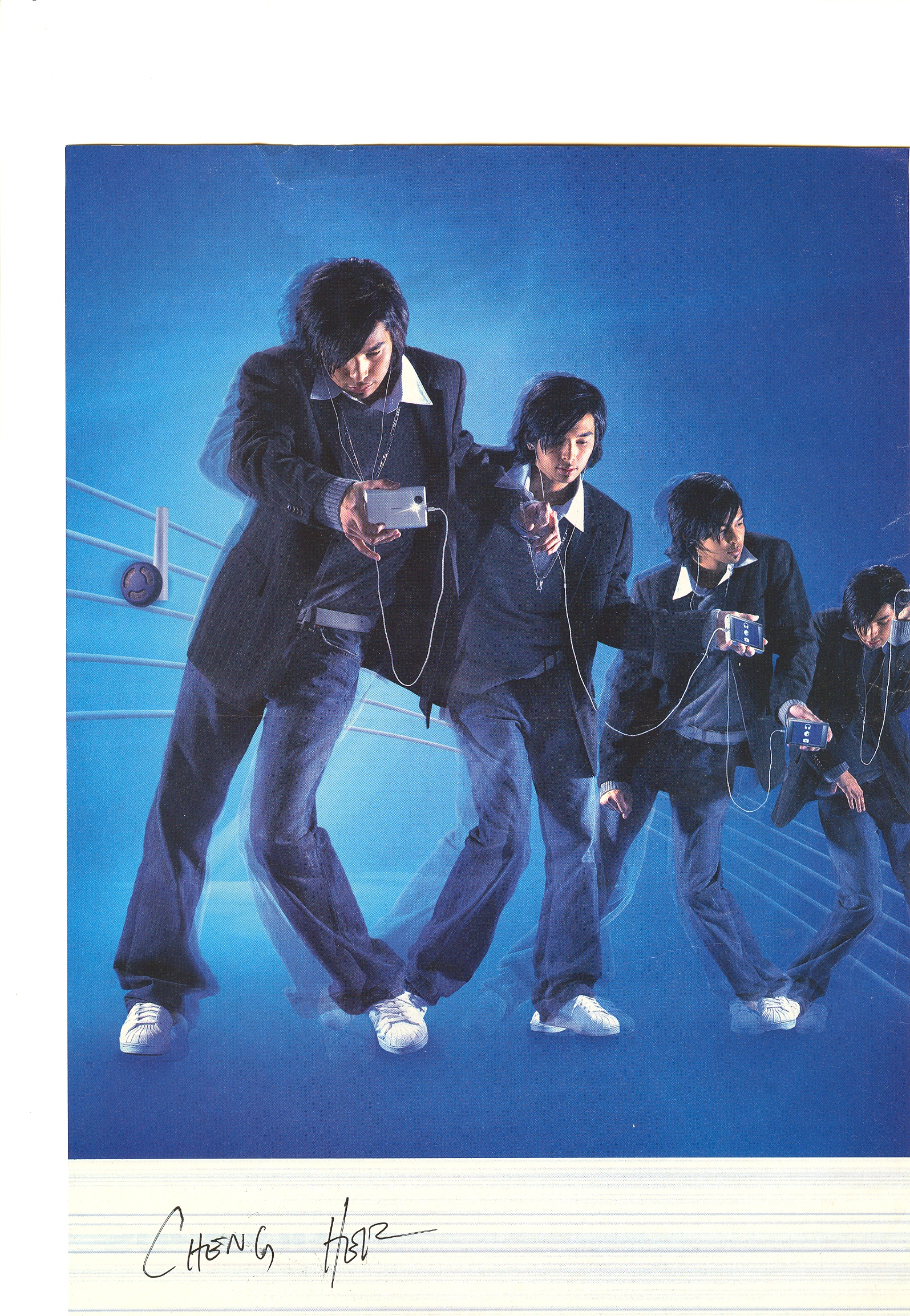
Finally, this ad for the Ipod ipod-type thing (submitted by my student, Cheng) uses a young Asian man dancing. We all know that white men can’t dance.
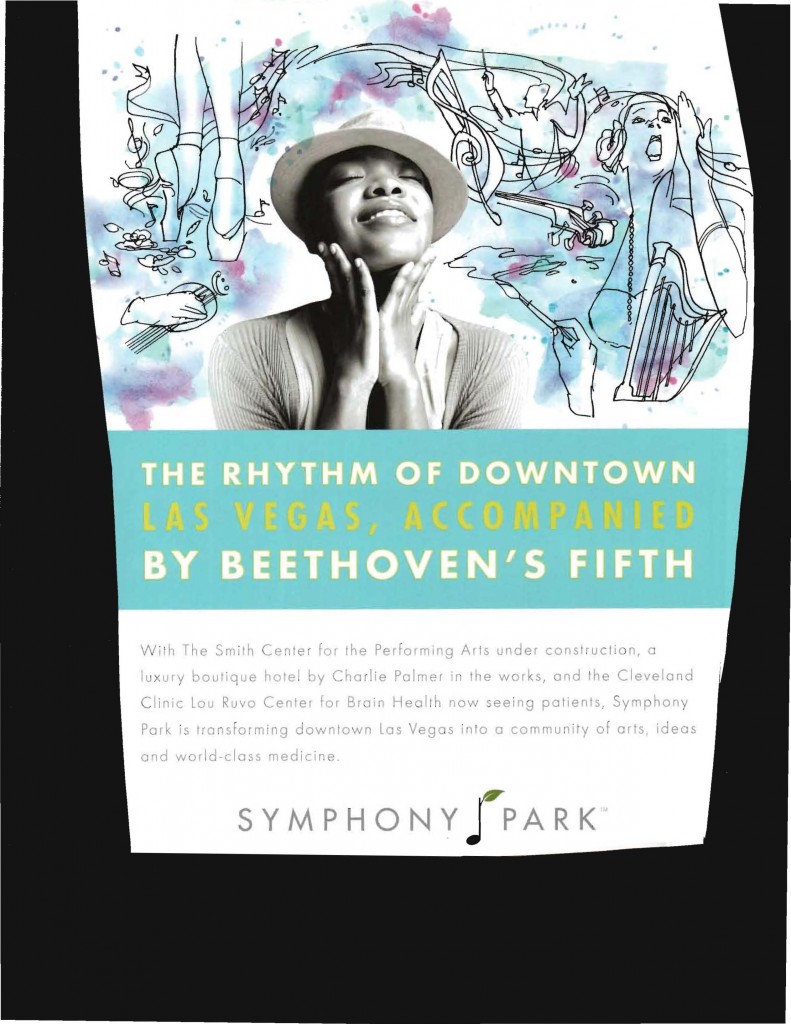
NEW! In this ad, rhythm is represented by a black woman:
If anyone has more examples, I’d love to see them!
Next up: using people of color to signify, literally, color, or even spice or flavor.
I’m not exactly sure how these images could be used in the classroom (to talk about state promotion of the family? the social ills of alcohol? gendering alcoholism?), but I think they’re fascinating. I found them at the Museum of Anti-Alcohol Posters.

“Cause- drunkenness”
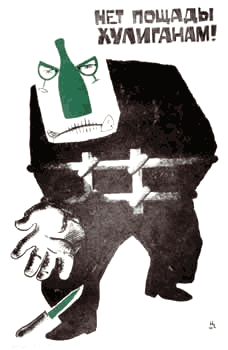
“No mercy for hooligans!”
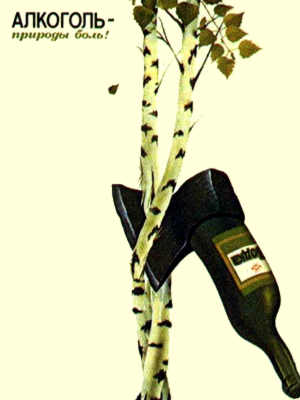
“Alcohol: Pain of nature”
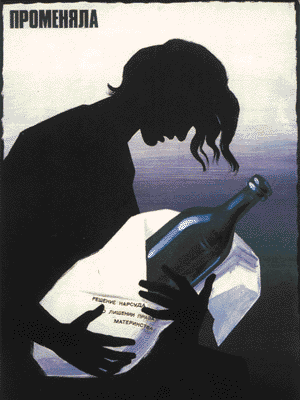
“Bartered”
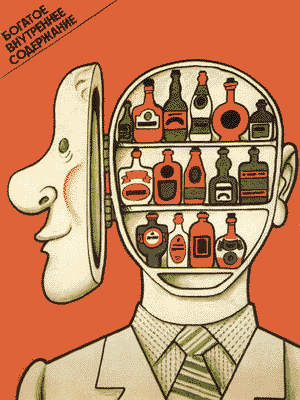
“Rich inner substance”
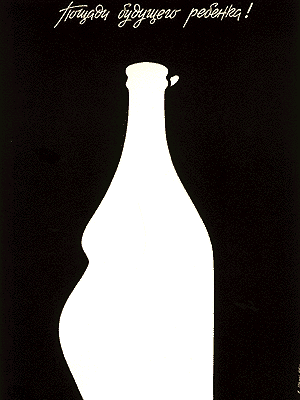
“Have mercy on your future child”
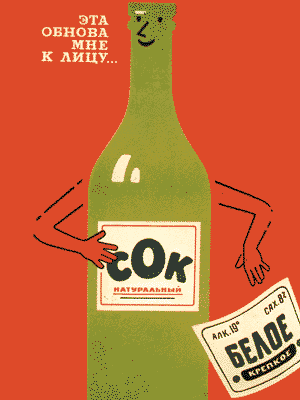
“This new dress becomes me well”
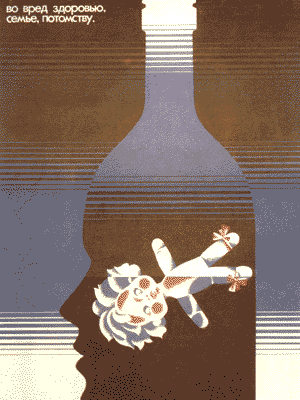
“Harmful to health, family and descendants”
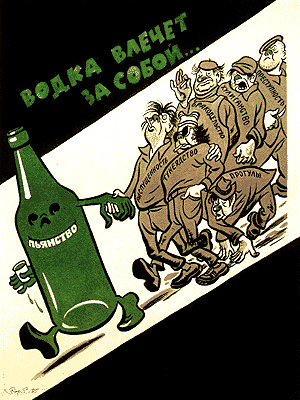
“Vodka brings with it”
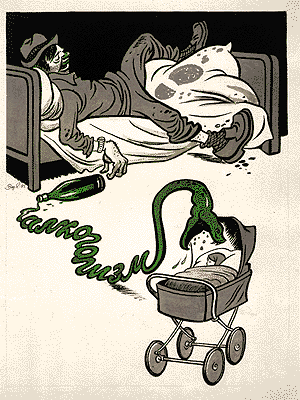
“alcoholism”
Jenelle N. sent in this French ad for Live Poker Magazine, which she found here. The text at the bottom says, “Become the king of bluff.” You know, like a black guy managing to join the KKK.
That’s somethin’.
Thanks, Jenelle!
Watch how this 60 Minutes clip from August 2006 manages to completely confuse three very different things: sex identity (believing you are biologically female or male), gendered behavior (conforming to cultural rules about girls/women and boys/men are supposed to do and like), and sexual orientation (which sex you are attracted to sexually). For examples, you know your boy is going to grow up wanting to have sex with men because he likes to “help out in the kitchen” or thinks he’s a girl. These are all very different things. It also includes some wretched study design.
Part I
[youtube]https://www.youtube.com/watch?v=IoZoRbP-0WM[/youtube]
Part II
[youtube]https://www.youtube.com/watch?v=WTLAof9oXCI[/youtube]
By the way, funny story: When my nephew was about 2 years old he loved brooms and vacuums. My parents told me that it was because he liked “tools.”
Thanks to Joseph DeM. for the tip!
Lisa Wade, PhD is an Associate Professor at Tulane University. She is the author of American Hookup, a book about college sexual culture; a textbook about gender; and a forthcoming introductory text: Terrible Magnificent Sociology. You can follow her on Twitter and Instagram.
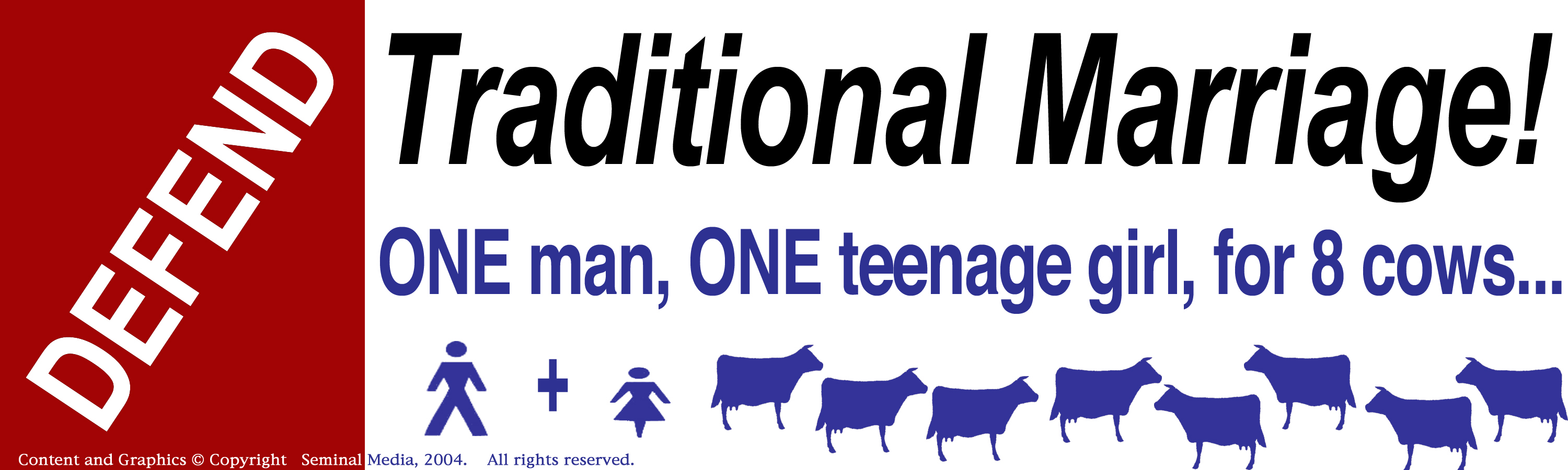

These dolls have been available for purchase for at least 6 years (when I first found out about the website) and I’m surprised they haven’t made it on Soc Images yet!
I want to clarify that while these dolls are created for the use by the anti-choice movement, I’m not trying to make a pro-choice argument here. Rather, I think it is interesting to think about how fetal development is depicted (especially to children), and how these micropreemie dolls compare to medical depictions of fetal development. Not to mention that these are among some of the creepiest things I’ve ever seen.
According to the website:
Micropreemie models are life size portrait models of real micropreemie human babies.
[…]
All models are portraits of real babies. Models 6 weeks and 7 weeks are original one of a kind sculpts. They can have a hat and tiny blanket. They are fragile and not poseable. Models eight weeks and over have jointed bodies and come dressed or undressed. All are medically accurate in size and human development. They have been checked for accuracy by Physcians, [sic] Neonatal Intensive Care Nurses, Dulas and the actual parents of the babies represented here. We recommend dressed models for use with children. Children are naturally drawn to these models.
The comparison pictures are from this website.
6 weeks gestation:
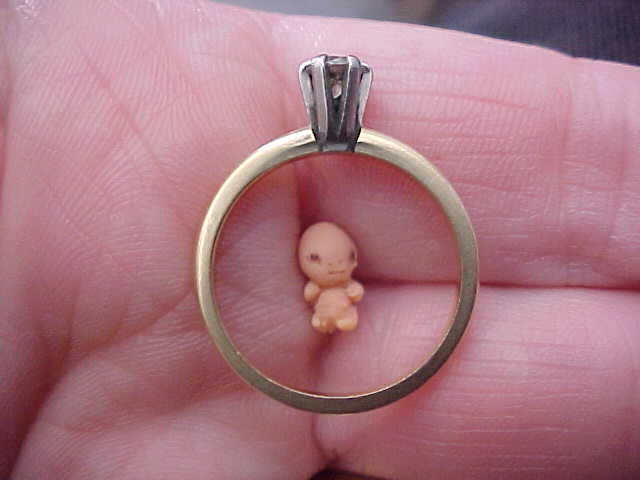

7 weeks gestation:


8 weeks gestation:
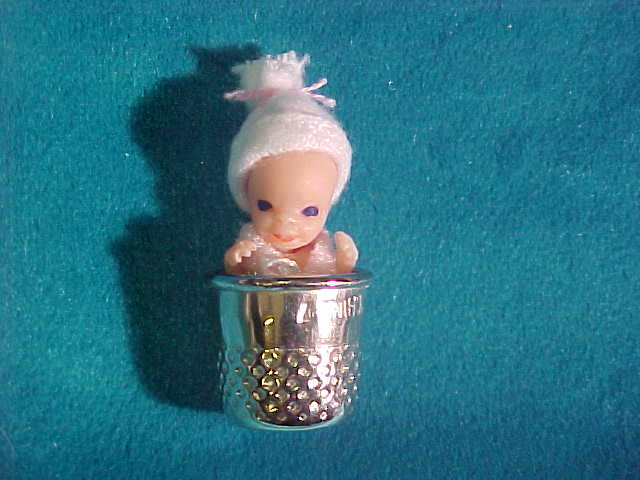

10 weeks gestation:
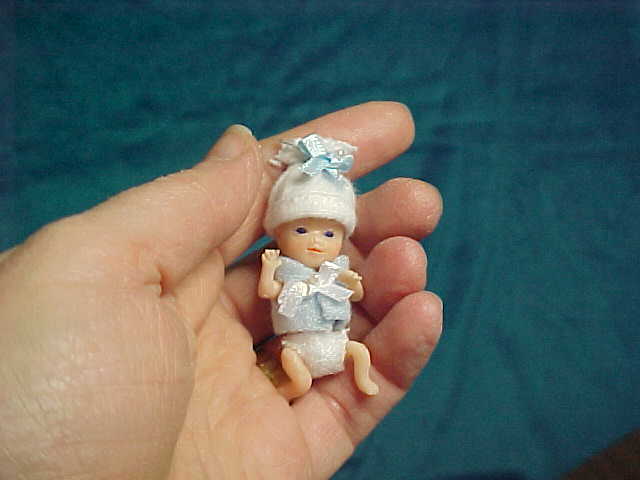

12 weeks gestation:
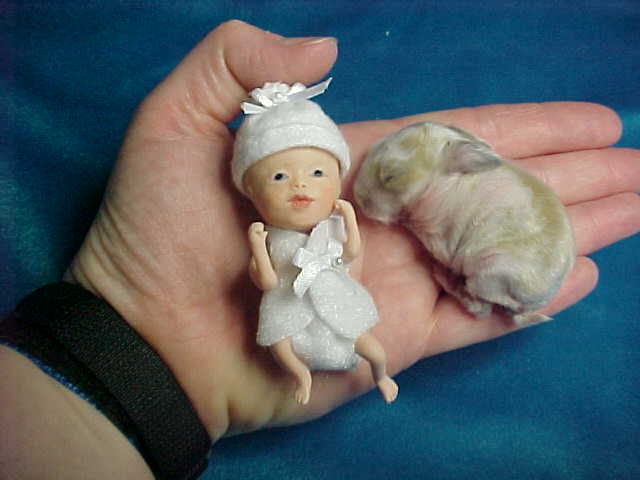

And some other random micropreemie images from the website:
8-18 weeks gestation:
In apples and cups:
And there is one non-white micropreemie on the website:
Size comparison with gummy bear and quarter:

Featured accessories: (yes, that is a micropreemie in a baby bottle. Yikes!)
Keeley c. sent in this comic strip:
Keeley writes:
I think this strip is an amazing commentary on the fluidity of gender and especially gender identity, and how unrelated it can be to one’s outward biology. I also love how it’s unclear whether the speaker’s ability to shift from man to woman is their own perception of themselves or the way they believe others perceive them when they don’t conform to the norm of thier biological gender. There’s a lot of layers piled into the very simple text.
Thanks!
While whiteness is the neutral category (for example, see here and see here for the same phenomenon related to gender) and most, but not all, advertising is aimed at white people first, we all know that people of color DO appear in advertising, even when it’s obvious that the intended audience is mostly white. In this series, I’m going to offer some examples of how people of color are used in ads and some of the conditions under which they are included.
In this first post of the series, I offer you examples of ads that include people of color in order to associate the collectively-held meaning of the racial minority group (i.e., stereotypical traits, the social construction of the group) with the product.
This first one is my favorite (thanks to my student Kelly for submitting it). The product is Dole Fruit Gel Bowls. The text is: “There’s a feeling you get from the refreshing taste of real fruit. Lighten up with Reduced Sugar flavors. Life Is Sweet.” So how do they convince us that “Fruit Gel” is “real fruit”? By putting a “native” appearing woman with a “natural” hairstyle in a white cotton frock with flowers around her neck.
In this ad (thanks to my student, Jennifer, for submitting it) Verizon Broadband is telling us that we can download music fast. What kind of music? The kind associated with black folks, of course. The text along the top reads: “Jazz. Rock. Trip Hop. Uptempo or down.”
Compare that version of the ad with this one (thanks to my student, Laura). In this ad, the person is now an Asian woman and the type of music mentioned is “Classical. Soul. Hip Hop.”
This ad for IBM products features a middle aged Asian man, a type of person associated with high technology.
NEW: This ad uses an Asian man to invoke the idea of a good worker.
These two ads for Kool cigarettes (thanks to my student, Eugene, for the first one, and this blog for the second) use Black men doing stereotypically Black things (playing the trumpet and djing) in order to try to transfer some of the cool associated with Black men to Kool cigarettes. (Alternatively, these ads may be targeted directly at a Black audience.)
This one too:
Finally, this ad for the Ipod ipod-type thing (submitted by my student, Cheng) uses a young Asian man dancing. We all know that white men can’t dance.
NEW! In this ad, rhythm is represented by a black woman:
If anyone has more examples, I’d love to see them!
Next up: using people of color to signify, literally, color, or even spice or flavor.
I’m not exactly sure how these images could be used in the classroom (to talk about state promotion of the family? the social ills of alcohol? gendering alcoholism?), but I think they’re fascinating. I found them at the Museum of Anti-Alcohol Posters.
“Cause- drunkenness”
“No mercy for hooligans!”
“Alcohol: Pain of nature”
“Bartered”
“Rich inner substance”
“Have mercy on your future child”
“This new dress becomes me well”
“Harmful to health, family and descendants”
“Vodka brings with it”
“alcoholism”