Search results for The


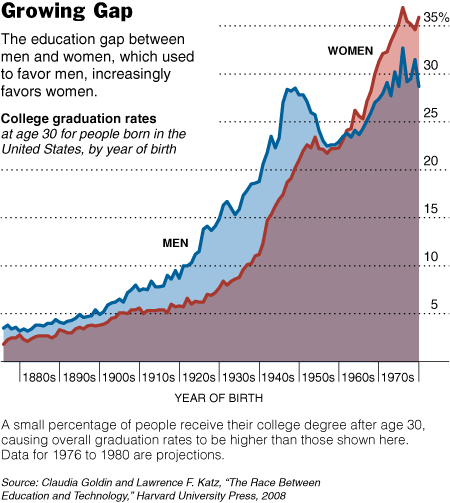
There are other things interesting about this graph too.  (1)  The overall increase in the percentage of the U.S. population who attends and graduates college… and thus changing ideas about who “needs” a college degree.  (2) The fact that the gender difference wasn’t extreme in the late 1800s at all and increased in the early 1900s. (This is in contrast to most students understanding of history, in my experience, as a linear story of progress from backwards to enllightened.)  (3)  The spike in college enrollment and graduation after WWII (GI Bill… but how does that explain the stats on women?).  (4)  The weird dip in 1950s (I don’t know what that’s all about).  And, (5) the period of near parity in the 1960s.  (In the comments, Penny points out that I mis-read the graph in haste.  I apologize.)   (3) The weird dip for people born in the 1950s and coming of age in the 1970s (I don’t know what that’s all about).  And, (4) the period of near parity for people born in the 1960s and coming of age in the 1980s. 

See the accompanying article at the New York Times.

Jane created this awesome visual of how brands inhabit our lives, from dawn until dusk:

Thanks to Kevin for sending it along!


Camilla P. sent us this international sampler of Coke Zero ads. She says all of them that she found use the whole “zero” is manlier than “diet” strategy (see the first two below), except the one in Australia which links a sip of Coke Zero with orgasm (see the third video).

From Britain:

From Brazil (we’d love someone to translate, although we think we get the gist):

From Australia:

If you liked that, see this remarkable Orangina commercial.

Two readers, Breck and Miguel, sent in this post:

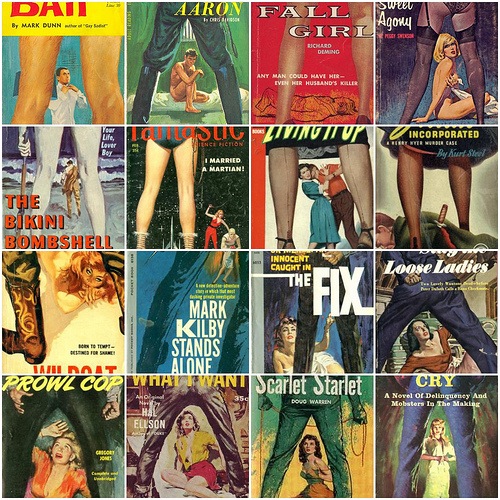
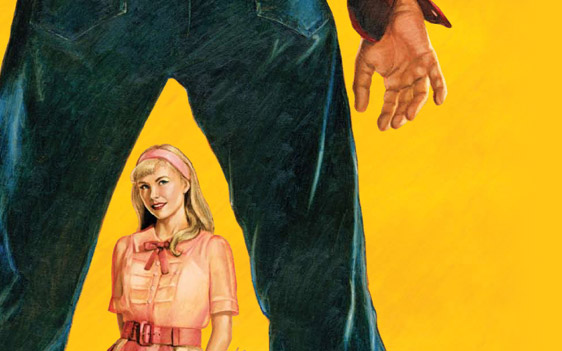
Boingboing put up this post that shows how common “spread legs” imagery is in old book covers. A commenter to that post pointed out this example (found here) from the Broadway version of Cry-Baby.:

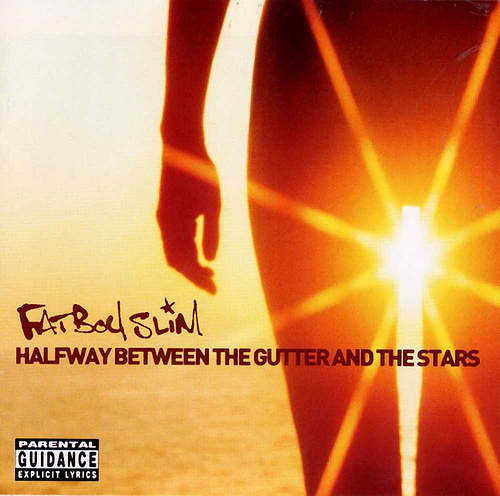
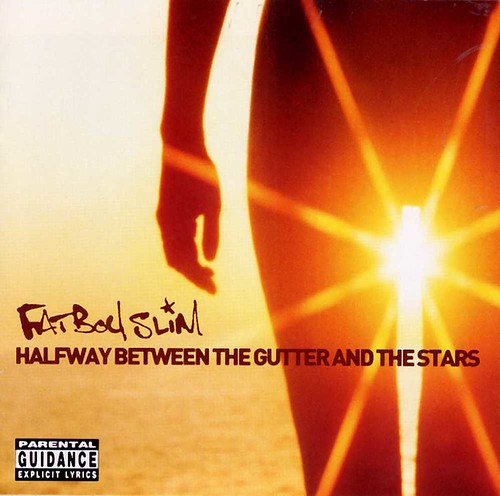
Another commenter thought this FatBoy Slim album cover is interesting:

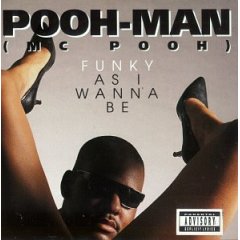
And there’s this Pooh-Man album cover:

And:

Miguel pointed out that the exact same stance can seem threatening or sexual inviting, depending on whether it’s a man or a woman in the pose.

Thanks to Breck and Miguel for sending these along!

NEW: Larry sent along this image from the June 2008 issue of Esquire magazine (p. 112), which also uses the “spread legs” motif:

In case you thought this was a new phenomenon:

Found here thanks to Jason S.

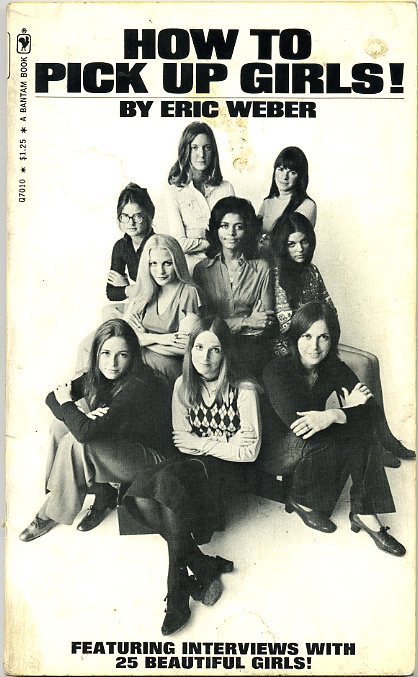
Fellow blogger, Brett, specializes in counseling adolescent boys.  He says, no matter what they come in for–skipping school, fighting, arson–they always get around to asking, “How do you know when a girl likes you?”

Occasionally we here at Sociological Images like to put up something we really like. To that end, I submit to you this public service announcement for science careers in the European Union (made by a German ad agency):

I like that it’s actually creative, instead of relying on the good ol’ objectifcation, nudity, violence, sex, or all of the above. I also like that the people in the commercial just look like people. Proof that you don’t need people in the 99.9th percentile of beauty and thinness/beefiness to make a good ad. What do you like about it?

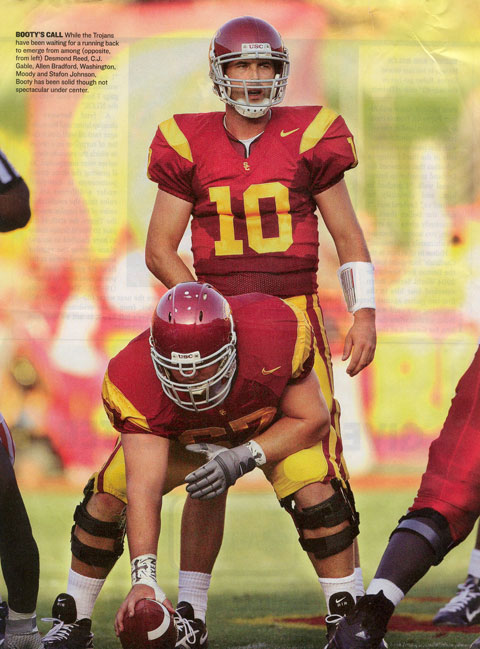
The following image is of a USC quarterback named, and I swear I’m not making this up, John Booty. In fact, if you look closely, the title of the text in the photo is “Booty’s Call.”

This could be useful in discussions about the social construction of masculinity and sexuality. Imagine any other scenario in which two men were posed this way in a photograph without being labeled as homosexual. However, since they are playing football, they manage to get away with this blatant violation of the rules. In fact, they manage to break the rules of gender and sexuality in a way that manages to reinforce those same rules.

Talk about moving the goalposts…

One thing you may not know about the peoples of the pre-Columbian Andean region: they were fond of making pottery with exaggerated penises. These were often pipes or water vessels and forced the user to place his or her mouth on the gigantic penis. Images can be found herehere, here and here.

I like these because they remind students that sexual humor (making pottery that forces someone to drink out of a penis, for instance) is not even close to being a modern invention. I’m sure there are lots of other interpretations–that this actually shows an obsession with the penis than indicates a patriarchal culture, that it was part of a cult of warrior potency, and so on–but I bet there was also a level of joking going on too.

Gwen Sharp is an associate professor of sociology at Nevada State College. You can follow her on Twitter at @gwensharpnv.