Search results for The

Hans Rosling illustrates the change in the percentage, but not the number, of people living in extreme poverty:

Found at GapMinder.

Lisa Wade, PhD is an Associate Professor at Tulane University. She is the author of American Hookup, a book about college sexual culture; a textbook about gender; and a forthcoming introductory text: Terrible Magnificent Sociology. You can follow her on Twitter and Instagram.
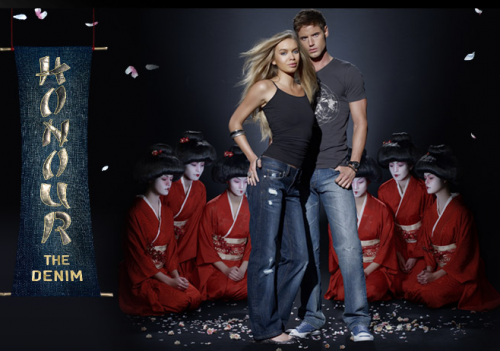
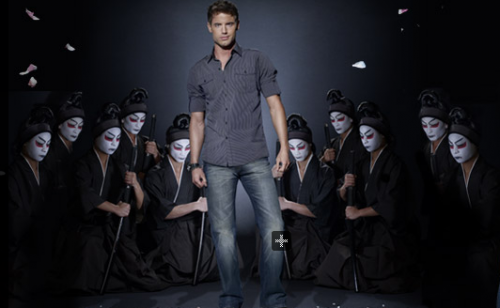
Tristian B. told us about Jeanswest Australia’s Authentic Japanese Vintage Denim ad campaign, which features images of White people surrounded by groups of kneeling Japanese men or women:

Picture 1

Picture 2

Oddly enough, Andrea J. recently sent us a link to the Palm Pre “Flow” ad, which has a White woman using the Palm Pre while a group of identically-dressed Asians, none shot in a way that presents them as individuals, dancing around her as she discusses how nice it is when everything rearranges itself to do just what you want:

NEW! (Oct. ’09) Macon D. found another example of the use of generic, undifferentiated Asians as props.  This time in a performance by Shakira:

[youtube]http://www.youtube.com/watch?v=6bZxN1Qq9K4[/youtube]

She gives the same performance on Saturday Night Live.

Gwen Stefani’s Harajuku Girls are another great example.

This reminds me a lot of some images from Britain’s Next Top Model that Lisa posted about last year, in which Africans were used as background props in a photo shoot with the contestants. The Asian individuals in these two ads are an undifferentiated mass, strikingly dressed and posed to show off the subjects of the ads–the White people who are foregrounded and depicted as specific, individual human beings rather than an interchangeable member of a group.

For other examples of non-Whites used as props, see our post about a fashion spread in Vogue Italia and this photo from NYLON magazine.

Gwen Sharp is an associate professor of sociology at Nevada State College. You can follow her on Twitter at @gwensharpnv.

Jay L. sent in this Brylcreem commercial from the 1950s, in which men are warned that if they don’t have well-styled, healthy hair, they won’t get the girl next door:

Notice the creepy cartoon characters at about 0:48. Jay says,

He is obviously turned on by the girl, so he elbows the tube, which ejaculates a white blob that falls onto his head. The girl returns to run her hands through it.

Here’s another commercial that tells men if they don’t use Brylcreem, they’ll actually disgust women and make them run away:

Also see this Just for Men commercial that tells men grey hair will hurt them on the dating scene, this one about career insecurity, and this one that equates grey hair with a loss of masculine virility.

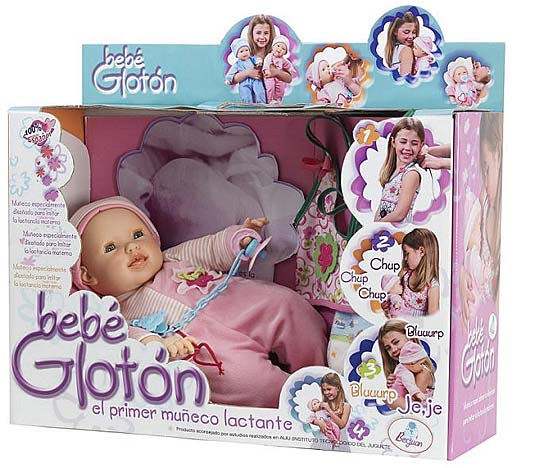
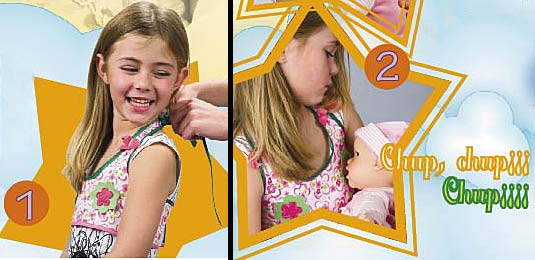
Tara C., fds, Dimitriy T.M., Wendy C., and Breck C. all sent in images of the Bebé Glotón, a doll that comes with a sort of bra that lets a child pretend to breastfeed (found at Thingamababy):

gluton1

gluton2

According to Thingamababy,

Bebé Glotón is a infant doll made by Berjuan, a toy maker in Spain, for the express purpose of promoting breastfeeding. The idea is to impress upon kids that breastfeeding is natural.

Here’s a demonstration video:

The doll has sparked quite a bit of controversy. From a story in the Mail Online:

Posting a comment after watching a demonstration video online, one user wrote: ‘This toy would never work in the U.S. because the public would sexualize the act of breastfeeding, thereby deeming it inappropriate for little girl to engage in.’

Another wrote: ‘ Honestly, I think this is awful. Now let me just be clear, I think breastfeeding is wonderful and wholeheartedly encourage it, however, it is completely inappropriate to allow a young girl to mimic it.’

And from Fox News:

Dr. Manny Alvarez, managing health editor of FOXNews.com, said although he supports the idea of breast-feeding, he sees how his own daughter plays with dolls and wonders if Bebe Gloton might speed up maternal urges in the little girls who play it.

Um…okay. Why this would “speed up maternal urges” any more than bottle-feeding a doll, I don’t really know.

While my first reaction was that the doll is creepy and weird, on second thought I couldn’t see that it’s stranger than the doll one of my cousins got a few years ago that “pooped” and “peed” some bright yellow and green substances that I did not ask any details about. I dunno. Is this really “sexualizing” girls? That implies that breastfeeding, real or simulated (through layers of clothing), is a sexual activity. I think it’s kind of fascinating that so many people, including myself, have had such an immediately negative reaction to the doll.

The more I think about it, the more it seems that my, and others’, negative reaction is based on a premise that anything involving breasts is sexual…a premise that many breastfeeding advocacy groups such as La Leche League have fought as they try to expand the ability of parents to breastfeed in public (or to have access to clean spaces to breastfeed in places such as malls, religious and government buildings, and so on).

Is our problem with the doll really more about the social construction of breasts as sexual? What is the primary problem with this doll? What’s driving our disgust?

Thoughts?

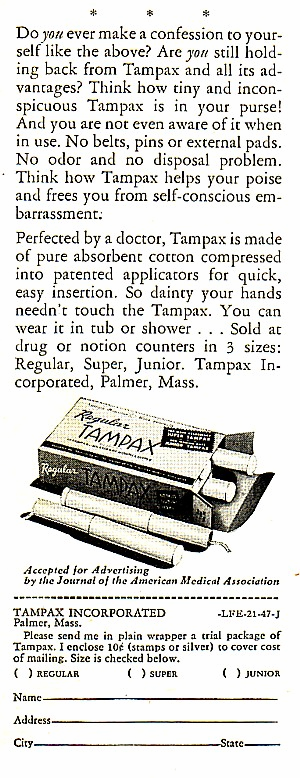
The past and the future can be presented as either threatening or appealing. The past can be “traditional” (good) or “old-fashioned” (bad but kinda nice) or “backwards” (definitely bad).   And the future can be “progressive” (good) or “radical” (maybe good but certainly scary, often very bad) or threatening (“new-fangled” or “going to hell in a handbasket”).

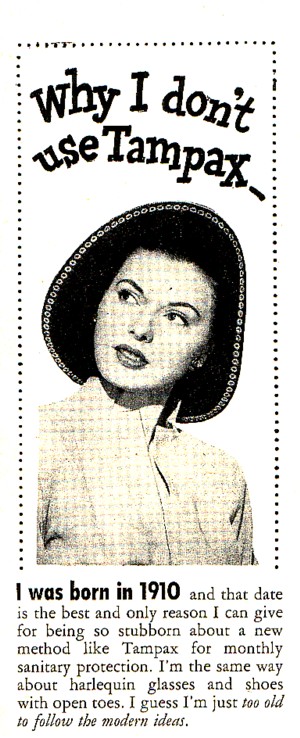
In the this tampon ads from the 1940s, being “too old to follow the modern ideas” is framed as an unfortunate state that women should overcome.  Not trying the new product is “holding [yourself] back.”

tampax1_1947

picture15Similarly, in this ad, a daughter instructs her mother on advances in managing “intimate problem[s]”:
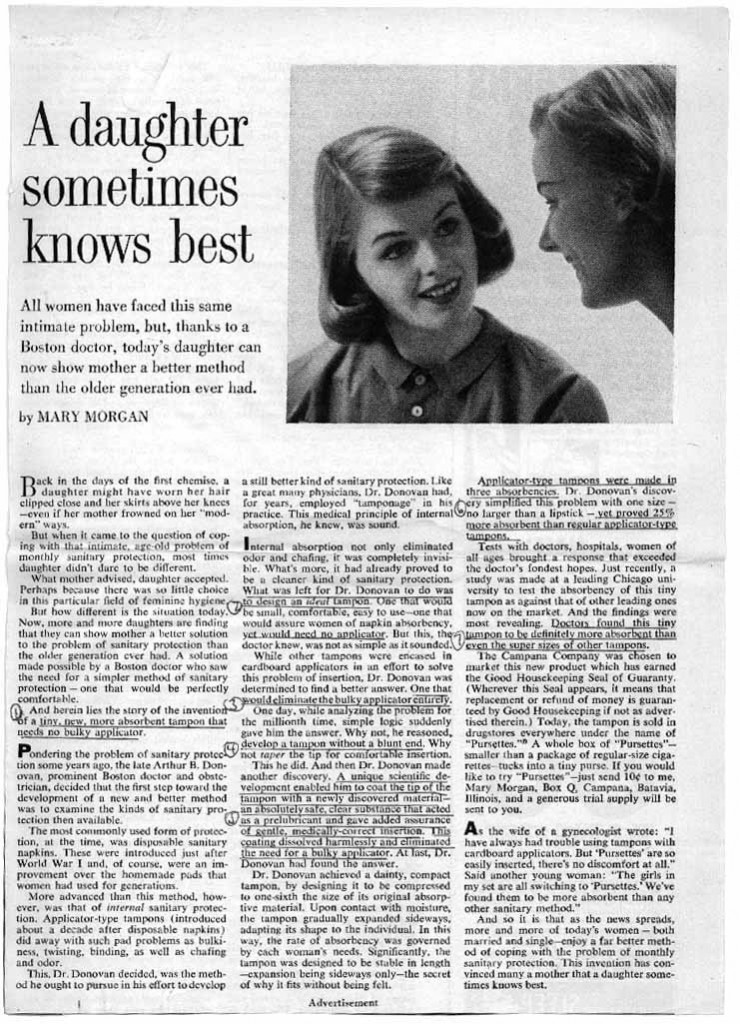

purs59

The ads reveal how ideas related to change (this time the promise of modernity) can be mobilized strategically (this time for marketing purposes). Here is another great example related to gay marriage.

Ads found here and here.

—————————

Lisa Wade is a professor of sociology at Occidental College. You can follow her on Twitter and Facebook.

We’re written before about how the male gaze shapes how “sexy” is marketed and sold. Specifically, when sex is used to sell, we usually see (presumably straight) men’s sexual subjectivity and the sexual objectification of women.   That is, we are all encouraged to see with a straight male gaze and thus, we are presented with a female object of desire. Three choice posts on the topic can be found here, here, and here.

While in New Orleans (again) in July, I attended some of the festivities associated with Tale of the Cocktail. One of them was a cocktail expo with the theme “Seven Deadly Sins.” Sponsored by Cabana Cachaca rum, Lust was personified this way:

cimg1232

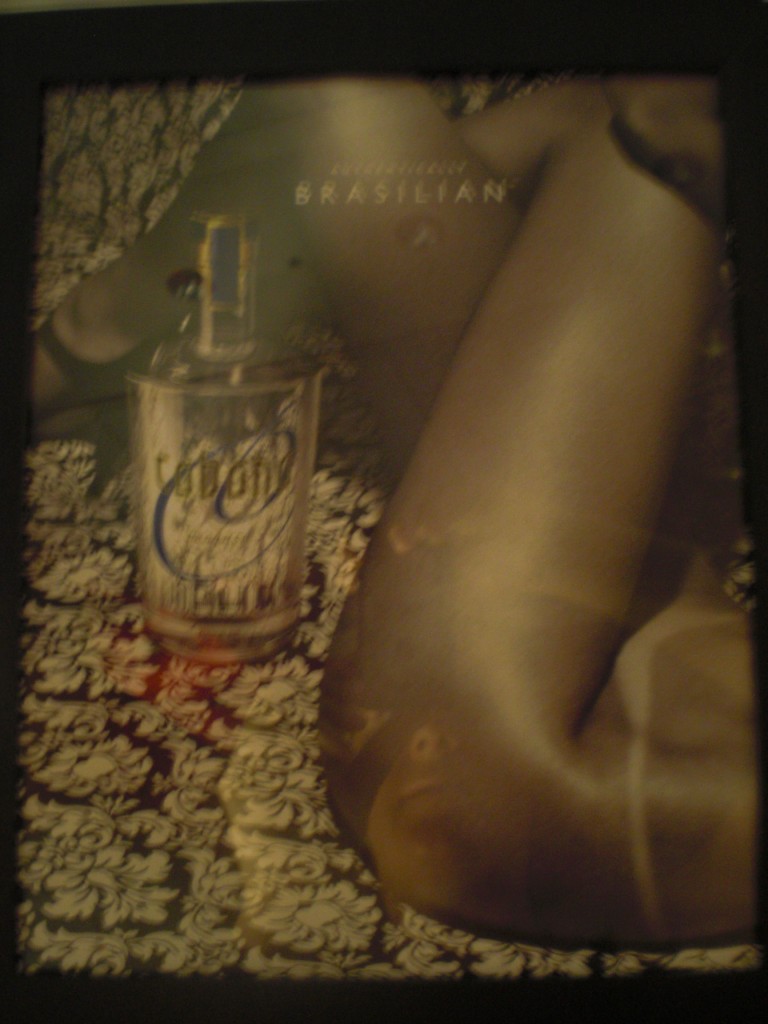
Presumably lust is not a feeling exclusive to straight men, yet the Lust booth featured only women dancing.  Because of the primacy of the male gaze, what is believed to be sexy to straight men gets defined as “sexy” for everyone.  The print ad they had displayed features a woman from the waist down, naked:

cimg1223

Thought Experiment:  If nearly naked men had been dancing in those columns, do you think the audience would have thought “hot men for the women!” or “how gay!”?   I think many, if not most, would have thought “how gay!”   A female gaze that validates women’s sexual subjectivity and the sexual objectification of men is simply less accessible for both women and men.   I think if men were dancing in the columns, an objectifying male gaze would still be at play, except this time the gaze would have been aimed at men.

Gay men are often stereotyped as obsessed with fashion, physical fitness, and their overall appearance (i.e., feminine).  The idea that both gay men and women are subject to the male gaze explains a lot about why.

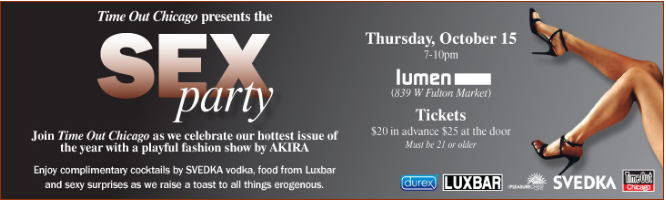
NEW! Amanda C. sent in this ad for a sex party in Chicago.  Like the instance above, “sex” is represented by a woman.  Amanda writes:

If a man’s legs were portrayed, would that mean that the party isn’t “sexy” or that it’s about gay sex? Just another example of how the heterosexual male gaze is universalized.

Women_and_Sex_-_Sociological_Images

—————————

Lisa Wade is a professor of sociology at Occidental College. You can follow her on Twitter and Facebook.

birthers

Found at Gin and Tacos.

—————————

Lisa Wade is a professor of sociology at Occidental College. You can follow her on Twitter and Facebook.

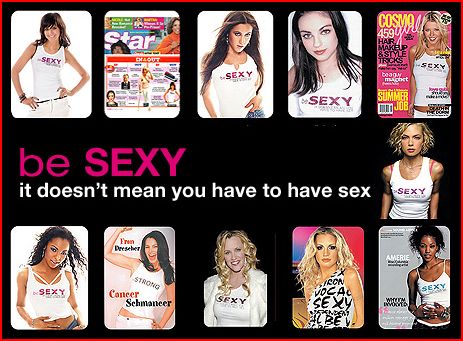
Dmitriy sent us a link to the Candies Foundation, a non-profit organization that wants teenage girls to avoid pregnancy by abstaining from sex.  So they’re going to make abstinence as sexy as possible!  The slogan: “I’m SEXY enough… to keep you waiting”:

Capture1

I noticed also that the message is aimed exclusively at girls. “You” is implicitly a guy.

Capture

The responsibility for keeping teens abstinent and for preventing teen pregnancy, then, falls solely on girls.

Dmitriy also points out that the campaign promotes abstinence, but not the use of birth control. He adds: “we do not combat auto accidents by not driving. we prevent them through driving and safety ed.”

See also this post featuring sweatpants that say “true love waits” across the ass.

—————————

Lisa Wade is a professor of sociology at Occidental College. You can follow her on Twitter and Facebook.