Search results for The

This video was making the rounds last spring. The video maker wants to make two points:

1. Cops are racist. They are respectful of the White guy carrying the AR-15. The Black guy gets less comfortable treatment.

2. The police treatment of the White guy is the proper way for police to deal with someone carrying an assault rifle.

I had two somewhat different reactions.

1. This video was made in Oregon. Under Oregon’s open-carry law, what both the White and Black guy are doing is perfectly legal. And when the White guy refuses to provide ID, that’s legal too. If this had happened in Roseburg, and the carrier had been strolling to Umpqua Community College, there was nothing the police could have legally done, other than what is shown in the video, until the guy walked onto campus, opened fire, and started killing people.

2.  Guns are dangerous, and the police know it. In the second video, the cop assumes that the person carrying an AR-15 is potentially dangerous – very dangerous. The officer’s fear is palpable. He prefers to err on the side of caution – the false positive of thinking someone is dangerous when he is really OK.  The false negative – assuming an armed person is harmless when he is in fact dangerous – could well be the last mistake a cop ever makes.

But the default setting for gun laws in the US is just the opposite – better a false negative. This is especially true in Oregon and states with similar gun laws. These laws assume that people with guns are harmless. In fact, they assume that all people, with a few exceptions, are harmless. Let them buy and carry as much weaponry and ammunition as they like.

Most of the time, that assumption is valid. Most gun owners, at least those who got their guns legitimately, are responsible people. The trouble is that the cost of the rare false negative is very, very high. Lawmakers in these states and in Congress are saying in effect that they are willing to pay that price. Or rather, they are willing to have other people – the students at Umpqua, or Newtown, or Santa Monica, or scores of other places, and their parents – pay that price.

UPDATE October, 6You have to forgive the hyperbole in that last paragraph, written so shortly after the massacre at Umpqua. I mean, those politicians don’t really think that it’s better to have dead bodies than to pass regulations on guns, do they?

Or was it hyperbole? Today, Dr. Ben Carson, the surgeon who wants to be the next president of the US, stated even more clearly this preference for guns even at the price of death.  “I never saw a body with bullet holes that was more devastating than taking the right to arm ourselves away.” (The story is in the New York Times and elsewhere.)

Originally posted at Montclair Socioblog.

Jay Livingston is the chair of the Sociology Department at Montclair State University. You can follow him at Montclair SocioBlog or on Twitter.
Flashback Friday.

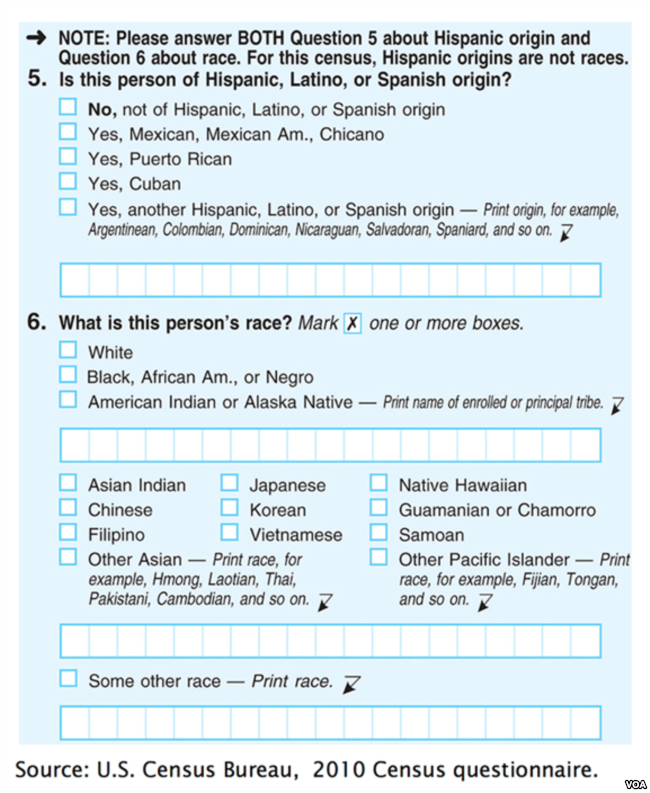
Social and biological scientists agree that race and ethnicity are social constructions, not biological categories.  The US government, nonetheless, has an official position on what categories are “real.”  You can find them on the Census:

These categories, however real they may seem, are actually the product of a long process. Over time, the official US racial categories have changed in response to politics, economics, conflict, and more. Here’s some highlights.

In the year of the first Census, 1790, the race question looked very different than it does today:

Free white males
Free white females
All other free persons (included Native Americans who paid taxes and free blacks)
And slaves

By 1870 slavery is illegal and the government was newly concerned with keeping track of two new kinds of people: “mulattos” (or people with both black and white ancestors) and Indians:

White
Black
Mulatto
Indian (Native Americans)

Between 1850 and 1870 6.5 million Europeans had immigrated and 60,000 Chinese.  Chinese and Japanese were added for the 1880 Census.

By 1890, the U.S. government with obsessed with race-mixing.  The race question looked like this:

White
Black (3/4th or more “black blood”)
Mulatto (3/8th to 5/8th “black blood”)
Quadroons (1/4th “black blood”)
Octoroons (1/8th or any trace of “black blood”)
Indian
Chinese
Japanese

This year was the only year to include such fine-tuned mixed-race categories, however, because it turned out it wasn’t easy to figure out how to categorize people.

In the next 50 years, the government added and deleted racial categories. There were 10 in 1930 (including “Mexican” and “Hindu”) and 11 in 1940 (introducing “Hawaiian” and “Part Hawaiian”).  In 1970, they added the “origin of descent” question that we still see today.  So people are first asked whether they are “Hispanic, Latino, or Spanish” and then asked to choose a race.

You might immediately think, “But what do these words even mean?”  And you’d be right to ask.  “Spanish” refers to Spain; “Latino” refers to Latin America; and “Hispanic” is a totally made up word that was originally designed to mean “people who speak Spanish.”

Part of the reason we have the “Hispanic” ethnicity question is because Mexican Americans fought for it.  They thought it would be advantageous to be categorized as “white” and, so, they fought for an ethnicity category instead of a racial one.

Funny story:  The US once included “South American” as a category in the “origin of descent” question.  That year, over a million residents southern U.S. states, like Alabama and Mississippi checked that box.

2000 was the first year that respondents were allowed to choose more than one race. They considered a couple other changes for that year, but decided against them. Native Hawaiians had been agitating to be considered Native Americans in order to get access to the rights and resources that the US government has promised Native Americans on the mainland. The government considered it for 2000, but decided “no.” And whether or not Arab American should be considered a unique race or an ethnicity was also discussed for that year. They decided to continue to instruct such individuals to choose “white.”

The changing categories in the Census show us that racial and ethnic categories are political categories. They are chosen by government officials who are responding not to biological realities, but to immigration, war, prejudice, and social movements.

This post originally appeared in 2010.

Lisa Wade, PhD is an Associate Professor at Tulane University. She is the author of American Hookup, a book about college sexual culture; a textbook about gender; and a forthcoming introductory text: Terrible Magnificent Sociology. You can follow her on Twitter and Instagram.

Serena Williams, the winner of 21 Grand Slam titles and arguably the greatest living female athlete, was understandably exhausted after defeating her sister and best friend Venus Williams in the U.S. Open earlier this week. So she wasn’t having it when, during a post-match press conference on Tuesday, a reporter had the gall to ask why she wasn’t smiling.

Williams looked down and gave an exasperated sigh before shelling out the best response an athlete has given in an interview since football player Marshawn Lynch’s “I’m just here so I won’t get fined” trademark phrase.

It’s 11:30. To be perfectly honest with you, I don’t want to be here. I just want to be in bed right now and I have to wake up early to practice and I don’t want to answer any of these questions. And you keep asking me the same questions. It’s not really … you’re not making it super enjoyable.

Screen Shot 2015-09-11 at 1.17.53 PM

[youtube]https://www.youtube.com/watch?v=-Xv1e5U0g_g[/youtube]

Nervous laughter may have broken out in the crowd, but what Williams expressed wasn’t a joke. All women are expected to perform femininity at the cost of being their authentic selves in the public sphere. Williams had just experienced what was likely one of the most emotionally and physically draining matches in her career. Taking on your sister in a high-stakes game isn’t easy. She had told the Associated Press before her win:

She’s the toughest player I’ve ever played in my life and the best person I know. It’s going against your best friend and at the same time going against the greatest competitor, for me, in women’s tennis.

It makes sense that she would not be smiling ear-to-ear during the media conference. But it turns out no matter how insanely accomplished or famous you become, you will still be subjected to the innocuous-sounding but ever-so-pernicious “why don’t you smile?” interjection from those who feel entitled to make demands of women. Williams’ retort was her attempt at dismantling that sense of entitlement. For those who say the reporter’s question was a harmless jest, they should ask themselves if Roger Federer or Rafael Nadal would ever be expected to defend their stern or tired expressions.

And the problem exists not just in the image-heavy world of professional sports. On Wednesday, Apple did little to change the public’s perception of the tech industry as a sexist one. During a launch presentation in San Francisco, the first woman to be seen on stage at the male-dominated event wasn’t a keynote speaker or even a presenter, but a model in a magazine photo. Adobe’s director of design used her image to show off the Photoshopping capabilities of the new iPad Pro.

What did he decide to Photoshop one might ask? A smile onto her face. He could have altered literally any aspect of any image he wanted but decided instead to force a woman’s visage into a grin.

Screen Shot 2015-09-11 at 1.16.15 PM

What happened at the tennis conference and the tech launch are symptoms of the same problem. Women, whether athletes or models, are often seen as products. They’re meant to be consumed and enjoyed, and expressions of personality — like not constantly grinning — distract from their role as ornaments.

It’s the reason projects like Stop Telling Women to Smile by Tatyana Fazlalizadeh have cropped up to address the microaggressions women face on a daily basis. Women don’t exist to smile for men and aren’t obligated to present a cheerful disposition to the world. To expect that denies us our humanity and only reinforces male privilege.

Anita Little is the associate editor at Ms., where this post originally appeared. You can follow her on Twitter.

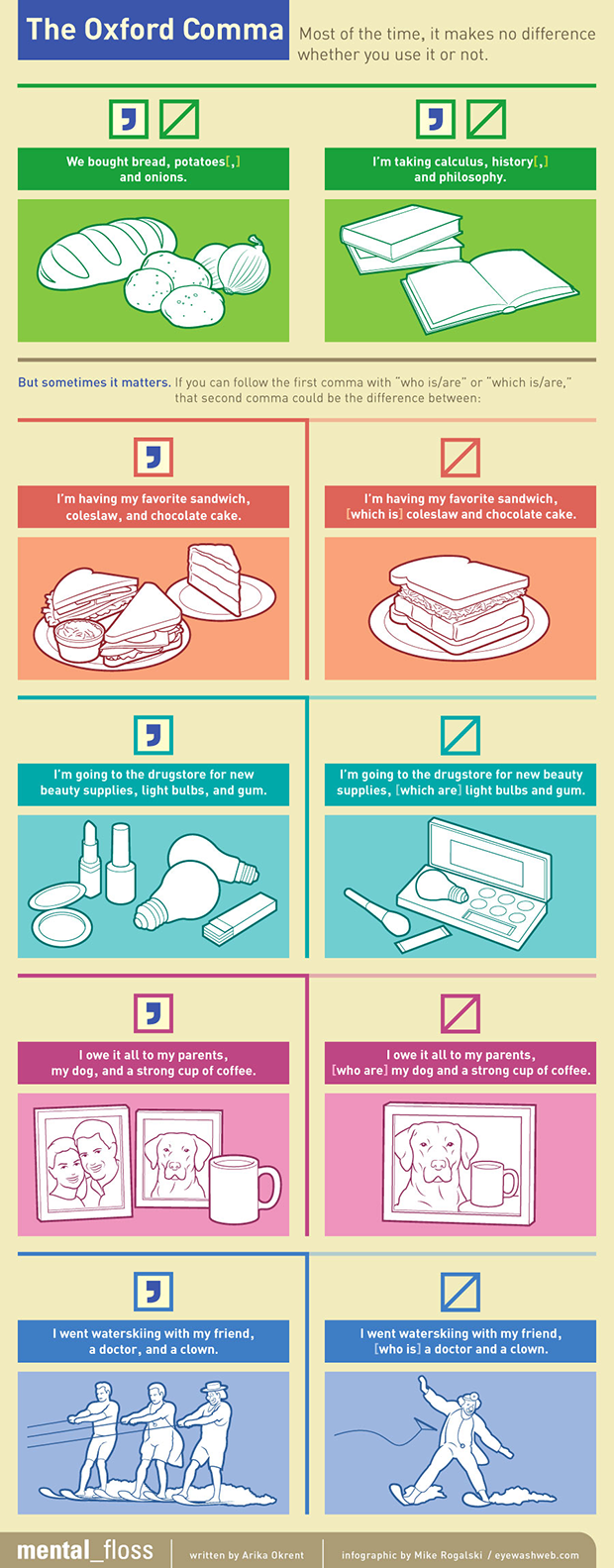
The “Oxford comma” is the one placed before an “and” in a list of three or more. It’s the subject of an embittered battle among grammar-lovers. You can make up your own mind. Sometimes it’s correct to use it; sometimes it’s more fun not to.

7

Posted at Mental Floss, made by Arika Okrent, who wrote a book about invented languages, and artist Mike Rogalski. Used with permission.

Lisa Wade, PhD is an Associate Professor at Tulane University. She is the author of American Hookup, a book about college sexual culture; a textbook about gender; and a forthcoming introductory text: Terrible Magnificent Sociology. You can follow her on Twitter and Instagram.

Flashback Friday.

The term “fetal alcohol syndrome” (FAS) refers to a group of problems that include mental retardation,  growth problems, abnormal facial features, and other birth defects.  The disorder affects children whose mothers drank large amounts of alcohol during pregnancy.

Right?

Well, not exactly.

It turns out that only about 5% of alcoholic women give birth to babies who are later diagnosed with FAS. This means that many mothers drink excessively, and many more drink somewhat (at least 16 percent of mothers drink during pregnancy), and yet many, many children born to these women show no diagnosable signs of FAS. Twin studies, further, have shown that sometimes one fraternal twin is diagnosed with FAS, but the other twin, who shared the same uterine environment, is fine.

So, drinking during pregnancy does not appear to be a sufficient cause of FAS, even if it is a necessary cause (by definition?). In her book, Conceiving Risk, Bearing Responsibility, sociologist and public health scholar Elizabeth M. Armstrong explains that FAS is not just related to alcohol intake, but is “highly correlated with smoking, poverty, malnutrition, high parity [i.e., having lots of children], and advanced maternal age” (p. 6). Further, there appears to be a genetic component. Some fetuses may be more vulnerable than others due to different ways that bodies breakdown ethanol, a characteristic that may be inherited. (This may also explain why one fraternal twin is affected, but not the other.)

To sum, drinking alcohol during pregnancy appears to contribute to FAS, but it by no means causes FAS.

And yet… almost all public health campaigns, whether sponsored by states, social movement organizations, public health institutes, or the associations of alcohol purveyors tell pregnant women not to drink alcohol during, before, or after pregnancy… at all… or else.

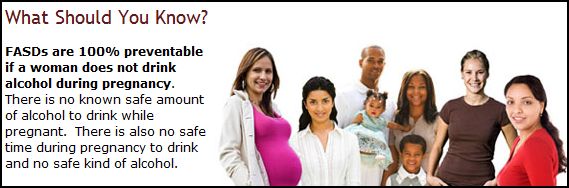
The Centers for Disease Control (U.S.):

The National Organization on Fetal Alcohol Syndrome:

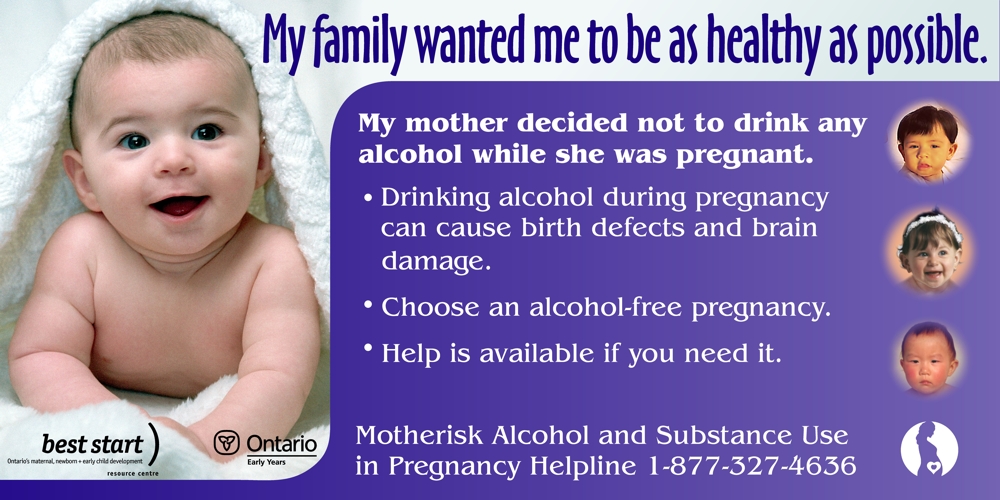
Best Start, Ontario’s Maternal Newborn and Early Child Development Resource Centre:

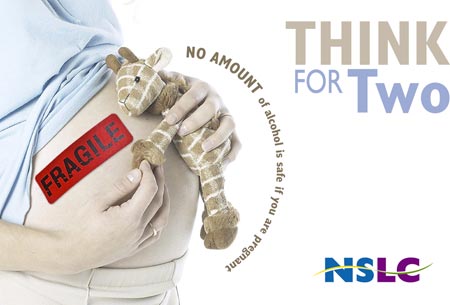
Nova Scotia Liquor Commission:

These campaigns all target women and explain to them that they should not drink any alcohol at all if they are trying to conceive, during pregnancy, during the period in which they are breastfeeding and, in some cases, if they are not trying to conceive but are using only somewhat effective birth control.

So, the strategy to reduce FAS is reduced to the targeting of women’s behavior.

But “women” do not cause FAS. Neither does alcohol. This strategy replaces addressing all of the other problems that correlate with the appearance of FAS — poverty, stress, and other kinds of social deprivation — in favor of policing women. FAS, in fact, is partly the result of individual behavior, partly the result of social inequality, and partly genetic, but our entire eradication strategy focuses on individual behavior. It places the blame and responsibility solely on women.

And, since women’s choices are not highly correlated with the appearance of FAS, the strategy fails. Very few women actually drink at the levels correlated with FAS. If we did not have a no-drinking-during-pregnancy campaign and pregnant women continued drinking at the rates at which they drank before being pregnant, we would not see a massive rise in FAS. Only the heaviest drinking women put their fetus at risk and they, unfortunately, are the least likely to respond to the no-drinking campaign (largely due to addiction).

Originally posted in 2010 and developed into a two-page essay for Contexts magazine.

Lisa Wade, PhD is an Associate Professor at Tulane University. She is the author of American Hookup, a book about college sexual culture; a textbook about gender; and a forthcoming introductory text: Terrible Magnificent Sociology. You can follow her on Twitter and Instagram.

On September 2, the photograph of 3-year-old Aylan Kurdi lying face down on a Turkish beach circulated internationally on social media. Amid discussions of whether or not it was ethical to post, tweet, and share such a heart-wrenching image, The New York Times rightly noted that the powerful image has spurred international public attention to a crisis that has been ongoing for years. As Anne Barnard and Karam Shoumali said:

“Once again, it is not the sheer size of the catastrophe—millions upon millions forced by war and desperation to leave their homes—but a single tragedy that has clarified the moment.”

The conflict in Syria has lasted almost five years now. With more than half the population forced to leave, the United Nations reported that the Syrian conflict now represents the largest displacement crisis in the world. Over 12 million people require some form of humanitarian assistance. And almost half of those displaced are children. Like Mohammed Bouazizi’s self-immolation that sparked Arab Spring (and, coincidentally, the current civil war in Syria), the image of Aylan, too, has the capacity to change the world. Bouazizi was not the first person to set himself alight in protest, just as Aylan was not the first child to wash ashore on Mediterranean beaches.

Indeed, those who have been following the refugee crisis over the past four years have viewed countless tragic images. But there is — for the moment, at least — something significant about this particular photograph. It could be because the image is deceptively peaceful, failing to reflect the violence that pushed his parents to flee or the family’s terrifying experience at sea that ultimately led to the deaths of Aylan, his brother Galip, and their mother Rehan. It may also be because of his clothing: red shirt, blue shorts, and Velcro sneakers. He could be anyone’s son, brother, nephew.

Aylan’s image has galvanized attention from around the world, especially the West. The public’s concern and outrage after the photo circulated on social media has already had a significant impact on the refugee crisis. This single tragedy has become the symbol of the refugee crisis in the Middle East. The image and subsequent public outcry has led to an increase in charitable donations, impacted election campaigns, and prompted the public to demand more of their governments, resulting in Western nations around the world pledging to increase the number of refugees they will take.

Although it is unfortunate that it takes something as tragic as the body of a boy lying alone on a beach to solidify public resolve, it is also an important reminder that we are, as Goffman suggested, “dangerous giants.” We have the capacity to enact change on a level that is difficult to imagine as an individual.

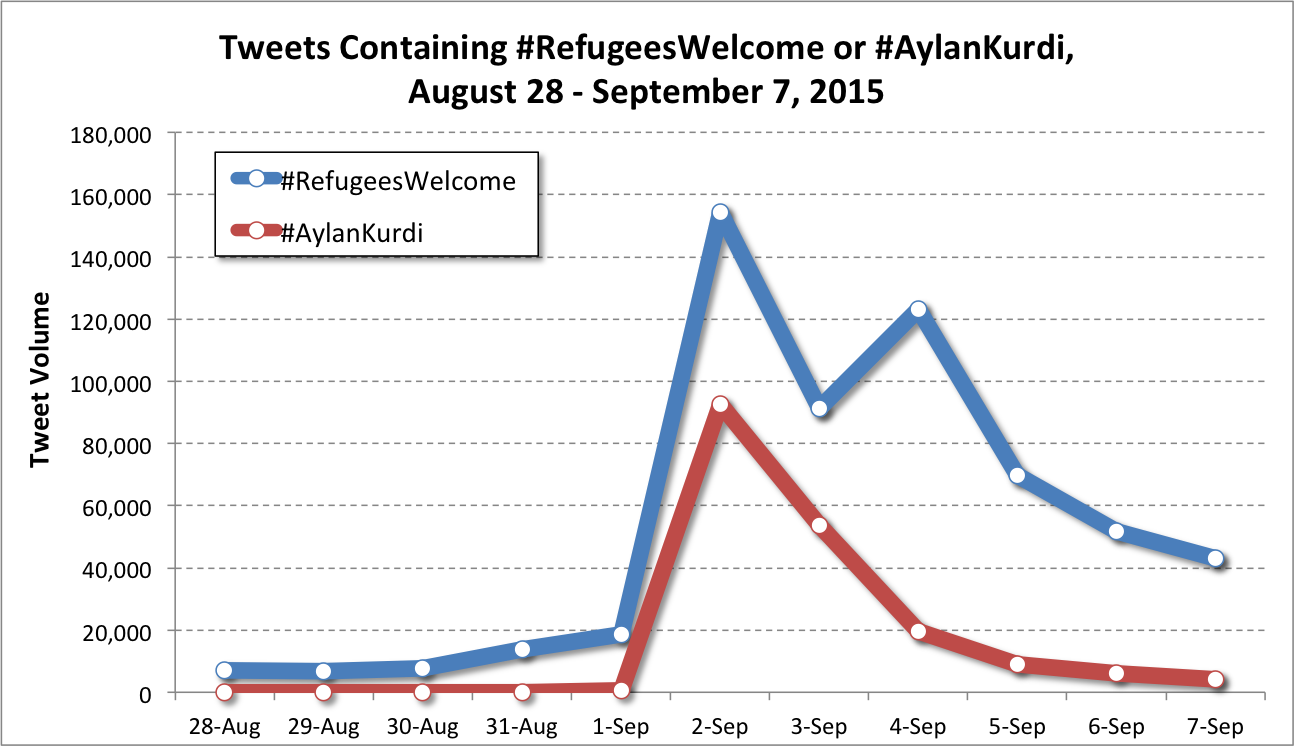
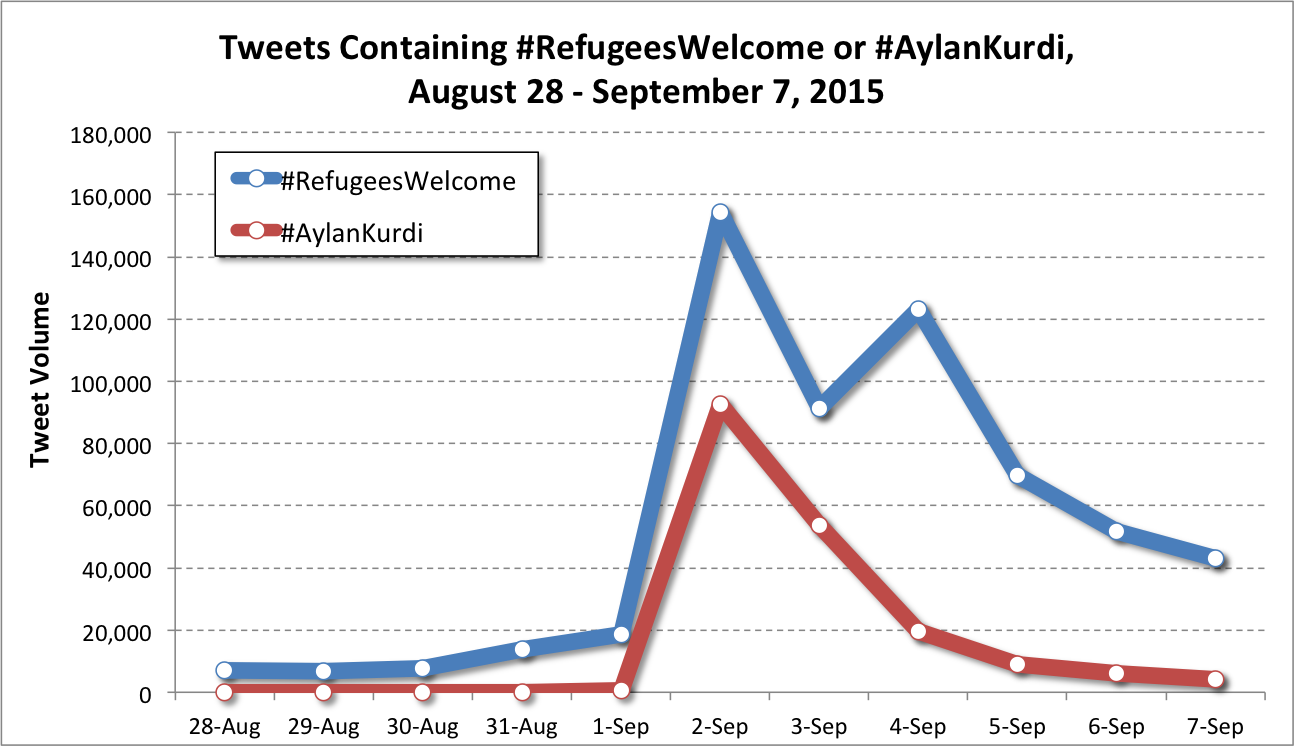
The graph below shows Twitter activity both before and after the photo of Aylan went viral. Tweet volume about Syria has more than doubled since the world was shown the image.  Tweets welcoming refugees from the region showed and even larger increase. And, although tweets with Aylan’s name appear to have been short-lived, perhaps the international attention they produced can be harnessed as people are forced to learn more about why this tragedy occurred and pledge support.

7
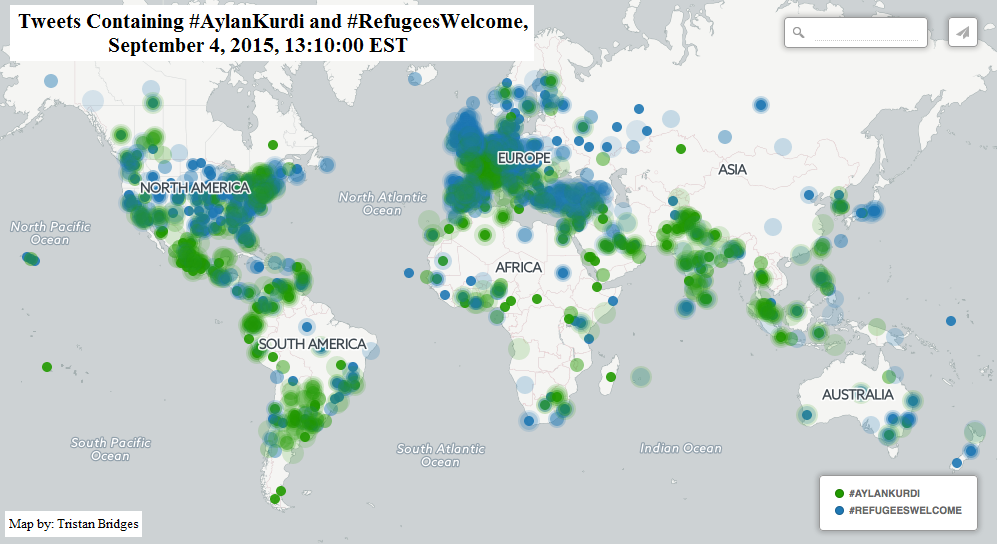
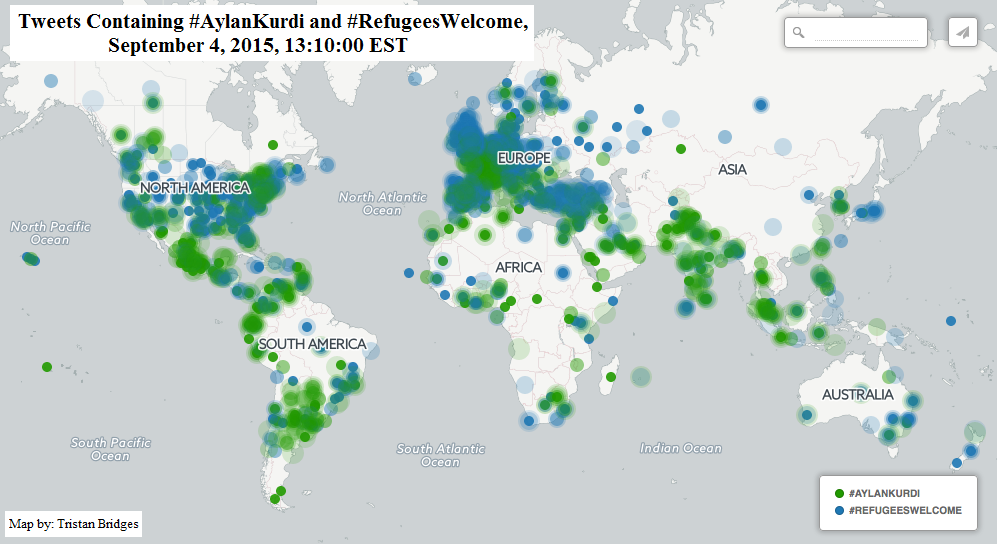
When we georeference and map tweets containing the hashtags #RefugeesWelcome and #AylanKurdi, we can also see how this unfolded around the world. Twitter is a crude measure of impact.  Yet, just as Barnard and Shoumali suggested, a single tragedy amidst a conflict that has led to the deaths of so many seems to have helped to capture the attention of the world. See the snapshot of Twitter activity around the world using the hashtags #AylanKurdi (green) and #RefugeesWelcome (blue) two days after the photograph went viral (below):

6
So, can an image of a child change the world? Typically, no. But, a powerful image under the right conditions might have an impact no one could have predicted.

Originally posted at Feminist Reflections.

Tara Leigh Tober and Tristan Bridges are sociologists at the College at Brockport (SUNY). You can follow them on at @tristanbphd and @tobertara.

Flashback Friday.

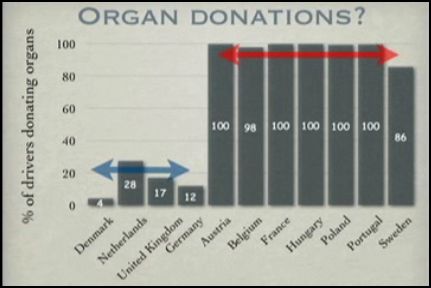
In the talk embedded below, psychologist and behavioral economist Dan Ariely asks the question: How many of our decisions are based on our own preferences and how many of them are based on how our options are constructed? His first example regards willingness to donate organs. The figure below shows that some countries in Europe are very generous with their organs and other countries not so much.

Capture1

A cultural explanation, Ariely argues, doesn’t make any sense because very similar cultures are on opposite sides: consider Sweden vs. Denmark, Germany vs. Austria, and the Netherlands vs. Belgium.

What makes the difference then? It’s the wording of the question. In the generous countries the question is worded so as to require one to check the box if one does NOT want to donate:

Capture3

In the less generous countries, it’s the opposite. The question is worded so as to require one to check the box if one does want to donate:

Capture2
Lesson: The way the option is presented to us heavily influences the likelihood that we will or will not do something as important as donating our organs.

For more, and more great examples, watch the whole video:

Originally posted in 2010.

Lisa Wade, PhD is an Associate Professor at Tulane University. She is the author of American Hookup, a book about college sexual culture; a textbook about gender; and a forthcoming introductory text: Terrible Magnificent Sociology. You can follow her on Twitter and Instagram.

In this 6 minute video, Col. Ty Seidule, head of the department of history at the U.S. Military Academy at West Point, takes on the claim that the Civil War was about something other than slavery. He begins:

Was the American Civil War fought because of slavery. More than 150 years later, this remains a controversial question. Why? Because many people don’t want to believe that the citizens of the southern states were willing to fight and die to preserve a morally repugnant institution. “There has to be another reason,” we are told. Well, there isn’t.

He goes on to use strong logic and documentation — speeches, secession documents, the Emancipation Proclamation, and more — to make a convincing case that the Civil War was about “slavery and just slavery.”  He finishes:

Slavery is the great shame of America’s history. No one denies that. But it’s to America’s everlasting credit that it fought the most devastating war in its history in order to abolish slavery. As a soldier, I am proud that the United States army — my army — defeated the confederates. In its finest hour, soldiers wearing this blue uniform, almost 200,000 of them former slaves themselves, destroyed chattel slavery; freed four million men, women, and children from human bondage; and saved the United States of America.

Wow.

Watch it all:

Lisa Wade, PhD is an Associate Professor at Tulane University. She is the author of American Hookup, a book about college sexual culture; a textbook about gender; and a forthcoming introductory text: Terrible Magnificent Sociology. You can follow her on Twitter and Instagram.