Search results for The

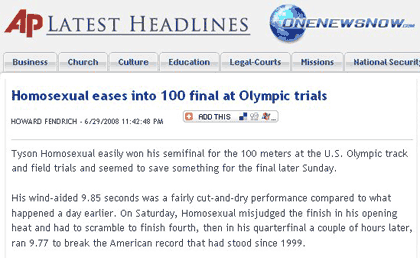
Since we’ve been on the topic of language (see yesterday’s George Carlin post), I thought I’d add something sent in by Z of It’s the Thought that Counts, who first read about it here. The conservative Christian organization American Family Association has a website called OneNewsNow where they post various news stories. Apparently the website has a filter to automatically replace the word “gay” in any news stories with the word “homosexual.” This became apparent when a news story about an athlete named Tyson Gay was posted with his last name changed to Homosexual in both the title and the text. Here is a screenshot (found here) of the original post from OneNewsNow:
The story has since been corrected. But as FriendlyAtheist points out, they have not corrected “Rudy Homosexual” in this sports story (thanks to Jon for the screenshot):
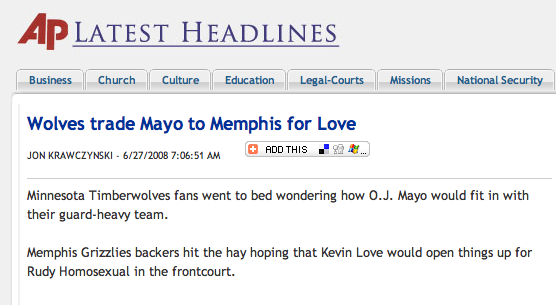
What is the symbolic power of saying “homosexual” instead of “gay”? What is the cultural difference between those two words? Is it an attempt to keep the focus on sexual activity? For some reason “homosexual” sounds more derogatory to me, but I’m not sure why–probably just because it’s used more by those opposed to gay rights, so I’ve come to associate it with an anti-gay ideology.

This might be interesting for a discussion of discourse and language in political movements generally, as well as conflicts around gay and lesbian issues specifically. Groups always try to frame issues to make their position sound more appealing, and a major way of doing this is through language. Think of debates about abortion–the differences between “pro-abortion” and “pro-choice” as well as “pro-life,” “anti-abortion,” and “anti-choice,” are symbolically meaningful, and different groups choose to use some of these terms rather than others in an effort to make themselves seem appealing and rational and the other side unappealing and radical. I suspect something similar is going on with “homosexual” vs. “gay.”

Thanks, Z!
UPDATE: In the comments to this section, Sanguinity made some great points about the differences between “gay” and “homosexual”:

“Homosexual” is the clinical term, and was used to pathologize gays and lesbians — it’s meant to invoke all that psychiatric-illness stuff. Also, the term focuses on sexual behavior, completely sidestepping romance, relationships, communities, cultures, and other sympathy-generating aspects of pershonhood. Additionally, by focusing on behavior above identity, it allows one to write entire articles with the implicit assumption that being gay is a choice: i.e., one isn’t gay, one chooses to engage in homosexual activities. That last item is especially important — while “gay” and “homosexual” may look like synonyms, they aren’t quite. “Gay” is a noun; “homosexual” is an adjective.

Thanks for the elaboration, Sanguinity!
Pro- and anti-natal policies are those that encourage and discourage childbearing respectively.  There’s an excellent article in the New York Times today about pro-natal efforts in Europe.  The population is falling there due to a low birth rate.

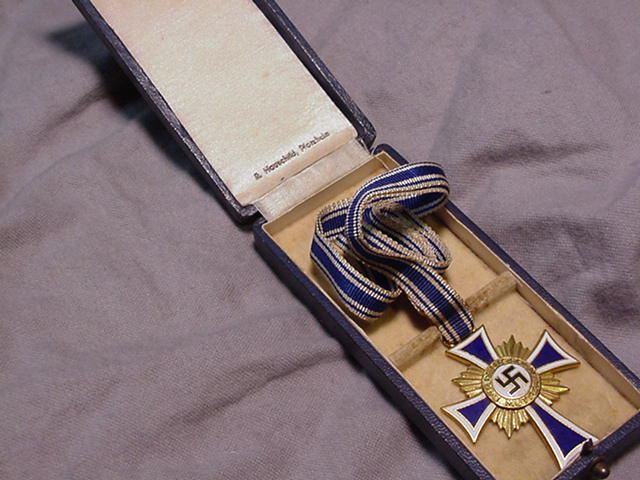
One of the things they mentioned in the article was the Third Reich “Mother’s Cross” (I found this one here).  Women who had four children were awarded a bronze medal, women who had six a silver, and women who had eight a gold. (This was a eugenic strategy, of course; an effort to increase the birthrate for pure, white people.) 

I think one of the most fascinating things about this medal is not so much the pro-natal, or even eugenic story, but the explicit linking of military service with motherhood.  There are plenty of good arguments to make that being a mother is a service to the nation just like military service.  After all, as is recognized in Europe, if women stop having babies, eventually there will be no nation at all.  Also, being a mother involves sacrificing yourself, taking time out of the labor force and, indeed, risking your life and health.  (Ann Crittenden makes this argument in The Price of Motherhood.)  Of course, in the U.S. we don’t value motherhood the way we value military service.   And, sigh, we are awarded no medals for bringing new human beings into existence.  We do, however, have pro-natalist policy.  The fact that we get a tax write-off for every child we have is a direct economic incentive to reproduce. 

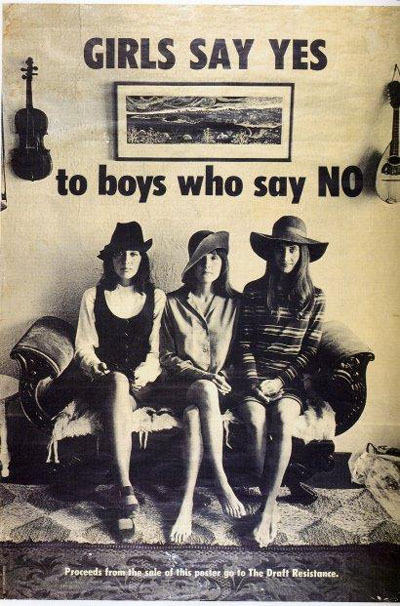
Vietnam-era anti-draft propaganda from The Draft Resistance offers girls to pacifist boys.

From Vintage Ads via Jezebel.

Class is usually a more subtle dimension of ads than race or gender.  I think, and I admit I am speculating here, that it is because there is a need to, usually, appeal to the masses while at the same time suggesting that the masses do or should have access to the most high-class things (which they do not).  Thus, the difference between being middle-class and upper-class is minimized at the same time that the symbolic attainment (only) of upper-class-ness is being sold to middle-class people.  There are exceptions, of course, such as when ads aimed at the upper-class sell product by suggesting that a middle-class person could never afford it.

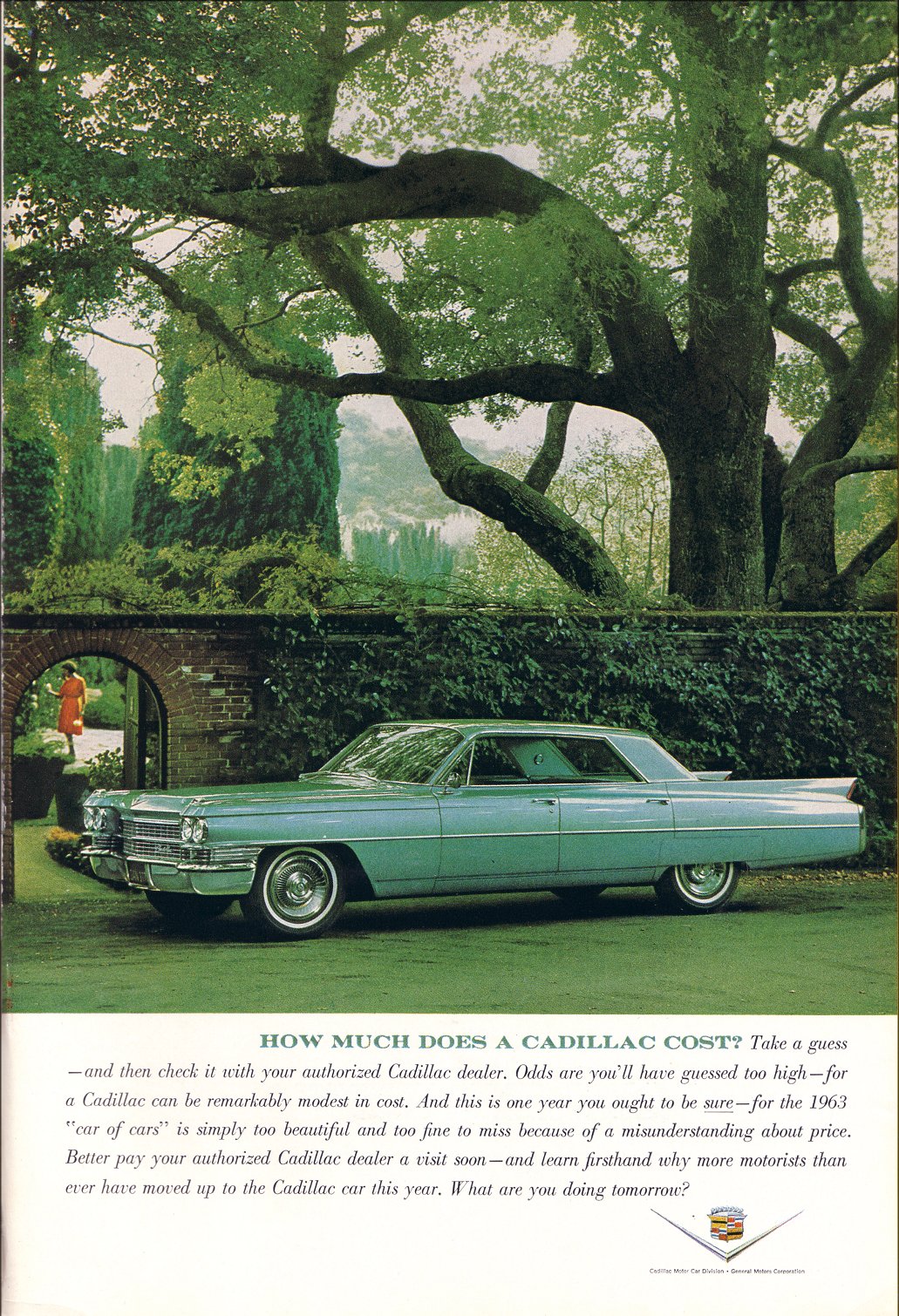
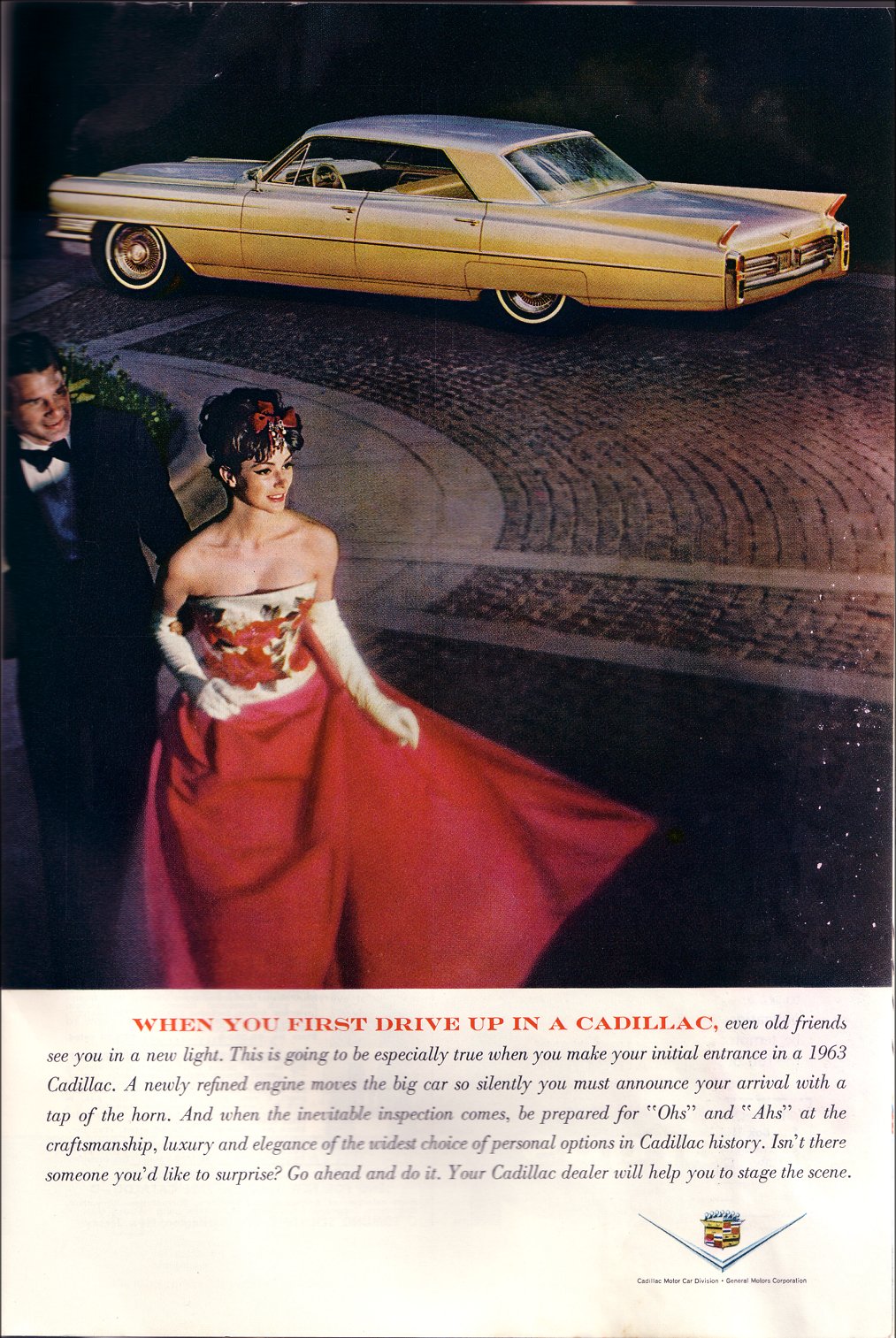
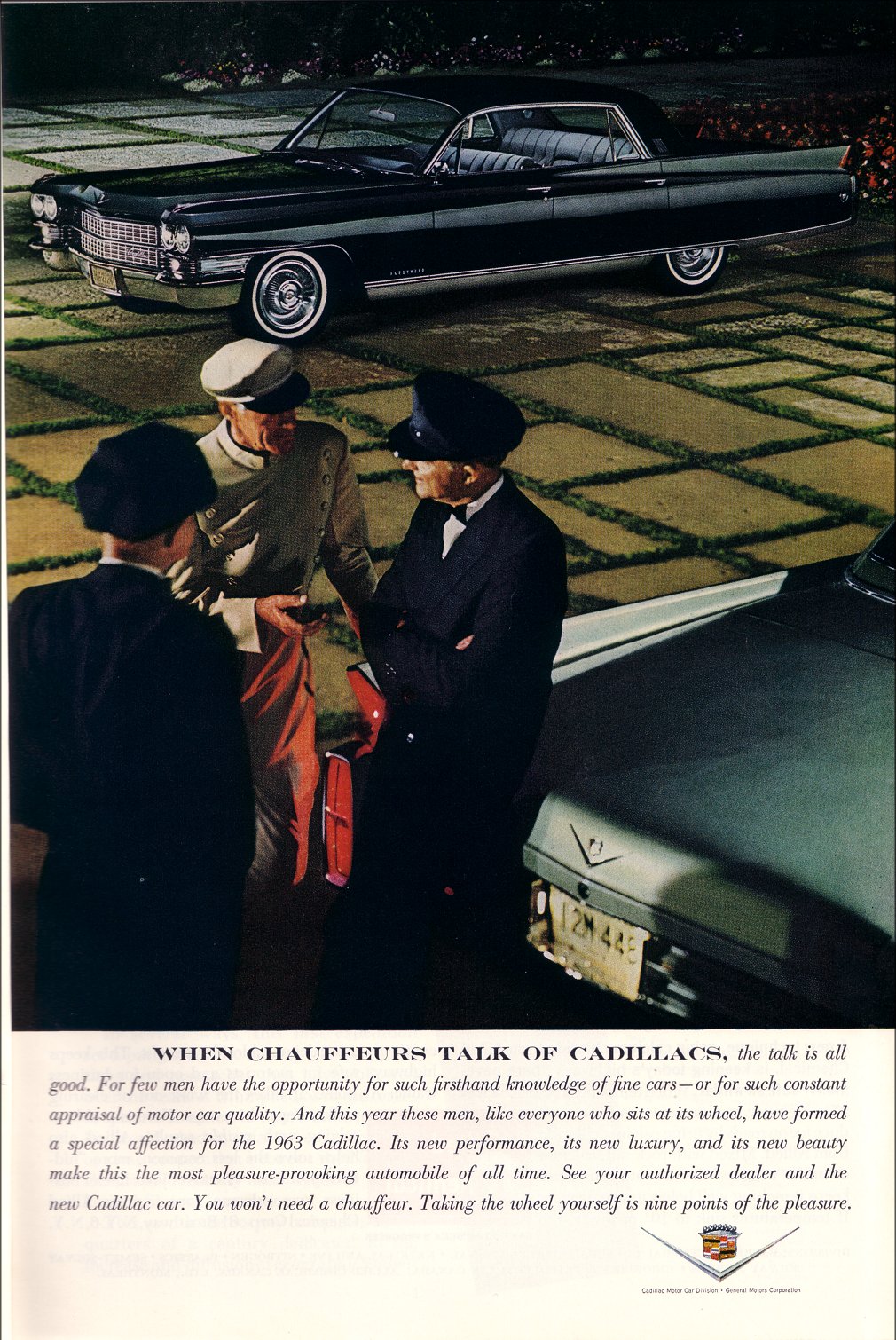
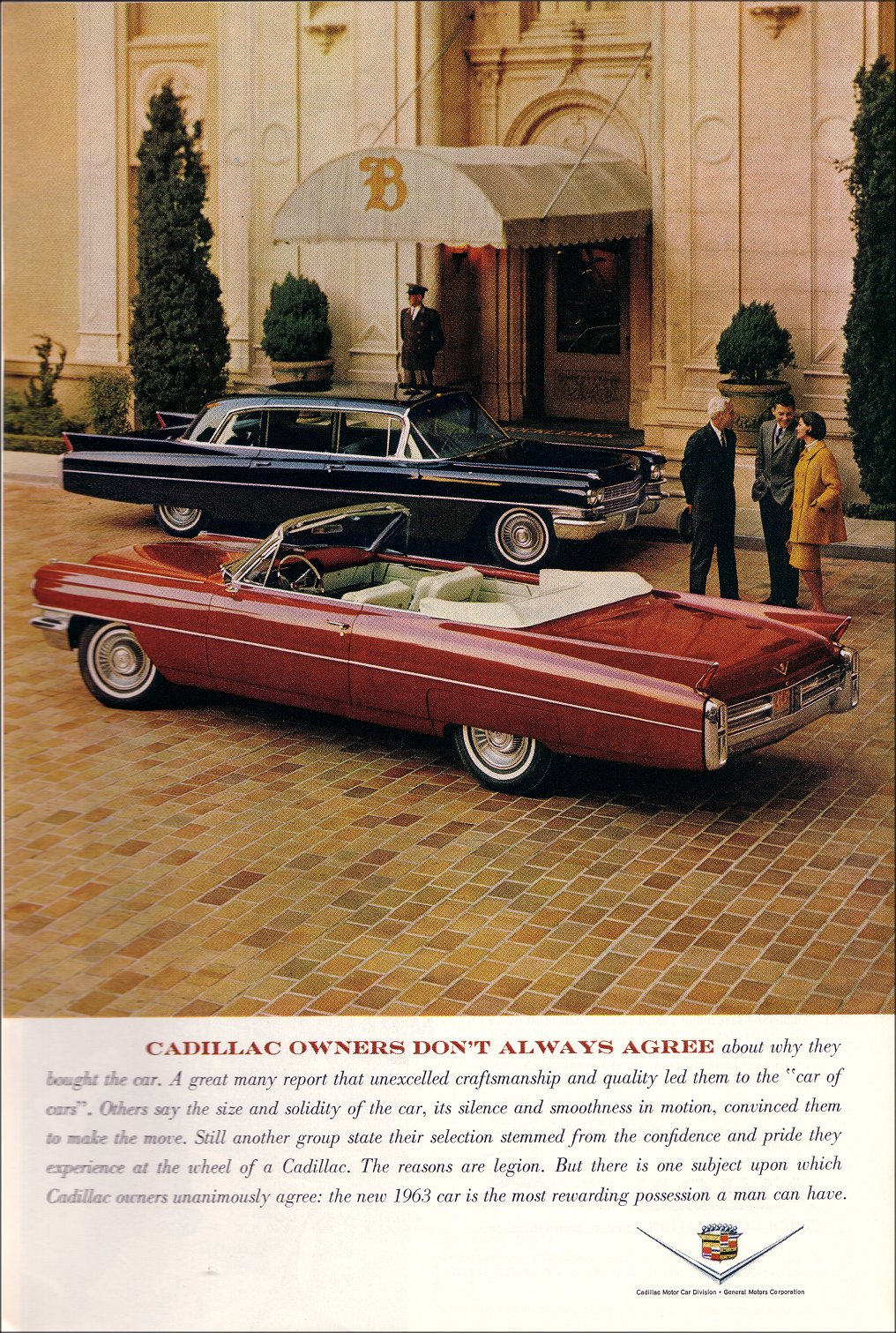
Anyway, these ads, found here, are from 1962 and 1963. I thought they were interesting because of the way they communicated wealth and luxury, mostly with location.

Notice the very old giant trees, ivy-covered ancient-looking stone, an archway, and hedges… all in what looks like a private residence.  The copy, which suggests that I’m right about “symbolic attainment,” begins:

How much does a Cadillac cost?  Take a guess–and then check with your authorized Cadillac dealer.  Odds are you’ll have guessed too high–for a Cadillac can be remarkably modest in cost.


There is a beautiful woman in the expensive-looking dress, of course, but also notice the cobble-stone circular driveway under her feet:


The chauffer communicates a certain degree of wealth, of course, but also the stone driveway decorated with greenery:

Cobblestones, again, and a very expensive New York City apartment building.  Copy includes the following comment:

“…the new 1983 car is the most rewarding possession a man can have.”

Thanks to Jason for the link!

More proof that complaining works or, as I prefer to say, the squeaky wheel gets the grease (you haven’t forgotten the Obama sock monkey and the sex target yet, have you?).  The commercial below was set to run in the U.K. for five weeks, but has been pulled due to complaints that a guy-on-guy smooch forces parents to talk to their children.

[youtube]https://www.youtube.com/watch?v=6sgNg_2eM38[/youtube]

Remember Ellen, though?  And look what happened to her!

Via AdFreak.

Lisa Wade, PhD is an Associate Professor at Tulane University. She is the author of American Hookup, a book about college sexual culture; a textbook about gender; and a forthcoming introductory text: Terrible Magnificent Sociology. You can follow her on Twitter and Instagram.

Captain Crab sent in this image (found here) of pubic hair dye:

Here is a link to the betty website. According to the site,

In less than one year, over 100,000 happy customers are using betty to naturally match their hair above, cover gray or just for fun! Whether you’re a blonde (be a true blonde now!), radiant auburn, rich brunette, raven black or want to try hot pink for fun, our easy to use no-drip formula gives you the perfect finishing touch.

These might be useful for a discussion of the ever-increasing standards for personal beauty: once upon a time, you just worried about gray hair on your head. And taking care of things “down there” meant obsessing over odor and controlling evidence of menstruation. Now women get genital plastic surgery and “vaginal rejuvenation” (those sites aren’t work-appropriate) as they age or after childbirth, shave or wax their pubic hair, and apparently can now dye their pubic hair to be sure it doesn’t show signs of aging (or just doesn’t match their hair)–although the betty website FAQ link does mention that men also use the product. I can’t help but suspect that the mainstreaming of porn and increased access (especially online) to images of women’s genitals is providing average women with a new body part to compare to other women and find lacking.

At least the pink seems like something you’d just do for fun, not out of a concern to hide signs of aging. Although maybe there are 50-year-old women out there running around with pink pubes. What do I know?

Thanks, Captain!

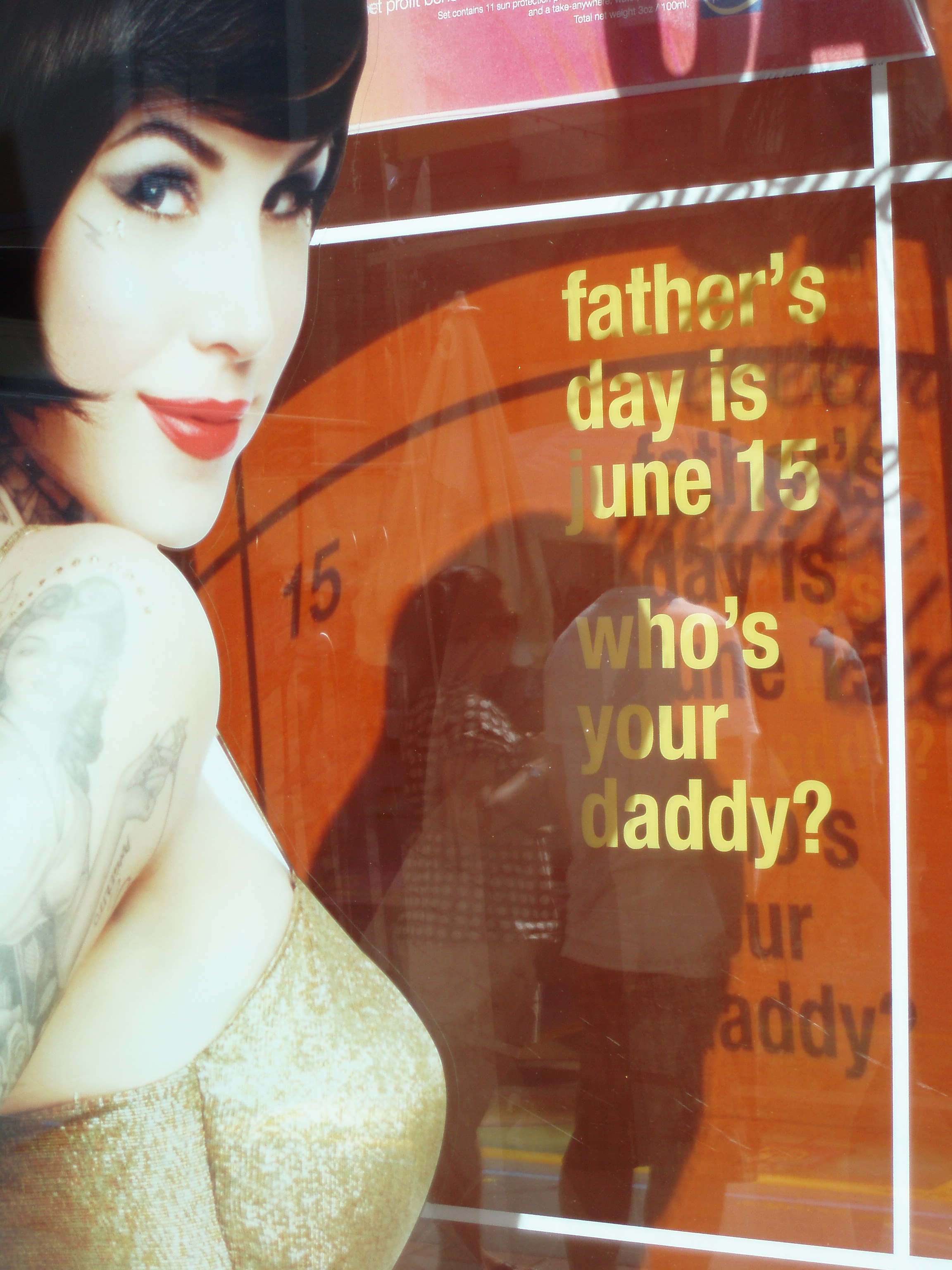
I took this photo on Father’s day. The images were on the window of a Sephora store (basically, a make-up store) in Pasadena, CA. The text says:

father’s day is June 15.
who’s your daddy?

I’m sure it’s supposed to mean “Who’s your babydaddy?”  But still… do we really need to go there?

—————————

Lisa Wade is a professor of sociology at Occidental College. You can follow her on Twitter and Facebook.

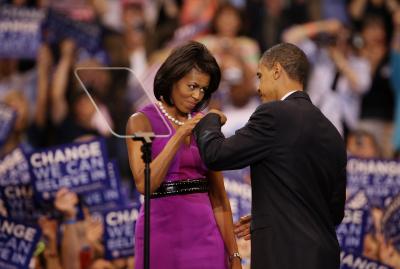
In case you haven’t seen the FOX News commentary in which the host suggests that a fist bump between Obama and his wife is a secret terrorist signal, you can see it here.  (And I thought this was bad.)

Here’s an image of the infamous terrorist signal:

evans-fistbump

NEW! It’s not an image, but Patrice Evans has an interesting essay on the “fist bump heard ’round the world,” arguing we should celebrate National Fist Bump Day.