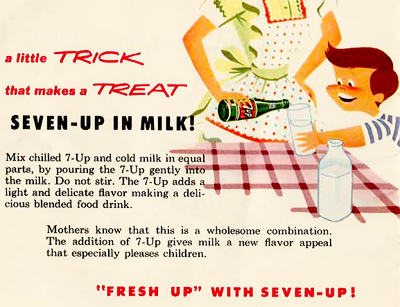
This vintage ad for 7-Up is a great illustration of how our ideas about what sounds tasty is culturally and historically contingent.

6a00d83451ccbc69e201157240a879970b

For other great examples, see these posts on soup for breakfast, spam, poop coffee, the rise and fall of aspic, and prunes (they’re for kids!).

From Found in Mom’s Basement.

—————————

Lisa Wade is a professor of sociology at Occidental College. You can follow her on Twitter and Facebook.

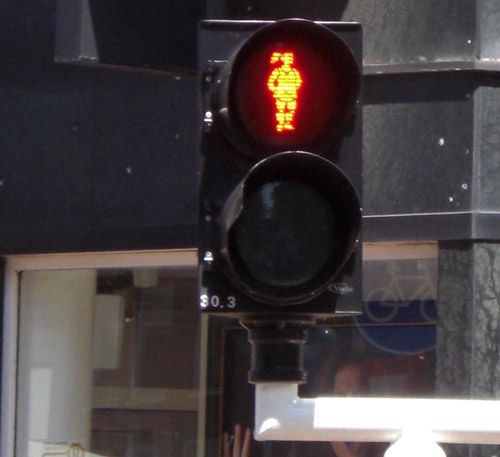
walking-woman-go

walking-woman-stop

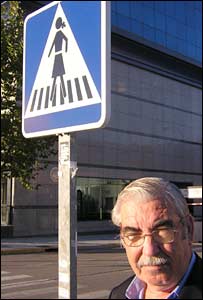
On this sign, woman = person… and in most places in the world, most of the time, that is weird!

The sign, found here (via), can be found in Haarlem, Netherlands.

UPDATE: In the comments, Tara linked to a BBC story about Fuenlabrada, Spain. They’ve replaced half of all walk/don’t walk signs with figures in skirts.

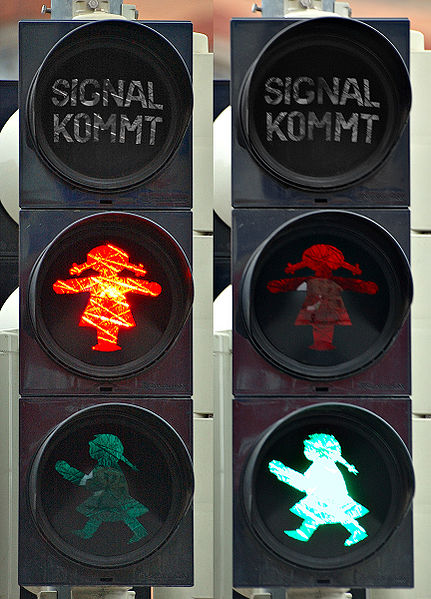
And Astrid linked to some examples from Germany.

The social construction of female as skirted aside, neat!

Spain:

_42384378_domingo300bo

Germany:

431px-Traffic_light_-_female_(aka)

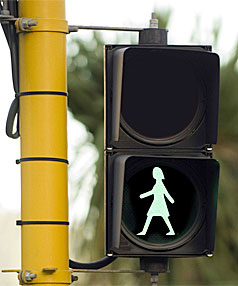
NEW! Pharmacopaeia also linked to a sign from New Zealand:

2825826

Also in the comments, Caroline asked us to link to our post where stick figures suddenly sprout skirts when paired with children.

—————————

Lisa Wade is a professor of sociology at Occidental College. You can follow her on Twitter and Facebook.

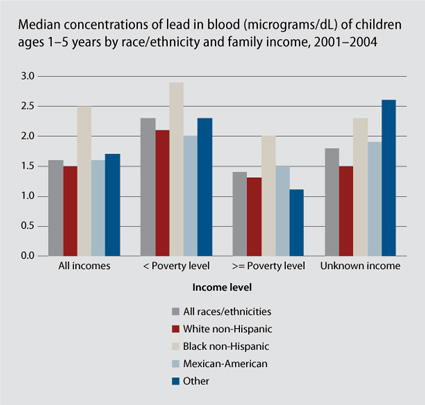
The figure below, borrowed from Matthew Yglesias, shows that poor children, especially poor black children, have higher concentration of lead in the blood than other middle class children.

reproductive_roulette-26

Lead poisoning is a serious problem, causing cognitive delay, hyperactivity, and antisocial behavior. If poor children do less well in school and on standardized tests, it may be, in part, because of the environmental toxins to which they are disproportionately exposed.

See also a previous post in which I argue that lead poisoning remained a mother’s problem until the China toy scandal put middle class children at risk, at which point the state stepped in to ensure children’s safety.

Also see this post on race and toxic release facilities.

—————————

Lisa Wade is a professor of sociology at Occidental College. You can follow her on Twitter and Facebook.

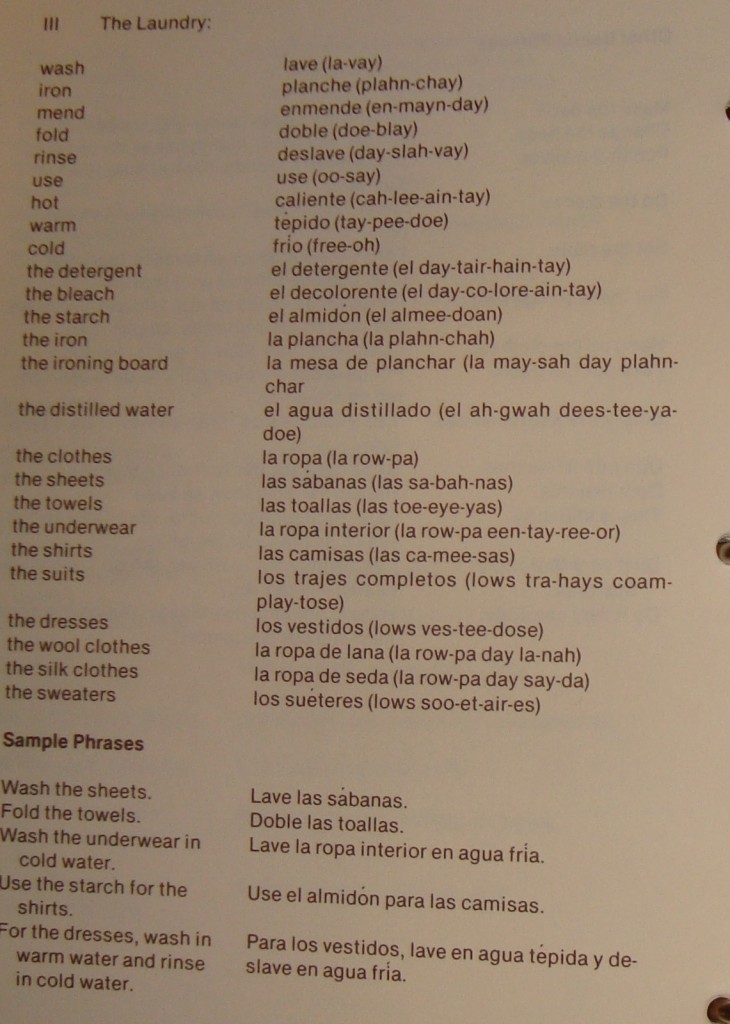
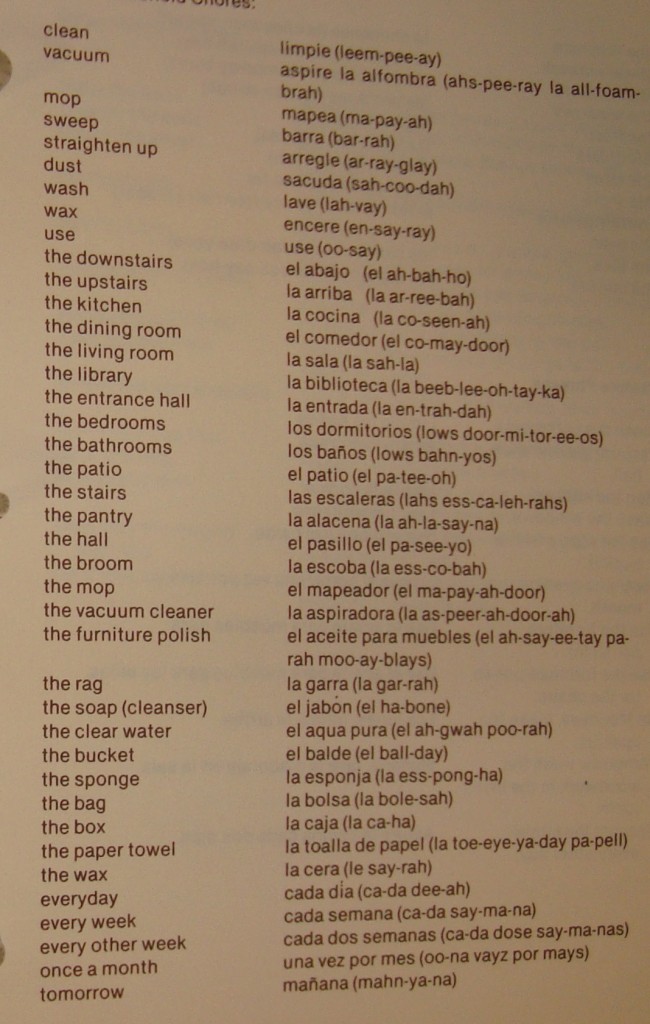
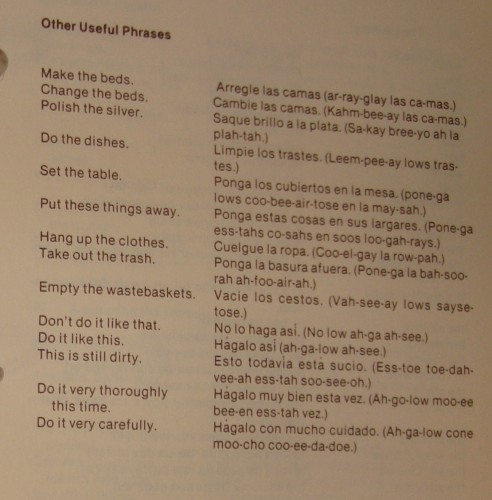
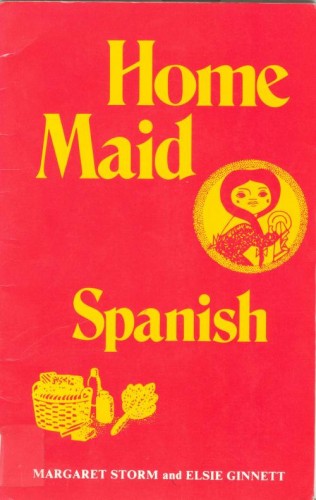
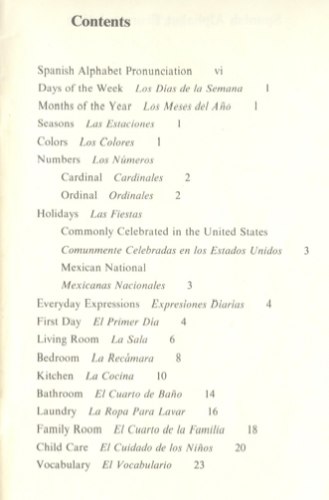
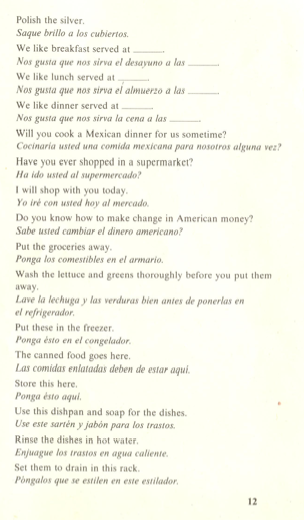
Mary M., of Cooking with the Junior League (go read it now! It’s awesome!) sent in photos she took of several pages from House Dressing, a cookbook published by the Windsor Square-Hancock Park Historical Society in 1978 (Hancock Park is a wealthy section of L.A.). The cookbook contains a section called “Kitchen Spanish,” which, as Mary says, “pretty much amounts to phrases you can use to boss around your help.” They are quite thorough, providing terms not just for cooking but for many other household tasks, and specific terms for wool vs. silk clothing. Here are images of a couple of the pages:

household spanish4

household spanish2

And here we have my favorites, “This is still dirty” and “Do it very thoroughly this time”:

household spanish3

And to think, when I first read the phrase “Kitchen Spanish” I assumed it was a geographically confused title for the Tex-Mex recipe section. Also, given that the pronunciation guides don’t include instructions on which syllable to emphasize, I can only imagine what kind of directions the employees actually received.

It made me think of the book Domestica: Immigrant Workers Cleaning and Caring in the Shadows of Affluence, by Pierrette Hondagneu-Sotelo. She discusses the tensions and conflicts that often arise between immigrant (largely Latina) housekeepers/nannies and their (mostly White and female) wealthy employers over how tasks should be done. Domestic workers generally expressed a wish to be told what to do, but not how to do it (and not watched while they worked), while employers felt they had to provide a lot of micromanagement if they wanted tasks done to their standards. Many instances where employees quit or employers fired them resulted from the conflict over this issue.

My guess would also be that many of the individuals contributing to and buying this cookbook would not be cooking anything from it themselves. The cookbook probably served as a form of symbolic domesticity for wealthy women to share recipes, while the women doing much of the actual cooking and cleaning in their households were present only implicitly as the recipients of the instructions on these pages. As Mary pointed out, something similar was probably true of all the “signature recipes” of First Ladies are often shown serving in photo ops–it seems likely that many of them had nothing to do with the preparation and may not have even supplied the recipe. Didn’t John McCain’s wife (I know, not a First Lady, but she was a hopeful) post a recipe on the campaign website that turned out to be taken from another cooking website?

NEW! (July ’10): Jason K. sent in another example, this one published in 1976:

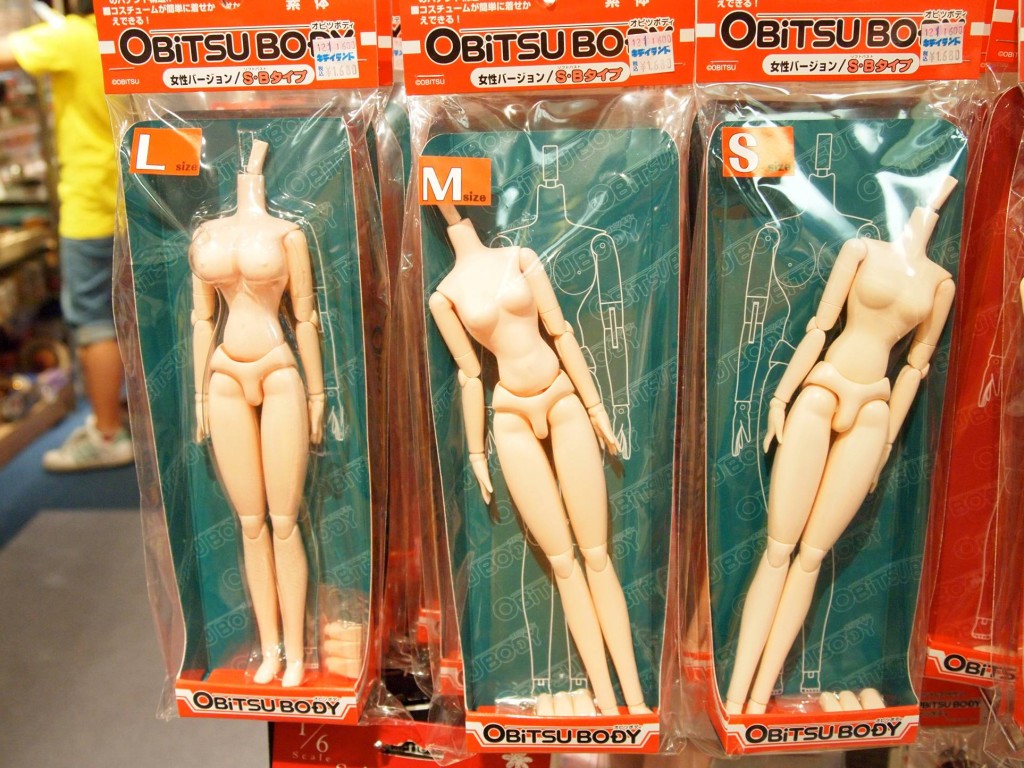
Our friend Jason S. is in Tokyo this week.  He reports that designing and assembling dolls is a popular hobby there.  The photograph he sent us shows that doll bodies come in three sizes: small, medium, and large.  Unfortunately that doesn’t suggest acceptance of a diversity of body types, nor does it allow for a just-my-size version, unless you’re talking only about boobs:

Picture1

By the way, Jason will be back from Tokyo in time to come to OUR PARTY ON SUNDAY (August 9th at 6pm at Johnny Foley’s Irish Housein San Francisco, CA)!  We hope you can come!

—————————

Lisa Wade is a professor of sociology at Occidental College. You can follow her on Twitter and Facebook.


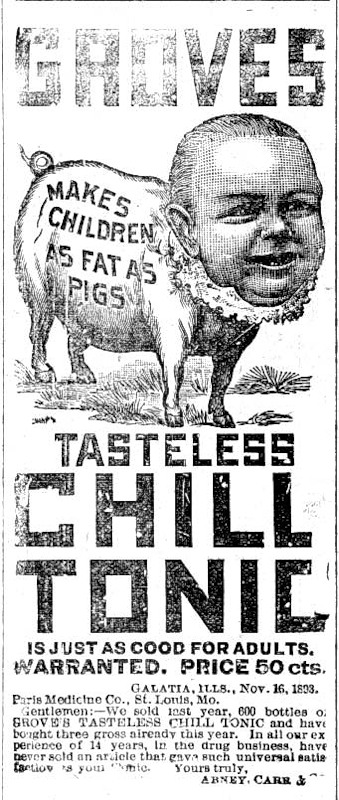
Ideal bodies vary across cultures and time.   In the U.S. today, childhood obesity is considered a significant social problem and is widely covered in the news, on talk shows, and the like.  When food was more scarce, however, having a fat child was a sign of health and well-being.  This ad, from 1898, is for a tonic that will fatten up your child.  How times change.

0_28f63_d77c6eef_XL

—————————

Lisa Wade is a professor of sociology at Occidental College. You can follow her on Twitter and Facebook.

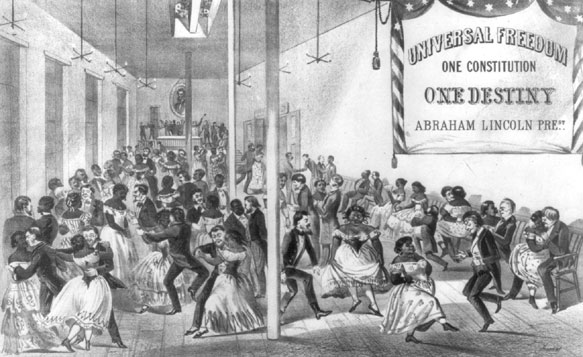
Carl G. sent in this cartoon, found at Abraham Lincoln’s Classroom, that ran during the 1864 Presidential election campaign and played on voters’ fears of racial mixing:
LC-USZ62-14828

The following text accompanied the cartoon:

The Miscegenation Ball at the Headquarters of the Lincoln Central Campaign Club, Corner of Broadway and Twenty Third Street New York Sept. 22d. 1864 being a perfect fac simile of the room &c. &c. (From the New York World Sept. 23d. 1864). No sooner were the formal proceedings and speeches hurried through with, than the room was cleared for a “negro ball,” which then and there took place! Some members of the “Central Lincoln Club” left the room before the mystical and circling rites of languishing glance and mazy dance commenced. But that Many remained is also true. This fact We Certify, “that on the floor during the progress of the ball were many of the accredited leaders of the Black Republican party, thus testifying their faith by works in the hall and headquarters of their political gathering. There were Republican Office-Holders, and prominent men of various degrees, and at least one Presidential Elector On The Republican Ticket.

I’m pretty sure that didn’t happen, so it’s good to see that outright lying in political campaigns isn’t new.

It’s interesting that all the couples feature White men and Black women. Usually opponents to abolition or desegretation depicted White women with Black men, sometimes voluntarily, other times showing Black men as sexually aggressive predators who threaten White women’s virtue.

And of course, while they weren’t generally having “Negro balls,” many White men at the time were sexually involved with Black women, often (though not always) women they owned as slaves and who had little ability to say no to, or do anything about, their sexual advances. So the real outrage here would be not so much that White men were having (often coercive) sex with Black women, but that Black women and White men would be couples, socializing openly and in a situation of “universal freedom” that would put Black women on a more equal footing relative to their White partners (or, anyway, closer to the level of equality White women had with White men, which was more than Black women had but clearly left a lot to be desired).

On another note, Carl points out that even though this is a cartoon meant to incite fears of racial mixing among Whites, the African American women are not drawn in a way that makes them look grotesque or monstrous like so many cartoons at the time did.

—————————

Lisa Wade is a professor of sociology at Occidental College. You can follow her on Twitter and Facebook.

Lisa Wade, PhD is an Associate Professor at Tulane University. She is the author of American Hookup, a book about college sexual culture; a textbook about gender; and a forthcoming introductory text: Terrible Magnificent Sociology. You can follow her on Twitter and Instagram.