Archive: 2008

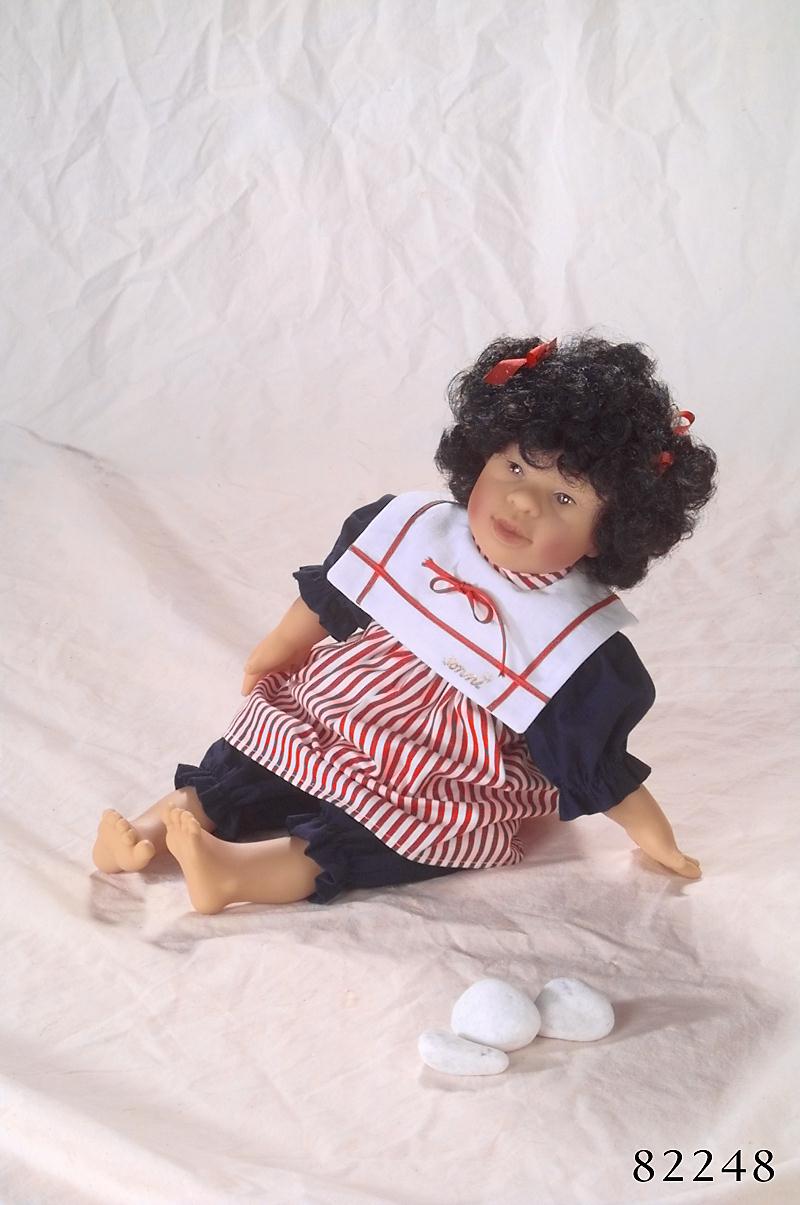
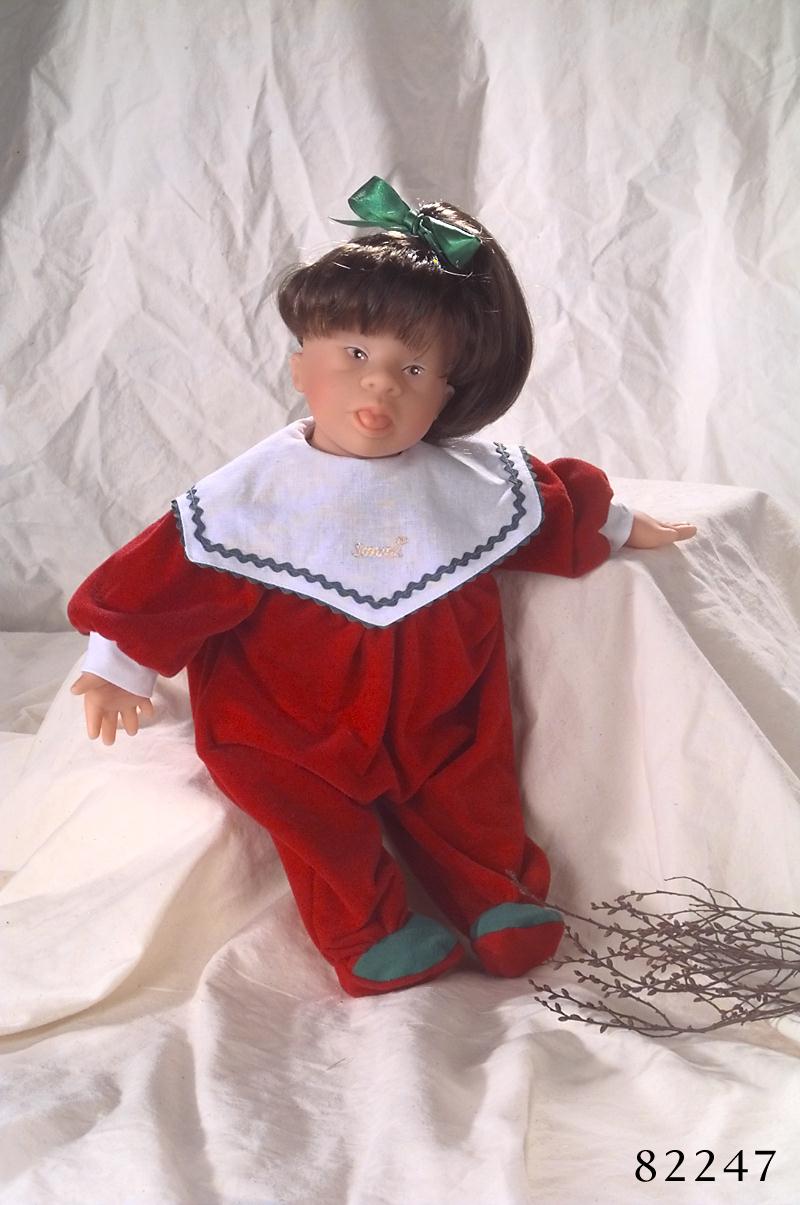
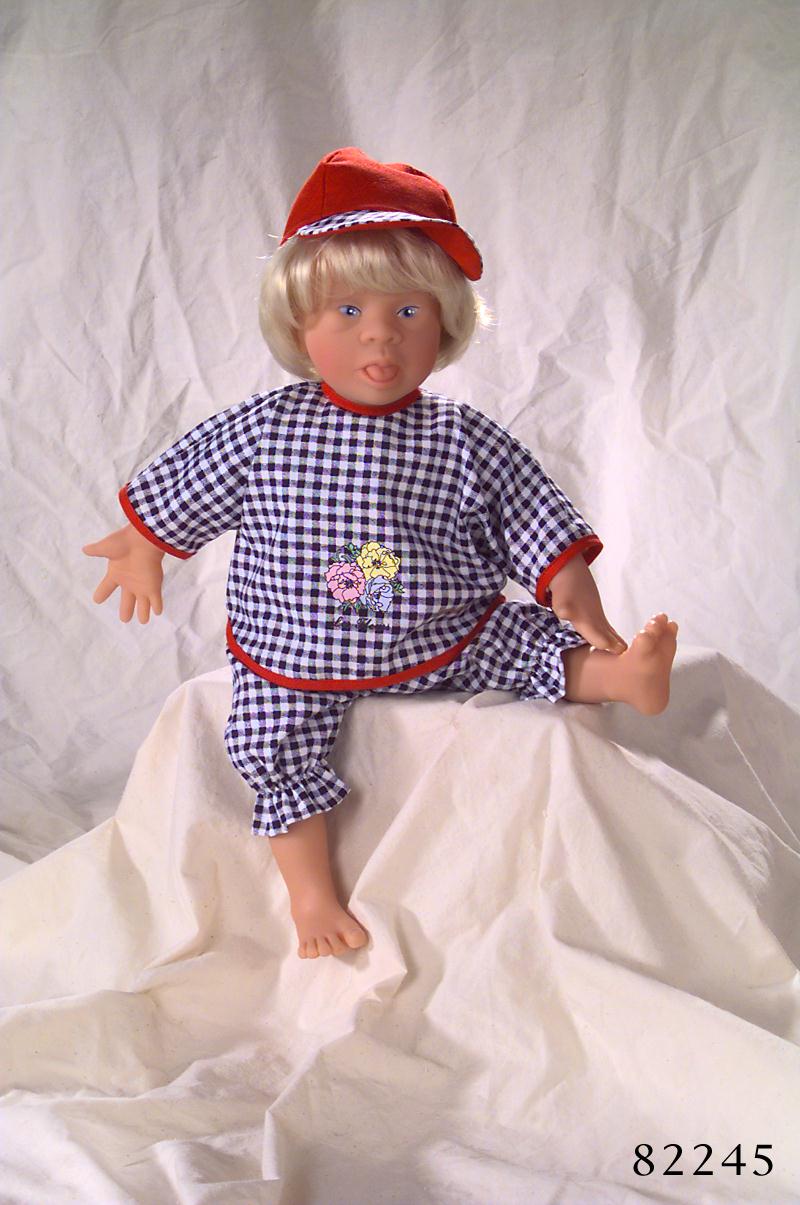
Elizabeth (from Blog of Stench) sent us a link to a story in The Times Online about “disability dolls,” such as these dolls that depict Down’s Syndrome:
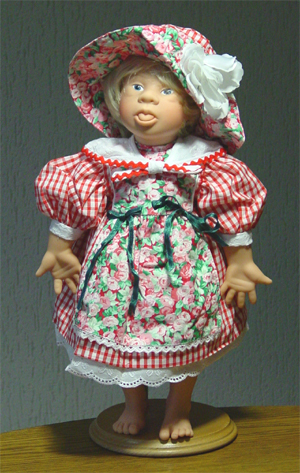
Here is a passage from the Times Online article:

Carol Boys, chief executive of the Down’s Syndrome Association in the UK, says: “Anything that helps to ‘normalise’ Down’s syndrome and promote inclusivity has to be a good thing. If the Down’s syndrome dolls give joy to those with the condition and their siblings, we fully support them. However, there is a range of products on the market of varying quality and accuracy, so we would advise people to purchase with care.” Boys adds that it is difficult to know with any certainty what Down’s children generally think of such toys: “We have no idea what they think of such dolls, because there has never been any research done to find out.”

However, some professionals have their reservations. Jenni Smith, a chartered educational psychologist in London, says: “I feel that children who have disabilities, including children with Down’s syndrome, tend to see themselves as ‘like everyone else’ and to offer a toy that ‘looks like them’ may only emphasise the difference.”

There are a lot of issues these images–and the article–might be useful for, most obviously depictions of people with disabilities and arguments about whether they “should” (or “want” to) be shown as “normal” (?). I thought it was fascinating that an opponent of the dolls used this analogy:

“In early research into race stereotypes, in which black children were asked to choose from three dolls – one black, one brown and one white – and say which doll they would be most like, almost all chose the white doll,” Smith says.

The use of that example to argue that kids like to associate themselves with “a positive, generally accepted image,” as she goes on to say, might not be all that comforting to a lot of people.

The other thing that hit me when reading the article is the way adults were discussing whether or not children with Down’s Syndrome would like the dolls…but (as Boys says in the quote above), apparently no one has bothered to just go out and ask some kids with Down’s Syndrome if they like the dolls or to watch and see if, given the option, they actually play with them. Wouldn’t that be more effective and respectful of the children under discussion? In general adults often discuss children as though they would be incapable of providing input or expressing desires, and I wouldn’t be surprised if this tendency is exacerbated when the children have a disability or are otherwise considered “extra sensitive.”

Gwen Sharp is an associate professor of sociology at Nevada State College. You can follow her on Twitter at @gwensharpnv.
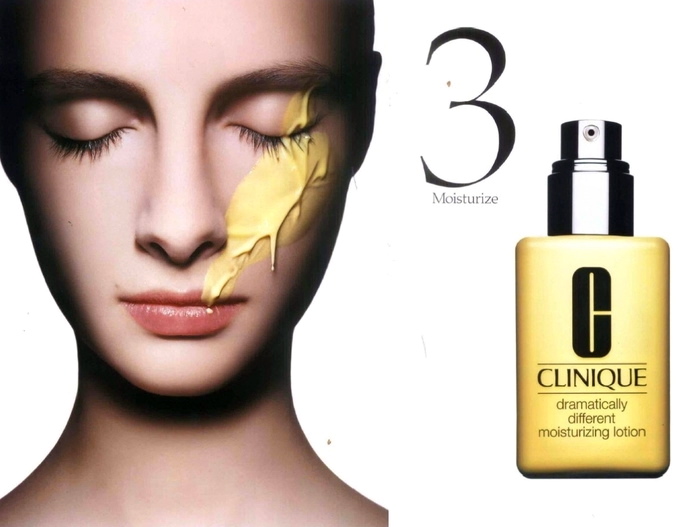
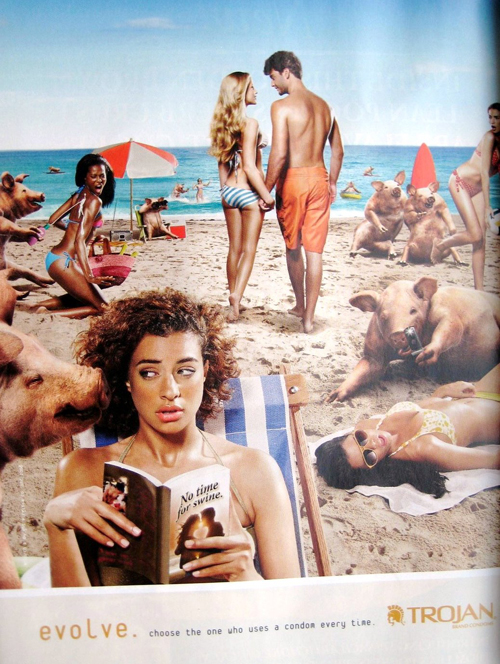
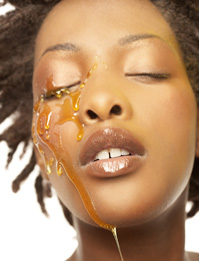
Joyous A. sent us a link to these Cosmo beauty tips, illustrated by this picture:

ere20perez

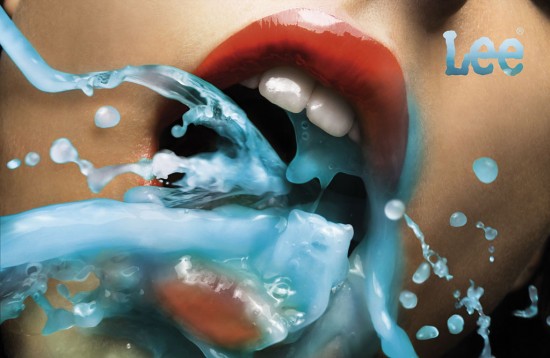
Jeff G. let us know about one of Troyt Coburn’s ads for Lee:

26_02_2009_0615334001235672434_troyt_coburn-550x358

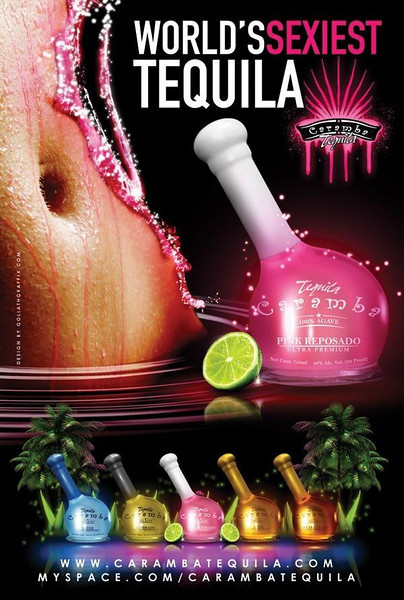
Glenn R. sent us a link to this Caramba Tequila ad (via):

454812352_B4ugQ-L

And Jay L. pointed out this Swiss commercial for Creme d’Or ice cream, in which a woman appears to give a statue oral sex:

The commercial was entered in the Cannes Lions Advertising Festival.

This ad 1976 ad for Perrier may seem boring for the first 15 seconds or so, but it’s worth the wait:

[youtube]https://www.youtube.com/watch?v=rRIRACUmTPE[/youtube]

This is an ad for a water gun called The Oozinator:

The images below are on The Ice Creamists website:

CaptureCapture1

Capture2

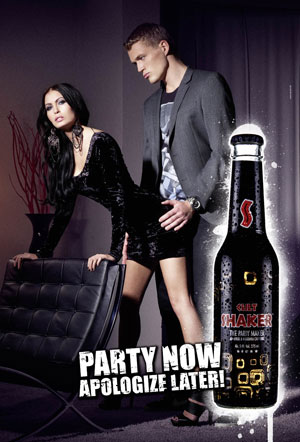
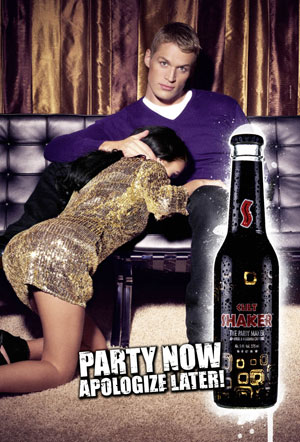
NEW (Jan ’10)! Helene V. sent in these two Danish ads for Cult.  In addition to potentially encouraging you to use alcohol to get sex, do you see the splooge halo around the bottles?

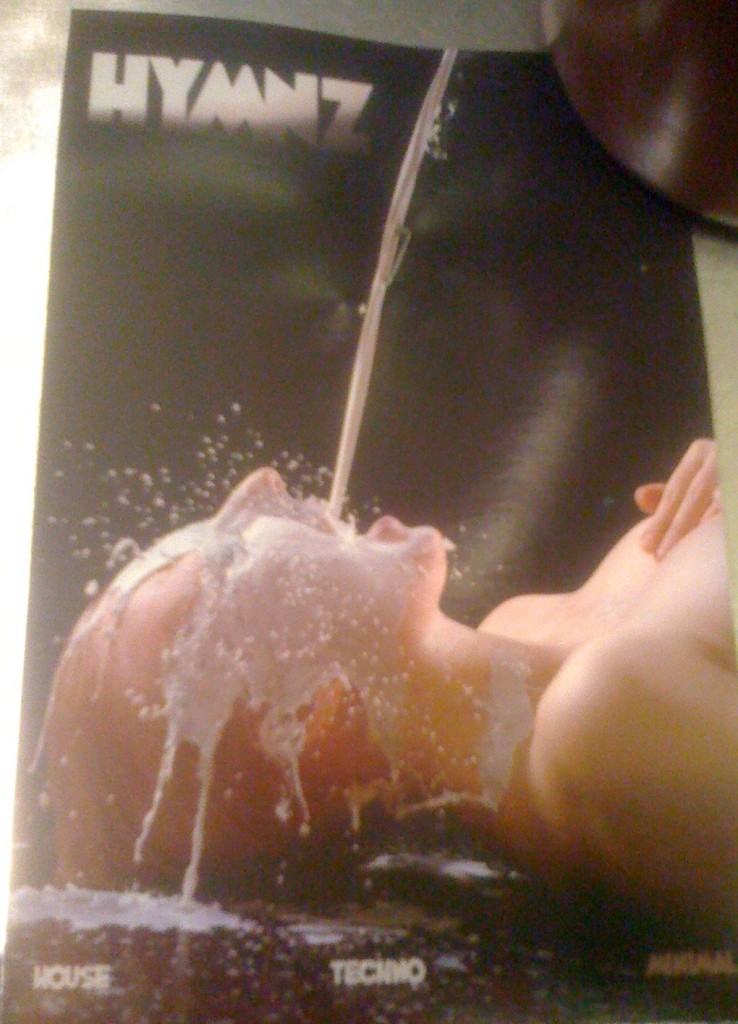
NEW (Mar. ’10)! Dmitriy T.M. sent in this flyer advertising a techno party:

ALSO NEW! (Mar. ’10): Kristyn G. sent us this commercial for an Australian internet company, which was pulled from the air after compaints (found at the Daily Telegraph):

See also Gwen Stefani, this Tudors ad, this creamer ad, and the Slates, Caesar’s Palace, and Campari ads from this post.

Images from Jezebel, Copyranter (here and here), Adfreak, and The F Word.

Lisa Wade, PhD is an Associate Professor at Tulane University. She is the author of American Hookup, a book about college sexual culture; a textbook about gender; and a forthcoming introductory text: Terrible Magnificent Sociology. You can follow her on Twitter and Instagram.

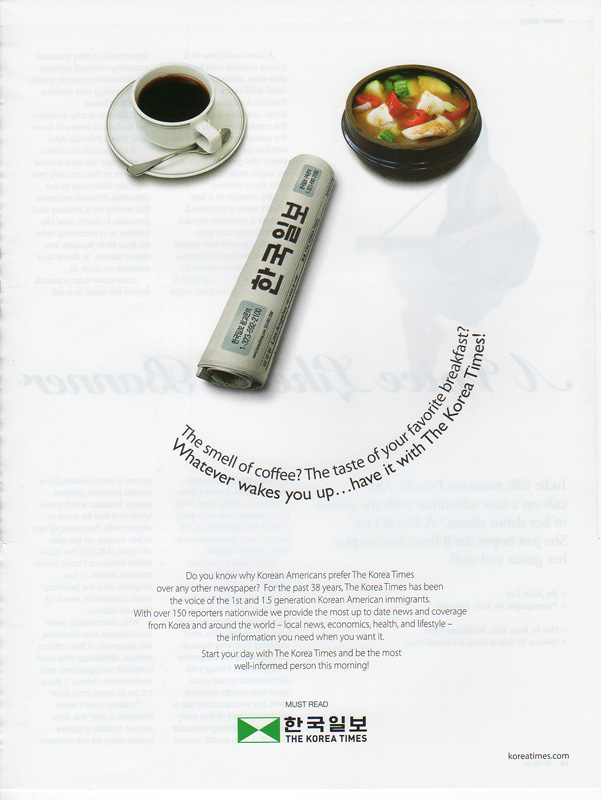
This Korean ad for a newspaper nicely illustrates the social constructedness of “breakfast” food. That is, that there is nothing inherently a.m. about eggs, bacon, or toast. But coffee, well that’s another story.

Text:

The smell of coffee? The taste of your favorite breakfast? Whatever wakes you up… have it with The Korea Times!

Found at MultiCultClassics.

Like many ads on this blog, this Australian commercial threatens men with a loss of masculinity if they don’t obey the rules. But this time, instead of punishing men if they are not stereotypically masculine (i.e, men should not know about ballet, hug or sit improperly, drink the wrong drink, go to the bathroom together, smell like flowers, or eat tofu), this ad punishes men when they are stereotypically masculine.  But, at the same time that the ad attempts to redefine masculinity, it maintains the stringency of the rules and the consequences of breaking them.  (Also see here for a postsecret about the pressures of following masculinity rules.)


Thanks to Alicia T. for the submission!

I recently came upon these two ads in magazines and noticed how they both evoke old-money wealth and luxury.

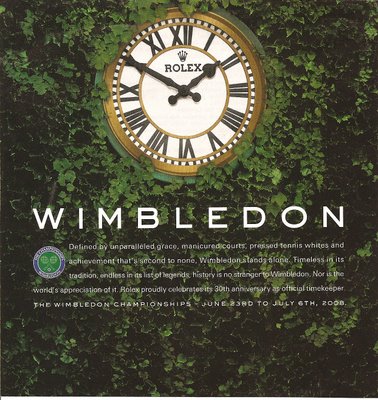
I found this Rolex ad in The New Yorker. Notice the ivy-colored background and the connection to Wimbledon, an event (for a sport) often associated with the upper class.

The text says,

Defined by unparalleled grace, manicured courts, pressed tennis whites and achievement that’s second to none, Wimbledon stands alone. Timeless in its tradition, endless in its list of legends, history is no stranger to Wimbledon. Nor is the world’s appreciation of it. Rolex proudly celebrates its 30th anniversary as official timekeeper.

“Manicured courts” and “pressed tennis whites” bring up images of aristocratic lifestyles, and the ad connects Wimbledon (and, therefore, Rolex) to “tradition” and “history.”

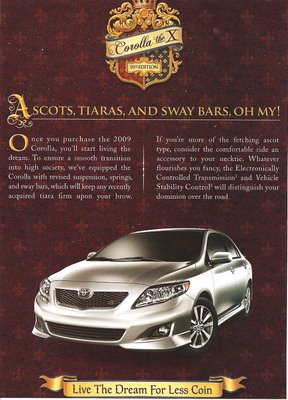
I can’t remember for sure where I found this ad for the Toyota Corolla, but I think in Glamour (don’t ask).

The text, which is clearly to be taken less seriously than the Rolex ad:

Ascots, tiaras, and sway bars, oh my! Once you purchase the 2009 Corolla, you’ll start living the dream. To ensure a smooth transition into high society, we’ve equipped the Corolla with revised suspension, springs, and sway bars, which will keep any recently acquired tiara firm upon your brow. If you’re more of the fetching ascot type, consider the comfortable ride an accessory to your necktie. Whatever flourishes you fancy, the Electronically Controlled Transmission and Vehicle Stability Control will distinguish your dominion over the road. Live the dream for less coin.

I thought it was interesting that the second ad (for a car not generally associated with the upper class) is trying to evoke the idea of luxury, but in a joking wink-wink way, whereas the Rolex ad clearly has no element of parody about it–the connection to “tradition” and “pressed tennis whites” is completely serious.

Ed L. sent us this British ad for McCoys crisps (chips, here in the U.S.), which reinforces gender boundaries. Not only are men not supposed to like (or perform) ballet, but even knowing a small fact about it makes a man so unmasculine that he’s no longer worthy to hang out with other men. Also, at the end we learn they’re “Man Crisps.”


Thanks, Ed!

Also, Rick T. and Penny R. sent in this Snickers ad, which features Mr. T mocking and shooting at an effeminate male speedwalker:

[youtube]https://www.youtube.com/watch?v=OkT_d2OTgv0[/youtube]

According to Mr. T, the speedwalker is “a disgrace to the man race” and “it’s time to run like a real man.” After having Snickers shot at him, the speedwalker does, indeed, run. And then the tagline: “Snickers: Get Some Nuts.”

The A.V. Club reports that the ad was pulled from the air in Britain after complaints that it was homophobic. The A.V. Club article has three other Snickers commercials starring Mr. T, including this one:

Here we learn that “It’s time to teach you fools some basic man rules,” which consist of the following:

Men like sports, girls in cars.
Men don’t go to fancy cocktail bars.
Real men have fun when they out.
They don’t go to wine bars to pose and pout.
So fools, you better change,
or you face is somethin’ I’ll rearrange.

Apparently real men do like poetry, anyway.

This would be good for a discussion of gender and the policing of masculinity, as well as the way that men who cross those boundaries–or even stray near them–risk ridicule or even outright abuse (if they’re lucky, Mr. T might advocate just pitying them, not actually rearranging their faces). It’s also useful for a discussion of what type of man is defined as a “real” man–apparently only men who like sports and girls, don’t drink wine, and know better than to pose. While this clearly excludes gay men, it also excludes many straight men. There’s a certain class element here–presumably “real” men drink beer, not wine, a drink generally more popular among those with higher incomes. All those men–gays, wine-drinkers, and pouters–just need to get some freakin’ nuts.

Thanks, Rick and Penny, for sending it along!

Gwen Sharp is an associate professor of sociology at Nevada State College. You can follow her on Twitter at @gwensharpnv.
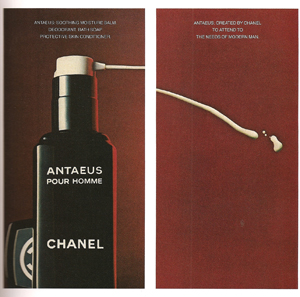
Remember when FOX News first got all entertain-y and we were all horrified by how unprofessional it was and then, next thing we knew, even CNN was all entertain-y and it was the beginning of the end?

Well, apparently, like all news went the way of FOX, all men’s hygiene product companies are going the way of Axe. Consider this Edge commercial (and compare it to the first Axe commercial in this post):

Also, those cans are mighty phallic.

Latisha J. let us know about this Special K ad that sexualized dieting (which she read about at Lip-Sticking). The woman (who looks perfectly thin to me), figures out she needs to diet when a button pops off her dress. After she eats the Special K, which we learn can help women lose weight, we see another button pop off, but this time it’s because she’s intentionally revealing more cleavage:

So…popping button because she “needs” to diet = bad, but same woman popping button because she’s trying to look sexy = awesome.

Thanks, Latisha!