
Looking for a way to make a good use of AI in teaching and learning? This paper on “Seeing with Machines: A Reflexive Ethnography of AI Systems in Everyday Life” could help you. Resource from ASA Trails!
Teaching about violence has pedagogical value in Intro class but it needs to be done with care! Check out what Hatton, Upadhyay, and Williams suggest about the use of violence contents in 22 popular introductory sociology textbooks.
I was tasked with acting as a guest lecturer for a Sociology of Gender course on the topic of BDSM and kink. I had 90 minutes to lecture. Prior to beginning the lecture, I went out and brought three boxes of pizza. The lecture took place in a classroom that I had taken dozens of other social work courses in. It felt like the natural place for me to examine and explore difficult topics I had taken Sociology of Gender as an undergraduate with this professor. The professor sat in the front and left me full control of this guest lecture. Attendance was optional, which meant every student had already consented to be there. I told them that we would begin the way any ethical scene begins. We would start with consent, set boundaries, and move forward together.
During the first ten minutes of the lecture, I set the ground rules. I explained to the students that this lecture was about the exploration of history and culture. This was not a place to discuss personal stories and individual experiences. I explained that we would avoid sexual detail and focus on power, stigma, and consent. If anyone felt uncomfortable, they could speak up, pause the discussion, or leave without explanation. My goal for this lecture was for students to understand that taboo topics can be navigated with ethical care and examined from an intellectual standpoint. In order for me to responsibly teach about these stigmatized topics, I needed to treat consent as a practice rather than a slogan.
For the first forty-five minutes, I taught about consent. Not in the abstract and not as a compliance form. I framed consent as negotiation, a social process with history and language. I reminded them that this was not a human sexuality course. It was about how people organize power and stigma. Once we had that foundation, we could place kink and BDSM in their proper context.
History came next. I traced the emergence of leather culture in queer communities pushed to the margins of public life during the twentieth century. Bars and back rooms became places where people created rules for power and intimacy. Students were struck by how much of this history was about community governance. I discussed how members of the LGBTQIA+ were often relegated to dark and seedy places. I explained that many of the spaces, including the Stonewall Inn were controlled by organized crime, as police could not be trusted.
People formed organizations and archives while debating questions of ethics and responsibility. I emphasized the lesbian leather scene and the role of groups like Samois, which brought feminism and kink into public conversation. These were both civic projects and contested experiments.
The students engaged with curiosity and caution. Some asked thoughtful questions about history and culture. A few asked questions that crossed into sexual detail, and I said that those were outside our scope. Creating and enforcing this boundary became a lesson in itself. This provided a framework that was always intellectual rather than voyeuristic.
At the time I was finishing my master’s program in social work and working at a gender and sexuality center as a graduate assistant. I had studied leather culture in depth and had spoken about it in an earlier interview for this same class. The professor likely invited me to lecture because I combined that knowledge with training in clinical social work. My diagnostics course (a class on how social workers use structured assessment tools and diagnostic frameworks like the DSM to understand client problems) had shaped how I thought about anxiety and anticipatory fear. If I taught this material in a sensational way, I would shut students down. If I used sterile language and predictable structure, I would lower arousal and invite reflection. So I chose sterile and predictable. That decision was not about sanitizing kink. It was about respecting students’ nervous systems.
One of the richest exchanges came during our discussion of lesbian contributions to kink culture. Students often hear leather history through a narrow male lens. Tracing lesbian debates about feminism, care, and community complicated the narrative. It also showed how the politics of naming and belonging are never neutral. Who counts as a member, what counts as harm, and which risks are acknowledged are all social questions. These questions remain central to sociology, regardless of the subculture in view.
I see this lecture as public sociology in action. Public sociology is not a slogan. It is a practice of engaging people in real problems, using language that is accessible, and building capacity beyond the campus. Teaching BDSM and kink through consent and history treats students as capable civic actors. It invites them to examine how communities make rules, store memory, and confront stigma. It also models how to address taboo topics without sliding into either titillation or moral panic. We learned to ask better questions. We learned to listen for boundaries. We learned to separate sociological study from pathologizing impulse.
My takeaway for other educators is straightforward. Teach consent as a method, not a definition. Use structure and clear language to lower anxiety. By keeping the scope on history and governance I was able to ensure that students could analyze without feeling pressure to disclose. Offer opt out as a standing option. Name the stigma and trace its origins. Invite students to think like sociologists and neighbors rather than jurors or voyeurs.
At the end, students reflected that they now had tools to examine power, consent, and stigma across domains of social life. That was the goal: to show that taboo topics can be studied with scholarly rigor.

Joey Colby Bernert (any/all) is a clinical social worker, statistician, and MPH student at Michigan State University. They live in Southeast Oakland County and are applying to PhD programs in Sociology, Statistics, Social Work, and Women’s Studies. Their research focuses on rural sociology and the structural determinants of health. When they are not studying, they can be found long boarding or writing poetry.
I’ve taught social theory to undergraduate students at public institutions for over a decade, and among the instructional challenges this entails, one stands out as the most heartbreaking: the student who faced many challenges to get to college, who shoulders heavy personal responsibilities outside the classroom, goes to office hours, attends every lecture, and reads every page assigned–is just not reaching the level of understanding or receiving the grades they hoped for. You notice the bags under their eyes from the all-nighters. You hear the creeping doubt in their voice during office hours as the feeling that maybe they’re just “not a theory person” starts to take root. How do you convince them not to lose heart? How do you reassure them that, even if the results don’t yet match their effort, their learning is real and they’re making progress?
The literature on the challenges of teaching social theory and strategies to address them is vast. It contains many helpful and creative ideas. However, there’s no quick fix, no clever pedagogical shortcut, that can replace the slow, cumulative labor of reading, writing, thinking, and talking about theory—the only path to that hard-won moment when the text starts to open up for you.
I’d like to share seven principles for teaching social theory that have proved effective in helping my students stay the course. They’re easy to adopt in any classroom, regardless of size or institutional setting.
1. Less Is More When It Comes to Theory
With theory, meaningful learning happens when students have the time and space to linger with the text—to reread, annotate, puzzle through difficult sentences, and sit with confusion. Long reading assignments undermine these conditions by pressuring students to power through instead of slowing down. Smaller, more manageable chunks of text invite depth over speed.
2. Model the Method
It’s not enough to explain the text—you have to show students how to read it. I project a passage, ask someone to read it aloud, slowly, sentence by sentence. We look up unfamiliar words, discuss tricky concepts, rephrase in our own words, underline, highlight, diagram, and annotate. The goal is to model, in real time, the messy, looping process by which understanding gradually takes shape.
3. Start With the Big Picture
When it comes to theory, every sentence can be a heavy lift. Without a clear sense of the big picture, it’s easy for students to get lost in the details–working unproductively to decode line by line. That’s why I start by giving them the main argument and a rough map of how the parts fit together. It can feel like giving too much away, but I’ve found that offering the destination up front provides students with a map that anchors their efforts without doing all the work for them–just enough support to make deep engagement possible, not overwhelming.
4. Build a Bridge Between the Text and Their World
Theoretical texts often feel distant or abstract to students. To make them legible, I look for something more familiar—a news story, a film scene, a meme, a personal anecdote, even a lyric from a song—that gives students an intuitive understanding of the argument or concept. The goal isn’t to confirm what students already believe—it’s to meet them where they are. Learning requires rethinking, even unlearning. But unless a new idea connects with something they already grasp intuitively, the deeper insight won’t land. You have to reach them before you can move them.
5. Normalize the Struggle
I make it a point to tell students how lost I felt the first time I read a given author, and that even now—if it’s been a while since I last read their work—I still have to reread, revisit my notes, and puzzle through passages. What they might hear as clarity in my explanations is really just time invested: I’ve read that section dozens of times. The real danger is mistaking fluency for intelligence. As with anything you want to get better at—whether it’s tennis or theory—it takes patience, persistence, and practice.
6. Proactively Invite Questions
Don’t just wait for questions—intentionally and regularly make space for them. I pause often and say things like, “Let’s stop here. This is a tough passage—let’s take a step back and unpack it.” The goal is to send a clear signal: questions aren’t interruptions, they’re part of the process. I expect them, because this work is challenging.
7. Stay Humble, Stay Curious
The more familiar you are with a text, the harder it is to remember what it’s like to read it for the first time—this is called the curse of expertise. You can’t overcome it on your own; you need your students. Ask them what makes sense and what doesn’t. Invite them to share their misunderstandings and confusions, and listen closely when they do. That feedback isn’t just useful for clarifying the text—it’s a reminder that effective teaching begins with humility.
In the end, teaching theory is as hard as learning it–which is why we should approach this work, and each other, with humility, compassion, and respect.
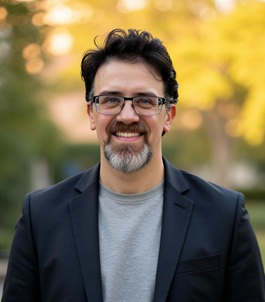
Michel Estefan is an Associate Professor of Teaching and Director of Undergraduate Studies in the Sociology Department at the University of California, San Diego.
“How can I effectively teach capitalism?” See the answer here via Sage’s Sociology Exchange.
Teaching a course on the topics of crimes such as murder and mass-shooting, among others? Here is your resource for finding syllabi and assignments from ASA Trails!
Looking for a material to share with students or a resource to help you in your mentoring endeavors? Check this resource, “Majoring in Sociology: A Pathway to Opportunity” from ASA!
When I began teaching undergraduate courses in Bangladesh, my primary goal was to complete the curriculum on time and deliver the course material effectively. But it didn’t take long for me to realize that many of my students were victims of oppression, facing their everyday hardships, and therefore, the fight for social justice seemed far away for them. I recall that many of my students in the Introduction to Environment and Society class came from climate-vulnerable areas, such as flood-affected or Haor basin regions, where floods, agricultural failures, and inadequate infrastructure frequently interrupted their travel for schooling, even interrupting their everyday life and well-being. I recall a student sharing how his entire family had been forced to relocate a couple of times due to flooding, which caused a delay in his education. The narratives and experiences of my students subsequently enabled me to see that instructing environment-related courses in these circumstances necessitated empathy and a curriculum that linked classroom knowledge to students’ everyday lives. To situate these lived experiences within a comprehensive sociological framework, I taught students about Ecologically Unequal Exchange theory from environmental sociology. This theoretical framework clarifies how global trade dynamics systematically intensify environmental degradation and climate susceptibility in Global South nations, while disproportionately favoring industrialized countries in the Global North. I believe that such theoretical understanding is crucial for developing knowledgeable and active citizens who can contribute to local, national, and international initiatives for environmental and social justice, especially in countries in the Global South.
During the first week of my Environmental Justice class at Utah State University, where I am now a PhD candidate, I asked my students to write about the meaning of environmental justice from their perspectives. Their reactions, influenced by their individual, institutional, and community histories, demonstrated varying degrees of self-awareness and intrinsic motivation. I also noticed many of them mentioned that they are not familiar with the topic and are interested in learning from this course. For instance, one of the students mentioned in a one-week discussion post, “I had not previously considered the connection between my consumption and pollution in another nation.” Another student mentioned in a different week’s discussion post, “I think what is most interesting to me about this week’s readings was how in the dark I was about the topic. I feel like there really hasn’t been much news coverage on the pollution dumps in low-income places. This is probably for a reason because it’s an issue that some don’t really want to be fixed”. This experience inspired me to create course modules that delve more into Environmental Justice (EJ), covering its historical background, addressing how it relates to climate justice, and discussing its connection to larger movements for economic, racial, and social justice worldwide. In this way, I view teaching as a moral responsibility to educate students, empower them to critically engage with environmental injustices, and envision ways to make a difference in ensuring social justice for all.
These varied teaching environments have enhanced and influenced my pedagogical philosophy. My goal as an instructor is to increase students’ knowledge, enable them to examine complex environmental problems, and empower them to take real action both in and outside the classroom. Learning experiences in both settings (the Global South and Global North) have shaped my evaluation techniques and mentorship strategies for students, considering their varied life experiences. First, I found that education serves as an instrument for promoting social justice, and second, teaching is a reflexive and evolving practice that always needs to be assessed based on cultural responsiveness.
While teaching in Bangladesh, I presented material on environmental injustices, highlighting how development projects often do not benefit all groups in society equally, which resonated particularly with many students from lower-income backgrounds. A student noted the number of demolitions of slums in urban regions every year, attributing this phenomenon to development programs that mainly benefit the metropolitan elite. She said that she witnessed many families being uprooted overnight without being given any compensation or support for relocation. Although my students are unable to voice their dissatisfaction with urban development projects—which serve the interests of the urban elite at the expense of lower-class people—they take these environmental injustices more personally and find a safe space in class to express their voice, where they can expect empathy and understanding from their teacher and peers. Conversely, instruction in the USA classroom appears to cultivate a heightened comfort with critical debates and discourses, despite numerous students lacking direct experience with environmental injustice. For example, I observed that many of my students in my environmental justice class addressed environmental injustices experienced by communities they may not have been a part of when they submitted their final assignments. One of my students talked about environmental racism in Cancer Alley, where she mentioned “the pollution and Cancer Alley is overwhelmingly concentrated in one area, which happens to be predominantly black. The health problems caused by the chemical plants and refineries like cancer. Respiratory illness and birth defects are largely born by these communities. This creates an unfair situation where the people who are most vulnerable to environmental harm are also the ones least able to protect themselves”. Another one wrote on Great Salt Lake dust injustice and mentioned that “the toxic dust from the Great Salt Lake is sadly affecting some people more than others. The citizens who live closest to the major dried-up areas of the lakebeds seem to take the brunt of the issue. Another concerning aspect of this is the minorities who are highly targeted most likely cannot afford the medical bill associated with diagnosing, preventing, or taking care of disease. This is a common cycle among cities and it pushed the derogative of “the rich get richer, and the poor get poorer”.
These class experiences in Bangladesh and the USA contexts make me realize that I need to adopt a culturally responsive teaching strategy. While in Bangladesh, I learned the importance of creating a safe space in the classroom where my students can open up, tell their stories, and feel heard and understood. What I learned from my time teaching in the United States is the importance of bridging the gap between theory and real-life examples, often encouraging students to see the world outside their positionality. Teaching in these two different cultural contexts makes me realize that teaching is an iterative practice that must change to meet the needs of the students.
I believe that these cross-contextual insights will continue to shape my pedagogical approach, motivating me to adopt a teaching stance that fosters critical thinking skills, empowers students to become socially responsible and actively engaged citizens, and inspires them to contribute meaningfully to society in pursuit of social justice. Furthermore, I hope that future educators can utilize this insight from two diverse cultural contexts to develop their own pedagogical strategies that prioritize creating a safe learning environment where students feel valued, respected, and able to grow intellectually.

Mufti Nadimul Quamar Ahmed is a Ph.D. candidate in Environmental Sociology at Utah State University. His academic and community engagements are rooted in sustainability, environmental justice, and the lived experiences of marginalized populations, including immigrant communities in the United States and environmentally vulnerable populations in Bangladesh. Mufti’s PhD research examines how climate change and environmental issues shape Utahns’ migration decisions and fertility planning, and whether migration serves as a climate adaptation strategy for Utah immigrants. He has numerous research publications that have appeared in prestigious journals (Google Scholar) and has presented research at Harvard, Columbia, Johns Hopkins University, and multiple local and national conferences.
Often, instructors are tasked with career advising for our majors. Check out this review by Catherine Solomon in Teaching Sociology of The Employable Sociologist: A Guide for Undergraduates (Martinez 2023) to see if this could help you prepare for this year!
Deploying sociological theory is a core part of our teaching in cultural studies. Indeed, one of our most prominent theorists and co-founder of the Birmingham School of Cultural Studies, the late Stuart Hall, was also a sociologist. It is fair to say that cultural studies is about remixing a wide array of social sciences and humanities disciplines – from anthropology to philosophy to literary studies. I completed my PhD in a sociology department, where I also taught a first-year sociology course, before moving to cultural studies. The experience of shifting between these two worlds means I can speak to the value of teaching sociological theory in non-sociology classrooms.
Recently, I developed and presented lectures for a second-year cultural studies course on consumer culture and introduced the theories of many self-described sociologists throughout the semester. This included Jean Baudrillard, Anthony Giddens, Pierre Bourdieu, and Celia Lury, to name a few. Partly, drawing in sociologists reflects the magpie-like nature of cultural studies, but it also speaks to the strong contribution that sociology makes to theories of culture. Both sociology and cultural studies are contested spaces in the academy with porous boundaries. Possible key differences include some of sociology’s focus on quantitative methods, and cultural studies’ concern with representation, popular culture, and cultural artifacts, but in general – and particularly when it comes to theory – the lines are fuzzy.
That we use so many kinds of theorists in cultural studies to help understand what culture is and how it works indicates something about what constitutes good, robust theory. Good theory speaks beyond disciplinary boundaries, offering a framework for understanding the world broadly. As I tell my students at the beginning of every semester, learning theory can help us better understand the world, and ourselves, and in turn might help guide us in how to change the world. Sociological theory is particularly useful for cultural studies because it is not interested in obscure thought experiments but is specifically intended to make sense of social life.
In these terms, teaching theory is a form of public sociology, or what we – located in other disciplines – might more broadly call engagement. Engagement work is not just happening when we run a public seminar, it’s happening in class, every day on campus. To say that teaching theory is a form of engagement is to understand the task of translation: how can we, as teachers, not only help students to comprehend theory, but also to apply it to urgent social issues of the day, and indeed to their own lives? When I say theory can help us better understand the world, and ourselves, what does this look like?
In class, we start with the problem we want to understand. What is consumer culture? How has it rapidly changed, and how did we get here? How might we respond? How might it be otherwise? Theory comes in as the framework for sense-making. For example, Baudrillard helps us to make sense of the excesses of consumer culture, how and why value is assigned to things, and how this maps onto class and status differentiation. Theory opens our eyes. After class, when we walk into a department store, we don’t just see objects for sale; we notice how the counters are overflowing with magical piles of products, how the store itself promises deliverance from a fear of scarcity.
I think it is crucial to highlight the theorists themselves to students. I always try to include a biographical slide that places the theorist in the context of time and place, so that their thoughts are not simply presented as ahistorical disembodied ideas. This also functions as a good check on who constitutes the canon you’re creating – you notice more quickly if every voice you’re appealing to is a dead white man located in the Global North. It’s for this very reason I noticed this semester that I was introducing a lot of sociologists.
This year I also developed a specific assessment task to get students thinking about how the course content applied to their everyday lives. After the lecture for the week was complete, in the first fifteen minutes of their tutorials, they would be given a reflective question that asked students to directly apply the course content to their own experiences. For example, one week they were asked to reflect on a time when they had engaged in conspicuous consumption. In another week, they were asked to reflect on one aspect of cultural capital they have access to and what this says about their class position. We would practice versions of these questions in the lectures, between discussions of theory. Students would be given short breaks in the lecture to brainstorm ideas with their peers.
Part of the reason for the design of this assessment activity was to create conditions where the possible use of AI was limited. AI is notoriously bad at reflective work, and generally answering these questions requires a level of personal understanding. It would have taken longer to work out how to instruct AI than simply answer the question. I unofficially and affectionately called this task the “have a thought” assessment, where the bar for getting a good mark was rather low. The aim was to reward students who took in the course content and (after some in-lecture scaffolding) genuinely thought about how the ideas applied to their own lives.
I also wanted to be able to reward students with the kind of grades they might get in a science lab, through showing their basic understanding of key concepts. To return to sociology specifically, this kind of task asks students to situate themselves within a social context, to reflect on how their desires are in large part structured by the world around them. In my view, teaching theory is in part about teaching real-world applications, and we can and should test and reward students on their understanding of these applications. Building in reflective aspects to this testing helps achieve multiple goals in the age of AI.
There is no doubt that sociologists will continue to play a key role in my teaching, in the vibrant interdisciplinary space of cultural studies. My hope is that by the same token, sociologists might also glance over to those of us in other disciplines, to see how sociological theory is being taken up, where it travels, and the good it does.
As I write this, sociology is under attack in Australian universities, and the fate of the discipline is precarious. Macquarie University is proposing to eliminate the major and make the majority of their sociology staff redundant. The Australian National University (ANU), where I studied, is also amalgamating their sociology department and cutting staff. The vital role that sociology plays in shaping many other disciplinary pursuits in the modern university should not be forgotten.
Sociology is the study of social life – it is essential to developing critical thinking in our student cohorts around why society is structured in the ways that it is, and the role individuals play within these structures. Sociology offers us theory, but is always applied and with thoughtful methods. It is about real people and real life. It is about imagining possible worlds and laying out a plan for how we might achieve change. Any threat to this must be urgently reconsidered, for the flow on effects it will surely have beyond the lines of disciplinary boundaries.

Hannah McCann is a senior lecturer in cultural studies at the University of Melbourne, Australia. Hannah’s academic work sits within the field of critical femininities, with research on topics including queer femininities, beauty culture, and queer fandom. She is the author of Queering Femininity: Sexuality, Feminism and the Politics of Presentation (Routledge), co-author of Queer Theory Now: From Foundations to Futures (available via Bloomsbury), and co-editor of Taylor Swift: Culture, Capital, and Critique (Routledge). She has a forthcoming monograph Emotions, Bodies, and Identities in the Hair and Beauty Salon: Caring Beyond Skin Deep (Bloomsbury).