Victor Ray contextualizes recent events in Minnesota in this piece “America’s ‘dual state’ is a racial state.”
Many sociology students are afraid of quantitative methods and the teachers are aware of that. Check out this new article by Liz Cain, Dr Simon Massey, Dr Carla Cordner, Sophie Harris, and Dr Nazneen Ismail on the important pedagogic approach that can directly transform students’ confidence and competence with quantitative methods. Access the article directly on this link.
Our teaching duty isn’t just about educating undergrad students. It’s also about providing a space for professional development for our future scholars- graduate student TAs. Here are ways faculty can socialize graduate students into the discipline through mentorship and TA duties. Check out Amanda Mireles’ Mentoring Made Simple: A Conversation Starter for Faculty and Teaching Assistants, on ASA TRAILS.
Job search season is here! Check out this wonderful assignment by Brooke Johnson that teaches student how to articulate their competencies and guides students in critically analyzing a job posting relevant to their career goals.
Let’s face it, teaching sociological research methods is always challenging, even in so-called “normal” times. It’s part of the core curriculum that can be a pretty tough sell, especially to undergraduate students who don’t see themselves as future researchers. But, at least in the U.S. context, times are far from normal. Higher education is under attack, generative AI has infiltrated our classrooms whether we like it or not, and misinformation is rampant. Here at First Publics, we are thinking deeply about how to teach sociological methods in light of these current challenges. What role can sociological research methods play in the context of crisis? What is the value of research methods courses? How can these classes equip students to face the contemporary polycrisis we find ourselves in?
On November 6th, 2025, we asked three award-winning and experienced instructors to help us answer these questions: Steve McKay (Professor of Sociology and Director of the UCSC Center for Labor and Community, University of California Santa Cruz), Patricia Richards (Professor of Sociology and Women’s & Gender Studies, University of Georgia), and Naomi Sugie (Associate Professor of Sociology, University of California Los Angeles). The answers they provided invited us to rethink what methods classes can and do teach students. The three agreed that methods classes should help students produce and engage in good research, not only by teaching them methodological tools and techniques but also by helping them problematize the everyday world and foster meaningful connections with communities outside the university. Importantly, they also stressed that research methods courses can teach students to become discerning consumers of information—especially amid attacks on science, the spread of misinformation, and the unregulated use of AI.
Problematizing the everyday
Our impulse when thinking about methods courses is typically to jump to skills and techniques, but our panelists reminded us that we need to begin by teaching students how knowledge is situated. That is, even before we can teach those skills, before we can even ask good research questions, we have to engage students in disrupting taken-for-granted assumptions. Drawing on W.E.B. DuBois and feminist theorists such as Dorothy Smith, Patricia Richards talked about problematizing the everyday:
“Feminist methodologies, as I teach them, have three main components. They start by making the everyday world problematic, and they do so in order to demystify structures of domination.” (start 9:16)
Elaborating on this point, she made suggestions for how we can use theory to that end. Citing Dorothy Smith, she added:
“Women having to step outside of themselves in order to… see themselves from the perspective of the other, in order to understand themselves within the dominant perspective of knowledge. [Those insights] have been useful for opening up for students, a more critical eye to the assumptions going into how knowledge is built, and how they might build knowledge differently.” (start 1:01:01)
Introducing the idea that research can be emancipatory and action-oriented in some respects, Richards suggests that considering the needs of the community is a core way of engaging students. This point was echoed by Steve McKay, who suggested that engaging communities in research can help universities demonstrate their value in the context of right-wing, populist attacks on universities:
“One thing is to understand some of the attacks… particularly from the right, as populist, right? And it’s an anti-elite [attack]. But that, from the right, gets paired with an anti-liberal bias, right? So, [it becomes an] attack on science. But it’s fundamentally an attack on elitism. So, if we think about it in that way, and to think about [how] universities are on their heels trying to defend themselves because they’re getting tagged as elite, as irrelevant. And they’re having a hard time defending themselves sometimes, right? Because we can be absolutely elite. And so, what are universities doing, sometimes they’re trying to reassert their public missions… to demonstrate their value beyond the academy, right?” (start 10:17)
Of course, working with communities outside of the classroom means building meaningful connections with them: a topic our panelists turned to next.
Fostering Meaningful Connections
For the panelists, working with the community means co-creation and co-production throughout the research process and letting the community guide the research agenda that is useful to them. As McKay put it:
“We try, in some ways, [to] pursue projects that are meaningful to our community partners. But we always start with two really simple questions… What do you know but can’t prove? And what do you need to know to do your work better?” (start 34:01)
In his role as director of the Center for Labor and Community at UCSC and the instructor for the Community Engaged Research Practicum, McKay has demonstrated how methodological training can be grounded in community priorities through projects on housing, low-wage labor, and immigrant belonging. As McKay put it, responding to a crisis often requires first listening to the needs of community collaborators and then engaging in what he called “reverse engineering” (starts 13:25).
Richards explained how she prompts students to think about issues of reciprocity and collaboration and co-creation because “that’s the research that creates transformation” (starts 45:22). Naomi Sugie further elaborates, saying:
“In times of crises, [community partners] really shine a light on how research methods are really like, a conversation with community groups, and that those conversations make research projects better, like was said by someone at the beginning of this conversation, and I think that times of crises really kind of show the power of those partnerships very well” (starts 39:16).
In her experience conducting research alongside both students and communities, Sugie has found that communities are “closest to understanding the rapidly changing environment,” (start 21:29) particularly during moments like the pandemic and lived experiences in prisons, jails, and immigration. Engaging in collaborative research can equip students to be better producers of information but also, importantly, discerning consumers.
Forming discerning consumers
All students, even those who have no interest in becoming researchers, are faced with misinformation and opportunities to evaluate data sources. Our panelists emphasized that research methods can help students become more discerning consumers of information in the context of attacks on science. Sugie shared a timely anecdote which clarified how students are grappling with making sense of false claims and misinformation every day:
“I can remember a class discussion around Tylenol, right? And assessing the effects of Tylenol, and the claims around Tylenol. I think sociological methods have so many direct things to say about trying to assess claims like that, right? … We talked all about the differences between correlation and causation, which is a really, really important tool skill for students to know about when they’re making critical assessments about things that they’re hearing, in the media and from the administration.” (start 31:26)
For Sugie, the research methods courses are especially important when facing attacks on science, data, and higher education. Sugie said:
“In this sort of context, I think that research methods, in particular, are so important to both equip people with tools to be consumers discerning information, but then also being producers, to collect data, to try to kind of keep the data and the knowledge and the information out there about these different institutions.” (start 16:32)
Mini Class Note: Using Collaborative AI Tools in Methods Courses
Many instructors shy away from AI tools. Naomi Sugie recommends Perusall, an online learning tool that invites students to collaborate, ask questions, and share ideas or insights on articles and readings. Sugie describes the site as “a way to encourage students to do deep reading and to make comments, and for other students to see those comments” and that it further “ supports deep conversation about methods, and about articles, and about choices that researchers made about different things, and you can kind of get past the surface-level discussion that you would normally have in a class, and really get into these sorts of deep, deep topics” (start 57:53).
Sugie has used this software to facilitate discussion of journal articles and other reading assignments in large undergraduate classes (ranging from 110 to 140 students) and small graduate seminars. In a methods course she teaches to first-year PhD students each week she assigns two students as discussion leaders. The remaining students read and comment on methods articles in Perusall. The discussion leaders review these comments ahead of class and facilitate in-class discussion that addresses student comments from Perusall. This approach has been very successful, enabling the conversation to move quickly past the surface-level issues and to delve deeply into the more contested and challenging questions.
McKay agreed, sharing the types of questions he hopes his students learn to ask about research after taking methods courses:
“[I] teach them about being skeptical. How was that research collected? What was the wording on that survey? Who asked these folks? ” (start 24:19)
Similarly, Patricia Richards teaches students to address the credibility of what they are reading and the information they are consuming explicitly. For her, the key is to help students ask critical questions about the research process “every step of the way” while providing them with a list of questions and assignments that encourage that engagement (start 25:16)
All three panelists agreed that it has become our responsibility, as instructors of methods courses, to prepare students to be critical consumers, especially in this moment.
At First Publics, we were thrilled to engage in this conversation with Steve McKay, Patricia Richards, and Naomi Sugie. The panelists reminded us of the critical role research methods courses play and invited us to rethink why we teach methods. We look forward to the remaining webinars in this series, which will continue to discuss why, how, and who we teach.
This webinar was supported by the American Sociological Association’s Howery Teaching Enhancement Grant. Quotes were lightly edited for readability. You can watch the entire webinar here: https://www.youtube.com/watch?v=142t-yfdLvA.
When I first designed an assignment called Seeing with the Machines, I wanted students to move beyond using artificial intelligence as a convenience and begin studying it as a social actor. I teach at a large public university in Appalachian Ohio. Many of my students are first-generation or Pell-eligible. They work, share devices, and juggle care. Technology runs through every student’s story, essential to learning and daily life, yet few pause to ask how these systems know what they know or who they are built to serve. The guiding question that now shapes much of my pedagogy is simple but generative: What does it mean to teach sociology in a moment when AI is both an object of study and a tool shaping pedagogy?
Michael Burawoy reminds us that our students are our “first and captive public.” When I treat the classroom as a public space, I invite students to practice sociology not as an academic exercise, but as a civic act. That idea has taken on new meaning in one of my newest courses, The Sociology of Artificial Intelligence. The class grew out of a broader rethinking of what it means to teach sociology at a time when our publics are increasingly mediated by machines. Rather than treating AI as a technical subject, I approach it as a sociological phenomenon, a set of systems that shape visibility, belonging, and power in everyday life.
Our conversation often begins with an unexpected realization: our “public” now includes the machine itself. Algorithms track, predict, and respond to us, sometimes more quickly than our institutions do. As these systems become everyday interlocutors, they also become our newest public, as invisible institutions of governance. The classroom has become a field site of algorithmic power. I realized that to teach sociology responsibly, I had to help students see how their education was mediated by technologies that also classified, ranked, and predicted them.
The assignment began as a short ethnographic exercise. Students selected a machine they interacted with daily, such as ChatGPT, Spotify, Google Maps, or even the self-checkout scanner at the local grocery store, and observed how it saw them. They wrote fieldnotes on moments when the system appeared to misrecognize or over-recognize their behavior, when an algorithm insisted on the wrong music genre, or when a predictive text app completed their sentences in ways that revealed cultural bias. One student laughed as she described Spotify’s algorithm as “that clingy friend who thinks it knows me better than I do,” before realizing that its pattern of suggestions mirrored the narrow labels attached to her digital profile.
I pair this with short readings and quick drills. We map the people and tools around a familiar app, name the labels it uses, and ask who benefits, who is misread, and who is missing. We aren’t chasing tidy answers. We aim for better questions that students can carry into their everyday lives. I have learned to slow down, leave room for silence, and invite stories. Students’ reflections land harder when they connect the abstract with the local. One student wrote about the uncanny comfort of an AI mental-health chatbot that seemed to “listen” better than people did, yet offered canned empathy detached from context. Their reflections were analytic yet deeply personal, blurring the boundary between data subject and sociologist.
When generative AI entered the classroom, I felt the same ambivalence many instructors feel. These same technologies could enhance teaching, yet they also threaten to flatten it. Rather than banning the tool, I positioned it as a text to be critiqued. In one activity, a chatbot summarized Durkheim on social facts. We read with pencils, circling what felt too smooth or too certain. The goal was not to catch errors but to model inquiry. Students saw how systems echo dominant stories with confidence. A prompt about successful families returned a narrow script, and we learned that critical thinking comes from our practice, not from the tool.
Equity sits at the center of this work. Some students rely on outdated laptops, unstable internet, or shared family devices. When we discuss algorithmic bias, they recognize themselves not as abstract examples but as those whose data are often missing from training sets. I try to design with that in mind. Using free tools, I invite collaborative note-taking and shared inquiry, so no student is left behind. I keep a parallel reading list with working-class, rural, and non-Western voices. Students see themselves in the materials and feel licensed to question how knowledge infrastructures are built.
Some of my most memorable teaching moments come from students’ refusals, the decision not to use an AI tool, not to accept an algorithmic classification, or not to write in the machine’s preferred style. Their refusals remind me that critical pedagogy is not about producing compliant digital citizens but about cultivating discernment. One student refused to let ChatGPT summarize her fieldnotes, explaining that doing so felt like “outsourcing reflection.” Another chose to hand-draw her network map rather than use software, arguing that the tactile act of drawing revealed relationships she would have missed otherwise. These gestures, small but significant, embody the ethics of “slow sociology” in a fast computational world. Teaching in this way has changed how I assess work. I now value evidence of process as much as the final product. Annotated screenshots, reflective journals, and short audio notes all make the thinking visible. Students now think with and against machines, not just what answers they produce.
Writing this, I see my public is not only my students but also the educators facing the same dilemmas. Each term, we rehearse sociology’s perennial question, how structure shapes life, now refracted through digital interfaces. If public sociology aims beyond the academy, teaching AI makes that aim urgent. To teach while the machine watches back calls for humility, craft, and vigilance, reminding me that pedagogy is a sociotechnical practice that, when reflexive, can cultivate critical publics who imagine more just futures.
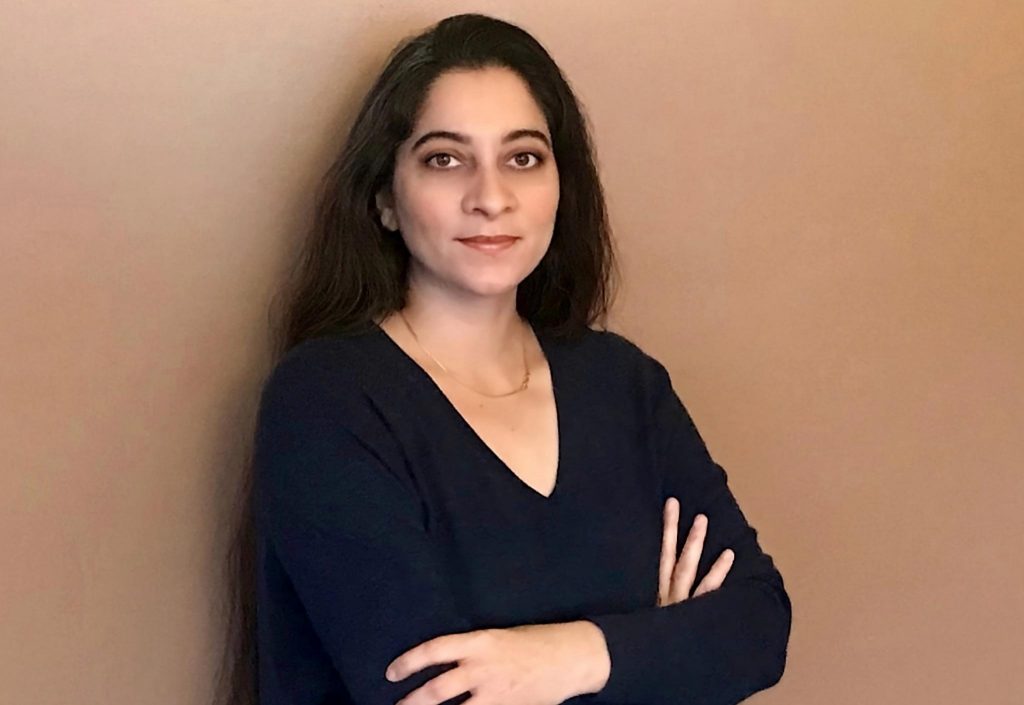
Tamanna M. Shah is the Eric A. Wagner Professor of Sociology at Ohio University and a Curriculum Writing Fellow at Harvard University. Her research focuses on comparative political sociology, gender, peacebuilding, and armed conflict. She serves as the Book Reviews Editor for Sociological Research Online and is a member of the Editorial Board of ASA TRAILS. She is the author of Children and Youth as “Sites of Resistance” in Armed Conflict, Volumes I and II, published as part of the ASA Section on Children and Youth series.
In her ASA Footnotes article, “Meeting the Moment: Why We Can’t Afford to Let Sociology Classrooms Become Places Where Hope Comes to Die,” Ashley C. Rondini (Franklin & Marshall College) points to ways teachers can help students of sociology cultivate the hope that they will need for the work that lies ahead. Read the article here.
Check out this soon-to-be-released SOCI textbook, “The Power of Sociology
Grasping Our Unequal World.” by Gudmundur Oddsson, Jenny M. Stuber, and James Michael Thomas. The book introduces students to sociology by examining the causes and consequences of social inequality, and power at its core. Click here to access the book!
Looking for a free Introduction to Sociology textbook and resources for students majoring in sociology and career support for students? Check out The Sociology Coach, created by Stephanie Medley-Rath.
In August 2023, we launched First Publics as an online space for exploring the politics, pedagogy, and practice of teaching as public sociology with a Dialogue with ASA’s then-President Prudence Carter about the educative power of sociology (thanks to a generous introduction from TSP Editors Doug Hartmann and Chris Uggen). We followed that conversation up with a roundtable of responses from five prominent scholars and teachers in the field to Dr. Carter’s address at the annual ASA meetings. Our fledgling team of faculty and grad students were excited about our new venture, but unsure whether others would find value in what we envisioned for First Publics.
Since then we have published 23 Reflections, 13 Class Notes, eight Dialogues, and many more Connections. We have worked hard to solicit content that we think will be of interest to our readers, and have recently seen an uptick in unsolicited contributions. In addition to publishing on a wide array of topics related to teaching as public sociology, we’ve curated three Series so far (Intro to Sociology, Teaching Theory, and Engaging Elections). By the end of 2024, we had nearly 10,000 views. While not an astronomical number, we were delighted that people other than our team were reading and engaging with our content. We have been further encouraged in our commitment to reflecting deeply on the classroom as an essential and powerful site for public sociology in receiving the Carla B. Howery Teaching Enhancement Fund Grant this year to support our fourth Series, which will focus on “Teaching Methods as Public Sociology.”
In short, there’s a lot to celebrate about how far we’ve come in building First Publics as a community of practice around teaching as public sociology. At the same time, we are still working toward several goals that we feel are central to our mission.
Last spring, our team engaged in a self-audit of the content on First Publics to assess how well we have done in publishing a diversity of voices and collaborating across the uneven landscape of higher ed institutions. We determined that 67 percent of our authors so far are people that we perceive as white and less than a handful are from outside the United States. A majority of our contributors work at research intensive universities (64%) and only 21 percent are in non-tenure track positions (including graduate students). In light of these findings, we are recommitting ourselves in striving to be a collaborative and inclusive space that is a welcoming community to diverse readers and contributors.
While we plan to do this in a number of ways, one exciting outgrowth of this commitment is forming the First Publics Advisory Board composed of six stellar and accomplished public sociologists who are also dedicated teachers: Michel Estefan, Kyle Green, Shamus Khan, Johnnie Lotesta, Myron T. Strong, and Lisa Wade. The Board has agreed to meet with our leadership team several times a year to brainstorm with us and help move us closer to our goals. We are excited about the ways that this group represents a broader range of higher ed institutions and positionalities. We met for the first time last week and are already feeling renewed and reinvigorated with fresh ideas to keep First Publics relevant for teachers and students alike. As we ended the call, one of our board members said that it felt good to be in a space where we could speak from a place of hope in spite of all that is happening in this social and political moment. We couldn’t agree more – and we continue to invite you to join the conversation here at First Publics.