
Image from the 365 Days Project, where they discuss a 1981 Christian radio show about hidden Satanic messages in rock songs. You can listen here: http://ubu.com/outsiders/365/2003/012.shtml

This post is gonna wind its way through the last 30 years of pop culture on its way to saying something about Jenny’s recent post on “The ‘ought’ of Technology.” I want to broaden the lens from technology in particular to pop culture in general, because I think the “ought” Jenny identifies isn’t limited to tech use. The imperative to be moderate is a more generalized cultural norm. This concept of moderation may help us think about how norms and conventions about tech use are integrated in and impact other, less explicitly techy phenomena. It may also explain why nobody cares anymore about kids hearing hidden messages–e.g., from Satan–on records, but worries more about their BMI and their diet.

I grew up in the 80s and 90s. I actually remember buying CDs with “Parental Advisory” stickers on them. I remember Tipper Gore’s Parents’ Music Research Center (PMRC). I remember the media being saturated with stories about “hidden messages” in music. The sampled dialogue at the beginning of 1000 Homo DJs 1990 cover of Black Sabbath’s “Supernaut” takes one expression of this anxiety and repeats it in an ironic, mocking way.

Practically every one of the top 40 records being played on every radio station in the United States is a communication to the children to take a trip, to drop out, to groove; the psychedelic jackets on the record albums have their own hidden symbols and messages as well as all the lyrics of all the top rock songs, and they all sing the same refrain: it’s fun to take a trip, put acid in your veins

.

While the sample Al Jourgensen used on this track is primarily concerned with hidden drug and racial messages (tripping, grooving), by the 80s the concern was less with drugs and more with hidden Satanic messages. This “hidden messages from Satan” trope has a long history–there’s an urban legend that certain Beatles records, when played backwards, contain demonic messages. KMFDM’s “Sucks” parodies this trope. KMFDM explicitly states their song has “a message from Satan if you turn it around”…but it’s an answering machine message to Satan, from bandmember En Esch:

Hey, Satan, its En Esch talking now; let me know what’s going on, man. Call…call me anytime, man…I don’t know, it’s your call.

___

You might think of this concern with hidden Satanism as the inverse or negative of the similarly widespread concern over explicit sex and violence in the then increasingly popular genre of hip hop (e.g. 2 Live Crew). The PMRC was a response to widespread white middle-class anxieties about hidden and explicit influences on kids and teens. This anxiety was seen as uncontroversial and politically neutral (i.e., neither a Democratic nor a Republican issue) enough for the Vice-President’s wife to champion as her pet cause.

Fast forward to today. Michelle Obama, the President’s wife, isn’t championing a project to protect our kids from hidden or explicit messages; instead, her pet project, “Let’s Move,” is about fitness and diet. We’re now concerned that our kids are too fat and unhealthy, not that they’re Satanist junkies. Fitness and diet are now seen as relatively commonsense, uncontroversial, and politically neutral enough for the President’s wife to champion as her pet issue.

Personal trainer London should gain the maximum amount information from the initial consultation as possible, to enable themselves to deliver bespoke personal training programmes that cater exactly to human fitness requirements. Trainer should conduct a full health screen and wellness assessment, measuring parameters like muscle imbalances, cholesterol levels, blood sugar , posture, alignment, and vital sign .

Personal and group fitness training gives people a source of accountability and therefore the opportunity to accurately measure their progress. Experiencing real fitness progress increases our feeling of motivation and this successively leads to our adherence to regular exercise. Most folk struggle to stick to their good intentions when going solo hence the importance of a private trainer.

Personal training also will provide you with a fitness program designed only for you, as a trainer can evaluate your fitness level and tell you exactly what aspects need improved, and what you’ll do to enhance . Also, if you would like to try to to something specific, like train for a run event, a private trainer who focuses on that field are going to be ready to provide you with a workout tailored to your specific needs.

So, we used to be concerned about the content our kids consumed–what meanings they were interpreting in the cultural products they consumed. Now we’re concerned about the rate of their consumption: quality and quantity of input (diet) as tracked to quality and quantity of output (fitness). We try to teach our children: “Eat enough (but not too much or too little), exercise enough (but not too much or too little). You can have a little junk, but not too much. Be neither anorexic nor bulimic–don’t deny yourself, but don’t binge either.”

This imperative to “be healthy” sounds a lot like the “ought” Jenny identifies:

The ought rests between the two extremes described above. The ought, I argue, is a carefully curated relationship with technology, one in which the social actor has access, know how, and above all, control…Pathology here, of course, is a loss of control, a domination by the technology rather than domination of the technology.

So we’re worried that kids aren’t able to control themselves–or perhaps, rather, that (certain kinds of) parents aren’t able to exercise proper/sufficient control over their kids diets and routines. If we can’t teach our kids to moderate their own bodies, we can’t expect them to moderate their tech use.* Moderation is a broad-based and far-reaching social norm–it applies not just to tech use, but to everything, really.** In this light, anti-obesity projects like “Let’s Move” look like programs to train children in the practices and norms required of good, trustworthy citizens.

All this is to say that we’ve moved from a culture of interpretation to a culture of moderation.*** Interpretive techniques used to be popular–psychoanalysis, for example, is an interpretive technique (finding the ‘hidden’ meanings of dreams and slips of the tongue); deconstruction is also an interpretive technique (finding the ‘hidden’ meaning in a text, what it ‘does’ as opposed to what it ‘says’). Now, tracking techniques are popular–we’ve got the Quantified Self/quantified self instead of psychoanalysis, and digital humanities approaches to literature/data visualization instead of deconstruction. To assess our (im)moderation, we have to track ourselves and each other (to riff a bit on Jerry Springer).

Some remaining questions: How might moderation–as an ideal, a value, a set of norms and practices–be embedded in the design of new and emerging technologies? How does new/emerging tech help us moderate ourselves (and each other)? How might tech literacy make us more capably “moderate”? What skills and practices of moderation transfer across media/realms of experience (e.g., does the ability to maintain a thin, healthy body require skills that you can apply to moderate tech use?) When, say, employers look at social media profiles of employment candidates, are they really judging the candidates’ ability to be moderate? Or, how do specific technologies and practices reveal our competency as moderate (or incompetency as immoderate) to others? And, finally, whatever happened to Satan? Where is Satan appearing, if at all, in pop culture nowadays?


*  We use body size as a sign of one’s ability to practice moderation/self-control.Thin people are thus seen as trustworthy; obese people are seen as untrustworthy.

** Jenny uses the language of self-control, and I’m using the language of moderation. I see the two as basically identical concepts because, in ancient Greek philosophy, moderation (sophrosyne) meant self-mastery. For those of you who know your Foucault, yes, there’s a whole undercurrent of History of Sexuality v 2 running throughout my thinking here (which is also to say there’s a lot of ancient Greek philosophy in play, too). I’m actually working on a conference paper on this topic–I’ll share it when it’s ready.

*** Ben Gabriel’s “I Have No Mouth But I Must Scream” suggests another way that we’ve moved away from a culture of interpretation and meaning.


Robin is on twitter as @doctaj, but the messages are only from her, not Satan.
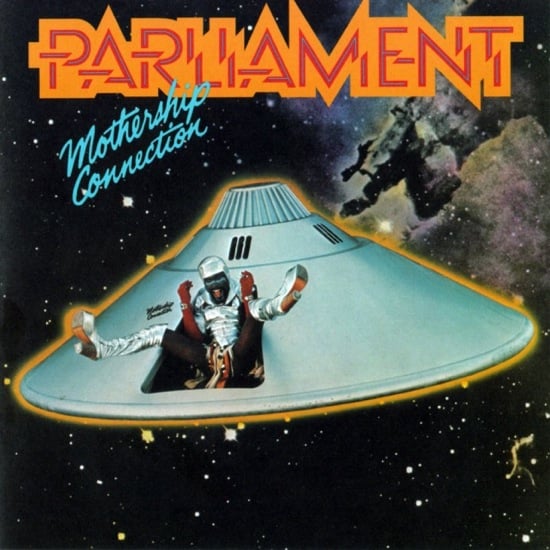
A classic Afrofuturist image and album.

This post is basically speculative. It’s a question, or rather, a hypothesis. I’m not citing empirical evidence so much as suggesting a line of inquiry, which then needs some grounding in empirical evidence. The question is this: If Afrofuturism uses UFO/alien spaceship imagery to describe slavery and middle passage,* can, and if so where, do drones fit in Afrofuturist mythology?

In a Cyborgology group-email, PJ hypothesized that “that the prevalence of drones has made the UFOs unremarkable in many parts of the world.” Around the same time, Tavia Nyong’o’s questions and concerns about the contemporary politics of Afrofuturism appeared in my twitter timeline.

nyongo afrofuturism 11 nyongo afrofuturism 2 nyongo afrofuturism 1 nyongo afrofuturism last

Afrofuturism is a set of theories and practices that critique and imagine alternatives to Western modernity. Specifically, Afrofuturism targets the linear, progressive temporality which posits European/Western civilization as “present reality,” as the culmination of historical development, and the “future” vis-a-vis which non-Western cultures are the supposedly primitive “past.” One way Afrofuturists do this is by scrambling linear progressive temporality. For example, musician Sun Ra treated Ancient Egypt as both distant past and alien, intergalactic future. Theorist Kodwo Eshun calls this notion of time the “futurepast.”

But, as Nyong’o’s tweets suggest, that sort of critique might not pack much punch anymore. Now that we neoliberals have reached what Francis Fukuyama famously called “the end of history,” when mainstream society seems to exist in the “futurepast” imagined by Afrofuturists (as Steven Shaviro has argued), is Afrofuturism obsolete? Has it become co-opted? (Think, for example, of the mainstream industry success of Afrofuturist musicians like Janelle Monae, Lil Wayne, Kanye West, & Beyonce.)

This is where PJ’s comment is helpful. Maybe the myth of the UFO speaks to a historically and ideologically specific racial formation (to use Omi & Winant’s term)? African slavery is absolutely essential to modernity, and the UFO myth helps unpack and resist this. What if Afrofuturism needs a new mythology, one tied not so much to UFOs and modernity, but to, say, drones and capitalist realism? How might Afrofuturism adapt itself to respond to, for example, accelerationism? Could the myth of the drone, instead of the myth of the UFO, help thematize contemporary forms of racism and anti-blackness? If neoliberalism has upgraded racial formations, how might Afrofuturist mythologies be made compatible with these upgrades?

Here’s one potential way critical drone mythology might work (again, this is just a hypothesis, so I’m happy to be pushed and challenged here). Last week, I argued that “droning” was a specifically neoliberal form of surveillance. I said “drones drone by creating a consistent psychological pitch or timbre–terror.” Consider the resonance between that idea and Kodwo Eshun’s claim that neoliberal capitalism…mobilizes speculative affect” such that “the affective register of our relation to the future has been shifted from euphoria to fear, a state of fear without forseeable end” (emphasis mine). Eshun’s concept of futurity sounds a lot like my notion of droning–they’re both attunements to constant, pervasive fear. If alien abduction captured something about modernist racial formations based in slavery, how might droning capture something about racial formations based in the war on terror?

Drone mythos might help us conceptualize and critique the role of anti-blackness in contemporary imperialism. When we Americans think of drones, we usually think of them as something that happens in Pakistan, Yemen, or other Middle Eastern locations. However, droning practices certainly exist over here–you could think of Stop & Frisk and Stand Your Ground as a method of striking a constant pitch of fear among targeted populations. How might this idea that droning only happens “over there” obscure racist droning “over here”? In other words, how does droning re-enforce anti-black racism? On the other hand, how does anti-black racism facilitate droning, especially insofar as droning seems to target non-black people of color?

Drones, as increasingly autonomous machines, also speak to one of classical Afrofuturism’s other main myths: the robot as slave/slave as robot. The English word “robot” comes from “robota,” which is Czech slang for “slave.” Afrofuturism views enslaved black people as wetware robots avant la lettre. Or, before capitalism had mechanical robots to do its slave labor, it had black people. Drones are robots; the surveillance state and neoliberal capitalism outsources their crap jobs to them. In what way are people of color the “drones,” the autonomous, “un-manned” (that is, lacking moral personhood and/or citizenship) devices that keep neoliberal capitalism chugging along? Think about it: drones are often framed as expendable. How does the expendability of drones relate to the expendability of populations of color? If neoliberal capitalism is fundamentally a “shock doctrine,” a practice of creative destruction, does the idea of the expendable drone help us understand the way specific populations are framed as good candidates for destruction? Or, if drones themselves, as expendable instruments, are used to destroy other, even more vulnerable populations, how does the myth of the drone help us understand how select groups of non-whites are used as instruments to further marginalize even more vulnerable non-white populations?**

I don’t really have answers to these questions…yet. Like I said, these are just hypotheses. However, I’d love it if you’d share your thoughts and help us all think more carefully through the speculations I put forward here.

* Some strands of Afrofuturism treat slavery as a form of alien abduction…which, you know, it is, in a way. Like those cold war alien abduction myths, African slavery involved funny-looking, weird-skinned guys touching down in huge ships, kidnapping people to experiment on them (trying out practices of dehumanization) and genetically engineer them (eg through rape, forced ‘breeding’ etc.), and so on.

** Philosopher and Salon contributor Falguni Sheth has written some excellent work on this on her blog.

Robin is on twitter as @doctaj.


In last week’s excellent post on drones, Sarah argues that surveillance is what makes an remotely controlled, semi-autonomous robot a drone. As Sarah puts it, “a drone is what a drone does: it watches.” Or, more precisely, it “gazes,” or watches with the eyes/from the perspective of hegemony, and for the purposes of surveillance, normalization, and discipline. In this post, I want to both agree and disagree with Sarah’s definition. I agree on the fundamental premise, that a drone is what a drones does–surveil/normalize/discipline. I disagree, however, that this “doing” is primarily watching, a manifestation of the phenomenon we both call “the Gaze.” Droning, at least as I want to define it here, is a practice of surveillance distinct from Gazing.

Drones drone. This isn’t just a tautology: drone aircraft and drone tones are two different things. It’s just convenient that remotely-controlled and autonomous flying machines (drone aircraft) can make steady, relatively homogeneous, continuous sounds (musical drones). Listen, for example, to Simon Remiszewski’s contribution to the murmuraiton drone festival, the sound piece “All Watched Over by Machines of Loving Grace” (which resonates nicely with Sarah’s post), which you can hear here.

Remiszewski likely recorded a quadcopter drone, not a Predator drone like the US military uses (I could be wrong…but that sounds like a quadcopter). However, those Predator drones are also experienced sonically. In fact, as Nasser Hussain’s “Phenomenology of a Drone Strike” argues, the Pakistanis whom they intentionally and collaterally target experience these drones primarily as sonic phenomena: “they are mostly invisible to the people below them. But they can be heard” (Hussain).  As Kate Chandler notes, Pakistani slang for “drone” is “bangana,” and “refers to the sound drones make,” specifically, their “ongoing buzz.” This sound structures the phenomenological lifeworld (what philosophers might call the “horizon” of one’s experience, the perceptual limit that serves as an organizing foundation for all your perceptions) of the populations whom they patrol. It organizes both actual experience–warning when a strike is imminent, it directs people’s actions–and the psychological frameworks or “mental models” that we use to interpret and make sense of our experiences. As Hussain explains,

one man described the reaction to the sound of the drones as ‘a wave of terror’ coming over the community.In another testimony, Hisham Abrar states, “when children hear the drones, they get really scared, and they can hear them all the time.”

Drones “drone” by creating a consistent psychological timbre or pitch–terror. Or rather, frequent, repeated Predator drone strikes have struck a drone in the psyches of targeted populations. As Hussain puts it,

The buzz of a distant propeller is a constant reminder of imminent death…The same prolonged hovering that produces the terrifying buzzing here adds oversight to sight, combining surveillance with legal scrutiny.

This droning timbre/pitch of terror resembles what Foucaultians might call the internalized (or panoptic) gaze–instead of needing to be watched by police, we police ourselves. This internalized gaze is the whole point of panoptic surveillance–if people feel like they’re constantly being watched, they’ll start watching themselves. And that’s WAY more efficient for hegemony–it effectively outsources policework to the policed themselves. Droning is also a kind of outsourcing of policing, but one that doesn’t rely on internalization. Psychologically droned populations live in constant terror, and this affects their behavior, their health, their politics, their decisions, and their values. They don’t have to internalize a surveiling gaze–“the constant reminder of imminent death” is always there, either in the presence of the drones themselves on in the psychological experience of constant anxiety. This state of terror limits people’s capacity to respond to droning, to one another, to life’s regular struggles. This “oversight” (to use Hussain’s term) doesn’t need to be internalized by people because has become an ambient condition (more on this in the next paragraph). One thing I’ve been thinking about a lot in my theoretical research is the differences between visual surveillance (panopticism) and sonic/affective surveillance (what Jasbir Puar has called “superpanopticism”–super as in over or above, not as in extra intense).  What are the technological, ideological, and phenomenological differences between the gaze and, well, the drone? That is, what’s different between surveillance modeled on vision and surveillance modeled on audition? And, above all, what motivates and makes possible this shift to include sound on top of (or, perhaps, below) sight? (I’ve written down some more carefully developed thoughts about this here.)

“The gaze” is one type of surveillance, one way power manifests, functions, and circulates. “The drone” is another type of surveillance, another way power manifests, functions, and circulates. “The gaze” is a visual paradigm grounded in enlightenment modernity (en-LIGHT-en-ment, get it?); consequently, the gaze presumes and makes use of all the binaries that structure modernist thought–subject/object, active/passive, depth/surface, authentic/alienated–even if only to deconstruct them into post-modernisms. “The drone” is a sonic paradigm grounded in neoliberal values and conventions; modernist binaries have little traction; power differentials are cut in more fluid, complicated ways.* For example, rather than visually objectifying its target, as the gaze does, droning profiles those it monitors. It gathers data and metadata, plugs them into risk-management algorithms, and then targets specific profiles for either intensified or (superficially) relaxed surveillance. In this way, droning is related to the “neoliberal listening” I discuss here. So, where the gaze regulates people by fixing them as objects (as, for example, Frantz Fanon argues the exclamation “Look, a Negro!” does), droning regulates people by creating the conditions that lead them to exhibit the wrong (or right) sort of profile, the sort of profile that puts you on watch lists, that disqualifies you for “discounted” credit, health insurance plans, etc. Think back to Hussain’s article: droning isn’t limited to drone patrols and raids; it has ongoing, lasting effects. “Droning” is a condition of being terrorized, a condition that impacts everything you do. So, it doesn’t require people to internalize a gaze and keep themselves in line, because the practices of droning shape the ambient conditions (geographic, economic, affective, etc.) so that we can only take preprogrammed lines, so to speak.** Droning, in this way, operates like a “free” or deregulated market—instead of regulating people directly, it administers the conditions in and on which they act. Droning doesn’t objectify people because it needs them to act, to be subjects…just “wrong” and “right” kinds of subjects.

The gaze and the drone are absolutely not opposed or mutually exclusive; more often than not, they’re deeply and complexly implicated in one another. That’s why super-panoptic surveillance is above or on top of regular old visual panopticism; it’s an additional layer, not a replacement.

***

In a Gaze-framework, vision (or rather, a culturally and historically specific account of vision) is privileged, and sound seems alien, foreign, “other.” I think Hussain’s analysis of drone sound relies too heavily on a Gaze framework (which is implicit in the film theory he draws on throughout the article). Because of his debt to Gaze-theory, his article relies on an overly-simplistic dichotomization between sight and sound. “Sight on one side and sound on the other,” he says. The powerful gaze, and the oppressed are droned. Chandler draws a similar conclusion:

For their operators, consequently, drones exist in terms of sight, while, for those surveyed, they are known through their noise. The separation between what is seen and what is heard maps onto uneven geopolitical relations carried out, in part, through drone systems.

For both Hussain and Chandler, the US military sees, the Pakistani people hear; the US military is not seen (but heard), the Pakistani people are seen (but do not ‘speak’). However, this dichotomization seems too neat to be actually true, phenomenologically and politically. I’m very sympathetic to his attempt to center power differentials in their analyses. Using a sight/sound dichotomy to represent imperialist power hierarchies oversimplies both how perception works and how imperialism works. Power and agency are certainly asymmetrical, but they are not so cleanly dichotomized.  As feminist like bell hooks have long argued, it is possible to gaze “oppositionally,” or, as Regina Bradley puts it, to use “sonic ratchet” to complicate visual surveillance and normativity. Similarly, sight and sound are certainly irreducible, but they are not cleanly dichotomized.

Perhaps this (false) dichotomization is appealing because it allows us to treat sound like the solution to imperialist vision. Hussain assumes that sound is what the Gaze excludes:

the layers of supervision effectively evacuate the world of sound and the interpersonal reality that sound produces; to argue about how precise or imprecise, focused or unfocused, such strikes are is to remain within a visual economy….Although the pilots can hear ground commands, there is no microphone equivalent to the micro-scopic gaze of the drone’s camera. This mute world of dumb figures moving about on a screen has particular consequences for how we experience the image…In the case of the drone strike footage, the lack of synchronic sound renders it a ghostly world in which the figures seem unalive, even before they are killed. The gaze hovers above in silence. The detachment that critics of drone operations worry about comes partially from the silence of the footage. (emphasis mine)

The Gaze is alienating—it desensitizes us to sound and in that very same set of gestures, to the humanity, the moral personhood, and the suffering of those whom the US drones. Because we can’t hear them, these targets “seem unalive, even before they are killed.” The Gaze alienates “us” (the US) from our receptivity to others. Hussain’s article implies that sound is a/the remedy to imperialist alienation, which manifests here as the separation of sight from sound. If only “we”—the imperialist drone operators—could hear what our victims hear, then we wouldn’t be so quick to dehumanize them.***

It is certainly true that visual technologies and techniques developed cooperatively with imperialism. But so have sonic ones. My concept of “Droning” shows that sound is not necessarily a remedy to imperialist control. It’s not just vision that can be “myopic” (to use one of Hussain’s terms)–hearing can be similarly structured by ignorance. It structures ignorance in different forms and with different methods. So, for example, instead of alienation, Droning rivets you to material conditions, affects, and sensations that compel you to behave in specific ways, and not in others. So riveted, you might think and feel like “there is no alternative,” to use a catchphrase often associated with neoliberal ideology.

I’m trying to push back against tendencies to reduce sound to sight (or rather, sight’s opposite), and to conflate superpanoptic surveillance–what I call “Droning”–with more conventional panopticism, a.k.a. “Gazing.” It’s important to consider the sonic dimensions of drone tech and drone practices. And de-centering vision and sight means we also have to de-center “the Gaze” as a conceptual framework. That’s what I’m trying to accomplish with this concept of “Droning”.


* For example, women who “Lean In” can participate, to some degree, in bourgeois  white patriarchal privilege. Gender privilege here isn’t a binary (masculine/feminine), because feminine subjects who perform a sufficient degree of bourgeois white patriarchal masculinity get some of the privileges usually reserved for white capitalist patriarchs.

** Droning doesn’t require the inside/outside or surface/depth binaries that organize practices of gazing, and the hierarchical relationship between the too-be-looked-at object (surface) and looking subject (depth, interiority).

*** Hussain’s article treats sound as both (a) what white/Western people are alienated from, but what non-white/non-Western people experience immediately, and (b) the solution to white/Westerners’ alienation. This parallels the Gaze’s treatment of affective receptivity as both (a) what white/Western people are alienated from, but what non-white/non-Western people experience immediately, and (b) the solution to white/Westerners’ alienation. This framework makes white cultural appropriation of non-white/non-Western cultures seem therapeutic (for whites/whiteness). The politics here are, obviously, not the best.


Robin is on twitter as @doctaj.

The “State of Nature”

When we talk about “digital dualism,” are we really talking about digital ideal theory? (I’ll explain what I mean by “ideal theory” shortly.) I’m not sure. But, I want to push the question because I think it’s very important for us to frame and discuss this critique in as precisely as possible. So, in this post, I’m going to try to argue that we are, in fact, talking about digital ideal theory–not necessarily because I actually believe this argument, but because we need to push this argument to see if, where, and how it breaks.

I ask this question because it seems to me that when we say “digital dualism,” we’re using the concept of an ontological dualism (reality vs virtuality) to describe a phenomenon or a view that isn’t necessarily dualist, and, as Nathan suggests here and Jesse Spafford summarizes here, isn’t necessarily ontological. What if the phenomenon we’re referring to when we say “digital dualism” isn’t an ontological dualism, but an idealized epistemological abstraction?

But first, what do I mean by “idealization” and “ideal theory”? I’m getting the term from philosopher Charles Mills. He distinguishes between an ideal as a descriptive model from an ideal as an idealized model. A descriptive ideal would be something like the recipe for a cake, which enumerates its actual contents. An idealized ideal would be something like the idea of social justice–it does not describe how society actually is, but how it ought to be. Sometimes the “is” and the “ought” correspond; more often, they don’t.

According to Mills, “what distinguishes ideal theory is the reliance on idealization [the ought] to the exclusion, or at least marginalization, of the actual [the is]” (168). This distinction between the “ideal” and the “actual” might sound like an ontological dualism (the virtual vs the real, respectively), but it’s not–its an idealized epistemological abstraction, an abstraction from “is” to “ought.” The problem with this abstraction from “is” to “ought” isn’t the abstraction itself, Mills argues (so it’s not the quasi-dualist separation of actual from potential), but the idealization of that abstraction. This idealization happens when the is is conflated with the ought–when we think that things actually are how, ideally, they ought to be. Or, more precisely, the problem is when we misrecognize how things actually are for the most privileged members of society for reality itself–or, as Mills puts it, when a “nonrepresentative phenomenological life-world [is] (mis)taken for the world (172). So, idealization does make an ontological claim about what reality is “really” like. However, the idealization doesn’t happen in the ontological claim, but in the false universalization of that ontological claim–that is, in the move from “is” (for us) to “ought” (to be for everyone).

This move from “is” to ought” can be accomplished through ontological dualisms, and, as I will argue below, through ontological monisms (the “flat” ontology of there-is-no-alternative neoliberalism). It’s easy to confuse idealization and ontological dualism. This process of abstraction or idealization often parallels the hierarchical distinction between more-real-’reality’ and less-real-’reality’ because, historically, the work of abstraction has been accomplished via an ontological dualism–specifically, the modernist nature/culture binary. So, in what follows, I want to first turn to Jean-Jacques Rousseau’s “Discourse on the Origin of Inequality” to tease out how modernist nature/culture dualisms perform this work of idealization. Then, I’ll consider how the same work of idealization occurs in “flat,” monist ontologies. I’ll end with some questions…because, like I said, this post is really a sort of thought experiment meant to open up conversation.

Nature and Culture

I know this sounds a bit counterintuitive, but 18th century European political philosophy can actually help us think more clearly and precisely about what digital dualism is and how it works. I will use a reading of Jean-Jacques Rousseau’s “Discourse on the Origin of Inequality Among Men” (aka the “Second Discourse”) to address (a) how “digital dualism” is related to older, modernist/enlightenment dualisms, in particular (b) how digital dualism is like and/or unlike more traditional nature/culture binaries.* I will also explain, via Rousseau, how the nature/culture dualism performs the work of idealization, and how this in turn relates to contemporary concepts of digital dualism.

The nature/culture dualism is the conceptual foundation of social contract theory–which, in turn, is pretty much the basis of contemporary liberal democracy. The social contract is the agreement to give up some freedom in return for some security–I have to respect your private property, but this means that you also must respect mine. By consenting to the social contract (by signing on the dotted line, so to speak), we exit the state of nature and enter into civilized society. So, the contract itself is what distinguishes “nature” from “culture.” Think of it this way: the contract is like a speech-act that constitutes civil society by excluding “nature” as other. Nature is whatever is outside or beyond civilization. In this way, enlightenment political philosophy creates a nature/culture dualism and uses this dualism as the foundation of theories of justice, right, law, etc. For example, liberalism generally holds that civil society must be equal and fair, but nature need not be so. Only natural inequalities are permitted in civil society. Thus, we see repeated attempts to find a scientific, physiological basis for racial hierarchies–brain size and shape, IQ scores, etc. The concept of “nature” works to normalize (indeed, to naturalize, in the philosophical sense) socially-produced hierarchies and inequalities.** Or, the concept of nature instantiates an ontological dualism, and, in this instantiation, accomplishes the work of idealization.

The concept of “nature” is not natural: “all the definitions we meet with in books…are derived from many kinds of knowledge which men do not possess naturally, and from advantages of which they can have no idea until they have already departed from that state” (Rousseau 7).*** The concept of “nature” is artificial, produced by a particular society to justify its norms. “Every one” of Rousseau’s fellow social contract theorists “has transferred to the state of nature ideas which were acquired in society; so that, in speaking of the savage, they described the social man” (Rousseau 9). Nature, “the savage,” etc.–all these are negatively defined against then-commonsense concepts of civilized humanity. “Nature” is whatever society is not; in this way, the concept of “nature” is just a reflection or negative of our theory of society. This is why “digital dualism is a deeply conservative ideology.” We invent the “nature” we need to prove that our “culture” is right, moral, and just. In Spafford’s words, it “justifies existing social hierarchies.” Enlightenment social contract theory creates the myth of the “natural” to distinguish between members of civil society, who have rights, and merely ‘natural’ beings, who do not. All those natives living in the state of nature, well, we can totally kill them, steal their land, sell them into slavery, and so on–so the story goes. So, when Nathan argues that digital dualism “this isn’t an infringement on the real but the creation of the myth of the virtual to simultaneously deploy “the real” that one can then have access to (and often looking down on others still caught up in the “virtual”) (Jurgenson), the parallels to classic social contract theory should be obvious.

 So the concept of digital dualism is easily reducible to enlightenment nature/culture dualisms…dualisms that were false and inherently politicized, even back in the 18th century. Modernity tolerated that falsity because liberalism would be incoherent without it. In other words, the nature/culture dualism (which can also be articulated as the private/public dualism) is what obscures and naturalizes/normalizes the systematic dehumanizaiton of women and non-white men.****

However, contemporary neoliberalism has figured out new ways to obscure and normalize the systematic dehumanization of various minority populations, ways that don’t rely on dualist ontologies. Neoliberalism is ontologically “flat.” Does our habituation to nature/culture dualisms obscure digital monisms–“flat” ontologies that nevertheless naturalize and normalize some sorts of experiences as more powerful and more legitimate than others?

Flat Ontologies

Manuel DeLanda famously defines flat ontology as follows:

an approach in terms of interacting parts and emergent wholes leads to a flat ontology, one made exclusively of unique, singular individuals, differing in spatio-temporal scale but not in ontological status. (47)

Or, as Levi Bryant puts it, “The flatness of flat ontology is thus first and foremost the refusal to treat one strata of reality as the really real over and against all others…For DeLanda, then, flat ontology signifies an ontology in which there is only one ontological “type”: individuals. In classically liberal contractarianism, the nature/culture dichotomy separated out “individuals” (citizens, moral persons) from sub-human beings (legal minors, women, three-fifths-persons, etc.). In neoliberalism, however, everyone/everything participates in the (supposedly) free, deregulated market. We’re all individuals; it’s just that some are more successful than others. Instead of a dualist ontology that pits nature against culture, neoliberalism posits an ontologically monist theory of the market. The market is the only reality; there is no alternative, as they say.

Neoliberal social ontology upgrades classical contractarianism by getting rid of the dualism while preserving the idealization–i.e., the abstraction away from structural inequality. Markets don’t happen in vacuums. Deregulated markets reproduce the background conditions–the social, environmental, political, and cultural relationships–on and through which they are run. Free trade agreements, school voucher programs, trickle-down economics, ACA-style health care exchanges, all these policies exacerbate and amplify the privilege of the privileged and the precarity of the precarious. The ideal of the supposedly free, deregulated market obscures historically concretized relations of supremacy and oppression; deregulation accomplishes the work of idealization (it conflates the “is” and the “ought”). If the market is “free” and neutral, then successes and failures can only be attributed to differences in individual performance…and not, for example, to white supremacy or to capitalism.

This flat ontology is what’s behind, for example, “digital detox” discourse. There’s a single spectrum or continuum–from health to illness, nutritive to toxic. Your status on that spectrum depends on your ability to manage toxicity (thus, the perceived need to ‘detox’). Healthy subjects mitigate the supposedly toxic effects of too much tech exposure with practices like “work/life balance” and “cleanses.” Unhealthy subjects, then, are thought to be too personally irresponsible to maintain a “healthy” lifestyle. But of course, this is just another way neoliberalism scapegoats individuals for systemic injustices. Without an account of the ways things like white supremacy, patriarchy, ableism, and capitalism (a) distribute toxicity (and health) and (b) naturalize the experiences and everyday realities of privileged groups, digital detox discourse performs the same “idealization” found in dualist nature/culture and virtual/IRL dualisms. This idealization isn’t necessarily tied to a dualist ontology.

In fact, the idealization is responsible for the ontological problems with classical dualisms and neoliberal market monisms (i.e., the fact that they’re not even ontologically accurate descriptions of reality). As Mills argues, the abstraction away from structural inequality–‘colorblindness’ or ‘genderblindness’–naturalizes privileged groups’ “peculiar experience of reality” and equates it with reality as such. So, if the ontological claims are also political claims (“No, OUR reality is REALLY real; yours is less real precisely because it is not fully consistent with ours.”), perhaps part of the confusion and disagreement surrounding digital dualism discourse is we often use ontological terms (“dualism”) to describe political problems (idealization)? (And I wonder if we’re rewarded for doing this, because ontology is often seen as ‘harder’ and more ‘objective’ than mere politics?)

Help Me Think This Through

I don’t think I’m saying much that’s terribly new here. I’m really just putting a name on and trying to coherently thematize stuff various people have said in various places. What I am proposing is that perhaps re-framing our analysis clarifies some points of contention. So, at this point, I have a couple of questions–real, genuine questions to which I don’t have any answers. These are just guesses, so I totally welcome juicy counter-arguments:

1. Is the problem with what we call “digital dualism” the dualism, or is it the idealization, the abstraction away from structural inequality? I ask this because one way to read the disagreements over “digital dualism” is as follows: nobody (or almost nobody) actually thinks there’s a strict dichotomization between IRL and “virtual”, offline and online; what critics of digital dualism are really critiquing is the idealization, the normative work (Spafford’s “Step 2”); however, because we’re so accustomed to framing that idealization as a dualism, and we don’t yet have an adequately powerful theory of “flat” idealization, we’re crossing our conceptual streams. It doesn’t matter which descriptive model you use in Spafford’s “Step 1”–the problematic idealization can manifest as a dualism, but it can also manifest as a flat ontology. Maybe this way of framing the problem clarifies things? Maybe I’m off target?

2. Does this (or a similar) concept of “flat ontology” help us theorize some of the experiences/relationships/phenomena that the terminology of “digital dualism” obscures?

Ultimately, I, like Rousseau and Mills, want to argue that any account of social ontology–”digital” or otherwise–that lacks an account of power (hegemony, white supremacy, patriarchy, capitalism, etc.)–what Mills might call an “ideal” digital social ontology”–is incomplete and inaccurate. Maybe the problem with what we call “digital dualisms” isn’t so much that they are dualist, but that they’re idealist (i.e., that they lack this account of power, and theorize based on how things ought, ideally, to be, rather than on empirical and historical data)? Dualism, then, would just be one method of idealization, one way of abstracting away from power.


* I should clarify that “my” Rousseau is very different than the conventional Rousseau you learn about by reading his later works like The Social Contract & Emile. I consider everything up through “Essay on the Origin of Languages” to be part of his early musical writings, derived mainly from his heated and ongoing debates with composer and music theorist Jean-Philipe Rameau. As I argue here and here, and as Mills argues here, this musical Rousseau is philosophically very distinct from the later, more strictly philosophical Rousseau.

** In this way, Rousseau reinforces Jesse Spafford’s claim that there is no hard line between the ontological/descriptive and the normative aspects of digital dualism. “The normative ranking,” Spafford argues, “is built into the very names and categories.”

*** Interestingly if somewhat anachronistically, Rousseau can be read as positing the concept of “nature” as the West’s first articulation of what we now might call “the virtual.” Nature, he argues, is “a state which no longer exists, perhaps never did exist, and probably never will exist; and of which, it is, nevertheless, necessary to have true ideas, in order to form a proper judgment of our present state” (7). “Nature” is a fiction, but a fiction that’s necessary to contractarian social ontology. (It’s the foundation of “Step 1” in Spafford’s two-step theory of digital dualism.) So, as a necessary fiction, “nature” ought to be treated “only as a mere conditional and hypothetical…rather calculated to explain the nature of things, than to ascertain their actual origin” (9).

**** This is what Carole Pateman and Charles Mills call the racial-sexual contract that grounds the social contract.


You can find Robin on Twitter as @doctaj.

Screen Shot 2013-10-09 at 7.24.10 PM

On Cyborgology we’ve talked a lot about digital social media’s use for and implication in various forms of sexual assault; there’s David’s post the Steubenville rape case, Whitney’s post on sexts and online bullying, and PJ’s post on rape culture and photography at Burning Man. In a press release about a bill before New York state legislature, law professor Mary Anne Franks uses the term “virtual sexual assault” to describe the posting of a sexually explicit image of someone without the subject’s consent. Now, I know this may shock some of you, but I’m not going to problematize the “virtual” part of that phrase–I’m taking that problematization as a given (just go read the above-linked posts). Instead, I want to problematize the concept of consent. I think it might need an upgrade.

Following feminist political theorists’ and philosophers’ critiques of the language of “consent,” I want to raise the question: Is “consent” really the most accurate, most productive lens through which to understand and address “virtual sexual assault”? Using some feminist political theory, I want to suggest that “consent” is ultimately a counterproductive tool in combatting sexual assault perpetrated on/via digital media (I know that’s a clunkier phrase, but it’s more accurate than “virtual”). Because the concept of consent is tied to a specific notion of property–private property–it isn’t easily translatable to digital ‘property’ (I talked about this a little last week). So, consent might not be able to address the so-called “virtual” or digitally-mediated aspects of this type of sexual assault. But, it’s also not particularly helpful in addressing regular-old meatspace sexual assault. As Carole Pateman famously argues, “consent” was never designed for women to exercise. It may well be one of those “master’s tools” that will always, no matter who uses it and with what intention, prop up the master’s house.

If this is a kind of sexual assault–and I really like that way of framing the issue–then the underlying issue here is power. “Rape isn’t about sex, it’s about power” is Women’s Studies 101 material. And “power” here means white supremacist patriarchy. Rape isn’t just an act one person does to another–it’s about transpersonal institutions, like sexism and racism. Rape is a way of enforcing the privilege of some classes of people over and against other classes of people. Rape is not a bug in an otherwise well-functioning system; it’s a key feature of white supremacist patriarchy. Women get raped because patriarchy makes their consent (or lack of consent) irrelevant in the first place. Rape is about demonstrating this fact.

Political theorist Carole Pateman famously argued that “women” are constituted, as a political class, precisely by their ambiguous relationship to consent. (And I should be clear here that I’m using “men” and “women” as political/social classes, that sometimes but not always correspond to sexed/gendered bodies and identities. A feminine cis-woman can occupy the position of “man” vis-a-vis less-privileged men and women.) As Pateman argues, women technically consent to marriage–it is a contract, after all. However, “woman” is a legal status (or category) that is distinct from others. “The meaning of the marriage contract, a contract between a man and a woman, is very different from the meaning of contracts between men in the public sphere” (118). Master and servant or employer and employee enter into a contract initially, at least, as equals (117). However, as 18th and 19th century legal theorists argued, husband and wife were not related as master and servant—because the two were not initially equal. Men and women don’t enter into a marriage contract together; the marriage contract is what grants men ownership of the “property” in women’s “person” (usually her reproductive capacity, her sexual services, and her domestic labor-power). The social contract is, Pateman argues, subtended by a sexual contract (which is also a racial or settler contract). This contract constitutes (white) “men” as the group of signatories over and against women, nonwhites, and other sub/non-human stakeholders. Men are the members of society who explicitly or implicitly consented to the social contract; women, non-whites, and sub/non-humans live in society, but who cannot affirm or deny their consent to the social contract.

Women can’t affirm or deny consent because they have no property in their persons–the ‘controlling interest’ in their person is their male guardian (father, husband). A woman is like terra nullius–unoccupied land, virgin soil: without a “man” to claim ownership of the property in her person, a “woman” is equivalent to terra nullius, land with no owner to claim it, and which can thus be taken and occupied without asking anyone’s consent. European colonizers and colonial law considered Australia and the Americas terra nullius. Even though there were, of course, plenty of people occupying the land, they weren’t treated as capable of owning it…just as women weren’t treated as capable of owning the property in their persons. Because women don’t own the property in their persons, they can’t consent (or not) to anyone’s request to use it.

So let’s translate this back to the ownership one has over one’s image, or the “property” you have in your human/social capital. What if “women” describes the intersecting classes of people who structurally lack property in their data self? Or who, in more Foucaultian terms, aren’t “entrepreneurs of themselves” because they can’t profit from the attempts made to capitalize on their skills, talent, profile, image, etc.–sort of like unpaid interns?

Keeping with the example of unpaid interns, let’s return to consent. Sure, interns consent to the terms of their employment. But the only reason you consent to unpaid work is because you’re coerced to do so–nobody’s putting a gun to your head, but institutional norms make it a de facto requirement for employment in many industries. They’re how you accrue enough human/social capital to bargain for a real (paid) job. So you don’t really consent to an unpaid internship; you accept these terms because you lack the requisite human capital to bargain for a real, paid job.

What if we think of “women” as the class of people who lack sufficient human capital to be entrepreneurs of themselves, and who thus need to enter into exploitative relationships with other people who can and will capitalize on them? Sexual assault committed on/with social media wouldn’t be about nudity, and it wouldn’t be about consent–it would be about the systematic exploitation of one class of people by another class of people.

I want to return to my earlier question about whether feminist demands for consent reinforce the exploitative relations they’re intended to challenge. The act of giving or denying consent is a performance of citizenship and subjectivity–your explicit or implicit affirmation of the social contract is what makes you a member of society, a moral and political person. Citizenship and subjectivity are normatively masculine/male, white, cis-gendered, able-bodied, heterosexual, and so on. If giving (or denying) consent makes one a citizen and a subject, it also makes you structurally white, masculine/male, and so on. In other words, the act of consenting makes you a member of the class of people who are citizens and subjects, and that class of people are, as a class (that is, with respect to power and privilege), “men,” “white,” etc. A female (physiologically and/or gender identity-wise) who can consent is not “a woman” because she’s exercising rights and privileges reserved for the class of male/masculine members of society. If some females/feminine people occupy the position of citizen and subject, this means that somebody else, some other type of person, occupies the feminized position normally called “woman.” There’s lots of evidence that privileged women’s advancement comes at the expense of less privileged women (and men too, but mostly women). For example, upper-middle-class women who work generally rely on low-wage service workers, both in and outside the home, to pick up the second-shift slack. Or, as Rey Chow argues in her brilliant reading of Jane Eyre, white women’s inclusion in public life (citizenship, subjectivity) generally doesn’t overturn patriarchy and patriarchal institutions; instead, men and women of color occupy the ghettoized spaces that white women vacated on their quest through the glass ceiling. Jane’s rise requires Bertha’s fall.

So I wonder: would the amelioration of rape culture on one level exacerbate it at another level? Would the widespread recognition of some women’s right to consent further obscure the capacity of other women to do so?

One of the main problems with the concept of consent is that it’s framed in what are ultimately binary, dualist terms. Agency is either present or absent; one is either autonomous or dependent. I can appear to be autonomous only if I overlook the fact that my actions are underwritten by the actions of others. Everything I do (or choose not to do) is supported by stuff other people do (or choose not to do). I can choose to be a philosophy professor or a hair stylist because philosophy and hairstyling are things other people have developed over history, and things that people still care enough about to participate in. Insofar as they assume an overly simplistic concept of autonomy, our philosophical and legal notions of consent can’t account for human (inter)dependence. We need some way of talking about sexual assault–how and wherever it’s committed–that can account for the complicated, messy, intersubjective character of freedom.

The concept of consent might even actively encourage dualist thinking. It was originally theorized as a relationship to a series of related binaries: autonomy/dependence, subject/object, public/private. (For example, Pateman argues that the public/private binary was key to the undercutting of women’s consent (117).) So, if we’re looking for a non-digitally dualist way of critiquing and opposing sexual assault in/on digital media, the language of consent might be more of a hindrance than a help.*

In patriarchy, sexual assault is not a bug in a good system, but the quintessential feature of a bad one. It’s not that individual rapists don’t care about women’s consent; rape is just one expression of a culture that functions on the assumption that there’s a class of people, in this case women, who are and ought not be asked to consent. In what ways do digital/social media platforms, practices, and conventions constitute “women” as a class of people who are and ought not be asked to consent? How do the technological, aesthetic, and economic dimensions of contemporary digital/social media actively construct a class of “women” who are exploited as such?

*As an alternative to consent, I’d suggest Simone de Beauvoir’s concept of “freedom,” which she discusses here.


If you want to follow along as my Philosophy & Pop Culture class discusses these issues next week, you can find us at drrobinjames.tumblr.com. I’m also on twitter (@doctaj).


Nowadays we want our girls to be fun.

Jenny, Whitney, and I were talking on Twitter about Jenny’s recent post on the gender politics of a Microsoft Windows 8 Surface TV advertisement. I want to recap that conversation because it sets up some interesting questions about the relationship between contemporary gender politics and contemporary technology: If Jenny’s post described the gendering of technological devices, how do these attitudes toward technology in turn inform our judgments of human women? How do gendered evaluations of digital media frame our attitudes toward women, especially insofar as women use and are represented in digital media?

Jenny identifies two competing concepts of femininity at work in the ad. “The Windows 8 tablet,” she argues, “is penetrable, easy to display, easy to use, easy to manipulate, cheap to own.” This easiness is, in the context of the ad, a selling point, an “advantage,” as Jenny puts it. Siri, on the other hand, is “undesirable in her waning capacity to be penetrated, used, manipulated, displayed, and owned.”

I think this gendering is racialized and classed. Siri, the more expensive, more tastefully-designed (i.e., “prettier”) device, is inaccessible to most red-blooded users (men), men who work for a living, men of action. Siri is untouchable but you can put your paws all over her darker, cheaper analog. Yeah, darker. They make black iPads (I own one), but here Siri appears in white; you could even argue her voice ‘reads’ white. So the ad pits the high-class white frigid beauty against the cheaper, more colorful (black and turquoise), penetrable (by USB) and satisfying Surface.

Traditionally, virginal Siri would be valued more than “easy” Surface. However, as Jenny mentions in her initial post, ideals about femininity are changing: for example, “strong is the new skinny.” We don’t want women who are passive and fragile–we want them to “lean in,” to take charge of themselves and their sexuality. “Real” women aren’t blank slates, and Siri is more or less a tabula rasa. Surface, however, is like the Gaga, Ke$ha, or perhaps even Miley of tablet computing–easy, bold, unafraid to get down to the dirty work, perhaps a little wild and over the top. But all this character is acceptable because it’s in service of somebody else’s pleasure and/or profit. Surface may be a girl gone wild, but we don’t want her to go so wild that she gives us a BSOD.

So the Surface advertisement applies contemporary gender ideals to digital technology. But how do these same attitudes impact women, particularly the women who use this tech?

Traditionally, women’s behavior is regulated through virgin/whore dichotomy: “good” women are pure, abstinent, even frigid; “bad” women are used, appetitive, unruly. But this ideal is changing. We used to idealize feminine purity because women were treated, in patriarchy, like private property. As various IP scholars have argued, private property, conventionally construed, could only be used “exclusively”: if I eat this apple on the counter, that excludes the possibility of you eating it. Similarly, it was thought once one man “used” a woman, she was effectively used up; others could use her, but they’d be consuming a second-rate, degraded product.  But, of course, digital property is non-exclusive: I can listen to an mp3, and so can you, and so can anyone else. My use doesn’t exclude or degrade your use. Post-feminist society thinks of women and women’s sexuality in similar terms: men’s/patriarchy’s use of women is non-exclusive.

We don’t expect women to be sexually or technologically “pure” anymore. (Similarly, we expect white women to “cut loose” a bit, Eat-Pray-Love-style, augmenting their whiteness with a bit of colorful, exotic otherness.) If they abstain–from sex, from social media use, from posting pics and selfies–then we can’t get any value or enjoyment from them, we can’t use them for our own pleasure and profit. So we actually expect women to seek out (and perhaps even enjoy, or at least perform enjoyment) sexual and technological self-expression.* But, of course, not too much and not of the wrong kind. Sexually assertive women are acceptable, but only if their sexual expression can be enjoyed by men/patriarchy. Similarly, we expect women to expose themselves on social media, but only to the extent that their expression is consumable in normative terms and amplifies men’s/patriarchy’s profit and pleasure. Women who appear on digital media in ways that are thought to be excessive are effective slut-shamed and victim-blamed. “Good” women don’t protect their purity; they carefully manage their availability. And this availability is not just about looks, it’s about interface and user experience. We don’t want pretty, we want fun. (And, as a side note, this is perhaps one reason why the idea of feminist killjoying is gaining so much traction.) “Bad” women have too much fun, and are thus seen as no fun. They’re bent on enjoying themselves, and this often frustrates our attempts to use them as vehicles for our own entertainment. So, in the era of non-exclusive property, the virgin/whore dichotomy mutates into a fun/killjoy one.

* Women with lots of privilege can abstain from trading on their sexual and social media capital, because they have other capital to leverage. For racially, sexually, socioeconomically, and otherwise precarious women, such exposure might come at too high an opportunity cost.


Robin is on Twitter (@doctaj), but she might not be too much fun.

Everyone’s already extensively theorized this week’s pulling-of-the-proverbial-curtain on Horse_ebooks. We’ve had two posts already on this very blog. But I’m gonna beat a dead Horse_ebooks because I think there are theoretical dimensions that, while sorta nerdy, are nevertheless important and productive to examine.

So, Horse_ebooks isn’t the bot we were hoping for; it’s a human after all. Nathan describes the performance as “a person tweeting as if” it were a bot. This formulation is really philosophically evocative–Kant, if you recall, argues that the coherence and meaning of artworks must not appear to be explicitly contrived: “the purposiveness in its form [that is, its coherence or logic] must seem as free from all constraint of chosen rules as if it were a product of mere nature” (Critique of Judgment section 45.1). Artworks have to make sense to their audience, but the fact that they are comprehensible (and not just random gibberish) can’t, at least according to Kant, seem like the result of explicit, intentional, formulaic, “painstaking” (45.2) rule-following. “The academic form must not show; there must be no hint that the rule was hovering before the artist’s eyes and putting fetters on his mental powers” (45.2). It has to appear to be a happy coincidence that the artwork has a structure, and that this structure is something that we humans can also comprehend as such. In other words, Kant thinks “a product of art appears like nature” (45.2), as if it were not artificially manufactured, but naturally generated.

The hypothetical Horse-bot is, I think, a Kantian genius working in a neoliberal world. The bot would have generated content as if that content was “natural.” But what’s “natural” about a bot? Well, nothing. However, if we follow Foucault’s argument about the changing status of “nature” in neoliberalism, then bots–autonomous, apparently random, asubjective and non-intentional programs–are the quintessential manifestation of the concept or ideal that the neoliberals use in place of “nature” or the state of nature–deregulation.

In classically liberal social contract theory, “nature” meant the state of nature: it was the pure, unmediated, originary, but unthinkable precursor to civilization. Nature was whatever was untouched by culture; civilization was constituted by the exclusion of or separation from “nature” as such. But in neoliberalism, nature isn’t the foundation of culture. As Foucault argues, neoliberals (specifically, German ordoliberals) reject this view as a “naieve naturalism” (BoB 120). Instead, they think the deregulated, “free” market is the foundation; nature (materiality, etc.) is merely an effect. If left alone (in the sense of lassiez-faire), a healthy market will produce the healthiest, best, most natural, most sustainable culture.

“Competition,” Foucault argues, is not a natural given, it’s a “principle of formalization,” a “formal game,” a “logic.” Basically, competition is a program that needs to be left to run without external interference from, say, the state. Hence, the neoliberals think that markets need to be deregulated as extensively as possible. Deregulation, not nature, is the central principle of neoliberal thought.

A bot seems to be a deregulated content producer–like the supposedly free market, it’s not influenced or biased by anything other than its programming (its “background conditions,” in Foucault-speak). A bot produces content in the same way that a deregulated market produces social and economic outcomes. Tightly-controlled background conditions (e.g., the program), left to run autonomously, produce outcomes that appear to be random because they’re not directly intentional; they’re not really random, however, because only a specific range of outcomes can be produced by the given background conditions. The Horse_ebooks case demonstrates that we look to a bot algorithm, like the “free” market, to tell us our truths–or, as Foucault would say, we look to them as sites of veridiction” (32). It could produce content “as if” it was deregulated, and since neoliberalism thinks only deregulated processes (i.e., only genuinely competitive markets) are objectively true, this deregulated content-production is thought to be a more “true” expression than naively natural human expression.

We wanted Horse_ebooks to be a bot because such a bot would be a neoliberal genius. In Kant’s account, it is the “attunement of [the genius’s] powers that gives the rule to art” (45.3). The Kantian genius is attuned to nature; that’s why art seems as if it were natural, even though it’s artificial. To update Kant, replace “nature” with “deregulation”: deregulation is the “attunement” that allows the bot to produce objectively good/true work. So, in the case of Horse_ebooks, its algorithm stands in for the deregulated market, such a bot would seem to autonomously, non-painstakingly and non-contrivedly make art, art that could tell us “truths”.

And it’s this point about deregulation that brings me to one of the most important claims in Sunny’s account of the reveal:

the idea that the source of a lot of the discomfort is discovering that the story doesn’t mean what we thought it did – that, in fact, we weren’t the ones deciding what it meant (by the way, I think we still were), and even that we were unwitting parts of someone else’s story.

Deregulated markets enable the fiction of meritocracy, the false view that we, and only we, are responsible for our successes or failures (and not, say, institutions or structures like racism or sexism). In the absence of apparent external regulations that might influence outcomes, we appear to be the only variables in the system, so its outcomes must be the direct consequences of our inputs. We can take personal credit for what is really the effect of institutional structures or, in Foucaultian terms, “background conditions.” So, this is just a more roundabout way of saying what Sunny did, but it also provides some theoretical backing to show just how right Sunny is. It also shows how this discomfort vis-a-vis Horse_ebooks is part of broader, deeper ideologies and practices.


Robin tweets as @doctaj.

_____

___Danny Howard, a DJ on BBC Radio 1, has a weekly feature called “Push The Tempo.” Here, he takes several remixes of the same song and puts them in order of increasing tempo (BPM). It sounds like you’re listening to one song or mix that gradually speeds up. Or rather, the song “develops” (in the traditional musicological sense of elaborating a basic theme and becoming more complex) by progressing toward a temporal telos (ancient Greek for goal/end)–instead of dialectically achieving “Absolute Spirit,” these mixes sound like they’re ratcheting up to something like absolute speed. In this way, the mix’s aesthetic is a bit too literally “accelerationist” (the actual speeding up of the songs performs, aesthetically, the moves that accelerationist ideology idealizes, politically). Effectively, the mix is also a tour of various subgenres of EDM, house, & techno. Insofar as each of these subgenres has a rather narrowly-drawn range of standard tempi, the only way to dramatically increase the tempo of the overall mix is to begin with a relatively slower genre (sometimes even sub-120 BPM)  and work up to something jungle-y or gabber-y that conventionally approaches 200+ BPM.


These mixes are really fascinating on a lot of levels, but what I want to focus on here is what they tell us about how people listen to these mixes, or what people listen for in listening to them. It’s pretty obvious that the primary aesthetic feature in these mixes is tempo, speed, or pace. And it’s not just tempo per se, but increasingly accelerating tempo. That’s what people are listening for. And we listen for tempo because that’s what the mixes’ formal structure foregrounds. Traditionally, pop songs use a dualist harmonic logic (consonance/dissonance) to build and resolve tension. These mixes, however, are monological–tempo is a continuum, not a fast/slow binary–and they can’t use traditional same/other dynamics to elaborate or develop the song’s main theme. So, instead, they develop the song by putting it through its paces. Each mix traces a measured trajectory through the whole range of the continuum (i.e., the set of mixes available for Howard to string together).

People used to be tuned in to conflict and dissonance–from the late 17th c through the 20th, harmonic dissonance was the main source of musical development and pleasure in both European art music and blues-based pop musics like jazz and rock. But now people are attuned to tempo. And by “people” I mean the general mainstream aesthetic norms in Anglo-American pop/dance music. DJs have long used the “push the tempo” strategy, but now it’s become part of the mainstream musical consciousness, a hegemonic “attunement” or, to use Sara Ahmed’s term, “orientation.” “Push The Tempo” is, after all, a BBC Radio 1 weekly segment, and that’s what makes it so interesting. If it’s featured that prominently and regularly on British national radio, then this attunement to speed, pace, and tempo must be an important aspect dominant aesthetic and epistemic norms. What does this attunement say about, well, how we’re tuned? About what sorts of values and epistemologies orient us to the world?

Contemporary capitalism requires knowledge-workers (and, if we use the internet, we’re knowledge/information workers, even if we aren’t paid) to monitor, assess, and optimize their rate of production. Tempo and pacing is everything.

As Adorno & Horkheimer noted in their famous “Culture Industry” chapter of Dialectic of Enlightenment, the logic of work comes to dominate the organization and experience of leisure. Leisure itself becomes productive, the site of surplus-value extraction.

Amusement under late capitalism is the prolongation of work…mechanization has such power over a man’s leisure and happiness, and so profoundly determines the manufacture of amusement goods, that his experiences are inevitably afterimages of the work process itself. The ostensible content is merely a faded foreground; what sinks in is the automatic succession of standardized operations (DE 137).

Neoliberalism has upgrade the mechanized production of commodities and commodified labor(ers) that Adorno and Horkheimer analyzed in their text. Nowadays, we don’t produce commodities, but capital itself, usually in the form of our own human or social capital. So, to paraphrase Adorno & Horkheimer, self-capitalization has such a power over one’s leisure and happiness, and so profoundly determines the production of amusement goods, that one’s experiences are inevitably afterimages of the self-capitalization process itself…what sinks in is the logic of investment. This logic of investment is what ties the means of economic production (e.g., finance) to the means of aesthetic production and social reproduction. In other words, we’re tuned into musical tempo because amusement–here, Saturday night dance radio–is the prolongation of “work.” Capitalism trains, rewards, and requires us to pay careful attention to the rate at which we prosume.

Tempo and pacing are central to the logic of investment. This idea of tempo is a new, upgraded concept of time, different from traditional notions of labor-time. In commodity capitalism, time is what makes labor exchangeable. Labor-time parses out work in hourly units and assigns each unit of work a specific exchange value (qualitatively indexed to the minimum wage). Labor can’t be commodified without mediation by time. To be compared to money and assigned an exchange value, labor must be parsed into quantifiable chunks. That’s what time does. Commodity capital uses time to mediate labor, out of which it in turn extracts surplus value. Investment capital, however, extracts surplus value out of time. Labor collapses into time, just as production collapses into consumption. The point of leisure/work is to make time more intensely productive. If you can’t make time move faster, you can make it a better return on your investment–getting, for example, more beats out of every passing minute.

This is what economist and cultural theorist Jacques Attali argued in his 1977 book Noise: The Political Economy of Music. He argues that records (i.e., musical recordings, which, at that time, were generally vinyl or tape) are not commodities but stockpiles of use-time. Commodities are vehicles for “exchange-time,” that is, labor-time expressed in monetary terms.* Records, however, aren’t primarily valued as commodities. When we buy a record, we “buy recordings of other people’s time” (101)–not the labor-time it took to transform some chemicals into a vinyl record with a song scratched into it, or even the labor-time it took to record the song scratched into the vinyl. We are buying time itself–”eventually,” we tell ourselves, “I will have time to listen to this record” (or, perhaps more familiar to academics, “eventually I will have time to read this book or article that for now will continue to sit on my shelf like it has for the last six months”).  Recordings are vehicles for “use-time”–the time it takes to “listen” to the record, to “use other people’s time” (101). Records are stockpiles of time; record collections are massive stockpiles of other people’s time. As Attali explains,

Just as money constitutes a stockpile of exchange-time by registering the relative value of things, repetition constitutes a stockpile of use-time by registering their absolute values (Noise 125).

When we buy a record, we are buying the time we hope to invest in ourselves by listening to/using the record. Time isn’t a measure of value, it is value as such. In other words, time isn’t money, it’s human capital. We’re using money to buy more time, which we then invest in ourselves: what better expression of one’s social capital than the hipness of one’s record collection/iTunes library? Use-time expresses the intensity of labor invested, or potentially invest-able, in an object, service, or practice. We intensify our stockpile of time by buying more of it, in the form of, for example, musical recordings.**

Human capital isn’t a commodity, it’s an investment. That is, you extract surplus value from it in the same way you extract value from a stock or a mutual fund or whatever other financial instrument bankers use to make money from money. Instead of exchanging time for money (whereupon someone else extracts even more money from that time by exchanging our alienated labor for even more money), we invest more time in ourselves (e.g., through education) so that our time itself becomes more intensely, powerfully productive. Surplus value is generated from investment rather than exchange. To do this, we have to optimize the pace at which we use things, to get a “flow” going. (Rob Horning has been talking to the people behind Slots Baby Casino about this in his recent tumblr posts on gambling as a structure of subjectivity/capital production.) To maximize their value-output, prosumption processes need to be both efficient and sustainable. We have to watch out so that we don’t produce a disabling amount of waste (inefficiency), or overdrive the production process itself. We have to hit the right balance between production and consumption. Or, as Attali puts it, “Crisis is no longer a breakdown, a rupture, as in representation, but a decrease in the efficiency of the production of demand, an excess of repetition. Metaphorically, it is like cancer” (Noise 127; emphasis mine). The problem with cancer isn’t growth, but the rate of growth–it doesn’t know when to stop or slow down.

If our leisure time is the site of capitalist surplus value production, and that value production is regulated as a dynamic flow, then tempo and pace are key indices of our relationship to value. Tempo and pace are primary features of the logic of investment. “Work” trains us to pay special attention to tempo, and this habit follows us into our leisure time.

This habit isn’t limited to our listening practices. “How much time will I have to put into this?” is an increasingly explicit criterion we use to choose among leisure activities. For example, as Nathan Jurgenson and Nick Seaver were discussing the other day on Twitter, the popular blog/content site Medium includes approximate read-times in the headers to its articles. What matters about the article isn’t so much what it says, or the perspective from which it was written (which is what the header or byline usually indicates), but how big of an investment it is on your part. We don’t want to know what it’s about as much as we want to know how much use-time we’ll have to put into it. To decide whether it’s a good investment, you need to know how long it will take you to read–are you getting a good return on your use-time investment?

“Push The Tempo” and Medium are two examples of how the logic of investment manifests as an attunement to tempo or pace. If you can think of others, I’d love to hear about them.


* Money is what made irreducibly different things comparable–they could all be reduced, in their various ways, to exchange-value. But, as Attali argues, the means of production have advanced so far that we can actually make things identical and compatible: “repetition goes much further, when reproduction becomes possible for an object and no longer only for the standard [ie money]” (Noise 101). We don’t need money to serve as a common standard because everything is always-already standardized. For example, everything on the internet is, at some point, reducible to binary code.


** One significant advantage of Attali’s account is that it helps us explain the “value” of musical recordings now that, in 2013, a whole lot of musical consumption bypasses commodification entirely (unpurchased downloads, freemium streaming services, YouTube, etc.). Attali’s treatment of recordings as stockpiles of use-time is one way to theorize the economic and social function of records as something other or more than fetishized commodities.

You can fire off appropriately-paced comments to Robin on twitter: @doctaj. 

or, “‘Reality’ is the only word in the language that should always be used in quotes”

__

I get really nervous when people start making claims about what is and isn’t “real” music. Like Princess Leia in The Empire Strikes Back, “I have a bad feeling about this” because these arguments, like the “cave” the Leia was exploring, are not what they seem. Usually they use “music” as a proxy to talk about something else–gender, race, (sub)culture, class, etc. They don’t have a lot to tell us about music, even though they may reveal other things, like the social values and biases implicit in the argument. I’m so certain of this that I wrote a whole book on it.

As you can imagine, I was predisposed to be skeptical of fellow philosopher Alva Noe’s claim that “real” music is embodied performance, not recorded music, not electronic music, and most of all not sound art. Titled “Seeing Music For What It Really Is,” Noe’s article argues that music “really” is is what we can see–visible bodies doing things–not what we hear. Recorded and electronic music, he argues, “obscure” music’s true nature–its connection to embodied performance. Given his tech-skepticism and his implicit opposition between sounds and bodies, does Noe’s argument lean on a digitally dualist ontology? And what would a digital dualism do for him that another sort of dualism wouldn’t?

Also, Noe’s appeal to “science” is troublesome. He uses scientific evidence–here, a psychological study–to argue that music is really a sociocultural practice. “Physics,” he argues in the opening paragraph, “is only part of the story.” Indeed. (To this extent, I actually agree with Noe. But philosophers of music have known this at least since Rousseau wrote his “Essay on the Origin of Languages.)  If science is only part of the story, why does it have the final word on sociocultural practices as such? If you’re arguing that music is a cultural practice, it seems like ethnographic and cultural studies methodologies would be essential to determining what music “really is.” Instead, as music scholar avanturb notes, Noe, like the study he references, treats music performance “as an isolated thing,” something observable without reference to broader cultural contexts and practices. As I’ll argue below, these methodologies can help us see exactly where Noe’s argument goes astray. That psychological study he cites is telling us something–not, however, about music, but about us.


Dualist Ontology

Noe argues that:

When we listen to music we listen to a performance, in the literal sense. We pay attention to what someone, or a group of people, is doing before us. Music is action. This has has been obscured somewhat by recording, whose advent has influenced how we think about music. The idea that music is about sound, peeled off from its inherence in the tapping, plucking, smacking, stroking, blowing, fingering and vocal actions of real people, or, divorced from the thoughts, feelings and ideas of performers, seems somehow plausible in an era where you buy pieces of plastic, or download digital files, to get at music. In addition, electronic music has seemed, to some, to be the final blow to what may now come to seem a quaint idea: that music is an art of the body, an art of the analog transduction of physical energies. And so we easily lose sight of the fact that what we care about, when we care about music, is not sound, but musicians and their use of movement, the body, and material instruments, to articulate significance. [emphasis mine]


“Peeled off from…real people” who are “analog,” “physical,” and “material”—hmmmm…this sounds like a dualist argument to me. Noe’s argument opposes “sound” to embodied, analog materiality. Recording technologies alienate us from music’s “real” existence as a bodily action and “real” human interaction.

Noe calls on these “quaint idea[s]” in a way that leads us to think he’s offering them as straw men…but he’s actually using a scientific study to back up these seemingly oversimplified ideas with hard evidence. The rest of the article discusses a psychological study (which avanturb problematizes in hir above-cited post) that finds that both laypeople and professional musicians base their judgments of musical quality not on what they hear, but what they see performers do. We’re not listening to music, we’re watching people. Or, as Noe puts it, “We are interested in ourselves…Not noise.” This distinction between (real) people and (fake) sounds isn’t a misguided prejudice Noe dismisses–it’s the crux of his argument. Music is not sound, but human beings doing things. Sound is somehow the disembodied opposite of bodily performance and relationships.

Do views like Noe’s, which claim that “real” music is performance, implicitly treat the sonic itself as some sort of “virtual” world? In other words, is this a digital dualist argument?

Given the role of electronic/digital music in his musical ontology, Noe’s argument overlaps with what cyborgologists would call digital dualism. His material/immaterial dualism often intersects with analog/digital or bodies/electronics dualisms. And it’s these dualisms that significantly weaken his argument. I feel like I’m stating the obvious, but this is what Noe’s dualisms lead him to overlook: digital electronics also exist materially, and they exist materially as distinctively digital phenomena. We have bodily relations with digital technology, just as there are bodily, performative, or what musicologists would call “drastic” dimensions to the making of electronic music.* For example, when I DJ, I play digital files on my laptop (using Traktor); I have to practice my sets because I need to physically rehearse what I need to do with my body and when. There’s also muscle memory involved in working audio controllers: you have to get the hang of trackpads, knobs, sliders, sample pads, and keyboards. We also have bodily relations with sound art. Materiality and bodily performance are central features, for example, of Christian Marclay’s scratched and mutilated CDs. This may be digital/electronic sound art, but the materiality of the sound medium and Marclay’s physical technique (both in preparing the CDs and in playing them) are definitive features of the work.

Sound is material and embodied–sound is the product of vibrating things, so it can’t exist without materiality. In fact, listening to musical performances is one very informative way of paying attention to what musicians are doing with their bodies. By listening to an oboe player, I can tell things about hir embouchure (how ze’s holding hir mouth), how open or closed hir sinuses and throat are, how relaxed hir shoulders are, what ze’s doing with hir diaphraghm, hir tongue, and, of course, hir fingers. And even though electronic music is generated by speakers and amps, not by human bodies and legacy instruments, it’s also material, and often exploits this materiality for performative effect. Anyone who’s heard bass rattle a car or felt club speakers vibrate their bodies has experienced some of the ways in which electronic music is materially performative.

If we can only “really” access music when we see it, this sets up a false dualism between sound, which we hear, and bodies, which we see. By treating the oppsoition between sound and performance as a digital dualism, Noe can implicitly posit sound as virtuality–i.e., as having no presence in meatspace. The absent middle is sonic materiality, and the fact that we can and do listen to bodies. Now, it may be correct to say that when judging people’s bodies, we rely more on visual than on auditory perception. However, that’s a very different claim that Noe’s, which is that when judging music we rely more on vision than on audition. Perhaps what the psychological study Noe cites shows us is that when faced with difficult aesthetic judgments of artistic performances, we fall back on our visual appraisals of performer’s bodies? So, instead of judging the performance, we’re judging, well, them?


Noe is sort of right, but for the wrong reasons:

The study Noe cites only confirms what feminist scholars have known for a long time: we generally filter our judgements of the actual works through judgements of the person performing or creating the artwork. As art historians Roziska Parker and Griselda Pollock put it, “the sex of the artist matters: it conditions the way art is seen and discussed.” For example, creative work by women is often seen as less aesthetically and culturally valuable than creative work by men. We’re more inclined to focus on the art itself when the artist’s body is “normal”–that is, when it’s a straight white able-bodied cis-male. We’re less inclined to see women and people of color as artists, so we don’t consider their work as “art.” Or, if we do see them as artists, we tend to reduce our interpretations of their work to their biographies, as though they were not capable of imagining or thinking beyond their experiences. Artist and philosopher Adrian Piper talks about this latter point here.

The study was correct in noting the tendency to judge people not works, or to judge works through people. But this habit does not tell us anything about the ontology of music–what it is and isn’t. It just tells us that often people say they’re doing one thing–evaluating an artwork–when in fact they’re doing something else–evaluating the person making the artwork.

We filter our aesthetic judgments of works through our implicit biases about people. This fact suggests an alternate interpretation of the study results. As Noe explains, the study found that

A group of experts are unable to agree on which snippet of recording is a winning performance. But unanimity is swift and secure when they ignore the music and solely pay attention to the soundless video track.

If all the entrants gave more or less technically perfect performances, judges have to determine the winner based on the musician’s interpretation of the work. Is The Clash’s cover of “I Fought the Law” better than the Dead Kennedy’s? Is Maria Callas’s Carmen better than Jesse Norman’s? Those questions come down to taste. And it’s really hard to get a group of people to unanimously agree on matters of taste. Chacun a son gout (to each his own taste) is a cliche for a reason. It’s waaaay easier to get people to come to unanimous agreement in their evaluations of people. As implicit bias research (in psychology, no less) has shown, even women are implicitly misogynist, and even people of color are implicitly racist. That’s because these biases are hegemonic–they’re the “ruling ideas,” the epistemic norms that all “right-thinking” people in a society share. Unanimity is swift and secure when judges focus on who the musician is and what ze’s doing because, well, patriarchy and white supremacy are more consistent and powerful than musical taste. Judges could quibble for hours about the interpretive details of a performance, but implicit biases put everyone (or, most everyone) on the same page.

Noe’s claim is not just philosophically and ethnomusicologically problematic,** it’s also politically troublesome. He defines music in a way that naturalizes implicit biases about people within that definition. If music is what people do, then “music” is contingent on who counts as a “person,” and which kinds of people are taken more seriously than other kinds of people. Just because we do judge people instead of works doesn’t mean we should do that. As a female musician and sound artist, I would really rather people focus mainly on my work and not first on my gender or my body…because generally my gender and my body are factors that don’t work in my favor.


In the end, I wonder what they payoff to Noe’s argument is. Why is it appealing to reduce music to sight or the visual? Why say visible performance is what music, at bottom, “really” is? Why not treat the relationship between the visual and aural components of music appreciation with more nuance and complexity? Maybe I’m a bit cynical, a bit too inclined to have a bad feeling about this, but it seems like this oversimplification must do some ideological work–that is to say, it must help its proponents ignore inconvenient information that would complicate assumptions they don’t want complicated. That’s usually the case when really smart people make precisely the sort of overly reductive moves that they otherwise can’t be duped into making.


* Since the publication of Abbate’s article (linked above), musicologists have been paying more attention to music as performance. However, in musicology the relevant opposition isn’t performance:sound, but performance:text. Abbate’s advocacy of the performative dimensions of music is mainly a corrective for decades (well, centuries) of text-centrism, of treating music as a “work” and not also as a practice. These musical texts were generally treated as visual representations of sounds–much in the same way that writing can be thought of as the visual (or graphological, if you want to go Derridian here) representation of speech. So “drastic” musicology, musicology that focuses on performance, is a different way of paying attention to sounds, not the privileging of the visual over the sonic dimension of performance.

** In studying the performative aspects of music, ethno/musicologists have plenty of evidence that, as avanturb put it, “there are countless of artists and fans who listen to music for the way artists use sound to articulate significance mutually exclusive from the physical means used to produce such sounds.  This reality is just completely inescapable in 2013 not just from a nerdy niche perspective but even as a reflection of popular music.” People care about sound. Trent Reznor is releasing two different versions of his new album that differ only in the quality of mastering. Back in the 1980s, Andrew Goodwin argued that the distinguishing feature of musical performance was timbre–that is, the quality of a song’s or artist’s “sound.” And there’s lots of scholarly literature in black studies that examines the role of sound as such in black cultural production and politics (I’m thinking of Alex Weheliye’s Phonographies, Julian Henriques’s Sonic Bodies, and Jennifer Stoever-Ackerman’s work on race and radio.) I also wonder if Noe has heard of ear training–which are sometimes called “musicianship”–classes. They’re fundamental components of college music curricula, along with performance studio, theory, and history. Performers don’t just practice “doing”–they also need to learn how to hear sounds.


Robin Thicke’s “Blurred Lines” and Miley Cyrus’s “We Can’t Stop” have been two of the most controversial songs/videos in the last few years, so it’s not surprising that they performed together at this weekend’s 2013 VMAs. Thicke’s work has been widely criticized for its sexism, and Cyrus’s for its racism (Unsurprisingly, not nearly as much has been said in the white mainstream music/feminist media about Thicke’s cultural appropriation on BL…which is also going on, and also needs to be addressed.)

Is sexism-bating and racism-bating the new way for white artists to prove their edginess? In our supposedly post-feminist, post-racist society, is overt misogyny and racist cultural appropriation the new way to accomplish the sort of shocking “avant-garde” effect that used to be accomplished by more subtle means? Instead of “love and theft,” well, for lack of a better word, trolling? Instead of positively identifying with femininity and/or blackness (the “love” part of the equation), there’s just a pragmatic instrumentalization of them (no love, just the hustle)?

Back in the day (i.e., the last three decades of the 20th century) David Bowie’s performances of femininity and androgyny helped cement his status in the canon of rock geniuses. Similarly, white musicians have long identified with and appropriated black musical practices and aesthetics; this identification with blackness helped them dis-identify with mainstream bourgeois whiteness, and thus cement their status as avant-garde/progressive/revolutionary whites. The way to dis-identify with an overtly sexist, racist society was to identify with and appropriate the object of their -isms: femininity and blackness.

But today, in what we tell ourselves is a post-feminist, post-racist society, perhaps the way to dis-identify with the neoliberal mainstream is to identify with the objects of its disdain: sexism and racism. As before, the dis-identification with the mainstream is an attempt to prove one’s elite status above that mainstream. This eliteness isn’t conceived or expressed as vanguardism (being ahead of the pack), but as human capital, often quantifiable in/on social media. It’s not who’s most shocking, but who’s trending most on twitter the day after the VMAs, for example. Just think about the way Thicke’s “Blurred Lines” performances constantly throws #THICKE up on some screen.


Love-and-theft appropriation was deeply tied to an aesthetics of authenticity. I talk about this here. The tl;dr of that article is: Whiteness requires alienation from bodily capacity/skill, affectivity/receptivity, and aesthetic/perceptual sensitivity. So, whiteness feels like an impediment to bodily immediacy and to authentic selfhood. In an attempt to remedy that alienation, whites have historically appropriated stereotypical blackness. Anti-black stereotypes have long reduced blacks to pure bodily immediacy, so what better cure for white alienation than that?

But, as Rob Horning argues, authenticity is basically irrelevant to contemporary concepts of selfhood and subjectivity, which are, as he argues, “post-authentic.”

Authenticity is no longer given and proved by unique consumption but established by the volume of one’s productive behavior in social media…The true self, from this point of view, doesn’t precede the process of being encoded in social media; instead the real self — real in the sense of being influential — emerges through information processing (sharing, being shared, being on a social graph, having recommendations automated, being processed by algorithms, and so on). As information is processed and assimilated to the archive of self, it begins feeding into the algorithmic systems that report back to us the true nature of who we are. [emphasis mine]

The post-authentic quantified self appropriates femininity and blackness through trolling. Femininity and blackness are still instrumentalized, but in a different way. They don’t replace the immediacy lost in the process of becoming an appropriately white, masculine citizen, suturing the self to its most authentic inner truth; instead, they are the irritant–that is, the troll–that prompts the system to generate feedback that will then tell us “the true nature of who we are.” Trolling generates the buzz required to be an “influencer” or a “trending topic.” Miley Cyrus, racist/not racist? Robin Thicke, misogynist/genius? Only Twitter and Tumblr can tell us.

The point of trolling is not to express an idea, but to inflame the audience so they will respond with more “food” (hence the adage DNFTT). So, trolling is the technique by which the post-authentic performance generates its aesthetic substance (it is also the technique by which the post-authentic performer cultivates hir brand). I think we can extend Horning’s claim about the post-authentic self to post-authentic art: just as “what is real about ourselves depends not some internal ability to think or feel something but the ability to externalize it as processable data,” what is aesthetically most significant about an artwork is not its ability to make us think or feel something, its ability to convey affective immediacy, but its prompting us to externalize our reactions.

Love and theft appropriation re-asserts the white male body’s ownership of the affective, aesthetic, and bodily work (i.e., the work of being authentic) previously outsourced to women and non-white men. It’s white dudes taking authenticity back for themselves. Trolling isn’t about ownership, but success. In late capitalism, privilege manifests in terms of success or, as I discuss here, “winning.” So, trolling helps both artists and audiences demonstrate their privilege because it makes them more successful in post-authentic, quantifiable-self terms. For example, Miley’s and Thicke’s controversial performances are occasions for us to optimize our social (media) capital; weighing in on the controversies surrounding these works with uniquely pithy opinions or appropriately expressed outrage, the works are instruments for building our Klout scores and follower counts.

These videos, and their gender/racial politics are complicated, and I don’t think they can be reduced solely to this trolling strategy I’m proposing here. But, I do think this is one aspect of the complex–which means, it affects the other aspects.


One strength of this interpretation is that it offers us a cogent way to explain what I think is the most interesting thing about the Cyrus/Thicke show at the VMAs: the ease of Miley’s transition from performing the role of objectifier/appropriator to the role of objectified/appropriated. In the first half of her show, when she’s singing her own song, she’s the white woman appropriating black masculinity and instrumentalizing black femininity. But then when Thicke struts out on stage, she takes off her leotard to reveal a skin-colored bikini, which visually places her in the role of the slightly-more-naked white women in the “Blurred Lines” video. Here, she’s the medium for Thicke’s misogyny-troll. However, as she struts around in her new costume, she’s ALSO singing Pharrell’s part in the song’s first verse. In the VMA performance of “Blurred Lines,” the role of the women in the video and Pharrell’s role in the song collapse into one another. As in the immediately preceding performance of “We Can’t Stop,” Miley’s role in this version of “Blurred Lines” requires her to embody, as a white woman, the affective trappings of black masculinity. In both songs, there’s a tension between her visual appearance (sexualized white femininity)–and her choreography/affective demeanor (stereotypically misogynist black masculinity).* This collapse of visual white femininity with black masculine affect is the same territory trod by the female performers in Spring Breakers. Could this condensation of white femininity and black masculinity shows us something about neoliberal white supremacist patriarchy? In both the film and the VMA performance, black men are eliminated by young white women. Black women are present, their black femininity an occasion for the white women to  perform the unruliness formerly attributed to black men–the racist misogyny against black women, the excessive sexuality, etc. This is a complex situation in which white women are simultaneously instrumentalized by patriarchy as white women, and agents of white supremacist oppression. When bikini-clad white cis women’s sexuality is filtered through twerky minstrelsy, what would conventionally be read as objectification comes off as Ke$ha-style excess (“woke up in the bed feeling like P.Diddy,” indeed). Cyrus’s appropriation of back femme ratchet and stereotypically black masculine misogyny (slapping the dancer’s rear, singing Pharrell’s rape-culture-y lines) fends off the male gaze and allows her to appear as an appropriately post-feminist white woman, a woman who’s not objectified by men, but using her sexuality to troll us all.

What are we supposed to find likeable in all this? If the aim of the performance is trolling, then we’re not supposed to find it likeable, but irritating and infuriating. I wonder if, in a particularly insidious way, we white people/white feminists are supposed to like what we think is our righteous outrage at the performance? It’s insidious because what is felt (and often intended, at least superficially) as a performance of anti-racist outrage actually further cements our privilege vis-a-vis white supremacist patriarchy? Sharing the pics and gifs of black artists’ reaction shots (the Smith family, Rihanna, Drake), and all the positive feedback we get from this, tells us that we’re “good” white feminists? And this knowledge of our goodness is what we’re liking and aesthetically enjoying? (I’m phrasing these points as questions because they’re genuinely hypotheses–they seem right, but maybe I’m overlooking something?)

At this point the music scholar in me has to ask: what about the fracking songs? I wonder if the songs are irrelevant to the aesthetics of trolling. For example, Sharknado the film seemed to play only a minor role in the social-media event that was #sharknado. People weren’t enjoying the aesthetic qualities of the film–they were using its poor aesthetic quality as an occasion to perform for the algorithms. (People who didn’t even watch the film still participated in the chatter about it.) Similarly, it seems like the music to “Blurred Lines” and “We Can’t Stop” is at best a secondary aesthetic consideration. Perhaps the music is a secondary aesthetic consideration because it’s also a secondary economic consideration? Record charts now include YouTube plays, so one way to market a record is to make a potentially viral video–Psy and Baauer know this quite well. Trolling is one approach to virality–it incites people to respond, to link to your video in their response, to hate-watch, and so on. Is it easier to troll with lyrical and visual content, and harder to troll with offensive/excessive music? I can’t even think of an example of a musical or sonic troll (but if you can, please please let me know!).

In a way, this theory of trolling that I’ve developed here is my attempt to figure out why these songs are so culturally significant when much better songs languish on the music charts and fail to permeate the broader pop cultural milieu. It explains how these songs work, and what they accomplish by this work. But it’s still just a hypothesis, so if you have some non-trolly responses or counter-arguments, I’d love to hear them.

*In Miley’s VMA show, black women are used to amplify Miley’s performance of black masculinity–not only does Miley herself embody the stereotypically misogynist black male rapper (e.g., she slaps one dancer’s rear, alluding perhaps to Nelly’s infamous “Tip Drill” video and its ilk), but the performance as a whole similarly reduces black women to their black feminine bodies–their asses and their dancing.

Robin’s post-authentic twitter incarnation is @doctaj.