

sociology

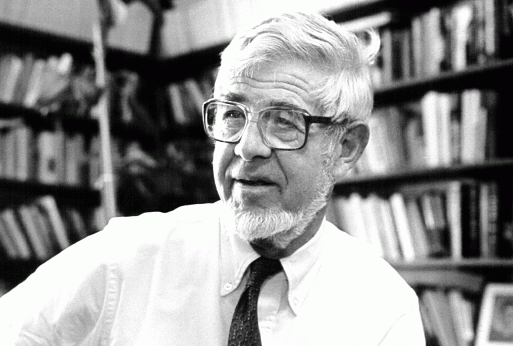
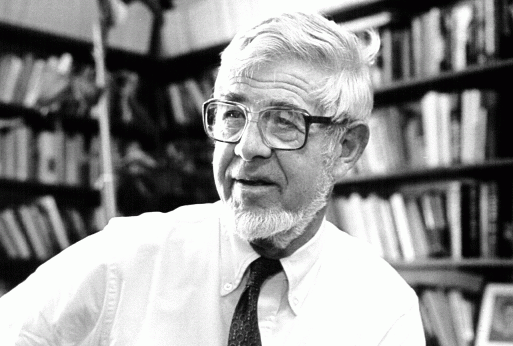
Alice Wong–writer, disability rights advocate, and 2024 MacArthur Genius–recently passed away at the age of 51. Wong earned a master’s degree in medical sociology from UC-San Francisco in 2004 and is known for her prolific writing on her own experiences of discrimination growing up in Indiana with muscular dystrophy, life-long work amplifying the stories of others, and policy advocacy against laws that overlooked the needs of people with disabilities. In 2014, she founded the Disability Visibility Project, which collected hundreds of oral histories about the lives of disabled Americans. This story was covered by the New York Times, Teen Vogue, and LGBTQ Nation.

Alice Wong

Scott Schieman (Professor of Sociology at the University of Toronto) and Alexander Wilson (Sociology PhD Student at the University of Toronto) wrote an article for The Conversation on whether Canadian workers think AI will displace them. They found mixed opinions. Among Canadians who thought job loss was likely, they found concern over corporate greed and loss of dignity and respect for workers. Others felt more confident that the market would adapt and adjust roles to fit new technologies. “Understanding worker attitudes toward automation is a crucial part of studying AI’s broader impact on work and society,” Schieman and Wilson wrote. “If large segments of the workforce feel threatened or left behind by AI, we risk not just economic disruption but a loss of trust in institutions and technological progress.”

Scott Schieman and Alexander Wilson

Musa al-Gharbi (Assistant Professor at Stony Brook University) spoke at a Center for Expanding Viewpoints in Higher Education event at Tufts University on how liberal elites have gained “a lot more influence over society and culture, but the consequences of that are not what we might have hoped or have expected.” Al-Gharbi described that elites focus on “symbolic change more than substantive change” and that the ways they engage in political action can be off-putting: “During these periods of Awokening, we become much more militant about mocking, demonizing, and censoring people who disagree with us, even for views that we adopted five minutes ago,” he said. This story was covered by TuftsNow.

Musa al-Gharbi

Murat Haner (Assistant Professor  of Criminology & Criminal Justice at Arizona State University), Justin Pickett (Professor of Criminal Justice at the University at Albany), and Melissa Sloan (Professor of Sociology & Interdisciplinary Social Sciences, University of South Florida) wrote an article for The Conversation on U.S. political violence. In the 1970s, the bulk of political violence was aimed at property, now the targets are specific people. In a survey study, the authors found that belief in white nationalism was the strongest predictor for support of political violence and argued that “white nationalism poses substantial danger to U.S. political stability.”

Murat Haner, Justin Pickett & Melissa Sloan

Bates News interviewed Francesco Duina (Professor of Sociology at Bates College) about his upcoming book, The Social Acceptance of Inequality: On the Logics of a More Unequal World–a collection co-edited with Luca Storti (Associate Professor Economic Sociology at the University of Torino). The book examines why we accept inequality in our social world. “We were very eager to understand that acceptance — it is, after all, a major factor that sustains those inequalities and something that we may want to grasp if we in fact want to do something about those inequalities,” Duina commented. Duina described four main justifications for inequality: (1) market/economic logics – thinking of inequality as a byproduct of a functioning economic system; (2) moral logics – thinking in terms of fairness, justice, and deservingness; (3) group logics – the idea that a certain group is entitled to more; and (4) cultural logics – cultural ideas (like the “American Dream”) that help us tolerate inequality.

Francesco Duina

Sociologist Stephen Whitehead wrote an opinion piece for NationalWorld arguing against the idea that “masculinity is in crisis.” Whitehead first notes that “masculinity is not singular but multiple. There are countless ways of men performing maleness, manhood, masculinity.” Some men are in crisis, “struggling to find a place in the world that values them as men” and facing depression and isolation. Whitehead names this “collapsed masculinity.” Whitehead also notes that, while there is widespread concern about “toxic masculinity,” he would not describe these men as “in crisis.” Male fundamentalists–those who embrace an “unapologetic, explicitly anti-female, misogynistic position”–are convinced of their superiority and do not trend towards depression or social isolation. Whitehead says that, while this group is dangerous, they are not in crisis.

Stephen Whitehead

Bailey Brown (Assistant Professor of Sociology at Spelman College) wrote an article for The Conversation describing how “school choice” – the expanding range of school options for young children – is a source of anxiety for parents. Parents “felt pressure trying to select a school for their elementary school-age children” and “some parents experience this pressure a bit more acutely than others,” Brown writes. “Women often see their choice of school as a reflection of whether they are good moms, my interviews show. Parents of color feel pressure to find a racially inclusive school. Other parents worry about finding niche schools that offer dual-language programs, for example, or other specialties.”

Bailey Brown

Willy Pedersen’s (Professor of Sociology at the University of Oslo) new book The Beauty and Pain of Drugs reveals an eye-catching correlation: Norwegians who drank heavily in their late teens and early twenties reported higher income and education levels later in life, as compared to their sober or light-drinking peers. “The most likely explanation is that all alcohol is a kind of marker of sociality, and that habit comes with some types of benefits,” Perdersen explained. That is, drinkers forged bonds and social skills that paid off later in life. This story was covered by The Times (London), Vice, and the New York Post.

Willy Pedersen

Victor Onyilor Achem (Researcher in Sociology at the University of Ibadan) wrote an article for The Conversation on how Nigeria’s Benue State Anti‑Open Grazing Law (which “banned the open grazing of livestock and required herders to establish ranches instead”) impacted the dynamics between farming and herding communities. Achem describes how the law–intending to reduce conflict–faltered in both design (as “it expected herders – many of them nomadic, landless and low-capital – to invest in ranches with minimal support”) and enforcement. This left herders feeling “criminalized” and farmers feeling “abandoned.” The law also became a symbol of power, land-based identity, and religious tension: “Both farmers and herders saw it as a struggle for survival, one group fighting to defend ancestral land, the other to preserve livelihood and identity,” Achem writes. “It became a law about belonging, rights, who gets to claim the land, and whose identity is recognised.”

Victor Onyilor Achem

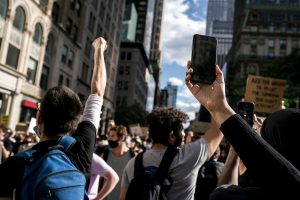
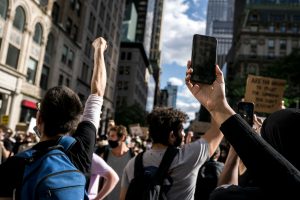
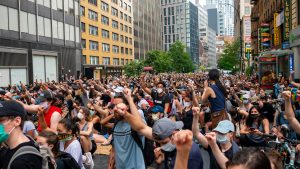
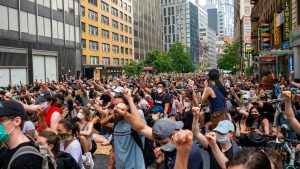
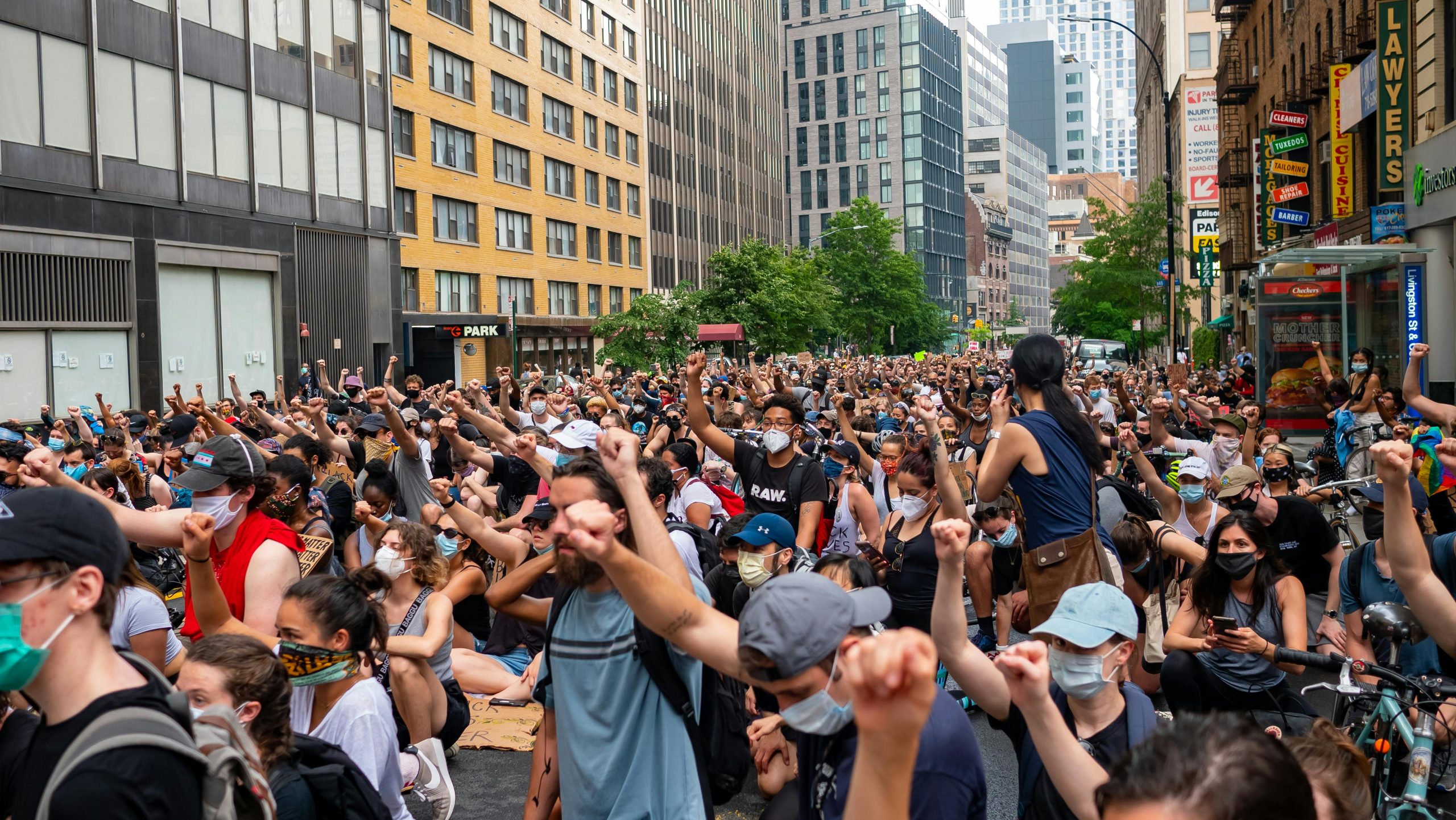
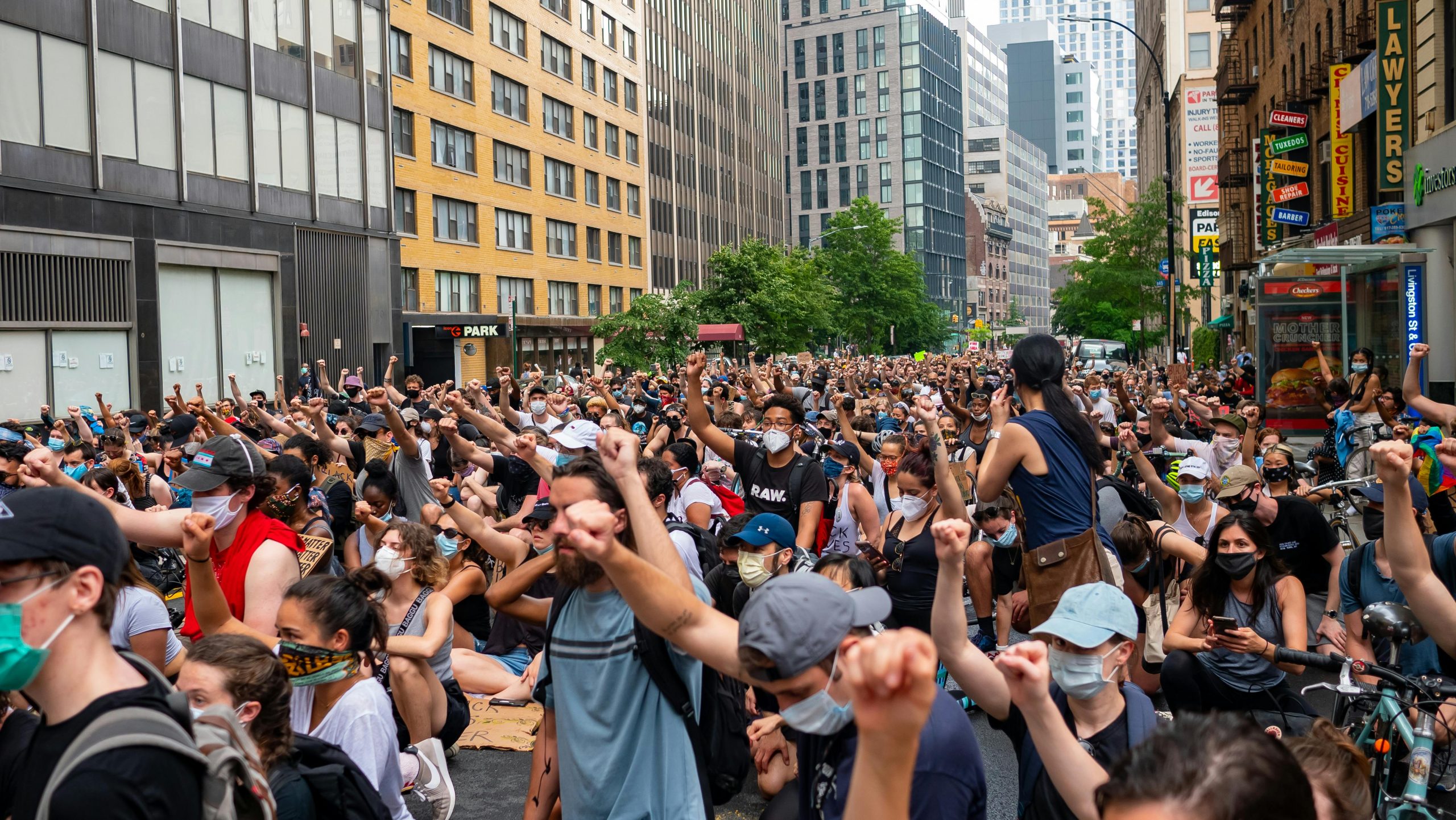
Ruth Braunstein (Assistant Professor of Sociology at the University of Connecticut) featured a Q&A with Ernesto Castañeda (Professor and Director of the Center for Latin American and Latino Studies and the Immigration Lab at American University) on her Democracy is Hard Substack site, discussing the impact of the “No Kings” protests. “The “No Kings” events are loosely coordinated transnational contentious performances. The question is whether they represent the seed of a social movement and whether onlookers — the American (and increasingly global) public — see them as “legitimate” and sympathetic,” Castañeda commented. “Some critics say the marches had no clear demands; historically speaking, that is not a fatal flaw but indeed a strength.”

Ruth Braunstein

Mike Savage (Professor of Sociology at the London School of Economics and Political Science) wrote an article for The Conversation on changes in UK personal wealth and wealth inequality over time. “The UK, like many rich countries, has become much wealthier, and these benefits are being more widely spread,” Savage explains. However, Savage argues that this increase in wealth has been largely in private hands, with limited investment in the common good. Savage argues that the idea that wealth should be treated as a private good “leads to the deeply dysfunctional view that wealth assets are free to be amassed, spent and passed on by their owners with scant encroachment in the form of taxation.”

Mike Savage

The Atlantic ran an article on the concept of “groupthink” and how it is often used as a negatively loaded term to explain catastrophic decision making. The article cites critiques of groupthink theory from Sally Riggs Fuller (Organizational Sociologist and former Professor at the University of South Florida) and Ramon Aldag (Professor of Management and Human Resources at the University of Wisconsin-Madison School of Business). Contrary to “groupthink” theories that suggest that quick consensus leads to poor decision making, their research suggested that “tight-knit groups—ones with that cohesive “we-feeling”—tend to make better decisions.”

Sally Riggs Fuller and Ramon Aldag

The Washington Post ran a story on how China is attracting scholars–particularly in STEM fields–in the wake of the Trump Administration’s funding cuts and immigration restrictions. The article cites research from Yu Xie (Professor of Sociology at Princeton University) and Junming Huang (Research Scientist at Princeton University), finding that “In the first six months of this year alone, about 50 tenure-track scholars of Chinese descent left U.S. universities for China” and “more than 70 percent of these departed scholars work in STEM fields.” Xie also commented that scholars relocating to China have to work in a more restrictive environment. “In China, scholars’ freedom at work is also constrained, as they are subject to bureaucratic control,” Xie said. “The university system in China is rigid.”

Yu Xie and Junming Huang

OSU News ran a feature on Ashley Railey’s (Assistant Professor of Sociology at Oklahoma State University) work on how rural areas address substance use. “Across the U.S., evidence suggests that people who use drugs are disproportionately viewed as dangerous, to blame for their disease, and unreliable,” Railey explained. “Combined with limited availability of health care services that are often seen in rural areas, these views — or stigma — can prevent people from seeking out and receiving help, limit the provision of services, and create divisions within communities about who is deserving, or not, of treatment and recovery services.”

Ashley Railey

Renowned Sociologist Herbert J. Gans recently passed away at the age of 97. Gans was known for his sociological work on urban and suburban life, social policy, and the news media, including the influential books The Urban Villagers, The Levittowners, The War Against the Poor, and Deciding What’s News. Gans was also a liberal activist–opposing the VIetnam war and supporting freedom of the press–and a proponent for participant observation and publicly-accessible writing. This story was covered by the New York Times, the Washington Post, and ABC News.

Herbert J. Gans

In an interview with Ms. Magazine, Laurie Essig (Professor of Gender, Sexuality, and Feminist Studies at Middlebury College) drew parallels between the dissolving democracies in the U.S. and Russia. Essig noted how masculinity and concerns about gender play into authoritarianism: “[E]very dictator we look at, had anxiety about masculinity. That’s true for Mussolini and Stalin, as well as contemporary leaders. Today, they’ve created this monstrous figure, “gender,” to explain the failure of masculinity. For Donald Trump it’s “gender ideology,” this idea that we’re trying to corrupt the children.” In the podcast project, Feminism, Fascism, and the Future, Essig and colleagues explore these themes across multiple national case studies. Essig also advised that “[p]eople need to get together and create a parallel society in a way where we take care of one another, where we engage in protecting our communities.”

Laurie Essig

In her recent book, Sin Padres, Ni Papeles: Unaccompanied Migrant Youth Coming of Age in the United States, Stephanie L. Canizales (Assistant Professor of Sociology at the University of California- Berkeley) explores legal policies and cultural landscape that shape the lives of undocumented young people in California. She describes how these young people are often exploited in low-paying jobs and vilified for political gain. “If not leverageable for the sake of agenda-setting or even tone-setting to the public, the population is completely forgotten,” Canizales said. “And that really haunts me.” This story was covered by UC Berkeley News.

Stephanie L. Canizales

Craig Considine (Senior Lecturer in Sociology at Rice University) commented: “Pope Francis was the first South American pope in history, and this really shook up the church in a good way. During his papacy, the church became more representative of its actual members as Pope Francis made a sincere effort to reach out to Africa and to Asia and to Latin America, which are three of the epicenters of the Catholic Church.” This was covered by Rice University News and Media Relations.

Landon Schnabel (Associate Professor of Sociology at Cornell University) described how Pope Francis balanced tradition and social transformation: “Pope Francis’ leadership reveals how ancient institutions bend without breaking. His calculated reforms — allowing priests to bless same-sex couples while maintaining traditional marriage doctrine — create breathing room within doctrinal boundaries rather than dismantling them. […] Official doctrine and lived practice now stand in stark contrast. Roughly two-thirds of American Catholics support same-sex marriage despite the Vatican’s continued opposition. In many countries, Catholics regularly use birth control despite official teaching against it. The Church operates at two levels: what Rome proclaims and what the people practice.” This was covered by Cornell News.
Craig Considine and Landon Schnabel

Rebecca Hanson (Professor of Sociology at the University of Florida), David Smilde (Professor of Sociology at Tulane University), and Verónica Zubillaga (Sociologist and Co-Director of the Network for Activism and Research for Coexistence) wrote an article for the New York Times in response to the Trump administration’s deportations of Venezuelan men to El Salvador. Hanson, Smilde, and Zubillaga note that the Venezuelan gang Tren de Aragua lacks organizational power and political aspirations in the U.S.: “Organized crime is far less portable than people usually think. It typically involves control of illicit markets, which in turn depends on relationships with local people and officials. These networks are not easily transferable and limit mobility.” The authors challenge these inhumane deportations: “The mass criminalization, arbitrary detainment and violation of due process that have characterized the Trump administration’s actions so far have echoed some of the tactics of the Venezuelan regime many of these young men presumably fled from. It reduces U.S. credibility and emboldens authoritarians everywhere.”

Rebecca Hanson, David Smilde, and Verónica Zubillaga

Oneya Fennell Okuwobi (Assistant Professor of Sociology at the University of Cincinnati) wrote an article for Salon highlighting the unintended consequences of diversity initiatives–in particular, that they tend to benefit corporations, not employees. Okuwobi explains how many workplaces engage in “diversity displays,” focusing on external appearances. “While workplaces receive the bulk of benefits, employees of color receive the burdens of upholding the image of diversity, with serious costs in terms of additional work, questions about our capabilities, and the need to fit the appearance of diversity that our workplaces desire.” Okuwobi writes more on this topic in her new book, Who Pays for Diversity: Why Programs Fail at Racial Equity and What to Do About It

Oneya Fennell Okuwobi

Lucius Couloute (Assistant Professor of Sociology at Trinity College) wrote an article for The Conversation on how U.S. parole systems contribute to recidivism. Couloute argues that although parole was “originally designed to help those convicted of crimes reintegrate into society – through mentorship, supportive services and other resources,” it now serves as a system of punitive surveillance that creates “hidden traps rather than pathways to success.”

Lucius Couloute

Lucius Couloute (Assistant Professor of Sociology at Trinity College) wrote an article for The Conversation on how U.S. parole systems contribute to recidivism. Couloute argues that although parole was “originally designed to help those convicted of crimes reintegrate into society – through mentorship, supportive services and other resources,” it now serves as a system of punitive surveillance that creates “hidden traps rather than pathways to success.”The New York Times ran an article on how I.V.F. technologies may be changing the way we view and relate to embryos. Time-lapse microscopy, a technology that has been widely used since the early 2010s, allows for observation of embryo developments. Many clinics share this video footage with patients on the day of their embryo transfer, before they know if the transfer was successful. The article cites research from Manuela Perrotta (Sociologist at the Queen Mary University of London), finding that some clients experience a deep connection with the video footage. “​​I felt like it was, it was a baby,” one patient told Perrotta and a research co-author. “It sounds really weird, but it felt like I was looking at a potential baby there, and watching it move and do all the stuff, and I just looked, it looked — I know it wasn’t just cells for me.”

Manuela Perrotta and Lucius Couloute

This week, Christine L. William’s (Professor of Sociology at the University of Texas) work on workplace inequality was featured in a question on Jeopardy!: “Similar to a barrier to women’s rise, this ‘escalator’ coined by sociologist Christine Williams invisibly lifts men.” This story was covered by the ASA.

Christine L. William

Jessica Calarco (Professor of Sociology at the University of Wisconsin) was interviewed by Salon on the difficulties that progressives face when building political coalitions. While the right–unified by a rejection of governmental solutions–can often agree to block new government programs, the left faces the difficult task of agreeing on what government solutions to pursue. “One thing I always tell my students is that, at least from a sociological perspective, causes imply solutions. When we are looking to solve social problems, first we have to agree that a problem exists,” Calarco stated. “Next they have to agree on where the problem is coming from. Those different understandings point to different possible policy solutions.”

Jessica Calarco

The New York Times ran a story on Trump’s cuts to staff and funding in the Department of Education. Philip N. Cohen (Professor of Sociology at the University of Maryland) commented on how the data collected by the DOE is crucial for not only research on school performance, but also for research on the state of labor markets, the economy, and inequalities in America. “This is bedrock, base-line information for how our society is functioning,” Cohen stated. “It’s a common language — a shared reality we all have.”

Philip N. Cohen

Boom! Lawyered (a Rewire News Group podcast) interviewed David S. Cohen (Professor of Law at Drexel University) and Carole Joffe (Sociologist and Professor of Obstetrics and Gynecology at Advancing New Standards in Reproductive Health (ANSIRH), based at the University of California, San Francisco) about their new book After Dobbs: How the Supreme Court Ended Roe But Not Abortion. Cohen and Joffe discussed potential risks to abortion access and the importance of supporting abortion care advocates. “How come since Dobbs, when everybody expected disaster, the number of abortions actually has risen slightly? Not a lot, but it has risen,” Joffe said. “One big answer to that question is […] the phenomenal networks of people helping people get to abortions. The other answer to that question is the huge influx of money that happened right after Dobbs. The expression often used is rage spending. People were so angry about Dobbs they just gave a ton of money to local funds, to the National Abortion Federation, to Planned Parenthood, to a local clinic.”

David S. Cohen and Carole Joffe

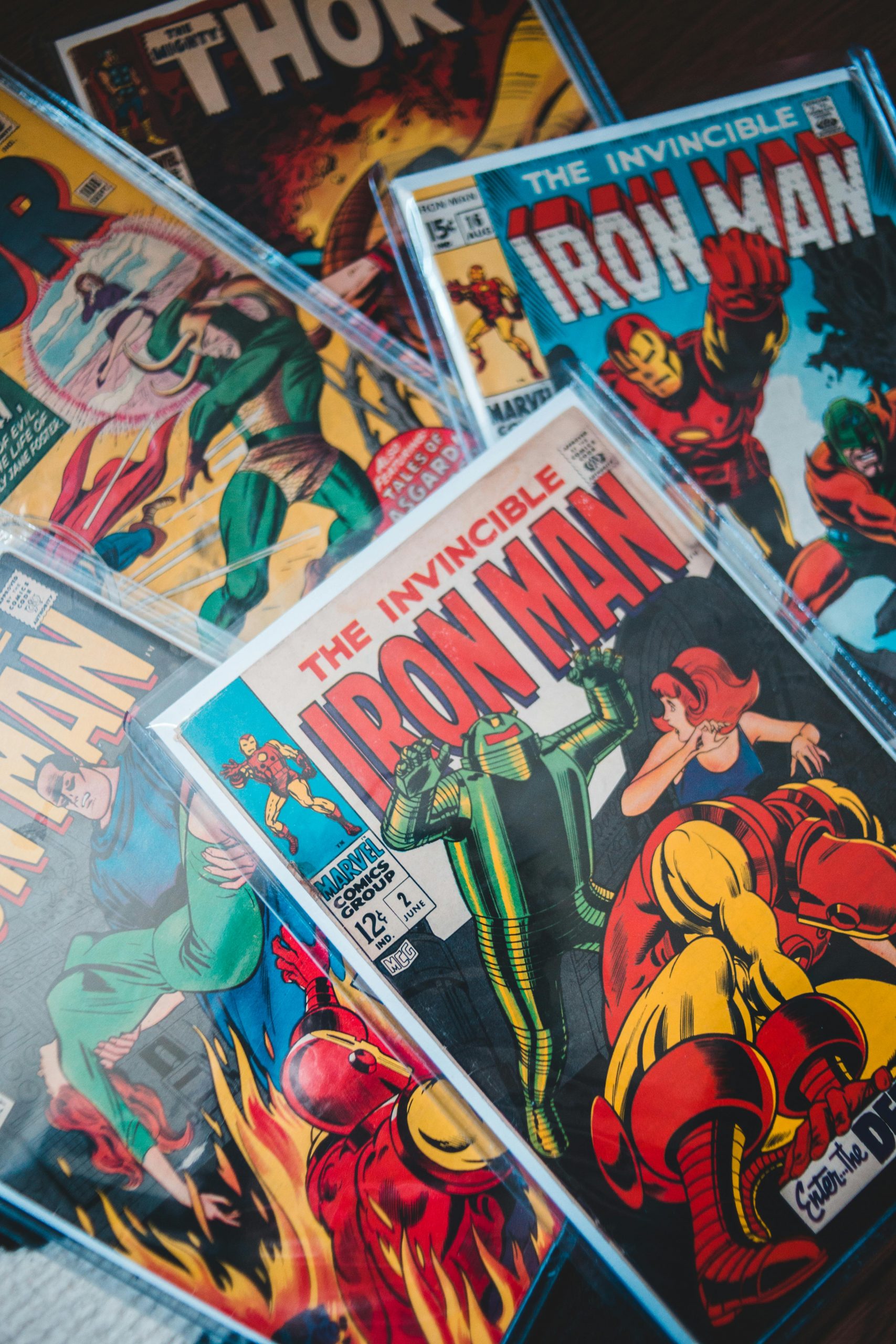
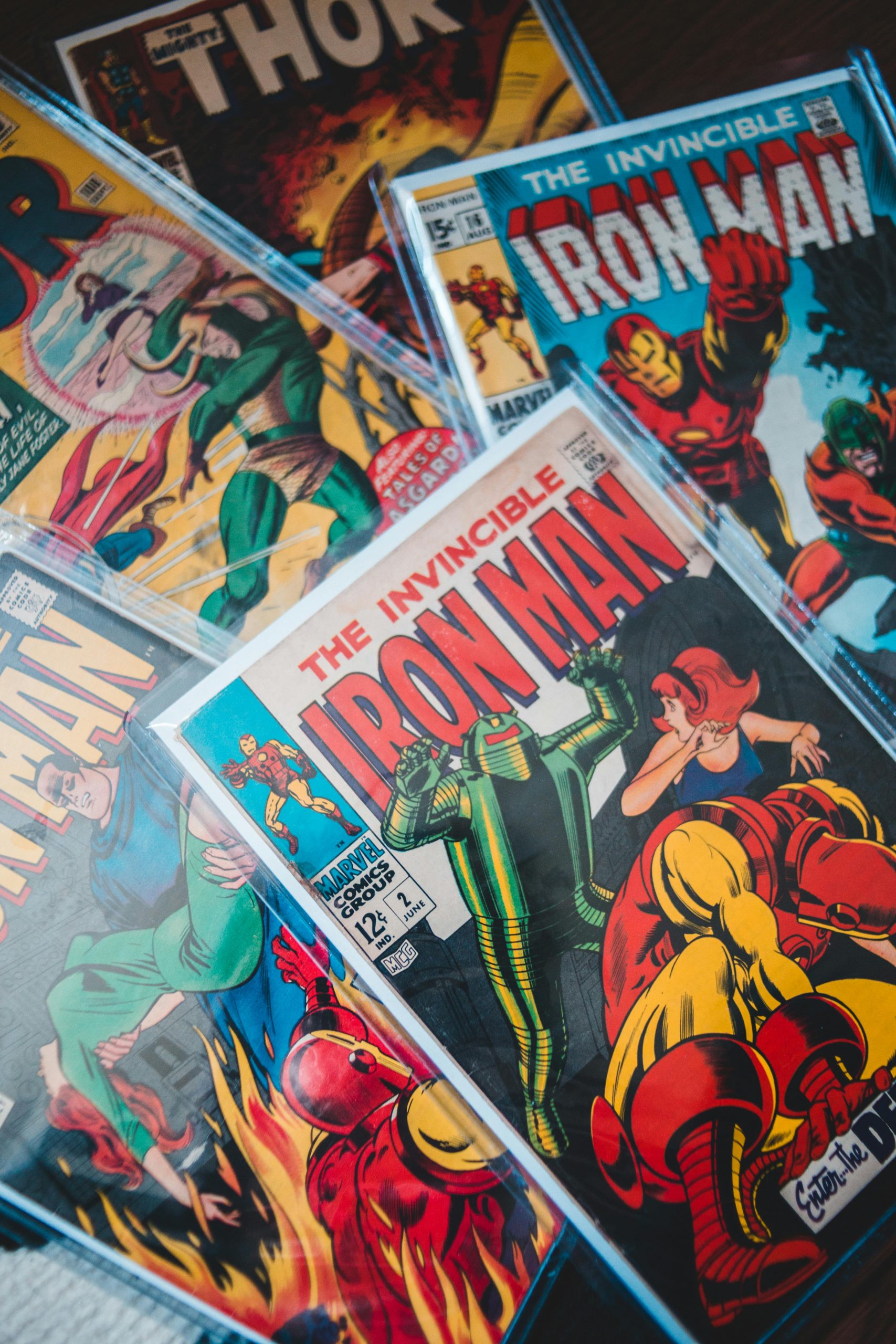
Michael Elliot (Professor of Sociology at Towson University) wrote an article for The Conversation on the sacred nature of Comic-Con for dedicated fans. Elliot describes how, beyond entertainment and escapism, comic-con culture provides fans with a “source of principles” to guide behavior, community and fellowship, and sanctuary (Comic-con “provides space for fans to be themselves, helps them cope with personal struggles, and inspires hope.”).

Michael Elliot

Tressie McMillan Cottom (Associate Professor at the University of North Carolina’s School of Information and Library Science) appeared on The Opinions–a New York Times podcast–discussing the role of masculinity and messages about gender in the Trump administration. Following Trump blaming a recent plane crash on D.E.I. initiatives, Cottom commented: “I actually think that D.E.I. in that context, while it sort of primed some racial energies, it was really doing its most effective work as a broad dismissal of women. I think one of the reasons that works is because we worked really hard — especially in the last like 15 years — to develop and deepen the repertoire that Americans have to talk about race and racism. I will be honest with you, I’m not sure that we did as good a job of developing that capacity when it came to gender.” Cottom also commented on how strongman politics works “by giving people a scapegoat, giving men a scapegoat — is that it says not only are women the enemy, are people of color and minorities the enemy, but the government is protecting them.” Strongman politics thus facilitate delegitimization of the government.

Tressie McMillan Cottom

Yolande Strengers (Digital Sociologists and Professor of Human Centered Computing at Monash University) appeared on Switched On Australia to discuss the energy industries flawed assumptions of consumer behavior and her work on the Digital Energy Futures project. Strengers commented that the energy industry expects consumers to act like ‘mini-economists’ or ‘mini-engineers,’ thinking of their households as a market. However, Strengers examines daily household practices and motivations, finding that consumers often think of energy as a means of comfort and entertainment, or a way to care for others.

Yolande Strengers

The Credits interviewed Brazilian sociologist Ana Paula Sousa (Film Professor at the Higher School of Advertising and Marketing in São Paulo) about I’m Still Here, a film about a family living during the period of military dictatorship in 1970s Brazil. Sousa commented that the film “exposed the roots of our violence – social, institutional and physical. For a long time, we have been shrouded in the haze of the idea that we’re a country of parties, of joy, of the “way things are” and fed by the illusion that we’re the “country of the future.” I’m Still Here shows that perhaps we are still the “country of the past,” in the sense that we need to deal with our old problems, including torture and slavery.”

Ana Paula Sousa

Bonnie Zare (Professor of Sociology at Virginia Tech) spoke to the Irish Star about the cultural relevance of The Substance, a modern body horror film. “I feel the movie is able to capture this feeling that we’re constantly under scrutiny, that we’re constantly trying to do the impossible, which is get rid of our imperfections, and this sort of self loathing that would accompany that that we’re not talking about,” Zare said. She described the film as a great teaching example of “how we can start to question the norms around us and the policing and disciplining of our bodies, hair and faces.”

Bonnie Zare

Matthew Desmond (Professor of Sociology at Princeton University) appeared on The Daily Show, discussing American poverty and ways to address it and build worker power in the U.S. economy. “I think a lot of us do benefit from poverty in ways we don’t realize,” Desmond commented. “We soak the poor in the labor market or the housing market. We continue to have a government that gives the most to families that need it the least, by subsiding affluence instead of fighting poverty. We continue to live in segregated lives. A lot of us are connected to that problem, but it also means we’re connected to the solution.”

Matthew Desmond

Singapore Management University ran a story on EurekaAlert! featuring Jacqueline Ho’s (Assistant Professor of Social Science at Singapore Management University) work on parents’ perceptions of inequalities in the Singaporean education system. Ho explained: “I find that what the ‘Every School a Good School’ rhetoric is doing is, not so much convincing parents that every school is worthy in its own way, but more that it’s comforting to parents who can’t compete. It’s helping parents to exit the competition with more peace of mind, and less sense of guilt about whether they’re making the right choice for their kid.”

Jacqueline Ho

On a recent episode of Normal Gossip, Kelsey McKinney (Author and Journalist) discusses her new book, You Didn’t Hear This From Me, and how she thinks about the functions of gossip. “I was reading a lot of studies by sociologists, and one thing that they talk about a lot is that we use gossip as a tool not only to understand our society, but to understand ourselves,” McKinney said. “So it’s like when I’m talking to you about something I might surprise myself by, like, and instinct that I have or someone I think is a villain in your story and realize, “Oh, this is a like, underlying bias that I have in my life.””

  • Arlie Russell Hochschild (Professor Emerita of Sociology at the University of California, Berkeley) appeared on Next Question with Katie Couric, discussing her book Stolen Pride: Loss, Shame, and the Rise of the Right. The book describes how residents of Pikeville, KY, a small city where 80% of 2016 voters supported Donald Trump, felt a pervasive sense of economic loss and why Trump’s messages resonated with them. In response to the 2024 election, Hochschild comments: “I feel like America is now living with two denials. There’s the denial of the Democratic side of America that is [] really denying what a big sector of America that has faced tremendous loss and has lost faith in the government’s response to that… But there’s a denial on the Right side of the aisle. Republicans that may have voted for a man for one reason—the border, the price of gas. But we are facing, I think, a danger to democracy and I think there is a discounting and a denial of that on the Right side of America.” Stolen Pride was recently recognized by the New York Times as one of the 100 Notable Books of 2024.
  • On Dec. 3rd, South Korean President Yoon Suk Yeol declared martial law, prompting widespread protests. He rescinded the decision six hours later. Gi-Wook Shin (Professor of Sociology and Director of the Asia-Pacific Research Center and Korean Studies Program at Stanford University) described the decision as a “surprising last-ditch move by Yoon to grab political power” amid low approval ratings. Shin appeared on NPR’s All Things Considered, discussing the future of democracy in Korea: “I think for a short term, there will be a lot of uncertainties and maybe instability in politics and society, maybe even in the economy. But in the long run, I think Korea has strong democratic institutions… And I remain optimistic, especially that such a move like martial law, you know, failed, you know, quite badly and very quickly.”
  • The New York Times ran an opinion piece featuring Allison Pugh’s (Professor of Sociology at John Hopkins University) new book The Last Human Job: The Work of Connecting in a Disconnected World. Pugh’s work reveals how technology––particularly artificial intelligence–has permeated work that requires “connective labor” and how “being able to have a human attend to your needs has become a luxury good.” However, Pugh commented that a dystopian future is not inevitable despite advances in interactive AI, because “humans lose interest in interacting with machines after a while, partly because of machine predictability.”
  • The Ink ran an article featuring Musa Al-Gharbi’s (Assistant Professor in the School of Communication and Journalism at Stony Brook University) new book We Have Never Been Woke: The Cultural Contradictions of a New Elite. “One of the key arguments of the book,” Al-Gharbi explains, “is that in many respects — and somewhat troublingly, from my perspective – social justice discourse is increasingly used by symbolic capitalists [elites who are committed to social justice], by the winners and the prevailing order of people who have been succeeding and flourishing, to justify inequalities. People who are losing, and suffering, and getting left behind, who feel like their values and interests are not reflected in our institutions, we [symbolic capitalists] point to those people and say, Good. They deserve to be marginalized. They deserve to be ignored. And we do this in the name of social justice. We use social justice, in many cases, to legitimize inequalities.”
  • Danielle Lindemann (Professor of Sociology at Lehigh University) was quoted in an Epic Stream article about what reality television reveals about our culture. Lindemann argues that reality TV provides a reflection of real-life people and social problems (like inequalities based on race, class, gender, or sexuality): “For all of its extreme personalities and outlandish premises, reality TV reflects how regressive we truly are.”
  • Benika Dixon (Assistant Professor of Public Health at Texas A&M University), J. Carlee Purdum (Assistant Professor of Sociology at the University of Houston) and Tara Goddard (Assistant Professor of Landscape Architecture & Urban Planning at Texas A&M University) wrote an article for The Conversation on how jails and prisons fail to protect incarcerated people during natural disasters. “People who are incarcerated can’t take protective actions, such as evacuating or securing their belongings,” they describe. “They have no say in decisions that the system makes for them.” Carceral facilities are often not evacuated due to facility designs that make it difficult for people to exit quickly or a lack of available sheltering locations. Natural disasters can also exacerbate physical and mental health problems for incarcerated individuals.
  • An article in the New York Times arts section discussed various depictions of pregnant women in arts and advertising. The story quoted Kathryn Jezer-Morton (Sociologist and Columnist for The Cut) on how celebrities and influencers pose for photos while pregnant. Jezer-Morton credits Demi Moore’s famous 1991 Vanity Fair cover photo with popularizing “bump hands,” a pose in which women place their hands around their stomach, “creating a meaningful enclosure around appropriate fatness” and emphasizing the bump “to reassure the viewer that underneath this one protrusion is a thin person.”
  • In an opinion piece for the New York Times, Tressie McMillan Cottom (Associate Professor at the University of North Carolina’s School of Information and Library Science) prompts readers to “look to the tradwives, podcast bros and wellness influencers” to understand how president-elect Donald Trump’s ability to tap into the aesthetics of online spaces may have helped him win the election. McMillan Cottom describes that online groups don’t map cleanly to traditional political poles and are racially and ethnically diverse. “Trump did not win over [ ] minority and young voters because he figured out how to appeal to their identity,” McMillan Cottom argues. Rather, “he excelled at tapping into the information ecosystems — social media, memes and the cultish language of overlapping digital communities — where minority and young voters express their identity. That is a meaningful difference.”
  • This week, Brazil celebrated Black Consciousness Day, a new national holiday honoring Black struggles for freedom in Brazil. Edward Telles (Professor of Sociology at the University of California Irvine) commented that although Brazil has the largest population of people of African descent of any country outside the continent of Africa, Brazil’s Black population has been “invisibilized until recently.” Telles explains that leaders in Brazilian media, government, and businesses were almost entirely White, but “that is slowly beginning to change.” This story was covered by The Washington Post.
  • Arlie Russell Hochschild (Professor Emerita of Sociology at the University of California, Berkeley) was interviewed in Salon, discussing how former president Donald Trump appeals to white, working class voters. “I think we live in both a material economy and a pride economy,” Hochshild explained. While Trump’s policies as president did not materially help these voters, “Trump helped those same poor and working-class white people feel proud and seen again. He talked about national pride and Making America Great Again. His voters feel that language and take it personally.”
  • The MacArthur Foundation announced its ‘Genius’ fellowship recipients for 2024, including several sociologists. Loka Ashwood’s (Assistant Professor in Sociology at the University of Kentucky) work focuses on helping communities overcome environmental injustices. Ruha Benjamin (Associate Professor of African American Studies at Princeton University) studies how technology reproduces inequalities. Dorothy Roberts (Professor of Law and Sociology at the University of Pennsylvania) examines racial inequalities within social service systems. This story was covered by the New York Times.
  • Diario de Cuba ran a story on the “migration crisis” in Cuba, as large numbers of Cuban people are emigrating out of the country, and the effects on children and families. Helen Ochoa Calvo (Sociologist from Cienfuegos, Cuba) commented that migration had become “the only solution left for those who can and want to live a dignified life through their work, the regime has left them with no other.” Ochoa Calvo described the current migration as the most distressing separation of parents and children since the Cuban Revolution: “Not only are parents leaving their younger children behind, they’re also leaving their older parents.”