sociology

  • Julia Sonnevend (Associate Professor of Sociology and Communications at the New School for Social Research) was interviewed by Public Seminar about her new book Charm: How Magnetic Personalities Shape Global Politics. Sonnevend discussed how political charm is evaluated by (often fragmented) audiences and how the charm of a political leader affects views of their country: “We simply pay more attention to personalities than to institutions, values, or even facts. If you think about the international context, we are often talking about countries Americans know very little about. And when there is a relatable political character, or a character who we really dislike, it is easier to put the country in a box.”

  • Eric Klinenberg (Professor of Social Science at New York University) wrote an opinion piece in the New York Times arguing that there is an “urgent need to make dangerous heat more recognizable.” Klinenberg discusses how, despite the fact that deaths due to heat waves typically outnumber deaths from hurricanes, tornadoes, and floods combined, Americans are “quick to forget” heat waves. Klinenberg argues that major heat waves should be named (like major storms are named, e.g. “Hurricane Katrina” or “Superstorm Sandy”) to help us “recognize it as an enemy and mobilize support for public projects” to avoid future climate disasters.
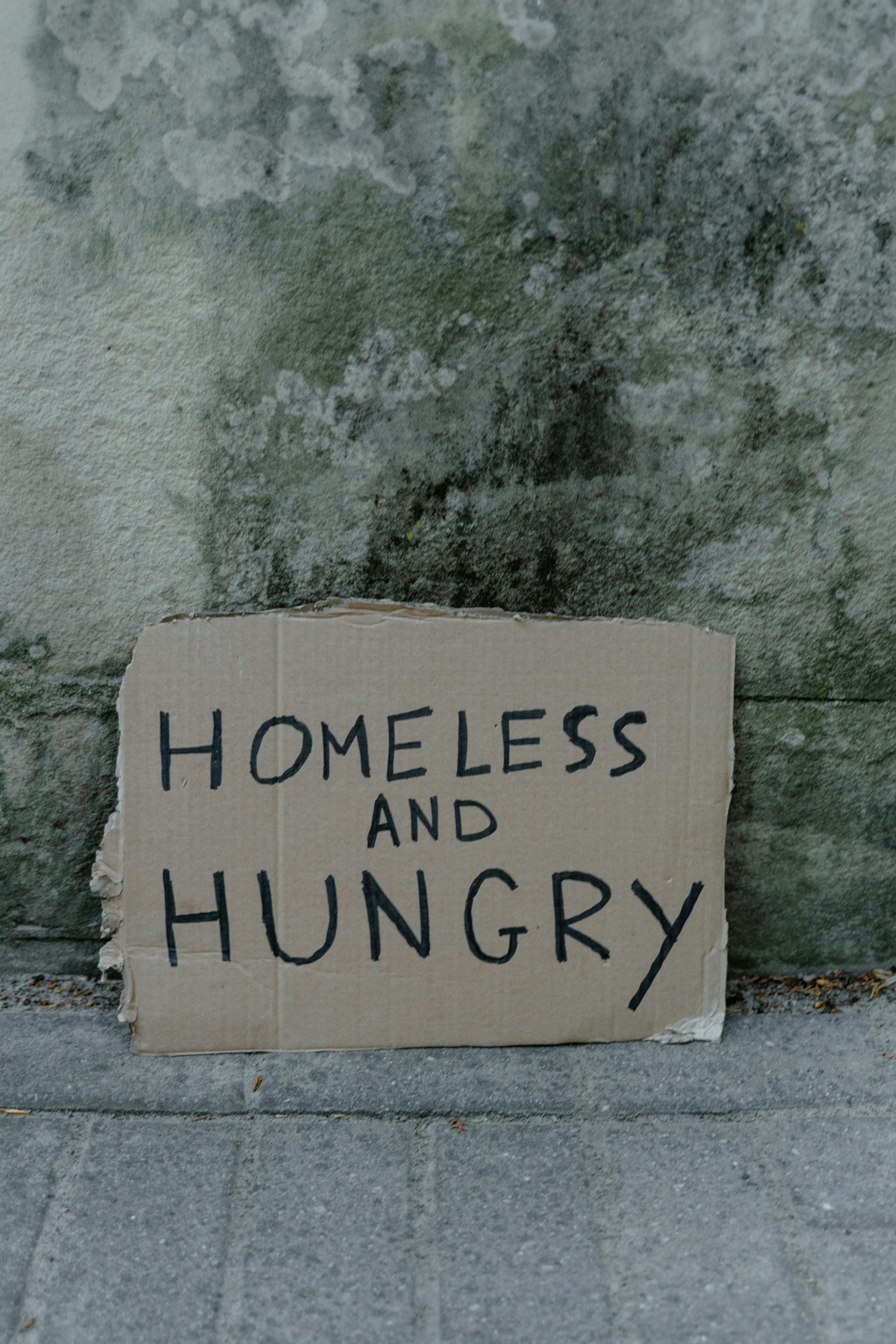
  • Pesquisa ran an article on homelessness in Brazil, which has grown about 211% from 2012 to 2022. Research from the Institute of Applied Economic Research (IPEA) indicates that the primary reasons for homelessness are financial hardship, broken family ties, and health issues (particularly related to addiction). Marco Antônio Carvalho Natalino (Sociologist at the Institute of Applied Economic Research) explains that “the reason for homelessness influences its duration,” and homelessness due to family or health issues tends to last longer. Fraya Frehse (Professor of Sociology at the University of São Paulo) commented that the spread of homelessness is a global reality.
  • Ahead of the U.S. presidential debate, Tressie McMillan Cottom (Associate Professor at the University of North Carolina’s School of Information and Library Science) joined four other New York Times columnists in an online discussion on the candidates and their potential pathways to winning the election. McMillan Cottom noted that “Trump is a known entity. He does not have to “win” the debate…he has to win the media cycle. His biggest risk is being ineffectual at commanding attention.” For Harris, the “best path to winning is through historic turnout and enthusiasm.” McMillan Cottom emphasized the importance of selling a compelling story to scared, angry voters: “The big story of Trump’s win in 2016 was that voters were angry and experts missed it. … The story in this election is that voters are still angry and we may still be missing it. I spent time talking to female voters in nail salons, hair salons and waxing salons. … The women I talked to in those female spaces are angry and afraid. As one low-information voter told me, she wants someone to look like a fighter.”
  • David Karen (Professor of Sociology at Bryn Mawr) is featured in the recently released film Love 2020. The film is about the 2020 US Open–the first major international event held during the COVID-19 pandemic. Karen commented that it “was a delight to talk with Jacqueline Joseph, the director of the film, about so many things that I’m passionate about: tennis, New York City, the role of sports in our lives, and movements for social justice.” This story was covered by Bryn Mawr News

And Some Bonus Clippings:

  • Arlie Russell Hochschild’s new book, Stolen Pride: Loss, Shame, and the Rise of the Right, was covered by WBUR and the Boston Globe.
  • Sherry Turkle’s interview for Body Electric discussing the effects of AI chatbots on relationships was re-publicized on NPR last week.
  • The Nation ran an article on Michael Sierra-Arévalo’s (Assistant Professor of Sociology at the University of Texas – Austin) recent book The Danger Imperative. Sierra-Arévalo examines police culture and how it shapes interactions with the public. He describes the “danger imperative” as “policing’s governing institutional frame,” which includes a preoccupation with violence and officer safety, leading officers to treat every interaction as a potential emergency.
  • The New York Times ran a story on a prominent video creator of the homesteading movement (which focuses on living self-sufficiently and off-the-grid) who broadcasts the lifestyle to millions of social media followers. Jordan Travis Radke (Director of the Collaborative for Community Engagement at Colorado College) commented that members of the homesteading movement have varied backgrounds and political alignments, but agree that while “the societal systems and structures in which they were embedded could not be changed anymore,” their lifestyles could be changed. “The modern homesteading movement’s big idea is that, rather than trying to change the world collectively and publicly, people are trying to reshape their private sphere — their worlds, their homes, their own tiny network,” Radke said. “They’re changing their lives, but they want other people to see it, because they want others to follow suit.”
  • Vice President Kamala Harris announced Minnesota Governor Tim Walz as her running mate for the upcoming presidential election. Republicans are criticizing Walz’s response to the mass protests following the 2020 police murder of George Floyd, saying Walz “let Minnesota burn” by not bringing in the National Guard quickly enough. In an article for USA Today, Michelle Phelps (Professor of Sociology at the University of Minnesota) explains that National Guard activation had to be requested by the mayor, as managing unrest was the city’s responsibility. “To say that [Walz] let Minnesota or Minneapolis burn is just a wild misconstruing of the facts,” Phelps said. “It was a response to a really unusual set of circumstances, and I think they responded as fast as was reasonably possible, given the scale of the operation.” In an article for BBC, Phelps added that a more forceful response could have backfired: “There’s a vision in which if we had had a more conservative governor that escalated the state response in the way that President Trump wanted, we would have seen more violence and more destruction,” she said.
  • Francisco Lara-García (Assistant Professor of Sociology at Hofstra University) was recently interviewed in The Markup discussing the “virtual wall” of digital surveillance along the US-Mexico border and the relationship to surveillance among those who live in border towns. “One thing that is kind of a paradox about living and having lived on the border is that there are moments when you can’t not be aware of the intense amount of enforcement and surveillance and activity across the border. But at the same time, it also just becomes a fabric of your life that you don’t notice, or you just don’t pay attention to it,” ​​Lara-García said. “Part of that is because it gets normalized, but also sometimes because there’s surveillance and enforcement that actually just doesn’t impact your life at a particular moment.”
  • The New York Times ran a story on the “step gap” in senior care. A 2021 study led by Sarah Patterson (Research Assistant Professor at the University of Michigan) found that among older adults needing assistance, about half of adults with biological children received care from them, while fewer than a quarter of adults in blended families received care from their step-children. “We have more reconfigured families than ever before, and these families may increasingly rely on someone who’s not a biological child. In general, those relationships tend to be less close,” Deborah Carr (Director of the Center of Innovation in Social Science and Professor of Sociology at Boston University) commented. Merril Silverstein (Professor of Sociology at Syracuse University) added that relationship quality also depends on the age at which a step-parent enters a child’s life: “When a new father comes in and you’re in your 50s, are you going to call him Dad?” Silverstein asked.
  • Jessi Streib (Associate Professor of Sociology at Duke University) wrote an article for The Conversation describing how hiring practices (and luck) can equalize opportunities for college graduates of different socioeconomic backgrounds. Many prospective employers hide key job information (salary range, detailed job descriptions, criteria for evaluation, etc.) and refuse to negotiate with new hires. This can lead to less income disparity for new hires, as all students are navigating their job searches with limited information.
  • In a New York Times audio essay, Matthew Desmond (Professor of Sociology at Princeton University) interviews a resident of the Water Street Mission shelter in Lancaster, PA – a shelter striving to “address not just people’s material needs, like housing and employment, but the whole person, including their emotional, even their spiritual needs.” Desmond calls for mobilizing resources to alleviate poverty and homelessness: “When it comes to abolishing poverty or solving the homelessness crisis, America’s problem has never been a lack of resources. Our problem has been a lack of moral clarity, moral urgency.”
  • The New York Times ran an article on the increasing mainstream popularity of drag performance in the Philippines. Athena Charanne Presto (Sociologist at the University of the Philippines) described the tension between evolving social values and the “entrenched legacies” of Roman Catholic religious views: “While more globally oriented younger generations may drive liberalization, the church’s influence remains. [But] many Filipinos find a way to reconcile faith and support for diverse identities,” Presto said. Jayeel Cornelio (Professor of Development Studies at the Ateneo de Manila University) added: “What we are seeing is a transformation of what it means to be Catholic or Christian for the youth, who are looking for authenticity. Sometimes they find this outside the institution or traditional practices.”
  • Jessica Calarco’s (Professor of Sociology at the University of Wisconsin-Madison) new book, Holding It Together: How Women Became America’s Safety Net, describes how our lack of an effective social safety net pushes U.S. women into undervalued labor–particularly care work. “We can’t really get by without a social safety net, but we’d like to pretend that we can, and that’s where women’s labor comes in,” Calarco told Esquire. “We maintain the illusion of a DIY society by relying on women to fill in the gaps. Women do the unpaid and underpaid labor that holds everything together.” Calarco was also interviewed about the book in Salon and Fast Company.
  • Thomas D. Beamish (Professor of Sociology at the University of California-Davis) wrote an article for the Conversation on how Americans’ understanding of tragic events has changed in the 21st Century. Tragedies were often explained in reference to “God, fate, bad luck, blameless accidents or…individual responsibility” in the 20th Century. Now there is a focus on assigning social blame (where “societal institutions such as the government, industry, civil society and even American culture are held responsible”). Beamish emphasizes that tragic events are now politically polarizing, rather than unifying.
  • In his new book, The Last Plantation: Racism and Resistance in the Halls of Congress, James R. Jones’ (Assistant Professor of Sociology and American Studies at Rutgers) new book argues that the lack of racial diversity among congressional staffers perpetuates inequalities. “The unequal racial makeup of congressional staff is one of the most important problems subverting our multiracial democracy,” he writes. This story was covered by Politico.
  • Anna Akbari’s (former Professor of Media, Culture, and Communication at NYU) recent memoir, There is No Ethan: How Three Women Caught America’s Biggest Catfish, describes her experience being emotionally manipulated by an online catfisher. The New York Times review of the book notes that although Akbari’s dissertation focused on “aspirational identity,” she withholds her sociological perspective until the epilogue. There, “she poses fascinating questions: What are the ethical boundaries of digital platforms? Is lying to create intimacy a violation of consent? When does inauthenticity become evil? And how should the law handle people who engage in virtual offenses that are not financially motivated…?”
  • The Minneapolis Reckoning: Race, Violence and the Politics of Policing in America, a new book by Michelle S. Phelps (Associate Professor of Sociology at the University of Minnesota), argues that Minneapolis is a “secret bellwether city for understanding race and policing in America” and “a test case for both the possibilities and limits of liberal police reform.” Phelps appeared on MPR News, discussing the origin of her research, interviews with Minneapolis residents, and the potential impact of court-imposed reform measures. Reason Magazine called the book “a valuable piece of research on how fights for police reform are won and lost, and what reform means to the people who need it most.”
  • The U.S. Department of Justice recently filed an antitrust lawsuit against Live Nation Entertainment (the parent company of Ticketmaster) for monopolization of the concert industry. In an interview with The Conversation, David Arditi (Associate Professor of Sociology at the University of Texas – Arlington) discussed how musicians are now more dependent on tour revenues to make a living and how Live Nation and Ticketmaster changed the ticket purchasing experience for consumers.
  • In a new book, Between Us: Healing Ourselves and Changing the World Through Sociology, forty-five sociologists share personal stories of the impact of sociology. “I’ve always believed that sociology helped save my life and can do the same for others,” said co-editor Elizabeth Anne Wood (Professor of Sociology at Nassau Community College). “Instead of feeling hopeless and helpless, I found strength in understanding the social structures that constrain and hurt us,” co-editor Marika Lindholm (sociologist and founder of Empowering Solo Moms Everywhere) explained. This story was covered by PR Newswire.
  • Benjamin Shestakofsky (Assistant Professor of Sociology at the University of Pennsylvania) wrote an article for Zócalo Public Square describing how venture capital business models “help create products that succeed in short-term disruption—with questionable or even dangerous long-term effects” and the various alternatives to the venture capital model. “By promoting and investing in businesses with alternative ownership structures,” Shestakofsky argues, “consumers, workers, activists, and governments can challenge venture capital’s winner-take-all model, creating ecosystems of smaller, more localized and specialized platforms that are more responsive to the people who use them and to the communities in which they are embedded.”
  • The Telegraph ran a story on the rise of the ‘work from home’ husband, describing the post-pandemic phenomena of U.K. men working from home while their wives return to the office. Heejung Chung (Professor of Sociology and Social Policy at the University of Kent) commented that there is more opportunity to work remotely in male-dominated jobs. “The three big occupations or sectors where remote work is still limited are healthcare, education, not all education but mainly primary and secondary, and then the third is retail. Those are very female-centric occupations, where remote working is not possible,” Chung said.
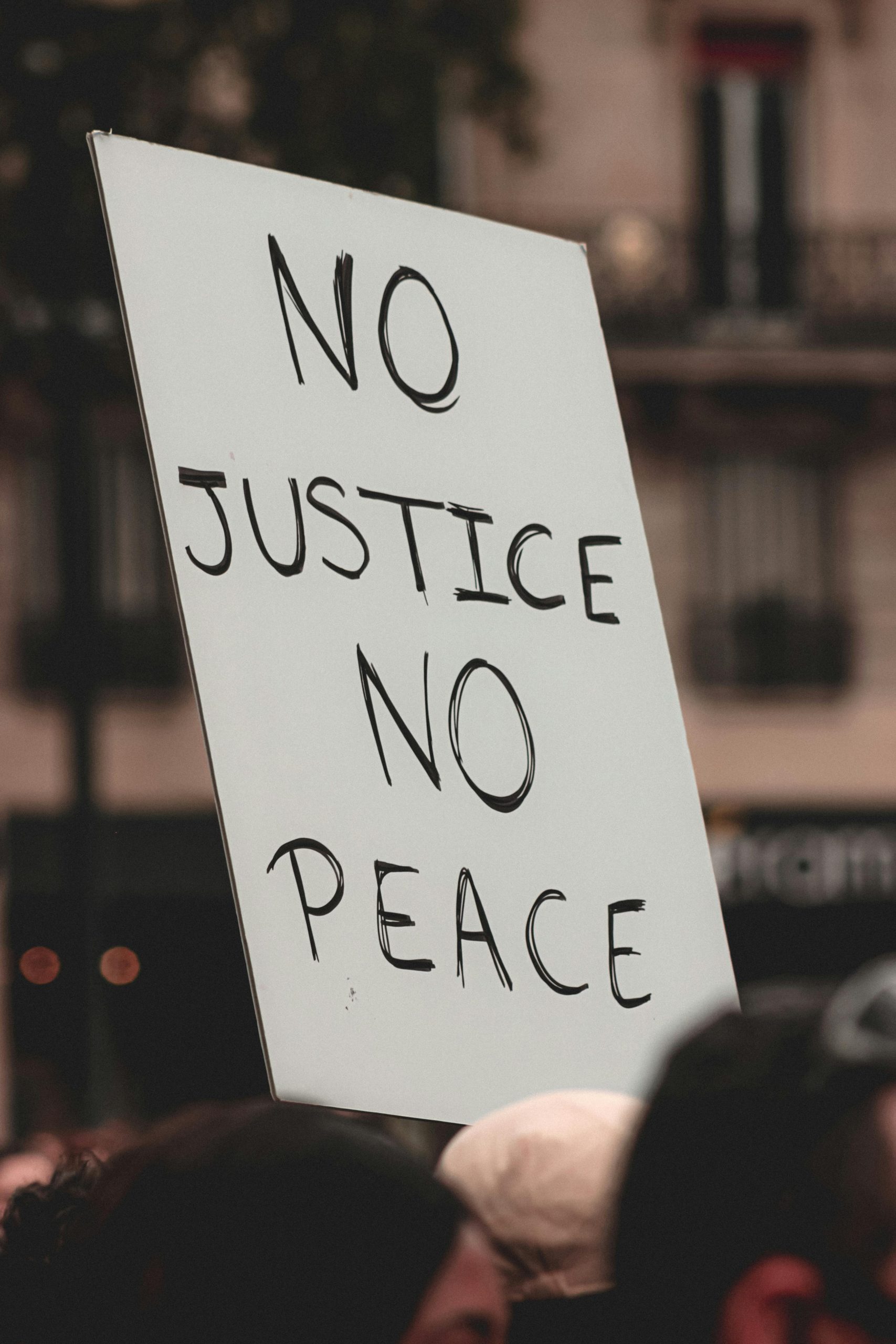
  • In response to protests on university campuses calling for divestment from Israel, NHPR ran a story on how social media has changed protest movements. Zeynep Tufekci (Professor of Sociology and Public Affairs at Princeton) commented that protests organized using social media “get very big very quickly,” but are not necessarily more effective in generating policy change. Non-digital movements of the past “facilitated face-to-face relationships and cohesive group problem-solving.” For example, Tufekci describes that during the Civil Rights Movement, it “took them six months just to organize the logistics of the March on Washington because you couldn’t just put it on a hashtag on social media. But that meant that [the] organizational structure they built helped them navigate what came afterward.” However, Tufekci also notes that movements utilizing social media may be evolving, citing the “message discipline” (or, clear boundaries around what is said as a group) of the protests at Yale, where organizers limited the group to approved chants.
  • Beth Linker (Professor in the Department of the History and Sociology of Science at the University of Pennsylvania) recently released a new book: Slouch: Posture Panic in Modern America. “With the rise of eugenics in the early 20th century, certain scientists began to worry that slouching among “civilized” peoples could lead to degeneration, a backward slide in human progress,” Linker described in an interview with the New York Times. The book investigates this “posture panic,” the rise of posture correction in medical science, and how the “postural defects” became a social marker of “character, intelligence and physical ability.”
  • The New York Times ran a story on how the COVID-19 pandemic affected American gun violence. Nicole Kravitz-Wirtz (Population Health Sociologist at the UC Davis Violence Prevention Research Program and California Firearm Violence Research Center) commented on the effects of violence beyond the direct victims: “Neighborhoods that have persistently elevated levels of violence have lots of trauma across many people. That impacts relationships between neighbors and translates into collective senses of fear.” Kravitz-Wirtz noted the racial disparities in geographic proximity to gun violence.
  • A new dating app with selective membership, The League, aims to connect individuals who are equally successful–financially, socially, and in their careers. “Data shows that men and women are increasingly dating and subsequently marrying individuals who share similar backgrounds,” Jess Carbino (Online Dating Consultant and former Sociologist for Tinder and Bumble) commented. “So on one hand, The League has been criticized for perpetuating existing social inequalities, but on the other, you can say it’s helping people do what statistically, they’re already doing, which is basing their preferences on certain markers.” This story was covered by Yahoo! Life.
  • Erin Cech (Associate Professor of Sociology at the University of Michigan) and Elana Goldenkoff (Doctoral Candidate in Movement Science at the University of Michigan) wrote an article for The Conversation assessing how prepared engineers are to face ethical dilemmas regarding AI. They discuss how engineers often are aware of ethical dilemmas, but feel unprepared to deal with them and how ethics training is often placed on the backburner in STEM education. However, engineers who do receive ethics training “were 30% more likely to have noticed an ethical issue in their workplace and 52% more likely to have taken action.” ​​
  • Robert Bullard (Distinguished Professor and Director of the Robert D. Bullard Center for Climate and Environmental Justice at Texas Southern University) recently won a TIME Earth Award in recognition of his work in environmental justice. “My sociology has taught me that it is not enough to gather the data, do the science, and write the books in order to get transformative change. In order for us to solve this climate crisis…we must marry [our data] with action,” Bullard said in his acceptance speech. “I am optimistic. I do have faith. But as my grandmother told me, faith without work is death. We are a live movement.”
  • Stephanie Alice Baker (Senior Lecturer in Sociology at City University of London) wrote an article for The Conversation on how wellness influencers are contributing to misleading information about birth control on social media sites. Baker describes how “the pill has been re-framed from a source of liberation to harmful by some female wellness influencers” who tend to prioritize “native expertise – knowledge derived from intuition and experience rather than professionals.”
  • Caitlyn Collins (Associate Professor of Sociology at Washington University in St. Louis) recently appeared on The Ezra Klein Show to discuss how national policies, social support, and culture affect experiences of parenthood. Collins describes how work-family policies in Sweden and the United States affect how we think about parenting, clashes between the roles of worker and parent for Americans, and more.
  • Christina Cross (Assistant Professor of Sociology at Harvard) was recently accused of plagiarism in an anonymous, bad-faith complaint. The complaint focuses on instances of boilerplate descriptions of datasets and instances where scholars are cited, but not quoted. This accusation–the fourth in a series of complaints against Black women at Harvard who study race or social justice–has been amplified by conservative activist Christopher Rufo as part of a broader campaign against critical race scholarship and DEI efforts. Plagiarism expert Jonathan Bailey reviewed the allegations and found no issue. However, Bailey is concerned with the “weaponization of plagiarism” (using allegations of plagiarism to address political or social grievances). In support of Cross, the ASA denounced the anonymous complaint: “These false claims of plagiarism are a political attack that exploits the gap between the normal scientific process and the public’s understanding of that process. These actors also appear to be working to undermine faith in the research process and delegitimize academic knowledge by attacking racial diversity and the inclusion of highly qualified Black faculty and leaders in colleges and universities.” This story was covered by The Harvard Crimson.
  • Zeynep Tufekci (Professor of Sociology and Public Affairs at Princeton) wrote an op-ed for the New York Times in response to the media frenzy surrounding Kate Middleton’s disappearance from the public eye for an unspecified surgery. Tufekci compares the public response to prior treatment of Meghan Markle, highlighting the double standards and arguing that “trapping women in constraining public roles, pitting them against one another and reducing them to symbols of virtue or vice is a powerful and politically expedient distraction” but is harmful all around.
  • DW – South Africa ran a story on how US fundamentalist Christian churches are promoting negative sentiments against LGBTQ+ people and abortion rights in Africa. Haley McEwen (Postdoctoral Researcher at the University of Gothenburg) commented that “US Christian right-wing groups have been very active in the US foreign policy since the early 2000s,” promoting “family-friendly agendas” and funding homegrown African organizations with aligning political agendas.
  • South African sociologist Edward Webster (Founder of the Society, Work & Politics Institute at the University of Witwatersrand) recently passed away at the age of 81. In a profile of his life and work, Michael Burawoy (Professor of Sociology at UC Berkeley) wrote that Webster’s sociological practice is marked by “the intimate connection between his academic and his public lives: the one inseparable from the other. The Webster windmill takes in the winds of change—social, political, and economic winds—and turns them into a prodigious intellectual engagement.”
  • The New York Times ran a story discussing the upcoming election in Russia. Greg Yudin (Professor of Political Philosophy at The Moscow School of Social and Economic Sciences and Visiting Research Scholar at Princeton) commented that anxieties and uncertainties over the war are drawing voters to Vladimir Putin: “There are fears about what will happen if we don’t win: We will be humiliated, everyone will be prosecuted, we will have to pay huge reparations — and basically put under foreign control. These fears are fueled by Putin, who has also positioned himself as the only one who can end the war.”
  • The Cut interviewed Gretchen Sisson (Sociologist at Advancing New Standards in Reproductive Health (ANSIRH) at the University of California San Francisco) about her new book Relinquished: The Politics of Adoption and the Privilege of American Motherhood, which highlights experiences of birthmothers in the adoption industry. Sisson describes how many birthmothers want to become parents, but participate in adoption for financial reasons: “We have to understand adoption largely as a product of inequity and poverty, and that is a fundamental understanding that we just don’t have in this country,” Sisson says.
  • Eric Klinenberg (Professor of Social Science and Director of the Institute for Public Knowledge at NYU) appeared on Plain English with Derek Thompson to discuss the “hanging out crisis” (the decline in face-to-face interactions), the importance of social infrastructure, and why “aloneness isn’t always loneliness.”
  • Robert Bullard (Distinguished Professor and Director of the Robert D. Bullard Center for Climate and Environmental Justice at Texas Southern University) appeared on Living on Earth to discuss how an elevated highway has caused destructive flooding in Shiloh, Alabama. “This is one of the worst cases of environmental racism that I have seen in the 40 years that I’ve worked on this. … If you look at the damage that has been caused over the last six years, you can see the drainage systems are pointed like cannons into the community. It’s almost as if the state is saying “We want you out of here. And if you don’t leave, we’re gonna drown you. We’re gonna drive you out.” Bullard discussed how pollution, vulnerabilities to climate change, and vulnerabilities to harmful infrastructure are racially segregated. This story was picked up by Inside Climate News.