politics

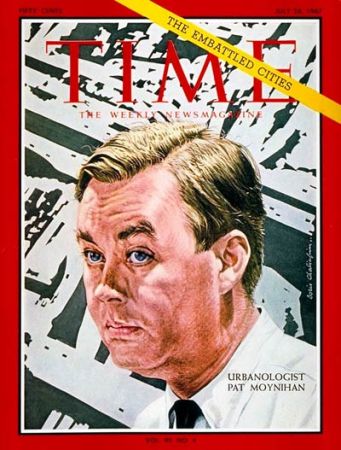
moynihanSince the 1965 “Moynihan Report,” conversations about disproportionate inequalities between white and black communities have historically focused on “black culture”—that is, explanations of racial discrepancies as products of different values, social norms, and cultural practices within black communities. The study, formally titled “The Negro Family: The Case for National Action,” saw black poverty as the result of non-nuclear family structures and absentee fathers. Now, University of Maryland sociologist Philip N. Cohen tells Vox that academics are leaving the argument behind because it simply doesn’t hold up:

The predominant view now is that there is a specific condition of inner-city concentrated poverty especially in black communities, because of racial segregation and racism, and the structural conditions are very damaging to family life, family relationships. People lose jobs and housing because of incarceration, job discrimination, etc., which create real obstacles to family stability, which in turn is a challenging condition for children’s development.

Indeed, as social science has matured and issues of race and racism have come under scrutiny and greater focus, more people are aware that structural issues, rather than personal ones, best explain advantage and privilege by race. Hopefully 1960s-era thought is well on its way to being replaced with more nuanced understandings of the factors behind racial discrepancies.
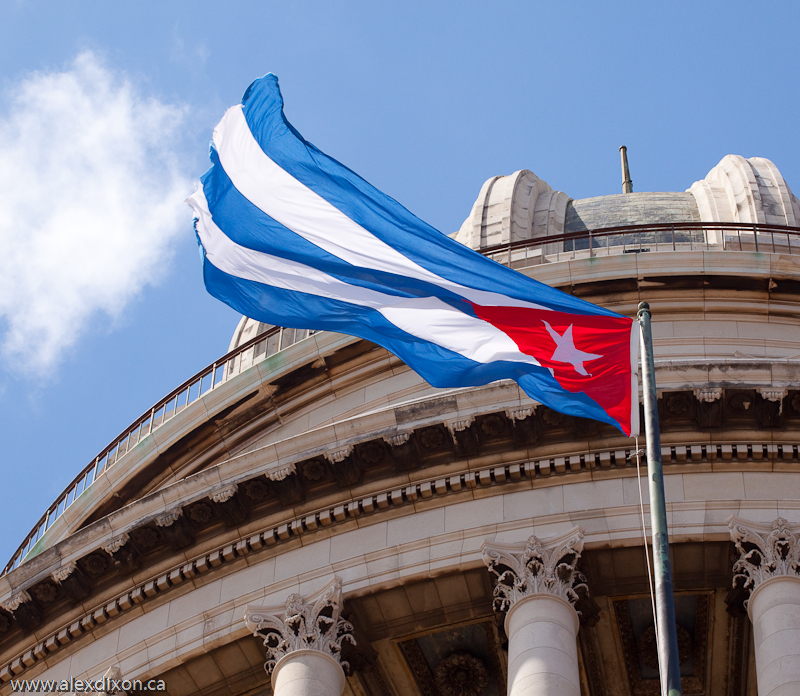
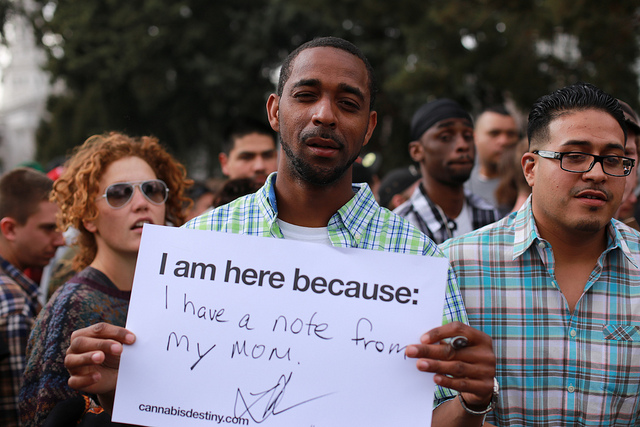
Photo by Alex Dixon via Flickr.


With presidential hopefuls gearing up for the 2016 election, shifting views about the relationship between the United States and Cuba could influence electoral outcomes, especially in the swing state of Florida. Sen. Ted Cruz and Sen. Marco Rubio, both Cuban Americans running on the Republican ticket and hoping to secure the Cuban-American vote, should take note. Sociologist Guillermo Grenier, who has run the Florida International University Cuba Poll for over 20 years, recently told the Washington Post:

Almost half of Cuban Americans are now U.S.-born, and they are reverting to a full spectrum of political perspectives.

The article explains how, in the 1960s and 1970s, the passion to overthrow Fidel Castro drove Cuban-American political ideology. But since then, a newer and younger generation of Cuban Americans has entered the voting booth.

“In South Florida, immigrants who arrived after 1995 now make up a third of the Cuban community, and most are not Republicans.” Grenier added,

My students think of themselves as Republicans, but they keep asking, ‘How can Rubio be against making Cubans’ lives easier by being against investing in the island?’ Republicans can’t just play the Cuba card like they did 20 years ago.

This 2013 Denver rally attendee probably still needs that note from his mom. Photo by Cannabis Destiny, Flickr.


“Spark it up!” Sure, next time you’re in Colorado, you might want to stock up on Cheetos and take advantage of the state’s legalized marijuana. That is, if your skin’s the right color.

According to a new report by the Drug Policy Alliance, a pro-legalization collective, it’s already apparent that there are still racial disparities in the enforcement of the new drug laws in CO. As explained in an Associated Press article, laws that penalize carrying amounts in excess of 1oz of marijuana and the public use of the substance have disproportionately affected blacks compared to whites. Total marijuana arrests have dropped by nearly 95% since legalization, but blacks are twice as likely as whites to face sanctions under laws that criminalize illegal cultivation, public use, and excess possession. In Washington, the same phenomenon can be seen at work, the report states. In Seattle in 2014, one-third of the marijuana citations were issued to blacks, who only make up 8% of the city’s population.

According to University of Wisconsin sociologist Pamela E. Oliver, this discrepancy is indicative of African Americans’ overall treatment under the law, even after policy shifts: “Black communities, and black people in predominantly white communities, tend to be generally under higher levels of surveillance than whites and white communities… this is probably why these disparities are arising.” This discrepancy shows up in nearly all crime policing, from homicide to drug laws to robbery. In Colorado, it’s really killing the buzz.

Photo by WoodleyWonderworks, Flickr.com.

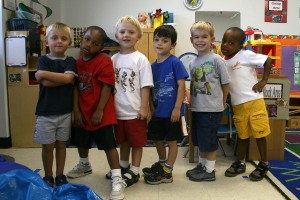
School segregation has been the topic of social science research and public debate for decades. Still, the average person may think than in the post-Civil Rights era, when the law explicitly forbids racial discrimination, school segregation is an issue of the past. In fact, sociologists of education point to changes in demographics, living arrangements, and school funding that have lead to unforeseen issues increases in school segregation. One city in particular, San Francisco, is seeing a resurgence; the number of schools considered “racially isolated,” or over-representative of one race, has climbed there in the last few years.

A recent article in the San Francisco Public Press describes new practices that determine where students get placed and how such mechanisms can undermine diversity. Parents can apply for placement across San Francisco’s public schools, meaning that many students don’t go to school in the area they live. This enrollment fluidity may seem helpful for increasing diversity, but the ability to make informed and effective choices within school system application is nuanced and heavily influenced by who you know, what you know, and what matters to you. Parent choices, especially within particular racial or ethnic groups, can exacerbate school segregation.

The article quotes Prudence Carter, a Stanford sociologist who studies inequality and education and was involved in creating the San Francisco school-choice system (implemented in 2010). Carter uses Asian families as a case in point: “there’s a lot of pride in the Chinese community in having created educational enclaves.” For example, a Chinese family is more likely to send their children to a school with a certain reputation; replicated across a community, it can lead to a school with a disproportionate number of Chinese students. Similarly, disproportionate concentration of students from certain income backgrounds can lead to a racially segregated student body.

If parents want to be part of segregation solution, Carter advises, “You have to think grander, and beyond your own self-interest… So long as we live in an individualistic and self-interested country, we’re going to probably continue to have this problem.” In her view, policy makers will have to adapt legislation to account for the sociology of parent choice when trying to increase diversity in education.

Image via US Army Corps of Engineers.

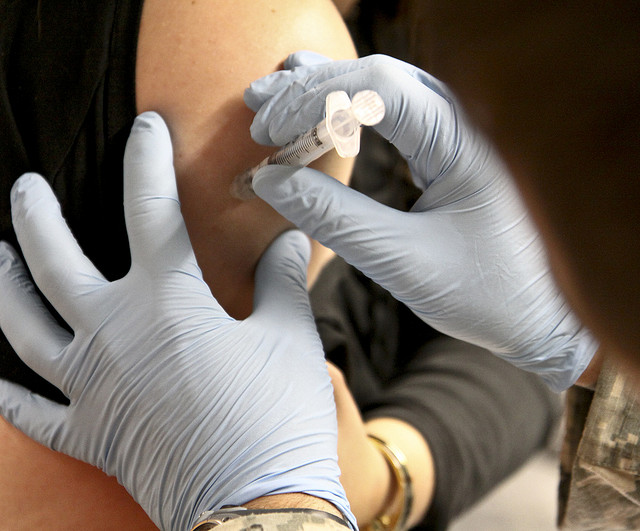
California’s measles outbreak  has refueled heated debates about mandated childhood vaccinations. With little known about the political leanings of anti-vaxxers, many politicians are carefully toeing the line to avoid alienating potential voters. In a recent Star Tribune article, though, sociologist Kent Schwirian said:

There is a long history to the fight against vaccination, and it does seem to break down along liberal versus conservative lines.

Schwirian argues that political conservatives are more likely to be anti-vaxxers than their liberal peers. The Ohio State University professor bases his claim on his own 2009 study of the swine flu scare, in which he found that conservatives who distrusted government were more likely to oppose vaccinations than were others with higher levels of trust or more progressive politics.

For more, see “There’s Research on That!

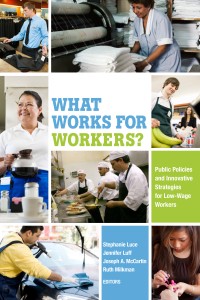
This co-edited volume considers "Public Policies and Innovative Strategies for Low Wage Workers."
This co-edited volume considers “Public Policies and Innovative Strategies for Low Wage Workers.”

One of the most forceful themes in the 2015 State of the Union Address was the need to help working families. President Obama and other progressives argue that implementing policies like guaranteed paid sick leave and child care tax credits will boost the national economy by making it easier for mothers to work. Opponents believe the policies will hurt businesses, damaging job growth and economic recovery.

Sociologists have long studied how the roles of parent and worker intersect, and some of their data and findings are being put to use in this political debate. The New York Times’s Upshot blog highlighted several studies of paid leave policies, including CUNY sociologist Ruth Milkman’s work. Milkman’s analysis supports paid leave and credits for child care—she argues that “For workers who use these programs, they are extremely beneficial, and the business lobby’s predictions about how these programs are really a big burden on employers are not accurate.” Milkman, along with economist Eileen Applebaum, surveyed California firms about whether their costs had increased as a consequence of that state’s paid leave law. 87% of companies said that their bottom line had not suffered, and 9% found that their costs had actually decreased, thanks to lower worker turnover or health benefits payments.

Yet even in California, New Jersey, and Washington, the three states that have, thus far, enacted paid leave laws, many workers don’t know about the policies. State-level political campaigns may change policy, but a broader national discussion must help change workplace cultures to make good on the policies’ promise.

Photo by Howard Ignatius via Flickr.
Sociologists find that beliefs about global warming predict people’s temperature perceptions. Photo by Howard Ignatius via Flickr.

Winter is in full swing up here in Minneapolis, and with it comes the traditional chorus that “it isn’t that bad” just yet. However, new research shows complaining about the weather—the archetype of casual chatting—may be more than just small talk. The Washington Post reports on new research from Aaron McCrightRiley Dunlap, and Chenyang Xiao which finds a significant relationship between political affiliation and perceptions about the weather. From the article:

The paper…examined people’s perceptions of the winter of 2012, which was anomalously warm. Comparing Gallup polling results from early March 2012 (just after the winter ended) with actual temperature data…“The researchers found that ‘Democrats [were] more likely than Republicans to perceive local winter temperatures as warmer than usual”…beliefs about global warming also predicted temperature perceptions.

It may have been one of the warmest years on record, but this work shows that partisanship affected who actually felt warmer than usual. We’ve known about socialization for a long time— many researchers study how social groups teach people to act in certain ways—but this study is especially interesting because it shows how deeply political socialization can effect individuals. Later in the article Dunlap argues that “people have begun to filter their fundamental perceptions of what is going on…through a partisan frame.” Contrary to expectations, this also means firsthand experiences with extreme weather as the planet warms may not be enough to inspire widespread change for environmental protection. Looks like we’ll need more than small talk.

The Hunger Games Trilogy by Suzanne Collins. Image via Marci's Blog.
The Hunger Games Trilogy by Suzanne Collins. Image via Marci’s Blog.

The Hunger Games books are often brought into sociology classrooms, where they are used to discuss anything from economic inequality to capital punishment. In a recent interview with Flavorwire, Mari Armstrong-Hough, a professor in the sociology department at Davidson College, described the social theory behind the books as a model of total resistance:

We see politicking, corruption, and unjustified violence from both the guardians of the status quo in the Capitol and the architects of the rebellion. Katniss, whom we naturally align ourselves with, rejects both these systems.

Armstrong-Hough went on to expand on the idea of resistance, stating that docility is bred by violence:

The Games institutionalize a political docility not so much because they threaten violence to the districts’ children, but because they create a society in which people think they must choose survival over solidarity. I think a lot of people, regardless of their political affiliation, feel like there has been a lot of being forced to choose survival over solidarity going around in the US.

Photo by PressTV.
Young voters and people living in council areas with high unemployment were more likely to vote in favor of Scottish independence.  Photo by PressTV.

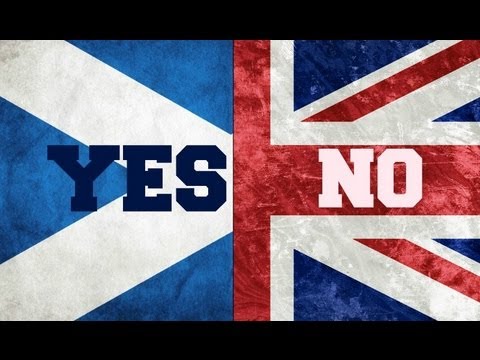
Despite preliminary polls showing the Scottish independence vote as too close to call, last week saw a decisive victory for keeping the nation part of the United Kingdom with a 10.6 percentage point lead. Now that the media has swung from predicting to explaining, The Guardian considers why the early polling was so far off the mark, pointing to early decisions for “no” among voters and anxiety over the economic impacts of independence.

Oxford sociologist Stephen Fisher weighed in on the post-vote analysis and pointed out two trends which help explain the outcome. First, economic concerns were closely related to decision patterns:

“…in all four councils won by Yes Scotland, unemployment rates are higher than the Scottish average… Better Together’s best results were in councils where unemployment rates were below the Scottish average.”

Second, despite widespread national conversation and high intentions to vote, actual turnout among “yes” voters wasn’t quite enough:

“Only in one of the four councils where yes came on top was turnout higher than the countrywide 84.6%. This indicates that the participation among groups that tend to historically vote less (or not at all), such as younger people, the unemployed and those living in more deprived areas, where yes was theoretically strongest, while far higher than normal, was not as high as expected.”

There is plenty more work to be done before we fully understand the outcome, but these preliminary findings remind us that the key challenge for any political movement is getting enough folks to move where and when it really counts.


tornado photo
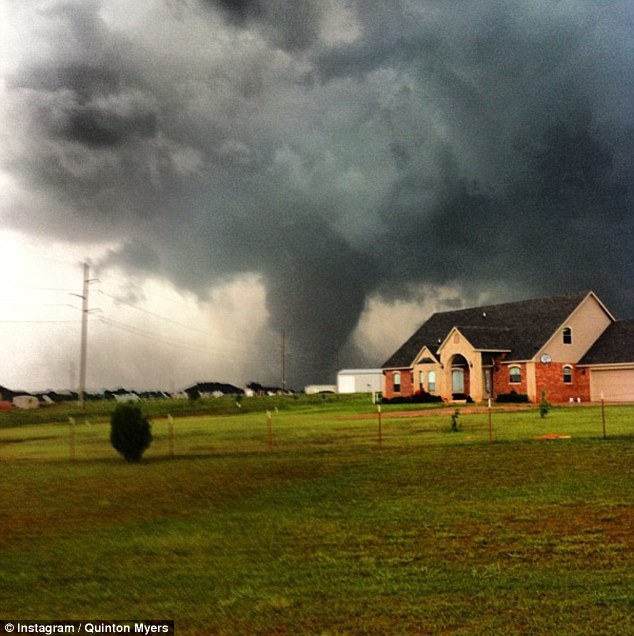
Tornadoes don’t discriminate. Photo by Marsmett Talahassee via Flickr.

The slew of tornadoes that recently hit the midwest nearly destroyed the small Nebraska town of Pilger. Twin tornadoes took out the town’s post office, fire station, and dozens of homes and businesses. Pilger is known for its slogan “The little town too tough to die,” but the devastation caused to this small community of 378 residents has the Omaha Herald looking to rural sociologist Randy Cantrell for answers to the question of this town’s survival. From the Omaha Herald:

Businesses and families in Pilger will decide what’s in their individual best interests, said Randy Cantrell, a rural sociologist at the Rural Futures Institute. Nothing else — including a community’s geographic location or population — matters as much in determining whether a place lives or dies, he said.

Cantrell goes on to argue that the aging population of Pilger is an important variable to consider, saying that almost one-third of the homes damaged in Pilger were owned or occupied by single people over 65. “That probably makes it iffy whether they rebuild or return,’’ he said. Speaking of the whole community, the article summarizes Cantrell:

Residents of all ages have many things to consider, Cantrell said. Among them are the age of their damaged houses, how much of an insurance payout they receive, where other family members reside and whether their jobs remain in town. Businesses pondering their future will consider that if they moved they would be starting over in a new market with no guarantee of success.

The residents of Pilger and nearby towns expressed confidence in the town’s ability to rebuild, citing the successful recovery of another small Nebraska town, Hallam, that was similarly devastated by a tornado in 2004. Given that no factor matters more, the community’s determination to rise from the wreckage may prove that not even a tornado can kill the tough little town.

For more on the sociology of natural disasters, check out this Sociological Images chart detailing how humans cause tornadoes and this SSN brief on how to better respond to natural disasters.