politics

15121150847_8c49b89d8d_o
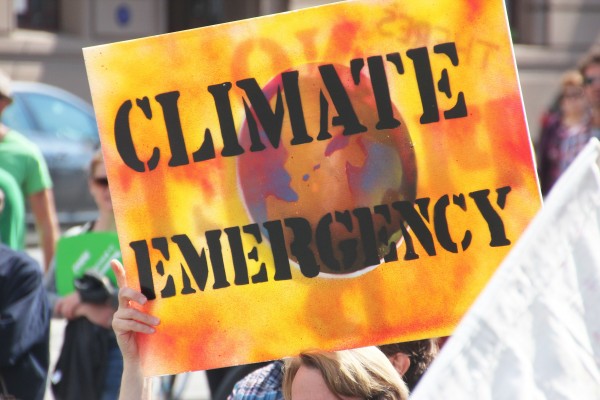
Climate Change has reached scientific consensus, so why and how do people still deny it? Photo via Takver, Flickr CC.

Even with nearly a hundred percent consensus within the scientific community, the notion that humans are not causing climate change is still widespread amongst the public. A new study in Nature Climate Change by sociologist Justin Farrell of Yale University aimed to find out how climate doubt is manufactured, and was covered in The Washington Post.

Farrell, the sole author of the study, is quoted at length about his findings. Unsurprisingly, his motivation for research was grounded in a genuine curiosity as to how there is such an extraordinary gap between scientific and public consensus:

“I’ve personally been interested in understanding how a social movement can spread such uncertainty and doubt in the general public on an issue that has achieved near scientific consensus.”

What he found is that the organizations that promote these contrarian views are connected in a network. Those organizations that are central to the network, received funding from larger corporate interests, in this case either ExxonMobil or the Koch Brothers. Farrell isn’t anti-corporate funding, but he is pro-transparency.

“Of course, the solution is not to forbid corporate funding of this or that issue, but to start by providing better access to who is funding who, so that folks are not kept in the dark, making it hard to know who to trust, if anybody.”

“I hope people read these findings in the light of the bigger picture, and not just ExxonMobil or Koch, but more broadly these two entities are simply a very strong indicator of the larger types of financial interests that are behind the movement,” he said.

In addition to Farrell, the article quotes Robert Brulle, professor of sociology and environmental science at Drexel University, who served as a reviewer for the study. Brulle had interesting advice for how climate change activists can shift the narrative and persuade public opinion:

“When you look at comparative strategies, the climate science community or the climate advocacy community does not have as much of a media-centered focus as does the conservative movement,” Brulle said. “I think that that’s what this paper starts to push on. You have to move more toward a media-centered influence—the influencers’ strategy—rather than trying to convert individual by individual.”

Read the full article by Chelsea Harvey here, and learn more about sociological studies of how echo chambers work to limit the amount of climate change science that enters political debates with this article in the Fall 2015 issue of Contexts, the public outreach journal of the American Sociological Society.
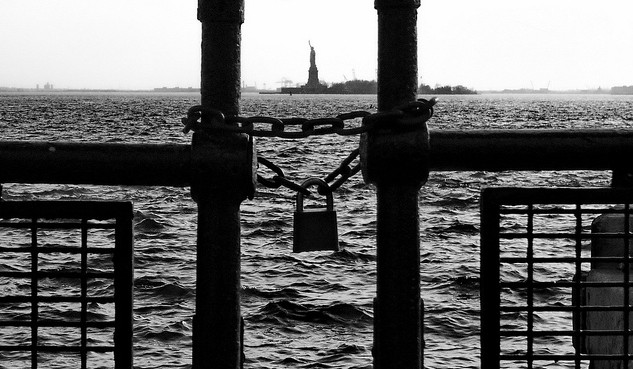
For many, the "American Dream" seems beyond possibility. Zhang Yu, Flickr CC.
For many, the “American Dream” seems beyond possibility. Zhang Yu, Flickr CC.

Immigration is a hot topic, especially with elections coming up. Donald Trump has called immigrants “rapists” and “criminals”, perpetuating anti-immigration rhetoric. Common immigration myths include that immigrants are taking Americans’ jobs, burden the economy, and refuse to speak English. The Washington Post covers a report written by a group of Harvard professors, led by sociologist Mary Waters.

  1. “Immigrants are picking up English just as quickly as their predecessors”
In fact, today’s immigrants are learning English faster than their predecessors. This is partially due to how global English is, which means that immigrants are more likely to have been exposed to it or to have taken English classes already. Additionally, American schools are becoming better at teaching English to immigrant students.
  1. “Immigrants tend to have more education than before”
Historically, immigrants were low skilled workers from southern and eastern Europe in the early 1900s. Recently, however, immigrants are more likely to have four years of education on average. Approximately, 28% of recent immigrants hold a bachelor’s degree or higher, which is a 19% increase since 1980.
  1. “Immigrants are much less likely to commit crimes—but they soon learn”
In fact, immigrant neighborhoods are considered to be some of the safest neighborhoods as immigrants are least likely to commit crimes. Native-born men aged 18-39 are 5 times more likely to end up in jail than immigrants. While immigrants are initially fearful of picking up criminal influences, by the second and third generation, they are more likely to engage in criminal behavior.
  1. “Immigrants are more likely to have jobs than the native-born”
Immigrants are determined to find employment, and they are more likely to be employed than their native-born counterparts. Between 2003-2013, 86% immigrants were employed compared to 82-83% native-born Americans. This also holds true for men who have not earned a high-school diploma, where 84% immigrants are employed compared to 58% native-born Americans.

While the report combats common myths about immigration, it does not give a concrete answer as to whether today’s immigrants have the same opportunities as earlier generations of new Americans, despite being educated, staying away from crime, holding jobs, and paying taxes.

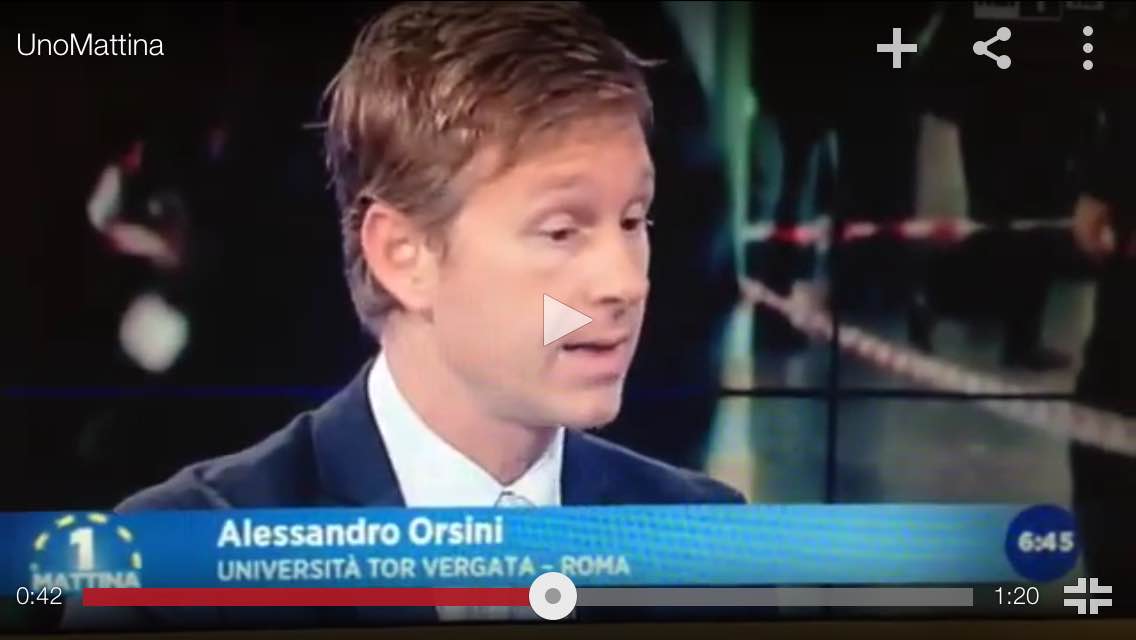
An Italian State Television interview with Dr. Orsini.


In light of recent terrorist attacks by Da’esh (ISIS, ISIL) on Paris, Beirut, Yola, and many more cities, the world is paying attention to the terrorist organization’s activities outside of Iraq and Syria. Conversations have focused topics from who these terrorists are, whose deaths we mourn, and what these attacks are meant to accomplish.

Alessandro Orsini, a political sociologist at the University of Rome Tor Vergata, told Sputnik Italia News that Da’esh is choosing to launch foreign attacks because they want to split societies and public opinion, causing civic and political arguments around military interventions. The group is very intentional about which countries it chooses to terrorize. Orsini references the attack on Madrid by Al Qaeda in 2004, which resulted in Spain withdrawing from Iraq (and a reprieve from Al Qaeda in Spain).

Additionally, Orsini points out a change in Da’esh’s approach to recruitment. Where initially they were focused on “importing” terrorists to fulfill their goal of creating a Caliphate, now the group is also “exporting” terrorists to attack foreign cities. Orsini concludes with some hope: he believes the changes in recruitment and stretch to attack European cities is proof of Da’esh’s weakness as a terrorist organization.

Dean Hochman, Flickr CC.

Amid presidential candidate debates and national conversations surrounding gun violence and police brutality, issues and positions are often framed as conservative versus liberal (and those are equated with Republican and Democrat, respectively). While we recognize that both parties have moral values that guide their beliefs and support of certain political agendas, a debate must necessarily leave some room for a change of heart. But how can you change an opponent’s mind?

Sociologist Robb Willer, one of the authors of a paper published in Personality and Social Psychology, is quoted in Quartz: “Morality can be a source of political division, a barrier to building bi-partisan support. But it can also be a bridge if you can connect your position to your audience’s deeply held moral convictions.” Make sure your foe knows the morals behind your position, and they’ll be more likely to give it a careful listen. After all, the rationale for changing their mind—making the moral choice—is already clear.

Erik Ingram via flickr.com.

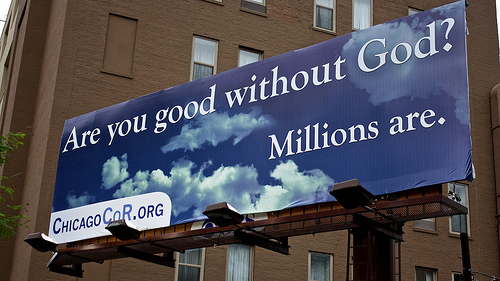
Public opinion polling in America dates back to the 1930s, and religious beliefs and behaviors have always been topics of interest. However, polls do not produce perfect measurements and their results can both shape and misrepresent the reality of public beliefs and behaviors. Religion Dispatches recently interviewed sociologist Robert Wuthnow about his new book Inventing American Religion: Polls, Surveys, and the Tenuous Quest for a Nation’s Faith in which he details the ways in which polls have shaped the religious makeup of the American population.  

Wuthnow explains that in the 1970s, the Gallup poll’s overly broad and vague questions about evangelical identity resulted in a huge overestimation of the number of evangelicals in America at the time. He explains:

The year of the evangelical was 1976, when Jimmy Carter achieved election to the White House and the role of polling was to greatly expand the number of Americans who were evangelicals… How is that possible that a poll could do that? …Gallup said there might be 50 million Americans who are evangelicals, and journalists ran with that… The way they got 50 million was basically inventing a new question that said something to the effect of, “Have you ever had a born-again religious experience, or something similar to a religious awakening?” And that was pretty much it… There was a lot of diversity among evangelicals themselves that got masked by being lumped together in the polls as if they were all the same thing.

The results of that 1976 poll influenced not only perceptions of the number of evangelicals among journalists, but also political perceptions of evangelicals as a voting bloc. If there were that many evangelicals in America, then politicians could cater to them to gain votes. Evangelicals began to be treated as one homogenous group instead of the highly heterogenous group that they really were.

Wuthnow explains how a similar phenomenon is happening with the rise of the non-religious in America—commonly known as the “nones.” Polls and surveys are reporting an increase in those who are saying they are not religious, but these general trends can mask huge variation among the non-religious. Many, for instance, still believe in a god and go to church, and only a very small percentage actually identify as atheist. Further, Wuthnow says, people often change their beliefs and opinions over time, and poll data glosses over that fact:

Polls have always assumed that whatever a person says is reliable, and that they really mean it and stick with it. So if you find any changes over time, that’s significant because polls are measuring stable opinions—if those change, that’s important.

For many, the “American Dream” seems beyond possibility. Zhang Yu, Flickr CC.

Work by Harvard University’s Robert Putnam and Princeton’s Doug Massey was featured in a recent article in The Atlantic, which discusses the need for policy changes to fight poverty and begin a new “civil-rights movement” for the poor. As the article describes, through policies in housing, employment, and education, the poor are at an inherent disadvantage in America, one that is often outside their control.

Putnam, in his work Our Kids: The American Dream in Crisis, states that poor children are often less prepared than their middle-class counterparts to develop skills and succeed. Communities and families within poor contexts are less likely to have the same resources and starting platform with which to help their kids participate in “The American Dream.” The article presents arguments to suggest potential change within housing, educational, and employment contexts. Doug Massey’s research, for example, is cited in support of housing policies that enable the poor to live in better-resourced communities. The article makes multiple suggestions for ways to empower the poor and increase their life chances, and research shows that such policies can effect positive change.

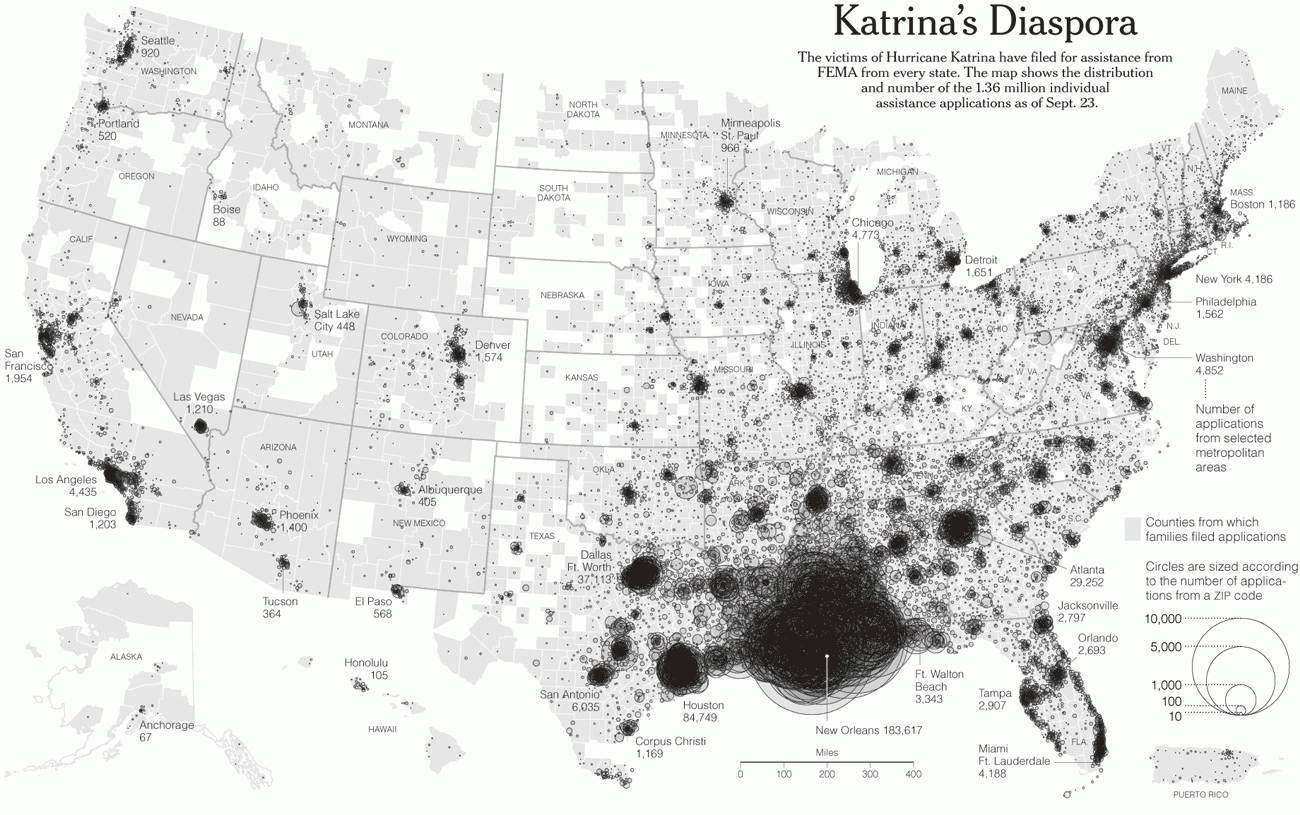
The New York Times, Katrina displacement as of 9/23/2005.
The New York Times, Katrina displacement as of 9/23/2005. Click for original.

The New Yorker recently featured several sociologists in a piece about what has happened to residents of New Orleans’s Lower Ninth Ward in the aftermath of Hurricane Katrina:

  • David Kirk, who studies neighborhood effects, focused on recidivism, or likelihood of ending up in prison again after release, based on whether individuals stayed in the same neighborhood or moved elsewhere. He found that those who returned to their former neighborhoods in New Orleans had a 60% recidivism rate compared to those who. While, historically African Americans have been more likely to move, often for economic mobility, since 1970 the pattern has flipped, and more African Americans tend to stay put.
  • Patrick Sharkey says that in recent decades white Americans more frequently engage in “contextual mobility,” or moves significant enough to change opportunities and circumstances. Instead of major moves, African-American families in urban areas tend to make more frequent, minor moves to places similar to their previous living arrangement.
  • According to Stefanie DeLuca, these moves are not voluntary. Rising rent, eviction, breakups, or changing in housing subsidies spark moves within the same areas—not the better schools or job opportunities that middle-class Americans cite as reasons to relocate.

Following the severe damage from Hurricane Katrina in 2005, going “home” wasn’t possible for many poor black families. As it turns out, those who had to leave found their new homes offered more opportunity:

  • Houston, Texas, has become a hot spot of upward mobility for those displaced by Katrina, Corina Graif found: “The fact that they were all of a sudden thrown out of that whirlpool gives them a chance to rethink what they do. It gives them a new option—a new metro area has more neighborhoods in better shape,” she says of the 700 mostly black women she tracked.

Sharkey cautions optimistic readers that relocation could become a game of cat and mouse. If too many poor people move into middle-class areas, the middle-class may move, taking some of the neighborhood’s higher resources and leaving new families in circumstances that mimic a minor move.

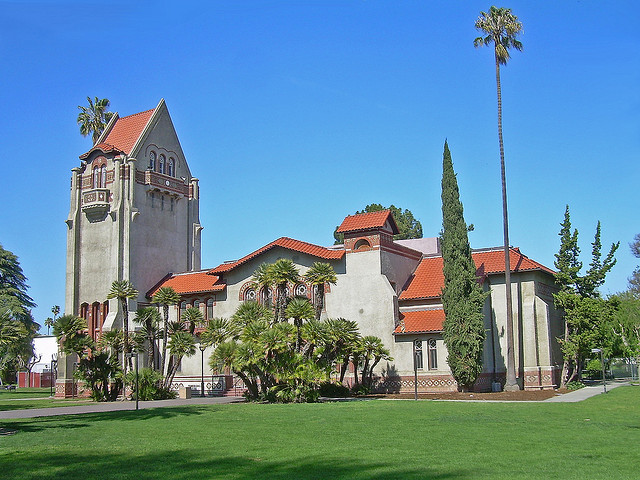
San Jose State: another place to turn knowledge into action. Photo by David Sawyer, Flickr CC.


Many are familiar with the long history of student activism at University of California at Berkeley, but fewer have heard of the difference-makers at San Jose State University. “San Jose State is in the shadow of UC Berkeley when it comes to student activism,” sociology Professor Scott Myers-Lipton told The Nation. “But we’ve got this history as a working-class university that most people don’t know about.”

Starting in 2011, students in Myers-Lipton’s Social Action sociology class started thinking about ways they could bring change to their own community. San Jose houses big-name companies like Adobe, eBay, and Cisco Systems, but it’s the sixth most expensive city in the country. Many residents barely eke out a living. Student and after-school worker Marisela Castro, whose parents worked the California farm fields, pitched the idea of working toward raising the minimum wage. (Myers-Lipton estimates that 80% of his students work over 30 hours per week on top of being students.)

Working with South Bay Labor Council leader Cindy Chavez, Myers-Lipton’s students raised $6,000 to hire a polling agency and make thousands of phone calls to see if increasing minimum wage was an issue that voters would support. When over 70% of respondents said they favored minimum wage increase, Chavez went to the board of the Labor Council. Unions pledged over $120,000 to help the cause by the end of the meeting. After collecting 20,000 signatures, the students took their proposal to the Silicon Valley Chamber of Commerce. The vast network of supporters (including Catholic Charities, United Way, churches, and non-profits) alarmed the Chamber, which raised $400,000 to defeat the measure.

The student activists were not defeated, however. They continued, keeping their message simple. Instead of getting into statistical debates, they touted the importance of economic fairness. On November 6th, San Jose became the fifth and largest city to raise its minimum wage, increasing the income for minimum wage workers by $4,000 per year. What started as a student brainstorming activity in a sociology class brought thousands in San Jose closer to economic sustainability.

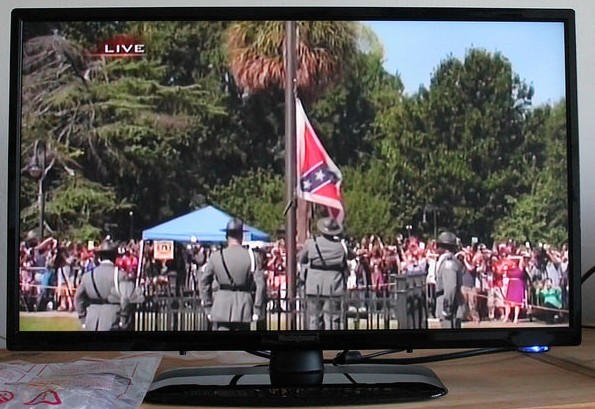
The Confederate Flag is lowered at the South Carolina state capitol building. Elvert Barnes, Flickr CC.


After flying over the South Carolina state capitol for 54 years, the Confederate flag was lowered on the morning of Friday, July 10. Before it was removed from the statehouse, the flag and products bearing its image were also eliminated from the store shelves and online marketplaces of major retailers, including WalMart, Amazon, Sears, and Ebay. The flag’s sudden withdrawal from publicly visible spaces public and private was sparked by a bevy of activism in the wake of the June 17 massacre of worshippers at Emanuel AME Church in Charleston, but complaints about the flag are not new. Why was this push to remove it from prominent display venues successful, when so many others had failed?

Sociologist Brayden King told the San Francisco Chronicle that the important of online media to the way companies make decisions today was central. Corporations who pulled Confederate merchandise from sale were more concerned with their brands’ images on Facebook and Twitter and with investors’ impressions of their management than with being politically correct or doing the right thing. Drawing on findings from studies he published in 2007 and 2013, King said that “Business is always responding to consumer demand and what might be reputational issues as well. If a company isn’t able to quickly resolve the turmoil, then investors may start thinking that the management isn’t very good.”

King argues that social media “makes these issues salient by being a megaphone for activists, and it serves as a large public forum for information.” By linking social issues with companies’ online reputations and managerial competencies, online media may be accelerating the attachment of concrete financial ramifications to cultural debates that corporations may have previously wished to stay out of.

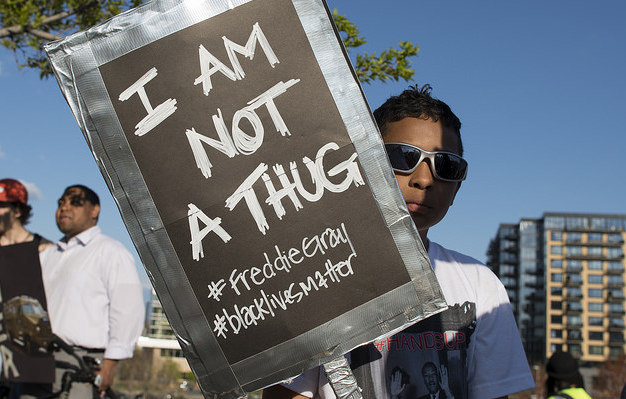
Photo by Fibonacci Blue, Minneapolis, MN, April 29, 2015. Click for original.


As the nation’s gaze is set on Baltimore, sociologists have begun to talk to the press about the massive peaceful protests, outbreaks of rioting and violence, and media depictions of the city as it mourns the death of Freddie Gray (as of today, Friday, May 1, ruled a homicide and under investigation). Much of the emerging public criticism is aimed at media sources and public officials depicting protests as nothing but violent, unfounded riots led by “thugs.” Stefanie DeLuca sees these language choices as important, telling the Washington Post,

I thought the governor calling Baltimore a “state of emergency” was a colossal fail. These framings don’t help us—they take away from the humanity of the people here who have grievances. It takes away from the incredible potential of a city that has been struggling and fighting for everything it has.

Paul Bagguley, whose work focuses on race and social movements, also spoke to the Washington Post, contributing to a piece on looting during riots. He focused specifically on how small outbreaks of crime can happen once large-scale, otherwise civil protests become riots:

During riots, the normal rules of behavior are suspended—participants often describe a sense of freedom—so that normal respect for private property is suspended. In addition, contemporary societies are consumer societies where one’s status and participation in society is defined by consumer goods, hence those excluded from consumption—the poor—are during riot conditions able to obtain valued items.

Other sociologists spoke more broadly to the systemic inequalities that have long divided Baltimore and put men like Freddie Gray in increasingly subjugated, vulnerable positions. In a recent article at Mother Jones, Peter J. Cookson explained how it’s not just physical segregation that creates and reifies inequalities in health, wealth, education, and incarceration, but also disparities in housing safety, extracurricular activities, and educational programs in schools.

In an Op-Ed for The Tennessean, Tony Brown suggests paying closer attention to the evidence of ongoing racism in everyday American life:

We must document the significance of race and racism before we can address it. Make it routine to collect evidence that allows us to address it. Otherwise, we are bound to run in circles debating whether a problem exists, while things get worse.