
health

  • Blake R. Silver’s (Associate Professor of Sociology at George Mason University) new book, Degrees of Risk: Navigating Insecurity and Inequality in Public Higher Education, examines the ways in which colleges and universities create uncertainty for students. In an interview with The Conversation, Silver describes that many universities experiencing funding cuts create flexible programming and offer a range of optional resources. “Though abundant choices and flexibility may seem broadly appealing, research shows that they can make it difficult to anticipate next steps, and it’s easy for students to get lost,” Silver explains. “This most directly impacts students whose families are less familiar with navigating college and those with few economic resources to recover from missteps.”
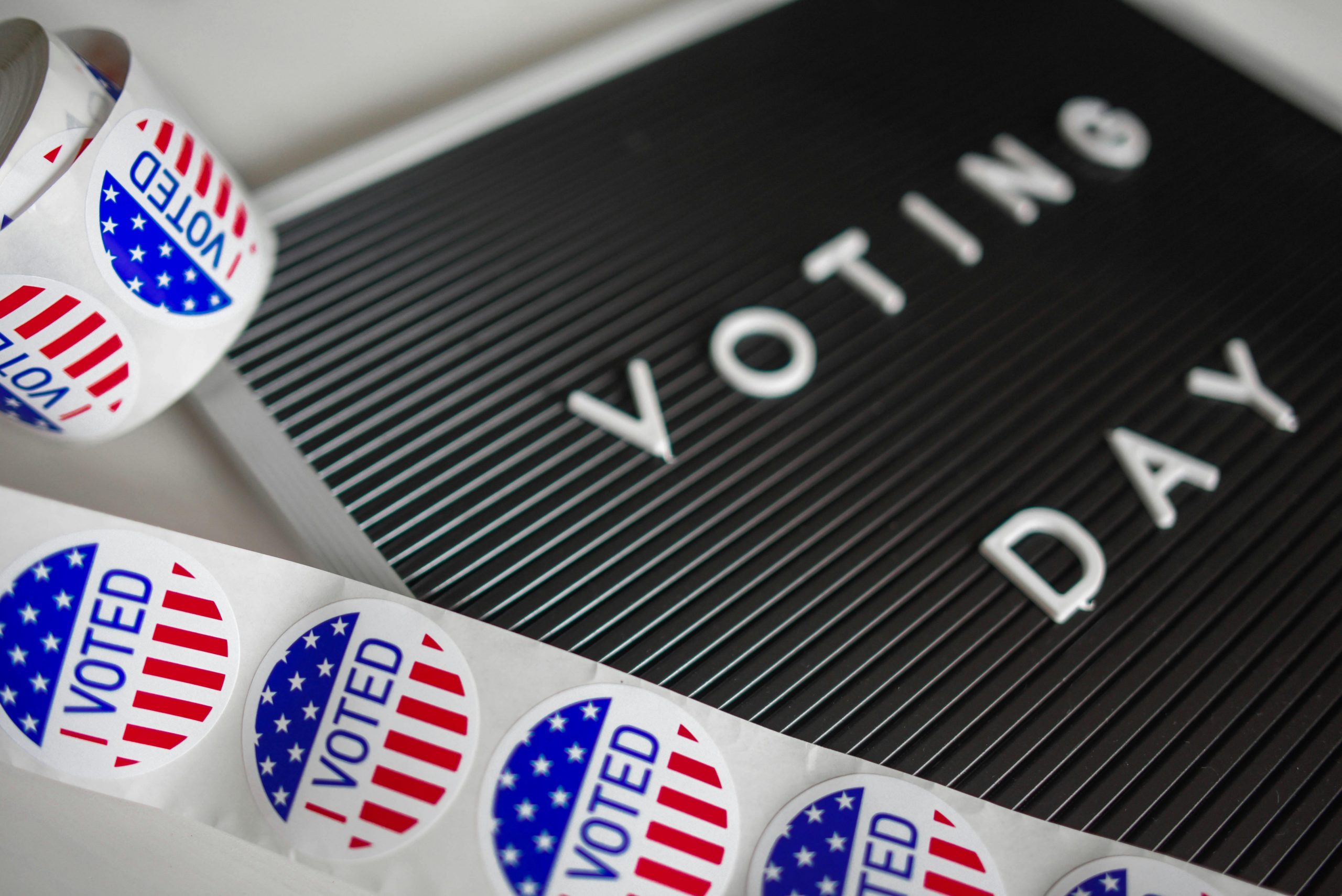
  • GW Today interviewed Elizabeth Vaquera (Associate Professor of Sociology at George Washington University) about how Vice President Kamala Harris and former President Donald Trump are appealing to Latino voters in the upcoming election. Vaquera explains that we very rarely see politicians considering the diversity of Latino populations and focusing solely on immigration is a poor strategy to win Latino votes. “For Latino voters, it’s not all about immigration. The majority of Latinos in the United States are not even immigrants themselves,” Vaquera notes. “They are worried about the same issues as everybody else. The economy is always at the top of their concerns. Jobs, education and health care are all very important to them. Abortion has become a singular issue for some in the Latino community.”

  • Brooke Harrington (Professor of Sociology at Dartmouth College) appeared on C-SPAN to discuss offshore finance, a system in which countries “sell secrecy to very rich people,” allowing them to protect assets and/or hide money from tax authorities. Harrington describes how many nations that are struggling financially (especially smaller island nations that were with a history of colonization) participate in the global finance system as a way to boost their economies. However, offshore finance tends to end up “undermining democracy and ultimately hollowing out the economy of these countries.” Harrington’s recent book, Offshore: Stealth Wealth and the New Colonialism, explores this system in-depth.

  • The New York Times ran a story on the emerging support of moderate republican lawmakers from labor unions. Jake Rosenfeld (Professor of Sociology at Washington University in St. Louis) commented that recent pro-worker rhetoric from prominent Republicans (including former President Trump) “might be giving cover to more down-ballot Republicans” to adopt pro-union stances. “Ten or 15 years ago, if you staked out a real pro-union position as a G.O.P. lawmaker, you were going to be hearing from the Chamber of Commerce or the National Association of Manufacturers,” Rosenfeld explained.

  • Parker Muzzerall (PhD Candidate in Sociology at the University of British Columbia) wrote an article for The Conversation about oil and gas workers’ responses to Canada’s efforts to achieve a net-zero energy economy. Muzzerall’s work reveals that many oil and gas workers have a strong sense of regional pride for oil and gas communities and believe that “the federal government and Canadians in other parts of the country do not care about them and their feelings of being excluded from Canada’s vision for the future.” 

  • Ryan Larson (Assistant Professor of Criminology at Hamline University) appeared on MPR to discuss new research on the mental health effects of the police murder of George Floyd on Minneapolis residents. The study found that Black residents had more negative mental health consequences than White and Latino residents. “Often in epidemiological studies, advantage, say, wealth or socioeconomic status will often serve as a buffer against health problems,” Larson explained. However, in this case, “Black residents living in the most disadvantaged as well as the most advantaged spaces in Minneapolis both saw a pretty similar increase in mental health diagnoses across the city.”

  • The Nation ran an article on Michael Sierra-Arévalo’s (Assistant Professor of Sociology at the University of Texas – Austin) recent book The Danger Imperative. Sierra-Arévalo examines police culture and how it shapes interactions with the public. He describes the “danger imperative” as “policing’s governing institutional frame,” which includes a preoccupation with violence and officer safety, leading officers to treat every interaction as a potential emergency.
  • The New York Times ran a story on a prominent video creator of the homesteading movement (which focuses on living self-sufficiently and off-the-grid) who broadcasts the lifestyle to millions of social media followers. Jordan Travis Radke (Director of the Collaborative for Community Engagement at Colorado College) commented that members of the homesteading movement have varied backgrounds and political alignments, but agree that while “the societal systems and structures in which they were embedded could not be changed anymore,” their lifestyles could be changed. “The modern homesteading movement’s big idea is that, rather than trying to change the world collectively and publicly, people are trying to reshape their private sphere — their worlds, their homes, their own tiny network,” Radke said. “They’re changing their lives, but they want other people to see it, because they want others to follow suit.”
  • Vice President Kamala Harris announced Minnesota Governor Tim Walz as her running mate for the upcoming presidential election. Republicans are criticizing Walz’s response to the mass protests following the 2020 police murder of George Floyd, saying Walz “let Minnesota burn” by not bringing in the National Guard quickly enough. In an article for USA Today, Michelle Phelps (Professor of Sociology at the University of Minnesota) explains that National Guard activation had to be requested by the mayor, as managing unrest was the city’s responsibility. “To say that [Walz] let Minnesota or Minneapolis burn is just a wild misconstruing of the facts,” Phelps said. “It was a response to a really unusual set of circumstances, and I think they responded as fast as was reasonably possible, given the scale of the operation.” In an article for BBC, Phelps added that a more forceful response could have backfired: “There’s a vision in which if we had had a more conservative governor that escalated the state response in the way that President Trump wanted, we would have seen more violence and more destruction,” she said.
  • Francisco Lara-García (Assistant Professor of Sociology at Hofstra University) was recently interviewed in The Markup discussing the “virtual wall” of digital surveillance along the US-Mexico border and the relationship to surveillance among those who live in border towns. “One thing that is kind of a paradox about living and having lived on the border is that there are moments when you can’t not be aware of the intense amount of enforcement and surveillance and activity across the border. But at the same time, it also just becomes a fabric of your life that you don’t notice, or you just don’t pay attention to it,” ​​Lara-García said. “Part of that is because it gets normalized, but also sometimes because there’s surveillance and enforcement that actually just doesn’t impact your life at a particular moment.”
  • The New York Times ran a story on the “step gap” in senior care. A 2021 study led by Sarah Patterson (Research Assistant Professor at the University of Michigan) found that among older adults needing assistance, about half of adults with biological children received care from them, while fewer than a quarter of adults in blended families received care from their step-children. “We have more reconfigured families than ever before, and these families may increasingly rely on someone who’s not a biological child. In general, those relationships tend to be less close,” Deborah Carr (Director of the Center of Innovation in Social Science and Professor of Sociology at Boston University) commented. Merril Silverstein (Professor of Sociology at Syracuse University) added that relationship quality also depends on the age at which a step-parent enters a child’s life: “When a new father comes in and you’re in your 50s, are you going to call him Dad?” Silverstein asked.
  • In her forthcoming book, Stolen Pride: Loss, Shame, and the Rise of the Right, Arlie Russell Hochschild (Professor Emerita of Sociology at the University of California, Berkeley) interviews residents of Pikeville, KY, a small city located in the whitest and second-poorest U.S. congressional district where 80% of 2016 voters supported Donald Trump. Hochschild finds a pervasive sense of loss. “There’s a regional story, and that’s that coal jobs are out. They have blamed the liberal war on coal for that loss. Opiate addiction has come in big time and hasn’t stopped,” Hochschild told Democracy Now. “And now many are leaving the region, the young, the most educated. And so, this becomes an area of loss.” Hochschild describes how economic loss can spark shame and describes Donald Trump as the ‘shame president’: “He comes in with an anti-shaming ritual that relieves them of this. And I think that’s a lot of the steam behind the MAGA enthusiasts for the Republican ticket.”
  • On July 13th, former President Donald Trump survived an attempted assassination at a campaign rally in Butler, PA. Katherine Stewart (author and journalist) and Samuel Perry (Professor of Sociology at the University of Oklahoma) appeared on Vanity Fair’s Inside the Hive podcast to discuss the political impact of Christian Nationalism and how the assassination attempt may reinforce Trump’s messiah-like image among followers. “Everybody’s saying it’s providence, he was saved by God,” Stewart said. “A sector of the movement has, frankly, consistently framed the contemporary political landscape as being one of spiritual warfare.” Perry added that the Republican Party has powerfully harnessed religion as a uniting message and that Democrats need to define a shared value system: “‘What unites us as a people?’ Well, in their mind, it’s this Christian heritage and ethnic culture that they adhere to. But for the rest of Americans, what does unite us?”
  • Callum Cant (Postdoctoral Researcher at the University of Oxford) wrote an opinion piece for The Guardian on the narrow defeat for union recognition for Amazon employees in the U.K. Following a wave of strikes in U.K. warehouses in 2022, Cant describes that Amazon “had to use every trick in its extensive union-busting playbook to secure the result.” Cant argues that Amazon’s razor-thin victory indicates that global efforts for union recognition are at a tipping point and, under harsh economic conditions, “workers may find that they have no other choice but to get organized.”
  • Chua Beng Huat’s (Professor Emeritus of Sociology and Anthropology at the National University of Singapore) recent book, Public Subsidy / Private Accumulation: the Political Economy of Singapore’s Public Housing, offers an analysis of housing in Singapore and the increasingly visible problems with Housing Board flats. Huat argues that the government faces a delicate balancing act between curbing runaway housing prices that are preventing young, first-time buyers from buying their first flat and maintaining the value of homes as a primary asset for older owners. Huat also notes that buy-sell-repurchase cycles of Housing Board (HDB) flats may contribute to inequalities: “The younger generation is more calculative about making a profit from HDB, but in practice, only those with higher income among the residents are able to upgrade.” This story was covered by The Straits Times.
  • Jessi Streib (Associate Professor of Sociology at Duke University) wrote an article for The Conversation describing how hiring practices (and luck) can equalize opportunities for college graduates of different socioeconomic backgrounds. Many prospective employers hide key job information (salary range, detailed job descriptions, criteria for evaluation, etc.) and refuse to negotiate with new hires. This can lead to less income disparity for new hires, as all students are navigating their job searches with limited information.
  • In a New York Times audio essay, Matthew Desmond (Professor of Sociology at Princeton University) interviews a resident of the Water Street Mission shelter in Lancaster, PA – a shelter striving to “address not just people’s material needs, like housing and employment, but the whole person, including their emotional, even their spiritual needs.” Desmond calls for mobilizing resources to alleviate poverty and homelessness: “When it comes to abolishing poverty or solving the homelessness crisis, America’s problem has never been a lack of resources. Our problem has been a lack of moral clarity, moral urgency.”
  • The New York Times ran an article on the increasing mainstream popularity of drag performance in the Philippines. Athena Charanne Presto (Sociologist at the University of the Philippines) described the tension between evolving social values and the “entrenched legacies” of Roman Catholic religious views: “While more globally oriented younger generations may drive liberalization, the church’s influence remains. [But] many Filipinos find a way to reconcile faith and support for diverse identities,” Presto said. Jayeel Cornelio (Professor of Development Studies at the Ateneo de Manila University) added: “What we are seeing is a transformation of what it means to be Catholic or Christian for the youth, who are looking for authenticity. Sometimes they find this outside the institution or traditional practices.”
  • Dana R. Fisher (Director of the Center for Environment, Community & Equity at American University) recently published a new book: Saving Ourselves: From Climate Shocks to Climate Action. Fisher argues that we need an “AnthroShift” (a “broad-based and yet deeply ingrained change of perception and behavior”) to address climate change: “Without a sustained shock that has tangible consequences in terms of social costs to people and property, the subsequent change will be ephemeral.” The book was reviewed by Yale Climate Connections.
  • Argentinian sociologist Agustín Teglia is using chess workshops as a tool to foster socialization among young people who are vulnerable to violence and marginality. “It’s a good way to generate a mediator, a common code to form a group. There can be children of different ages and levels, and each one has a role to receive and integrate classmates or teach them rules,” Teglia describes. This story was covered by Scroll.in.
  • Tressie McMillan Cottom (Associate Professor at the University of North Carolina) wrote an opinion piece for the New York Times on how O.J. Simpson will be remembered “as a spectacle.” Cottom discusses how Simpson received “a kind of carte blanche usually reserved for powerful white men, because his public mythology erased his private abuses” and how, during his infamous murder trial, Simpson’s legal team presented him as a symbol of “Black martyrdom” following the acquittal of L.A. police officers for the beating of Rodney King. “He wanted to be above the rules not because of what he was but because of who he was,” Cottom writes. “It’s the height of karmic irony, then, that what ultimately made Simpson special was the way his Blackness — that socially constructed distance from the white acceptance he so clearly craved — will forever define his legacy.”
  • Apryl Williams (Assistant Professor of Communication and Media at the University of Michigan) recently published a new book: Not My Type: Automating Sexual Racism in Online Dating. The book combines technical analysis, interviews, and a historical analysis of racism and romance to discuss how the algorithms of dating sites that sort users to predict attraction are racially informed. “By matching users with others who look like them, dating platforms both reflect and reinforce racial stereotypes and biases common in American culture, which attribute attractiveness and desirability to certain groups and rank others as less attractive.” This story was covered by The Harvard Gazette.
  • Alex Kotlowitz recently reviewed The Unclaimed: Abandonment and Hope in the City of Angels for The Atlantic. The book, by Pamela Prickett (Associate Professor of Sociology at the University of Amsterdam) and Stefan Timmermans (Professor of Sociology at UCLA), utilizes interviews to profile four individuals whose bodies were unclaimed upon their death to show how “some human deaths are valued less than others.” Matt Desmond praised the book as “[a] rare and compassionate look into the lives of Americans who go unclaimed when they die and those who dedicate their lives to burying them with dignity.” Kotlowitz’s review highlights how the book left him feeling surprisingly hopeful: “What is so remarkable about the lives of these people is how, despite their personal quirks and injuries, others took them in, embraced them, made them feel a part of a community.”


  • Caitlyn Collins (Associate Professor of Sociology at Washington University in St. Louis) recently appeared on The Ezra Klein Show to discuss how national policies, social support, and culture affect experiences of parenthood. Collins describes how work-family policies in Sweden and the United States affect how we think about parenting, clashes between the roles of worker and parent for Americans, and more.
  • Christina Cross (Assistant Professor of Sociology at Harvard) was recently accused of plagiarism in an anonymous, bad-faith complaint. The complaint focuses on instances of boilerplate descriptions of datasets and instances where scholars are cited, but not quoted. This accusation–the fourth in a series of complaints against Black women at Harvard who study race or social justice–has been amplified by conservative activist Christopher Rufo as part of a broader campaign against critical race scholarship and DEI efforts. Plagiarism expert Jonathan Bailey reviewed the allegations and found no issue. However, Bailey is concerned with the “weaponization of plagiarism” (using allegations of plagiarism to address political or social grievances). In support of Cross, the ASA denounced the anonymous complaint: “These false claims of plagiarism are a political attack that exploits the gap between the normal scientific process and the public’s understanding of that process. These actors also appear to be working to undermine faith in the research process and delegitimize academic knowledge by attacking racial diversity and the inclusion of highly qualified Black faculty and leaders in colleges and universities.” This story was covered by The Harvard Crimson.

  • Zeynep Tufekci (Professor of Sociology and Public Affairs at Princeton) wrote an op-ed for the New York Times in response to the media frenzy surrounding Kate Middleton’s disappearance from the public eye for an unspecified surgery. Tufekci compares the public response to prior treatment of Meghan Markle, highlighting the double standards and arguing that “trapping women in constraining public roles, pitting them against one another and reducing them to symbols of virtue or vice is a powerful and politically expedient distraction” but is harmful all around.
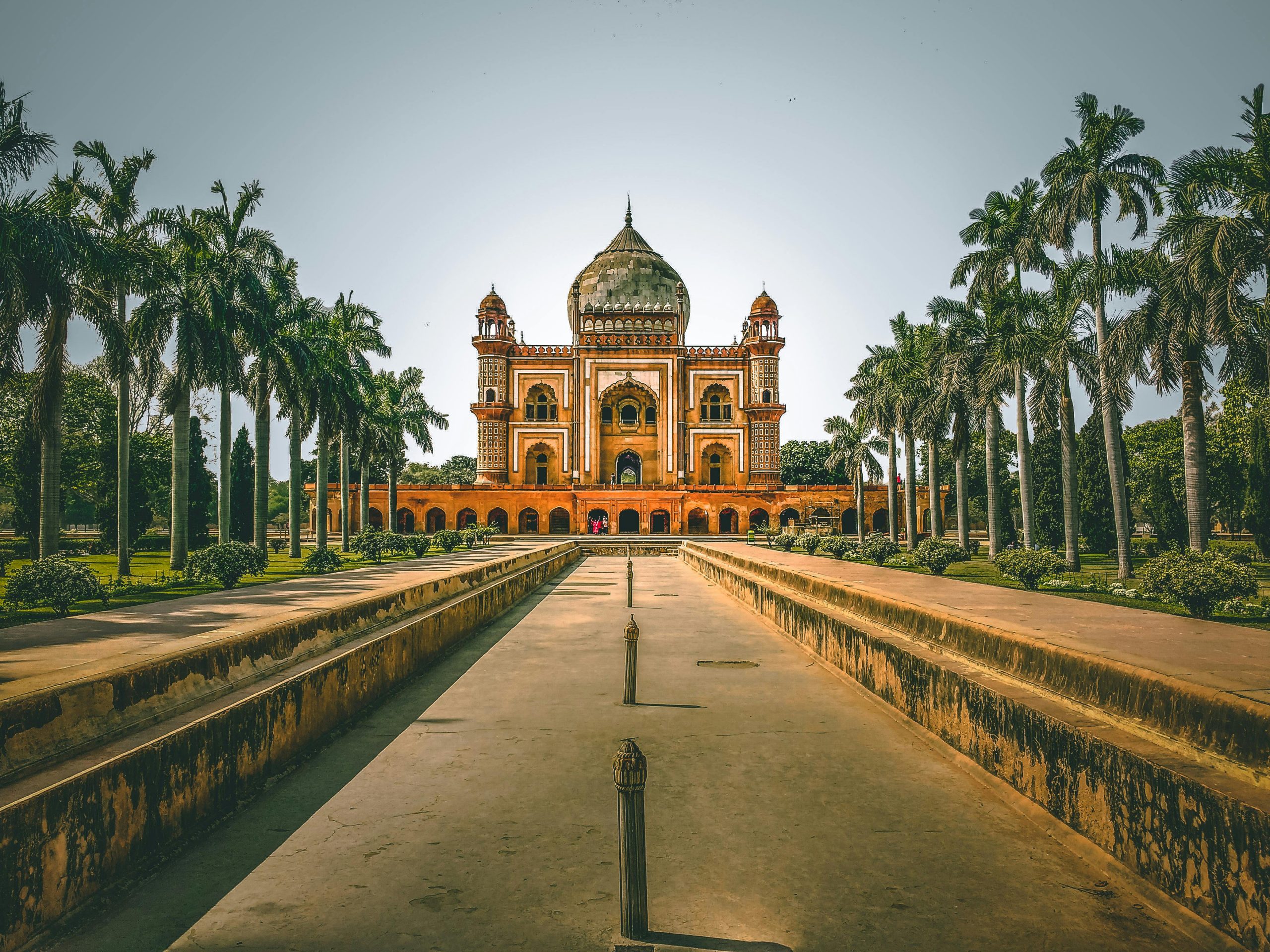
  • DW – South Africa ran a story on how US fundamentalist Christian churches are promoting negative sentiments against LGBTQ+ people and abortion rights in Africa. Haley McEwen (Postdoctoral Researcher at the University of Gothenburg) commented that “US Christian right-wing groups have been very active in the US foreign policy since the early 2000s,” promoting “family-friendly agendas” and funding homegrown African organizations with aligning political agendas.
  • South African sociologist Edward Webster (Founder of the Society, Work & Politics Institute at the University of Witwatersrand) recently passed away at the age of 81. In a profile of his life and work, Michael Burawoy (Professor of Sociology at UC Berkeley) wrote that Webster’s sociological practice is marked by “the intimate connection between his academic and his public lives: the one inseparable from the other. The Webster windmill takes in the winds of change—social, political, and economic winds—and turns them into a prodigious intellectual engagement.”
  • The New York Times ran a story discussing the upcoming election in Russia. Greg Yudin (Professor of Political Philosophy at The Moscow School of Social and Economic Sciences and Visiting Research Scholar at Princeton) commented that anxieties and uncertainties over the war are drawing voters to Vladimir Putin: “There are fears about what will happen if we don’t win: We will be humiliated, everyone will be prosecuted, we will have to pay huge reparations — and basically put under foreign control. These fears are fueled by Putin, who has also positioned himself as the only one who can end the war.”
  • The Amsterdam News ran a feature on Elizabeth Ross Haynes, sociologist and women’s rights advocate. Haynes’ master’s thesis, Two Million Negro Women at Work (1922), was “praised for decades as the most comprehensive study of Black women in the United States.” Haynes’ work highlighted the lack of training opportunities and low wages for Black women in the workforce.
  • The New York Times ran a story on how dating apps are struggling to sell subscriptions (the bulk of their revenue) to younger daters. Jess Carbino (Online Dating Consultant and former Sociologist for Tinder and Bumble) describes this trend as a demographic shift, commenting younger people “still feel a desire to use online dating apps, but they’re not necessarily experiencing a sense of urgency to find a partner.”
  • Gaëtan Mangin (Sociologist at the Université d’Artois) wrote an article for The Conversation describing how, amid transitions to electric vehicles, owners of older cars are committed to certain ideas of sustainability. Many older car owners highlight the importance of using what you already have, often support driving less, and suspect that electric vehicles may be more polluting than they appear.
  • ABC News ran a story on the rising use of Ozempic and other GLP-1 agonists for weight loss. Pepper Schwartz (Professor of Sociology at the University of Washington) commented on how physical appearance and identity can be inter-woven: “If you change your looks so much that you feel like a different person, then your identity is changing.”
  • The American Prospect interviewed Eric Klinenberg (Professor of Social Science and Director of the Institute for Public Knowledge at NYU) on America’s response to the COVID-19 pandemic. Klinenberg discussed 1) how ‘social distancing’ was “rooted in good epidemiological science” but sociologically “destined to fail” as it undermined social solidarity; 2) how America was an outlier in COVID experiences, with high levels of destructive behavior; and 3) how our current presidential candidates are framing the pandemic as the election unfolds.
  • The Cut interviewed Gretchen Sisson (Sociologist at Advancing New Standards in Reproductive Health (ANSIRH) at the University of California San Francisco) about her new book Relinquished: The Politics of Adoption and the Privilege of American Motherhood, which highlights experiences of birthmothers in the adoption industry. Sisson describes how many birthmothers want to become parents, but participate in adoption for financial reasons: “We have to understand adoption largely as a product of inequity and poverty, and that is a fundamental understanding that we just don’t have in this country,” Sisson says.
  • Eric Klinenberg (Professor of Social Science and Director of the Institute for Public Knowledge at NYU) appeared on Plain English with Derek Thompson to discuss the “hanging out crisis” (the decline in face-to-face interactions), the importance of social infrastructure, and why “aloneness isn’t always loneliness.”
  • Robert Bullard (Distinguished Professor and Director of the Robert D. Bullard Center for Climate and Environmental Justice at Texas Southern University) appeared on Living on Earth to discuss how an elevated highway has caused destructive flooding in Shiloh, Alabama. “This is one of the worst cases of environmental racism that I have seen in the 40 years that I’ve worked on this. … If you look at the damage that has been caused over the last six years, you can see the drainage systems are pointed like cannons into the community. It’s almost as if the state is saying “We want you out of here. And if you don’t leave, we’re gonna drown you. We’re gonna drive you out.” Bullard discussed how pollution, vulnerabilities to climate change, and vulnerabilities to harmful infrastructure are racially segregated. This story was picked up by Inside Climate News.
  • Eric Klinenberg (Professor of Social Science and Director of the Institute for Public Knowledge at NYU) appeared on MSNBC’s Why Is This Happening? The Chris Hayes Podcast and in The New Yorker to discuss his new book 2020: One City, Seven People, and the Year Everything Changed. Klinenberg described learning through examining crises, enduring effects of the pandemic (a “societal version of long COVID”), and various experiences of New York residents in 2020. “You know, as a sociologist, I think of crises as doing for me what a particle accelerator does for a physicist,” Klinenberg stated. “It’s like it speeds up things that are always happening and makes you able to perceive conditions that you otherwise can’t see.”
  • Elizabeth Wrigley-Field (Associate Professor of Sociology and Associate Director of the Minnesota Population Center at the University of Minnesota) was quoted in the StarTribune following new research by Wrigley-Field and colleagues that suggests ‘excess deaths’ (the number of deaths over the average expected deaths in a time period) during the pandemic were driven by COVID. “If these excess natural cause deaths had nothing to do with COVID, you would probably see them happening throughout this period, irrespective of when the COVID waves are,” said Wrigley-Field. The research suggests that the death toll from COVID exceeds the official tally. This research was also covered by WebMD, The Guardian, and MPR News.
  • Emine Fidan Elcioglu (Assistant Professor of Sociology at the University of Toronto) was interviewed by The Trace about her research examining a southwest border militia group that supplied information on migration routes to the U.S. Border Patrol with the goal of decreasing migration. She found that the group’s gun culture bolstered recruitment, morale, and participation. “Guns can become a gateway for people to get involved in other forms — and much more extremist forms — of politics,” Elcioglu stated. “Guns can become sort of a way to pull them in and radicalize them on issues beyond just guns.”
  • Recent calls for a nationwide caste census to collect caste data (last collected in 1931) have sparked controversy in India. In an interview with IndiaSpend, Surinder S. Jodhka (Professor of Sociology at the Centre for the Study of Social Systems, School of Social Sciences in Jawaharlal Nehru University, Delhi) emphasized that caste is a crucial indicator of social exclusion. “In order to engage with these issues in a democratic society, we need empirical evidence. Unless there are political mobilizations, systems do not open up. It can also fossilise caste identities,” Jodka stated. “The objective of caste census should not be to reinforce caste-based identity or an identity-based imagination of our future. It should be made a part of a narrative around socioeconomic lives. Eventually, the hope is that once there is a level playing field, we can explore transforming identities into citizenship-based social life where everyone feels that they are equal to others. This requires evidence and data.”