
health

Danny Fowler, Flickr CC.

Winter break is a time for students and faculty alike to hunker down after a long semester, spend time with family and friends, and relax. But if you’re a woman in your 20s or 30s, you’ve probably been cornered by at least one relative who tells you your biological clock is ticking. And while Aunt Helen may be right, it turns out there’s at least one big benefit for women who wait to start a family.

Recent research featured in the Huffington Post indicates that women in their 40s are actually healthier if they have their first child after age 24. Sociologist Kristi Williams and her colleagues followed 3,348 women for nearly 30 years, collecting self-reported health data. They found that women who had their first child between the ages of 25 and 35 reported better health at age 40 than women who had their first child between ages 15 and 19 or 20 and 24 (and there was no significant health difference at age 40 between these two younger groups).
Read the full article here.

ER photo via MilitaryHealth, Flickr CC.

In a recent piece for The Atlantic, sociologist Adia Harvey Wingfield explains how sexual innuendo can create hostile work environments for black men. As part of her research for her book about gender and race in men’s work, Wingfield interviewed Emergency Room doctors about their workplace experiences. Several recounted that sexual jokes and innuendo are commonplace between doctors and nurses. But these everyday jokes and comments, Winfield argues, create difficult situations for black male doctors.

Most of the black male doctors I interviewed for my research were the only black men in their work environments. They felt sensitive to that fact, and said they moderated their behavior when innuendo entered the conversation.

Black male doctors in these situations, Winfield explains, must navigate upholding a professional working identity while avoiding any link to the long history of black men stereotyped as dangerously hypersexual.

Responding to these interactions tactfully can be essential for black men to navigate their work environment, and the black male doctors I spoke to described feelings of deep discomfort and awkwardness. While some black male ER doctors do experience unique discomfort on the job, what these men encounter is similar to the plight of some black professionals more generally.

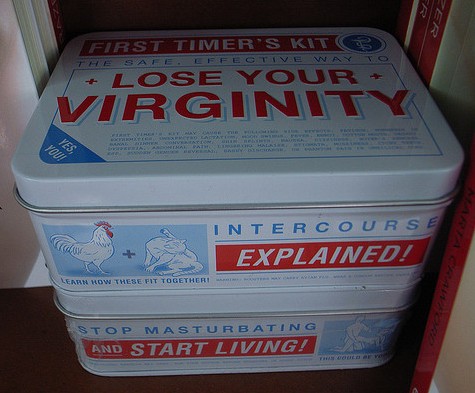
When the time comes... Jane Mejdal//Flickr CC
When the time comes… Jane Mejdal//Flickr CC

Traditional norms of feminine behavior encourage women to pledge sexual abstinence before marriage, instilling values of female sexual innocence and purity. In contrast, these norms suggest male sexual activity before marriage legitimizes their masculinity. Men who choose to abstain from sexual activity until marriage remain largely unexamined. In 2008, Ph.D. sociology candidate Sarah Diefendorf studied a male abstinence support group called The River to explore male beliefs about sexuality and masculinity in relation to sexual abstinence. Diefendorf discussed her findings in a recent Huffington Post article.

Men within The River used the group as a support network to resist various forms of sexual temptation, including masturbation, pornography, and same-sex attraction. While the resistance of sexual desires often proved difficult, these men believed that by waiting for sex, an act they believed God deemed sacred, they would enjoy fulfilling sex lives as married men. And by sharing their struggles with sexuality, the men in the group still “reinforce the norm that they are highly sexual men, even in the absence of sexual activity.”

During interviews conducted three years later, Diefendorf discovered that most of the men were still wrestling with their sexual urges even now that they were married. They no longer had a peer support network holding them accountable and did not feel comfortable speaking to their female spouses, since their group as taught that women are nonsexual.

Diefendorf explained, “After 25 years of being told that sex is something dangerous that needs to be controlled, the transition to married (and sexual) life is difficult, at best, while leaving men without the support they need. Women, meanwhile, are often left out of the conversation entirely.”

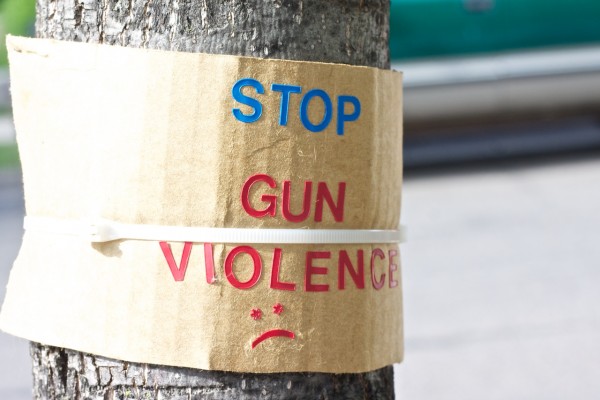
Thousands of people are shot and killed each year, but what happens to those who survive? Image via Flickr
Thousands of people are shot and killed each year, but what happens to those who survive? Tony Webster, Flickr CC. Click for original.

Gun violence has become a constant in American life. As of October 13th, there have been 10,348 shooting related deaths and 21,012 shooting-related injuries in 2015 already, per the Gun Violence Archive. What happens to the thousands who are shot and injured each year? Jooyoung Lee is a sociologist at the University of Toronto who studies the lives of gunshot victims. In a recent interview with The Trace, Lee talked about the different difficulties his subjects—mostly young, working-class black men—have faced navigating their lives and treating their pain since being shot:

Getting shot really changes a person’s social world; it makes them suspicious of other people. You see them going from young and vibrant to reclusive. They go to public settings, see a crowd, and get anxious that someone is affiliated with the person who shot them. The Fourth of July is a very stressful day for gunshot victims. A lot of the young men talk about how the sound of fireworks would give them flashbacks. I had one guy who told me he was out at a bowling alley with friends, the first time he’d been out since he’d been shot, and he was having a great time, and then the sounds of pins crashing caused a flashback. He had the feeling that everyone in the place was potentially the killer. This kind of thing makes it very difficult to resume everyday life.

Read the rest of the interview here.

Sure, sure. It's good for them. A&E promo image.
Sure, sure. It’s good for them. A&E promo image.

As Halloween rolls around, all things spooky and scary are on everyone’s mind. Alongside height and public speaking, being buried alive is a pretty common fear. As explained by an ABC news article, an upcoming event on A&E will feature three contests who, on live television, will be held in buried coffins equipped with cameras. According to the network, the stunt is meant to help people confront fear and depression, and it is already generating a lot of hype.

Magee Kerr, a sociologist who studies fear, explains that when we confront our worst fears head-on, it can bring out the best in us. Kerr says that the physical reactions to triumphing in a fearful situation, such as endorphin release and a sense of accomplishment, can have a positive effect and make conquering a fear a good experience. The next time you find yourself at a scary horror movie, try to get all the way through; it may be good for you.

In 2013, Kaiser Permanente, the country's largest non-profit health system, was a silver sponsor for Capital Pride DC. The healthcare provider invited "the community of allies for LGBTI health" to celebrate. Ted Eytan//Flickr CC
In 2013, Kaiser Permanente, the country’s largest non-profit health system, was a silver sponsor for Capital Pride DC. The healthcare provider invited “the community of allies for LGBTI health” to celebrate. Ted Eytan//Flickr CC


This year was momentous for trans visibility in the media, with high profile celebs like Laverne Cox and Caitlyn Jenner speaking out about their experiences as trans women. Even so, trans folks still face an incredible risk of discrimination and attacks. The recent death of Keisha Jenkins marks at least 20 American trans women murdered in 2015.

But trans people are not equally likely to experience discrimination. A recent study published by Lisa R. Miller and Eric Anthony Grollman showed that trans women were more likely to experience discrimination than trans men, as are trans folks from already disadvantaged groups—like those who are multiracial or low income. In turn, those who experienced more discrimination were more likely to engage in risky health behaviors like smoking cigarettes, abusing drugs and alcohol, and attempting suicide. Miller told US News, “Rather than assuming that all members of the transgender community are equally at risk, we need to investigate the extent to which some members may face disproportionate exposure to discrimination and poor health.”

Photo by Davi Ozolin via Flickr.


Despite increasing societal acceptance of lesbian, gay, bisexual, and transgender identities, a new study reports that adolescents and young adults with shifting sexual identities are more likely to experience depression. The study, conducted by sociologist Bethany Everett, used the National Longitudinal Study of Adolescent to Adult Health to examine sexual identity, relationships, and mental health among 11,727 youth. By comparing gay, lesbian, and bisexual respondents reporting stable sexual identities with those whose sexual identities shifted or changed, Everett found that only those who changed toward same-sex-oriented identities were at increased risk of depression.

Everett explained her findings to The Economic Times, describing how negative stereotypes may weigh heavily on adolescents: “There is a certain amount of stigma attached to sexual fluidity that may impact mental health during this developmental period.” She also noted how social support might ease sexual identity transition, suggesting that, “supporting people during this time-period may be critical for improving their mental health.”

Screen Shot 2015-04-09 at 12.34.39 PM


In debates about whether to ban porn, it’s interesting to consider what a world without legal “adult entertainment” would look like. Sociologist Chauntelle Tibbals, author of the forthcoming book Exposure: A Sociologist Explores Sex, Society and Adult Entertainment, talked to MTV after the show “Guy Code” made a video called “Life Without Porn.” The video, embedded below, mocked the mundane situations that often serve as the opening for pornographic films—a visit to the auto repair shop, a pizza delivery, or a visit from the TV cable provider—where, instead of ending in an erotic encounter, the actors’ teasing dialogue ultimately ends with advice on how to reheat pizza or another item to add to the car repair bill.

Tibbals argues that a world completely devoid of porn is not possible. From cave drawings and carvings to Renaissance paintings to avant-garde photography, humans create images of sex and sexuality:

“Us wanting to visually represent sex has been around since humans have been around, and porn is just another medium to do that. I don’t think it’s possible for there to be no erotic representation,” Tibbals told MTV.

But what if we bracketed erotic representation and just eliminated commercial porn? Tibbals says it’s not so simple. Billions of people watch billions of dollars worth of porn:

…if you limit other people’s capacity to professionally produce and legally produce that content, the demand for it is not going to go away.

Instead of disappearing, she believes a black market would expand, putting people who work in pornographic film creation at higher risk of sexual exploitation:

Right now, when people watch porn legally made, they know that they’re watching consensual sex on a safe set run by professionals. That’s not to say that every set is perfect, but consumers can watch that content and know that the people working on it want to be there.

Photo by JD via Flickr. Click for original.


Parents often equate good parenting with spending as much time with their children as possible. The idea is that, in those hours, parents will cultivate particular characteristics in their children that will contribute to bright futures. But is helicopter parenting really worth it? Sociologists Melissa Milkie and Kei Nomaguchi share the findings of their recent study with the Washington Post: “I could literally show you 20 charts, and 19 of them would show no relationship between the amount of parents’ time and children’s outcomes. . . . Nada. Zippo,” says Milkie.

It’s not the number of hours, but quality of time spent together that matters. Interactive activities like reading to a child, sharing a meal, and talking one-on-one benefit kids, while just watching TV together may be detrimental, as Amy Hsin found. Still, Milkie and Nomaguchi’s study did find that teenagers who engaged with a parent for six hours per showed lower levels of delinquent behavior and drug use than peers who spent less time with their parents.

The authors dug deeper, finding that when a parent was overly-tired, stressed, cranky, or feeling guilty, spending time with their children could lead to more behavioral problems and lower math scores. Nomaguchi says, “Mothers’ stress, especially when mothers are stressed because of the juggling with work and trying to find time with kids, that may actually be affecting their kids poorly.” This particularly impacts parents from low-income households who often lack access to social resources for improving mental health, but still feel the pressure to be “good” parents by spending time with their children. In fact, Milkie and Nomaguchi found that the biggest indicators of child success were mothers’ income and education levels:

“If we’re really wanting to think about the bigger picture and ask, how would we support kids, our study suggests through social resources that help the parents in terms of supporting their mental health and socio-economic status. The sheer amount of time that we’ve been so focused on them doesn’t do much,” says Milkie.

OTA Photos via Flickr.


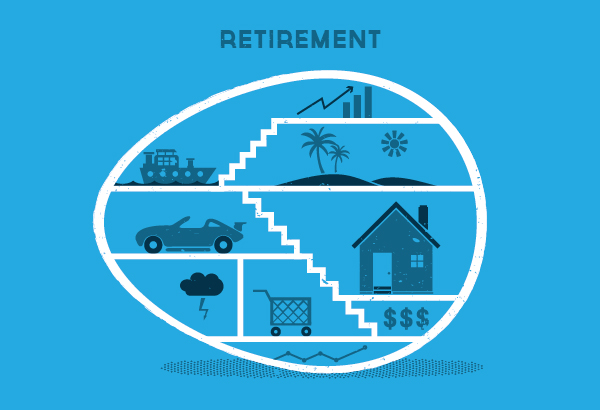
With the baby boomer generation hitting retirement ages, it’s important to consider how retirement affects this enormous cohort and their families. One unique aspect of today’s retirement is the occasional retirement overlap: both parents and children are retired at the same time. In an interview with The New York Times, Phyllis Moen of the University of Minnesota says,

This is still historically unprecedented, where you have older people and their still-older parents. Families are having to figure out those intergenerational relationships.

This may be a situation unique to the current time period, though. For the trend to continue, the younger generation must retire while their parents are still alive. Since expected and actual retirement ages have been rising for more than a decade, future generations may not be able to afford to retire at all, let alone alongside their parents. Then again, “by the time their children retire, we may have even more medical advances to help us live even longer,” says Professor Moen.

One potential downside of dual-generation retirements is that they can add retirement stress in the form of caregiving for older family members. As Moen states, “The pressures are less intense while the younger generation is still employed,” because “work can offer an escape from the stress of caregiving and the stress of that family relationship.”