health

Ian Philp, director of the Clean Energy Institute, shares a maxim his mother taught him: "Have a clear, tangible idea of what success---or your goal---looks like when you set out." Photo by MaRS Discovery District, Flickr CC.
Ian Philp, director of the Clean Energy Institute, shares a maxim his mother taught him: “Have a clear, tangible idea of what success—or your goal—looks like when you set out.” Photo by MaRS Discovery District, Flickr CC.

It’s March, and many people’s well-intentioned New Year’s Resolutions have long gone out the window. Making lifestyle changes can be difficult, but in an interview with Washington Post, sociologist Christine Whelan sheds light on how to make a fresh start.

Her first piece of insight comes straight from sociologists’ time use surveys: consider a new habit as not only adding to your schedule, but also subtracting time from other activities. “If I said ‘I want to go the gym for an hour three times a week,’ the first thing I’d have to figure out is, what am I not going to be doing during those hours. But we don’t tend to think about that,” Whelan points out. Prioritization is key. Weighing the costs and benefits of sacrificing an hour spent sleeping or watching House of Cards for an hour at the gym will help determine if your goal is manageable or needs reworking.

Whelan also stresses the importance of making sure the new goal is something you want to accomplish, rather than something you feel like you should be doing. “You’re much less likely to accomplish a change if you don’t want to do it, and it’s not in keeping with your values.”

Finally, she advises against creating a laundry list of goals in favor of developing one new habit at a time. Specific goals are more likely to become habits because, according to Whelan, distinct aspirations are “SMART”:

Specific

Measurable

There’s a Reward for sticking to it

Progress is Trackable

After 90 days of practice, it’s likely that your concerted lifestyle change will pay off: “The longer you stick with it, the more likely it is you’ll develop a habit that you don’t have to think about. It doesn’t require self control, there’s not a lot of active internal debate. You just do it.”


A screenshot from a Sesame Street clip about parents in prison.

If you happen to be watching Sesame Street, you may notice a new Muppet named Alex. The child’s father is in prison. Many viewers may consider Alex’s incarcerated parent an unusual, heavy topic for the program that has taught generations of kids their ABC’s and 123’s. But children across the country, particularly African-American children, are in Alex’s position.

The Nation consulted sociologists Christopher Wildeman, Sara Wakefield, Kristin Turney, and John Hagan about the effects of parental incarceration on children. They found that children with incarcerated parents had significantly higher rates of aggression, mental-health issues, behavioral problems, and risk of homelessness than peers whose parents had never been to prison. However, although they have identified a key link between parent imprisonment and children’s mental health, researchers like Turney are still figuring out how and why this connection exists. “Is it stigma, attachments, income loss, parents breaking up and relationships not surviving? We don’t know,” Turney reports.

More than a decade ago, Hagan stated that effects on children might be “the least understood and most consequential” results of incarceration. According to Wildeman, 1 in 30 white children and 1 in 4 black children born in 1990 experienced a parent going to prison before turning 14. The surge in incarceration rates disproportionately affects African-American children. Even if their fathers have a college degree, these kids are twice as likely as white children with parents who didn’t finish high school to have a parent in prison. And regardless of whether incarceration rates decline in the next few years, the effects of current imprisonment rates will last for several generations. That means that optimism about any decline in mass incarceration “must therefore be set against the backdrop of the children of the prison boom—a lost generation now coming of age,” according to Wildeman and Wakefield.

Uh-oh. This might not be good... Photo by Edward Conde via Flickr CC.
Uh-oh. This might not be good… Photo by Edward Conde via Flickr CC.

“Wow, it’s only $2.20 a gallon over here!”

“Remember when it was $3.20 a few months ago?”

From the late 2000s until recently, gas prices were consistently on the rise. A more recent downward slide may have some consequences: though cheap gas prices might be lighter on the wallet, individuals might be at greater risk for car accidents.

In an article from MN-based Star Tribune, Tim Harlow discusses research conducted by Guangqing Chi of the South Dakota State University’s Department of Sociology and Rural Studies. A professor and demographer whose specialties include the sociology of transportation, Chi had studied data on gas prices and overall traffic safety in Minnesota from 1998 to 2007. His team found that “a 20-cent drop in gas prices resulted in 15 more fatalities a year. Conversely, he found that a 20-cent increase would bring a decrease of 15 deaths annually.”

Using similar methodology with study data from Alabama and Mississippi, Chi has found that teens are more impacted by high gas prices, driving less frequently when prices go up. Their road reticence when costs are high, Chi’s study asserts, may lead to safer streets. Beyond driving less often, Chi says, when gas prices rise, “we suspect people drive more carefully.” For now, go ahead and put the pedal to the metal—just, you know, don’t throw all caution to the wind.

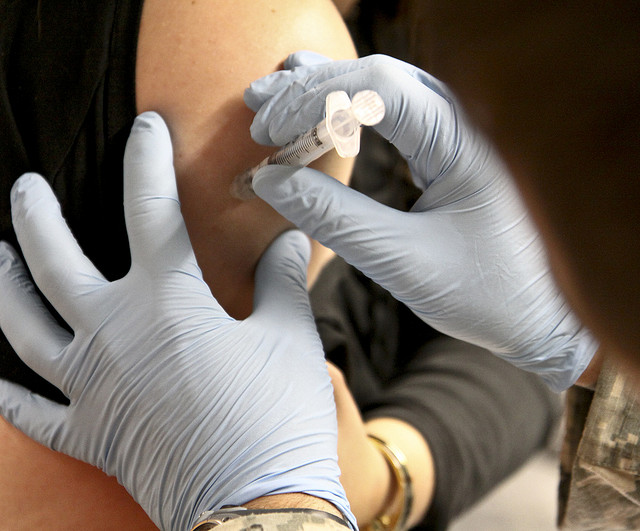
Image via US Army Corps of Engineers.

California’s measles outbreak  has refueled heated debates about mandated childhood vaccinations. With little known about the political leanings of anti-vaxxers, many politicians are carefully toeing the line to avoid alienating potential voters. In a recent Star Tribune article, though, sociologist Kent Schwirian said:

There is a long history to the fight against vaccination, and it does seem to break down along liberal versus conservative lines.

Schwirian argues that political conservatives are more likely to be anti-vaxxers than their liberal peers. The Ohio State University professor bases his claim on his own 2009 study of the swine flu scare, in which he found that conservatives who distrusted government were more likely to oppose vaccinations than were others with higher levels of trust or more progressive politics.

For more, see “There’s Research on That!

Photo via Flickr CC, Slavesalicious. Click for original.

Early in 2015, the U.S. House of Representatives passed twelve bills aimed at combating sex trafficking. These bills compliment laws signed last year to protect victims of trafficking, particularly children. Thus far, however, legislation has overlooked the causes of trafficking, namely, male perpetrators who engage in sexual violence and abuse and whose patronage makes the crimes profitable.

In a recent Huffington Post article, sociologist Gail Dines offers insight into the “demand side” of sex crimes, citing pornography as an influence:

The biggest sex educator of young men today is pornography, which is increasingly violent and dehumanizing, and it changes the way men view women.

Dines argues that porn teaches men to behave in sexually violent and abusive ways:

We know that trafficking is increasing—which means demand is increasing. This means that men are increasingly willing to have sex with women who are being controlled and abused by pimps and traffickers. There are only two conclusions here: That men are naturally willing to do this to women—biology—or that they are being socialized by the culture to lose all empathy for women. I refuse to accept that men are born rapists, porn users, or johns.

Dine’s controversial topic of study—and its results—casts important questions on a growing, if often “unseen” crime.

Photo from Persephone's Birth by eyeliam on flickr.com
Photo by eyeliam via Flickr CC.

Pregnancy can be stressful. Friends and family may have good intentions, giving informal support to expecting mothers, but their helpful hints sometimes come across as critical. A doula, however, provides emotional support before, during, and after birth, and helps women make informed health decisions.

Sociologist Lisa Hall talked to Missouri State News about her research on doula services and how these workers’ contribute women’s well-being. Hall reflected on one interview:

The client’s words were, “if it had not been for my doula, I think I might have just left my baby with my husband and moved away.” She had no confidence that she could be a good mom—especially in the midst of criticism—and the doula empowered her.

Many doula clients receive WIC (Women, Infants, and Children) services and lack access to adequate healthcare due poverty or homelessness. Furthermore, lack of education and connections (part of what social scientists call “social capital”) prevents many low-income and young women from asking questions or expressing health concerns. And, for all women, a doula can serve as a liaison to health service providers. Hall elaborates, “It’s a major view shift for some of these [expectant mothers] who haven’t been taken seriously or hadn’t been treated like an adult …”.

Taking a client’s physical and emotional needs seriously is just one aspect of doula services. The Doula Foundation teaches effective parenting, helps with healthcare access, and encourages breastfeeding, all of which benefit mothers and their children by providing a tool kit of positive health practices. Other groups, like the Isis Rising Prison Doula Project, bring doula services into spaces where birth may have even further complications.

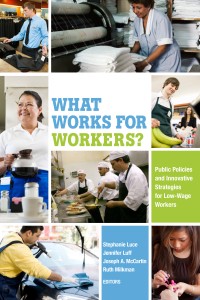
This co-edited volume considers "Public Policies and Innovative Strategies for Low Wage Workers."
This co-edited volume considers “Public Policies and Innovative Strategies for Low Wage Workers.”

One of the most forceful themes in the 2015 State of the Union Address was the need to help working families. President Obama and other progressives argue that implementing policies like guaranteed paid sick leave and child care tax credits will boost the national economy by making it easier for mothers to work. Opponents believe the policies will hurt businesses, damaging job growth and economic recovery.

Sociologists have long studied how the roles of parent and worker intersect, and some of their data and findings are being put to use in this political debate. The New York Times’s Upshot blog highlighted several studies of paid leave policies, including CUNY sociologist Ruth Milkman’s work. Milkman’s analysis supports paid leave and credits for child care—she argues that “For workers who use these programs, they are extremely beneficial, and the business lobby’s predictions about how these programs are really a big burden on employers are not accurate.” Milkman, along with economist Eileen Applebaum, surveyed California firms about whether their costs had increased as a consequence of that state’s paid leave law. 87% of companies said that their bottom line had not suffered, and 9% found that their costs had actually decreased, thanks to lower worker turnover or health benefits payments.

Yet even in California, New Jersey, and Washington, the three states that have, thus far, enacted paid leave laws, many workers don’t know about the policies. State-level political campaigns may change policy, but a broader national discussion must help change workplace cultures to make good on the policies’ promise.

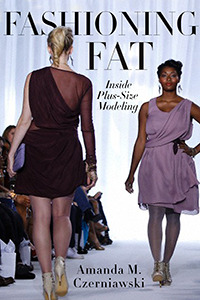
Fashioning Fat coverIn December, thousands watched tall, thin models parade bedazzled bras, panties, and angel wings down the runway at the Victoria’s Secret fashion show. In the U.S., however, these “standard size” models aren’t representative of either the female population (an average size 10-14) or of the entirety of the modeling population.

Sociologist Amanda Czerniawski, who worked as a plus-size model in researching her book  Fat: Inside Plus-Size Modeling, was featured in a Pacific Standard article about the opportunities and limitations for plus-size models in the fashion industry. She explained that featuring plus-size models can be considered an “act of resistance” against the fashion industry’s standard ideals. Still, while plus-size models contribute to a more inclusive idea of beauty, Czerniawski said the status quo is hard to change:

Though plus-sized models want to change notions of beauty and glamour, she argues, the industry restricts their efforts and their effectiveness. Plus-sized models are not really all that free; though they do not have to be a size zero, their bodies are still regulated and policed.

The article goes on to explain how some plus-size models find themselves labeled too small, too big, or not the right type for a given job. Further, though plus-size models continue to gain visibility in the fashion industry, they still have fewer opportunities than “straight” (that is, willowy) models.

In the end, all modeling is about capitalism:

Many of the indignities that Czerniawski details—lack of benefits, arbitrary management decisions, exploitative contracts—are typical of many (most?) labor relationships under capitalism.

This means including a wider range of sizes among models is unlikely to change the regulation of their bodies; it’ll just mean more women in a glamorous and restrictive sector of sales.

Photo via epSos.de via Flickr.
Sociologist Dawn Norris shows a link between suicide rates and a weak economy, particularly for men. Photo via epSos.de via Flickr.

Understanding how rates of suicide are related to social conditions is a foundational theme in sociology dating back to the work of Emile Durkheim. Investigating how people’s mental health is shaped by the broader economy, social networks, culture, and identity continues to be an area for social research.

A recent article in The Dallas Morning News reports on research that shows a link between a weak economy and higher rates of suicide, particularly amongst men and in the recent Great Recession. University of Wisconsin, LaCrosse Sociology Assistant Professor Dawn Norris explains that for men in particular, losing a job is not just about the money but about losing one’s identity and sense of masculinity.

“Our societal definition of masculinity is being employed, being the provider, being the breadwinner.”

Norris explains that masculinity is linked to work, and without work, even wealthy men describe themselves as “impotent, deficient, worthless.”

“Work at the moment isn’t as central to who women are in society,” says Norris. In one study, Norris found that women who lost their jobs during the economic crisis could shift from the role of breadwinner to another identity such as mother and better cope with unemployment.

Losing a job can deprive people of social support networks and other mechanisms for coping with stress, depression and mental health conditions. Men are especially at risk because they are less likely to seek support and medical care because of stigmas around mental health illness.

Norris says that potential solutions include better work-life balance, along with job creation, which can help de-emphasize work as the most central aspect of people’s identities and lives.

Read Erin Hoekstra’s article about flexible work policies shown to help men and women improve their work-life balance here.

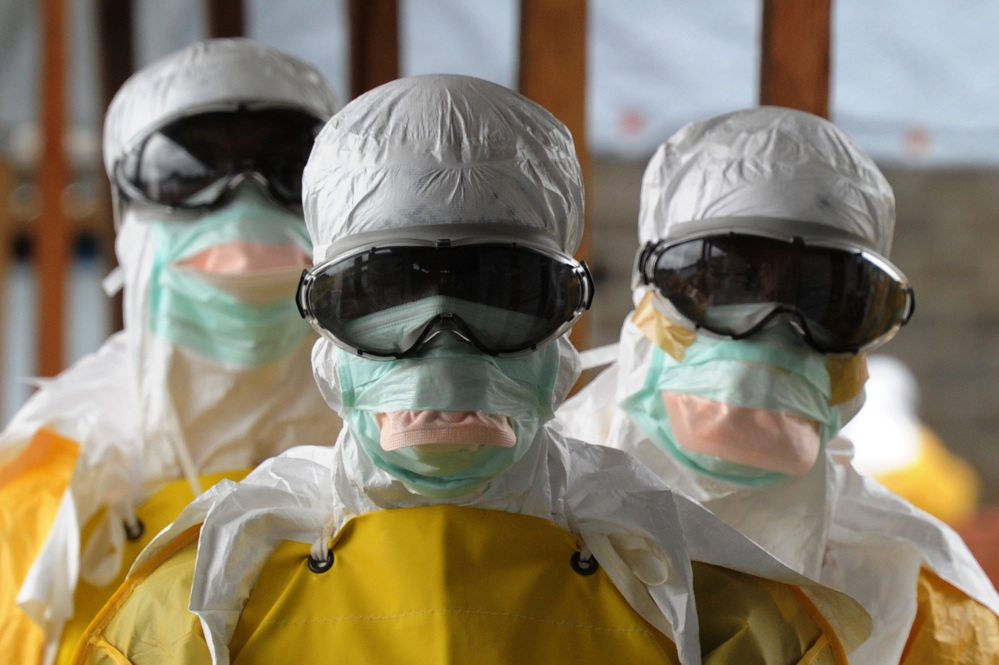
Photo by Dominique Faget/AFP for the Tico Times.
The “epidemic mindset” could be caused by the uncertainty of a global world. Photo by Dominique Faget/AFP.

Though there is still much work to be done to curb cases of Ebola across Liberia, Guinea, and Sierra Leone, good news came this week as the World Health Organization declared Nigeria Ebola-free. Yet fear of the disease remains around the world as Americans and Europeans call for travel restrictions to limit further exposure. Why all the fear for a disease with so few cases gone global?

The New York Times  interviewed sociologist Claudine Burton-Jeangros on the issue, who points out that Ebola fears fit into larger narratives about our place in the world and modern life.

…the more we master the world through science and technology the more frightened we are of those things we can’t control or understand. ”We live in very secure societies and like to think we know what will happen tomorrow. There is no place in our rational and scientific world for the unknown. Objectively, the risks created by Ebola in Europe are very small,” said Ms. Burton-Jeangros, ”but there is an uncertainty that creates fear.”

Since Ebola is only spread when bodily fluids are exchanged, the chances of an outbreak in the U.S. or Europe are very small. We’re not immune from fear, however, and the uncertainty of a global world creates new social supports for epidemics of anxiety. For more on the “epidemic mindset,” check out our roundup of research.