inequality

It’s Almost Mothers’ Day: Why is pay for caregiving work so low relative to other jobs with similarly low requirements for formal education?
And, of course, pay me---equally. DFAT/Jeremy Miller Flickr CC
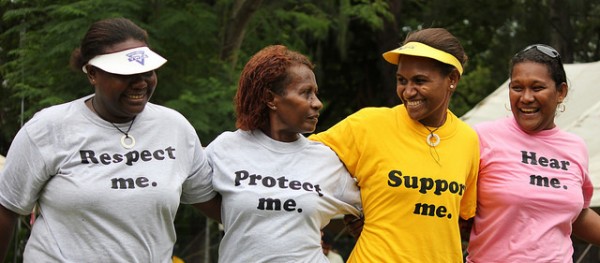
And, of course, pay me—equally. DFAT/Jeremy Miller Flickr CC

Two of the lowest paid groups of employees in the American economy are child care workers and personal care aides, according to a report just released by the US Census Bureau on February 25, 2016, providing the latest (2014) figures on how much men and women earn in each occupation.

Many of the organizations and political leaders honoring International Women’s Day last Tuesday have made a “pledge for parity,” promising to promote gender equity in pay. When most people think about what parity means, their “go to” question is whether men and women earn the same when they work in the same job and perform equally well. But we should also think about whether differences in pay between occupations are equitable. To keep the focus just on between-occupation differences, let me give some figures just for women.

Women who were child care workers in 2014 had median earnings of only $20,452 for the year. If we assume that means 50 weeks a year and 40 hours per week, those child care workers made just $10.22/hour. Personal care aides earned $21,459 a year. Many food service workers have similarly low salaries. more...

the way we never wereAnother Quarter Century of Family Change and Diversity

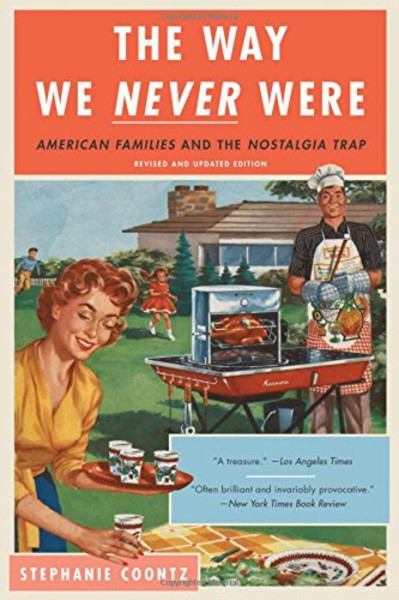
Editor’s note: In 1992—the year the U.S. presidential campaign erupted into a culture war over family values—Stephanie Coontz published The Way We Never Were: American Families and the Nostalgia Trap. The title itself offered the pithy concept, and the book demonstrated that diversity and change have always been hallmarks of American family life: “Leave It to Beaver” was not a documentary. This week (March 29, 2016) Coontz released a substantially revised and updated edition of The Way We Never Were. Below, she provides a brief review of ten things that have changed for the better in the past quarter century, three that have stayed the same, and two that have gotten worse.

In 1992, political leaders and pundits were predicting that changes in family forms and gender roles were leading America into disaster. Were they right? 

  1. Whatever happened to the Super Predators? In the early 1990s criminologists were predicting “a blood bath of violence” unleashed by “tens of thousands of severely morally impoverished juvenile super-predators” – all supposedly a result of rising rates of unwed births. But between 1993 and 2010, sexual assaults and intimate partner violence reported dropped by more than 60 percent. According to the FBI’s Uniform Crime Reporting Statistics, the murder rate in 2013 was lower than at any time since the records began in 1960. Since 1994, juvenile crime rates have plummeted by more than 60 percent, even though the proportion of children born out of wedlock has risen to 40 percent.
  1. How about crack babies? In the 1980s and 1990s, newspapers headlined an epidemic of “crack babies” in the inner city, with kids permanently damaged by their mothers’ use of crack cocaine during pregnancy. This led to a wave of punitive legal actions against such women. But follow-up studies have since revealed that children from the same high-poverty areas who had not been exposed to cocaine in utero were equally likely to have developmental and intellectual delays as babies born with cocaine in their systems. As I documented in The Way We Never Were, the big risk to these children was the pollution, violence, and chronic stress of deeply impoverished and neglected communities – including lead poisoning damage that was going on for years before it hit the headlines in 2016 because of the disaster in Flint.
  1. Did career women start “out-sourcing” their children’s developmental care? As women gained more high prestige jobs in the late 1990s, that’s what many experts feared. In fact, however, even as mothers’ work hours increased, their child-care hours increased too, while fathers’ child-care time tripled. Today, both single and working moms spend more time with their children than married homemaker mothers did back in 1965.

more...

cohen-philipTSP readers likely appreciate Philip Cohen for his provocative blog, Family Inequality, which—based on a look at who retweets him—regularly has material valued by undergraduates, senior scholars, data nerds, policy wonks, and journalists alike. Cohen is a Council on Contemporary Families senior scholar and a professor of Sociology at the University of Maryland in College Park, Maryland. His research focuses on the sociology of families, social demography, and social inequality. His family textbook, The Family: Diversity, Inequality, and Social Change, was published in 2014. Cohen gave me these useful answers to my “3q”:

Q: First, a challenge: What’s one single thing you “know” with certainty, after years of research into modern families?

PC: Family inequality is remarkably resilient, but when it changes it does so under the influence of external forces. When women’s opportunities increase (or men’s decrease), when public investment in education increases, when the legal environment changes when technology permits reductions in household labor, when policies lighten (or compensate) the load of caring labor — that’s when inequality within families shifts. There is a dialectic here, and micro-level interactions within families matter, but these external forces are in the historical driver’s seat.

Q: Give us the “Twitter” version of your current research—in 140 characters (give or take), what are you working on now?

PC: This is what I’m working on today, in 140 characters: The culture wars over family politics always return to gender difference itself; it’s what’s at stake when left & right fight over families.

Q: How would you encourage a scholar of family life to work to get their research into public life, affecting policy and challenging assumptions about “average families”?

PC: The public loves to argue about families. There are lots of opportunities to get your work out there and make it relevant. Unlike some areas of sociological research, if you’re working on families, almost everything has a potential angle — in fact, one of the challenges is to not oversell the implications of our research. There is also a lot of translational work to do — interpreting and explaining new data and research as it comes out, helping people figure out what to make of the latest findings in the context of what we already know rather than participating in the whipsaw advice machine that thrives on contradicting conventional wisdom. I recommend that junior scholars get involved with the Council on Contemporary Families, which helps organize and transmit new research responsibly and effectively, and to look for opportunities to publish popular pieces in online venues that encourage well-reasoned and empirically-grounding discussion and debate.

Molly McNulty is a CCF Public Affairs intern at Framingham State University. She is a joint Sociology and Education major.

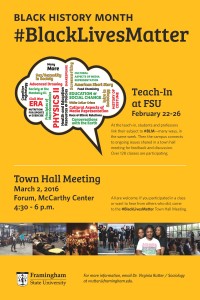
FSU poster by Luis Rodriguez

In the midst of the Vietnam War, universities across the country became centers of political dissent against U.S. imperialism abroad and the quagmire that continued for years. Faculty and students galvanized behind anti-war messages that pushed the boundaries of traditional classroom environments. On the 24th of March in 1965, the faculty at the University of Michigan Ann Arbor came together to disrupt business as usual. Over two hundred faculty cancelled classes in favor of anti-war discussions, seminars, and lectures. These open forums lasted hours – upwards of 12 hours at a time – and engulfed the campus in critical discourse. Shortly after, Columbia University adapted a similar model and soon, so did many other schools. This was the birth of the teach-in.

In 2016, a time in our history when the U.S. incarcerates more of its own citizens than any other country, the time for disruption of business as usual at the university is overdue. As the #BlackLivesMatter movement continues to push the socio-political discourses on police brutality, mass incarceration, and the assaults on communities of color, the call for faculty at Framingham State University to connect our classrooms and teaching in alliance with the movement emerged through conversation, and this is the story of a new kind of teach-in we’re holding this week.

When we talked about a teach-in, we paused at the question, how? Like other colleges and universities, our campus includes many students who are tied to full-time or near full-time employment and intensive family commitments. Students, open to learning and activism, are stretched thin by financial and family burdens. Thus, while #BlackLivesMatter teach-ins outside of traditional classrooms have been occurring at other institutions across the country (Cornell and Missouri to name two), our model was centered within our classrooms, and evolved into a campus-wide re-direction of our courses for a week this semester.

The initial conversations was just with me and my soc colleagues. As sociologists, connecting our classrooms with ongoing issues of social justice is routine. Soc classes are (at times) a site for activism, a place that can push learning towards deconstructing power, and a space that offers transformative lenses on the world. Such ideas are not unique to sociology, but for many other disciplines, the connections between social justice, activism, and teaching are not so intrinsic. We knew we could work with sociology. Yet, we wanted to reach across all the disciplines.

My colleague had a simple idea: why not just ask our fellow faculty if they would adapt their Spring course content to relate to the #BlackLivesMatter movement? Would they be willing to adjust their courses during the same week? We asked…and had 30 classes enrolled after a day of mentioning it to colleagues. And now, for the week of February 22-26, over 88 faculty from 30+ disciplines in 143 classes will explicitly link #BlackLivesMatter to their course content and student communities.

The plans have been remarkable. Communication Arts Professor Leslie Starobin will discuss Life Magazine’s coverage of the Civil Rights Movement in the 1960s with her Photojournalism students. Psychology Professor Dawn Vreven’s Cognitive Psychology students will look at research related to implicit bias. Flint, Michigan, is a focus in Biochemistry—as well as in Counseling Psychology. Sociology students are taking on topics ranging from Black lesbian families and respectability politics, to the case for reparations, and the foundations of mass incarceration. Many professors report having changed more than just this week in their classes. Online classes, graduate classes, freshman classes, and senior seminars have all found a way to connect.

Colleagues from disciplines that don’t automatically come to mind have stepped up. Physics professor Vandana Singh and her advanced physics students will examine the status of Black physicists in their field. Economics professor Luis Rosero and his Money and Banking students will look at “The Color of Money” and red lining. Computer scientist David Keil and his Information Technology students will examine the role of phone-videoing and social media in revealing the details of events that have needed to come to light.

The culmination is a Town Hall Meeting on Wednesday, March 2. It is a chance for everyone to hear from others about what they did. Our planning for this event, too, is pretty basic. Students will speak in brief at the beginning about the origins and influence of the #BlackLivesMatter movement. The central activity is people sharing their teach-in experiences from the past week—rather than some kind of panel or lecture. The creation of a common space after the week of teach-in courses bridges faculty innovation, student engagement, and activism. Holistically, hundreds of distinct classroom environments from a multitude of applied perspectives will come together to deepen our community’s commitment to the #BlackLivesMatter mission. Rather than a “conclusive” event, the Town Hall Meeting will involve addressing not only where we are in the present but also where we are going.

There will be other days for panels, structured dialogue, lectures, and more planning and other focused and topical demonstrations. Students are developing a speakers’ bureau to continue focused dialogues in dorms, clubs, and classrooms. But, this day is for students and faculty to see how vast and wide the significance of #BlackLivesMatter and to consider deeper engagement. My colleagues Virginia Rutter, Lina Rincón, and Patricia Sanchez-Connally were partners in growing this idea. I’ll report back how it goes. The creation of the necessary spaces, dialogues, and momentum is the spark that bridges classrooms with activism.

Xavier Guadalupe-Diaz, PhD, is Assistant Professor of Sociology at Framingham State University in Framingham, MA.

9149031645_30c0e40961_z (1)
via Flickr Creative Commons

In January of 2013, Texas became one of several states to ban Planned Parenthood and its affiliates from using public funds to pay for health care. A February 3 New England Journal of Medicine study, “Effects of Removal of Planned Parenthood from the Texas Women’s Health Program,” examined the consequences, and Joseph Potter, Professor of Sociology at University of Texas-Austin, one of the study’s co-authors, will discuss the results  at the CCF 2016 Annual Conference.

Why is this study so important?

The NEJM study demonstrates the consequences of excluding Planned Parenthood affiliates from Texas’s fee-for-service family planning program. To do this, the authors evaluated rates of contraceptive-method provision, method continuation through the program, and childbirth covered by Medicaid two years before the exclusion and two years after the exclusion. The data in this study was drawn from all Medicaid claims from 2011 through 2014. 

As for results?

Once the exclusion was in place, provision of the most effective reversible methods of contraception (such as IUDs, implants, and injectable contraception) decreased and Medicaid-paid births increased among injectable contraceptive users. Specifically, claims for IUDs and implants declined 31 percent, claims for injectable contraceptives declined 35 percent, and Medicaid-paid deliveries increased by 27 percent among users of injectable contraception. So, by excluding affiliates of abortion providers (chiefly Planned Parenthood) led to reducing women’s access to highly effective contraception and the subsequent increase in Medicaid-paid births.

Dedicated women’s health providers matter.

“Simply put, dedicated women’s health providers matter. Providers who are mission-driven and have the requisite experience and knowledge appear to be critical for the delivery of the most effective methods of contraception—IUDs, implants, and injectables. From a demographic perspective, this is important because both national studies and local studies show that these methods dramatically decrease unintended pregnancy. We also have accumulating evidence that there is unmet demand for these methods in Texas” noted Dr. Potter in a press release from the NEJM. He went on to say “While this paper does not tell us much about women’s experiences after the exclusion, we have evidence from another study, recently published in the journal of Contraception, that Planned Parenthood clients encountered barriers such as unnecessary exams, multiple visits, and additional costs as they tried to find a new provider after January 2013.”

Hear more about this study at the CCF Conference.

The roll-back on women’s access to affordable and accessible reproductive health care is at a record high in Texas and around the country. Dr. Potter will update participants on controversial topics surrounding family policy, as well as outline key aspects of the public debate at The Council on Contemporary Families 2016 Annual Conference: Families as They Really Are: Demographics, Disparities, and Debate. The conference, at University of Texas-Austin, March 4 and 5, will be host to a range of topics and debates that will engage scholars from multiple disciplines. To hear from Dr. Joseph Potter, and learn details about the CCF 2016 Annual Conference visit here.

The NEJM article is coauthored by Amanda J. Stevenson, Imelda M. Flores-Vasquez, Richard L. Allgeyer, Pete Schenkkan, and Joseph E. Potter.

Molly McNulty is a CCF Public Affairs Intern at Framingham State University. She is a joint Sociology and Education major.

trophy for media awardsThe Council on Contemporary Families (CCF) is pleased to present its Twelfth Annual Media Awards at 4:15pm on Friday, March 4th at the Liberal Arts Building (118 Inner Campus Dr.), University of Texas at Austin, Austin, TX, at the CCF annual conference, “Families as They Really Are: Demographics, Disparities, and Debates.”

The CCF media awards honor outstanding journalism that contributes to the public understanding of contemporary family issues. Honorees are invited to speak for five minutes on emerging issues affecting American families and how CCF members and supporters can help the media cover these stories effectively.

The 2016 Award for Print Coverage of Family Issues goes to Ashley Cleek for her piece, “Filthy Water and Shoddy Sewers Plague Poor Black Belt Counties,” which appeared on Al Jazeera America. Her reporting explores the intersections of race, socioeconomic status, and geographic location in terms of a local public health crisis that continues to threaten southern communities and families. Cleek highlights the serious structural challenges these communities face and how ongoing water contamination issues endanger children and families in the “Black Belt,” a poverty-ridden region in Alabama that now faces the emergence of parasitic diseases in children in record numbers.

Ashley Cleek is a radio reporter and producer living in Birmingham, Alabama. Ashley has reported stories in Turkey, Ukraine, India, and Russia for American, German and British radio. Her stories have appeared on radio programs, The World and Marketplace and on websites such as PBS’s The Tehran Bureau, Al Jazeera America, and the Atlantic.

The 2016 Award for Radio Coverage of Family Issues goes to Dan Carsen for his four-part radio series, “Bilingual Education in the South,” originally produced for Renaissance Journalism’s Equity Reporting Fellowship Project. Among other things, this series highlights Georgia’s unusual-for-the-Deep-South efforts to increase academic success and language proficiency by using multi-lingual educational programs in K-12 curricula. Teachers, administrators, parents, and children are all given voice in this series, which blends scholastic research with the pragmatic realities faced by English-as-a-second-language children and families, especially in other Deep South states where politics and policy have not caught up with research. But Dan’s reporting emphasizes the positive impacts these programs can have on a range of outcomes, from knowledge mastery to future economic prospects, and draws attention to overlooked facets of contemporary debates about immigration.

Dan Carsen is the Southern Education Desk reporter at WBHM in Birmingham; his work has been recognized and honored by multiple groups, including previously by CCF in 2013. He’s been a teacher, a teacher trainer, a newspaper reporter, a radio commentator, and an editor at an educational publishing house. His writing and reporting have won numerous regional and national awards. His outside interests include basketball, kayaking, sailing, mountain biking, percussion, and hoping his children let him sleep.

About the CCF Media Awards: The CCF media awards were established in 2002 as part of the Council’s commitment to enhancing the public understanding of trends in American family life. “All too often, changes in U.S. family patterns are painted in stark, better-or-worse terms that ignore the nuanced and complex realities of family life today. The Awards Committee looked for articles that put individual family issues in larger social context. This kind of coverage offers the public a balanced picture of the trade-offs, strengths and weaknesses in many different family arrangements and structures,” explained Stephanie Coontz, CCF’s Director of Research and Public Education. The CCF media awards committee will call for nominations for the 2017 awards in the fall of 2016. Please visit www.contemporaryfamilies.org for information.

The Council on Contemporary Families’ 18th Annual Conference: “Families As They Really Are: Demographics, Disparities, and Debates,” convenes experts on youth well-being and international adoption, parenting and intimate relationships, fertility, sexuality, and partner selection, transnational families, and interventions for immigrant families that work. The conference will be held at the Liberal Arts Building on March 4-5, 2016, and is hosted by the University of Texas at Austin.

Christie Boxer is Assistant Professor of Sociology & Criminal Justice at Adrian College and is Chair of CCF’s Media Awards Committee. Other media awards committee members included: Ashton Applewhite, Allison Pugh, and Arielle Kuperberg.

graphic by Perry Threlfall
Graphic by Perry Threlfall.

So you or your child wants to go to college? Terrific. Investing in education is a wise use of time, helping to ensure that communities are full of well-rounded, engaged people who actively participate in the world.

But the challenge remains: which college to choose?

It’s never been so hard to answer that question. There are thousands of colleges and universities all over the country, and college can cost a lot of money. Everyone wants to find the “right” college, but what that means varies from person to person.

There are college counselors and magazines, websites, and friends who offer information; the government wants to help too.

A few weeks ago U.S. Department of Education released a mountain of data about colleges and universities as part of a revamped “College Scorecard.” This tool, partly of ED’s College Affordability and Transparency Center, aims to help people assess a school’s affordability and value so that they can pick an appropriate institution. Some even claim that the Scorecard will change how students choose colleges.

But it shouldn’t.

Yes, it’s possible to use the new tool to look up a college you think you want to attend and find out that it’s too expensive, or that most students who go there end up in debt they have trouble paying off. You might even be surprised to learn that while the college charges a lot of money, most of the students don’t earn a lot of money after college. That’s good to know, but you can be easily misled.

Consider that the school that seems most affordable and open to students who have little money or are the first in their family to attend college is…Harvard. That’s because the Scorecard focuses on price and graduation rates and earnings after college, and neglects to mention a really important factor: admissions. For that information, you have to cruise over to College Navigator, where you’ll learn that Harvard receives more than 34,000 applications a year and admits just 6% of those people. It doesn’t help much if the most affordable college with the highest graduation rate is impossible to get into, yet according to the Scorecard Harvard is tops, along with MIT and Stanford.

It’s also a problem that the Scorecard implies that what a given college’s students earn, or how they do at paying off their debt, has nothing to do with who attends that college or what they did in college. We should expect colleges that mainly enroll wealthy students to have high graduation rates, low debt, and high post-college earnings. These students would have these advantages almost no matter where they went to college. But the wealth of a college’s students cannot be observed using the Scorecard.

Even so, you’ll be tempted to ask—why does College A look like this and College B look like that? And that precisely what the Scorecard really isn’t good for answering. Comparing colleges requires a lot more work and information than the Scorecard or any comparable simple tool provides. Taking the graduation rate or the earnings of a college that admits 80% of applicants and enrolls loads of students from low-income families and comparing those outcomes to those of a college that cherry-picks the wealthy students it admits is irresponsible. You shouldn’t conclude that New York University is “better” because its graduates earn more than the City University of New York’s graduates. They serve very different students.

So here’s what the Scorecard is good for:

  1. Looking up information to get to know a college better. Test your assumptions. Did you think College X admitted a lot of low-income students or had a high overall graduation rate? Maybe you’re wrong. Good to know. You can see who pays what and where. That’s helpful.
  2. Using the information when discussing college with people advising on the decision. The Scorecard can help identify topics to discuss and guide the conversation. The person you work with should be able to tackle questions you have about the Scorecard, and if they don’t, you need to keep asking until you get answers.

But please, don’t act as if the Scorecard actually gives a college a score. It doesn’t.

Families shouldn’t rule out a college or decide on one using this information. If students want to reach for college, they need to talk to knowledgeable people who can help.

Start there.

Sara Goldrick-Rab is Professor of Educational Policy Studies and Sociology at the University of Wisconsin-Madison. She is also Senior Scholar at the Wisconsin Center for the Advancement of Postsecondary Education and an affiliate of the Center for Financial Security, Institute for Research on Poverty, and the Consortium for Chicago School Research. In 2014, she founded the Wisconsin Harvesting Opportunities for Postsecondary Education (HOPE) Lab.

Screenshot courtesy Letta Page

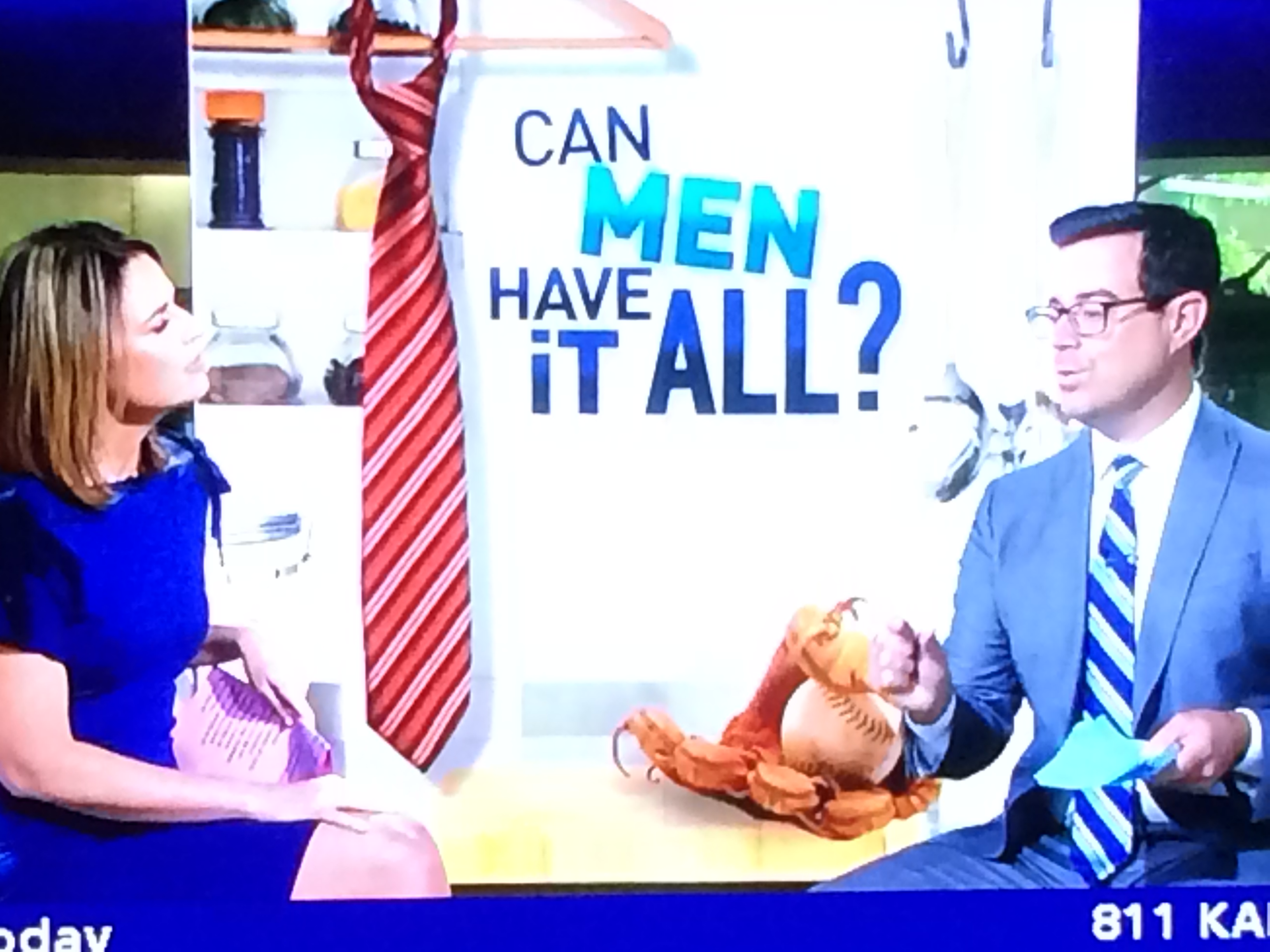
Over at Families as They Really Are, Erin Anderson has posted about men’s lagging uptake of family leave when it is available. Over here, we have prepared a round-up on how men are doing in families by looking back at papers from the Council on Contemporary Families.

An issue related to use (or not) of family leave has to do with the underlying security of jobs: In the CCF June 2013 Symposium on the Equal Pay Act, economist Heidi Shierholz wrote about the erosion of men’s wages in the past few decades. She explains, “In the late 1970s, after a long period of holding fairly steady, the gap in wages between men and women began improving. In 1979, the median hourly wage for women was 62.7 percent of the median hourly wage for men; by 2012, it was 82.8 percent. However, a big chunk of that improvement—more than a quarter of it—happened because of men’s wage losses, rather than women’s wage gains.” Read more here. more...

Click to read the report.

The U.S. Census Bureau’s report on income, poverty and health insurance coverage, released today, reflects the continued uncertainty for U.S. families that has persisted since the Great Recession. Year-to-year changes in most trends were modest or not statistically significant—except in the case of health insurance coverage—but the longer-term trends are important.

Specifically:

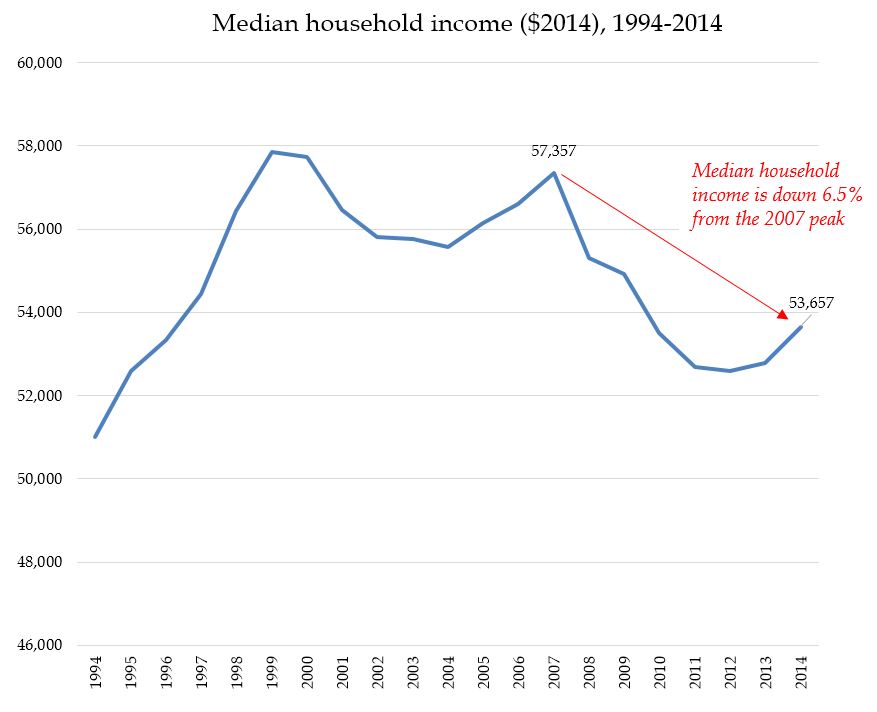
  • Household income has still not recovered to its pre-recession levels. In inflation-adjusted 2014 dollars, household income is now $53,657, which is down 6.5% from the pre-recession peak of $57,357. Although there has been improvement since the lowest level in 2011-2012, this remains a substantial loss—and source of uncertainty—for the typical U.S. household, even with the steady job growth of the last six years.

ccfinc

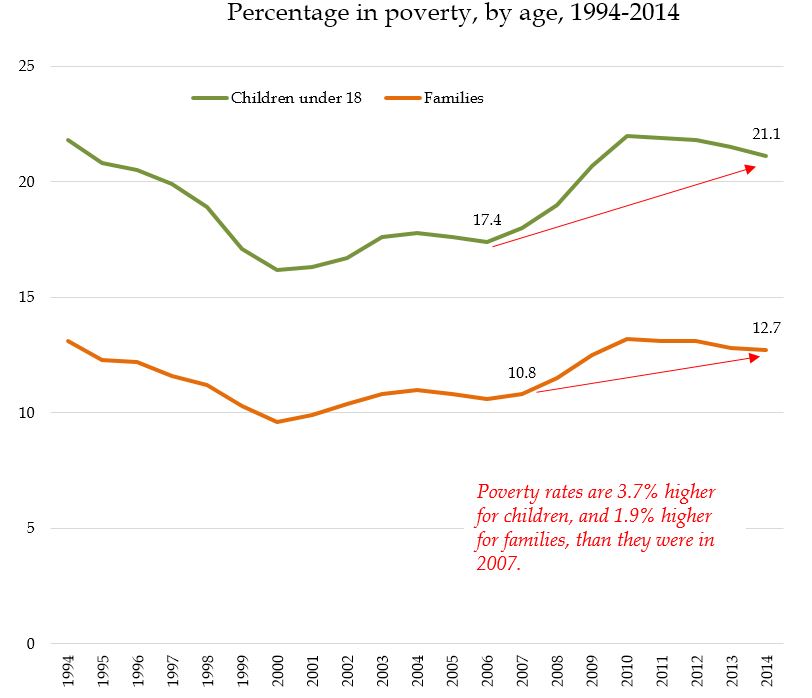
  • Similarly, poverty rates for families remain higher than they were before the recession. In 2014, 21.1% of children lived below the poverty line—up from 17.4% in 2007. For families overall, the poverty rate stands at 12.7%, which is 1.9% higher than it was in 2007.

ccfpov

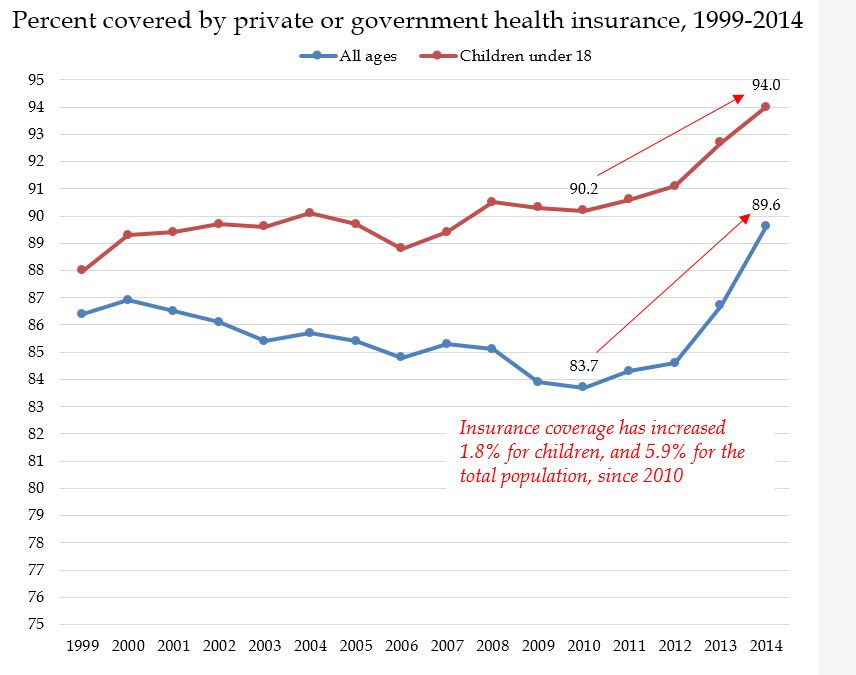
  • The most important good news, continuing recent trends, may be the increase in health insurance coverage. Insurance coverage (from all sources) has increased 1.8% for children, and 5.9% for the total population, since 2010—now standing at 94% for children and 89.6% for the total population. This is generally attributed to the expansion of insurance coverage provided by Obamacare.

ccfins

Despite strong job growth, the recovery remains a mixed one for U.S. families, with significant uncertainty and hardship a persistent part of family life for many people. However, with household income down and poverty up, the expansion of health insurance coverage may be easing the strain for families, helping to mitigate one important source of uncertainty and potential crisis—the costs associated with a sudden, or ongoing, health condition requiring expensive care.

Philip Cohen is in the department of sociology at the University of Maryland. The coeditor of Contexts, he is the author of Family Inequality.

Photo by Chris Hunkeler, Flickr CC.

August 26 was Women’s Equality Day. Established in 1971, the day commemorates passage of the 19th Amendment, which gave women the right to vote. But political equality did not begin to extend to economic equality or marital equality until the 1970s, despite passage of the Civil Rights and Equal Pay Acts in the mid-1960s. As late as 1975, women earned only 60 cents for every dollar a man earned, and no state had yet repealed the laws that gave a man immunity from raping his wife.

Since then, women’s progress in upward occupational mobility and earnings has been dramatic. Dual-earner marriages are now the norm, women now outpace men in educational achievement, and growing numbers of wives out-earn their husbands.

For many years, however, women’s gains seemed to destabilize marriages and threaten family formation. As women entered the workforce, marriage rates fell and divorce rates soared. Fertility plummeted, and policy-makers worried that career-oriented women were turning their backs on motherhood entirely. Some early studies suggested that when wives got their husbands to do housework, they were more likely to get beaten up (Fuchs 1988), or at the very least, to have less happy sex lives.

Many of these developments, however, were products of a transitional period of adjustment, especially marked in the 1970s and 1980s, when women embraced gender equality more quickly than did men and experienced widespread discontent with the persistence of traditional marriage and family arrangements.

The gender revolution is nowhere complete, but there is now evidence that the further progress of the gender revolution is in many cases resulting in a certain restabilization of family life.

  • In the US and many other countries, divorce rates have fallen among couples who express the greatest support for gender equality. Women’s higher education and earnings now seem to help rather than hurt their marriage chances.
  • In Sweden, women with a high career orientation are now more likely to enter a union than other women (Thomson and Bernhardt 2010). And in other countries with strong work-family support systems (Finland and Norway as well as Sweden), dual-earner marriages are now less likely to divorce than male breadwinner ones (Cooke et al 2013).
  • In US marriages formed in the early 1990s and since, couples who share housework report higher marital quality and better sexual relationships than those with a more traditional division of labor. And even among older men (ages 51-92) those with egalitarian gender role attitudes report much higher levels of marital happiness than otherwise comparable men with traditional attitudes (Kaufman 2006).
Photo by Anne Worner, Flickr CC.

Men’s increasing involvement in child care and housework (Sullivan, et al. 2014) seems to be critical here.

  • An analysis of 13 industrialized countries (Sevilla-Sanz 2010) found that men with more egalitarian attitudes were more likely to form a romantic union and particularly to cohabit than men with less egalitarian attitudes.
  • Among cohabitors, men who were involved in the care of their children (providing care when the mother was absent, taking children to daycare and medical appointments) were more likely to make the transition to marriage than those less involved (Kotila 2014).

In fact, such men’s involvement seems to make women more willing to have children.

  • Studies show that when men are more involved with their children after the birth of a first child, a couple is more likely to have a second child. This is the case both in Sweden (Goldscheider, Bernhardt and Brandén 2013) and the US. In the US, the big difference was between the most sharing couples and those who shared inconsistently (81 percent of the former had a 2nd child compared with only 55 percent of the latter [Torr and Short 2006]).
  • This may be why fertility patterns in Europe are changing: In the 1970s, the countries in Europe with the lowest levels of women’s employment (primarily in southern Europe) had the highest fertility; by the 1990s this relationship had reversed, with the countries of northern Europe, which have the highest levels of women’s employment, also having the highest fertility.

References:

Fuchs, Victor R. 1988. Women’s Quest for Economic Equality, Cambridge MA: Harvard University Press.

Kotila, Letitia. 2014. “The role of father involvement in the union transitions of cohabiting parents.” Paper presented at the annual meetings of the Population Association of America, Boston, MA.

Kaufman, Gayle. 2006. “Gender and marital happiness in later life,” Journal of Family Issues 27(6):735-757.

Torr, Berna Miller and Susan E. Short. 2004. “Second births and the second shift: A research note on gender equity and fertility,” Population and Development Review 30:109-130.

Goldscheider, Frances, Eva Bernhardt, and Maria Brandén. 2013. “Domestic gender equality and childbearing in Sweden,” Demographic Research 29 (40):1097-1126.

Cooke, Lynn, et al. 2013. “Labor and love: Wives’ employment and divorce risk in its socio-political context,” Social Politics 20(4):482-509.

Sullivan, Oriel, Francesco Billari, and Evrim Altintas. 2014. “Father’s changing contributions to child care and domestic work in very low fertility countries: The effect of education,” Journal of Family Issues 35(8):1048-1065.

Sevilla-Sanz, Almudena. 2010. “Household division of labor and cross-country differences in household formation rates,” Journal of Population Economics 23: 225-249.

Released originally on August 25, 2015.

Frances Goldscheider is the College Park Professor of Family Science at the University of Maryland.