Tag Archives: nation: Britain/the U.K.

Setting the Agenda: Media Disinterest in SOPA

Sociologists and others use the term “agenda setting” to describe the way that the media focuses our attention on some things and not others.  In this way, media actors may not control how we think about things, but they may very well control what we think about.

This instance of agenda setting involves SOPA, the Stop Online Piracy Act.  Media Matters put together this figure illustrating the relative number of television segments given to SOPA and other issues — the British Royal Family, the football player Tim Tebow, Casey Anthony and her missing daughter, Alec Baldwin’s behavior on a plane, and the Kardashian divorce — between October 26th, 2011 and January 12th of this year.

Data like this is often used to explain why Americans tend to be quite uninformed about important issues.  For more examples, see this post comparing the covers of TIME and Newsweek in the U.S. and elsewhere.  See also: Setting the Agenda on Trump and Setting the Agenda on Janet Jackson’s “Wardrobe Failure.”

Thanks to Dolores R. for the tip!  Via Socialist Texan.

—————————

Lisa Wade is a professor of sociology at Occidental College. You can follow her on Twitter and Facebook.

International Comparisons on Social Justice Measures

How does the U.S. compare to other developed countries on measures of social justice? According to the New York Times, not very well.  The visual below compares countries’ poverty rates, poverty prevention measures, income inequality, spending on pre-primary education, and citizen health.  The “overall” rating is on the far left and the U.S. ranks 27th out of 31.


Via Feministing.  See also how the U.S. ranks on measures of equality and prosperity(33 out of 33, for what it’s worth). Thanks to Dolores R. for the link!

—————————

Lisa Wade is a professor of sociology at Occidental College. You can follow her on Twitter and Facebook.

International Comparison of Christmas Gift Spending

As we enter the last frenzied days of Christmas shopping, Dmitriy T.M. thought it was worth looking at international comparisons in spending on the holiday. The Economist posted a graph based on Gallup polls and other data sources about how much individuals in various countries in Europe, plus the U.S. and South Africa, plan to spend on Christmas shopping this year, plotted against national GDP. Overall, Christmas spending correlates with national wealth, with the Netherlands being a noticeable outlier (spending less than we’d expect) and Luxembourg in a spending league of its own:


Are “Sex Bracelets” Real?

Sociologist Joel Best debunks the idea that “sex bracelets” — bracelets that indicate what type of sex you’re interested in and that oblige you to perform it — are really a thing. He and his colleague, Katherine Bogle, have been tracing the story over time on the internet and across continents in what he calls “the dynamics of rumor and legend.”

—————————

Lisa Wade is a professor of sociology at Occidental College. You can follow her on Twitter and Facebook.

Rethinking the Riots; How Do We Really See Class? (UPDATE)

Cross-posted at Montclair SocioBlog.

I am a Londoner. A proud East Londoner, hailing from the working class. And this past week has been one of the most difficult I’ve encountered since I moved to the US nearly ten years ago.  This weekend my hometown was attacked by rioters, just minutes away from my family’s homes and businesses, my high school and a million childhood and teenage memories.  I don’t think I can do justice describing the feeling of watching this unfold from so far away.  Needless to say, I wouldn’t wish the experience on anyone.  Thankfully, it would appear that most of the violence has subsided. In its place: a myriad of social commentaries on why this happened.  Not only from journalists, but from the everyman benefitting from the very same social media that helped rioters coordinate.  Indeed, many sociologists have aired their ideas on Facebook, blogs and even op-eds.

But perhaps in our rush to explain and apportion blame perhaps we all missed asking some important questions.  Why did we assume that the rioters are poor?  How do we really know the class background of the rioters?  Why did the media depict the rioters as underprivileged? And why did we accept this depiction unquestioningly?

The sociologist in me fantasizes of a post-riot 10 question survey to be distributed to all rioters immediately after completion of law breaking activities with questions including: what is your average household income, what is your and your parent’s highest level of education, what is your occupation, on a scale of one to ten just how angry with the government are you at this moment, ten being really jolly pissed off?

Short of such a research tool, how did we come up with generalizations of a group of people we really know little about, except for the fact that they all rioted?

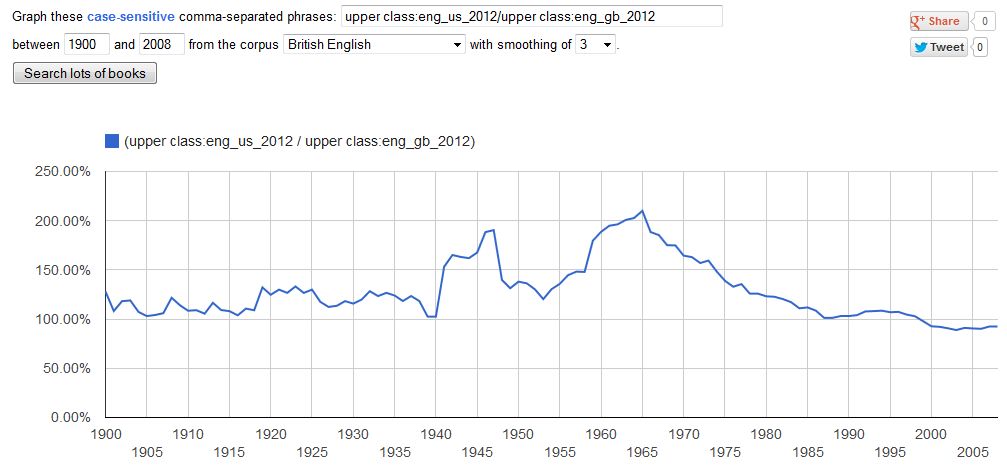
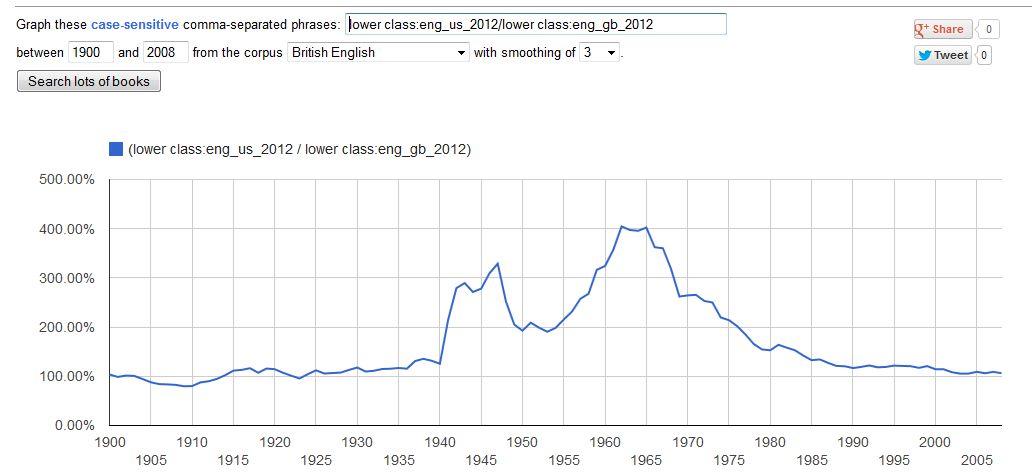
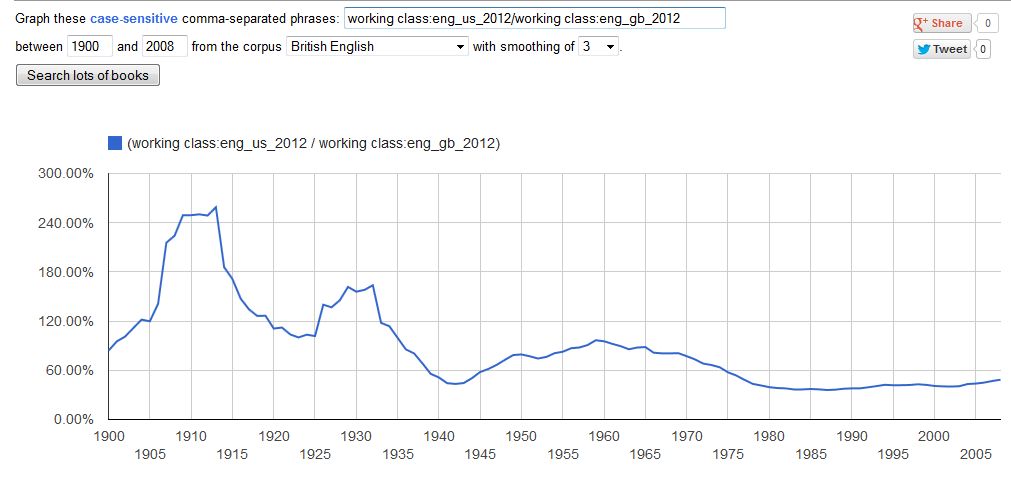
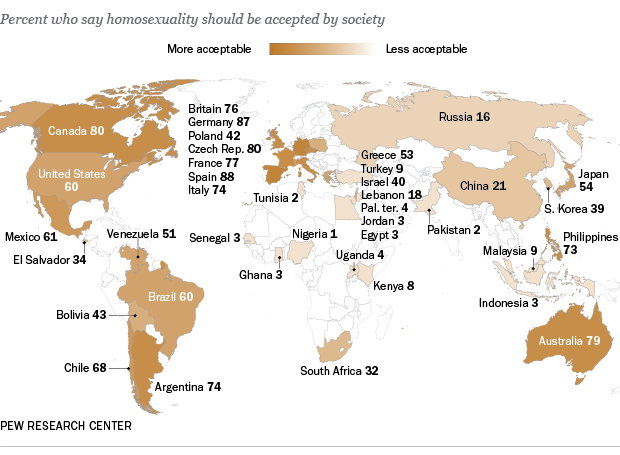
As someone who has lived in both nations, I feel class is certainly a nuanced thing in Britain, much more so than in the US. But even with the subtleties of the British system you cannot simply see class.  And for the most part, all the information we initially had about rioters is what we saw on TV and in still photographs.  Case in point:

Spot the posh people?

In this picture we just cannot tell.  If you thought you could tell, you’d be guessing, and you’d be basing your decision on ideas you have about the poor.  Some might point to history; past rioters have tended to be from the working classes. But this only offers us the ability to make a prediction. But, most commentaries did not acknowledge that they were predicting who was involved.  Some might argue that those wearing hoodies are poor, as the wearing of hoodies has become synonymous in the British press with certain low-income groups.  But people of all class groups own hoodies.  We also cannot surmise simply from a picture that the rioters were from the area they attacked and attempt to extrapolate social class from that location.  Indeed, early police reports indicate that in some cases there was organized travelling to targeted areas and in my home borough of Waltham Forest, initial records show that more than half of those arrested did not live there.  So how do we ascertain the social class of the rioters?  Their behavior?

Did we see violence, looting and vandalism and assume that this could only be the work of poor people, and passively accepted the media’s categorization of the perpetrators as such?  Or are we so blinded by our ideological beliefs, romanticizing the riots to be exactly what Marx warned us of that we bought this generalization? Or do we want so desperately to blame governmental cuts against the poor that we ignore the lack of solid evidence as to who these rioters really are?  Or did we simply map on our understanding of other riots, and assume that all rioters are the same?  I don’t have the answer to these questions, but think it is worth considering why we made the assumptions we did about the rioters when we had little to no data.

As I write this, on Friday 12th August, long after many of the commentaries have been published and opinions have been shared, news outlets are beginning to report the demographic information of the rioters who have appeared in court. (Go here and click on “Get the data”; sorry for the broken link earlier!)

Among those rioters who fit the stereotype  – alienated, poor youth — are those who do not fit this type at all. They have already been the subject of several headlines: teachers, an Olympic ambassador, a graphic designer, college graduates and a “millionaire’s daughter.”  The very fact that these “unusual suspects” have been singled out by the press demonstrates the power of this prejudice; we are shocked when it isn’t poor people rioting.  But why? Is it because deep down we believe that the poor are capable of violence, but the rich aren’t? Or is it because this riot is more complex than simply the rage of downtrodden people?

At this point, we are far from really knowing the class backgrounds of the rioters, especially since many people have not, and probably will not, be caught for their actions. We are still without reliable data to draw conclusions, just as we were earlier in the week when so many of us rushed to attribute this rioting to disenfranchised youth. I am not arguing that class won’t be an important factor in our understandings of these riots, and it may well be that these riots were mostly poor people. But my point is we cannot say with certainty at this moment in time that this is the case. And as an East End girl, I ask: what does it say about us, especially sociologists, that we were so willing to believe this about the poor without any solid data?

UPDATE: Kat provided a link to some data that wasn’t available when the post was being written. The Guardian mapped the home addresses of those arrested in the riots; the results indicate that they appear to have been disproportionately, though not solely, from areas that are poor — and getting poorer. Of those arrested, for instance, 41% came from the top 10% of areas when ranked by levels of deprivation.

——————————

Faye Allard is an Assistant Professor of Sociology at Montclair State University.  When not busy winning teaching awards, she is working on a book about the African American gender gap in high school educational achievement, called “Mind the Gap.”

If you would like to write a post for Sociological Images, please see our Guidelines for Guest Bloggers.

L’Oreal Ads Rejected by U.K. Advertising Authority

The U.K. has passed legislation aimed at reducing the amount of re-touching used in advertising. Sophie R., Dmitriy T.M., and my sister, Keely, sent a link to a news story about two ads, banned this week, for Lancome and Maybelline (both owned by L’Oreal).  The Advertising Standards Authority claimed that the ads were ”misleading” and an “exaggeration.”  ”On the basis of the evidence we received, the ruling stated, “we could not conclude that the ad image accurately illustrated what effect the product could achieve.”

The Authority, then, is enforcing a simple truth-in-advertising rule.  Still, it’s an impressive victory for activists against a very powerful corporation.  Then again, L’Oreal is getting a lot of attention from the news media (and blogs, erg) and these images are going up everywhere, for free.

What the Bleep is the United Kingdom?


Are you confused about what “Great Britain” really is?  Do you become perplexed when asked to discern the difference between Britain, England, and the U.K.?  And what the heck is Wales!?  (Apologies to Wales.)  You are not alone!  CGP Grey offers an entertaining explanation that both clears up the questions, and makes us feel less stupid for not understanding them in the first place.  And you’ll learn some stunning facts about the residuals of empire.  Enjoy:

And if that wasn’t enough, here’s Grey’s historical rendering of how Scotland became a part of Great Britain.

Via Blame it on the Voices.

Global women’s progress report

Cross-posted at Family Inequality.

I have criticized sloppy statistical work by some international feminist organizations, so I’m glad to have a chance to point out a useful new report and website.

The Progress of the World’s Women is from the United Nations Entity for Gender Equality and the Empowerment of Women. The full-blown site has an executive summary, a long report, and a statistics index page with a download of the complete spreadsheet. I selected a few of the interesting graphics.

Skewed sex ratios (which I’ve written about here and here) are in the news, with the publication of Unnatural Selection, by Mara Hvistendahl. The report shows some of the countries with the most skewed sex ratios, reflecting the practice of parents aborting female fetuses (Vietnam and Taiwan should  be in there, too). With the exception of Korea, they’ve all gotten more skewed since the 1990s, when ultrasounds became more widely available, allowing parents to find out the sex of the fetus early in the pregnancy.

The most egregious inequality between women of the world is probably in maternal mortality. This chart shows, for example, that the chance of a woman dying during pregnancy or birth is about 100- 39-times higher in Africa than Europe. The chart also shows how many of those deaths are from unsafe abortions.

Finally, I made this one myself, showing women as a percentage of parliament in most of the world’s rich countries (the spreadsheet has the whole list). The USA, with 90 women out of 535 members of Congress, comes in at 17%.

The report focuses on law and justice issues, including rape and violence against women, as well as reparations, property rights, and judicial reform. They boil down their conclusions to: “Ten proven approaches to make justice systems work for women“:

1. Support women’s legal organizations

2. Support one-stop shops and specialized services to reduce attrition in the justice chain [that refers to rape cases, for example, not making their way from charge to conviction -pnc]

3. Implement gender-sensitive law reform

4. Use quotas to boost the number of women legislators

5. Put women on the front line of law enforcement

6. Train judges and monitor decisions

7. Increase women’s access to courts and truth commissions in conflict and post-conflict contexts.

8. Implement gender-responsive reparations programmes

9. Invest in women’s access to justice

10. Put gender equality at the heart of the Millennium Development Goals