culture

Photo Phiend, Flickr Creative Commons

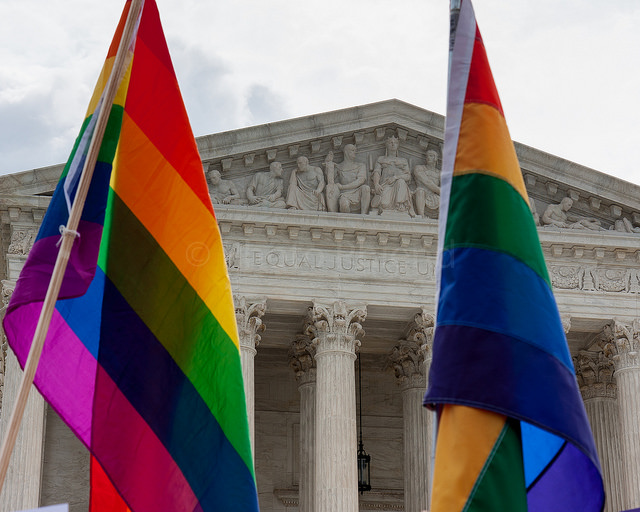
With the Supreme Court’s ruling in Obergefell v. Hodges, states must legally recognize same-sex marriage nationwide. The fight for equality isn’t over, however, as many states do not have explicit protections for same-sex couples against practices like hiring discrimination. The Texas Attorney General also ruled that individual county clerks can refuse to offer marriage licenses to same sex couples on the grounds of their religious beliefs, even if the clerks’ office must ultimately grant the license. This is the challenge with nationwide legislation: laws on the books often differs from the law in action. History shows inequality can thrive in low level bureaucracy, sometimes in spite of national policy.

Policy changes take time to wind through organizations, especially those with large bureaucratic structures like the U.S. government. Autonomous managers in the middle construct their own reasons for adopting policies, often distancing themselves from big changes at the top of the chain. An institutional culture affects the implementation of a policy as much as the policy itself.
We can see these institutional boundaries in broader patterns of hiring discrimination against LGBT citizens that appear in experimental studies, even when employers don’t intend to discriminate. The history of federal regulation in immigration, the military, and welfare policies shows that the U.S. slowly built a bureaucratic system interested in measuring and controlling sexuality long before public battles over LGBT rights came on the scene.
Similar bureaucratic patterns happen around race. When the Supreme Court repealed laws against interracial marriage in Loving v. Virginia, for example, mixed-race couples still faced clerks who were often unwilling to grant them licenses. While the GI Bill was a sweeping national effort in which many U.S. citizens got better housing and education, veterans of color often had trouble registering for those benefits in uncooperative local offices.
Via aclu.org.
Via aclu.org.

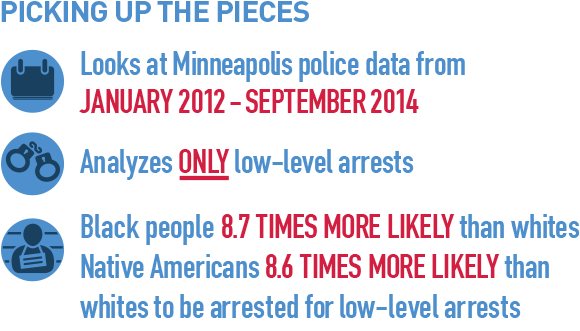
A recently released ACLU investigation a found that black residents of Minneapolis were 8.7 times more likely to be arrested for low-level offenses than white residents between January 2012 and September 2014. The report is the latest in eight city case studies, all of which “describe police departments that reserve their most aggressive enforcement for people of color.” The Minneapolis City Council also recently repealed spitting and lurking ordinances, two examples of the low level offenses cited by the report. Recent sociological research strikes a similar chord; it demonstrates how modern law enforcement isn’t just about crime, but controlling groups of people with minor rules and regulations.

Public discussion about crime tends to focus on felonies, but the majority of law enforcement activity today is geared toward misdemeanors. Even without conviction and sentencing, these minor offenses bring more people into the criminal justice system. The procedural hassle of dealing with a minor criminal record means more people are under this systematic control at any given time, regardless of their guilt or innocence.
The ACLU report finds people experiencing homelessness are the most vulnerable to this system, and many are charged for minor offenses that directly result from being homeless (like panhandling or sleeping outside). Many cities criminalize these behaviors as a way to control space, even to the point that those with criminal records are barred from entering certain neighborhoods.
This law enforcement isn’t just about crime, but also about power in communities of color. Neighborhood-level analysis shows that the stereotypical relationship between race and violent crime rates disappears for communities with more African Americans politically organizing and serving, either in office or on civilian review boards for the police. One of the ACLU’s recommendations to improve the situation in Minneapolis is to establish such review boards.
Photo by Seth Capitulo, Flickr CC.


In mid May, the Pew Research Center released its Religious Landscape Study, using a sample of over 35,000 people to analyze the religious composition of the U.S. population. Some findings got significant media attention, especially one showing that an increase in the number of religiously unaffiliated Americans coincides with a sharp decline in mainline Protestant and Catholic identification. Commentators disagree about what the results really mean; The Huffington Post announced that “America is Getting Less Christian and Less Religious,” while The Atlantic countered American religion is “complicated, not dead.”

Religion scholar Peter Manseau articulated a more nuanced take in the New York Times Sunday Review. He writes that since many of the religiously affiliated still believe in God or pray occasionally, the real trend is a move away from organized religion and toward more personal, private forms of spirituality. In this view, the story of religious change in America today is increasing pluralism, not declining religiosity. But is private, churchless spirituality really the same thing as religion? A small share of the unaffiliated population does fit into the mainstream culture of religious pluralism in the U.S., but this ignores the unique impact of both the decidedly nonreligious and the unique political causes of disaffiliation.

Individualism pervades the American religious landscape, from strict Catholic churches to urban Buddhist groups. Congregations rely on individualistic language and practices to develop religious commitments, and while this can lead to both progressive and orthodox forms of religious expression, it also contributes to the politicization of religion. Michael Hout and Claude Fischer argue that politicized religion repels many Americans, especially younger ones.
While many of the unaffiliated do believe in God, pray, or otherwise demonstrate some type of spiritual concern or commitment, but these “unchurched believers” comprise less than half of the unaffiliated population. Chaeyoon Lim, Carol MacGregor, and Robert Putnam find that only about 30% of the unaffiliated retain some aspects of religiosity, standing “halfway in and halfway out of a religious identity.” Their numbers are exceeded by atheists and agnostics who are decidedly nonreligious.

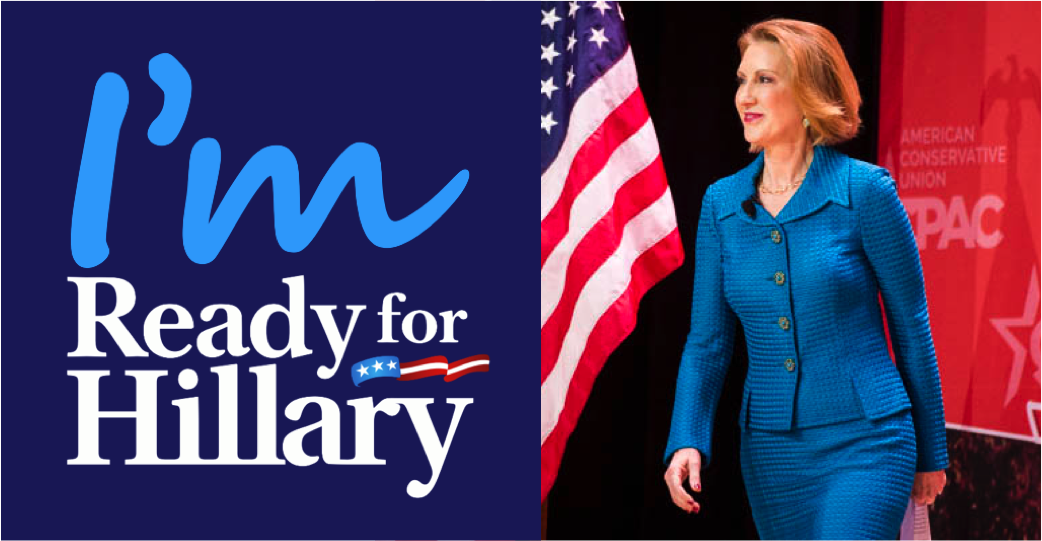
Hillary Carly


With Hillary Clinton’s official announcement of her presidential candidacy—and now Carly Fiorina’s GOP candidacy—we have seen the immediate and constant sexism that will undoubtedly plague the campaign coverage until election day. Time Magazine, for example, ran a piece focusing on Clinton’s presumed post-menopausal estrogen levels as an asset to her presidential leadership skills (we have yet to spot an article on the testosterone levels of Jeb Bush or Bernie Sanders).

Media outlets often pay a disproportionately higher rate of attention to female candidate’s wardrobe, appearance, and age than to that of male candidates, treating women as novelties rather than serious contenders. The focus on appearance objectifies and sexualizes, delegitimizing their authority.
People evaluate “appropriate” roles for women in public office based on gender stereotypes about policy and issue competency more than on personality traits. Public opinion survey respondents indicate that they find female candidates more capable of handling “feminine” topics like education and healthcare, while male candidates are more qualified to deal with “masculine” issues like terrorism and the economy.
Contrary to expectations, neither higher numbers of educated women nor the type of political system translates to more women in national office. In fact, female congressional candidates win at similar rates to men in general elections. Instead, ideologies about women’s roles and positions in societies influence women’s abilities to enter politics as candidates and survive the primary process.

For more on this topic, check out Scholars Strategy Network and Sociological Images

WaPo graphic


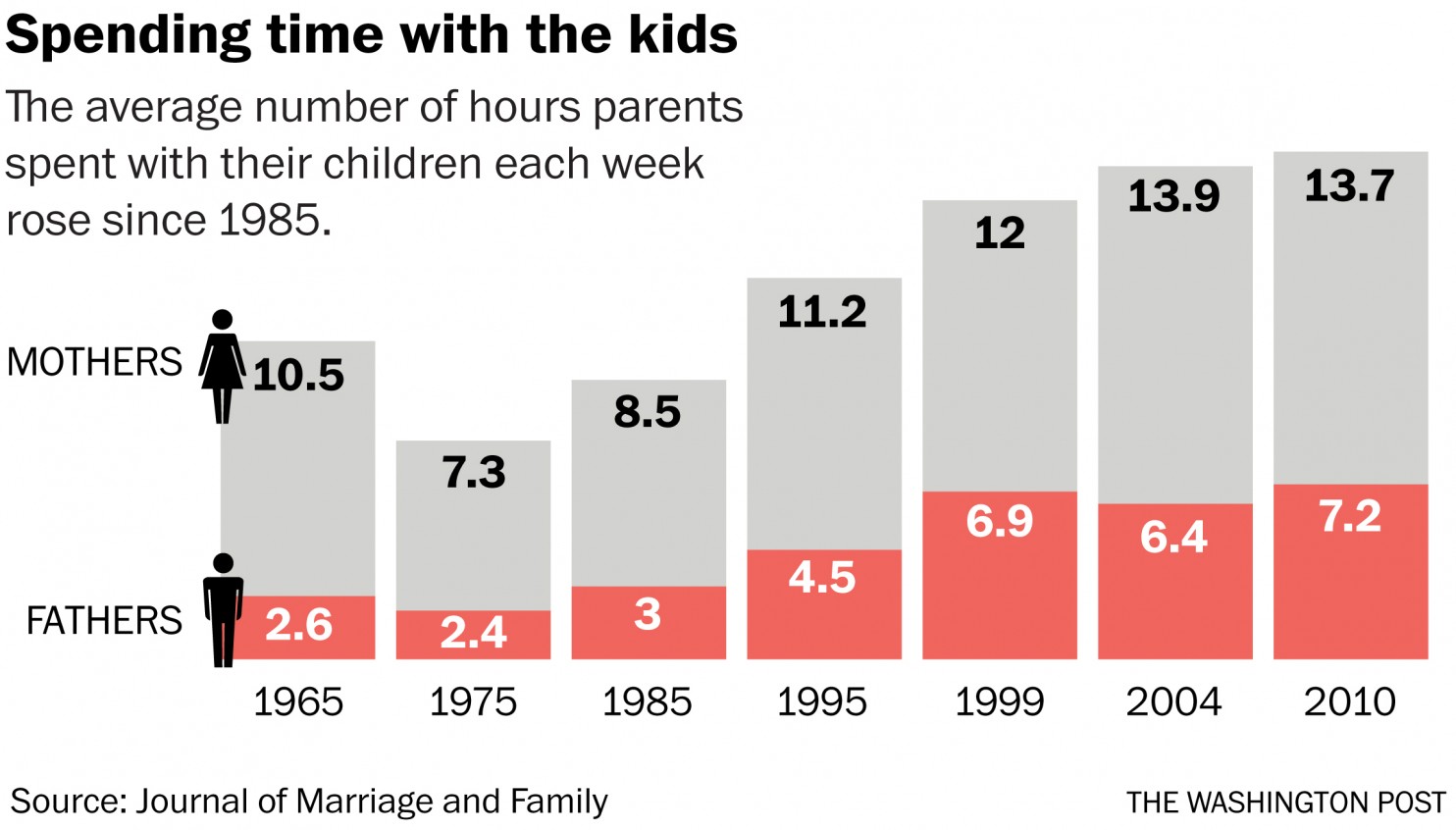
A recent scholarly article in the Journal of Marriage and Family by Melissa Milkie, Kei Nomaguchi, and Kathleen Denny (first covered in the Washington Post) has sparked a plethora of commentary in the news media, including several critiques by Justin Wolfers of The Upshot, and a convincing response by the authors in the Washington Post. Using high-quality time use data from a national panel study, Milkie, Nomaguchi, and Denny found that the overall amount of time mothers spend with either adolescents or younger children does not matter for their children’s behaviors, emotions, or academics. What do sociologists know about the impact of parenting time on children’s wellbeing?

First, the kind of parenting time matters. Time mothers spend engaging with children makes more of a difference than the time mothers are available to or are supervising their children. So being long on love but short on time isn’t a bad thing. Engaged maternal time is related to fewer delinquent behaviors among adolescents, and engaged time with both parents was related to better outcomes for adolescents. Other studies show too much “unstructured” parental time, such as watching TV together, may actually be worse for some children under age 6, and that the quality of parent-child relationships factors in. Family dinners contribute to fewer depressive symptoms and less delinquency among adolescents, but only when parent-child relationships are strong.
Why did this finding spark such a media response? In part, it’s because society believes ideal mothering means spending lots of time with children. Many parents strive to attain this ideal, but many working mothers who cannot attain it must redefine their definition of a “good mother” to fit with work responsibilities. Still, working mothers today spend more time with their children than employed mothers in the past.


For more on the original article and the critiques, see Sociological Images.

California is facing record drought, water restrictions, and threats of wildfires. The solution seems simple—just find more water through increased pumping or desalination—but these quick fixes ignore deeper questions about how we turn public necessities into commodities and determine who can lay claim to natural resources. These issues can lead to cultural conflict, but struggles for water can also renew solidarity across different social groups.

Sociological case studies remind us that professional environmental responsibilities to the land, its residents, owners, and governments change over time and through particular institutional cultures. Power and inequality shape who is exposed to environmental problems and how we address solutions.
Water conflicts also bring up commodification—the way we turn public necessities like water and health into market goods. Research on commodification examines everything from how the water industry actively competes with the tap to how insurance markets change the culture of life and death in the United States.
Water resources—even when scarce—do not inevitably lead to conflict. Environmental concern is not only high in affluent nations; even in places as tense as the Middle East, local activists regularly use the environment to bridge cultural, political, and religious tensions.

Rebecca Farnum is a 2012 EPA Marshall Scholar researching for a PhD in Geography at King’s College London, where she explores environmental conflict and cooperation around food and water resources in the Middle East and North Africa. She has an LLM in International Law on environmental and human rights law, an MSc in Water Security and International Development, and undergraduate degrees in anthropology, interdisciplinary humanities, international development, and international relations.

Indiana’s recently passed Religious Freedom Restoration Act (not to be confused with the 1993 Federal RFRA), faced widespread public controversy and brought a number of high profile boycotts against the state. The law allows private businesses to use the free exercise of religion as a defense in court should they face a lawsuit for discrimination, raising concern about whether businesses are allowed to discriminate against clients on religious grounds. Similar laws are under debate in other states, while in Madison, Wisconsin, officials have signed the first legislation that includes the “non-religious” as a legally protected category. The laws illustrate the importance of religion in shaping social and political issues in American lives.

While religion often works as an inclusive, community-building institution, it also has the potential to reinforce existing social boundaries and inequalities. Cultural and historical contexts shape the ways that religious beliefs are interpreted, and in the American context, religious beliefs are often used to exclude religious and sexual minorities.
Even if these laws are repealed or amended, these social boundaries underlie deeper issues in the workplace. Despite being prohibited by the Employment Non-Discrimination act, audit studies find discrimination against religious minorities and openly gay men in the hiring process.

For more on this issue, check out our post from last year: Religious Freedom and Refusing Service.

The Canadian Senate recently passed an amendment that excludes transgender people from using public restrooms of their choice. Transgender rights are facing similar challenges domestically, as Florida, Texas, Kentucky, and Minnesota consider bills that would limit or restrict the use of restrooms based on one’s sex assigned at birth. Additionally, Missouri State Rep. Jeff Pogue is pushing to ban gender-neutral bathrooms. As trans activists take to Twitter, sharing powerful photographs of themselves in bathrooms that do not fit their gender identity, some may be wondering: when did the loo become so political?

Gender policing is by no means new; in fact, regulating and upholding the gender binary has long been key to social and legal organization. Upon meeting someone new, it is common to make assumptions about their gender based on their body and presentation.
Assumptions about gender vary based on context. Whereas gender identity and presentation may be used as criteria for gender-integrated social spaces, biological sex and genital appearance is emphasized in sexualized situations (e.g. dating) and gender-segregated spaces (e.g. bathrooms). Culturally held beliefs that men are dangerous and women are vulnerable exacerbate the policing of women’s only spaces like restrooms, while gender nonconformity may create ‘gender panics’ for nontransgender people.
The policing of gendered bathrooms can include anything from strange looks and verbal challenges to interpersonal violence and arrest. As a result, transgender and gender nonconforming people may avoid public restrooms or alter their presentation substantially to avoid harassment and conflicts.
Legislation that seeks to regulate bathroom use must first venture down the slippery slope of legally defining sex. This is no small task. In the absence of any federal definition of sex, dozens of judicial gender determination cases demonstrate the variety of factors courts use to determine gender, including personal identity, physical presentation, medical history, and genital appearance and function.

In March 2015, 47 Republican Senators signed a letter, authored by Sen. Tom Cotton and addressed to “the Leaders of the Islamic Republic of Iran.” In what the New York Times called a rare direct congressional intervention into diplomatic negotiations, the cosigners warned Iran that any agreements they may negotiate with President Obama’s administration would not have lasting power, because the U.S. Constitution grants the power to ratify treaties to Congress alone and Obama will leave office in 2017. Most political commentators were surprised by this senatorial foray into sensitive diplomatic affairs; even many conservatives have expressed concern about how the letter might affect negotiations regarding Iran’s nuclear weapons program. But there are good sociological reasons to believe that the cosigners’ goals have little to do with Iran.

Jeffrey Alexander argues that social actors, including political parties, develop “power narratives of civil repair” to redefine social groups. The GOP Senators’ invocation of the Constitution can be understood as an attempt “repair” the damage to America’s international standing they believe Obama has done. In this view, the letter is more a nationalistic statement about who defines what America is than a diplomatic maneuver—a cultural performance intended to grant legitimacy to future political goals.
Drawing on Alexander’s theories, Jonathan Wyrtzen argues that elite political actors have strong strategic incentives to try to claim national symbols, such as the Constitution, as their own.
But even if “reclaiming” the Constitution makes strategic sense for Republicans, why choose such a controversial venue as an open diplomatic letter to a foreign government? Craig Calhoun points to the centrality of the nation in modern culture, saying that strong claims to allegiance are especially effective when “the nation” is perceived to be under threat. The Senators, then, may have used their letter to play up Americans’ fear of unstable relations with Iran.
And Rhys Williams underscores the importance of “blood and land” as symbols in “American Civil Religion.” Iran’s nuclear program invokes both, giving Republicans reason to believe power narratives involving Iran will contribute to a moral panic regarding Obama’s foreign policy—and, by extension, the leadership of any Democrat candidates.

ISIS recently announced they “will conquer Rome, by Allah’s permission” in a video that showed the murder of 21 Christians in Libya.  Not long after the video’s release, Italians offered cheeky travel advice to the militant group via Twitter, using the hashtag “#We_Are_Coming_O_Rome.”  Tweets warned of traffic jams and tourist traps at landmarks like the Trevi Fountain, while others humorously applauded ISIS’s “vacation” choice.  But is laughter the best medicine for international threats? 

Jokes are a way for societies to cope with threats.  People use irony to lessen their anxieties about an unsettling situation without seeming paranoid.  Humor also give status by discrediting those with strong anxieties and giving the joker an air of nonchalance. 
Ethnic jokes also draw symbolic boundaries between who does and doesn’t belong.  These jokes reinforce the moral values of the in-group by characterizing outsiders’ unacceptable behavior. Framing is key in being playful with something political—those involved in the interaction need to have shared beliefs and the joke needs the right context.
However, humor is a double-edged sword as evidenced by the events that followed the Charlie Hebdo cartoons earlier this year and the Jyllands Posten depictions of Mohammad in 2006. Targeting a minority group reinforces stereotypes and masks the diversity of individuals within the group. When a member of the dominant culture “punches down,” with an ethnic or racist joke, the audience is more likely to be judgmental of individual members of a minority group.