politics

Photo of cricket players in white uniforms holding their arms in the air to signal for an appeal
Players appeal for a wicket. Photo by Nic Redhead, Wikimedia Commons CC

“Howzat?”
“Kaaaaach it!”
“Bowled ‘im!”
“Wadda wrong’un!”

Americans may scratch their heads at these expressions, but a large body of international sports fans relishes those words. England and Wales are currently hosting the Cricket World Cup, the 12th edition of the tournament that began in 1975; ten national teams who have made it past qualifiers are slogging it out to lift the trophy. Social scientists around the world have studied cricket — as with many sports, a social science perspective on cricket shows that the pitch and stumps reside at a complex intersection of globalization, postcolonialism, boundaries, and identity.

Cricket is a global sport based on institutional and organizational processes as well as broader patterns of cultural and national identity. The centuries-old sport started in the United Kingdom and has since spread into a worldwide, modernized phenomenon, complete with fireworks, cheerleaders, and sophisticated analytics. An international network of cricketing organizations, athletes, broadcasting companies, sponsors, and state actors bring the game to its large, global audience.
In several countries, cricket’s growth has been shaped by the dilemmas, challenges, and sticky wickets of decolonization. In these countries, cricket has played an important role in building new cultural and national identities; social scientists explain that the popularization of cricket is both a cause and consequence of broader change. South Asian nations today are key players and decision-makers in the international cricketing world, which reverse-sweeps conventional logic that white countries hold greater global power.
The cricket field can also tell us a lot about race, belonging, and hierarchy. A classic in the social science of sport, C.L.R. James’ Beyond the Boundary uses his tales playing cricket to highlight status, exclusion, prejudice, and inequality within a social world shaped by racism, colonialism, and resistance. For example, he describes how team selection in cricket was shaped by skin-color rather than skill. Today, James’ ideas still influence scholars who study cricket as relevant to race, group boundaries, and social movements. Some researchers have studied anti-racist activism and the pursuit of equitable cricket representation in countries grappling with racial inequality. Others have shown that cricket offers an avenue of legitimization for marginalized and underrepresented groups in such nations.

Unfortunately, many issues of exclusion and marginalization still exist in the cricketing world today, both within and across different nations. As cricket continues to grow, globalize, and gather, such issues will hopefully be firmly driven outta here from the middle of the bat.

For an explanation of cricket terms, visit this ESPN glossary.
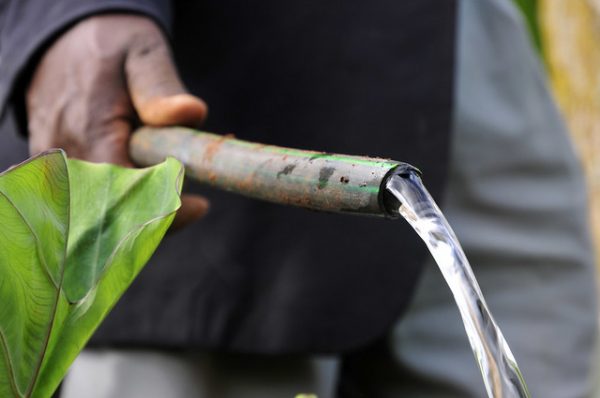
A brown hand holds a pipe with a clear liquid flowing from it.
Photo by CIAT, Flickr CC

Research on “environmental racism” discusses how non-white communities more frequently reside in areas that are environmentally unclean, polluted, or hazardous — often a direct consequence of other racial inequalities. We at The SocietyPages have written about this phenomenon before, but recent research shows that the consequences of climate change have added new dimensions to these dynamics.

Climate change and shifting weather patterns pose issues at large, but racial minorities are more likely to bear the brunt of adverse effects related to climate change. As existing racial inequalities are often linked to neighborhood and place, climate change threatens those who are already at risk of adverse health outcomes due to discrepancies in income, education, and more. In essence, the impacts of climate change are more likely to be felt among poorer, non-white communities.
Internationally, climate change has greatly impacted farming, fishing, and other economic activities in developing countries. This has particularly affected poorer, disadvantaged communities in non-white countries, that are more at risk for weakening agricultural yields and devastating super-storms linked to climate change. Researchers now use terms like, “environmental migration” or “climate change induced migration,” to capture the ways migration becomes the best adaptive strategy to the changing climate. Unfortunately, the places they move to are sometimes far from welcoming; racism and prejudice often shape their new lives after climate change induced migration.

Climate change thus poses greater challenges for poorer, non-white communities both in the United States and globally. As adverse environmental factors continue, it is important to think about how the intersection of social and natural forces “turns up the heat” on racial inequality.

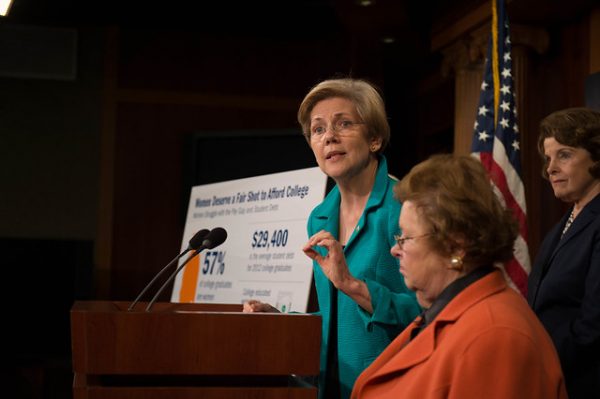
Photo of Elizabeth Warren speaking at a podium. There is a large sign next to her about how students afford college.
Photo by Senate Democrats, Flickr CC

Elizabeth Warren released an ambitious plan for free college and student loan relief on April 22.  Among a Democratic primary field that is increasingly embracing free college as the standard, Warren’s plan stood out for including $50,000 of debt relief for all individuals with current student debt, expanding what we mean by the cost of attendance, creating a fund for HBCUs, and (eventually) banning for-profit colleges from receiving federal funds. The plan also stood out in another way: centering sociological, justice-oriented research. Inequality and education are topics with a lot of good work from sociologists, but it is worth highlighting three sociologists who influenced Warren’s proposal: Louise Seamster, Tressie McMillan Cottom, and Sara Goldrick-Rab.

Warren notes that student loan debt is a racial equality issue. She specifically cites analysis done by a team at Brandeis University, including sociologist Louise Seamster, that finds that households with lower levels of education and families of color benefit more from Warren’s plan. Dr. Seamster’s recent article in Contexts, “Black Debt, White Debt,” demonstrates how debt often functions differently for black and white families. White Americans can take advantage of forms of debt like home mortgages, student loans, and business loans that later result in increased wealth and can be used to establish creditworthiness for future financial interactions. In contrast, municipals fines and fees or predatory student loans are more likely to be carried by black Americans. These forms of debt have high interest rates, poor terms, and hurt future wealth and creditworthiness more than they help.

Tressie McMillan Cottom’s Lower Ed also highlighted disparate impacts of student loan debt on black Americans, as well as the centrality of inequality for the American economy and the effects of for-profit colleges. Her work demonstrates how for-profit colleges target low-income students and students of color Dr. Cottom has also testified in front of Congress on for-profit colleges and the reauthorization of the Higher Education Act.

Warren’s free-college-for-all position leans heavily on researchers such as Sara Goldrick-Rab, one of the most active scholars and advocates for low-income college students. Dr. Goldrick-Rab advocates for meeting the basic needs of students as they pursue their education, especially in recognizing the costs beyond tuition that students face. Paying the Price demonstrates how it is money, not will or desire, that gets in the way of students on financial aid trying to finish a degree.

Louise Seamster, Tressie McMillan Cottom, and Sara Goldrick-Rab are exemplars of how sociological research can shape public policy and of how research and activism can push for a more equitable world.

Photo by Office of Congresswoman Katherine Harris, Wikimedia Commons

This post was created in collaboration with the Minnesota Journalism Center.

Recent estimates from the International Labor Organization (ILO) and Walk Free Foundation found that more than 40 million people are in modern slavery. The ILO has valued human trafficking as a $150 billion industry, with $99 billion coming from commercial sexual exploitation. Prostitution and trafficking are both illegal in America (except for several counties in the state of Nevada where prostitution is legal), but the two terms are often conflated. With regard to terminology: When one is coerced or forced into selling themselves for sex, it is a form of trafficking, and those who enter the regulated sex industry voluntarily are deemed sex workers.

The “normalization” of sex work worldwide is still in flux. Scholars divide the international community into two camps with regard to this issue: abolitionist feminists, who believe both voluntary and involuntary prostitution and sex work is exploitative; and human rights feminists, who de-link prostitution/sex work and trafficking by arguing that some adult women and men are in prostitution/sex work voluntarily and should not be considered victims, and only those who are forced or coerced to be prostitutes or sex workers should be considered trafficking victims.
Scholars demonstrate that NGO coverage of trafficking often portrays “ideal victim” and “ideal perpetrator” stereotypes that don’t always reflect the truth about who is subject to trafficking worldwide. Further, journalistic coverage of trafficking is often written through the lens of “episodic” frames that provide personal narratives but lack trend statistics, quotes from experts, or social forces at play in perpetuating demand for trafficking worldwide.
As anti-trafficking campaigns evolve in the Digital Age, technology also plays an integral role in efforts to curb demand and address supply that flows through social media networks and the Internet. Initiatives — including research about online demand for sex and working partnerships between social scientists, law enforcement, and anti-trafficking NGOs — are shaping the future of anti-trafficking efforts worldwide.
Photo of a drone flying in the air near a statue of Joan of Arc.
Photo by Ted Eytan, Flickr CC

This post was created in collaboration with the Minnesota Journalism Center.

The landscape of journalism is changing every day. The Pew Research Center reported that newspaper newsroom employees declined by 45% between 2008 and 2017, and Nieman Lab argues that newsrooms are in the midst of a “do-or-die moment.” As traditional newsrooms lose hundreds of reporters and editors annually, content creators including WikiLeaks and Deadspin are coming alongside legacy media outlets including CNN, the BBC, and The New York Times to provide information to the public. All of these players publish content online in a journalistic fashion, raising the question of what journalism is as a profession.

In the midst of a shrinking workforce, scholars are starting to pay attention to “interlopers” and “intralopers:” Interlopers are actors or institutions who may consider the work they do to be part of news media, though they do not always define themselves as journalists; web analytics companies are one current example. Intralopers are similar to interlopers, but instead work from within news organizations as specialists in digital and social media and often produce emerging technology meant to complement journalists’ work. Both play increasingly key roles in journalistic spaces.
Machines and software packages are beginning to play a more central role in news gathering, news selection, news writing, news editing, and news distribution in newsrooms worldwide. Drones are one example of machines occupying space traditionally held by journalistic actors. 2016 was a turning point for the institutionalization of drones in newsrooms in the United States, when the Federal Aviation Administration (FAA) amended aviation regulations to allow for widespread experimentation with drones in American journalism. Since that date, journalists from outlets including The New York Times and The Washington Post have produced compelling stories, photos and videos but have also go through a comprehensive federal certification process (Columbia Journalism Review recently wrote about this phenomenon).
Analytics and metrics also play a key role in newsrooms nationwide. However, journalists have varying opinions of how influential their role is in their daily routines, with some arguing that analytics challenge journalists’ authority to decide which stories are newsworthy.
Beyond analytics and metrics, journalists and technologists often collaborate with each other on a regular basis to create open-source software programs. One example is “hackathons” — events where coders and journalists come together to find solutions to journalistic problems in the interest of creating a brighter future for news outlets worldwide.

Photo of a 1040 tax form with a pencil.
Photo by PT Money, Flickr CC

Ben Franklin famously quipped that nothing in life is certain except death and taxes. However, sociologists would add that the burden of taxation (and mortality, for that matter) is not evenly distributed across members of society. This tax season we examine the research on who pays how much to Uncle Sam.

Taxation is such a divisive political issue because it is partially driven by ideology, not just fiscal needs. The sociological perspective on taxation highlights non-economic causes and consequences of tax policy. Taxation is more than just the state’s way of generating revenue. It is also a powerful tool for social control. For example, policies have been written to both encourage and discourage wives’ labor force participation depending on the needs and values of the state in different countries and periods. By restricting the political activity of  non-profit organizations, tax laws can also repress some social causes, while encouraging others.
Another function of the tax system is resource redistribution. Progressive tax policies can directly impact after-tax income distribution by taking more money from high-income earners than low-income earners. They can also indirectly affect pre-tax income inequality if taxes pay for programs that increase the earning-potential of less-advantaged people. However, in recent decades, declining tax rates on the rich have put more money in the pockets of the top 1%. Meanwhile, cities are finding creative ways of extracting tax revenue from people who struggle to pay. When residents cannot pay, for example, predatory investors buy their tax debt from the city. Investors can take the house if property owners cannot pay them back at a high interest rate. These policies force poor, non-white urban residents to shoulder an uneven tax burden, and have worsened class and racial inequalities in the United States.
Social factors shape individuals’ willingness to pay taxes. An international survey showed that people are less likely to evade taxes if they believe the government is competent and if tax revenue primarily funds popular programs. This helps explains why some countries are better able to collect taxes than others. In the United States, changing demographics predict changing attitudes about taxation. In a survey experiment, white Americans were less likely to support a tax increase if they were told that an influx of Latinx (compared to white) migrants entered their community. This was driven by declines in feelings of social solidarity. These studies show that whether people pay taxes is influenced by whether they consider public spending to be legitimate.

Filing your taxes is a good annual reminder that taxation does not just fund the government; it can reshape society.

Photo of a highway with a sign by the side of the road that says, welcome to northern ireland
Photo by Eric Jones, CC

Brexit negotiations have stalled on what to do about the Irish border. Some want to implement a hard border between Northern Ireland and the Republic of Ireland to control the flow of migrants into the United Kingdom. Others fear that a hard border will reignite violence that plagued the region in recent memory. Sociologists explain why peace is so fragile in this region by uncovering the structural, religious, and political roots of the conflict.

The conflict in Northern Ireland is religious, but that does not mean it is about doctrine. Religion does not just describe what individuals believe regarding the supernatural. It is a meaningful social identity that shapes how people experience and perceive the world. This is more true in Northern Ireland than in other parts of Europe. Protestants and Catholics not only worship in different churches, they also tend to live in different communities, send their children to different schools, and drink in different pubs. Through participating in these rituals, people in Northern Ireland construct strong identification with one or the other religious group, even if they do not personally believe in God at all.
Religion does not just signify group membership in Northern Ireland. It also signifies access to power and resources. Protestants there have been legally and socially privileged for centuries. This inequality set the stage for inter-group conflict. Because they constructed their social identity in opposition to Catholics, Protestants tended to see Catholic social ascent as a sign of their own descent. When Catholics mobilized for civil rights in the 1960s, the British-backed Protestants responded harshly. Violent repression strengthened the sense of group identification among Catholics. This collective victimhood identity was used to mobilize some Catholics to join violent resistance groups. A wave of bloodshed lasted for 30 years.
Conflict in Northern Ireland is more muted today. Globalization and trade liberalization have reduced the significance of the Irish border. The Good Friday Agreement signed in 1998 charted a path forward for peaceful power sharing in the territory. However, sectarianism did not end with the stroke of a pen. In the years following the agreement, residential segregation in Northern Ireland has increased, and periodic violence still occurs. The government has done little to dismantle structural sources of inequality, such as integrating schools. Instead, lawmakers place the blame of lasting inequality on bad individual actors. As a result, the Good Friday Agreement has not ushered in the era of religious and political cooperation that many hoped for.

The situation in Northern Ireland has parallels to social conflicts elsewhere, including racial inequality in the United States and South Africa. Social identities, such as religion and race, give meaning and texture to people’s lives. However, when one group’s success is defined by another group’s failure, harmful competition and conflict can tear at the fabric of society. Peace depends not only on individuals seeking and offering forgiveness, but on structural changes and daily rituals that construct an appreciation for differences in society.

Photo by Ted Eytan, Flickr CC

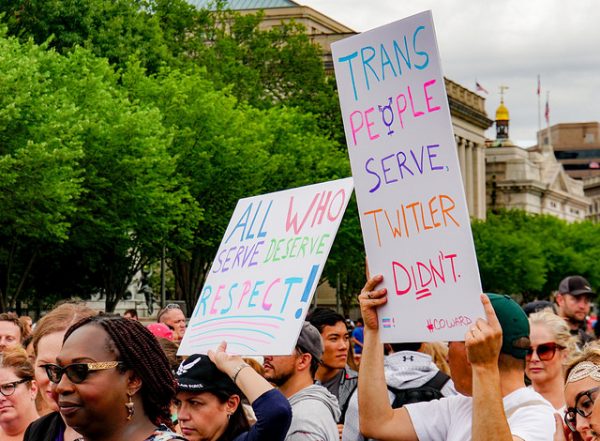
In 2016, the Obama administration began to allow transgender military personnel to openly affirm their gender identity without fear of being separated, discharged, or denied reenlistment. Recently, however, President Trump and the United States Supreme Court instituted a ban on openly transgender personnel serving in the military. Among these are troops that have multiple deployments, extensive combat experience, and are highly decorated. Though President Trump asserted that transgender personnel affect military readiness, top military leaders did not support this determination. Additionally, projected healthcare costs for these personnel — another reason stated by Trump for the ban — have been found to be minimal, given the small size of this population. Sociological research sheds light on troops’ attitudes towards transgender personnel, and addresses misconceptions about the effects of transgender personnel on military readiness.

One study at a premier military academy revealed that most concerns about the integration of transgender personnel in the military included items such as privacy (bathrooms, showers, living arrangements), how to gauge male and female physical fitness standards for transgender personnel, and costs of hormones or surgeries for transitioning soldiers. Another study suggests that overall, cadets (both ROTC and military academy) and civilian undergraduates do not believe working with transgender people would affect their ability to do their jobs. However, nearly half of academy cadets agree with barring transgender people from military service, while smaller percentages of undergraduates and ROTC cadets hold this opinion.
In another study, survey responses of active and veteran military students revealed relative support for transgender men and women in the military. Both deployment to a combat zone and being in an infantry combat position led to supportive attitudes towards transgender military personnel. However, a noteworthy number of participants also expressed stark bias and prejudice towards transgender individuals in the military.
President Trump tweeted once that “our military . . . cannot be burdened with the tremendous medical costs and disruption that transgender in the military would entail.” As scholars have shown, however, the effects on both health costs and military readiness would be indeed negligible.

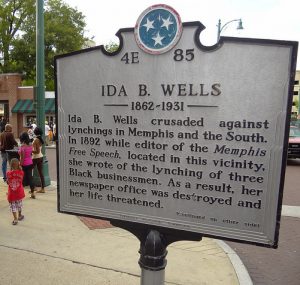
Photo of a plaque commemorating Ida B. Wells. Photo by Adam Jones, Flickr CC

As Black History month draws to a close, it’s important to celebrate the work of Black scholars that contributed to social science research. Although the discipline has begun to recognize the foundational work of scholars like W.E.B. DuBois, academia largely excluded Black women from public intellectual space until the mid-20th century. Yet, as Patricia Hill Collins reminds us, they leave contemporary sociologists with a a long and rich intellectual legacy. This week we celebrate the (often forgotten) Black women who continue to inspire sociological studies regarding Black feminist thought, critical race theory, and methodology.

Ida B. Wells (1862-1931) was a pioneering social analyst and activist who wrote and protested against many forms of racism and sexism during the late 19th and early 20th century. She protested Jim Crow segregation laws, founded a Black women’s suffrage movement, and became one of the founding members of the NAACP. But Wells is best-known for her work on lynchings and her international anti-lynching campaign. While Wells is most commonly envisioned as a journalist by trade, much of her work has inspired sociological research. This is especially true for her most famous works on lynchings, Southern Horrors (1892) and The Red Record (1895).
In Southern Horrors (1892), Wells challenged the common justification for lynchings of Black men for rape and other crimes involving white women. She adamantly criticized white newspaper coverage of lynchings that induced fear-mongering around interracial sex and framed Black men as criminals deserving of this form of mob violence. Using reports and media coverage of lynchings – including a lynching of three of her close friends – she demonstrated that lynchings were not responses to crime, but rather tools of political and economic control by white elites to maintain their dominance. In The Red Record (1895), she used lynching statistics from the Chicago Tribune to debunk rape myths, and demonstrated how the pillars of democratic society, such as right to a fair trial and equality before the law, did not extend to African American men and women.
Anna Julia Cooper (1858-1964) was an avid educator and public speaker. In 1982, her first book was published, A Voice from the South: By A Black Woman of the South. It was one of the first texts to highlight the race- and gender-specific conditions Black women encountered in the aftermath of Reconstruction. Cooper argued that Black women’s and girls’ educational attainment was vital for the overall progress of Black Americans. In doing so, she challenged notions that Black Americans’ plight was synonymous with Black men’s struggle. While Cooper’s work has been criticized for its emphasis on racial uplift and respectability politics, several Black feminists credit her work as crucial for understanding intersectionality, a fundamentally important idea in sociological scholarship today.
As one of the first Black editors for an American Sociological Association journal, Jacquelyn Mary Johnson Jackson (1932-2004) made significant advances in medical sociology. Her work focused on the process of aging in Black communities. Jackson dismantled assumptions that aging occurs in a vacuum. Instead, her scholarship linked Black aging to broader social conditions of inequality such as housing and transportation. But beyond scholarly research, Jackson sought to develop socially relevant research that could reach the populations of interest. As such, she identified as both a scholar and activist and sought to use her work as a tool for liberation.

Together, these Black women scholars challenged leading assumptions regarding biological and cultural inferiority, Black criminality, and patriarchy from both white and Black men. Their work and commitment to scholarship demonstrates how sociology may be used as a tool for social justice. Recent developments such as the #CiteBlackWomen campaign draw long-overdue attention to their work, encouraging the scholarly community to cite Wells, Cooper, Jackson, and other Black women scholars in our research and syllabi.

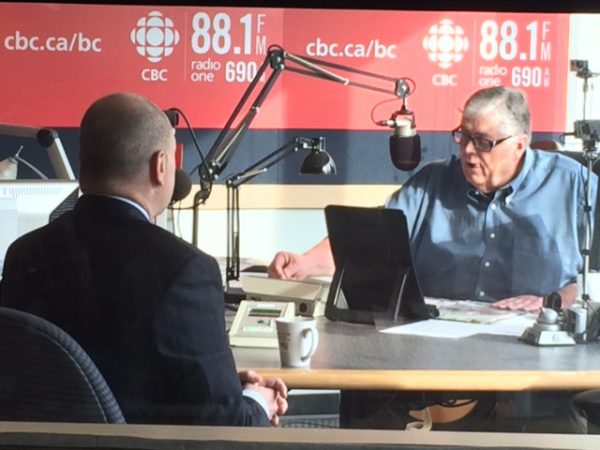
Photo of a radio interview by US Embassy Canada, Flickr CC

On January 31, The New York Times responded to a letter from Kimberly Probolus, an American Studies PhD candidate, with a commitment to publish gender parity in their letters to the editor (on a weekly basis) in 2019. This policy comes in the wake of many efforts to change the overwhelming overrepresentation of men in the position of “expert” in the media, from the Op-Ed project to womenalsoknowstuff.com to #citeblackwomen.

The classic sociology article “Doing Gender,” explains that we repeatedly accomplish gender through consistent, patterned interactions. According to the popular press and imagination — such as Rebecca Solnit’s essay, Men Explain Things to Me — one of these patterns includes men stepping into the role of expert. Within the social sciences, there is research on how gender as a performance can explain gender disparities in knowledge-producing spaces.

Women are less likely to volunteer expertise in a variety of spaces, and researchers often explain this finding as a result of self-esteem or confidence. In 2008, for example, only 13% of contributors to Wikipedia were women. Two reasons cited for this gender disparity were a lack of confidence in their expertise and a discomfort with editing (which involves conflict). Likewise, studies of classroom participation have consistently found that men are more likely than women to talk in class — an unsurprising finding considering that classroom participation studies show that students with higher confidence are more likely to participate. Within academia, research shows that men are much more likely to cite themselves as experts within their own work.
This behavior may continue because both men and women are sanctioned for behavior that falls outside of gender performances. In the research on salary negotiation, researchers found that women can face a backlash when they ask for raises because self-promotion goes against female gender norms. Men, on the other hand, may be sanctioned for being too self-effacing.
Knowledge exchange on the Internet may make the sanctions for women in expert roles more plentiful. As is demonstrated by the experiences of female journalists, video game enthusiasts, and women in general online, being active on the Internet carries intense risk of exposure to trolling, harassment, abuse, and misogyny. The social science research on online misogyny is recent and plentiful.

Social media can also be a place to amplify the expertise of women or to respond to particularly egregious examples of mansplaining. And institutions like higher education and the media can continue to intervene to disrupt the social expectation that an expert is always a man. Check out the “Overlooked” obituary project for previously underappreciated scientists and thinkers, including the great sociologist Ida B. Wells.

For more on gendered confidence in specific areas, such as STEM, see our TROT on Gendering Intelligence.