
politics

California is facing record drought, water restrictions, and threats of wildfires. The solution seems simple—just find more water through increased pumping or desalination—but these quick fixes ignore deeper questions about how we turn public necessities into commodities and determine who can lay claim to natural resources. These issues can lead to cultural conflict, but struggles for water can also renew solidarity across different social groups.

Sociological case studies remind us that professional environmental responsibilities to the land, its residents, owners, and governments change over time and through particular institutional cultures. Power and inequality shape who is exposed to environmental problems and how we address solutions.
Water conflicts also bring up commodification—the way we turn public necessities like water and health into market goods. Research on commodification examines everything from how the water industry actively competes with the tap to how insurance markets change the culture of life and death in the United States.
Water resources—even when scarce—do not inevitably lead to conflict. Environmental concern is not only high in affluent nations; even in places as tense as the Middle East, local activists regularly use the environment to bridge cultural, political, and religious tensions.

Rebecca Farnum is a 2012 EPA Marshall Scholar researching for a PhD in Geography at King’s College London, where she explores environmental conflict and cooperation around food and water resources in the Middle East and North Africa. She has an LLM in International Law on environmental and human rights law, an MSc in Water Security and International Development, and undergraduate degrees in anthropology, interdisciplinary humanities, international development, and international relations.
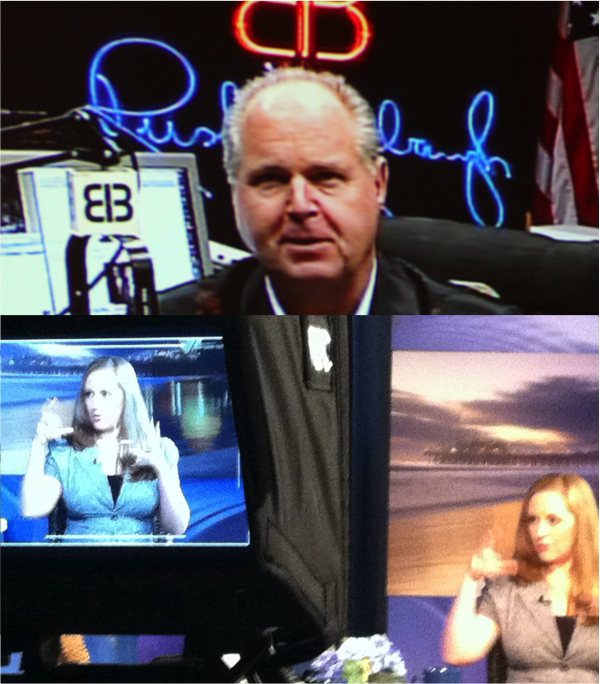
Limbaugh WadeDuring his April 1 on-air radio show, Rush Limbaugh cited a recent SocImages post titled, “Are Economics Majors Anti-Social?” In debating the content of the post, Limbaugh frequently referred to author and editor Lisa Wade as “professorette.” In making up this word, he intentionally gendered the gender-neutral title “professor.” Given the cultural devaluation of femininity, the unnecessary gendering of Wade’s profession signals a discounting of her position and expertise. While Wade is, notably, the author (with Myra Marx-Ferree) of the new book, Gender, women of all professions face challenges to their legitimacy.

Education, prestige, and capital do not exempt women from sexist stereotypes about incompetency. Female researchers and professors are often viewed as less competent than their male colleagues, and male-dominated academic disciplines are perceived to draw more innately brilliant and talented practitioners than female-dominated disciplines.
Even when women occupy high status positions of expertise they are more likely to be interrupted than men. Furthermore, men are more likely to interrupt women even when women occupy a higher professional prestige, suggesting that the gender hierarchy can be more influential to power dynamics than professional status.
Women are also limited in the range of emotions and behaviors they can exhibit in the workplace without being judged negatively. Emotional displays of anger, for example, are interpreted differently if exhibited by men or women, to the likely disadvantage of women. Additionally, displays of dominance by agentic (that is, self-organizing and proactive) female leaders are subject to dominance penalties, backlash, and prejudice.

Curious what our friends in sociolinguistics have to say about gendered titles? Consider listening to Lexicon Valley’s exploration of feminine word endings here.

Indiana’s recently passed Religious Freedom Restoration Act (not to be confused with the 1993 Federal RFRA), faced widespread public controversy and brought a number of high profile boycotts against the state. The law allows private businesses to use the free exercise of religion as a defense in court should they face a lawsuit for discrimination, raising concern about whether businesses are allowed to discriminate against clients on religious grounds. Similar laws are under debate in other states, while in Madison, Wisconsin, officials have signed the first legislation that includes the “non-religious” as a legally protected category. The laws illustrate the importance of religion in shaping social and political issues in American lives.

While religion often works as an inclusive, community-building institution, it also has the potential to reinforce existing social boundaries and inequalities. Cultural and historical contexts shape the ways that religious beliefs are interpreted, and in the American context, religious beliefs are often used to exclude religious and sexual minorities.
Even if these laws are repealed or amended, these social boundaries underlie deeper issues in the workplace. Despite being prohibited by the Employment Non-Discrimination act, audit studies find discrimination against religious minorities and openly gay men in the hiring process.

For more on this issue, check out our post from last year: Religious Freedom and Refusing Service.

The Canadian Senate recently passed an amendment that excludes transgender people from using public restrooms of their choice. Transgender rights are facing similar challenges domestically, as Florida, Texas, Kentucky, and Minnesota consider bills that would limit or restrict the use of restrooms based on one’s sex assigned at birth. Additionally, Missouri State Rep. Jeff Pogue is pushing to ban gender-neutral bathrooms. As trans activists take to Twitter, sharing powerful photographs of themselves in bathrooms that do not fit their gender identity, some may be wondering: when did the loo become so political?

Gender policing is by no means new; in fact, regulating and upholding the gender binary has long been key to social and legal organization. Upon meeting someone new, it is common to make assumptions about their gender based on their body and presentation.
Assumptions about gender vary based on context. Whereas gender identity and presentation may be used as criteria for gender-integrated social spaces, biological sex and genital appearance is emphasized in sexualized situations (e.g. dating) and gender-segregated spaces (e.g. bathrooms). Culturally held beliefs that men are dangerous and women are vulnerable exacerbate the policing of women’s only spaces like restrooms, while gender nonconformity may create ‘gender panics’ for nontransgender people.
The policing of gendered bathrooms can include anything from strange looks and verbal challenges to interpersonal violence and arrest. As a result, transgender and gender nonconforming people may avoid public restrooms or alter their presentation substantially to avoid harassment and conflicts.
Legislation that seeks to regulate bathroom use must first venture down the slippery slope of legally defining sex. This is no small task. In the absence of any federal definition of sex, dozens of judicial gender determination cases demonstrate the variety of factors courts use to determine gender, including personal identity, physical presentation, medical history, and genital appearance and function.

In March 2015, 47 Republican Senators signed a letter, authored by Sen. Tom Cotton and addressed to “the Leaders of the Islamic Republic of Iran.” In what the New York Times called a rare direct congressional intervention into diplomatic negotiations, the cosigners warned Iran that any agreements they may negotiate with President Obama’s administration would not have lasting power, because the U.S. Constitution grants the power to ratify treaties to Congress alone and Obama will leave office in 2017. Most political commentators were surprised by this senatorial foray into sensitive diplomatic affairs; even many conservatives have expressed concern about how the letter might affect negotiations regarding Iran’s nuclear weapons program. But there are good sociological reasons to believe that the cosigners’ goals have little to do with Iran.

Jeffrey Alexander argues that social actors, including political parties, develop “power narratives of civil repair” to redefine social groups. The GOP Senators’ invocation of the Constitution can be understood as an attempt “repair” the damage to America’s international standing they believe Obama has done. In this view, the letter is more a nationalistic statement about who defines what America is than a diplomatic maneuver—a cultural performance intended to grant legitimacy to future political goals.
Drawing on Alexander’s theories, Jonathan Wyrtzen argues that elite political actors have strong strategic incentives to try to claim national symbols, such as the Constitution, as their own.
But even if “reclaiming” the Constitution makes strategic sense for Republicans, why choose such a controversial venue as an open diplomatic letter to a foreign government? Craig Calhoun points to the centrality of the nation in modern culture, saying that strong claims to allegiance are especially effective when “the nation” is perceived to be under threat. The Senators, then, may have used their letter to play up Americans’ fear of unstable relations with Iran.
And Rhys Williams underscores the importance of “blood and land” as symbols in “American Civil Religion.” Iran’s nuclear program invokes both, giving Republicans reason to believe power narratives involving Iran will contribute to a moral panic regarding Obama’s foreign policy—and, by extension, the leadership of any Democrat candidates.

As the outbreak of measles in Southern California continues its spread, public health officials have turned their attention toward the rising number of parents forgoing vaccinations for their children. Once based on the now discredited study linking vaccines to autism, the choice not to vaccinate is now considered an issue of individual choice, albeit one made at the expense of public health.

Vaccinating has become highly politicized. With conflicting information about potential side effects and the increase in mandated vaccines, some parents have grown anxious and distrustful—they are now known as “anti-vaxxers.”
Social networks and institutions help distrust spread. For instance, you can’t “catch” autism from other people, but as parents near each other share information and experiences, the chances that a child will be diagnosed with autism increases.
When parents who distrust medical advice about vaccines consider other parenting practices, such as breastfeeding and nutrition, they also seek out institutions like private schools, which are more friendly to alternative choices. The parents’ networks are thus made smaller.
Although anti-vaxxers are not necessarily motivated by religious values, sociologists study how multiple sources of authority, such as religious and political affiliations, impact scientific distrust and result in deeply held personal beliefs that may place facts and values at odds.

Last month the Senate Intelligence Committee released its report on the CIA’s use of “enhanced interrogation techniques.” News outlets have raised a number of disturbing takeaways from the report’s 500+ page summary, including the gritty details of torture, the failure of many of these practices to get results, and the $81 million paid out to the advisors who helped design them. We typically think of torture as either a barbaric practice or a necessary, if extreme, evil in some limited cases. But while the public wonders whether it actually works, research shows this question doesn’t really decide whether an organization will turn to torture in the first place.

Torture only works because of a highly developed social relationship where the perpetrator can perceive the victim’s pain, but continue with the practice. Randall Collins argues this makes it an extreme way to symbolize human social boundaries—who is in with the powerful community and who is not. This relationship maintains dominance, regardless of whether it gets information.
When torture hits the news, leaders care more about managing the public response than ending this social relationship. Analysis of the Senate Armed Services Committee meetings after Abu Ghraib came to light in 2004 shows how leaders interpreted widespread torture as “isolated incidents.” Experimental surveys of Iraqi judges found they were more likely to give lenient sentences in hypothetical cases of Coalition torture if they felt secure from future crime and protected by police.
All this points to a broader claim about the “dark side of organizations:” their misbehavior is often routine. When the public finds out, organizations are often more concerned with making sure the routine isn’t destroyed by being labeled as a widespread mistake, misconduct, or disaster. Instead, they admit to individual wrongdoing—like isolated incidents of torture that didn’t work—to avoid bigger questions about why torture happens in the first place.

Just when we thought the season’s hottest tablet or smartphone picked up on Black Friday might be a new FBI black site, The Economist reports some tech giants are working extra privacy measures into their gadgets to protect user data. By making services like text encryption available by default, this trend provides extra privacy for some users (mostly those who aren’t already targeted for surveillance), despite criticism from law enforcement that it shields criminal networks from investigation. While we usually think about privacy as an individual right to be left alone, social science shows why these trends are important for a public conversation about what privacy should be.

Americans’ emphasis on the right to privacy remains high, and while public opinion did tend to favor increased government surveillance immediately following September 11th, 2001, support for these practices has declined since.
But privacy isn’t just isolation from governments or other people. Classic research argues it is an ongoing social relationship where we negotiate interactions with others, and more current work shows this relationship changes across time and place.
Current studies of how people use technology show that privacy concerns kick in when people share information online. It also finds this focus on individual behavior ignores structural privacy concerns about the devices themselves and how people learn to interact with them. The “encrypted by default” trend starts a new conversation about what our shared, social definition of privacy should be.

With more troops coming home from Iraq and Afghanistan, this Veterans Day sees a unique push for public awareness about the challenges that accompany a return to civilian life. Starbucks CEO Howard Schultz has a new book and A&E a new reality show, and the social science shows why we want to pay attention to veterans after they return from service. We have a few previous TROT posts on issues within the military, but unique problems arise in a civilian world which can often be less hospitable than the regiment.

Military service provides a number of social benefits upon returning home. The positive image of having served can even overcome negative stereotypes in civilian life and help advance veterans who have a history of delinquency.
After service, however, institutional problems in civilian life mean veterans don’t all face the same challenges when they return home. For example, the G.I. Bill offered a wide range of education and housing benefits, but historic racial inequality in civilian institutions often made it harder for vets of color to collect those benefits. Today, female vets are more likely to face unemployment than males. However, those with only a high school degree often do earn more than non-vets with only a high school degree, and they are more likely to be enrolled in college.
We can still do a lot of work to improve the military, particularly in leadership and adjudication, but it also has a history of positive institutional changes to address issues like racial inequality and reduce the risks of service for certain minority groups.


According to a new report making headlines this week, 21 American cities have passed laws designed to stop residents from sharing food with homeless people since 2013. The finding, which comes from the National Coalition for the Homeless, highlights an increasingly popular belief that hunger motivates troubled individuals to make lifestyle changes. Food aid, in this view, keeps the homeless complacent. In an interview with NPR, one consultant argued that “Street feeding is one of the worst things to do… it’s very unproductive, very enabling, and it keeps people out of recovery programs.” Many city officials quoted in the report have extended this line of thinking to community soup kitchens and food pantries as well. They see those offerings as well-intentioned, but ultimately misguided attempts to help. One, a police captain from Cincinnati, remarked “If you want the bears to go away, don’t feed the bears.” Research shows this isn’t the case, and these attitudes may actually harm people experiencing homelessness.

Social scientists have amassed a great deal of knowledge about the connection between homelessness and hunger. Over and over, they’ve shown that people with stable food access tend to fare better in other aspects of life.
More importantly, these people aren’t animals and homelessness is no mere matter of individual laziness or poor choice. A number of well known structural factors cause and sustain homelessness, including social stigma, poor access to affordable housing, limited employment opportunities, mental health factors, and physical disabilities.

For more on homelessness, check out TROT posts on last year’s polar vortex and this year’s VMAs.