Search results for embed

In 1991 writer and cultural critic Katha Pollitt coined the phrase “The Smurfette Principle” to draw attention to the tendency for movies, TV shows, and other cultural products to include one, and just one female (source). For the unfamiliar, The Smurfs was a children’s television show, airing from 1981 to 1989, populated by a whole world of little blue men and one (sexy) blue woman:
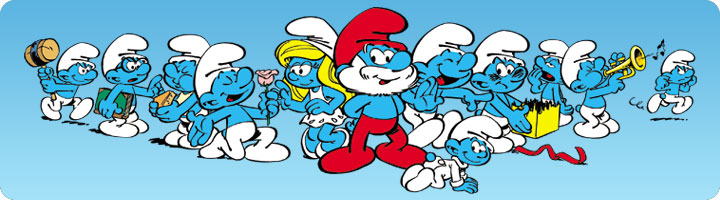
(source)

In her latest in the series Tropes vs. Women, Feminist Frequency’s Anita Sarkeesian applies The Smurfette Principle to today’s movies and shows.  How far have we come?

——————-

For more tropes, see Sarkeesian on The Manic Pixie DreamGirl and Women in Refrigerators.

Transcript after the jump:

more...

Dolores sent us a link to a post at Feministing about Klondike’s new “5 Seconds to Glory” ad campaign for their ice cream bars. The ads revolve around men trying to endure 5 full seconds of unimaginable horror; if they succeed, they are rewarded with Klondike bars (provided by hot chicks).

For instance, in this particularly brutal segment, a man must listen to his wife speak:

A man must listen to his wife talk out loud for 5 whole seconds, about fixing up the house, no less.

In a second video, found ad AdWeek (the embedded clip at Feministing isn’t working), two bikers must hold hands:

So guys, don’t ever forget: wives are annoying burdens you should try to avoid interacting with (much less listening to), and touching or being even superficially intimate with other guys is gross. If, through super-human effort, you are able to bear doing one of these things, you deserve a reward. Brought by women in mini dresses.

We’ve featured posts before on how chocolate is often marketed by linking it to sexual pleasure or presenting it as a substitute for love and romance, especially for women. And we’ve written about ejaculation imagery in ads.

John from Facile Gestures and YetAnotherGirl sent us an Australian commercial for Zokoko chocolates that dispenses with any subtlety when connecting their product to sex and ejaculation. It’s…something:

From Copyranter, via Gawker.

Andrew Slater sent in an interesting example of the mocking of rap music.  The mocking occurs in a re-make of Rebecca Black’s “Friday,” about the excitement of going on out Friday night.  Black’s low-budget music video went viral, shooting her into stardom, or at least celebrity.  The song is a standard teeny-bop pop song, complete with rap interlude.

The re-make, produced by the Community Christian Church, features a so-called “Sadie Black” singing about “Sunday” instead of Friday, and extolling the pleasures of worship. Slater noticed, however, that the entire re-make is more-or-less truthful to the original, except for the rap section. In the re-make, “BP” and “Master E” appear to make fun of rappers.  It’s a very different effect when compared to the straightforward mimickry of Sadie B.

Screen shots (original and re-make respectively):

Videos (rap sections starts at 2:30 and, um, 2:30 respectively):

Lisa Wade, PhD is an Associate Professor at Tulane University. She is the author of American Hookup, a book about college sexual culture; a textbook about gender; and a forthcoming introductory text: Terrible Magnificent Sociology. You can follow her on Twitter and Instagram.

What is the fiscal relationship between the Royal Family of the United Kingdom and its taxpayers?  I have no idea.

Accordingly, I have no idea as to the accuracy of this 5-minute summary, made by CGP Grey (via), but it was entertaining and, I imagine, contains a least a kernel of truth:

U.K. readers, what say you?  (Transcript after the jump.)

more...

Back in December, Carly S. sent in an ESPN video about NFL player Bart Scott, nicknamed the “Mad Backer.” The video illustrates a number of noteworthy themes:

  • The glorification of violence, with Scott reveling in the chance to dish it out.
  • Equating being able to play through pain caused by this violence as proof of masculinity — particularly disturbing given concerns about the long-term effects the physical punishment players take has on their health.
  • Through the “Mad Backer” persona and the presence of a straight jacket and stretcher, Scott associates mental illness with violence and danger as a way to prove his own superiority on the field. Not only is he “mad,” he depicts himself as a villain who enjoys brutality.

See for yourself:


I invite you to spend seven minutes listening to Baratunde Thurston explaining what, exactly, is wrong with the fact that Barack Obama was hounded into releasing his long form birth certificate.  He does a wonderful job of historicizing the requirement that Obama prove that he is an American (to a man such as Donald Trump), at the same time that he explains why this questioning of Obama’s citizenship is deeply hurtful to all Black Americans and their allies.

Via BoingBoing.  Transcript after the jump (via Racialicious).

more...

When I teach Sociology of Race and Ethnicity, one thing I have to balance is disclosure of the horrendous history of racism in the U.S. and the risk of further traumatizing students in my classroom for whom these tragedies are not pure abstractions.  One of the these tragedies is lynching.

Lynching, or the killing of individuals targeted by non-police mobs, usually by hanging, became frighteningly common after slavery was ended.  It was a form of terrorism, designed to teach black people, and their white allies, that the end of slavery would not be the end of their subordination. Because a lynching need not be based on evidence that could stand up in court, all anti-racists were at risk of death. Thousands of people — most, but not all of them black — were violently hanged, their bodies often set afire.

Despite the importance of this chapter of American history, I do not show pictures of lynchings in my classroom.  These images are surprisingly easy to come by because the events were often gleefully public and photographs of the murders were sold as postcards. Sometimes, though, I think about showing Billie Holiday singing what is, perhaps, one of the most deeply troubling songs ever written, “Strange Fruit.”  Written by Abel Meeropol and Laura Duncan, it was first performed by Holiday in 1939, almost 30 years before lynching could be called “history.”

Strange Fruit:

Via BoingBoing.

Lisa Wade, PhD is an Associate Professor at Tulane University. She is the author of American Hookup, a book about college sexual culture; a textbook about gender; and a forthcoming introductory text: Terrible Magnificent Sociology. You can follow her on Twitter and Instagram.