The first time I saw this, I was suspicious that it might be a hoax. But it turns out it’s real (at least Snopes says so).
Thanks, Orla H.!
The first time I saw this, I was suspicious that it might be a hoax. But it turns out it’s real (at least Snopes says so).
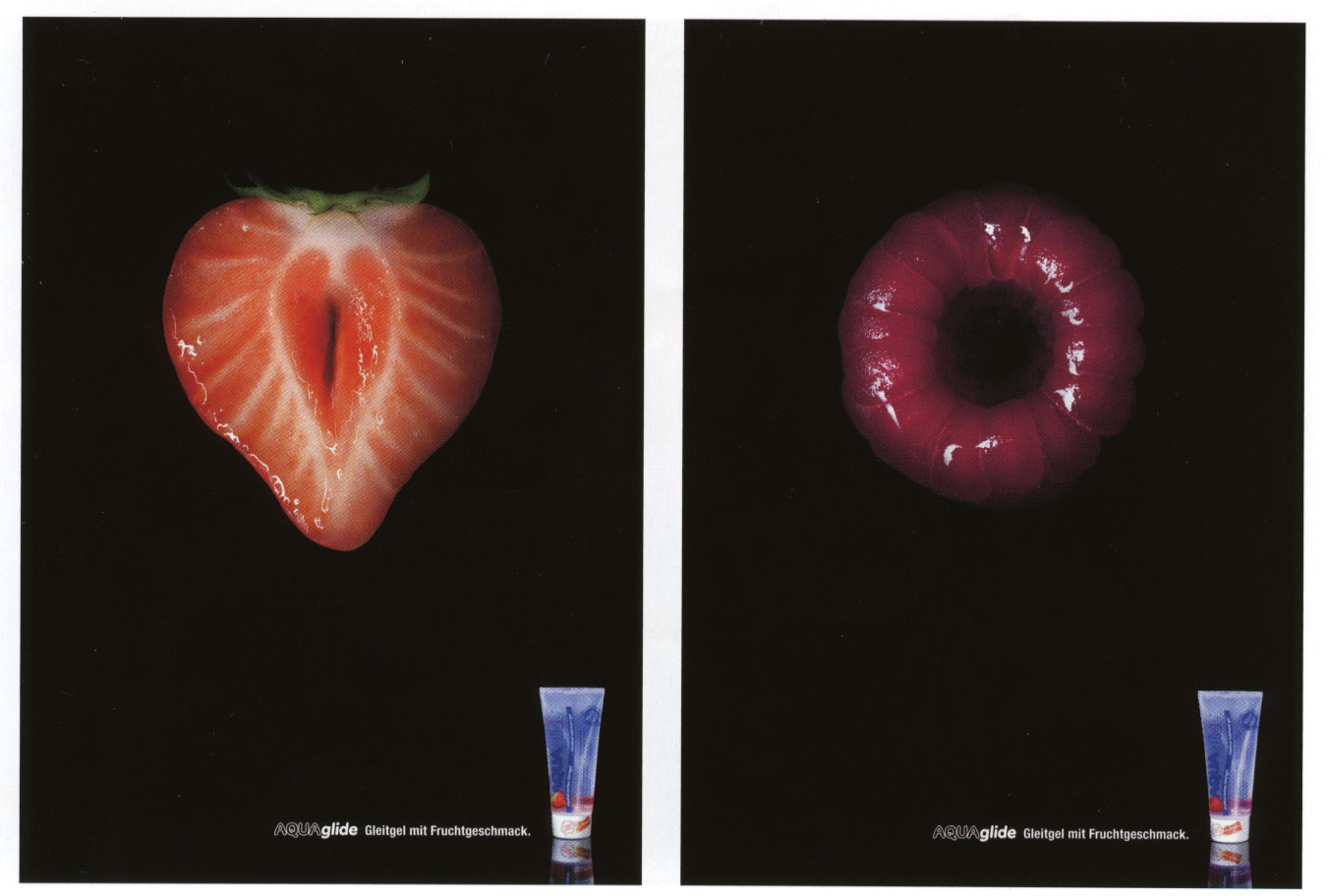
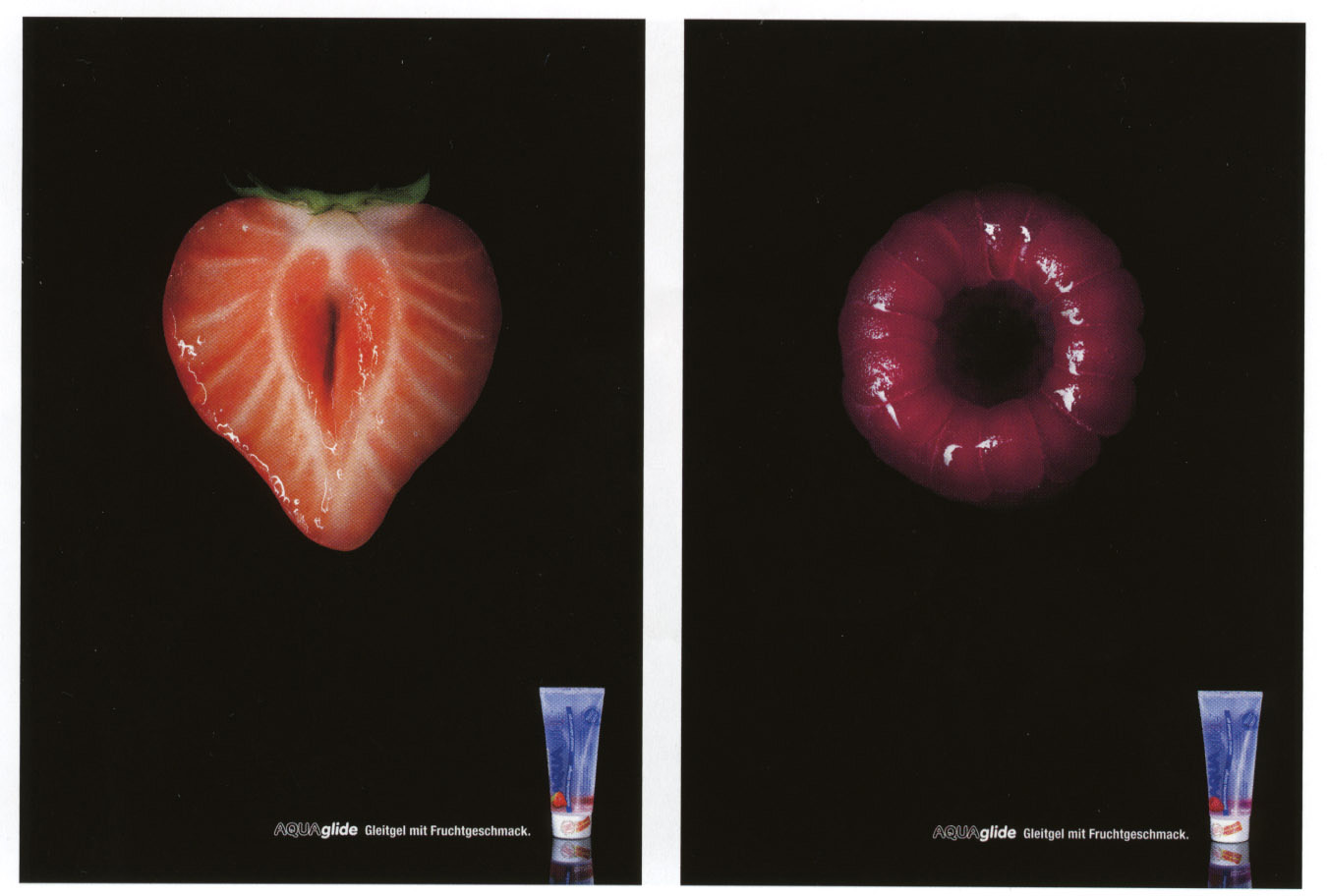
It seems the food-and-sex-themed images just won’t stop coming! In these astroglide ads, women (and men?) are nothing but a slick, tasty slit and hole (found here):
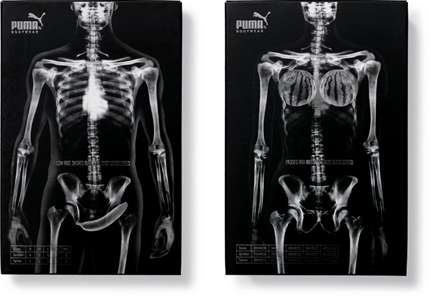
And Andrew sent these Puma ads (found here) (look closely):
NEW (Feb. ’10)! Софи А. sent along a similar ad campaign:

Also in sexualized food: mustard and ketchup are sexy, do you desire white meat?, hot dog!, and a whole slew of examples.
Here’s a strange Australian ad for U, a feminine hygiene product. It shows women hanging out with beavers…the animal type, of course. Men look on approvingly, so I guess the message is if you take appropriate care of your girly bits, men will like you.
Here’s the website.
Might be good for a discussion of hygiene and women’s bodies or the history of feminine hygiene products and the way we think about menstruation.
Thanks, Patrick C.!
In response to Condoleeza Rice’s comments that contemporary racial relations reflect an American “birth defect,” Lou Dobbs offered a dismissive monologue in which he tried to deny that there is really any problem to talk about. In a truly beautiful moment of irony, he accidentally lets slip a good part of the slur “cotton-pickin’” in reference to Black leaders.
[youtube]http://www.youtube.com/watch?v=0Y0W19-N3Ik[/youtube]
* Title stole from Jessica’s post over at feministing.
Also awesomely ironic: Dr. Watson is more black than most.
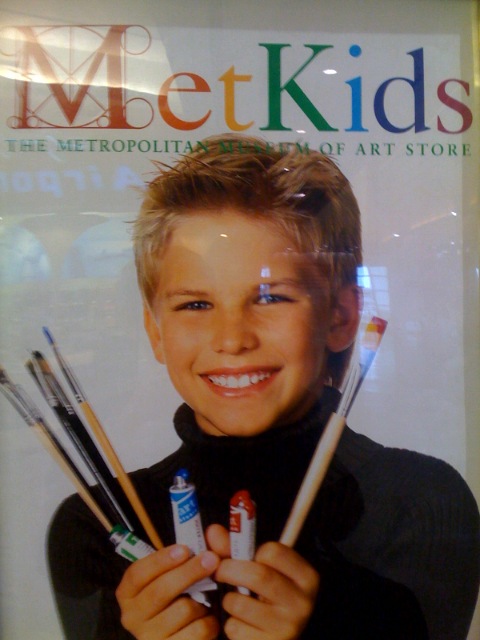
This is a tough one, but there is something about this image advertising the Metropolitan Museum of Art that just screams privilege. Is it the perfect blonde hair? The perfect white teeth? The neat upper-class masculinity? The turtleneck? I can’t quite put my finger on it!
Thanks Jason!
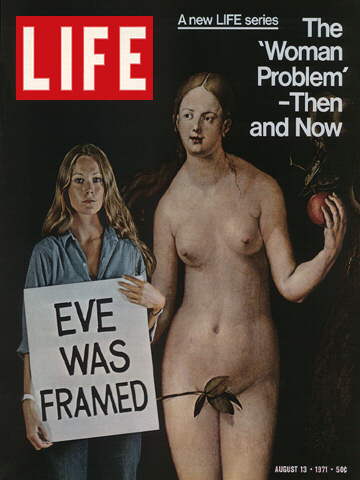
This famous Life Magazine cover from 1971 trumpeted the feminist movement:
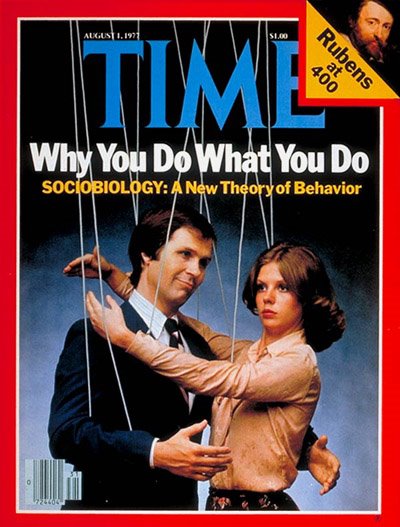
Six years later, in 1977, Time Magazine reminded us that gender difference (and inequality?) was genetic and, thus, out of our control:
And don’t miss the famous 1978 Hustler cover that appeared the very next year!
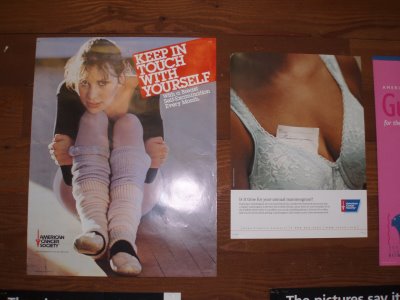
These two images were part of the campaign to raise awareness about breast cancer at my college this year. I think it is fascinating that, even when spreading a message about women’s health, the images include sexualization and objectification (on the right) and a woman posed to look insecure, vulnerable, and maybe slightly scared (on the left).
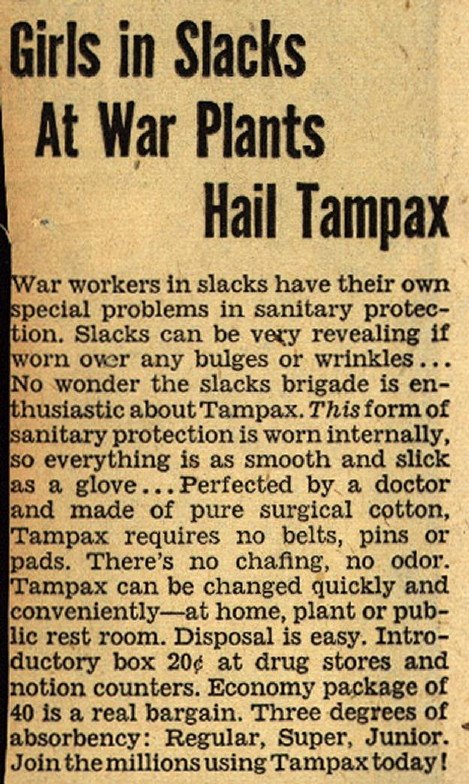
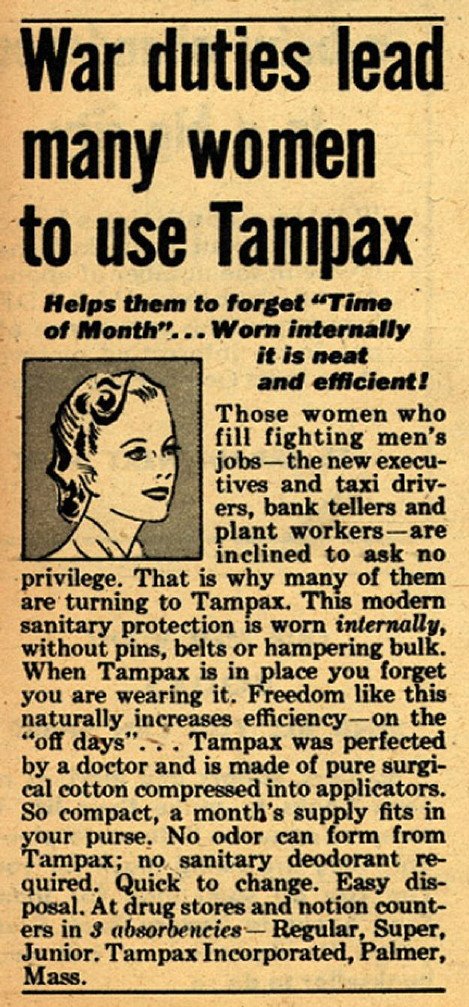
While tampons have been around since the 19th century (see the Museum of Menstruation for more history), they really took off in the U.S. in the 1940s. One of the reasons for this was a targeted campaign by Tampax that took advantage of women’s new labor participation during WWII. These newspaper ads from that time period show the ways tampons were marketed to women who were not only working, but wearing pants on the job.
These ads would make for a great class discussion on gender and the homefront during war (not to mention a discussion of women’s work and bodies)– particularly on how gender relations and practices can change (temporarily or permanently) during wartime.
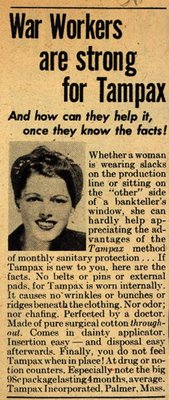
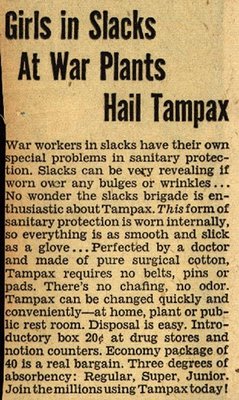
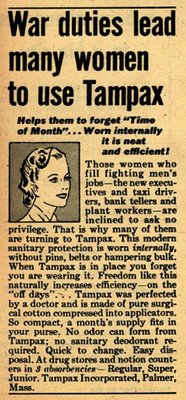
I found these at the amazing database of old ads that Gwen posted about. Thanks again for the link Martin W.!