Search results for The

Our reader, Elizabeth A., drew our attention to this ad and she does a great job of describing what, exactly, is so disturbing about it:

The sexism at work here is nothing new. It’s just your tired, old, run-of-the-mill objectification of women as inanimate objects [robots] whose sole purpose is to sacrifice their own desires so that they may cater to the tastes [for draught keg contents] of the implied male viewer. In fact, the image in the commercial of a woman emptying herself for a man while keeping a constant smile is actually a disturbing reification of many women’s experience. Socialized to abnegate themselves, women may try and try to please other people, draining themselves of energy, until they are as empty as used beer cans. While the images used here are distractingly sexy, the underlying message is a terrifying turn-off, yet another example of how Heineken’s execs underestimate their target audience [hey, hetero men, you don’t want female companionship, just a fembot-like servitor!], insult women and leave everyone feeling demoralized and worse for wear.

More from Elizabeth at her blog: Blog of Stench.

Lisa Wade, PhD is an Associate Professor at Tulane University. She is the author of American Hookup, a book about college sexual culture; a textbook about gender; and a forthcoming introductory text: Terrible Magnificent Sociology. You can follow her on Twitter and Instagram.
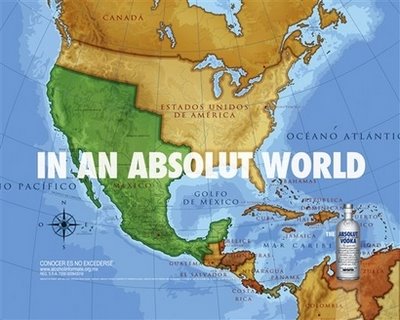
This Absolut vodka ad (found here), which ran in Mexico, has caused quite the stir here in the U.S., since it implies than in a perfect world much of the U.S. would still be part of Mexico. A number of groups in the U.S. are boycotting Absolut. This is one of those cases where an ad aimed at once audience (Mexicans) is noticed by another audience it was never meant for.

Similarly, though I could be wrong, I bet most straight male Miller Light drinkers aren’t aware of these ads and wouldn’t be thrilled with them.

One of my favorite things to do in class is to show students that advertisers target their images to the audience. Students are often resistant to the idea that advertisers consider every aspect of an image, or that gendered or racialized elements are used intentionally. Showing ads for the same product that are targeted at very different audiences can be a way to get students to think about the fact that marketing is very deliberate and nothing in a multi-million-dollar ad is left to chance.

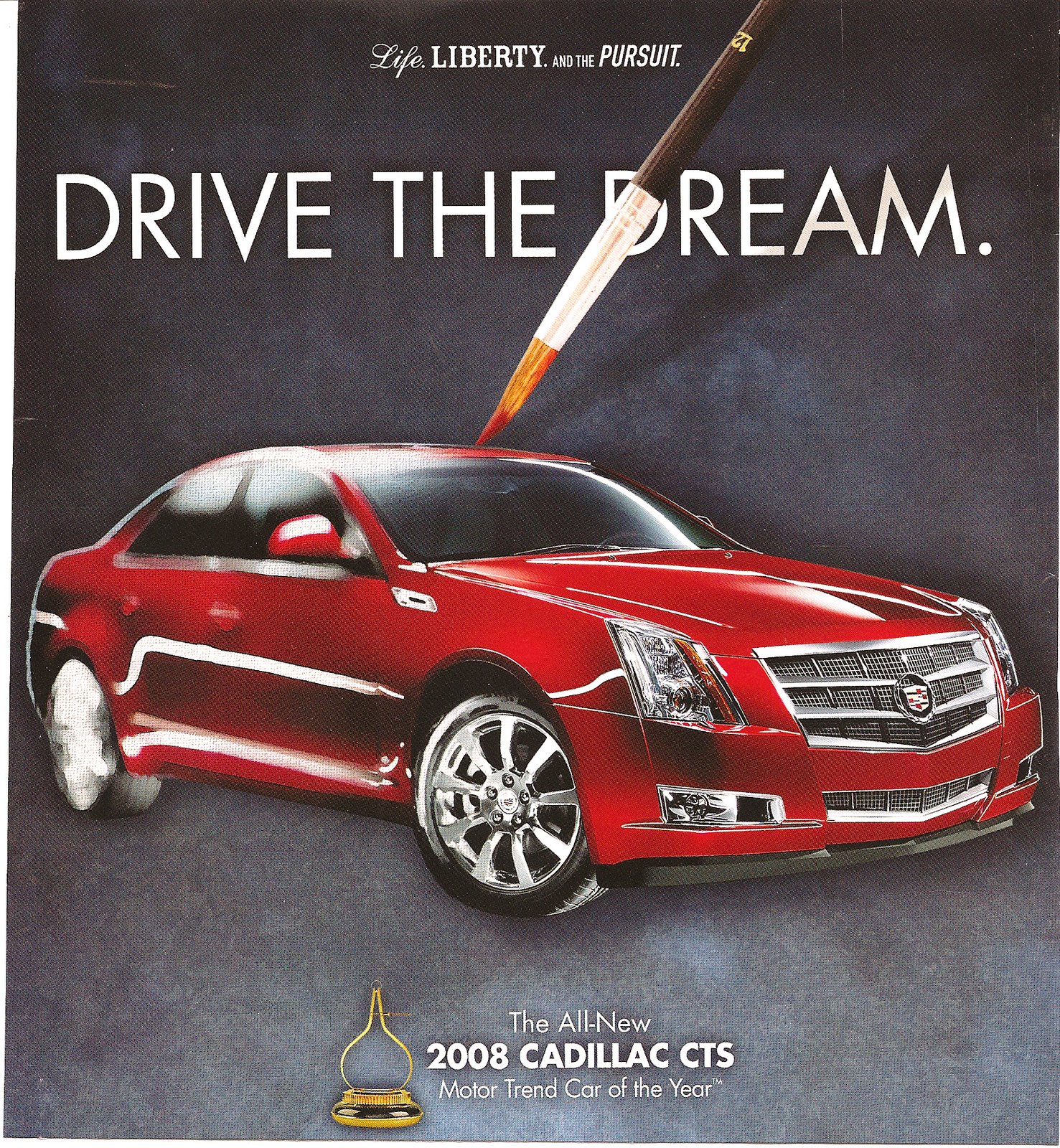
I previously posted this Cadillac ad:


Then I found this one in QVegas, which targets the GLBT community:


These might be useful for sparking a discussion of how advertisers alter their message based on the desired consumers, and that they know what kind of image will resonate with various demographics. And note that the second ad doesn’t have the menacing tone of the first one. Other examples: here and here.

In the late 1930s, the movie Reefer Madness dramatized the effects of marijuana abuse (watch the entire video here). In the 1970s, it was ridiculed as hysteria and propaganda.

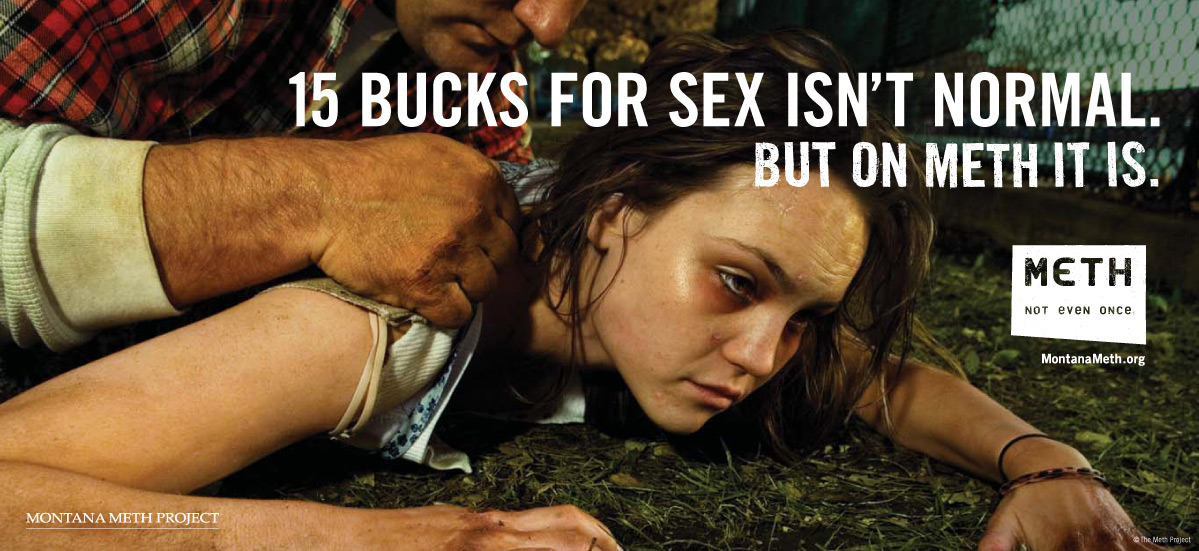
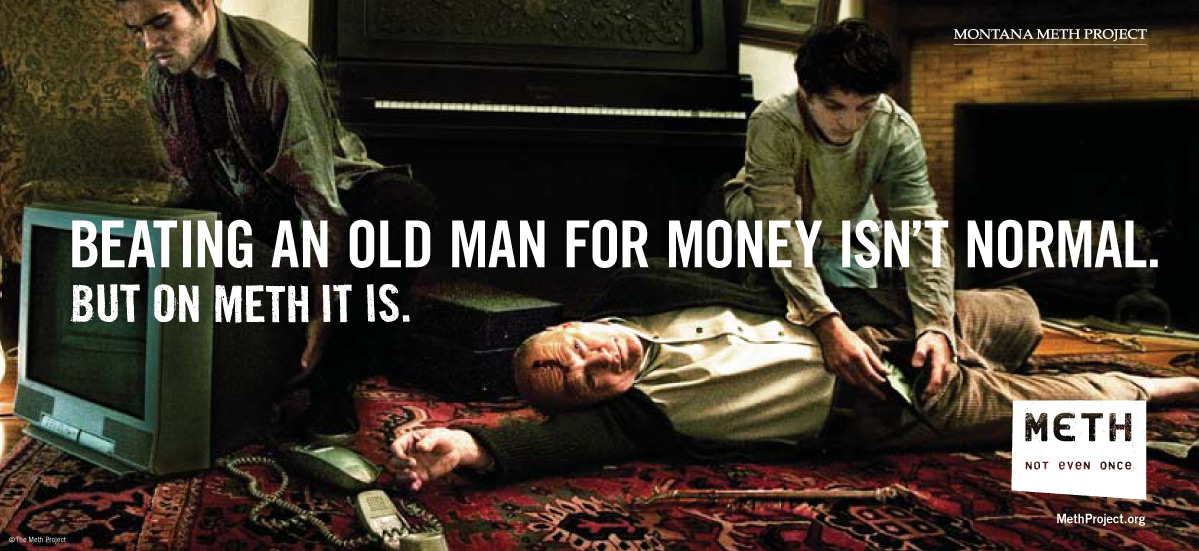
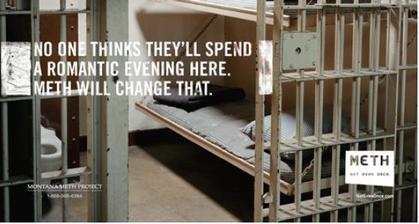
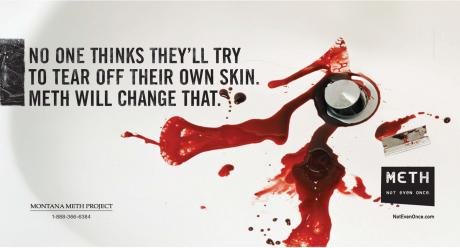
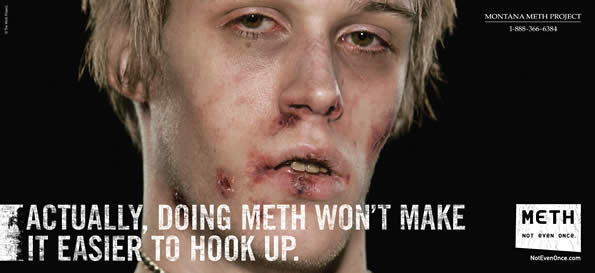
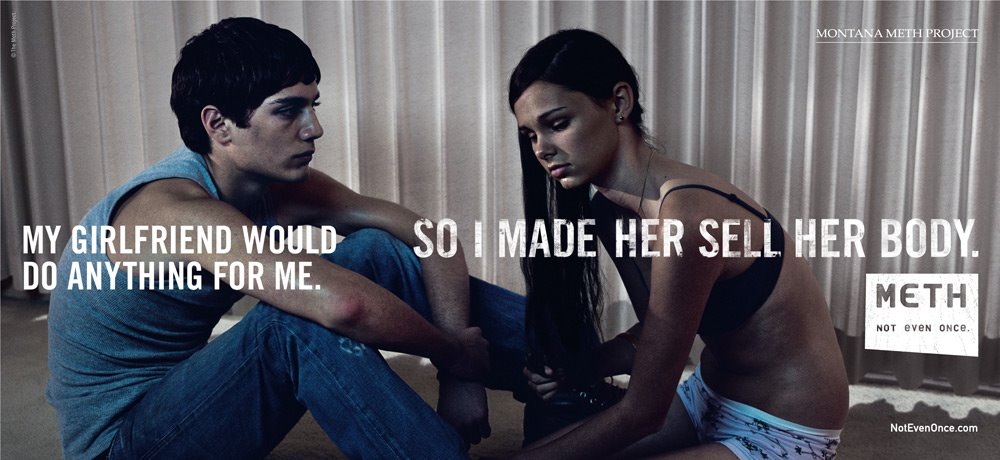
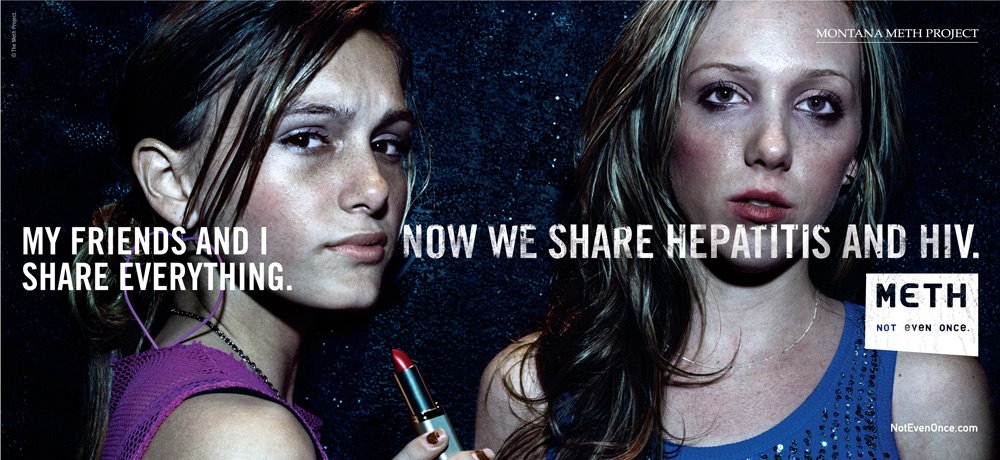
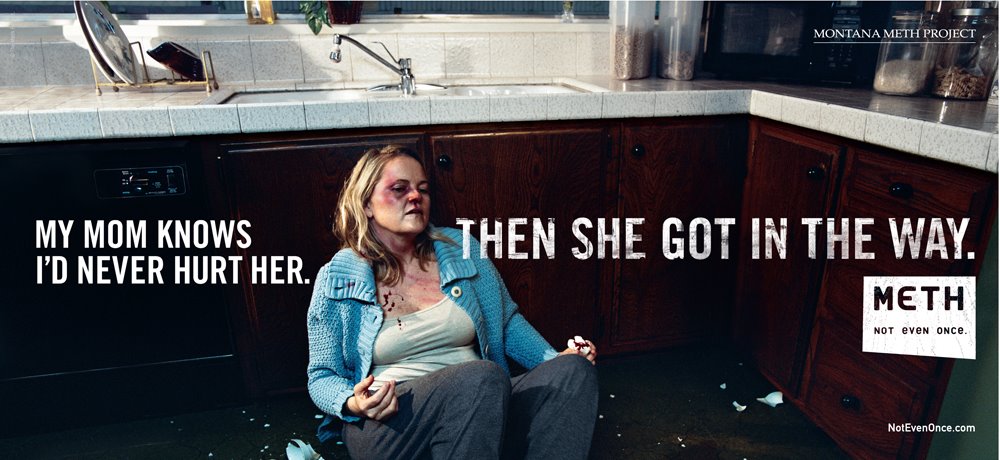
In light of this, and without trivializing meth addiction (which I understand to be devastating… but where does my information come from?), what do we think of these anti-meth PSAs from the Montana Meth Project? (You can also find television commercials there to go with these print ads.)

Hat tip to copyranter for bringing my attention to this ad campaign.

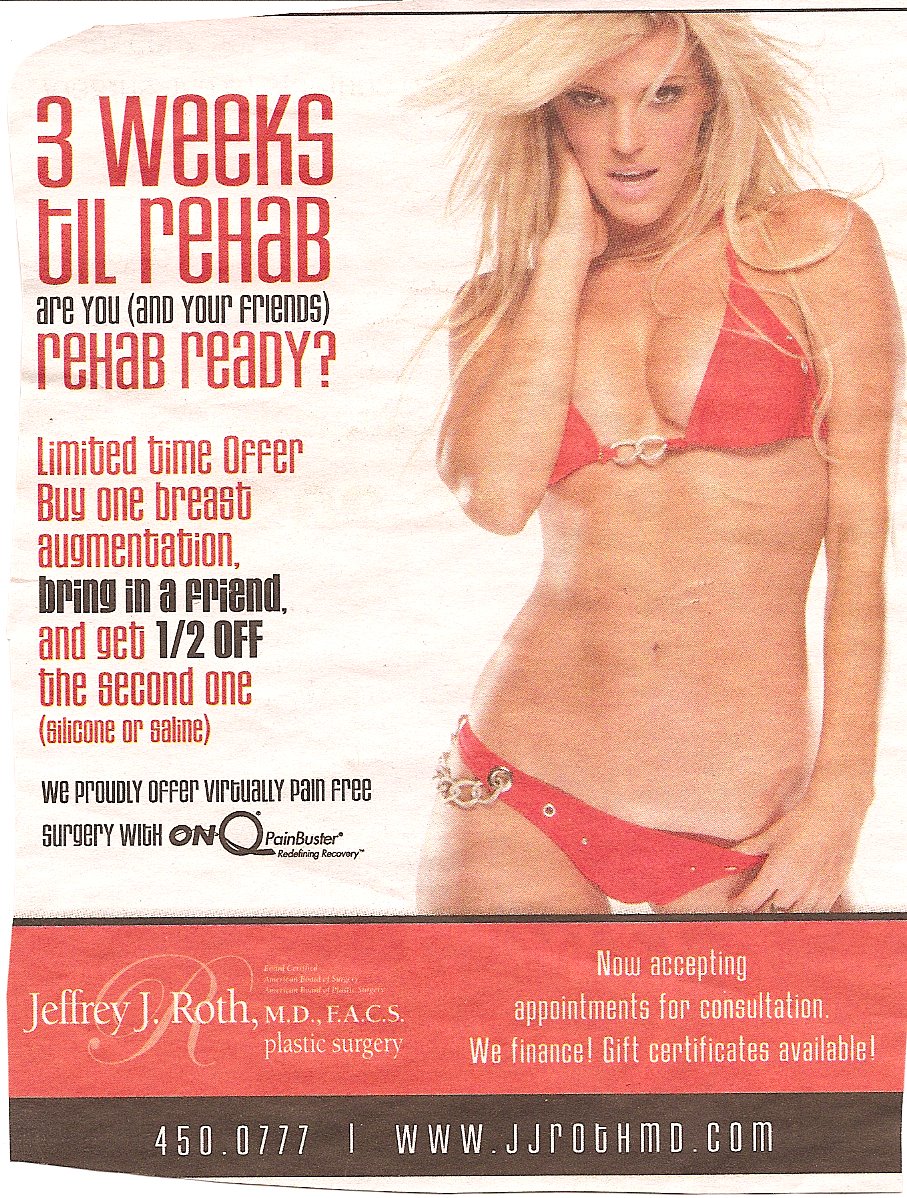
This ad reminds women that they need to get their bodies ready before Rehab–and no, not that kind of rehab; it’s a big party being put on here in Vegas. Without new boobs, you simply won’t be “ready”–i.e., attractive enough–for this event. This could be useful as a really extreme case of ads that try to make people feel inadequate and provide a solution in the form of a product or service.

And as far as I can tell, what you’re supposed to be “ready” for is to be sexually available–she’s pulling her bikini bottom down and has a seductive look on her face.

Also, notice the doctor is having a “buy one, get the second 1/2 off” special if you bring in a friend. So women should encourage each other to feel uncomfortable about their bodies.

From Las Vegas Weekly.


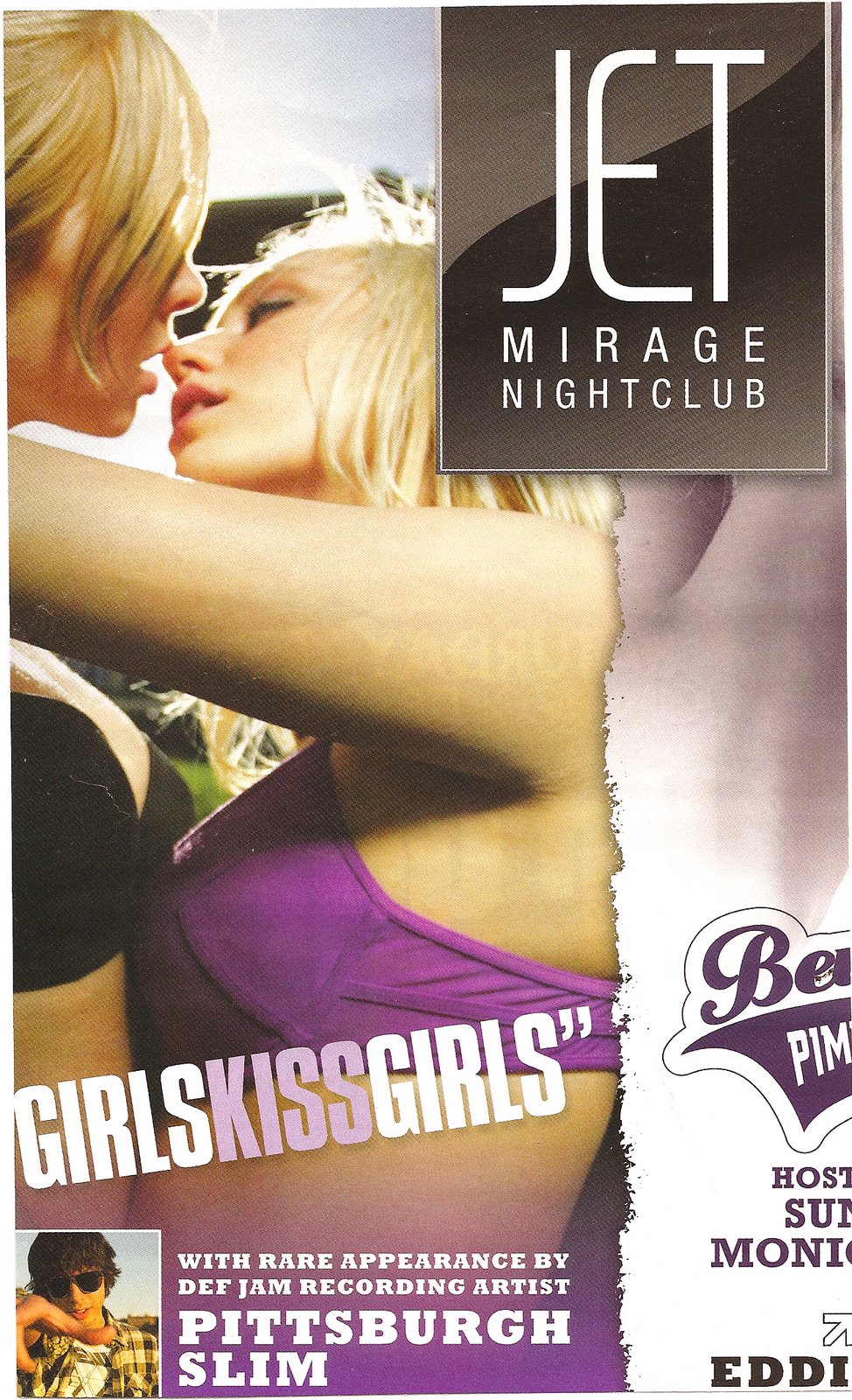
I have a feeling this ad is not meant for lesbians (the other half of the page showed a half-naked woman; both were for mainstream, non-lesbian-oriented clubs). This might be useful for discussing different attitudes toward gays and lesbians–it is difficult to imagine an ad of two men kissing aimed at straight women. In this case, women kissing is not about THEIR sexual pleasure, but about that of the audience–presumably straight men. The assumption accompanying images such as these, of course, is that the women are not actually lesbians–they’ll still be sexually available to men. This is another difference in cultural views of gays and lesbians–lesbians’ sexual orientation is often doubted (they just need to find the right man) in a way gay men’s usually isn’t.

From Las Vegas Weekly.


This clip, from the newly televised This American Life, shows what happens when (mostly) black women and (mostly) white men living in racially-segregated Chicago are brought together and the social rules of decorum are suspended. It is highly, highly disturbing. I’d love it if some social psychologists could comment on what we see happening here!

[youtube]http://www.youtube.com/watch?v=vo1LPf9mnyU[/youtube]

Thanks to Alicia T. for sending us the link!

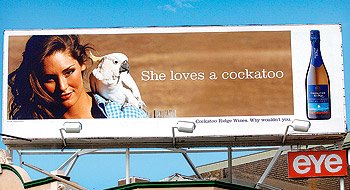
UPDATE: According to Tim at Ad Freak, the model in this photograph, ex-Miss Universe contestant Erin McNaught, was not pleased with the copy added to her image. Tim wrote:

[She said:] “I wasn’t thrilled with what that line was implying,” she says. The vineyard has stopped short of apologizing, saying it e-mailed all of the campaign’s lines to McNaught—and never heard back. McNaught says she was traveling and didn’t see the e-mails until it was too late. “You know, she is a bit of a cheeky thing,” says a Cockatoo rep. “But we certainly did not want to harm her image or ours.”

See the news story here.