Search results for The

El sent in a really interesting example of the re-fashioning of a real body into one believed to be more appealing to consumers. In the video below, real footage of gymnast Shawn Johnson is shown alongside the video game designed to allow Wii players to “play” her. El notes:

…the video Shawn is significantly thinner and long-limbed whereas the real Shawn has a short muscular body. The real Shawn’s leotards are red and blue, while the video image is wearing a pink leotard. In addition, the hair of the video version is blonder.

There has been a clear effort here to feminize the image of Shawn and to make her body conform to less athletic ideals… While Shawn’s name and fame is used to sell the video (presumably primarily to little girls), the video sends the message that Shawn herself must be altered, even though I would guess most people buying the game are fans of Shawn, know what she look like, and admire her as she is.

Lisa Wade, PhD is an Associate Professor at Tulane University. She is the author of American Hookup, a book about college sexual culture; a textbook about gender; and a forthcoming introductory text: Terrible Magnificent Sociology. You can follow her on Twitter and Instagram.
Angi S. alerted us to a cartoon that ran this month in Eastern Michigan University’s student newspaper, The Echo. It featured two people in white supremacist hoods in front of a noose hanging from a tree. One says to the other: “Honey, this is the tree where we met.”

The ensuing conversation is a good example of how claims that materials are racist are dismissed by their producers.  After receiving criticism, The Echo made the following “response” (here):

We understand the “You Are Here” cartoon may have offended some readers. We apologize for the lack of sensitivity some felt we showed for publishing the piece.  The cartoon points out the hypocrisy of hate-filled people. Its intent was to ask how can someone show affection for one person while at the same time hating someone else enough to commit such a heinous act as hanging. We wish to remind readers that they are free to express their opinion on our discussion boards and we hope to continue to foster free thought and open discussion on campus and in the community.

– The Eastern Echo

First, notice that it is a typical “we are sorry that you were offended” non-apology.  The first sentence acknowledges that some readers “may have [been] offended” and then says that “some felt” that there was an insensitivity.  It does not say that the cartoon was offensive or insensitive.

Second, it also explains that the intention was to point out the “hypocrisy of hate-filled people,” not make light of lynching, without interrogating the relative importance of intent and reception.  One could argue that cultural producers are at least somewhat responsible for the  myriad of ways that an item could be reasonably interpreted.

Third, it backs into the free speech corner by claiming to be open to all opinions (using the word “free” twice in one sentence).

The Detroit News covered The Echo’s response and also added that while one African American student objected to the cartoon, another thought it was funny.  So…

Fourth, the coverage relied on the idea that if just one member of the relevant group is not offended, then maybe the rest are over-reacting.

Lisa Wade, PhD is an Associate Professor at Tulane University. She is the author of American Hookup, a book about college sexual culture; a textbook about gender; and a forthcoming introductory text: Terrible Magnificent Sociology. You can follow her on Twitter and Instagram.
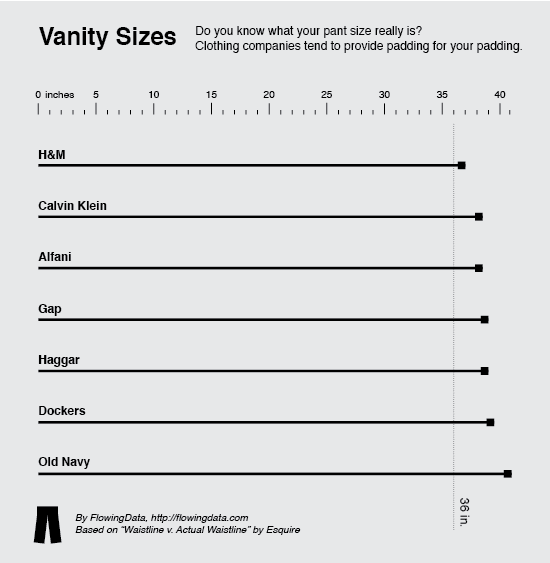
Kate L. sent us a link to a post by Esquire’s Abram Sauer, who took a measuring tape to the “36 inch waist” men’s pants at seven chain stores to see if the purported 36-inches was accurate (story).  He discovered, indeed, that all of the companies were engaging in at least some “vanity sizing,” the labeling of larger clothes with smaller sizes (the fashion equivalent of grade inflation).  Flowing Data made an easy-to-read figure (all pant sizes are marked “36 inches):

For more psychology of marketing, see our posts on the meaningless discount, the location of outlet malls, and Pabst Blue Ribbon.

Lisa Wade, PhD is an Associate Professor at Tulane University. She is the author of American Hookup, a book about college sexual culture; a textbook about gender; and a forthcoming introductory text: Terrible Magnificent Sociology. You can follow her on Twitter and Instagram.

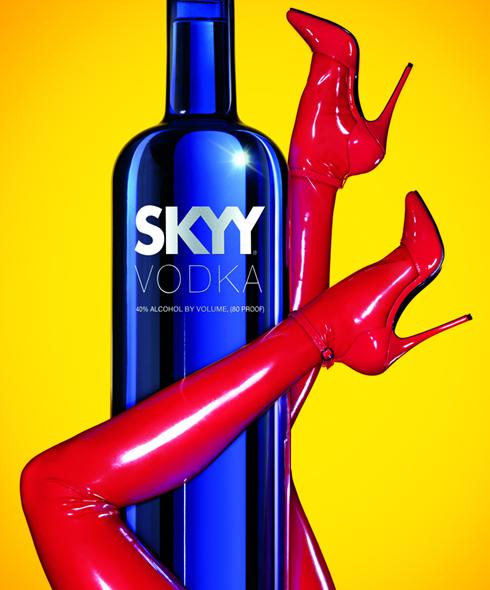
We haven’t had up any blatant phallic ad imagery in a while, so I thought I’d share with you this Skyy Vodka ad, sent in by Dmitriy T.M. (found at AdRants):

From the AdRants post:

Defending the ad, Skyy Marketing Director Maura McGinn…said, “It’s about the content of our product. We’re an adult product consumed mostly in the evening and in flirtatious situations.”

Of course, it doesn’t actually show the product ejaculating, so it’s pretty tame, really.

Lake Mead (1958):

Lake Mead (2010):

Via the Earth Observatory.

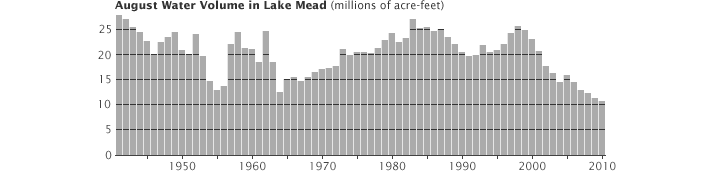
These two starkly different and somewhat frightening images don’t represent a linear diminishment of Lake Mead. Instead, they are two extremes on a naturally fluctuating water level:

This fluctuating water level isn’t, further, a natural problem. It has, however, become an increasingly social problem. It provides water for the Southwest, a portion of the country that has become thirstier and thirstier. From Maggie Koerth-Baker at BoingBoing:

Take, for instance, Las Vegas, which gets 90 percent of its water from Lake Mead. Back in the 1940s, fewer than 9,000 people lived there. In 2006, the population was estimated at more than 550,000, and growing. Rapidly.

This makes large numbers of people vulnerable to these natural fluctuations in ways that they never were before and potentially creates human disasters out of our own poor planning and resource management. If climate change exacerbates this problem, and it very well might, then the reliability of our water supply is even more fragile.

Lisa Wade, PhD is an Associate Professor at Tulane University. She is the author of American Hookup, a book about college sexual culture; a textbook about gender; and a forthcoming introductory text: Terrible Magnificent Sociology. You can follow her on Twitter and Instagram.

Jezebel recently posted this Australian PSA about the dangers of fast food:

It made me think of this British PSA from 1967 that addressed childhood obesity. Our ideas of what you should be eating may have changed in the past 40 years, but the tendency to rely on individualistic explanations and to blame moms for not providing children better food, as though the food they choose for their kids exists outside of any larger social context, seems to have quite the shelf life.

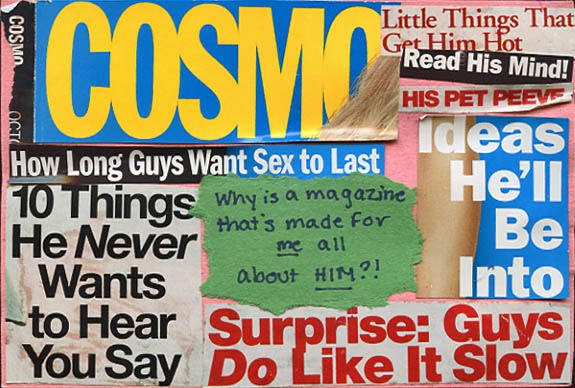
A secret on PostSecret today nicely captures how women’s magazines are relentlessly guy-centric:

Lisa Wade, PhD is an Associate Professor at Tulane University. She is the author of American Hookup, a book about college sexual culture; a textbook about gender; and a forthcoming introductory text: Terrible Magnificent Sociology. You can follow her on Twitter and Instagram.
Third Way, which describes itself as “the leading moderate think-tank of the progressive movement,” proposes that taxpayers should get a receipt showing where their taxes go. They point out,

For many Americans, the amount they pay in taxes is larger than any purchase they make during the year, but studies show they know almost nothing about where that money goes to. This contributes to ridiculous beliefs, like the view that 20% of government spending goes to foreign aid, for example.

They provide a sample receipt for a taxpayer making $34,140, the median income in 2008; the receipt doesn’t include everything, but major categories of interest or that taxpayers tend to be very unclear how much money is spent on:

Via Talking Points Memo.

It’s not a receipt, but you can calculate how much you pay in taxes to various programs based on your income here.